2027 Most Affordable Bachelor's Degree Programs for Gig Workers

Co-Founder and Chief Data Scientist
Gig workers often need a degree that raises earning potential without locking them into rigid schedules or heavy debt. The Federal Reserve's 2024 household economics survey reported that 16% of U.S. adults did gig work in the prior month, making flexible education a practical need rather than a niche concern.
This guide is for freelancers, rideshare drivers, delivery workers, caregivers, creators, and contractors comparing affordable bachelor's degrees. You'll learn which majors fit flexible careers, how to judge cost and quality, and how to choose a program that supports long-term stability.
Key Things You Should Know
- Affordability depends on total net cost, not sticker tuition. College Board's 2024-25 data lists average published in-state public four-year tuition and fees at $11,610 before grants, transfer credit, and employer aid.
- Degrees tied to regulated, technical, or employer-required skills often offer stronger ROI. BLS May 2024 wage data places computer and mathematical occupations above many general bachelor's-level fields.
- For gig workers, the best programs usually combine asynchronous online courses, generous transfer-credit policies, regional accreditation, career services, and clear pathways into W-2, freelance, or hybrid work.
Top 10 2026 Most Affordable Bachelor's Degree Programs for Gig Workers
Business Degrees
Business degrees are a versatile choice for gig workers who want management, marketing, accounting, sales, operations, or entrepreneurship options. Affordable programs may offer concentrations in digital marketing, project management, human resources, or finance. This path fits freelancers who want to price services better, manage clients, or move into analyst or coordinator roles.
It may be less ideal for students seeking a licensed profession unless they choose accounting coursework aligned with CPA requirements, which vary by state and often require credits beyond a bachelor's degree.
Healthcare Degrees
Healthcare bachelor's degrees can lead to stable roles in health administration, public health, health informatics, or community health. They fit gig workers who want mission-driven work but may not want direct clinical licensure. Check whether internships, labs, or field placements require daytime availability.
BLS May 2024 data places medical and health services managers at a median annual wage of $117,960, but those roles usually require experience. For affordability, prioritize programs that accept prior college credits and offer healthcare-specific career advising.
Information Technology Degrees
Information technology degrees are practical for gig workers already troubleshooting devices, building websites, supporting software, or managing platforms. Courses often cover networking, databases, cloud systems, systems administration, and IT project support.
This degree can support help desk, systems analyst, cloud support, and technical operations roles. It is often more applied than computer science, which can make it a better fit for students who want job-ready technical skills without a heavy theory focus. Look for programs that embed industry certification preparation.
Computer Science Degrees
Computer science degrees suit gig workers who enjoy programming, problem-solving, software design, AI tools, and data structures. This major can support software development, web development, quality assurance, data engineering, and technical product roles. It is rigorous, especially in math and algorithms, so part-time pacing may be wise for students balancing unpredictable work hours.
BLS projections published in 2024 show software developer roles growing much faster than average, but portfolios, internships, and coding assessments still matter alongside the degree.
Cybersecurity Degrees
Cybersecurity degrees fit gig workers interested in risk, networks, compliance, incident response, and protecting systems. The field can offer strong long-term demand, with BLS 2024-34 projections showing information security analyst employment growing far faster than average.
Entry-level hiring can still be competitive, so affordable programs should include labs, security tools, internship support, and preparation for credentials such as Security+. Avoid programs that promise instant high salaries; practical experience, clearance requirements, location, and employer needs strongly affect outcomes.
Psychology Degrees
Psychology degrees are useful for gig workers interested in human behavior, coaching-adjacent work, user research, case management, human services, sales, or graduate study. A bachelor's alone does not qualify graduates to become licensed psychologists or therapists. It can, however, build research, communication, data interpretation, and people-centered problem-solving skills.
Choose this major if you want broad career flexibility or plan for graduate school. If your goal is immediate high ROI, compare psychology with business analytics, IT, or healthcare administration before enrolling.
Nursing Degrees
Nursing degrees can be high-value but are less flexible than many online majors because clinical hours, labs, state board requirements, and licensure rules are strict. Gig workers who are already licensed practical nurses or registered nurses may find RN-to-BSN programs especially affordable and schedule-friendly.
BLS May 2024 data lists registered nurses at a median annual wage of $93,600, but pay varies by setting and region. Confirm that any program is approved for your state's licensure or advancement requirements.
Education Degrees
Education degrees fit gig workers who want teaching, training, instructional design, tutoring, childcare leadership, or education technology roles. Teacher licensure programs usually require supervised student teaching and state-specific exams, so online flexibility has limits. Non-licensure education degrees can work better for freelancers who want corporate training or learning design.
BLS May 2024 data places elementary school teachers, except special education, at a median annual wage of $63,680. Before enrolling, verify whether the program leads to certification in your state.
Criminal Justice Degrees
Criminal justice degrees may appeal to gig workers interested in law enforcement, courts, corrections, security management, victim advocacy, or compliance. The degree can help with promotion or federal, state, and local roles, but many sworn positions also require academy training, background checks, physical standards, and local hiring processes.
It may be a good fit if you want public service or investigations-related work. Ask schools about internships, agency partnerships, and whether credits align with graduate study in public administration or legal studies.
Engineering Degrees
Engineering degrees can offer strong ROI, but they are among the least forgiving for students with unpredictable schedules because of sequential math, labs, and design projects. Affordable options are often available through public universities, transfer pathways, or hybrid formats. ABET accreditation matters for many engineering fields, especially if professional licensure may become important.
Gig workers with construction, repair, CAD, energy, or manufacturing experience may find engineering technology programs more flexible than traditional engineering while still leading to technical roles.
How can gig workers choose the right affordable bachelor's degree for flexible careers?
The right affordable bachelor's degree is the one that connects your current income, available study time, transferable credits, and target career. For gig workers, "flexible" should mean more than online access; it should include predictable deadlines, part-time pacing, mobile-friendly coursework, and support when income fluctuates.
The comparison below shows how different degree choices tend to match common gig-worker goals. Use it as a first filter before you compare individual schools.
| Goal | Best-fit degree areas | What to verify before enrolling |
| Move into a stable office or remote role | Business, IT, healthcare administration | Internship options, employer partnerships, career coaching, transfer credit |
| Build higher-value freelance services | Computer science, marketing, cybersecurity, design-adjacent business | Portfolio projects, software access, applied coursework, client-ready deliverables |
| Enter a licensed or regulated field | Nursing, education, some engineering tracks | State approval, clinical or student-teaching requirements, exam pass-rate disclosures |
| Prepare for graduate school | Psychology, business, education, engineering, computer science | Prerequisite courses, GPA expectations, research opportunities, faculty advising |
Start by choosing the career outcome, not the major name. Then compare programs using the same criteria each time: total net price, time to completion, accreditation, required in-person work, student support, and evidence that graduates can move into the roles you want.
What types of bachelor's degrees offer the best return on investment for gig workers?
The best ROI for gig workers usually comes from degrees that either qualify students for employer-screened roles or help them sell specialized services at higher rates. Technical, healthcare, business, and regulated-field degrees often perform well because employers can connect the curriculum to concrete work responsibilities.
ROI is not only salary. A degree can be worth it if it improves income predictability, access to benefits, promotion eligibility, client trust, or resilience when gig platforms change pay structures. Still, students should be cautious with majors that require expensive graduate school before meaningful career entry.
When comparing ROI, consider these practical signals before you commit:
- Whether the target job commonly lists a bachelor's degree as required or preferred
- Whether the program builds a portfolio, clinical record, internship experience, or certification eligibility
- Whether entry-level roles in the field exist in your local market or remote-work target market
- Whether the degree can support both freelance income and W-2 employment
- Whether a shorter credential could test the field first before you invest in a four-year plan
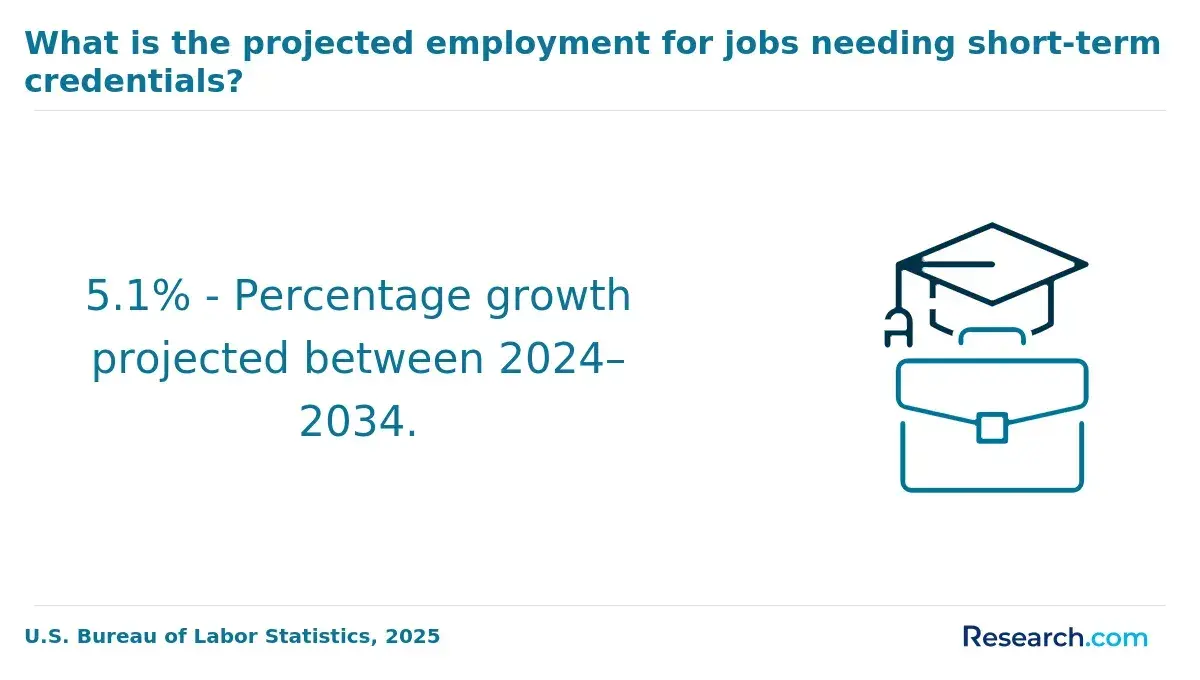
If you need a faster skills bridge before starting a bachelor's program, compare degree plans with quick certifications that pay well. A certificate will not replace a bachelor's for jobs that require a degree, but it can help you validate interest, build income, or earn credits in some stackable programs.
How do online bachelor's programs compare to campus options for gig workers' schedules and budgets?
Online bachelor's programs often fit gig workers better because they reduce commuting, parking, relocation, and missed-shift costs. Campus programs can still be better for majors requiring labs, clinicals, studio work, or local employer pipelines.
The table below compares format trade-offs that directly affect time, money, and predictability for working adults.
| Format | Best for | Budget impact | Schedule risk |
| Asynchronous online | Gig workers with changing weekly hours | Often lowers commuting and relocation costs | Requires strong self-management |
| Synchronous online | Students who want live instruction from home | Can still be cost-efficient | Live class times may conflict with peak earning hours |
| Hybrid | Clinical, lab, education, and technical programs | May require travel and local placement costs | Moderate, depending on campus visit frequency |
| Campus-based | Students needing equipment, networking, or structured routines | Can add transportation, housing, and opportunity costs | Higher if gig work is unpredictable |
Online is not automatically easier or lower quality. The best online programs use clear weekly modules, responsive faculty, accessible tutoring, digital library support, and transparent proctoring policies. Before choosing campus or online study, ask how exams work, whether courses are self-paced or term-based, and how quickly instructors respond to working students.
What are typical admission requirements for affordable bachelor's programs geared toward working adults?
Affordable bachelor's programs for working adults usually use standard undergraduate admissions, but adult-friendly schools may offer more flexible pathways. Requirements vary by institution, selectivity, transfer status, and major.
Most applicants should prepare for the following admissions items:
- High school diploma, GED, or prior college transcript
- Official transcripts from every college previously attended
- Minimum GPA requirements, especially for transfer students or competitive majors
- Placement requirements for math, writing, or college readiness when prior credits are limited
- Program-specific prerequisites for nursing, engineering, education, or computer science
- Proof of state residency when applying for in-state tuition at a public institution
Gig workers with scattered college history should pay close attention to transfer evaluations. A program that accepts more prior credits may be cheaper than one with lower tuition but stricter transfer rules. Ask for a written degree audit before enrolling, not a verbal estimate from admissions.
How much do low-cost bachelor's degrees usually cost, and how can gig workers pay?
Low-cost bachelor's degrees vary widely in price, but public institutions, online degree-completion programs, community-college transfer pathways, and competency-based models are often the most affordable starting points.
College Board's 2024-25 data lists average published tuition and fees at $11,610 for in-state students at public four-year colleges, compared with $43,350 at private nonprofit four-year colleges. That gap matters, but grants, scholarships, transfer credits, and time to completion can change the real cost.
Common price components include more than tuition, so compare the full cost of attendance:
- Tuition and mandatory fees
- Books, software, lab kits, uniforms, background checks, or testing fees
- Technology requirements and proctoring fees for online courses
- Travel costs for residencies, clinicals, labs, or student teaching
- Lost income if required class times reduce gig-work availability
Gig workers can reduce out-of-pocket cost by filing the FAFSA, applying for state grants, using employer or platform education benefits when available, starting at a community college, and choosing programs with generous credit for prior learning. The maximum Federal Pell Grant for the 2024-25 award year is $7,395, but eligibility depends on financial circumstances, enrollment intensity, and federal rules.
What accreditation and quality signals should gig workers look for in affordable programs?
Accreditation is the first quality signal to check because it affects federal financial aid, credit transfer, employer recognition, and graduate-school eligibility. For most students, the baseline is institutional accreditation from an agency recognized by the U.S. Department of Education or the Council for Higher Education Accreditation.
Some fields also require or strongly prefer programmatic accreditation. Nursing students should check state board approval and nursing accreditation where relevant. Engineering students should look for ABET accreditation when licensure or traditional engineering roles are goals. Business, education, cybersecurity, and healthcare programs may have specialized accreditors or quality designations, but the importance varies by employer and career path.
Red flags include vague accreditation language, pressure to enroll immediately, unclear total costs, missing licensure disclosures, poor transfer-credit transparency, and promises of guaranteed employment. A reputable school should be able to explain graduation requirements, student support, complaint processes, and career outcomes without relying on hype.
What courses and specializations best align bachelor's programs with gig and freelance careers?
Gig workers benefit most from coursework that turns into visible skills, portfolio evidence, or credentials employers understand. The strongest programs connect general education with practical projects rather than leaving students to translate the degree on their own.
Look for courses and specializations that match how you plan to earn money during and after school:
- Business analytics, accounting, digital marketing, and project management for freelancers who want better client, pricing, and operations skills
- Cloud computing, networking, programming, database management, and cybersecurity labs for technical service providers
- Health informatics, healthcare management, and public health for students targeting administrative healthcare roles
- Instructional design, educational technology, and assessment for tutoring, training, and learning-support careers
- Research methods, statistics, and data visualization for students interested in user research, policy, or graduate study
Certifications can strengthen a degree plan when they are relevant to the role, not added randomly. Students comparing embedded credentials can review certifications online to understand how shorter credentials may complement a bachelor's program.
What careers, salaries, and advancement paths can affordable bachelor's degrees open for gig workers?
An affordable bachelor's degree can help gig workers move from variable income into roles with clearer advancement ladders. It can also support higher-value freelance work by signaling discipline, technical knowledge, and specialized training to clients.
The table below summarizes common bachelor's degree pathways and the types of roles they may support. Salary varies by region, experience, employer, and industry, so use these examples as planning context rather than guaranteed outcomes.
| Degree area | Possible career paths | Advancement direction |
| Business | Marketing coordinator, operations analyst, account manager, project coordinator | Manager, consultant, business analyst, entrepreneur |
| IT or cybersecurity | Help desk analyst, systems administrator, security analyst, cloud support specialist | Security engineer, IT manager, cloud architect, risk manager |
| Computer science | Software developer, QA analyst, web developer, data-focused technical roles | Senior developer, technical lead, product engineer, engineering manager |
| Healthcare administration | Patient services coordinator, health data specialist, practice administrator | Department manager, health services manager, compliance leader |
| Education | Teacher, tutor, training specialist, instructional support role | Lead teacher, instructional designer, curriculum specialist, administrator |
BLS May 2024 wage data shows computer and mathematical occupations with a median annual wage of $105,990, illustrating why technical degrees often attract ROI-focused adults. However, entry into these roles depends on skills, projects, interviews, and local or remote hiring conditions.
Some workers later stack graduate education on top of an affordable bachelor's. If that is part of your plan, compare programs that keep undergraduate debt low and research the cheapest masters degree online options before assuming graduate school will be financially manageable.
How can gig workers balance study time with freelance work and family responsibilities?
Balancing school with gig work is less about motivation and more about designing a realistic system. Gig income often changes week to week, so students should protect both earning time and study time before the term starts.
A practical weekly plan should include these steps:
- Choose courses based on workload, not just degree-map order, especially when taking math, writing-intensive, lab, or programming classes.
- Block study time during low-earning periods and reserve high-demand gig hours for income when possible.
- Use part-time enrollment if full-time study would force high-interest debt or missed essential income.
- Tell instructors early if your work schedule is unpredictable, then confirm late-work and exam policies in writing.
- Create an emergency plan for illness, car repairs, childcare gaps, or platform deactivation so one disruption does not derail the term.
Students with caregiving duties should compare programs with asynchronous courses, multiple start dates, and generous leave or re-entry policies. The same flexibility factors that help parents are explained in guides to the best degrees for stay-at-home moms, and many apply to gig workers managing family responsibilities.
Common mistakes include enrolling full time to "finish faster" without calculating lost income, ignoring tutoring until grades drop, choosing the cheapest school without checking accreditation, and assuming online courses require less time. A better approach is to start with a manageable load, measure your real weekly study capacity, and scale up only after you know the workload is sustainable.
Other Things You Should Know About Affordable Bachelor's Degrees
The most affordable option is often an in-state public online degree-completion program or a transfer pathway that starts at a community college. The best major depends on your target career, but business, IT, healthcare administration, and computer science often balance flexibility with marketable skills.
Online programs usually fit unpredictable work schedules better, especially when courses are asynchronous. Campus or hybrid programs may be better for nursing, engineering, education, or other fields that require labs, clinical hours, or supervised placements.
It can, especially when the degree builds specialized skills clients or employers value, such as analytics, programming, cybersecurity, accounting, marketing, or healthcare operations. It is not a guarantee; portfolio quality, experience, networking, and market demand still matter.
Check institutional accreditation, total cost, transfer-credit policy, online course format, required in-person components, financial aid eligibility, career support, and whether the program aligns with your intended job or licensure path.
References
- Top 19 Bachelor Degree Programs for Working Adults | NEIT https://www.neit.edu/blog/degrees-for-working-adults
- How to Pay for a Degree in Cybersecurity | CyberDegrees.org https://www.cyberdegrees.org/resources/how-to-pay-for-a-degree/
- Top Degrees in Demand for the Future: 2026 & Beyond https://skillifysolutions.com/blogs/career-growth/top-degrees-in-demand-for-the-future/
- Does College Pay Off? A Comprehensive Return On Investment Analysis - FREOPP https://freopp.org/whitepapers/does-college-pay-off-a-comprehensive-return-on-investment-analysis/
- The gig economy: A tale of two labor markets https://www.adpresearch.com/research/the-gig-economy-a-tale-of-two-labor-markets
- New Data on Completion Rates | HESA https://higheredstrategy.com/new-data-on-completion-rates/
- Is College Worth it? | Return on Investment Analysis of College Degree https://educationdata.org/college-degree-roi