2027 Best Bachelor's Degrees With Self-Paced Courses

Co-Founder and Chief Data Scientist
Choosing a bachelor's degree is harder when you need flexibility without wasting money or time. Self-paced bachelor's programs let motivated students move faster through familiar material, often online and around work or family obligations.
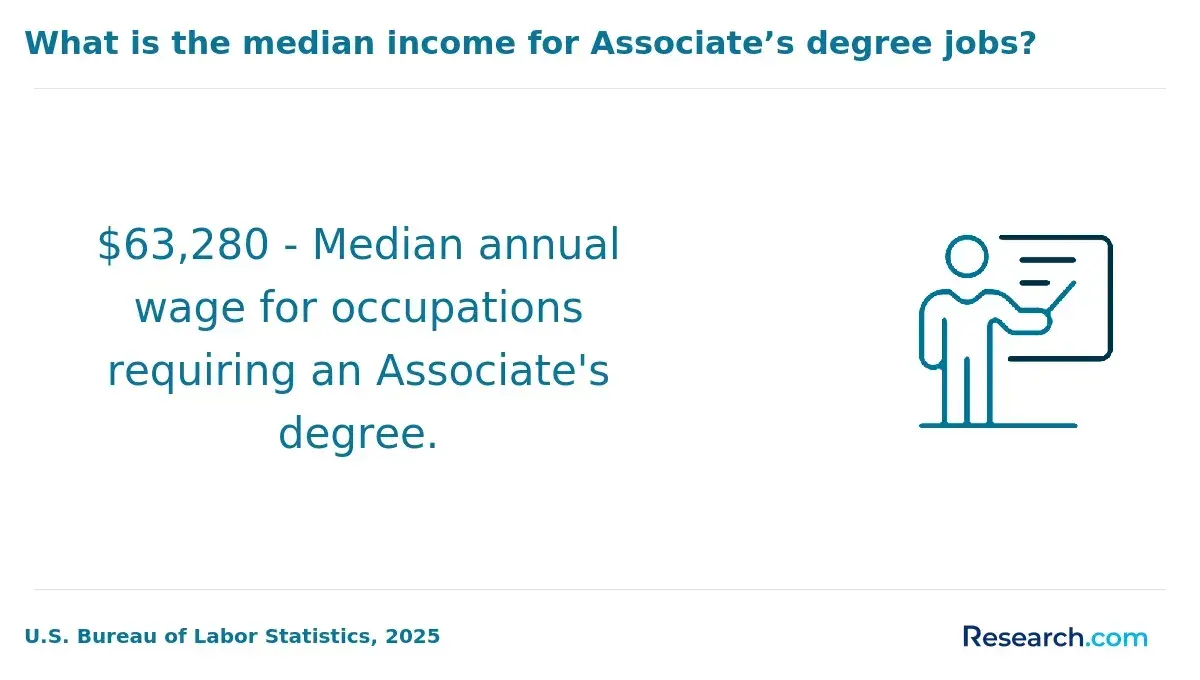
The need is clear: BLS 2024 education data shows workers age 25 and older with a bachelor's degree had median weekly earnings of $1,543, well above associate-degree and high-school-only levels. This guide explains the strongest degree areas, how self-paced formats work, what to verify before enrolling, and how to compare cost, accreditation, speed, and career fit.
Key Things You Should Know
- Self-paced bachelor's degrees are usually online, asynchronous, and competency-based, meaning progress depends on completed assessments rather than weekly seat time.
- Cost varies widely: College Board's 2024-25 figures place average published tuition and fees at $11,610 for in-state public four-year colleges and $43,350 for private nonprofit four-year colleges, before aid.
- Career payoff depends heavily on major: BLS May 2024 data reports a $105,990 median annual wage for computer and IT occupations, while some bachelor's fields require graduate study or licensure for the strongest outcomes.
Top 10 Best Bachelor's Degrees With Self-Paced Courses
Business Degrees
A self-paced bachelor's in business works well for students with work experience, military training, transfer credits, or management goals. Common majors include business administration, accounting, finance, marketing, human resources, and supply chain management. The format fits learners who can write, analyze data, and complete projects independently.
It may be less ideal for students who need live discussion, heavy faculty coaching, or a highly competitive on-campus recruiting pipeline. Look for clear transfer policies, recognized business accreditation when available, and concentrations aligned with your target role.
Healthcare Degrees
Self-paced healthcare bachelor's degrees often focus on healthcare administration, health information management, public health, or allied health completion pathways. They are best for students seeking nonclinical leadership, compliance, informatics, or operations roles. Check whether the curriculum includes healthcare finance, ethics, quality improvement, HIPAA-related privacy, and data systems.
For clinical careers, confirm whether the program meets licensure or certification requirements in your state. A flexible healthcare degree can be practical, but it should match the exact credential expected by employers.
Information Technology Degrees
Information technology is one of the strongest fits for self-paced learning because many courses are skills-based and assessment-driven. Students may study networking, cloud computing, systems administration, databases, scripting, IT project management, and service management. Some programs embed industry certifications, which can improve job readiness.
This path suits learners who like troubleshooting and applied technology more than advanced theory. Before enrolling, compare lab access, virtual environments, certification exam support, and whether the program teaches current cloud, security, and automation tools.
Computer Science Degrees
A self-paced computer science bachelor's degree is best for students comfortable with math, programming, algorithms, software design, and independent problem-solving. Unlike IT, computer science usually emphasizes theory, data structures, operating systems, databases, and software engineering.
It can support software development, data, AI-adjacent, and graduate study pathways. The main risk is choosing a program with weak projects. Look for rigorous coding assignments, portfolio-building coursework, version-control practice, and faculty support for complex technical topics.
Cybersecurity Degrees
Self-paced cybersecurity degrees can be valuable for students who already have IT experience or want a structured route into security operations, risk, governance, or incident response. Coursework may cover networks, ethical hacking, digital forensics, secure systems, cloud security, policy, and risk management.
Because employers often value hands-on proof, prioritize programs with labs, capture-the-flag style exercises, and mapped certifications. Beginners may need extra time to build networking and scripting foundations before advanced security courses feel manageable.
Psychology Degrees
A self-paced psychology bachelor's degree can prepare students for human services, case management support, research assistant roles, HR, sales, or graduate study. It is not enough by itself to become a licensed psychologist, counselor, or therapist in most states.
Strong programs include statistics, research methods, abnormal psychology, developmental psychology, social psychology, and ethics. Choose this degree if you want a broad human behavior foundation and are realistic about whether your target career requires a master's, doctorate, supervised hours, or licensure.
Nursing Degrees
Self-paced nursing options are most common in RN-to-BSN completion programs, not entry-level prelicensure nursing. They are designed for licensed registered nurses who need a bachelor's degree for advancement, leadership, public health, or graduate nursing pathways. Students should verify state authorization, clinical or practicum requirements, CCNE or ACEN accreditation, and whether employer tuition assistance applies.
If you are not already an RN, confirm whether the program actually leads to initial licensure before assuming an online bachelor's will qualify you for the NCLEX-RN.
Education Degrees
Self-paced education bachelor's degrees can support teacher licensure, paraprofessional advancement, childcare leadership, or non-licensure education roles, depending on the program.
Licensure-focused degrees require careful review because student teaching, background checks, state exams, and placement rules vary. Non-licensure education degrees may be better for training, curriculum support, or youth program roles. Before choosing this path, ask whether the program is approved for your state, how field experience is arranged, and whether moving states could create additional requirements.
Criminal Justice Degrees
A self-paced criminal justice bachelor's degree can fit students interested in law enforcement, corrections, probation, homeland security, emergency management, or legal support roles. Coursework often covers criminology, policing, courts, corrections, ethics, research methods, and policy.
The degree may help with promotion or federal eligibility, but many sworn roles also require academy training, background checks, physical standards, and local hiring processes. Compare programs by internship options, writing intensity, faculty experience, and whether the curriculum supports your specific public safety goal.
Engineering Degrees
Self-paced engineering bachelor's degrees are less common because engineering requires sequenced math, labs, design projects, and often ABET accreditation. Some flexible options exist in engineering technology, industrial technology, or completion pathways for students with prior technical credit.
This route may fit technicians seeking advancement, but students pursuing professional engineering licensure should be especially cautious. Confirm ABET status, lab requirements, transfer acceptance, state licensure implications, and whether the degree title matches the engineering jobs you want.
What are self-paced bachelor's degrees?
Self-paced bachelor's degrees are undergraduate programs that let students control how quickly they complete coursework within school-defined term limits. Many use competency-based education, where students prove mastery through papers, exams, projects, labs, or performance tasks. This is different from simply taking online classes; a standard online course may still require weekly deadlines.
Self-paced formats reward students who are organized, experienced, and comfortable learning independently. They can shorten time to graduation, but only if you consistently finish assessments and avoid delaying difficult courses.
Which online schools offer self-paced bachelor's degrees?
Several U.S. online schools offer self-paced or competency-based bachelor's options, but availability changes by state, major, and accreditation approvals. The table below shows common models to compare, not a ranking, because the best choice depends on your credits, budget, field, and need for licensure.
| School or model | Typical self-paced format | Common bachelor's areas | Best fit |
| Western Governors University | Competency-based terms with assessments | Business, IT, cybersecurity, health, education | Students with transfer credit or professional experience |
| Capella University FlexPath | Subscription-style competency-based courses | Business, IT, psychology, healthcare-related fields | Independent learners who want control over course speed |
| Purdue Global ExcelTrack | Competency-based online pathway | Business, IT, cybersecurity, nursing completion options | Adults who can complete modular work efficiently |
| University of Maine at Presque Isle YourPace | Competency-based sessions | Business, accounting, criminal justice, liberal studies | Transfer students seeking a public university option |
| Texas A&M University-Commerce competency-based options | Applied competency-based completion pathways | Organizational leadership and related applied fields | Working adults with prior learning or workplace experience |
When comparing schools, include application fees, transcript fees, technology fees, and transfer evaluations in your total cost check. If upfront costs are a barrier, reviewing no application fee online colleges can help you identify lower-friction options before committing.
Are self-paced bachelor's degrees accredited and respected?
Self-paced bachelor's degrees can be accredited and respected when the institution holds recognized accreditation and the program fits the career goal. Employers usually care less about whether courses were self-paced and more about whether the school is legitimate, the degree is relevant, and the applicant can demonstrate skills.
The table below summarizes the main accreditation checks because the right standard depends on the field, not just the delivery format.
| What to verify | Why it matters | Common mistake to avoid |
| Institutional accreditation | Supports transfer credit, federal financial aid eligibility, and general degree legitimacy | Assuming "accredited" means recognized without checking the accreditor |
| Programmatic accreditation | May be important in nursing, education, engineering, business, and some health fields | Choosing a flexible program that does not meet licensure or employer expectations |
| State authorization | Determines whether an online school can enroll students from your state | Enrolling before confirming eligibility based on residence |
| Licensure alignment | Essential for teaching, nursing, counseling-related pathways, and some technical fields | Assuming a bachelor's degree automatically qualifies you for a licensed profession |
A respected self-paced degree should have transparent faculty credentials, clear assessment standards, student support services, career resources, and published policies for complaints, withdrawals, and transfer credit.
What are the admission requirements for self-paced programs?
Admission requirements for self-paced bachelor's programs are usually similar to other online bachelor's programs, but many are designed for adult learners and transfer students. Requirements vary by school and major, especially in nursing, education, and engineering-related pathways.
Most applicants should be ready to provide the following materials and confirmations before applying:
- High school diploma, GED, or equivalent documentation if applying as a first-time college student.
- Official transcripts from every college previously attended, including military or professional training records when accepted for credit.
- Minimum GPA or transfer-credit threshold if the program is a degree-completion pathway.
- Proof of active licensure for RN-to-BSN or other completion programs that require a current professional credential.
- State residency and authorization information for online enrollment eligibility.
- Technology readiness, including reliable internet, webcam access if proctoring is required, and comfort using learning platforms.
Before applying, ask admissions how many credits will transfer, whether prior learning can count, what happens if you do not finish a course within a term, and whether changing majors resets degree progress.
How long does a self-paced bachelor's degree take?
A self-paced bachelor's degree can take less than four years if you transfer credits, complete competency assessments quickly, and enroll continuously. For students starting with no college credit, the degree still commonly requires about 120 credits or an equivalent competency structure, so speed depends on workload, prior knowledge, and school policy.
The table below helps estimate timelines based on starting point. Use it as a planning guide, not a promise, because pacing changes when courses include labs, fieldwork, clinicals, proctored exams, or writing-heavy assessments.
| Starting point | Typical remaining work | Realistic planning note |
| No prior college credit | Full bachelor's curriculum | Plan for a multi-year commitment unless the school permits unusually high course completion each term |
| Associate degree or 60 transfer credits | Upper-division major and general education gaps | Often the strongest case for acceleration if credits apply cleanly |
| 90 transferable credits | Final major, residency, and capstone requirements | Can be fast, but residency rules may require a minimum number of credits at the new school |
| Professional license or military training | Varies by credit evaluation | Ask for an official evaluation before estimating cost or completion date |
If you plan to continue after the bachelor's degree, compare graduate timelines early; some accelerated graduate options, including a fastest master's degree, may require specific prerequisites or a completed accredited bachelor's degree.
How much do self-paced bachelor's degrees cost?
Self-paced bachelor's degrees can be affordable when you complete many courses within each paid term, but they can become expensive if you enroll and make slow progress. College Board's 2024-25 data shows the average published tuition and fees at four-year institutions remain a major planning factor, especially before grants, scholarships, employer aid, or transfer savings are applied.
Use these current cost benchmarks and pricing patterns to frame your budget before comparing individual schools:
- $11,610 average published tuition and fees for in-state students at public four-year colleges in 2024-25.
- $43,350 average published tuition and fees at private nonprofit four-year colleges in 2024-25.
- Flat-term or subscription tuition may lower the cost per credit when students complete courses quickly.
- Per-credit tuition may be easier to predict for part-time students but may cost more if many credits remain.
- Extra costs can include books, e-text access, proctoring, background checks, clinical fees, graduation fees, and technology fees.
The smartest cost strategy is to request an official transfer evaluation before enrolling. A low tuition rate is less valuable if the school accepts fewer credits, requires repeated general education courses, or charges fees that are not obvious on the main tuition page.
What courses are in self-paced bachelor's degrees?
Courses in self-paced bachelor's degrees depend on the major, but most programs combine general education, major requirements, electives, and a capstone or final project. The difference is pacing: students may complete modules, assessments, papers, exams, or projects as soon as they demonstrate mastery.
The table below shows common course clusters by degree area so you can check whether a curriculum matches your goals before enrolling.
| Degree area | Common courses | What to look for |
| Business | Accounting, management, marketing, finance, operations, business law | Applied projects, data analysis, and concentration options |
| IT and cybersecurity | Networking, databases, cloud, scripting, security, systems administration | Labs, certification alignment, and current tools |
| Computer science | Programming, algorithms, data structures, software engineering, discrete math | Rigorous coding assignments and portfolio projects |
| Healthcare administration | Healthcare systems, quality improvement, finance, ethics, compliance | Industry-specific case studies and data skills |
| Psychology | Research methods, statistics, development, cognition, abnormal psychology | Graduate-school preparation if licensure is the long-term goal |
| Education | Learning theory, classroom management, assessment, curriculum, field experience | State approval and supervised teaching requirements |
If you are still comparing fields, reviewing broader college majors can help you see how course content connects to labor market demand, graduate study, and day-to-day work.
What jobs can you get with a self-paced bachelor's degree?
The jobs you can pursue with a self-paced bachelor's degree depend on the major, your experience, your location, and any licensure or certification requirements. The degree format matters less than the field of study, accreditation, portfolio, internships, and evidence that you can perform the work.
The table below connects common self-paced degree areas with practical job targets and important limitations.
| Degree area | Possible roles | Important limitation |
| Business | Operations coordinator, analyst, account manager, HR specialist, project coordinator | Finance and accounting roles may require specific coursework or credentials |
| IT | Help desk analyst, systems administrator, network technician, cloud support associate | Hands-on labs and certifications often matter for entry-level screening |
| Cybersecurity | Security analyst, SOC analyst, compliance analyst, risk analyst | Many security roles prefer prior IT experience |
| Computer science | Software developer, QA analyst, data analyst, web developer | Portfolio quality and technical interviews are critical |
| Healthcare administration | Clinic coordinator, revenue cycle analyst, health services supervisor | Clinical roles may require separate licenses |
| Psychology | Case management aide, research assistant, HR associate, behavioral health technician | Licensed counseling or psychologist roles generally require graduate education |
| Education | Teacher, instructional assistant, training coordinator, curriculum support specialist | Public school teaching usually requires state-approved licensure |
| Criminal justice | Police officer, probation support, corrections supervisor, security manager | Sworn roles include background checks, academy training, and agency standards |
To improve employability, build proof while studying: projects, internships, certifications, writing samples, supervised practice, or a portfolio. A self-paced format can show discipline, but employers still need evidence of job-ready skills.
What salary and job outlook apply to these degrees?
Salary and job outlook vary sharply by major and occupation, so do not judge all self-paced bachelor's degrees as one category. BLS May 2024 wage data shows why field choice matters: computer and information technology occupations had a median annual wage of $105,990, far above the median for all occupations.
The table below summarizes selected U.S. career areas often connected to bachelor's degrees. Use these figures to compare directionally, not as guaranteed outcomes, because pay depends on region, employer, experience, credentials, and economic conditions.
| Career area | Selected BLS May 2024 median annual wage | Outlook context |
| Computer and IT occupations | $105,990 | Strong demand is supported by cloud, cybersecurity, data, and software needs |
| Information security analysts | $124,910 | BLS projects much faster-than-average growth for 2024-34 |
| Registered nurses | $93,600 | RN-to-BSN students should compare advancement goals, not just entry-level access |
| Business and financial operations occupations | $82,610 | Outcomes vary by specialization, quantitative skills, and industry |
| High school teachers | $64,580 | State licensure and district pay schedules strongly influence earnings |
| Police and detectives | $77,270 | Hiring standards include agency requirements beyond the degree |
For ROI, compare total net cost, time to completion, transfer credit, employer tuition assistance, and the salary range for your target occupation. If earnings potential is a top priority, reviewing highest paying college majors can help you decide whether flexibility and labor market value align.
Common red flags include choosing an unrecognized accreditor, ignoring licensure rules, enrolling before receiving a transfer evaluation, assuming self-paced means easy, and selecting a major without checking job postings in your area. A better approach is to shortlist three programs, request written cost and credit evaluations, verify accreditation independently, and compare the curriculum against real job requirements.
Other Things You Should Know About
No. They are often more flexible, but not necessarily easier. Students must manage deadlines, complete assessments independently, and stay motivated without weekly class meetings.
It may be possible for students with many transferable credits, strong prior knowledge, and a program that permits rapid completion. Students starting from zero credits should expect a longer timeline.
Usually the diploma and transcript list the institution and degree, not the pacing style. Employers are more likely to evaluate accreditation, major relevance, experience, skills, and interview performance.
Students who need frequent live instruction, strict weekly deadlines, campus networking, or heavy tutoring may prefer structured online or on-campus programs. Self-paced learning works best for organized, independent students.
References
- The Most Popular Accredited Online Colleges https://www.onlineu.com/online-schools/most-popular
- How does a college degree improve graduates’ employment and earnings potential? - APLU https://www.aplu.org/our-work/4-policy-and-advocacy/publicuvalues/employment-earnings/
- Best Accredited Online Universities in 2025 https://www.study.eu/article/best-accredited-online-universities
- Accreditation as a Strategic Driver of Alignment Across Higher Education and Industry https://acbspjournal.org/2026/05/22/accreditation-as-a-strategic-driver-of-alignment-across-higher-education-and-industry/
- Online Bachelor's Degree Completion Financial Aid https://www.hamline.edu/admission-aid/financial-aid/online-bachelors
- Best Online Degrees for Working Adults in 2026 https://www.straighterline.com/blog/degreecompletion-best-online-degrees-for-working-adults-in-2026
- Career earnings by college major - The Hamilton Project https://www.hamiltonproject.org/data/career-earnings-by-college-major/