2027 Best Bachelor's Degree Programs With Competency-Based Programs

Co-Founder and Chief Data Scientist
Choosing a competency-based bachelor's degree is really a question of time, cost, and proof of learning. These programs let students advance by demonstrating skills instead of simply completing weekly seat-time requirements. That matters as tuition keeps rising: College Board's 2024 pricing report listed average published tuition and fees at $11,610 for in-state public four-year colleges and $43,350 for private nonprofit four-year colleges. This guide helps working adults, transfer students, military learners, and career changers compare majors, formats, accreditation, costs, and job outcomes before enrolling.
Key Things You Should Know
- Competency-based bachelor's programs are best for self-directed students with prior college credit, work experience, military training, or industry knowledge they can convert into faster academic progress.
- Cost depends heavily on pricing model: some schools charge per term, so faster completion can reduce total cost, while slower pacing can make the same program more expensive than a traditional degree.
- Use accreditation, transfer policy, assessment design, faculty support, and career alignment as the main comparison points; BLS May 2024 data shows computer and IT occupations had a $105,990 median annual wage, but outcomes vary by role and location.
Top 10 Best Bachelor's Degree Programs With Competency-Based Programs
Business Degrees
Competency-based business bachelor's programs are common because management, accounting, marketing, human resources, and operations skills can be measured through projects, exams, and workplace-style assessments. They fit students with supervisory experience, prior business coursework, or military leadership training. Before choosing one, check whether accounting tracks meet CPA education requirements in your state, because general business accreditation does not automatically satisfy licensure rules. Business is a flexible option, but students seeking highly technical finance, analytics, or accounting careers should compare course depth, software exposure, and internship access.
Healthcare Degrees
Competency-based healthcare bachelor's degrees often focus on healthcare administration, health information management, public health, or healthcare leadership rather than direct clinical practice. They can work well for medical office staff, allied health workers, and military healthcare personnel moving into management. Look for programs that teach compliance, reimbursement, data privacy, quality improvement, and healthcare operations. If your goal is a licensed clinical role, confirm state requirements first, because a healthcare administration degree is not a substitute for nursing, therapy, or other licensure-specific education.
Information Technology Degrees
Competency-based IT bachelor's programs are popular because many skills can be assessed through labs, projects, certifications, and scenario-based tasks. Students may study networking, cloud systems, databases, scripting, project management, and systems administration. This format is often a strong match for working IT support specialists who want to move into higher-level roles. Ask whether industry certifications are embedded in tuition, whether virtual labs are current, and how often the curriculum is updated to reflect cloud, automation, and AI-enabled infrastructure changes.
Computer Science Degrees
Competency-based computer science degrees usually require stronger math, programming, algorithms, data structures, software engineering, and database coursework than general IT degrees. They are better suited to students who want software development, data engineering, or technical product roles. The challenge is rigor: accelerating through programming competencies requires real fluency, not just familiarity. Compare capstone expectations, programming languages, portfolio requirements, and whether the program includes collaborative software projects, since employers often evaluate applied coding ability alongside the bachelor's credential.
Cybersecurity Degrees
Competency-based cybersecurity bachelor's programs may cover network defense, risk management, digital forensics, cloud security, incident response, scripting, and governance frameworks. They fit students with help desk, military, networking, or systems experience who can move quickly through foundational material. Strong programs include hands-on labs and align with recognized security certifications or frameworks. Avoid programs that are mostly policy-focused if you want technical analyst work; for technical roles, you need evidence of practical skills in vulnerability assessment, monitoring, and secure systems configuration.
Psychology Degrees
Competency-based psychology bachelor's degrees typically prepare students for human services, case management, research support, business, or graduate study rather than independent clinical practice. Core topics often include developmental psychology, abnormal psychology, research methods, statistics, social psychology, and ethics. This path fits students interested in people-centered work, but it is important to plan ahead: counseling, school psychology, and clinical psychology careers usually require graduate education and supervised licensure hours. Compare programs by research training, writing expectations, and graduate school preparation.
Nursing Degrees
Competency-based nursing bachelor's options are most often RN-to-BSN programs for licensed registered nurses, not pre-licensure BSN programs for beginners. They usually emphasize evidence-based practice, leadership, community health, quality improvement, and informatics. This format can be efficient for working RNs because clinical experience may support faster mastery of competencies. Before enrolling, confirm state authorization, clinical or practicum requirements, employer tuition benefits, and whether the program holds appropriate nursing accreditation. Non-RNs should verify whether a separate pre-licensure pathway is required.
Education Degrees
Competency-based education bachelor's programs may serve aspiring teachers, paraprofessionals, substitute teachers, or childcare professionals. The key issue is licensure alignment. A program that works for one state may not satisfy another state's student teaching, testing, or endorsement requirements. Strong programs clearly map competencies to classroom management, lesson design, assessment, inclusive instruction, and subject-area standards. If you want a teaching license, ask admissions staff to document the exact pathway for your state before you commit.
Criminal Justice Degrees
Competency-based criminal justice bachelor's degrees often cover policing, courts, corrections, criminology, ethics, public administration, and research methods. They may help law enforcement, military, corrections, or security professionals qualify for advancement or specialized roles. However, many sworn positions depend more on academy training, physical standards, background checks, and civil service rules than on the degree alone. Compare programs by writing rigor, policy analysis, leadership coursework, and whether electives support your target area, such as homeland security, investigations, or victim services.
Engineering Degrees
Competency-based engineering bachelor's degrees are less common than business or IT because engineering requires sequenced math, science, lab, and design work. Some programs focus on engineering technology, industrial technology, or technical management rather than traditional engineering licensure pathways. Students should be especially careful about accreditation, laboratory requirements, and whether the degree supports Fundamentals of Engineering exam eligibility in their state. This option may fit experienced technicians, but students seeking licensed professional engineer status should verify ABET-related requirements before enrolling.
What is a competency-based bachelor's degree and how does it differ from traditional programs?
A competency-based bachelor's degree is an undergraduate program organized around demonstrated mastery of defined skills, concepts, and outcomes. Instead of progressing mainly by attending class for a set number of weeks, students complete assessments that prove they can apply what they have learned. Those assessments may include exams, papers, projects, simulations, portfolios, presentations, or lab-based tasks.
The biggest difference is pacing. In a traditional program, students usually move through courses on a semester or quarter calendar. In a competency-based program, students may move faster through material they already know and spend more time on unfamiliar competencies. This can be valuable for adults with prior experience, but it can be difficult for students who need frequent deadlines, live lectures, or high-touch classroom structure.
The table below compares the major decision points. Use it to decide whether competency-based learning matches your study habits, schedule, and career goal.
| Factor | Competency-based bachelor's program | Traditional bachelor's program |
| Progress model | Students advance by proving mastery of competencies. | Students advance by completing courses within fixed academic terms. |
| Best fit | Self-motivated learners with prior knowledge, transfer credit, or work experience. | Students who prefer structured calendars, live class interaction, and predictable pacing. |
| Assessment style | Projects, exams, portfolios, simulations, and performance tasks. | Weekly assignments, exams, papers, labs, discussions, and participation. |
| Cost risk | Can be lower if completed quickly, but may rise if the student needs many terms. | Costs are usually tied to credits, semesters, or academic years. |
| Main caution | Requires discipline, careful accreditation checks, and comfort with independent study. | May be slower for students who already know much of the material. |
How can students compare accredited competency-based bachelor's programs and verify school quality?
Accreditation is the first quality check because it affects credit transfer, graduate school eligibility, employer recognition, and federal financial aid access. For most students, institutional accreditation from a recognized accreditor is the baseline; some fields also require programmatic accreditation or state approval.
When comparing schools, do not rely only on advertising language such as "self-paced" or "accelerated." Verify the evidence behind the program. Students who want a broader school-quality benchmark can also compare lists of the most reputable online universities while still checking each program's exact accreditation and outcomes.
Use the following checklist before applying. It focuses on quality signals that matter after graduation, not just convenience during enrollment.
- Confirm institutional accreditation through the school's official accreditation page and the accreditor's own directory.
- Check whether your major needs programmatic accreditation, state authorization, licensure approval, or certification alignment.
- Ask how transfer credits, prior learning assessment, military credit, and industry certifications are evaluated.
- Review assessment methods to see whether competencies are measured through rigorous projects, exams, labs, or portfolios.
- Request completion, retention, job placement, and graduate school acceptance information when available.
- Ask whether faculty, mentors, tutors, library services, career services, and disability accommodations are available to competency-based students.
The table below highlights red flags that should slow down your decision. If a school cannot answer these questions clearly, compare other options before paying an application or enrollment fee.
| Red flag | Why it matters | Better alternative |
| Unclear accreditation status | Credits, aid, licensure, and employer recognition may be at risk. | Choose a school with verifiable recognized accreditation. |
| No written transfer-credit estimate | You may enroll expecting a shorter timeline and later learn you need many more courses. | Request an official transfer evaluation before committing. |
| Vague assessment descriptions | Weak assessments may not build evidence of job-ready skills. | Look for clear projects, exams, labs, portfolios, and rubrics. |
| Licensure promises without state details | Teaching, nursing, counseling, and engineering rules vary by state. | Ask for written confirmation for your state and target credential. |
Are competency-based bachelor's degrees offered online, on campus, or in hybrid formats?
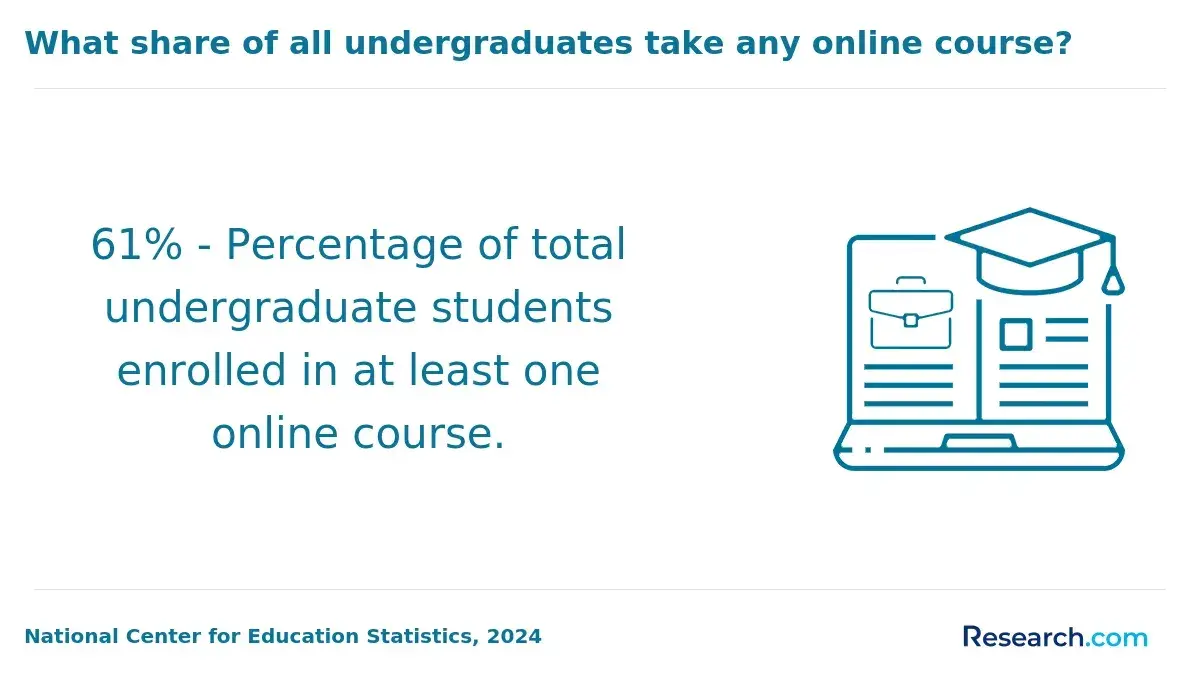
Competency-based bachelor's degrees are most often offered online, but formats vary. Some are fully online, some include in-person labs or clinical placements, and some use hybrid models with scheduled sessions, local fieldwork, or proctored assessments.
Format should be a practical decision, not just a preference. A fully online program may be ideal for a working adult, while a hybrid program may be better for students who need labs, clinical practice, teaching placements, or stronger face-to-face support. Older learners exploring online education more broadly may also find helpful context in guides to open university free courses for over 60s, especially before committing to a full bachelor's program.
The table below shows how common formats differ. Use it to match the program structure to your work schedule, learning style, and field requirements.
| Format | How it usually works | Best for | Potential drawback |
| Fully online | Coursework, assessments, advising, and tutoring are delivered remotely. | Working adults, military learners, parents, and students far from campus. | Requires strong self-management and reliable technology. |
| Hybrid | Most learning is online, but some activities occur on campus or at approved sites. | Students in fields with labs, demonstrations, or applied practice. | Travel and scheduling can reduce flexibility. |
| Online with local fieldwork | Academic work is online, while clinical, teaching, or practicum hours happen locally. | Nursing, education, healthcare, and human services students. | Placement availability can vary by region. |
| Campus-based competency model | Students attend campus but progress through mastery-based assessments. | Learners who want structure while still using competency-based pacing. | Less common and often less flexible than online options. |
What majors and specializations are most commonly offered as competency-based bachelor's degrees?
The most common competency-based bachelor's majors are in fields where learning outcomes can be measured through projects, workplace simulations, certification-aligned assessments, or professional portfolios. Business and technology programs are especially common because many students enter with prior work experience.
Students should choose a major by starting with the target role, not the fastest degree title. A short path only helps if the curriculum builds the competencies employers, graduate schools, or licensing boards expect.
The table below summarizes common majors and the decisions students should make before enrolling.
| Major area | Common specializations | Good fit for | Question to ask before enrolling |
| Business | Management, accounting, marketing, human resources, operations | Supervisors, entrepreneurs, military leaders, administrative professionals | Does the curriculum match my target role or certification path? |
| Healthcare | Healthcare administration, health information, public health, leadership | Allied health workers, medical office staff, healthcare supervisors | Is this administrative, clinical, or licensure-focused? |
| Technology | IT, cloud, cybersecurity, software development, data analytics | Technical support staff, career changers, certification holders | Are labs, certifications, and portfolio projects included? |
| Public service | Criminal justice, public administration, emergency management | Law enforcement, corrections, military, security professionals | Does advancement in my agency require a specific degree or training? |
| Human services | Psychology, social services, behavioral science | Case aides, nonprofit workers, students planning graduate study | Will I need a master's degree or license for my intended role? |
| Education | Elementary education, special education, early childhood, instructional studies | Paraprofessionals, substitute teachers, childcare professionals | Does the program meet my state's teacher licensure requirements? |
What courses, competencies, and learning outcomes do competency-based bachelor's programs typically include?
Competency-based programs still cover general education, major requirements, and upper-division coursework. The difference is that learning is organized around measurable outcomes, such as writing a data-supported business recommendation, configuring a secure network, analyzing a case study, or designing an instructional plan.
Most programs combine broad academic competencies with field-specific outcomes. The following areas are worth reviewing in the curriculum because they affect both graduation readiness and career usefulness.
- General education competencies such as written communication, quantitative reasoning, critical thinking, ethics, social science, humanities, and information literacy.
- Major competencies such as accounting analysis, healthcare compliance, systems administration, software design, psychological research methods, or classroom assessment.
- Applied assessments such as case studies, capstone projects, portfolios, lab simulations, business plans, data reports, and professional presentations.
- Career-ready skills such as collaboration, problem-solving, documentation, project management, digital literacy, and responsible use of AI tools.
AI is increasingly relevant across majors, but it should not replace core learning. Strong programs teach students how to evaluate AI-generated output, protect data, cite sources, avoid bias, and use automation responsibly in professional settings.
What are the typical admission requirements for competency-based bachelor's degree programs?
Admission requirements vary by school, but competency-based bachelor's programs often target adult learners who are ready for independent study. Some programs accept first-year students, while others are designed for transfer students who already have college credits or an associate degree.
Before applying, gather documentation early. Delays in transcripts, military records, certification verification, or foreign credential evaluation can slow down your transfer review and make the program seem less affordable than expected.
- High school diploma, GED, or equivalent credential for bachelor's admission.
- Official transcripts from all colleges previously attended, even if grades were low or credits seem unrelated.
- Minimum GPA or transfer-credit threshold, depending on the school and major.
- Proof of an active license for some completion programs, such as RN-to-BSN pathways.
- Technology readiness, including reliable internet, webcam access for proctoring, and basic software skills.
- English proficiency documentation for applicants whose prior education was not completed in English.
A common mistake is enrolling before receiving a formal transfer-credit evaluation. Ask for a written estimate showing exactly which requirements are satisfied and which competencies remain, because this has a direct impact on both timeline and cost.
How long do competency-based bachelor's programs take and how much do they cost?
Competency-based bachelor's programs can take less time than traditional programs when students bring substantial transfer credit and move quickly through assessments. However, they are not automatically faster. Students who work full time, struggle with self-paced learning, or need prerequisite support may take a more traditional amount of time.
Cost is equally variable. College Board's 2024 report placed average published tuition and fees for in-state public four-year colleges at $11,610 for the academic year, which gives students a useful benchmark when comparing competency-based pricing. If a school charges by subscription term, the total cost depends on how many competencies you complete per term.
The table below summarizes common cost drivers. Use it to compare total price, not just advertised tuition.
| Cost factor | Why it matters | What to ask |
| Tuition model | Per-term pricing rewards faster progress, while per-credit pricing is more predictable. | Is tuition charged per credit, per course, or per subscription term? |
| Transfer credits | Accepted credits can reduce the number of competencies required. | Which credits apply to my degree plan, not just elective credit? |
| Fees | Technology, assessment, graduation, lab, or proctoring fees can change the real price. | Can I see a complete fee schedule before enrolling? |
| Books and materials | Some programs include digital materials, while others bill separately. | Are textbooks, labs, software, and certification vouchers included? |
| Pace | Taking extra terms can reduce or eliminate expected savings. | What completion pace is realistic for students working full time? |
| Financial aid | Federal aid eligibility may depend on enrollment status and satisfactory academic progress. | How is aid disbursed in this competency-based model? |
Students planning beyond the bachelor's level should think about the full education pathway. If your career goal eventually requires graduate school, compare bachelor's costs with later options such as affordable online master's programs so you do not overinvest at one stage and underbudget for the next.
What careers, industries, and job roles can competency-based bachelor's graduates pursue?
Graduates can pursue many of the same roles as traditional bachelor's graduates, provided the degree is accredited and aligned with the target occupation. The best outcomes usually occur when students combine the degree with experience, internships, certifications, portfolios, licensure, or employer-recognized skills.
Use the table below as a career-matching tool. It connects common competency-based majors to industries and responsibilities rather than treating the degree title as a stand-alone career plan.
| Degree area | Common industries | Possible roles | Typical responsibilities |
| Business | Finance, retail, logistics, healthcare, technology, manufacturing | Operations coordinator, account manager, HR specialist, business analyst | Analyze performance, coordinate teams, manage processes, support decision-making. |
| Healthcare administration | Hospitals, clinics, insurance, long-term care, health technology | Practice manager, quality coordinator, health services supervisor | Oversee operations, compliance, scheduling, budgets, and patient-service workflows. |
| Information technology | Cloud services, education, government, healthcare, managed services | Systems administrator, network specialist, cloud support associate | Maintain systems, troubleshoot infrastructure, document changes, support security controls. |
| Computer science | Software, finance, cybersecurity, e-commerce, data services | Software developer, QA analyst, data associate, application support specialist | Build, test, document, and improve software or data systems. |
| Cybersecurity | Government, finance, defense contractors, healthcare, technology | Security analyst, risk analyst, SOC analyst, compliance specialist | Monitor threats, assess risk, respond to incidents, and support security policies. |
| Education | Public schools, private schools, childcare, education technology | Teacher, instructional assistant, curriculum support specialist | Plan instruction, assess learning, support students, and meet state standards. |
Some graduates later pursue advanced credentials when they want leadership, licensure, research, or faculty roles. If doctoral study is part of a long-term plan, researching a cheap online doctorate degree early can help you understand how undergraduate choices affect future admission, cost, and specialization options.
How do competency-based bachelor's degrees impact salary potential and long-term job outlook?
A competency-based bachelor's degree can improve salary potential when it helps a student qualify for roles that require or prefer a bachelor's credential. However, salary depends on field, location, employer, experience, certifications, licensure, and the strength of the student's portfolio or work history.
BLS May 2024 wage data shows why major choice matters. Information security analysts had a median annual wage of $124,910, while accountants and auditors had a median annual wage of $81,680. Those figures do not predict an individual graduate's salary, but they show that degree field and occupation can affect return on investment as much as tuition price.
The table below compares salary and outlook considerations for several common pathways. Use it as a starting point, then research your local labor market and target employers.
| Career area | Relevant bachelor's path | Salary and outlook context | ROI note |
| Technology | IT, computer science, cybersecurity, data analytics | BLS reports strong pay levels across many computer and IT occupations, with demand influenced by cloud, AI, data, and security needs. | ROI improves when students graduate with labs, certifications, projects, and experience. |
| Healthcare management | Healthcare administration, health information, nursing leadership | Healthcare employers often value both degree completion and industry experience. | Working healthcare professionals may benefit most because they can connect coursework to advancement. |
| Business operations | Business administration, management, accounting, HR | Business roles vary widely by industry and seniority. | Choose concentrations and projects that match a specific role rather than a broad title only. |
| Education | Teacher preparation, special education, early childhood | Pay and hiring are shaped by state salary schedules, licensure rules, and district needs. | Licensure alignment matters more than speed if your goal is classroom teaching. |
| Public service | Criminal justice, public administration, emergency management | Advancement may depend on agency policy, exams, rank, seniority, and background requirements. | The degree may help most when paired with field experience and leadership training. |
To evaluate ROI, compare total program cost with realistic career changes. A degree is more likely to be worth it when it removes a promotion barrier, qualifies you for a clearly defined role, or prepares you for a licensed or credentialed pathway. It is less compelling when the school cannot explain outcomes, the program does not match your state requirements, or the faster timeline depends on an unrealistic study pace.
Other Things You Should Know About
They can be respected when they come from an accredited institution and align with the job's skill requirements. Employers usually care most about accreditation, relevant experience, portfolios, certifications, and whether the degree meets role-specific requirements.
Some students with extensive transfer credit and strong prior knowledge may finish quickly, but one-year completion is not realistic for everyone. Ask for a written degree plan and estimate your weekly study time before relying on an accelerated timeline.
Many accredited competency-based programs qualify for federal financial aid, but aid rules depend on the school's model, enrollment status, and satisfactory academic progress standards. Confirm aid eligibility directly with the financial aid office.
Competency-based bachelor's degree programs commonly offer subjects like Business Administration, Information Technology, Nursing, and Education. Each subject focuses on mastering specific competencies, allowing students to progress based on their skill development rather than time spent in class.
References
- How do Competency-Based Education Programs Structure their Tuition Models? - C-BEN https://www.c-ben.org/how-do-competency-based-education-programs-structure-tuition-models/
- Competency-based education (CBE): A landscape overview https://feedbackfruits.com/blog/competency-based-education-higher-education-a-landscape-overview
- What is Competency-Based Education (CBE)? | University of Phoenix https://www.phoenix.edu/blog/what-is-competency-based-education-and-how-does-it-work.html
- What is Competency-Based Education (CBE) and How Does it Work Online? https://www.onlineeducation.com/features/cbe-competency-based-education-online
- College grads with work-based learning more likely to land jobs—but see mixed results on earnings https://workshift.org/college-grads-who-took-work-based-courses-more-likely-to-land-jobs-but-see-mixed-results-on-earnings/
- Examples of Competency-Based Education (CBE) Adoption https://envision.everspringpartners.com/plan/examples-of-cbe-adoption
- Competency-based Degree Programs in Higher Education https://www.tuw.edu/school-news/competency-based-degree-programs/
- Competency-Based Education | East Texas A&M https://www.etamu.edu/cbe/nav/
- How to Choose a Competency-Based Degree Program https://www.straighterline.com/blog/10-questions-to-choose-a-competency-based-degree-program