
2027 Mobile App Development Degree vs. Certificate: Which Should You Choose?

Co-Founder and Chief Data Scientist
Today's students and professionals face important decisions when choosing between earning a degree or a certificate in mobile app development. Both options offer valuable skills to advance careers, yet they differ in depth, duration, and cost. Degrees typically provide a comprehensive education over several years, while certificates focus on specific technical skills in a shorter timeframe.
Each path suits different goals: degrees often lead to broader job opportunities and higher salaries, while certificates can quickly boost specialized expertise. With the mobile app market expected to grow significantly, understanding these distinctions helps learners select the option that aligns best with their career ambitions and lifestyle.
Key Points About Mobile App Development Degree vs. Certificate Programs
- Degree programs offer comprehensive, in-depth knowledge, increasing long-term salary potential by up to 20% compared to certificates, which focus on specific skills for quicker employment.
- Certificates provide flexible, shorter timelines suited for skill upgrades, while degrees enhance professional growth with broader computer science foundations and networking opportunities.
- Choosing depends on career goals: degrees favor leadership roles, whereas certificates suit immediate technical proficiency and specialization in mobile app development frameworks.
What Are the Differences Between Mobile App Development Degree and Certificate Programs?
Both a degree and a certificate in mobile app development can open doors to rewarding careers, but they vary significantly in structure, depth, and time commitment. Understanding these distinctions can help prospective students choose the right educational path aligned with their professional goals and schedules.
Here are key differences between mobile app development degree programs and certificate courses:
- Career Advancement: Degrees generally provide a comprehensive foundation suitable for those seeking long-term career growth and leadership roles. Certificates focus on practical skills, ideal for individuals aiming to quickly enter the workforce or switch fields.
- Depth of Learning: Degree programs cover broader computer science and programming principles, offering a deep understanding of the discipline. Certificates concentrate on core app development techniques, which suit learners wanting targeted, hands-on training.
- Time and Commitment: Degrees usually require a longer time investment, making them suitable for full-time students or those preparing for extensive careers. Certificates are shorter and more flexible, benefiting working professionals or those needing to upskill rapidly.
- Cost and Resources: Degree programs often involve higher costs and access to more academic resources, while certificates tend to be more affordable and focused, allowing learners to gain skills without extensive financial or time burdens.
How Long Does It Take to Complete a Mobile App Development Degree vs. a Certificate Program?
Completion time is a crucial factor for students deciding between a mobile app development degree and a certificate program. Understanding the typical duration and flexibility of each option helps in choosing the best path aligned with career goals and personal commitments.
- Typical Duration: An associate degree or related bachelor's degree in mobile app development generally takes two to four years of full-time study, with part-time students sometimes needing four to eight years. In contrast, the duration of a mobile app development certificate program usually ranges from one to six months full-time, with some advanced certificates extending to 18 months.
- Flexibility: Certificate programs often provide more pacing flexibility, including evening and online classes, making them suitable for working professionals. Degrees may allow part-time enrollment but tend to require a longer, more consistent commitment to coursework and general education requirements.
- Factors Affecting Timeline: The time to complete a mobile app development degree can be shortened by prior experience and transfer credits, while certificates may waive prerequisites for those already experienced. The intensity of study-full-time versus part-time-also influences completion speed for both options.
Choosing between these pathways depends largely on how quickly a student wants to enter the workforce and their education background. For those seeking accelerated learning, exploring options for fast degrees may also prove beneficial.
Can You Complete a Mobile App Development Degree or Certificate Entirely Online?
The rapid growth of online education has made it possible to pursue a mobile app development degree or certificate entirely online through many accredited U.S. institutions. Various fully remote options are available, including bachelor's, master's, and associate degree programs, as well as shorter certificate tracks.
For example, Arkansas State University offers a Bachelor of Science in Digital Technology & Design - Mobile App Development that is 100% online with no campus visits required. These programs focus on essential skills such as Swift programming, Xcode, and UX/UI design.
Many master's degrees in mobile development are also delivered asynchronously, allowing students to study on their own schedules. Prospective students searching for an online mobile app development degree programs can find multiple options that fit their needs.
Most online mobile app development certificate online programs and degrees emphasize hands-on, project-based learning virtually and often culminate in a capstone project or portfolio rather than requiring in-person internships or licensure.
Optional local internships may be available for real-world experience. Shorter certificates are ideal for those seeking quick workforce entry, while full degrees serve those desiring broader credentials. When deciding between a degree or certificate, review program structures and support services to ensure the online format aligns with your goals.
For additional insight on accessible academic routes, consider the easiest PhD to get online as a model of how flexible degree programs can be structured.
Admission requirements are an important factor when choosing between a mobile app development degree or certificate program, as they determine how quickly you can begin your training and the level of academic preparation needed.
Understanding these differences can help you select a program that fits your background and career goals. Below is a side-by-side comparison of admission requirements for both options.
Admission Requirements for Mobile App Development Degree Programs
- Educational Background: Most degree programs require a high school diploma or equivalent, such as a GED.
- Standardized Test Scores: Some programs request ACT or SAT scores, especially for recent high school graduates. For example, Arkansas State University requires a minimum ACT super score of 19 or SAT combined score of 990, or a 3.0 high school GPA, or top 20% class rank for applicants with fewer than 13 transferable college credits.
- Placement Testing: Community colleges and technical schools typically require placement tests in English and math to assess readiness for required courses.
- Transcripts: Official high school and/or college transcripts must be submitted during the application process.
- GPA Requirements: Transfer students usually need a minimum college GPA, commonly around 2.0, to qualify for admission.
- Prerequisite Coursework: Some programs recommend or require prior classes in mathematics or computer science, particularly for advanced standing.
Admission Requirements for Mobile App Development Certificate Programs
- Educational Background: Certificate programs tend to have more flexible requirements, often only requiring a high school diploma or equivalent, though some may admit students without one.
- Placement or Basic Skills Assessment: Many certificate programs require a basic skills assessment or placement test, but these are generally less rigorous than degree program requirements.
- Transcripts: Submission of prior transcripts is usually optional but can assist with placement decisions or waiving prerequisites.
- No Minimum GPA: Unlike degree programs, certificate programs seldom require a minimum GPA for admission.
- No Standardized Test Scores: ACT, SAT, or other standardized test scores typically are not required for certificate program admission.
Because certificate programs typically have fewer barriers to entry, they are often chosen by individuals seeking quicker credentials or career changes. Those interested in more comprehensive academic preparation and long-term career options might prefer degree programs with more rigorous mobile app development degree admission requirements.
For students looking for affordable options, exploring cheapest online associate programs can be a helpful resource.
Knowing how many credit hours are required for mobile app development programs helps students effectively schedule their studies and understand the time commitment involved. This clarity is key when deciding between pursuing a degree or a certificate.
Here's a straightforward comparison of the typical credit requirements for each path:
- Degree programs: These usually range from about 60 credits for associate degrees to around 120 credits for bachelor's degrees. The coursework covers general education, major-specific classes, and electives, offering a broad and thorough education.
- Certificate programs: Designed to be completed quicker, these require between 12 and 30 credits, focusing on specialized skills in mobile app development or related IT areas.
A student I spoke with, currently enrolled in a mobile app development certificate program, shared his experience navigating this choice. He mentioned, "I wanted to upskill without the heavy time load a degree demands."
The lighter credit requirement allowed him to balance classes with a full-time job, though he noted the accelerated pace required intense focus and quick learning. He found the program's practical approach gave him applicable skills rapidly and appreciated not feeling overwhelmed by extensive general education courses.
Reflecting on his journey, he said, "Choosing the certificate felt like the right fit for my career timeline and personal life."
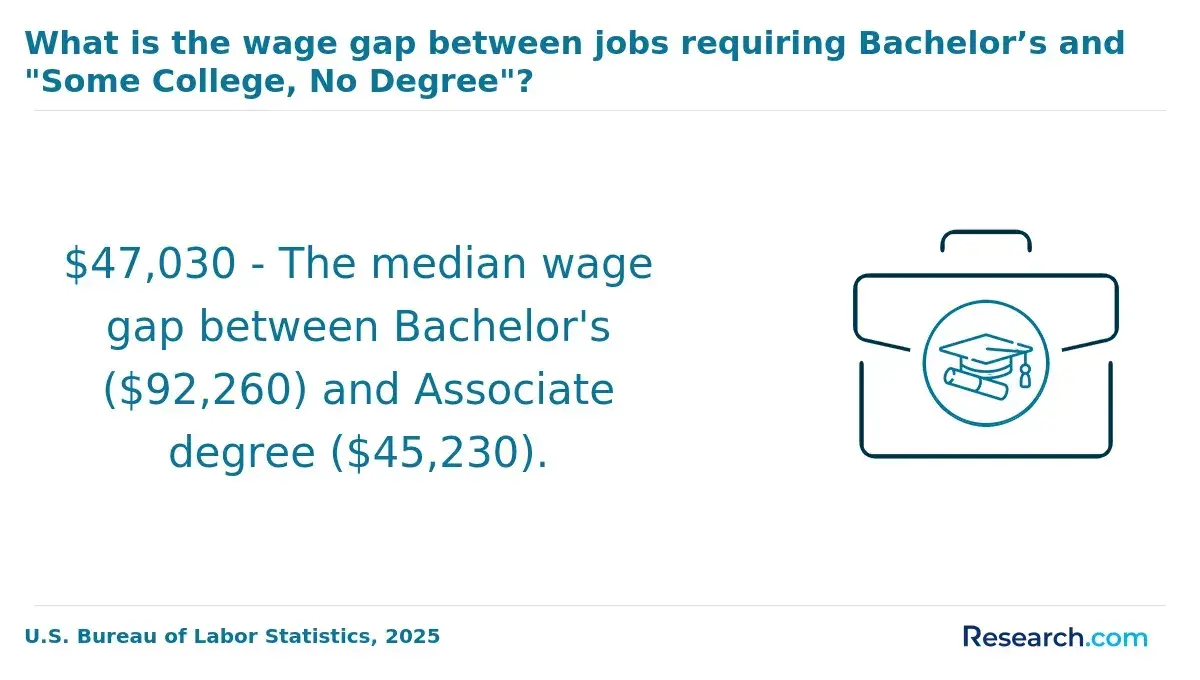
Tuition costs are a crucial factor when deciding between a degree and a certificate in mobile app development, as they directly affect your investment and future earnings potential. Understanding these costs can help you select the option that best fits your career goals and budget.
Below is a comparison of the average tuition ranges for each educational path.
Average Tuition for Mobile App Development Degree Programs
- Tuition Range: Bachelor's degree programs in mobile app development or related fields typically cost between $6,000 to over $55,000 per year, depending largely on the type of institution.
- Public vs. Private Schools: Public universities often charge between $6,000 and $12,000 per year for in-state students, while private schools can exceed $50,000 annually.
- Online vs. On-Campus: Some online degree programs offer competitive tuition around $10,000-$12,000 for the full degree, sometimes with uniform rates for all U.S. residents.
- Associate Degrees: Two-year associate degrees generally cost about $11,000 in total tuition and fees, making them a more affordable but shorter degree option.
- Additional Costs: Degree programs may require enrollment fees, textbooks, and specialized equipment that can add several thousand dollars to the total expense.
Average Tuition for Mobile App Development Certificate Programs
- Tuition Range: Mobile app development certificate program tuition usually ranges from $3,000 to $7,000 for the entire program, making certificates a more affordable choice.
- Program Length: Certificates typically take less time to complete, often just a few months to a year, which helps reduce overall costs.
- Institution Type: Community and technical colleges tend to offer the most affordable tuition, while private coding bootcamps may have higher fees.
- Online vs. In-Person: Many certificates are available online, lowering costs related to travel and campus fees.
- Additional Costs: Certificate students might pay for software licenses or exam fees, but these expenses are usually modest compared to degree programs.
Comparing the average cost of a mobile app development degree with mobile app development certificate program tuition reveals significant differences in both time and financial commitment.
For students seeking affordable options, exploring accredited US colleges online with no application fee might offer additional savings and flexibility.
You can often transfer certificate credits toward a mobile app development degree, but this depends largely on the institution's policies. Transferability usually hinges on whether the certificate program is accredited and how well its courses align with the requirements of the degree program.
Many schools have specific guidelines on accepting certificate credits, with some allowing a substantial portion—up to around 75% in certain cases—to apply to a bachelor's degree.
However, this is not guaranteed and varies widely, so not all credits will necessarily count toward the degree. Relevance of coursework is a critical factor in whether credits transfer successfully.
Key considerations when planning to transfer certificate credits include limits on the number of credits allowed, which may range roughly from 15 to 33. Additionally, many schools require that transferred credits meet a minimum grade standard, often a 'C' or better.
It is vital to check with academic advisors or the registrar's office before enrolling in a certificate program to confirm whether those credits will apply toward your degree. Proactively verifying transfer policies helps ensure you maximize your educational investment and avoid surprises later.
When I spoke with a student who completed a mobile app development certificate program before pursuing her degree, she shared that initially, she wasn't certain how many credits would count toward her bachelor's.
"I felt nervous about possibly losing time and money," she explained.
However, after consulting with the university's academic advisor and reviewing course syllabi, she discovered that a significant portion of her certificate credits transferred, accelerating her degree progress. She recalled the process as both reassuring and motivating, emphasizing the importance of early communication with the institution.
Her experience highlights how understanding credit transfer policies can empower students navigating their educational paths.
Certificate programs in mobile app development are not accredited in the same manner as degree programs. Mobile app development degrees, like associate or bachelor's degrees, are generally offered by colleges or universities that have institutional accreditation from recognized agencies such as the New England Commission of Higher Education or the Middle States Commission on Higher Education.
This accreditation ensures that both the institution and its degree programs meet strict academic standards and qualify for federal financial aid. On the other hand, certificate programs vary significantly in accreditation status.
Some certificates provided by accredited universities benefit from their institution's accreditation, but many offered by private companies or online platforms lack formal regional or national accreditation and rely more on industry reputation or employer recognition.
Accreditation plays a crucial role in validating the quality of education, facilitating credit transfers, and enhancing employer acceptance of credentials. Accredited programs are more likely to offer updated coursework and qualified instructors, making them preferable for students seeking recognized credentials.
When evaluating programs, students should verify that degree programs come from regionally or nationally accredited institutions, while certificate seekers should check for affiliation with accredited schools or endorsement by reputable industry organizations.
It is essential to confirm accreditation through recognized accrediting bodies before enrolling to ensure the program aligns with career goals and educational standards.
Both mobile app development degrees and certificates can provide pathways to careers in technology, but they typically prepare graduates for different levels and scopes of work. Understanding the distinct job opportunities tied to each credential can help you decide which aligns best with your career goals.
Below is a comparison of roles commonly available to holders of each credential.
Jobs you can get with a mobile app development degree
- Mobile app developer: Designs and builds complex applications across various platforms, often collaborating with teams to create user-friendly software.
- Software engineer: Develops, tests, and maintains software systems, ensuring efficient and scalable solutions in diverse environments.
- Application architect: Plans software structure and integration, overseeing technical standards to meet project goals.
- Project manager: Coordinates development projects, manages timelines, resources, and communication among stakeholders.
- UI/UX designer: Focuses on user interface and experience design to enhance app usability and appeal, typically working alongside developers.
Jobs you can get with a mobile app development certificate
- Mobile app developer (entry-level): Implements basic app features and assists senior developers in building functional applications.
- Junior programmer: Writes and debugs code under supervision while gaining hands-on experience in software projects.
- Software quality assurance technician: Conducts tests to identify bugs and ensures applications meet quality standards.
- Web or mobile application tester: Performs routine evaluations of apps to verify performance and usability before release.
Salary potential often differs significantly between mobile app development certificate holders and degree graduates, reflecting the varying depth of education and industry recognition. Understanding these variations is key for those deciding which path to pursue.
Below is a side-by-side overview comparing the average starting salary for mobile app development certificate holders versus entry-level mobile app development degree salary in the United States, along with important factors that influence these earnings and career outlooks.
- Typical Salary Range: Mobile app development certificate graduates usually start between $65,000 and $80,000 annually, while those holding a degree often command higher starting salaries from $80,000 to $95,000.
- Experience: Prior hands-on projects, internships, or relevant professional backgrounds can significantly boost starting pay for both certificate and degree holders, emphasizing practical skills alongside formal credentials.
- Industry Demand: Geographic locations and sectors like finance, healthcare, or major tech hubs-such as San Francisco or New York-offer higher salaries due to the increasing importance of mobile applications.
- Portfolio Strength: Demonstrable work like published apps or contributions to open-source projects especially enhances earning potential for certificate holders by showcasing applied expertise.
- Career Outlook: While degrees generally provide a higher average salary and better long-term growth, certificates offer a faster, more flexible entry point for those with prior experience, fitting diverse career trajectories.
- Additional Resources: For more on salary trends relevant to vocational paths, see trade school jobs salary discussion.
Here's What Graduates of Mobile App Development Programs Say About Their Degree or Certificate
- Timothy: "Pursuing the mobile app development certificate allowed me to quickly gain essential skills without committing to a lengthy program. The focused pace made it easier to balance learning with my job, and the lower cost was definitely a plus compared to degree programs, which can average much higher tuition. While it didn't provide the deep theoretical background a degree offers, it jump-started my career effectively and efficiently."
- Emilio: "The mobile app development degree program was a substantial commitment, both in time and cost, but it provided a comprehensive learning experience I believe is invaluable. The pace was steady but thorough, giving me a solid foundation in both development and software principles. In retrospect, the degree has opened more doors professionally and offered long-term benefits despite the higher expense compared to certificate options."
- Xavier: "Completing both the certificate and degree in mobile app development gave me a unique perspective on their respective advantages. The certificate was excellent for quickly acquiring hands-on skills, while the degree provided a deeper, more structured education that boosted my confidence in complex projects. Considering the cost difference, I found investing in the degree worthwhile for career growth, but starting with the certificate was a great way to test the waters."
Other Things You Should Know About Mobile App Development Degrees
Employers often regard mobile app development degrees as more comprehensive because they cover a wider range of technical and theoretical skills.
Certificates are seen as proof of targeted, practical training but may not demonstrate the same depth of knowledge or commitment as a degree. However, certificates can be valuable for entry-level positions or for professionals seeking to update specific skills quickly.
Degree programs frequently include or strongly encourage internships, co-op opportunities, or capstone projects that provide hands-on experience.
Certificate programs, especially shorter ones, may offer practical labs or project work but are less likely to offer formal internship placements. Practical experience is crucial in mobile app development to build a strong portfolio for job applications.
Some colleges and universities allow credits from mobile app development certificate programs to be transferred toward a degree, but policies vary widely.
It depends on the institution and whether the certificate courses align with the degree curriculum. Students should verify transferability before enrolling if they plan to pursue further education.
Many certificate programs end with a capstone project instead of a proctored final exam. Short programs may require 12 to 30 credit hours, while longer stackable certificates can include a portfolio review or app demo judged by faculty or an industry panel.
- Best Certifications for Mobile App Developers in 2025 (Ranked) https://www.tealhq.com/certifications/mobile-app-developer
- How to Become a Mobile App Developer https://www.cbtnuggets.com/how-to-become/mobile-app-developer-career
- Mobile Application Development (Co-op) https://www.fanshawec.ca/programs/map2-mobile-application-development/next
- Certificate vs. Diploma vs. Degree: What They Are & How They Differ https://potomac.edu/certificate-vs-diploma-vs-degree/
- Mobile Application Development Proficiency Certificate https://www.ccp.edu/degree-programs/mobile-application-development-proficiency-certificate
- Mobile App Development Degree: A Guide https://careerkarma.com/blog/mobile-app-development-degree/
- The Benefits of Earning a Degree in Mobile App Development https://www.baker.edu/about/get-to-know-us/blog/benefits-of-earning-a-degree-in-mobile-app-development/
- Certificate Program vs Degree: Which Credential Best Fits Your 2025 Goals? https://www.verifyed.io/blog/certificate-program-vs-degree
- Android Development Careers: College Degree vs. Real-World Skills https://www.test-king.com/blog/android-development-careers-college-degree-vs-real-world-skills/
- Mobile App Development and Computer Programming Graduate Certificate https://catalog.fontbonne.edu/preview_program.php


