2027 LPN-to-RN Bridge Programs in Florida: Admission, Schedules, and Campus Requirements
Audited and Verified:
Our Editorial and Data Verification Process
Research.com uses government datasets, official education statistics and primary institutional information to support its career and degree guides. Our review process checks factual accuracy, occupational definitions, source dates and the requirements associated with the credentials discussed.
How This Article Was Fact-Checked
Our editorial team verifies salary estimates, employment projections, education requirements and program information against original data providers and official organizations. Salary figures are checked against the relevant occupational definitions and reporting periods. Information about licensure, accreditation and required in-person training is reviewed separately.
Fact-checked and verified on:

Co-Founder and Chief Data Scientist
For a working Florida LPN, the shortest advertised bridge may not be the quickest route to an RN license. Prerequisite courses, limited nursing seats, clinical assignments, and required campus visits can all change the timeline. This guide explains how LPN-to-RN programs differ in admission, scheduling, training, and cost—and what to confirm before committing. You'll be able to compare programs against your existing coursework, work schedule, and ability to attend clinical placements, rather than relying on a program's headline length or "online" label.
Key Things You Should Know
- Florida LPN-to-RN bridges generally lead to an associate nursing degree and prepare graduates to seek RN licensure; an LPN license alone does not substitute for the program or the NCLEX-RN.
- Plan around three separate schedules: prerequisites, sequenced nursing courses, and assigned in-person clinical or simulation sessions. Online lectures do not eliminate attendance requirements.
- Before applying, obtain a written review of LPN advanced standing and a term-by-term plan. The advertised nursing sequence may exclude prerequisites, wait time for a seat, and clinical-related costs.
What is an LPN-to-RN bridge program in Florida?
An LPN-to-RN bridge is a prelicensure RN program designed for licensed practical nurses. It builds on prior practical-nursing education while requiring the additional coursework and supervised practice needed for the program's RN-level award, commonly an associate degree in nursing. Schools may call the track LPN-to-ADN, LPN-to-ASN, or an advanced-placement option within an associate nursing program.
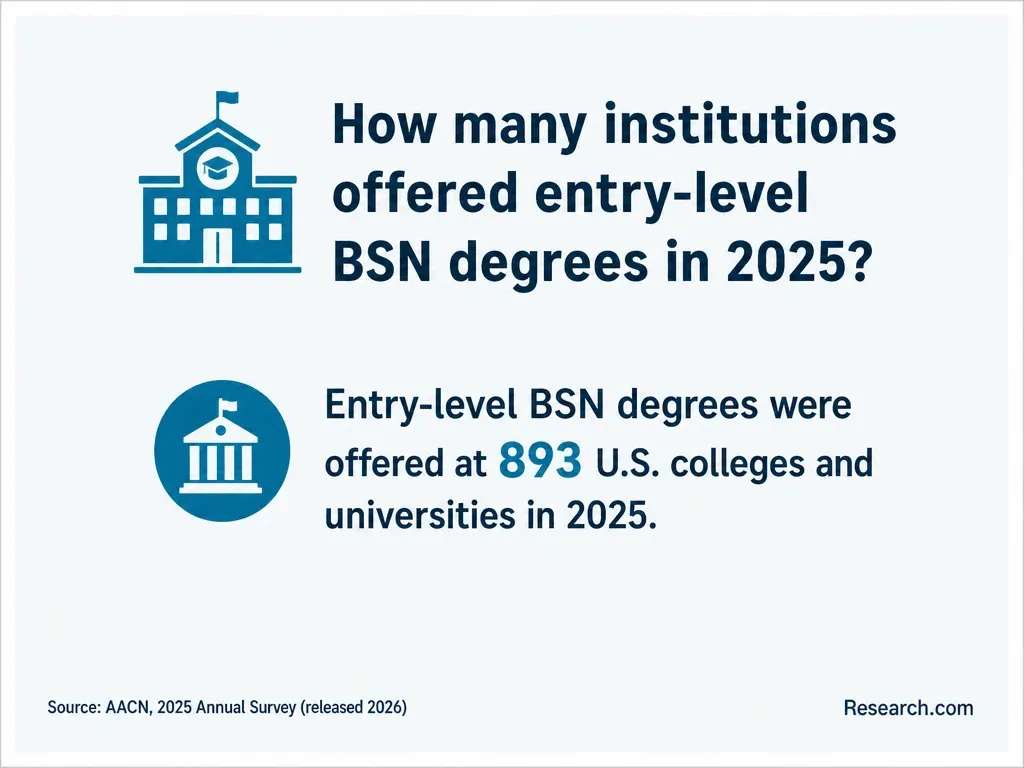
Advanced standing is not automatic. A school may require a transition course, competency assessment, or review of prior coursework before assigning a student to a particular point in its nursing sequence. The written degree audit—not the word "bridge"—shows which requirements remain. An LPN seeking initial RN licensure should also distinguish this route from postlicensure RN-to-BSN study. Broader entry-level nursing degree comparisons address different starting credentials and should not be mistaken for LPN-specific advanced standing.
What are the admission requirements for Florida LPN-to-RN programs?
Expect separate decisions about admission to the college and admission to its nursing bridge. The latter may be competitive even if the institution admits you. Requirements vary by school and entry term, so check the current bridge application rather than the college's general nursing page.
The following documents and conditions commonly affect whether an LPN can enter the intended cohort:
- An active, acceptable LPN license and transcripts from practical nursing and prior college study.
- Specified general-education and science courses, potentially with minimum grades, laboratory requirements, or course-age limits.
- A required entrance test, transition assessment, or documented nursing work experience, if that school uses one.
- Clinical clearance items such as a background check, immunization documentation, and site-specific requirements, which may be due after academic selection.
Ask when prerequisites must be complete, whether the LPN license must remain active through graduation, and how applicants are ranked if seats are limited. Do not assume every school requires TEAS or HESI: comparing nursing admission test policies can help frame that question, but the specific Florida bridge's published policy controls.
How do Florida LPN-to-RN bridge programs lead to RN licensure?
The bridge supplies education toward RN examination eligibility; it does not convert an LPN license into an RN license. A graduate must meet the Florida Board of Nursing's applicable licensure requirements, complete the examination application process, pass the NCLEX-RN, and receive an RN license before practicing as an RN.
Confirm that the specific RN program and campus or delivery location have the approval status needed for the intended licensure route. Ask the program how it documents graduates' eligibility and check the board's current instructions before applying. An aspirant may later consider associate-degree RN to MSN options, but those postlicensure programs do not replace the initial RN education, examination, or licensing process.
Delivery labels describe coursework, not the whole week. A campus program may put lectures, skills instruction, and testing on site. A hybrid program may move some theory online while retaining scheduled labs, examinations, simulation, and clinical placements. Ask whether online classes are asynchronous or require attendance at set times.
Do not treat "online" as "complete from home." RN prelicensure education includes supervised clinical preparation, and the school determines approved sites and attendance expectations. This differs from postlicensure online RN-to-BSN clinical requirement comparisons, which concern students who already hold an RN license. If a bridge advertises remote study, request its campus-visit calendar and clinical-location policy before paying a deposit.
Bridge curricula typically move beyond the LPN role into RN-level assessment, clinical judgment, care coordination, prioritization, and care of patients with more complex needs. A transition course may precede adult-health, maternal-child, mental-health, or other nursing courses; the actual sequence depends on the school. Laboratory practice and simulation support learning, while faculty-approved supervised clinical experiences provide assessed patient-care preparation.
Working as an LPN can make clinical situations familiar, but employment hours do not automatically replace assigned RN-program clinical experiences. Ask which clinical rotations are required, who arranges sites, and whether your current workplace can ever be approved. This distinction also matters much later in advanced practice: comparing post-master's FNP study options involves different prerequisites and supervised preparation, not a substitute for the RN bridge.
A bridge's published length often measures only its nursing-course sequence. For planning, separate the time needed to finish prerequisites, wait for an available entry cohort, complete sequenced nursing courses, and finish graduation and licensure steps. Depending on advanced standing and course availability, the nursing portion may span roughly one to two academic years; that is a planning range, not a promise from any Florida school.
Request a term-by-term plan showing the earliest realistic graduation date for your transcript. Check whether courses run every term and what happens if a required clinical cannot be scheduled. Advertisements for short-format DNP degree programs address a later educational stage and are not useful benchmarks for prelicensure bridge length.
For an employed LPN, the decisive issue is often the least flexible required activity, not the number of online credits. Clinical days may be assigned according to site capacity, and labs, simulation, testing, or orientation may have fixed attendance times. Evening classes do not guarantee evening clinicals.
Before accepting a seat, request answers to these scheduling questions:
- Which dates and weekly time blocks require campus attendance, live online participation, or travel to a clinical site?
- How far from campus may placements be, and can students request or decline a particular shift or site?
- How much notice is given for clinical assignments, and what are the makeup and absence rules?
- Can an LPN work a regular schedule during clinical terms, and what happens if a course must be repeated?
Share the answers with an employer or caregiver before committing. Comparisons of time-efficient PMHNP certificate pathways concern already-licensed nurses pursuing later specialty education; they should not be used to infer that a Florida prelicensure bridge offers similarly flexible clinical scheduling.
There is no reliable single statewide bridge price. Tuition depends on the institution, residency classification, chargeable credits, and how much prior coursework actually applies to the degree. A quote for nursing courses alone can understate the amount an LPN must pay.
Ask for an itemized estimate covering remaining prerequisites and nursing credits; institutional, laboratory, and technology fees; books and equipment; clinical-clearance costs; transportation or parking; and examination and licensure expenses. Add the household cost of work shifts lost to fixed clinical days. Then ask the financial-aid office how enrollment intensity and accepted credit affect aid, and ask an employer whether tuition assistance has repayment conditions. Planning the cost of a BSN-to-MSN transition is a separate, post-RN decision—not a price comparison for this initial licensure route.
Check three different forms of evidence: the institution's accreditation, the specific nursing program's accreditation status and scope, and the program's Florida nursing approval status. They answer different questions; one does not prove the others. Verify details for the campus, track, and entry cohort you would actually attend.
A useful comparison also includes the school's written advanced-standing decision, total remaining credits, cohort start dates, clinical placement responsibility, required travel, and published completion and NCLEX-RN results. For outcomes, look for the reporting year and cohort size rather than relying on an isolated pass-rate claim. Request policies on course repeats and loss of clinical eligibility: a low tuition quote offers little protection if a delayed course adds a term.
Keep the comparison tied to initial RN preparation. Resources about exploring less competitive DNP admissions address graduate admissions, not whether a Florida LPN-to-RN track is approved, accessible, or a good fit.
What careers, salaries, and job outlook follow Florida RN licensure?
RN licensure opens consideration for registered-nurse positions in settings such as hospitals, outpatient services, long-term care, and home health. It does not guarantee a particular unit, schedule, or salary. Employers evaluate the graduate's clinical preparation, prior LPN experience, available orientation, and the demands of the position; specialty units may require substantial supervised onboarding.
For a sound financial comparison, use current registered-nurse wage data for the relevant Florida area alongside actual local job postings, rather than treating a national RN median as a new bridge graduate's offer. Compare the likely pay with the program's total cost and any wages forgone during study. After gaining RN experience, nurses may consider further education—including post-MSN DNP pathways in systems leadership—but an advanced degree is unnecessary for initial RN licensure and does not replace employer-specific competency development.
Other Things You Should Know About Nursing
Not automatically. Practice authority depends on your license status, your primary state of residence, and the other state's rules. Verify whether you qualify for a multistate license or need licensure by endorsement before working across state lines.
No. Maintain your LPN license under its own renewal rules if you intend to keep working as an LPN while enrolled. Ask the school whether a lapse would also affect bridge progression.
Possibly. Disclose the prior enrollment and ask for the school's readmission or transfer policy. Your academic standing, course history, and time away may affect eligibility or placement in the sequence.
They may, but the receiving RN-to-BSN program decides which credits satisfy its requirements. Keep course descriptions and transcripts, and obtain a written evaluation before assuming a future completion timeline.
- Nursing (RN & LPN) | Florida Board of Nursing https://floridasnursing.gov/nurse-rn-lpn/
- Nursing - Licensed Practical Nurse to Associate Degree Nurse https://www.cf.edu/academics/areas-of-study/health-sciences/nursing/nursing-licensed-practical-nurse-to-associate-degree-nurse-bridge/
- Limited & Controlled Access Program Applications | Palm Beach State College https://www.pbsc.edu/admissions/limited-controlled-access-program-applications.php
- Nursing, Associate of Applied Science | Cuyahoga Community College Academic Catalog https://catalog.tri-c.edu/programs/nursing-aas/
- SJR State - Nursing LPN Bridge to ASN https://www.sjrstate.edu/nursing_lpn
- Nursing | ccp.edu https://www.ccp.edu/college-catalog/degree-programs/associate-applied-science-aas/nursing
- Nursing Bridge LPN, A.S. | sfcollege.edu https://www.sfcollege.edu/academics/programs/3313.html
- Test of Essential Academic Skills (TEAS) | Assessments https://valenciacollege.edu/students/assessments/teas.php
- Nursing (LPN-RN Transition), Associate of Science | Broward College Catalog https://catalog.broward.edu/programs-study/nursing-lpn-rn-transition-as/