2027 LPN-to-RN Bridge Programs in Arkansas: Admission, Schedules, and Campus Requirements
Audited and Verified:
Our Editorial and Data Verification Process
Research.com uses government datasets, official education statistics and primary institutional information to support its career and degree guides. Our review process checks factual accuracy, occupational definitions, source dates and the requirements associated with the credentials discussed.
How This Article Was Fact-Checked
Our editorial team verifies salary estimates, employment projections, education requirements and program information against original data providers and official organizations. Salary figures are checked against the relevant occupational definitions and reporting periods. Information about licensure, accreditation and required in-person training is reviewed separately.
Fact-checked and verified on:

Co-Founder and Chief Data Scientist
An Arkansas LPN-to-RN bridge can shorten the route to registered nursing, but the advertised program length may not reflect prerequisites, clinical travel, or time away from work. This guide is for licensed practical nurses comparing Arkansas programs.
It explains what to verify about admission, schedules, campus attendance, costs, and RN licensure - so you can choose a route that fits your existing credits and real weekly availability, not just a catalog description.
Key Things You Should Know
- Most Arkansas LPN-to-RN bridges lead to an associate nursing degree; the time saved depends on how the school applies LPN credit and sequences its remaining courses.
- Online coursework does not eliminate required in-person labs, supervised clinical placements, or potentially fixed daytime attendance.
- Confirm Arkansas State Board of Nursing approval and the exact RN-licensure track before paying a deposit; completing a bridge does not itself grant an RN license.
What are LPN-to-RN bridge programs in Arkansas?
An LPN-to-RN bridge is a prelicensure RN program that recognizes some prior practical-nursing education while preparing students for the broader responsibilities of registered nursing. In Arkansas, an LPN may encounter an associate degree in nursing (ADN or AAS in nursing) with an LPN transition option, advanced placement into an existing RN sequence, or a less common bachelor's-level route. The award and amount of credit depend on the institution.
"Bridge" does not mean that an LPN license converts to an RN license. Students must complete the receiving school's required coursework and clinical education, then meet RN examination and licensing requirements. Nor is an LPN-to-RN program the same as an RN-to-BSN program, which assumes the student is already an RN. After licensure, nurses considering graduate study can separately compare ADN-to-MSN bridge programs; those are not substitutes for initial RN preparation.
What admission requirements do Arkansas LPN-to-RN programs have?
Expect separate decisions about college admission, admission to the nursing track, and eligibility for clinical placement. Schools commonly review an active, acceptable LPN license; practical-nursing transcripts; prerequisite and cumulative grades; and completion of specified anatomy, physiology, microbiology, mathematics, or general-education courses. Entrance testing, minimum work experience, science-course age limits, and application windows vary. A criminal-background review, health documentation, immunizations, or drug screening may also be required for clinical participation.
Ask the nursing department for a written evaluation showing which LPN coursework earns credit, whether a transition course or competency assessment is required, and which prerequisites must be complete before applying rather than before enrollment. Request the next nursing-track deadline, not merely the college's general admission deadline. Advanced-degree admissions are a separate issue: material about understanding barriers to DNP admission does not establish eligibility for an Arkansas prelicensure bridge.
How long do Arkansas LPN-to-RN bridge programs take?
There is no reliable statewide completion time. A bridge may be described in semesters of remaining nursing courses, while prerequisite sciences, general education, a transition course, or a wait for the next clinical cohort add time. Part-time study can extend the calendar further; some programs require courses in a fixed order and offer them only once a year.
For a useful comparison, obtain a term-by-term degree plan based on your transcript. Check the first available start, credit awarded for LPN preparation, clinical-course sequence, and earliest realistic graduation date. Do not compare an associate bridge's prelicensure timeline with online MSN-PMHNP completion timelines: those graduate routes have different entry credentials and clinical objectives.
Delivery may be campus-based or hybrid, with some lectures online. A program advertised as online can still require on-campus testing or skills labs and in-person supervised clinical care at approved sites. Some schools also limit where students may complete clinical work. An out-of-state online program needs additional scrutiny for its authority to enroll Arkansas students, arrange acceptable clinical experiences, and prepare graduates for Arkansas RN licensure.
Before choosing by format, request the required campus dates, clinical-site geography, and whether online classes are live or asynchronous. "Online" describes how some instruction is delivered - not permission to complete clinicals remotely. The distinction also applies to later education such as short online DNP completion pathways, but their attendance policies do not predict what an LPN-to-RN bridge requires.
Clinical days may start early, run long, rotate among sites, and change between terms. Lab checkoffs, simulation, orientation, and examinations can add attendance outside scheduled lectures. Working LPNs should not assume their current job counts as school clinical experience: the program must approve the site, supervision, learning objectives, and evaluation.
A published weekly timetable is more informative than a label such as "flexible." Ask the program to identify which commitments are fixed and how much notice it gives when placements change:
- Days and times for lectures, labs, simulation, exams, and clinical shifts in each remaining term.
- Who assigns clinical sites, the likely travel radius, and whether evening or weekend placements are actually available.
- Attendance, missed-clinical make-up, and leave or reentry rules if employment or caregiving conflicts arise.
Graduate pathways have their own practice requirements; descriptions of post-master's DNP programs without traditional clinical rotations do not waive supervised clinical education in an initial RN program.
A bridge may begin with a transition course that connects practical-nursing experience to RN-level assessment, clinical judgment, prioritization, and delegation. Remaining nursing courses commonly cover adult and complex care, maternal and child health, mental health, pharmacology, and leadership or care coordination, alongside supervised clinical learning. Exact titles and sequencing vary; an LPN's work experience may inform learning without replacing required coursework or faculty-evaluated practice.
Compare the course map with the credit evaluation. If a required science is missing or too old under the school's policy, it can delay entry even when nursing credit is awarded. Later advanced-practice preparation is distinct: 12-month FNP coursework and clinical expectations should not be used to estimate the courses or clinical work in a prelicensure RN bridge.
No single Arkansas bridge price is dependable: tuition can vary by institution, residency classification, credit load, and whether LPN credit removes billable courses. Compare the cost of your remaining degree plan, not a school's per-credit tuition alone. An extra term caused by prerequisite timing can matter as much as the advertised tuition difference.
The table separates charges from expenses that may not appear on a tuition page. Ask each school for an estimate tied to your evaluated credits and expected clinical locations.
| Cost category | What to verify |
| Tuition and required fees | Remaining credits, residency rate, nursing-course fees, and summer charges |
| Preparation and compliance | Books, equipment, uniforms, testing products, background checks, and health requirements |
| Attendance and completion | Clinical travel, childcare or reduced work hours, graduation costs, NCLEX registration, and licensure fees |
Ask financial-aid staff how your enrollment intensity affects aid and whether employer assistance has repayment conditions. Future graduate tuition is a different calculation; lower-cost online BSN-to-MSN degree routes should not be counted as part of an Arkansas LPN-to-RN price quote.
Check three separate matters. Arkansas State Board of Nursing approval concerns the nursing program's regulatory standing; institutional accreditation concerns the college; and nursing-program accreditation, when held, applies to the specific program and accreditor's stated scope. ACEN and CCNE are nursing accreditors, but do not assume an institution's general accreditation means its particular RN track holds either nursing accreditation.
Verify the exact campus, degree, and LPN-entry track with the school and the board, and ask whether the status applies to your anticipated entry cohort. Review published NCLEX results by reporting year and cohort where available, rather than relying on a pass-rate claim without context. The same program-specific check would matter if you later compared affordable online psychiatric nurse practitioner programs; accreditation of one nursing degree does not establish the status of another.
Graduates seeking Arkansas RN licensure must satisfy the Arkansas State Board of Nursing's application requirements, including its review of education and any applicable background-check requirements, and complete the required NCLEX-RN process. Follow the board's instructions for the application, examination registration, authorization to test, and license verification. Requirements and fees can change, so use the board's current instructions before applying.
Graduation, permission to sit for NCLEX-RN, passing the exam, and issuance of an active RN license are distinct steps. Continue practicing within your existing LPN authority until you have verified RN authorization. Specialty education comes later: comparing faster PMHNP certificate pathways addresses graduate specialty preparation, not initial RN licensing.
What jobs, salaries, and outlook do Arkansas RNs have?
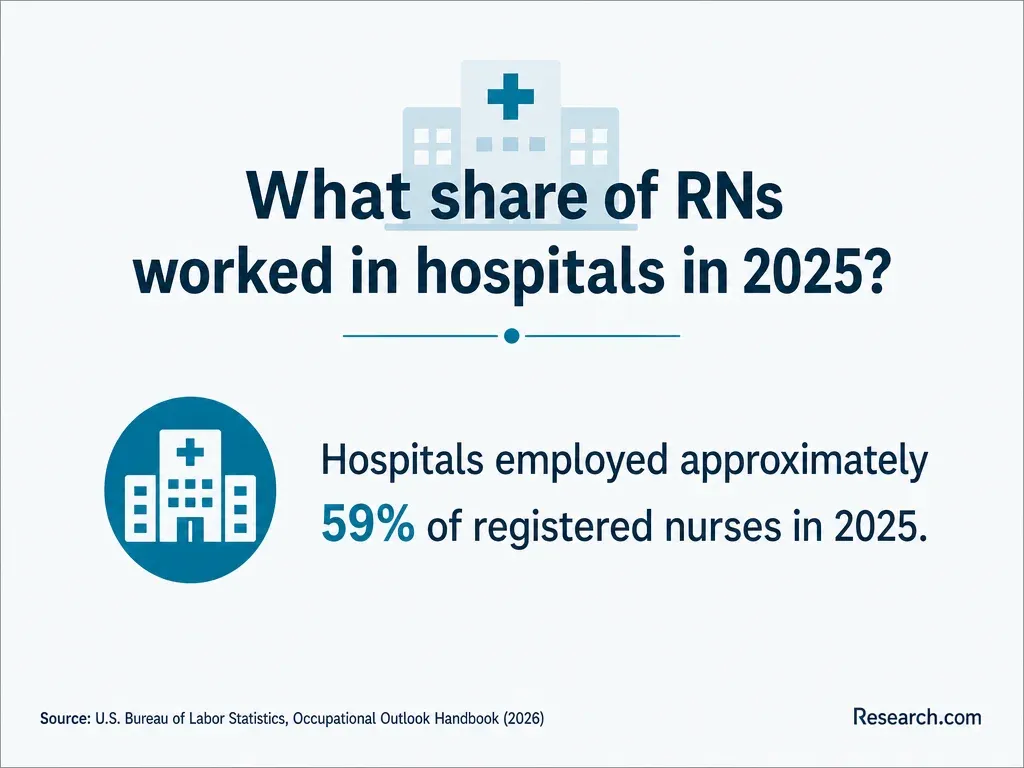
RN licensure can open positions in hospitals, clinics, long-term care, home health, and community services, but a bridge graduate still needs employer orientation and setting-specific competency development. When comparing openings, weigh shift patterns, commute, staffing support, and new-RN training alongside pay. An LPN's existing experience is valuable, but it does not automatically establish readiness for an unfamiliar RN specialty.
The U.S. Bureau of Labor Statistics reported a $93,600 national median annual wage for registered nurses in May 2024 and projected 5% RN employment growth from 2024 to 2034. Those are occupation-wide U.S. figures, not Arkansas starting salaries or offers to bridge graduates. For a local decision, compare current Arkansas RN wage data with actual postings in your commuting area and calculate the income you may forgo during clinical terms. Nurses who later seek advanced practice can explore shorter postgraduate family nursing preparation only after checking its separate degree, license, and clinical-entry requirements.
Other Things You Should Know About Nursing
Generally, enrollment in an RN program does not itself end an LPN license. Keep it active under applicable renewal rules and practice within the LPN scope until RN authorization is issued.
Not automatically. Ask the receiving school to evaluate documented training for credit and confirm with the Arkansas State Board of Nursing which educational route supports RN eligibility.
Request official transcripts and available course descriptions promptly. A new program decides what credit it can apply; prior enrollment alone does not guarantee advanced placement or clinical credit.
Not automatically. Your license status and any applicable Nurse Licensure Compact privilege determine where you may practice; verify authorization for each state and work arrangement before accepting a position.
- ASBN - Criminal Background Checks - Arkansas Department of Health https://healthy.arkansas.gov/boards-commissions/boards/nursing-arkansas-state-board/licensing/criminal-background-checks/
- Registered Nursing (LPN to RN) | asutr.edu https://asutr.edu/page/registered-nursing-lpn-to-rn/
- How the BSN Online Clinical Experience Works | Chamberlain University https://www.chamberlain.edu/academic-resources/bsn-online-clinical-experience
- Nursing - Accelerated | Baptist Health College Little Rock https://www.bhclr.edu/academics/programs/nursing-programs/nursing-accelerated/
- Program: Nursing (LPN - RN Transition), AAS https://catalog.uafs.edu/preview_program.php
- Registered Nursing (LPN to RN) | asub.edu https://www.asub.edu/degrees-and-certificates/registered-nursing/
- Clinical Placement Standards, Compliance, and Expectations | Current Students https://students.nursing.uw.edu/policies/policy-3-1-clinical-placement-standards-compliance-and-expectations/
- Nursing Program LPN/Paramedic to RN Bridge Application | NorthWest Arkansas Community College https://www.nwacc.edu/academicdivisions/healthprofessions/nursing/nursingapplications/applicationlpntorn.html
- R.N., L.P. N, & L.P.T. N; Chapter 3 - Registered Nurse Practitioner | LII / Legal Information Institute https://www.law.cornell.edu/regulations/arkansas/067-00-99-Ark-Code-R-002
- Background Checks, Skills, and Abilities - School of Nursing | UA Little Rock https://ualr.edu/nursing/become-a-nurse/admissions/essential-functions/