2027 LPN-to-BSN Pathways for Nurses in South Dakota: Direct Bridges and RN-to-BSN Alternatives
Audited and Verified:
Our Editorial and Data Verification Process
Research.com uses government datasets, official education statistics and primary institutional information to support its career and degree guides. Our review process checks factual accuracy, occupational definitions, source dates and the requirements associated with the credentials discussed.
How This Article Was Fact-Checked
Our editorial team verifies salary estimates, employment projections, education requirements and program information against original data providers and official organizations. Salary figures are checked against the relevant occupational definitions and reporting periods. Information about licensure, accreditation and required in-person training is reviewed separately.
Fact-checked and verified on:

Co-Founder and Chief Data Scientist
A South Dakota LPN who wants a BSN must choose between entering a prelicensure bachelor's program and earning RN licensure first, then completing an RN-to-BSN program. The distinction matters: an LPN license does not qualify someone for a postlicensure RN-to-BSN track, and a program labeled "online" may still require in-person clinical work.
This guide compares the routes, identifies what prior coursework may - and may not - save, and shows what to confirm with schools before committing time or money.
Key Things You Should Know
- There are two main routes to a BSN: enter a prelicensure BSN program as an LPN, or complete an LPN-to-RN pathway and then an RN-to-BSN program.
- An RN-to-BSN program requires RN licensure; an LPN license alone does not meet that entry requirement or replace the NCLEX-RN.
- Compare the entire route - not just one program's advertised length - including accepted credits, clinical scheduling, tuition, and the time until RN licensure.
What are the LPN-to-BSN pathways available in South Dakota?
"LPN-to-BSN" describes an outcome, not necessarily a program's official name. South Dakota LPNs can pursue a prelicensure BSN that accepts their prior preparation, or become RNs through an associate-degree pathway before completing a postlicensure BSN. A school's admission to its university does not establish admission to its nursing sequence.
The routes differ most in when the student becomes eligible to seek RN licensure. This comparison helps identify which program to ask about first.
| Route | Entry status | Next nursing award | RN licensure point | Best fit |
| LPN into a prelicensure BSN | LPN; applicable prerequisites and any required nursing admission review | BSN | After completing the approved prelicensure program and meeting examination and board requirements | Students who can commit to the BSN clinical sequence and want one degree program |
| LPN-to-RN, then RN-to-BSN | LPN for the RN pathway; RN license for BSN completion | Associate nursing degree, then BSN | After the prelicensure RN program, before RN-to-BSN enrollment | Students who need an earlier opportunity to work as an RN |
Ask South Dakota nursing schools, including South Dakota State University and the University of South Dakota, about the specific entry track open to an LPN, its campus or clinical locations, and whether it awards advanced standing. Neither a conventional BSN listing nor a school's RN-to-BSN listing proves that it currently offers a designated direct LPN-to-BSN bridge. Information on online nursing education options for beginners can help distinguish initial RN preparation from degree-completion study, but LPN applicants should request an individual credit review.
Can South Dakota LPNs enter a BSN program directly?
Yes, an LPN may be eligible for a prelicensure BSN without first earning an associate degree or RN license, provided the school admits LPNs and the applicant meets its nursing-track requirements. "Direct" does not mean automatic advanced placement: the program decides whether practical-nursing coursework or a competency assessment can satisfy particular requirements.
Request a written degree audit showing where each accepted credit applies. Credit counted as a general elective may not shorten a prerequisite, nursing course, or clinical sequence. Ask when the next required nursing course and clinical placement are actually available; a course offered once a year can matter more than an advertised credit award.
A short-format advanced practice program is not a substitute for initial RN preparation. For example, short-format FNP program comparisons concern a much later educational decision, not a route from LPN licensure to RN licensure or a BSN.
What RN-to-BSN alternatives are available for South Dakota LPNs?
The alternative is sequential: complete an LPN-to-RN transition or another eligible prelicensure RN program, satisfy South Dakota Board of Nursing requirements, pass the NCLEX-RN, obtain an RN license, and then enter an RN-to-BSN program. South Dakota State University and the University of South Dakota are institutions to investigate for RN-to-BSN study; confirm their current admission rules, delivery options, and applicability to your location directly with each program.
This route may let an LPN reach RN employment before finishing a bachelor's degree. Its drawback is that it involves two admissions decisions and potentially two sets of tuition, fees, and scheduling constraints. Compare an associate program's graduation date and likely RN licensure timeline with the direct BSN's projected completion date, rather than comparing BSN-completion coursework alone.
Postlicensure BSN study may involve community or workplace-based assignments instead of the same supervised bedside rotations required for initial RN preparation. When reviewing BSN completion programs using workplace-based projects, confirm whether an employer site, approved project, or local in-person activity is required; "no clinicals" does not necessarily mean no fieldwork.
Check three separate matters before applying: the institution's recognized accreditation, the nursing program's accreditation status and applicable degree scope, and the South Dakota Board of Nursing's approval of the prelicensure program when initial RN eligibility is the goal. Nursing accreditors may include the Accreditation Commission for Education in Nursing (ACEN) or the Commission on Collegiate Nursing Education (CCNE). An institution's accreditation alone does not establish nursing-program accreditation or board approval.
Ask the program for the exact degree and track covered, its current approval status, and whether its curriculum and clinical arrangements support RN licensure in South Dakota. A postlicensure RN-to-BSN program serves a different purpose: it assumes the student is already an RN and does not supply initial NCLEX-RN eligibility.
The same distinction matters if advanced study becomes a later goal. Comparisons of doctoral nursing projects and practice hours describe graduate requirements, not evidence that an undergraduate program qualifies an LPN for RN licensure.
Requirements vary by school and by entry route. A prelicensure BSN may review an active LPN license, transcripts, prerequisite sciences and labs, minimum grades, entrance assessments, and eligibility for clinical placements. An RN-to-BSN program generally requires an RN license and qualifying prior RN education instead. Schools determine whether older science courses, transfer labs, or prior nursing courses meet their requirements.
Before paying an application fee, obtain answers that affect both eligibility and the time to graduation:
- Which prerequisites remain, and are there course-age, lab-format, grade, or completion-deadline rules?
- Is admission to the nursing major separate from admission to the institution, and when does the clinical sequence begin?
- What LPN coursework or competency credit applies to degree requirements, rather than only to elective credits?
- Which background screening, immunization, or clinical-site conditions must be met after academic admission?
Keep the response with your degree audit. Prior LPN experience can support an application without replacing courses or supervised experiences the receiving program requires. Similarly, online FNP certificate routes after an MSN have graduate-level entry conditions; they do not provide an admissions shortcut for an LPN seeking a first RN license.
For initial RN preparation, expect in-person skills assessment, simulation, and supervised clinical learning even if some lectures are online. A campus-based schedule may make access to labs clearer but require regular travel. A hybrid schedule can reduce classroom commuting while retaining fixed clinical days, site assignments, and occasional campus visits.
RN-to-BSN coursework may be more widely available online because students already hold RN licenses. Still, check live-class times, group work, required projects, and whether the school can enroll and support a student living in South Dakota. Working LPNs should request a sample weekly schedule for the prelicensure portion, including early or weekend clinical shifts, before assuming they can retain their current hours.
Online flexibility also changes with degree level. Resources on online DNP timelines for working nurses address a later stage of practice and should not be used to estimate how much on-site attendance an initial RN pathway requires.
A prelicensure BSN commonly combines foundational sciences with nursing assessment, pharmacology, adult and family care, mental health, population health, and supervised clinical learning. An LPN's existing patient-care experience is valuable, but RN education assesses a different scope of practice, including broader clinical judgment, care coordination, and delegation within RN responsibilities.
RN-to-BSN study typically emphasizes subjects such as evidence-based practice, population health, leadership, and quality improvement rather than repeating the entire initial RN clinical sequence. Exact courses, fieldwork, simulation, and placement responsibilities depend on the program. Ask which experiences require a school-approved site or supervisor and whether employment-based activities can meet an assignment; do not assume paid shifts count as academic clinical hours.
Placement support is worth checking at every stage, but requirements are not interchangeable. Discussions of clinical training support in family NP education concern graduate advanced practice placements, not the clinical rotations needed in a prelicensure BSN.
No single duration or price accurately describes every South Dakota LPN-to-BSN route. Remaining prerequisites, actual advanced-standing credit, nursing-course sequence, clinical-seat availability, enrollment pace, and RN-to-BSN transfer policies all change the result. Published RN-to-BSN completion times start after RN licensure and should not be presented as the full LPN-to-BSN timeline.
Compare written estimates for the entire route using the same starting point. The table identifies costs that can disappear from an advertised tuition comparison but remain in a student's budget.
| Cost or time factor | Direct prelicensure BSN | LPN-to-RN, then RN-to-BSN |
| Tuition and required fees | Price all remaining prerequisites and BSN terms | Price both the RN program and BSN completion |
| Attendance and clinical costs | Include travel, equipment, screening, and possible reduced work hours | Include prelicensure clinical costs plus any later BSN project or travel requirements |
| Schedule risk | Check nursing-course sequence and clinical-seat availability | Check the gap between RN graduation, licensure, and BSN admission |
| Potential earnings timing | RN employment generally follows program completion and licensure | RN employment may be possible while completing the BSN |
Ask each school for a term-by-term cost estimate, including books, technology, testing, travel, and licensure expenses; then ask your employer whether tuition assistance applies to each stage. Future specialty tuition is a separate decision: PMHNP programs compared by tuition cannot establish the cost or financial return of an LPN-to-BSN route.
For an LPN entering a prelicensure BSN, graduation is not an RN license. The graduate must meet the South Dakota Board of Nursing's applicable licensing requirements, obtain authorization to test, pass the NCLEX-RN, and receive RN licensure before practicing as an RN. The existing LPN license does not convert automatically.
The sequence differs for an LPN-to-RN-to-BSN student: the NCLEX-RN and initial RN licensing process follow the qualifying prelicensure RN program. Completing the later RN-to-BSN degree does not ordinarily require taking the NCLEX-RN again. Confirm individual eligibility, including any background or documentation requirements, with the board; employers may impose additional onboarding and competency checks.
Future specialty credentials have their own eligibility rules. A short-format online PMHNP study option, for example, is not an alternative to initial RN licensure and does not by itself grant advanced practice authority.
What careers, salaries, and job outlook can BSN graduates expect?
Once licensed, BSN-prepared RNs can seek roles in settings such as hospitals, clinics, home health, and community care. Their duties may include patient assessment, care planning, medication administration, education, and coordination within RN scope. Specialty units typically add orientation and competency evaluation; a BSN alone does not establish independent readiness for critical care or management.
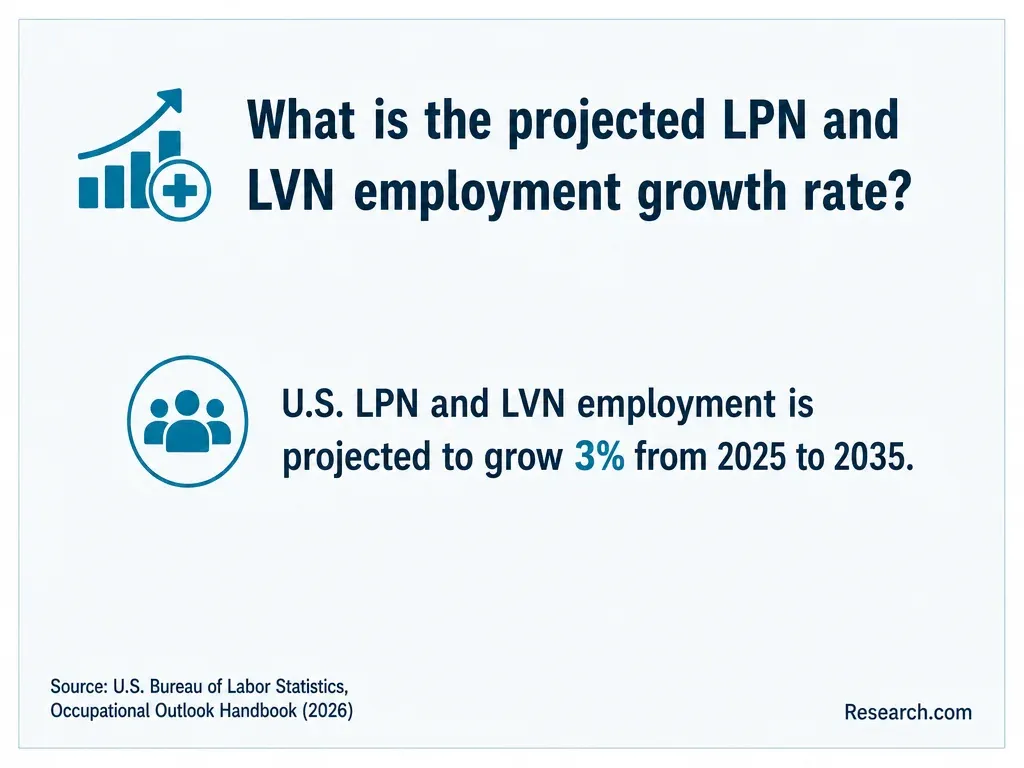
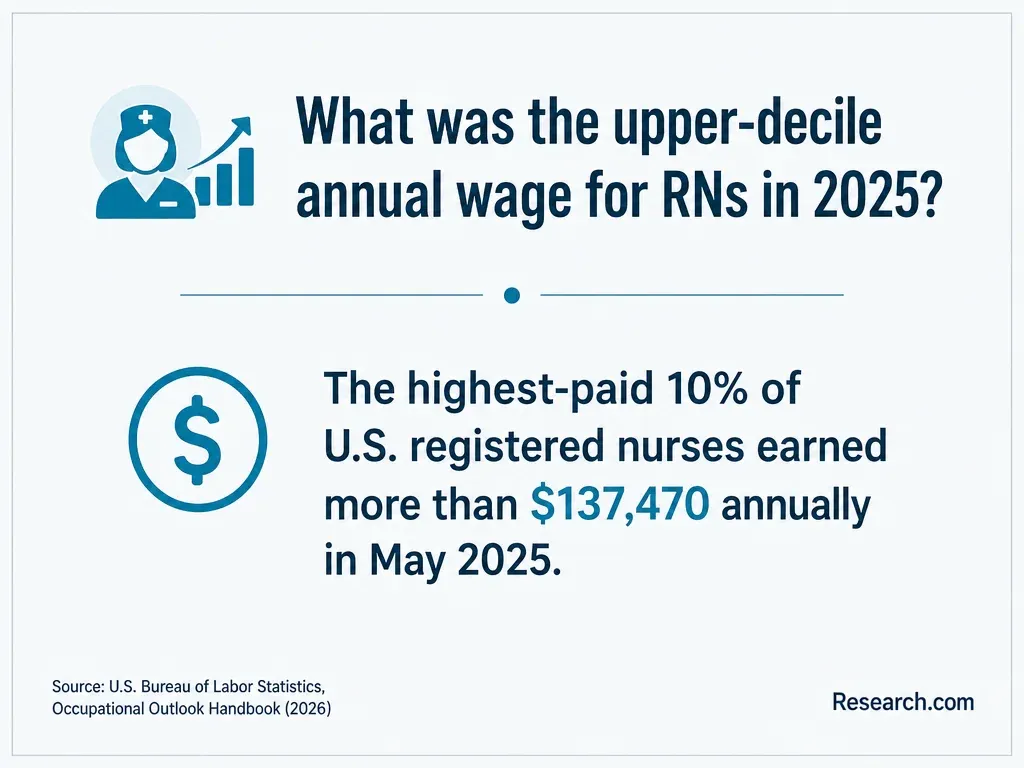
For pay comparisons, use the U.S. Bureau of Labor Statistics' registered nurses occupation rather than treating a national RN median as a South Dakota new graduate's offer or a guaranteed BSN premium. Compare local RN job postings, shift differentials, benefits, and employer education requirements with the LPN work and earnings you would give up while studying. National RN employment projections describe the occupation as a whole, not a promise of openings in a particular South Dakota community.
If the immediate goal is RN practice, the associate-degree-to-RN route may be sufficient while you decide whether a BSN serves a specific employer or advancement goal. Later, an RN considering graduate study can examine less expensive MSN pathways after a BSN; that separate decision should not drive an LPN to pay for a route that does not fit their near-term schedule or licensing goal.
Other Things You Should Know About Nursing
Generally, holding an active LPN license and enrolling in school are compatible. Whether you can keep your current hours depends on fixed labs, clinical shifts, employer scheduling, and the program's attendance rules.
Tell the school before moving. Authorization to enroll, clinical-site availability, and the licensing requirements where you plan to practice may differ from those used for a South Dakota student.
Yes. Employers may set education requirements for particular positions. Ask whether the policy applies at hire or after a deadline and whether tuition assistance or scheduling support is available.
Not automatically. Practice elsewhere depends on your license status, whether you hold an applicable multistate privilege, and the rules of the state where the patient is located. Verify authorization before accepting work across state lines.
- DAPIP | Homepage - Office of Postsecondary Education (OPE) https://ope.ed.gov/dapip/
- Administrative Rule 20:48:07:34 | South Dakota Legislature https://sdlegislature.gov/Rules/Administrative/20:48:07:34
- Accreditations & Memberships | University of Sioux Falls https://www.usiouxfalls.edu/about/accreditations-and-memberships
- Nursing - Undergraduate Programs | University of South Dakota https://www.usd.edu/Academics/Undergraduate-Programs/Nursing
- Distance Education: Student Out-of-State Location | Dakota State University https://dsu.edu/policy/distance-education-outofstate-location.html
- Bachelor of Science in Nursing - BSN Degree | Rasmussen University https://www.rasmussen.edu/degrees/nursing/bachelor-science-nursing-bsn/
- Nursing (RN Track) Graduate Outcomes | Riverland https://www.riverland.edu/academics/programs/nursing-rn-track-as/graduate-outcomes/index.html
- RN vs. BSN: What's The Difference? | Western Governors University https://www.wgu.edu/online-nursing-health-degrees/rn-prelicensure-nursing-bachelors-program/rn-bsn-difference.html
- Registered Nursing (RN) Program | Lake Area Tech https://www.lakeareatech.edu/programs/explore-programs/nursing-registered-nursing-rn/
- How Long Does It Take to Become an RN? | Edison State Community College https://www.edisonohio.edu/blog/how-long-does-it-take-to-become-an-rn