2027 Is an Online Regulatory Science & Affairs Doctorate Worth It? ROI, Salary Growth, and Career Impact

Co-Founder and Chief Data Scientist
An online regulatory science and affairs doctorate can be a smart investment, but usually only for professionals targeting senior leadership, consulting, policy, or academic roles. The decision matters because regulatory expertise is becoming more valuable as FDA rules, medical device quality systems, AI-enabled health products, and global supply chains grow more complex.
BLS May 2024 wage data show medical and health services managers had a median annual wage above $117,000, illustrating the earning potential in advanced life sciences leadership. This guide helps you weigh cost, salary growth, career mobility, alternatives, and break-even timing before committing.
Key Things You Should Know
- An online regulatory science and affairs doctorate is most financially useful for experienced professionals moving into director, executive, consulting, regulatory policy, or academic roles, not for entry-level regulatory affairs jobs.
- BLS May 2024 wage data place median pay above $117,000 for medical and health services managers and above $169,000 for natural sciences managers, but doctorate ROI depends on role, industry, employer, and prior experience.
- The strongest ROI usually comes when tuition is partly employer-funded, the program can be completed while working, and the degree supports a specific promotion or leadership path within pharmaceuticals, biotechnology, medical devices, or health agencies.
What Is the ROI of an Online Regulatory Science & Affairs Doctorate?
The ROI of an online regulatory science and affairs doctorate is the value you gain from the degree compared with what you spend to earn it. In practical terms, ROI includes higher compensation, faster promotion, eligibility for senior roles, consulting credibility, research capability, and professional influence, minus tuition, fees, interest, time, and opportunity costs.
Regulatory science focuses on how medical products, drugs, biologics, diagnostics, devices, food, and related technologies are evaluated for safety, quality, efficacy, and compliance. Regulatory affairs is the applied career function that helps organizations prepare submissions, manage approvals, respond to agencies, monitor compliance, and guide product strategy. A doctorate in this field is usually aimed at professionals who already understand the regulatory environment and want to lead at a higher level.
For most students, ROI is strongest when the doctorate is tied to a clear career move. If the goal is simply to enter regulatory affairs, a master's degree, graduate certificate, RAC preparation, or relevant industry experience may produce a faster and cheaper return. If the goal is to become a vice president of regulatory affairs, principal consultant, regulatory policy expert, agency leader, or faculty researcher, the doctorate may carry more weight.
The main ROI variables are easier to compare when separated into financial and career factors. The table below shows what to include before assuming that doctoral-level education will pay off.
| ROI factor | Why it matters | What to verify before enrolling |
| Total program cost | Tuition is only one part of the investment. | Tuition, fees, residency costs, technology fees, books, dissertation or capstone fees, and interest if borrowing. |
| Salary lift | The degree only pays for itself if it improves compensation or career security. | Whether your target employers pay more for a doctorate or mainly reward experience. |
| Promotion access | Some leadership tracks value doctoral-level research, policy, and strategy skills. | Whether director, executive, principal scientist, or policy roles in your sector list a doctorate as preferred. |
| Time to completion | Longer programs delay the point at which benefits outweigh costs. | Average completion time, dissertation support, leave policies, and part-time course load. |
| Employer support | Tuition assistance can dramatically improve ROI. | Annual reimbursement limits, service commitments, and whether the program qualifies. |
| Opportunity cost | Even online students may reduce overtime, travel, consulting, or leadership availability. | How many work hours, promotions, or side-income opportunities the program may displace. |
A useful way to think about ROI is this: an online PhD in organizational leadership is worth it when it helps you reach roles that would be difficult to access with your current credentials, and the expected long-term benefit clearly exceeds the total cost. It is less compelling when the same goal can be reached through a lower-cost credential, internal promotion, or specialized certification.
How Much Can Salaries Increase After an Online Regulatory Science & Affairs Doctorate?
Salary growth after an online regulatory science and affairs doctorate varies widely because employers rarely pay based on the degree alone. Compensation is usually shaped by years of experience, product area, regulatory complexity, management responsibility, company size, geography, and whether the role involves revenue-critical approvals or compliance risk.
BLS May 2024 wage data provide useful salary context for adjacent U.S. occupations, even though they do not isolate doctorate holders in regulatory affairs. The table below compares roles that may overlap with regulatory science careers and shows why the doctorate tends to matter most when it helps professionals move from individual contributor work into leadership, research, or strategy.
| Role category | Relevant salary context | How a doctorate may affect value |
| Compliance officers | BLS May 2024 median annual wage was about $78,000. | A doctorate may not be necessary for many compliance roles unless the work involves complex product regulation, policy design, or senior oversight. |
| Medical scientists | BLS May 2024 median annual wage was above $100,000. | Doctoral training can support research, evidence evaluation, clinical development, and academic or agency-facing roles. |
| Medical and health services managers | BLS May 2024 median annual wage was above $117,000. | The degree may help when paired with leadership experience and responsibility for regulated health operations. |
| Natural sciences managers | BLS May 2024 median annual wage was above $169,000. | Doctoral credibility can be valuable for leaders overseeing scientific teams, product development, quality systems, and regulatory strategy. |
The most realistic salary gains tend to occur through role change rather than automatic pay adjustment. For example, a regulatory affairs manager who earns a doctorate but stays in the same job may see only modest compensation effects. A manager who uses the degree to move into global regulatory strategy, combination product leadership, agency policy, executive consulting, or a senior scientific management role may see a stronger financial return.
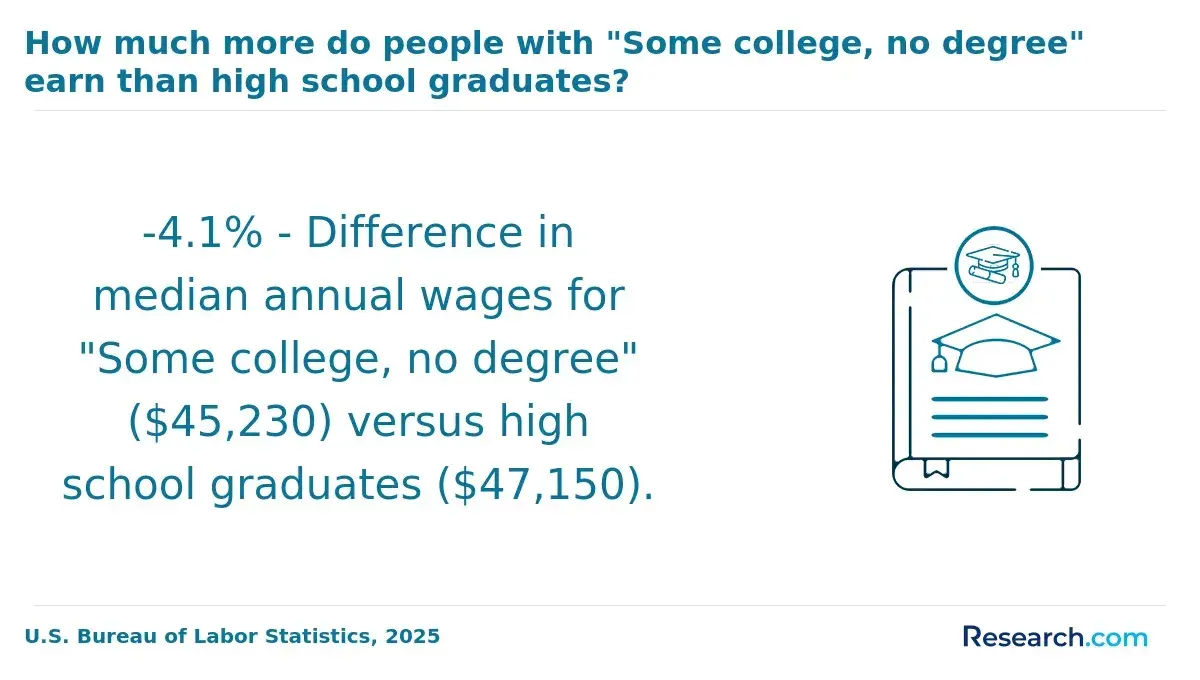
Students should avoid one common mistake: comparing doctoral salaries with bachelor's-level salaries without considering experience. Senior regulatory leaders often earn more because they have managed submissions, negotiated with agencies, led cross-functional teams, and handled high-risk compliance decisions. The doctorate can strengthen that profile, but it does not replace the career history employers expect. An online master's degree in human resources may also be a relevant alternative for professionals whose goals center on organizational leadership, workforce management, or employee relations.
Which Career Paths Offer the Strongest Financial Return With an Online Regulatory Science & Affairs Doctorate?
The strongest financial return usually appears in career paths where doctoral-level expertise helps solve expensive, high-stakes problems. In pharmaceuticals, biotechnology, medical devices, diagnostics, and digital health, regulatory decisions can affect product approvals, launch timing, labeling, quality systems, clinical evidence, and market access.
The table below organizes common career paths by likely doctorate value. It is not a salary guarantee; it is a decision aid for identifying where doctoral education is most likely to influence compensation, authority, or mobility.
| Career path | Typical work | Doctorate ROI potential | Best fit |
| Vice president or senior director of regulatory affairs | Leads regulatory strategy, submissions, agency interactions, and product approval planning. | High when the doctorate supports executive credibility and advanced scientific judgment. | Experienced regulatory professionals with management history. |
| Regulatory science consultant | Advises companies on submissions, compliance, clinical evidence, quality systems, and agency expectations. | High when the credential helps win specialized clients or premium projects. | Professionals with a strong industry track record and niche expertise. |
| Regulatory policy or agency leadership | Develops guidance, evaluates evidence, manages programs, or influences public health regulation. | Moderate to high when research and policy expertise are central to advancement. | Professionals interested in government, policy, or standards organizations. |
| Medical device or combination product strategy | Manages complex approval pathways, quality systems, risk management, and postmarket requirements. | High in specialized environments where regulatory complexity is a business-critical issue. | Professionals with device, diagnostics, biologics, or quality systems experience. |
| Academic or applied research faculty | Teaches, publishes, mentors, and conducts regulatory science research. | Moderate, depending on institution, rank, research funding, and teaching load. | Professionals who want teaching and scholarship as part of their career. |
| Entry-level regulatory affairs specialist | Supports submissions, documentation, labeling, and compliance tracking. | Low because most entry roles do not require a doctorate. | Career changers may be better served by a certificate, master's degree, or direct experience. |
Current regulatory trends also shape financial value. The FDA's 2024 final rule aligning the medical device Quality System Regulation more closely with ISO 13485, with an effective date in 2026, is one example of why employers need professionals who can interpret evolving rules and translate them into operational systems. Professionals who can connect science, regulation, quality, and business risk may see greater career leverage from doctoral training than those in narrower documentation roles. For professionals considering an adjacent field, a master's in psychology online can offer another pathway into roles involving organizational behavior, human factors, and workforce-related decision-making.
How Does an Online Regulatory Science & Affairs Doctorate Affect Career Advancement?
An online regulatory science and affairs doctorate can improve career advancement by signaling advanced expertise in research, evidence evaluation, regulatory strategy, quality, policy, and leadership. Its value is strongest when employers view the degree as proof that you can analyze complex product risks, lead cross-functional decisions, and communicate with regulators, scientists, executives, and legal teams.
The degree may help with advancement in several ways, but the effect depends on your existing background. A doctorate usually strengthens an already credible regulatory profile more than it creates one from scratch.
- Leadership credibility: Doctoral training can help experienced professionals compete for senior director, vice president, or enterprise regulatory strategy roles.
- Research and evidence skills: Programs often include study design, data interpretation, benefit-risk analysis, and applied research methods that are useful in policy and product development.
- Cross-functional influence: Regulatory leaders must translate rules into decisions for clinical, quality, manufacturing, legal, medical, and commercial teams.
- Consulting differentiation: A doctorate may help consultants position themselves as experts in specialized areas such as biologics, devices, diagnostics, AI-enabled health products, or postmarket surveillance.
- Academic eligibility: For teaching, research, and program leadership roles, a doctoral credential is often more relevant than it is in standard industry positions.
Still, students should not assume the degree automatically unlocks executive roles. Senior regulatory advancement usually requires documented experience with submissions, inspections, agency meetings, product launches, labeling changes, clinical evidence, quality systems, or remediation. The degree is most powerful when it complements those accomplishments.
AI and automation are also changing regulatory work. Tools can help with literature review, document drafting, submission management, signal detection, and compliance monitoring, but employers still need human experts to judge evidence, manage risk, defend decisions, and interpret evolving policy. Doctoral-level training may become more valuable for professionals who can govern AI-assisted regulatory processes rather than simply use them. For those interested in the behavioral side of these changes, an online psychology degree can provide a foundation in human behavior, decision-making, and organizational dynamics.
How Much Does an Online Regulatory Science & Affairs Doctorate Cost Compared With Its Potential Benefits?
Costs vary by institution, credit load, residency requirements, dissertation structure, and whether the student receives employer support. NCES data released in 2024 for the 2022-23 academic year show average graduate tuition and required fees of roughly $12,600 at public institutions and roughly $29,900 at private nonprofit institutions. Those averages are not specific to regulatory science doctorates, but they show why school type, residency status, and fee structure can change ROI significantly.
Because online regulatory science doctorates are specialized and relatively uncommon, applicants should evaluate the full cost rather than relying on advertised per-credit tuition. A lower per-credit price can become less attractive if the program requires more credits, paid residencies, extended dissertation enrollment, or repeated continuation fees.
When estimating the full cost, include every category that can affect your break-even point:
- Tuition for all required credits, including dissertation, capstone, or research continuation credits.
- Mandatory fees such as technology, student services, graduation, laboratory, or professional program fees.
- Travel costs for any required campus sessions, residencies, intensives, conferences, or dissertation defenses.
- Books, software, database access, exam fees, and professional association costs.
- Loan interest, origination fees, and the repayment effect of borrowing while interest accrues.
- Reduced income from cutting back overtime, travel, consulting, adjunct work, or leadership assignments during enrollment.
The potential benefits are also broader than salary alone. A doctorate may support a move into higher-stakes work, give credibility in scientific or policy discussions, open teaching opportunities, or help a consultant charge for more specialized expertise. However, these benefits are conditional. They depend on how well the program aligns with the student's sector, employer expectations, and career plan.
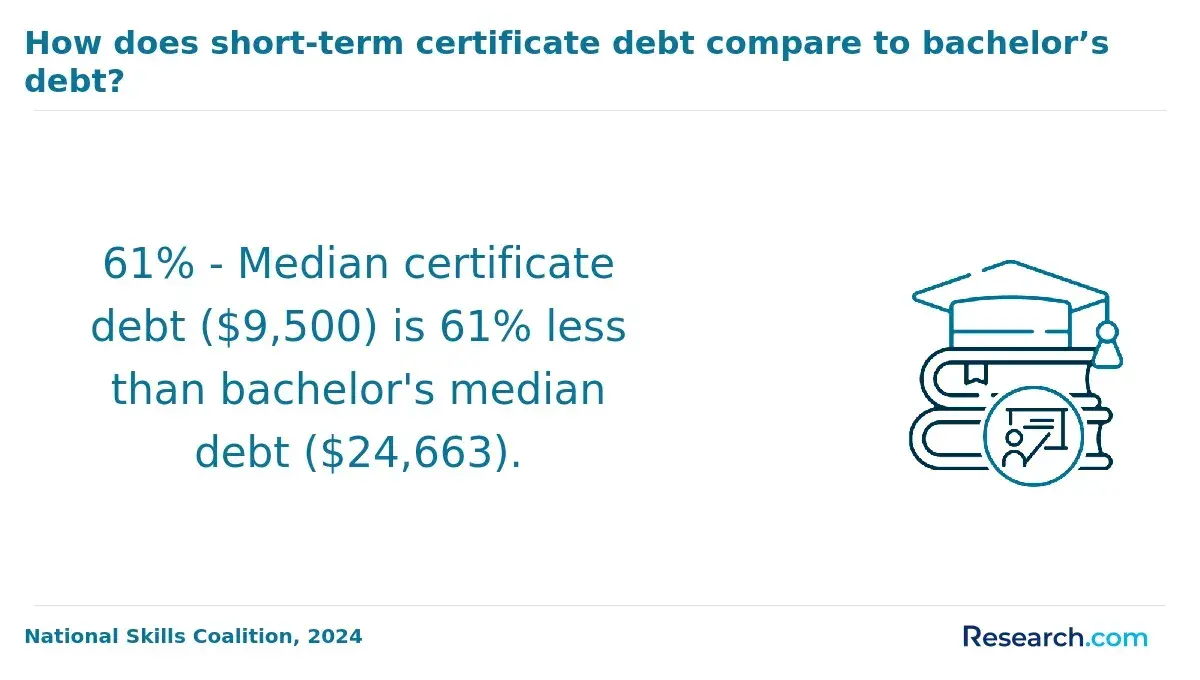
A practical break-even estimate can be calculated by dividing total net cost by expected annual pay increase. For example, if a student's net cost after employer support is $45,000 and the degree helps produce a $15,000 annual raise or promotion, the simple payback period is about three years before taxes and interest. If the same degree costs $90,000 and produces no role change, the financial case is much weaker.
How Does the Time Required for an Online Regulatory Science & Affairs Doctorate Affect Its ROI?
Time is one of the most underestimated ROI factors. Many online doctorates are designed for working adults, but part-time study can still take several years, and the dissertation or applied research phase may extend the timeline. The longer completion takes, the longer it may take to realize promotion, consulting, or salary benefits.
Time affects ROI in two ways: direct delay and opportunity cost. Direct delay means the financial benefit starts later. Opportunity cost means the program may limit your ability to accept a promotion, relocate, travel, publish, consult, or take on stretch assignments while enrolled.
The table below shows how completion time changes the financial picture even when tuition is the same.
| Completion pattern | Likely ROI effect | Best for |
| Accelerated while working | Can improve ROI if the pace does not harm job performance or dissertation quality. | Highly organized professionals with employer flexibility and strong preparation. |
| Standard part-time enrollment | Often balances income preservation with manageable academic workload. | Most working regulatory professionals. |
| Extended dissertation timeline | Can reduce ROI through extra fees, delayed benefits, and professional fatigue. | Students should avoid this unless research demands it or life circumstances require it. |
| Full-time study with reduced work | May weaken ROI if lost earnings are high, unless the program leads to a major career pivot. | Students with savings, fellowships, employer sponsorship, or a clear post-degree role. |
Before enrolling, ask schools for the median time to completion, not just the minimum advertised timeline. Also ask how many students finish the dissertation or capstone on schedule, how faculty advising works, and whether students can use work-based regulatory problems as applied research topics. Programs that help students finish efficiently can produce better ROI than programs with lower tuition but weak completion support.
Does an Online Regulatory Science & Affairs Doctorate Have the Same Career Value as a Campus-Based Degree?
An online regulatory science and affairs doctorate can have comparable career value to a campus-based degree when it is offered by an institutionally accredited school, uses rigorous faculty oversight, provides meaningful research or capstone support, and fits the expectations of the student's target employers. In many regulatory roles, employers care more about expertise, performance, industry experience, and institutional credibility than whether courses were completed online.
Online delivery may even improve ROI for working professionals because it allows them to keep earning income while studying. This is especially important in regulatory affairs, where years of industry experience are often as valuable as formal education. A professional who stays employed while completing the doctorate may preserve income, continue building regulatory accomplishments, and apply coursework directly to current projects.
However, online and campus-based programs are not automatically equal. Students should compare the substance of the program, not just the format.
- Accreditation: Confirm institutional accreditation recognized by the U.S. Department of Education or CHEA. Regulatory science doctorates typically do not lead to state licensure, so program fit and institutional quality matter more than licensure approval.
- Faculty expertise: Look for instructors with FDA, industry, quality, clinical research, medical device, pharmaceutical, biologics, or regulatory policy experience.
- Curriculum relevance: Strong programs should cover regulatory strategy, product development, quality systems, clinical evidence, risk management, ethics, policy, and research methods.
- Applied learning: Capstones, dissertations, case analyses, and work-based projects should connect to real regulatory problems.
- Professional network: Online students should still have access to faculty mentoring, alumni, industry speakers, research collaboration, and career support.
The biggest red flag is a program that markets convenience but provides limited advising, weak dissertation structure, vague outcomes, or little connection to regulated life sciences industries. Online format is not the problem; low academic or professional rigor is.
How Does an Online Regulatory Science & Affairs Doctorate Compare With Other Career Advancement Options?
A doctorate is not the only path to advancement in regulatory science and affairs. For many professionals, a master's degree, graduate certificate, professional certification, project leadership, or targeted experience may provide faster ROI. The best choice depends on whether the career goal requires advanced scholarship, executive credibility, research expertise, or simply stronger regulatory competency.
The table below compares common advancement options by cost, time, and likely career use. Use it to avoid overinvesting in a doctorate when a narrower credential would meet the same goal.
| Option | Typical purpose | Time and cost profile | When it may be smarter than a doctorate |
| Graduate certificate in regulatory affairs | Builds focused knowledge in submissions, compliance, quality, or product regulation. | Usually shorter and lower cost than a degree. | Best for career changers or specialists filling a knowledge gap. |
| Master's in regulatory science or regulatory affairs | Prepares professionals for specialist, manager, or strategy roles. | Moderate time and cost compared with a doctorate. | Often enough for industry advancement through manager or director levels. |
| RAC or other professional certification | Signals regulatory knowledge and professional commitment. | Lower cost, exam-based, and experience-dependent. | Useful when employers value demonstrated competency more than another degree. |
| MBA, MPH, MS in clinical research, or quality-focused degree | Supports leadership, public health, clinical operations, or quality systems careers. | Varies widely by program. | Better when the target role is broader than regulatory science. |
| Online regulatory science doctorate | Develops advanced research, policy, leadership, and expert-level regulatory judgment. | Highest time commitment and often highest total cost. | Best for senior leadership, consulting, policy, academia, or highly specialized scientific-regulatory roles. |
The doctorate makes the most sense when the career goal sits beyond routine regulatory execution. If you want to lead regulatory strategy across product portfolios, influence policy, teach at the graduate level, advise companies as an expert consultant, or conduct applied regulatory science research, doctoral training may provide distinctive value. If your goal is to move from associate to manager, a master's degree plus strong project outcomes may be enough.
Which Professionals Are Most Likely to Benefit From an Online Regulatory Science & Affairs Doctorate?
The professionals most likely to benefit are those who already have a foundation in regulatory affairs, clinical research, quality assurance, product development, pharmacy, medicine, public health, biomedical science, engineering, or life sciences management. The degree tends to amplify existing expertise rather than substitute for it.
Applicants with the strongest fit usually share several characteristics. These indicators help predict whether the doctorate is likely to create career leverage rather than simply add another credential.
- Experienced regulatory professionals: Managers, directors, submission leads, or quality leaders who want enterprise-level responsibility.
- Life sciences professionals moving toward regulation: Pharmacists, scientists, engineers, clinicians, and clinical research leaders who already understand regulated products and want formal regulatory expertise.
- Consultants and entrepreneurs: Professionals who need expert credibility in complex regulatory, quality, or evidence-generation work.
- Agency, policy, or standards professionals: Individuals who want to contribute to guidance, public health policy, review science, or regulatory modernization.
- Future faculty or applied researchers: Professionals who want to teach, publish, lead academic programs, or study regulatory systems.
Professionals who may not benefit as much include those seeking their first regulatory job, those unsure which industry they want to enter, and those whose employers promote mainly through experience rather than education. The degree may also be a poor fit for someone who would need to borrow heavily without a clear path to higher earnings or stronger career security.
Admissions requirements vary by school, but many doctoral programs expect a master's degree, professional experience, transcripts, letters of recommendation, a statement of purpose, and evidence that the applicant can complete advanced research or applied doctoral work. Some programs may accept applicants with extensive professional experience, while others require a specific science, health, pharmacy, engineering, or regulatory background.
How Can Students Determine Whether an Online Regulatory Science & Affairs Doctorate Is Worth It?
The best way to decide is to evaluate the doctorate as a career investment, not as a prestige purchase. A strong decision combines cost analysis, labor market research, employer feedback, program quality, and a realistic view of your career stage.
Use the steps below to make a practical decision before applying or borrowing.
- Define the exact role you want after the doctorate, such as senior director of regulatory affairs, principal regulatory scientist, consultant, policy leader, or faculty member.
- Review job postings for that role and note whether a doctorate is required, preferred, or rarely mentioned.
- Ask current leaders in your target sector whether the credential would change hiring, promotion, or compensation decisions.
- Calculate total net cost after employer tuition assistance, scholarships, military benefits, tax benefits, and out-of-pocket payments.
- Estimate a conservative salary increase based on realistic role changes, not national averages or exceptional executive salaries.
- Divide total net cost by expected annual income gain to estimate a simple payback period.
- Compare that payback period with alternatives such as a master's degree, certificate, RAC preparation, internal promotion, or targeted project leadership.
- Evaluate program quality by checking accreditation, faculty expertise, dissertation support, completion expectations, student outcomes, and alumni relevance.
- Assess whether you can complete the program while maintaining job performance, health, family responsibilities, and professional momentum.
- Decide whether the degree supports a specific career strategy within the next five to ten years.
Several red flags should make applicants pause. Be cautious if a program cannot explain typical completion time, offers vague career outcomes, lacks faculty with regulatory experience, requires heavy borrowing without clear payoff, or promises career transformation without evidence. Also be cautious if you are pursuing the doctorate mainly because you feel stuck; a mentor, certification, internal transfer, or targeted leadership project may solve that problem faster.
A good final test is simple: would the doctorate still be worth it if your salary increased slowly? If the answer is yes because it supports leadership, consulting, scholarship, policy work, or long-term professional identity, the degree may be a strong fit. If the answer depends entirely on a large immediate raise, the investment deserves closer scrutiny.
Other Things You Should Know About Regulatory Science & Affairs
No. Regulatory science is the study of the methods, evidence, standards, and policies used to evaluate regulated products. Regulatory affairs is the professional function that applies those rules in product development, submissions, approvals, labeling, compliance, and postmarket work.
Most U.S. regulatory affairs roles do not require a state license. Some professionals, such as pharmacists, physicians, nurses, attorneys, or engineers, may hold licenses related to their original profession, but regulatory affairs itself is usually not a licensed occupation.
A science, health, pharmacy, engineering, or clinical research background is often helpful, especially in pharmaceuticals, biotechnology, devices, and diagnostics. However, some regulatory roles also value experience in quality, compliance, documentation, project management, law, public health, or policy.
Important skills include regulatory analysis, scientific literacy, technical writing, quality systems knowledge, risk assessment, project management, ethical judgment, data interpretation, communication with agencies, and the ability to translate complex rules into practical business decisions.
References
- Is Grad School Worth It? A Comprehensive Return on Investment Analysis - FREOPP https://freopp.org/whitepapers/is-grad-school-worth-it-a-comprehensive-return-on-investment-analysis/
- How to get a job in regulatory affairs | Proclinical Recruitment Blogs https://www.proclinical.com/blogs/2021-2/how-to-get-a-job-in-regulatory-affairs
- Medical Affairs vs Regulatory Affairs: which is the smartest pharma career path? | headcount https://headcount.ch/blog/medical-affairs-vs-regulatory-affairs-which-is-the-smartest-pharma-career-path/
- Regulatory Affairs Career Path in Life Sciences https://pathologylabtraining.co.uk/biomedical-sciences/regulatory-affairs
- Upcoming events https://www.topra.org/TOPRA_Member/Professional_Development/Regulatory_Careers_Live_/TOPRA/TOPRA_Member/Careers/jobs_careers.aspx
- What Is an Best Online PhD Program and How Does It Work 2026? - GTR Blogs | Career Guidance Articles https://gtracademy.org/blog/online-phd-program/