2027 Is a Higher Education Leadership Doctorate Hard? Coursework, Research, Time Commitment, and Completion Tips

Co-Founder and Chief Data Scientist
A Higher Education Leadership doctorate is manageable, but it is rarely easy: the challenge is sustaining advanced coursework, independent research, and dissertation progress while life and work continue. The decision matters because leadership roles can be financially meaningful; the BLS reported a May 2024 median wage of $103,960 for postsecondary education administrators.
This guide is for prospective doctoral students weighing whether the workload fits their goals, schedule, and readiness. You will learn what makes the degree difficult, where students get delayed, and how to plan for completion.
Key Things You Should Know
- A Higher Education Leadership doctorate is hard mainly because it requires long-term consistency: many EdD and PhD pathways take about 3 to 7 years depending on enrollment pace, dissertation model, transfer credits, and committee timelines.
- The weekly workload is usually most realistic at 15 to 25 hours for part-time students and 30 or more hours for full-time students during heavy research, dissertation, or practicum periods.
- The dissertation or doctoral project is often the biggest completion risk because students must move from structured classes to independent research, data collection, analysis, revision, and committee approval.
Is a Higher Education Leadership Doctorate Hard to Complete?
Yes, a Higher Education Leadership doctorate can be hard to complete, but not because every course is impossibly difficult. The real difficulty is cumulative: students must handle doctoral reading, writing, research design, leadership theory, policy analysis, data interpretation, and a major independent project over several years.
Higher Education Leadership programs usually prepare students for roles in college administration, student affairs, academic affairs, enrollment management, institutional research, policy, community college leadership, diversity and inclusion leadership, or executive-level higher education strategy. Depending on the school, the credential may be an EdD, PhD, or another doctorate with a higher education administration or leadership concentration.
The difficulty varies by program type. An EdD is often practice-oriented and may emphasize applied leadership problems, organizational change, and improvement projects. A PhD is usually more research-intensive and may emphasize theory building, advanced methodology, publication-quality scholarship, and academic research careers. Neither is automatically "easy," but the type of difficulty differs.
Completion also depends heavily on the student's situation. A full-time campus-based doctoral student with funding and a clear research agenda may face intense academic pressure. A working professional in an online or hybrid EdD may face a different challenge: protecting study time after work, family obligations, travel, and leadership responsibilities.
The most important question is not simply "Is it hard?" A better question is: "Can I create the conditions that make completion realistic?" Those conditions include enough weekly study time, a focused research interest, strong writing habits, responsive faculty advising, financial planning, and a program structure that matches your life.
The table below separates the main difficulty factors so you can see which parts are academic, logistical, or personal. This distinction matters because each type of challenge requires a different solution.
| Difficulty factor | What it looks like | Why it affects completion |
| Doctoral-level coursework | Heavy reading, theory application, policy analysis, and scholarly writing | Students must move beyond summarizing ideas and begin evaluating evidence and building arguments |
| Research expectations | Quantitative, qualitative, or mixed-methods research design and data analysis | Many students have limited research experience before entering the doctorate |
| Dissertation or doctoral project | Independent proposal, data collection, analysis, defense, and revisions | The structure becomes less predictable than coursework, so self-direction becomes essential |
| Time management | Balancing work, family, study, meetings, and writing | Even strong students can fall behind if they cannot protect regular work blocks |
| Program fit | Mismatch between student goals, faculty expertise, research model, or delivery format | Poor fit can slow topic approval, advising, motivation, and persistence |
For most students, the degree is difficult but realistic if the program is well matched to their goals and they treat doctoral work as a long-term professional commitment rather than an extension of a master's program.
How Difficult Is the Coursework in a Higher Education Leadership Doctorate?
The coursework is demanding because it asks students to think like senior decision-makers and scholars at the same time. Instead of learning only how higher education works, students examine why institutions behave as they do, how policies affect student outcomes, and how leaders use evidence to make decisions.
Typical courses may cover higher education law, finance, governance, organizational theory, student development, equity and access, strategic planning, institutional assessment, policy analysis, leadership ethics, and research methods. Some programs also include internships, leadership labs, or applied improvement projects.
Students who earned strong grades in a master's program can still be surprised by the level of synthesis expected in doctoral coursework. Assignments often require evaluating peer-reviewed literature, applying theory to institutional problems, critiquing policy, and writing in a scholarly voice with proper citation practices.
The table below compares common coursework areas and the kind of difficulty each one creates. This can help you identify where you may need preparation before enrolling.
| Coursework area | Typical challenge | Students who may find it hardest |
| Higher education policy and law | Interpreting regulations, court decisions, governance structures, and compliance issues | Students without experience in administration, policy, or legal analysis |
| Finance and budgeting | Understanding institutional revenue, tuition models, resource allocation, and budget trade-offs | Students with limited exposure to college operations or financial planning |
| Leadership and organizational theory | Connecting abstract frameworks to real institutional change problems | Students who prefer practical tasks over conceptual analysis |
| Research methods | Designing studies, selecting methods, understanding validity, and interpreting findings | Students who have not taken recent statistics or research courses |
| Scholarly writing | Building evidence-based arguments and revising work to doctoral standards | Students who are used to workplace writing rather than academic writing |
Coursework may feel especially difficult for students whose professional background is adjacent to higher education rather than directly inside it. For example, someone interested in learning technology or faculty development may decide that one of the best online instructional design master's programs is a better first step if their goal is instructional design leadership rather than broad institutional administration.
To judge whether the coursework is manageable, review sample syllabi, ask how many pages students typically read per week, and find out whether major assignments are scaffolded into smaller milestones. A program that teaches research and writing progressively is usually easier to manage than one that assumes students already know how to produce doctoral-level scholarship.
What Are the Hardest Milestones in a Higher Education Leadership Doctorate?
The hardest milestones are usually the points where responsibility shifts from instructor-led structure to student-led progress. Coursework has deadlines and weekly rhythm; comprehensive exams, proposals, and dissertations require more independent planning.
Most Higher Education Leadership doctoral programs include several major checkpoints. The exact sequence varies, but the following milestones commonly determine whether students keep momentum or begin to stall:
- Completing core coursework with doctoral-level writing and research expectations.
- Passing comprehensive or qualifying exams that test synthesis across leadership, policy, research, and higher education theory.
- Choosing a dissertation or doctoral project topic that is focused, researchable, and aligned with faculty expertise.
- Writing and defending a proposal that clearly explains the problem, literature base, method, and feasibility of the study.
- Securing institutional approval for research involving human participants when required by the school's review process.
- Collecting and analyzing data while maintaining ethical, accurate, and well-documented procedures.
- Defending the final dissertation or project and completing committee revisions on time.
Comprehensive exams can be stressful because they test whether students can connect ideas across courses rather than repeat course content. A student may know higher education law, student development theory, and organizational leadership separately but struggle to integrate them into a coherent response to a complex institutional problem.
The proposal stage is another common pressure point. At this stage, students often discover that an interesting topic is not necessarily a feasible study. A topic may be too broad, the data may be inaccessible, the population may be difficult to recruit, or the research question may not match the proposed method.
The hardest milestone is not always the same for every student. Strong writers may struggle with statistics. Experienced administrators may struggle with theory. Research-oriented students may struggle to narrow a practical leadership problem. The key is identifying your weak point early enough to build support before it becomes a delay.
How Difficult Is the Research Portion of a Higher Education Leadership Doctorate?
The research portion is often one of the most intimidating parts of a Higher Education Leadership doctorate because it requires students to move from consuming research to producing it. You are not simply writing about leadership; you are designing a defensible way to investigate a real question in higher education.
Research in this field may examine issues such as student persistence, transfer pathways, leadership decision-making, faculty governance, student affairs outcomes, equity initiatives, community college policy, enrollment strategy, advising models, or organizational change. The topic may be applied, but the research still needs rigor.
Students typically encounter three broad research approaches. Understanding the difference helps you choose a topic that fits your strengths and the data you can realistically access.
| Research approach | What it involves | Common difficulty |
| Qualitative research | Interviews, focus groups, document analysis, observations, or case studies | Designing strong interview protocols, coding data consistently, and managing researcher bias |
| Quantitative research | Surveys, institutional datasets, statistical testing, or outcome comparisons | Choosing appropriate variables, using statistical software, and interpreting results correctly |
| Mixed-methods research | Combining qualitative and quantitative evidence in one study | Managing a larger design and integrating two forms of evidence coherently |
According to the National Center for Science and Engineering Statistics, U.S. research doctorate recipients had a median time to degree of 7.3 years from doctoral program start in the 2023 Survey of Earned Doctorates, released in 2024. That figure covers research doctorates broadly rather than only Higher Education Leadership programs, but it underscores an important point: doctoral research is a multi-year process, not a single capstone paper.
The research portion becomes more manageable when students choose questions that are important, narrow, and feasible. A study about "improving student success nationwide" is too broad. A study examining how academic advisors at a specific type of institution use early-alert data to support first-generation students is more workable.
Research also requires ethical and procedural patience. If your study involves students, staff, faculty, or institutional records, you may need approval before collecting data. Delays can happen if consent forms, recruitment plans, survey instruments, or data security procedures are incomplete.
How Hard Is the Dissertation for a Higher Education Leadership Doctorate?
The dissertation is hard because it combines everything students have practiced separately: scholarly writing, literature review, research design, data collection, analysis, interpretation, and professional persistence. It is usually less about brilliance and more about producing defensible work through repeated revision.
In a Higher Education Leadership doctorate, the final requirement may be a traditional dissertation, dissertation-in-practice, doctoral capstone, applied research project, or improvement science project. The label matters because it affects the type of question you ask, the evidence you collect, and how the final work is judged.
The dissertation becomes difficult for several reasons. These pressure points are worth understanding before enrollment because they often determine whether students finish on time:
- Topic scope: A topic that is too broad can create an unmanageable literature review and unclear research questions.
- Data access: Students may assume they can use institutional data, interview employees, or survey students before confirming permission.
- Method alignment: The research question, data source, and analysis method must fit together logically.
- Committee expectations: Different faculty members may request revisions that require negotiation and careful documentation.
- Writing endurance: The final document often requires multiple drafts, not one long writing push near the end.
Some students look for online EdD programs no dissertation because they want an applied doctoral path with a capstone or project instead of a traditional dissertation. That can be a legitimate preference, but "no dissertation" does not mean "no research" or "no rigor." Many alternatives still require data analysis, literature review, implementation planning, evaluation, and a formal defense or presentation.
A realistic dissertation is usually one that answers a focused question, uses obtainable data, fits the student's methodological skill level, and aligns with an advisor's expertise. Students who start with a career-relevant but researchable problem usually have an easier time staying motivated through revisions.
One common mistake is waiting until after coursework to think seriously about the dissertation. A better approach is to treat every major paper as a possible building block: a literature review, policy analysis, conceptual framework, or methods exercise that can later support the final study.
How Long Does a Higher Education Leadership Doctorate Take to Complete?
A Higher Education Leadership doctorate commonly takes about 3 to 7 years, but timelines vary widely by degree type, enrollment status, dissertation model, transfer credits, program calendar, and how quickly the student completes the final research requirement. Some accelerated EdD programs advertise shorter pathways, while traditional part-time programs can take longer.
It is important to separate advertised program length from actual completion time. A program may be designed for 3 years, but a student who changes topics, pauses enrollment, waits for data access, or needs extra committee revisions may take longer.
The table below gives a practical comparison of common enrollment patterns. Use it as a planning tool rather than a promise, because each school sets its own credit requirements and continuation rules.
| Enrollment pattern | Typical completion range | Best fit | Main risk |
| Full-time doctoral study | About 3 to 5 years | Students with funding, flexible work, or a strong research focus | High weekly workload and possible income trade-offs |
| Part-time professional EdD | About 4 to 7 years | Working administrators, student affairs professionals, and higher education staff | Slower progress if work demands interrupt writing and research |
| Accelerated or cohort-based EdD | About 2 to 4 years when structured tightly | Students with a clear topic, strong time management, and steady availability | Less flexibility if life or work disruptions occur |
| PhD in higher education or education leadership | About 4 to 7 or more years | Students aiming for research, faculty, policy, or scholarly careers | More intensive research expectations and longer dissertation development |
Prospective students comparing accelerated options should look carefully at structure, accreditation, faculty access, and final project requirements. Lists of 1 year EdD programs online can be useful for understanding what fast-track models exist, but a very short timeline is only realistic if the program design, prior credits, and final project expectations align with your schedule.
Before enrolling, ask programs how long students actually take to finish, not just how long the catalog says the program takes. Also ask what percentage of students finish the dissertation or project within the advertised timeline, whether leaves of absence are allowed, and what happens if you need an extra term.
How Many Hours per Week Does a Higher Education Leadership Doctorate Require?
A realistic weekly estimate is 15 to 25 hours for many part-time doctoral students and 30 or more hours for full-time students, especially during research, proposal, and dissertation phases. Some weeks will be lighter, but the degree becomes difficult when students plan only for the minimum.
Coursework weeks may include reading, discussion posts, papers, research assignments, group projects, and synchronous sessions. Dissertation weeks may include literature review writing, advisor meetings, data collection, coding, statistical analysis, revisions, and formatting.
The table below shows how time demands often shift across the program. This helps you plan for the fact that the workload changes rather than staying constant every term.
| Program phase | Common weekly workload | What the time is usually spent on |
| Early coursework | About 12 to 20 hours | Reading, discussion, writing, and learning doctoral expectations |
| Research methods coursework | About 15 to 25 hours | Methods assignments, data exercises, literature reviews, and project design |
| Comprehensive exam preparation | About 20 to 30 hours during peak periods | Reviewing core theories, synthesizing readings, and practicing responses |
| Proposal development | About 15 to 30 hours | Writing chapters or sections, refining questions, meeting with an advisor, and revising |
| Dissertation or project completion | About 20 to 35 or more hours during intensive periods | Data collection, analysis, final writing, committee revisions, and defense preparation |
Weekly time is not only about hours; it is also about attention. Two focused 3-hour writing blocks may produce more progress than six distracted evenings. Doctoral work requires concentration, not just availability.
A practical way to test readiness is to block 15 hours in your current weekly calendar before applying. If you cannot find those hours now, identify what would change after enrollment: fewer work commitments, family support, reduced travel, protected mornings, or a slower course load.
Can You Earn a Higher Education Leadership Doctorate While Working Full Time?
Yes, many students earn a Higher Education Leadership doctorate while working full time, especially in EdD programs designed for professionals. However, working full time makes the degree harder because the student's best hours are often already consumed by job responsibilities.
The fit is usually strongest for professionals whose work connects to the degree. A student affairs director, academic advisor, registrar, institutional research analyst, enrollment manager, faculty developer, or community college administrator may be able to connect coursework and research to real workplace problems. That relevance can improve motivation and make assignments more meaningful.
Working full time becomes less manageable when job demands are unpredictable. Emergency student issues, enrollment deadlines, budget season, accreditation visits, campus crises, or travel can disrupt the writing schedule. The risk is not one busy week; the risk is repeated interruption over several terms.
Students who work full time should make several decisions before enrolling. These steps can reduce the chance that work obligations derail academic progress:
- Choose a program format that matches your work rhythm, such as asynchronous online courses, evening sessions, weekend residencies, or a predictable cohort calendar.
- Tell your supervisor about the program only if doing so is professionally safe and likely to result in schedule flexibility, tuition support, or access to relevant projects.
- Protect recurring study blocks each week rather than waiting for open time to appear.
- Avoid taking on major new job responsibilities during comprehensive exams, proposal writing, or final dissertation revisions if you have any control over timing.
- Use work-related problems as possible research interests, but confirm early whether your institution will allow data access or employee participation.
Program selection matters more for working adults than many applicants realize. Choosing an accredited non profit online university can appeal to students who want flexible delivery while still paying attention to institutional mission, accreditation, student support, and long-term credibility.
If you work full time and have major family responsibilities, part-time enrollment may be more realistic than an accelerated plan. Finishing later with steady progress is usually better than starting too aggressively and losing momentum after the first year.
Why Do Students Struggle to Finish a Higher Education Leadership Doctorate?
Students usually struggle to finish for a combination of academic, personal, financial, and institutional reasons. Doctoral attrition is rarely caused by one bad grade. More often, students lose momentum when small delays accumulate and the program becomes less structured.
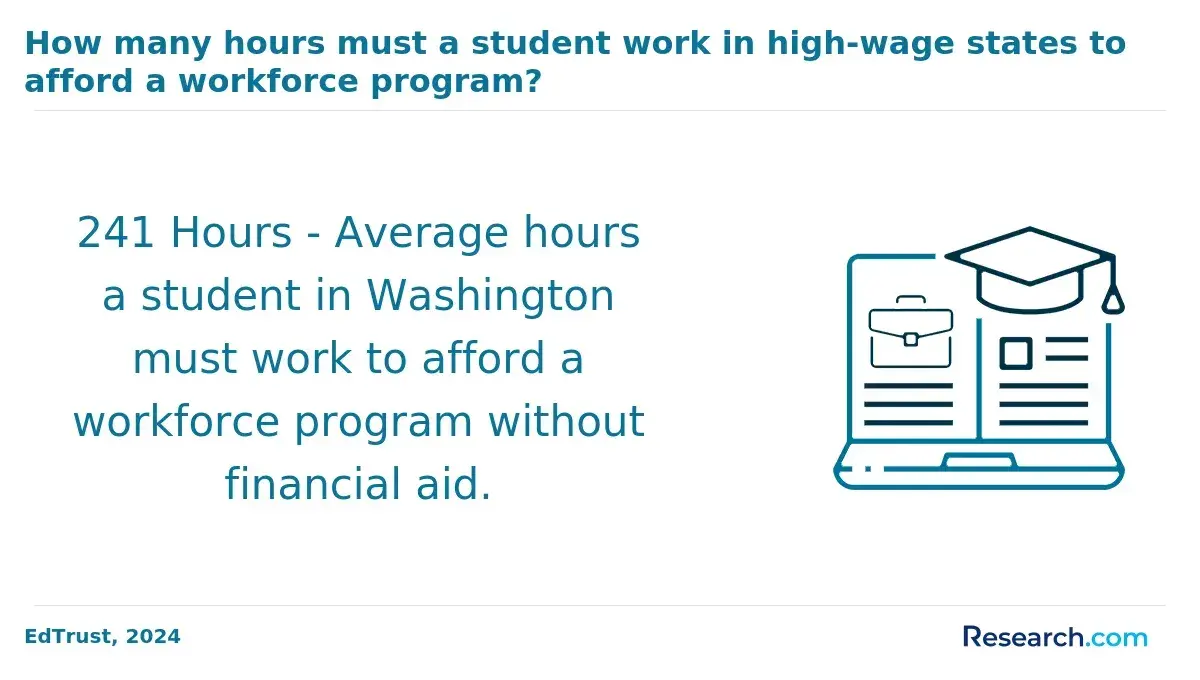
Financial pressure can also affect persistence. The College Board reported that average published tuition and fees for full-time graduate students at public four-year institutions were $12,596 in 2024-25, before living costs, fees, books, travel, and lost work time. That figure is not specific to doctoral programs, but it shows why even "manageable" tuition can become a serious long-term planning issue.
The most common completion problems are predictable. Recognizing them early gives students a chance to respond before they become program-ending barriers:
- Underestimating the workload: Students assume doctoral study will feel like a master's program, then fall behind on reading, writing, and research.
- Choosing a topic that is too broad: Ambitious topics can become impossible to research within the program timeline.
- Waiting too long to build research skills: Students postpone statistics, qualitative analysis, or literature review practice until the dissertation phase.
- Weak advisor communication: Unclear expectations can lead to repeated revisions, missed deadlines, or confusion about committee standards.
- Poor program fit: A student's interests may not match faculty expertise, available courses, or the program's dissertation model.
- Work and family overload: Full-time employment, caregiving, health issues, and travel can make consistent doctoral progress difficult.
- Burnout and isolation: Online and working adult students may feel disconnected if they do not build peer or faculty support.
One red flag is a program that cannot clearly explain its dissertation process, student support model, average time to completion, or faculty advising structure. Another red flag is assuming that speed matters more than support. A shorter program is not necessarily easier if students receive limited feedback or must complete major research milestones with little guidance.
Students also struggle when they define progress only as finishing chapters. In doctoral study, progress includes narrowing a question, improving a method, getting feedback, revising a framework, cleaning data, or clarifying an argument. These steps may feel slow, but they are part of producing credible work.
What Are the Best Strategies for Successfully Completing a Higher Education Leadership Doctorate?
The best completion strategies focus on structure, fit, and steady output. Successful doctoral students do not simply "work hard"; they build systems that make progress possible during busy, uncertain seasons.
Before enrolling, evaluate programs with the same seriousness you would bring to a major career decision. Ask about accreditation, faculty expertise, dissertation models, research support, online student services, cohort structure, writing resources, and actual completion patterns. Internal comparisons of program formats and options can help, but your final choice should reflect your goals, finances, learning style, and available time.
Once you begin, use a practical completion system. These steps are especially helpful for students balancing doctoral study with professional leadership roles:
- Define your reason for earning the doctorate in one sentence so you can return to it when motivation drops.
- Choose a focused research area early, then use course papers to test parts of the literature, theory, or method.
- Schedule doctoral work in recurring blocks each week, including at least one protected writing block when your energy is highest.
- Meet with your advisor before you feel stuck, not only after you have a complete draft.
- Keep a decision log for topic changes, committee feedback, data access questions, and revision requests.
- Build a small peer group for accountability, resource sharing, and emotional support.
- Use campus or online writing centers, statistics help, library consultations, and methodology workshops before the dissertation phase.
- Limit topic changes after proposal approval unless the current plan is truly unworkable.
- Plan for high-pressure terms by reducing optional commitments before exams, proposal defense, data collection, or final revisions.
- Track progress by weekly outputs, such as pages drafted, articles summarized, interviews scheduled, data coded, or revisions completed.
It also helps to align the doctorate with your career path. If your goal is senior campus administration, choose a program with strong leadership, policy, finance, and organizational change coursework. If your goal is faculty or research work, make sure the program offers advanced methodology, publication opportunities, and faculty whose research interests match yours.
Finally, be honest about readiness. If you do not yet have the time, support, or research foundation to begin, waiting a year and preparing intentionally can be a smart decision. The goal is not just to get admitted; it is to finish with work that strengthens your professional credibility.
Other Things You Should Know About Higher Education Leadership
An EdD is usually better for practitioners who want to solve institutional leadership problems, while a PhD is usually better for students aiming for research, faculty, or policy scholarship roles. The better choice depends on your career goal, preferred research depth, and final project expectations.
You do not always need advanced statistics before admission, but basic comfort with research methods, data interpretation, and academic writing is helpful. If you feel weak in these areas, take a refresher course or ask whether the program offers research support.
Online doctorates can be respected when they come from accredited institutions with qualified faculty, rigorous coursework, strong student support, and transparent dissertation or project requirements. Employers may care more about accreditation, relevance, reputation, and demonstrated leadership outcomes than delivery format alone.
Ask about average time to completion, dissertation or project format, advisor assignment, research support, cohort size, residency requirements, tuition and fees, transfer credit, and outcomes for graduates in roles similar to your goals. Clear answers are a good sign of program transparency.
References
- The Top 3 Types of Dissertation Research Explained https://www.snu.edu/blog/the-top-3-types-of-dissertation-research-explained
- Factors Influencing Doctoral Program Completion | IntechOpen https://www.intechopen.com/chapters/88591
- How to Get a Doctorate Degree in Education: A Complete Guide https://henryharvin.ae/blog/doctorate-degree-in-education/
- Hours Required for PhD and Bachelor's https://customuniversitypapers.com/hours-required-for-phd-and-bachelors/
- Research Methods: The Ultimate Guide for Academic and Professional Success https://www.litmaps.com/articles/types-of-research-methods
- What to Expect from Ed.D. Programs - Graduate Programs for Educators https://www.graduateprogram.org/blog/what-to-expect-from-ed-d-programs/
- Choosing the Right Research Methodology for Doctoral Studies https://www.globalxpublications.com/blog/choosing-right-research-methodology-doctoral-studies
- What Do College Students Do All Day? The Answer Isnât Studying https://manhattan.institute/article/what-do-college-students-do-all-day-the-answer-isnt-studying
- What does a PhD student do all week? - Teaching and Teacher Learning https://researchblog.iclon.nl/phd-student-week/
- Research Methodology: Types, Methods and Examples https://www.thesisai.io/blog/research-methodology-types-methods-examples/