2027 Is a Business Development Online Degree Worth It?

Co-Founder and Chief Data Scientist
Choosing an online business development degree is usually a career decision, not just an education decision. The right program can help you build skills in sales strategy, market analysis, partnerships, customer growth, negotiation, and revenue planning without leaving your current job. The wrong program can leave you with debt, weak employer recognition, or coursework that does not match your goals.
Online education has become a mainstream option, with over 6 million students enrolled in distance learning programs in the US alone. For working adults, parents, career changers, and students outside major college markets, that flexibility can make a business-focused degree more accessible. Still, value depends on the program’s accreditation, cost, curriculum, career support, internship access, and how well the degree connects to roles in sales, marketing, finance, technology, consulting, and operations.
This guide explains who benefits most from an online business development degree, what trade-offs to expect, what technology you need, how long programs take, whether full-time work is realistic, how internships work, what tuition may look like, and what salary and industry outcomes graduates can consider.
Key Benefits of Online Business Development Degree
- Online business development degrees offer flexible scheduling, allowing working professionals to balance education with career and personal commitments effectively.
- Programs emphasize practical skills like market analysis and client relationship management, which align closely with current industry hiring demands.
- Graduates typically see increased job prospects and salary potential, with business development roles growing 9% faster than average, according to the U.S. Bureau of Labor Statistics.
Who Should Choose an Online Business Development Degree Program?
An online business development degree program is best for students who need career-relevant business training but cannot, or do not want to, attend campus on a fixed schedule. The format works especially well when the program is accredited, offers strong faculty access, includes applied projects, and provides career services that online students can actually use.
This path is a good fit for learners who are comfortable managing deadlines independently and who want to strengthen skills tied to revenue growth, client acquisition, partnerships, market research, and strategic planning.
- Working professionals: Online study allows employees to keep earning income while building credentials for advancement. It is especially useful for sales representatives, account managers, marketing coordinators, entrepreneurs, and operations staff who want to move into business development, partnerships, or management roles.
- Parents and caregivers: Students with family responsibilities often benefit from asynchronous courses, recorded lectures, and flexible assignment windows. The key is choosing a program with predictable deadlines rather than assuming “online” means unlimited flexibility.
- Career changers: Adults moving from retail, hospitality, customer service, communications, or technical roles may use the degree to formalize business knowledge and show employers they understand markets, customers, financial basics, and growth strategy.
- International students: Remote programs can reduce relocation barriers and provide access to US-based coursework. Students should check time-zone expectations, synchronous class requirements, language support, and whether the credential is recognized in their target job market.
- Students with mobility challenges: Online learning can remove transportation and campus-access barriers. Prospective students should still review accessibility services, captioning, exam accommodations, and the usability of the learning platform.
- Entrepreneurs and small-business owners: A business development curriculum can help owners improve customer acquisition, pricing strategy, partnerships, lead generation, and market positioning while applying coursework directly to their company.
It may not be the best fit for students who need frequent in-person coaching, prefer highly structured daily schedules, or want a campus-based network as their primary reason for enrolling. Those students may be better served by a hybrid or traditional program.
What Are the Pros and Cons of an Online Business Development Degree?
An online business development degree can be worthwhile when it improves your skills, expands your network, and leads to career opportunities at a cost you can reasonably manage. The main trade-off is that online programs require more self-direction and may offer fewer informal relationship-building moments than campus programs.
Pros of an Online Business Development Degree
- Flexible scheduling: Many online courses are asynchronous, so students can complete lectures, readings, and assignments around work shifts, travel, or family responsibilities. This is one of the biggest advantages for learners who cannot pause their careers.
- Lower cost of attendance: Online programs can reduce commuting, housing, parking, and relocation expenses. Median tuition for business development degrees ranges from $7,170 (in-state) to $34,800 (private/out-of-state), so comparing total program cost is essential.
- Immediate workplace application: Working students can often apply lessons from sales strategy, analytics, negotiation, market research, or customer relationship management to their current jobs right away.
- Broader peer network: Online cohorts may include classmates from different states, countries, industries, and career stages. That variety can strengthen discussions about real business problems and help students understand different markets.
- Digital proficiency: Online learning builds comfort with tools such as Slack and Zoom, shared documents, project dashboards, video presentations, and virtual collaboration. These skills are directly relevant to remote and hybrid business development roles.
- More program choice: Students are not limited to nearby campuses. They can compare curriculum, tuition, accreditation, transfer policies, and career support across a wider set of schools, including affordable online business degrees that may overlap with business development career goals.
Cons of an Online Business Development Degree
- Limited face-to-face engagement: Business development relies heavily on communication, relationship-building, and persuasion. Online students must be intentional about joining live sessions, requesting feedback, and building faculty and peer relationships.
- High self-discipline requirement: Flexibility can become a disadvantage for students who struggle with time management. Successful online learners usually create weekly study blocks and treat coursework like a recurring work obligation.
- Possible isolation: Without campus events and hallway conversations, some students feel disconnected. Programs with active discussion boards, group projects, mentoring, and student organizations can reduce this problem.
- Technical dependence: Unstable internet, outdated hardware, or unfamiliar software can disrupt exams, presentations, and group work. Students should test their setup before classes begin.
- Variable program quality: Not all online programs offer the same level of academic rigor, employer recognition, or career support. Accreditation, faculty qualifications, graduate outcomes, and internship access should be checked before enrolling.
Students considering a shorter completion timeline can compare standard programs with fast track programs, but speed should not come at the expense of accreditation, learning quality, or manageable workload.
How Do AI-Enhanced Virtual Classrooms Work in Online Business Development Programs?
AI-enhanced virtual classrooms use software tools to personalize learning, provide faster feedback, support collaboration, and help instructors identify students who may be falling behind. In online business development programs, these tools can make courses more interactive and closer to the data-driven environments students may encounter at work.
AI does not replace faculty judgment, mentoring, or human discussion. Its value depends on how well it is integrated into assignments, simulations, advising, and feedback.
- Personalized learning pathways: AI-powered personalized learning in online business degrees can monitor quiz results, participation, and assignment performance, then recommend review materials or more advanced work. This helps students spend more time on weak areas such as financial analysis, market segmentation, or sales forecasting.
- Automated and intelligent assessment: AI-supported quizzes and practice assignments can deliver instant feedback. Instructors can also use performance trends to see where a class is struggling and adjust lessons before major exams or projects.
- Business simulations: Virtual business simulations with artificial intelligence may place students in scenarios involving pricing decisions, customer acquisition, negotiation, competitive analysis, or market expansion. These exercises help students practice decision-making before applying those skills in internships or jobs.
- Enhanced collaboration: AI tools can support group formation, schedule coordination, discussion prompts, and moderated breakout activities. This is useful in business development coursework, where teamwork and presentation skills are central.
- Proactive student support: Chatbots and virtual assistants may answer routine questions about deadlines, platform navigation, and course resources. Analytics can alert faculty or advisors when students stop logging in, miss assignments, or show signs of falling behind.
- Career preparation: Some programs may use AI-assisted resume tools, mock interviews, role-play exercises, and feedback systems to help students practice outreach, pitching, and client communication.
Students should ask how a program protects academic integrity, student privacy, and data security when AI tools are used. They should also confirm whether AI-generated feedback is reviewed by instructors, especially for high-stakes assignments.
Students comparing online learning options later in life can also review top degree programs for seniors online for broader insight into flexible and technology-supported education pathways.
What Technology Do You Need for an Online Business Development Degree?
A reliable technology setup is not optional in an online business development degree. Students need to stream lectures, join video meetings, build presentations, analyze spreadsheets, collaborate on group projects, and submit assignments without frequent disruptions. The goal is to meet school requirements and develop the digital fluency expected in modern business roles.
- Reliable computer: A current laptop or desktop with at least an Intel i5 processor, 8GB RAM, and 256GB storage is recommended. This supports spreadsheets, presentations, browser-based learning platforms, video calls, and analytics tools commonly used in business coursework.
- High-speed internet: Consistent broadband speeds of at least 25 Mbps download and 3 Mbps upload are necessary for video lectures, live classes, group meetings, file uploads, and online exams.
- Webcam and microphone: Built-in or external devices are important for class participation, presentations, interviews, team meetings, and simulated sales or negotiation exercises. Clear audio matters more than students often expect.
- Learning management system access: Platforms such as Canvas or Blackboard are typically used for course materials, announcements, assignments, grades, feedback, and discussion boards. Students should learn the LMS before the first major deadline.
- Productivity software: Microsoft Office, especially Word, Excel, and PowerPoint, or Google Workspace is commonly used for reports, dashboards, presentations, and collaborative documents. Excel is particularly important for business analytics, budgets, forecasting, and market analysis.
- Video conferencing applications: Zoom and Microsoft Teams support live lectures, office hours, networking events, group projects, and presentations. Students should know how to share screens, record when permitted, use chat, and troubleshoot audio.
- Time management tools: Google Calendar, Trello, or Asana can help students organize deadlines, team responsibilities, readings, exams, and work obligations. Online students often succeed or fail based on calendar discipline.
- Secure storage and backup: Cloud storage or an external backup system helps prevent lost assignments. Students should also use strong passwords and multifactor authentication when available.
- Quiet workspace: Technology alone is not enough. A consistent study environment improves focus during live sessions, exams, recorded presentations, and group meetings.
Before enrolling, students should check the program’s technical requirements, exam proctoring rules, software subscriptions, and whether the school provides free or discounted access to required tools. Those planning longer academic pathways, such as a phd without a dissertation, will benefit from mastering these systems early.
How Long Does It Take to Finish an Online Business Development in 2027?
The time required to finish an online business development degree depends on degree level, transfer credits, enrollment status, term length, and whether the program uses a traditional, accelerated, or competency-based model. Students should compare pace carefully because faster programs can reduce calendar time but increase weekly workload.
- Full-time online track: A full-time bachelor’s pathway generally takes about four years and aligns with the standard 120-credit requirement. This option suits students who can carry a steady course load while keeping up with readings, projects, exams, and group work.
- Accelerated programs: Accelerated pathways can shorten the degree to 18 months to three years. These programs may accept transfer credits, use condensed terms as short as 5-8 weeks, and require more intensive weekly study. They are best for students with strong time management and few competing obligations.
- Part-time enrollment: Part-time study may extend the program to five or six years or longer. This route is often more realistic for full-time workers, caregivers, and students who need to limit tuition payments per term.
- Self-paced and competency-based models: These programs allow students to progress by demonstrating mastery rather than waiting for a traditional semester schedule. Students with prior business experience may move faster, but they still need discipline and consistent progress.
- Transfer-credit pathways: Students with prior college credits, military training, professional certifications, or associate degrees should ask for an official transfer evaluation before enrolling. Transfer policies can significantly affect both timeline and total cost.
When comparing timelines, look beyond the advertised completion speed. Ask how many hours per week students typically study, how often courses start, whether prerequisites slow progress, and whether required courses are always available when needed.
Can You Work Full-Time While Completing an Online Business Development Degree?
Yes, many students work full-time while completing an online business development degree, but it requires realistic course planning. The most successful students choose a manageable course load, protect weekly study time, communicate early with instructors, and avoid overloading themselves during demanding work seasons.
- Program pacing: Part-time enrollment or a lighter course load can make the degree more sustainable. Taking fewer courses may extend the timeline, but it can reduce burnout and improve performance.
- Asynchronous vs. synchronous courses: Asynchronous classes are usually easier for full-time workers because lectures and assignments can be completed at flexible times. Synchronous sessions require live attendance, which may conflict with work meetings, travel, or shift schedules.
- Weekly workload: Students should plan for 15-20 hours weekly for assignments and group projects. Some weeks may be heavier, especially when presentations, exams, or team deliverables are due.
- Employer support: Schedule flexibility, tuition assistance, professional development funding, and supportive managers can make a major difference. Students should ask whether their employer requires grades, course approval, or a work commitment after tuition reimbursement.
- Personal time management: A weekly calendar, early assignment review, and clear boundaries are essential. Students should block study time before the week fills with work and personal obligations.
- Group-project coordination: Business courses often include team assignments. Working students should tell group members their availability early and use shared tools to avoid last-minute conflicts.
One student who balanced a full-time job with an online business development program described the experience as “intense but rewarding.” Late evenings became study time, and weekends were reserved for larger projects. She said the most motivating part was applying coursework at work almost immediately, but she also noted that success depended on a disciplined routine and clear academic goals.
Before committing, students should test the schedule by reviewing a sample syllabus, estimating commute and family obligations, and deciding how many courses they can complete without sacrificing job performance or health.
How Do Online Business Development Degree Programs Help with Internships?
Strong online business development programs treat internships as part of career preparation, not as an afterthought. Because online students may live far from campus, the best programs provide remote-friendly career services, employer connections, and clear guidance on how to find, apply for, and complete internships locally or virtually.
- Partnership networks: Many programs build relationships with startups, corporations, nonprofits, agencies, and local employers. These connections can give students access to internship listings related to sales operations, partnerships, market research, client success, and business analysis.
- Career services support: Advisors can help students identify suitable internships, prepare resumes and cover letters, practice interviews, and position prior work experience in a business development context.
- Mentorship programs: Some online degrees connect students with faculty mentors, alumni, or industry professionals who can explain job expectations, review career goals, and help students navigate professional networking.
- Virtual placement coordination: Online platforms may track applications, deadlines, employer contacts, and internship requirements. This helps students stay organized, especially when applying to multiple roles.
- Simulated practicum projects: Programs may include applied assignments that resemble internship tasks, such as lead generation, market research, competitive analysis, sales presentations, or partnership proposals.
- Remote internship options: Business development work is often compatible with remote projects, including CRM cleanup, market mapping, outreach planning, proposal support, and digital campaign analysis. Students should confirm whether remote internships qualify for credit.
- Academic credit and supervision: If an internship is required or optional for credit, students should understand hour requirements, evaluation methods, faculty supervision, and employer documentation before accepting a placement.
Students should ask direct questions before enrolling: Does the program guarantee internship support or only provide job boards? Are online students eligible for the same services as campus students? Can students complete internships in their own city? Are paid internships available? Clear answers can reveal how serious a program is about career outcomes.
What Is the Average Tuition Cost of an Online Business Development Program?
The average tuition cost of an online business development program varies by institution type, residency status, credit requirements, transfer credits, and fees. Students should compare total cost of completion, not just tuition per credit, because online program fees, technology charges, and transfer-credit policies can change the final price.
- Average tuition per credit: Public colleges typically charge around $337 per credit hour for in-state students. Private colleges average about $516 per credit. These figures provide a starting point, but published tuition does not always reflect aid or fees.
- Annual and total costs: Median yearly tuition for public four-year institutions stands near $9,361, while private school averages hit approximately $9,775. The total cost for a full undergraduate online business development degree at a private college can exceed $63,000.
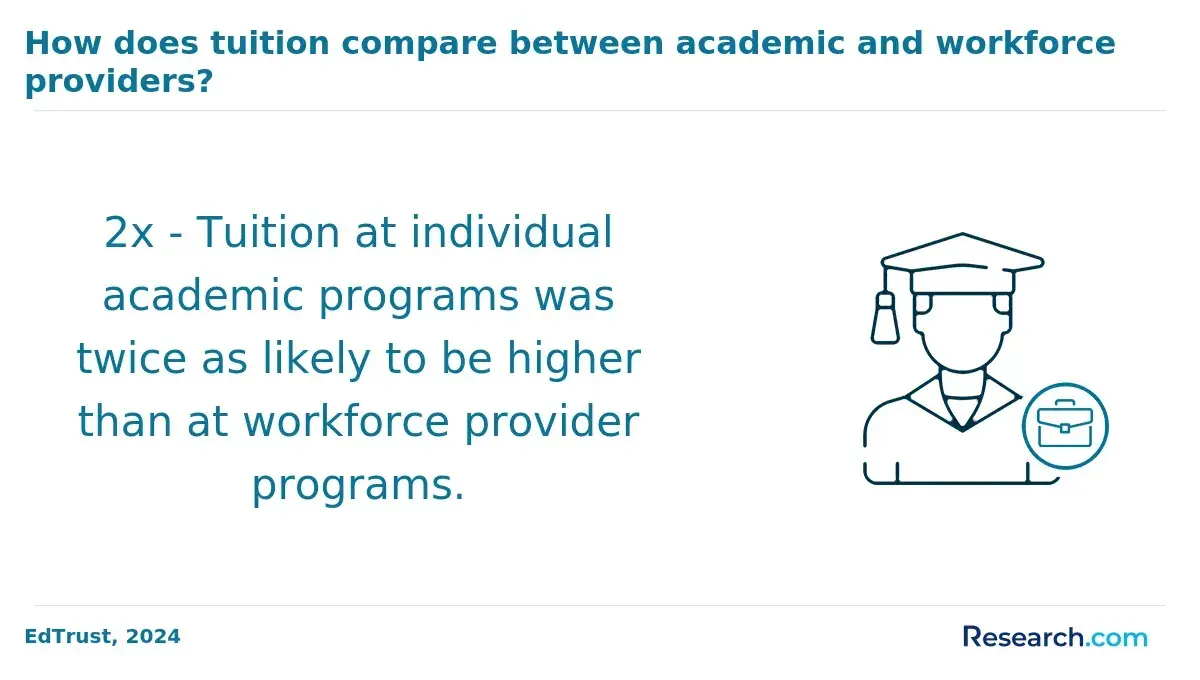
- In-state vs. out-of-state rates: Public universities often charge lower tuition to in-state students. For example, a public undergraduate business degree ranked at about $6,168 for residents, versus over $18,500 for non-residents. Out-of-state tuition can be two to three times the in-state cost.
- Private vs. public institutions: Private universities may have higher sticker prices, but institutional scholarships can reduce the amount students actually pay. Public institutions may be more affordable for residents, especially when they offer online tuition rates that do not vary by location.
- Additional fees: Students should budget for technology charges, online program fees, proctoring costs, platform access fees, textbooks, software, graduation fees, and possible course materials. These can add several hundred to thousands of dollars throughout the degree.
- Transfer-credit impact: Accepted transfer credits can reduce both time and tuition. Students should request an official evaluation before enrolling, especially if they have prior college coursework or professional training.
- Financial aid and employer support: Eligible students should complete required financial aid forms, compare scholarship options, and ask employers about tuition assistance. Aid policies vary, and not every program qualifies for every funding source.
One student pursuing an online business development degree described tuition planning as one of the most stressful parts of enrollment. He said he had to compare program costs carefully, track fees, and weigh scholarships against out-of-pocket expenses. “I had to carefully compare program costs and weigh potential aid,” he explained.
His experience highlights a common lesson: affordability depends on the net price, not the advertised tuition. Before committing, students should request a written cost estimate, confirm how many credits are required after transfer review, and calculate whether expected career benefits justify the investment.
What Is the Average Salary for Someone with an Online Business Development Degree in 2027?
Salary outcomes for graduates of online business development programs depend on role, experience, industry, location, performance, and degree level. Employers typically care less about whether the degree was online and more about whether it came from an accredited institution and whether the graduate can show relevant skills in growth strategy, sales, analytics, communication, and relationship management.
- Average entry-level salary: Business development associates starting their careers typically earn between $55,000 and $56,000 annually. Entry-level roles often focus on prospect research, outreach, CRM updates, sales support, and market analysis.
- Mid-career salary: Professionals with several years of experience may earn between $70,000 and $88,000. Higher compensation is more likely when employees manage accounts, partnerships, sales pipelines, revenue goals, or strategic initiatives.
- Salary by industry: Finance and media business development roles usually offer salaries averaging around $75,000, while technology or retail positions generally hover near $60,000. Industry choice can significantly affect earning potential.
- Geographic variation: Location matters. Cities like San Francisco and San Diego often feature average salaries exceeding $100,000. Remote roles may pay based on the employee’s residence, the employer’s compensation policy, or the labor market for the role.
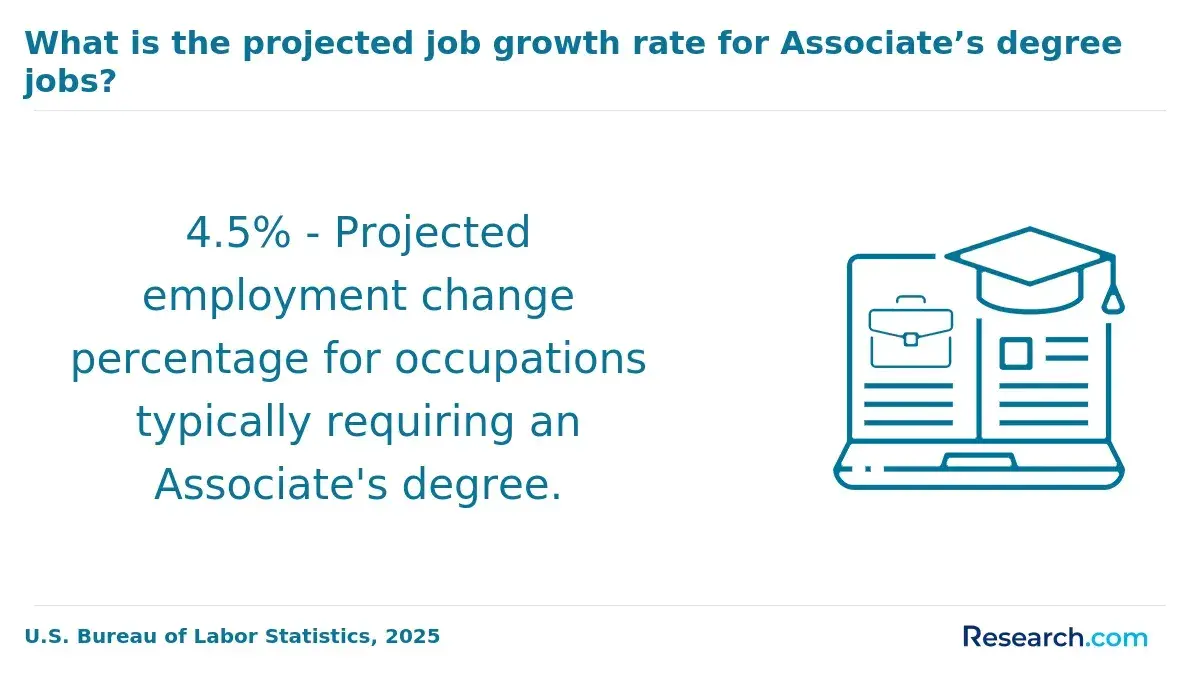
- Impact of degree level: Salaries also correlate with education level. Those with a master’s degree can expect average salaries near $83,500, which is substantially higher compared to bachelor’s degree holders at $71,500 or associate degree graduates at $57,100, according to Zippia.
- Experience and measurable results: In business development, compensation often rises when professionals can prove revenue impact, successful partnerships, lead conversion, client retention, or market expansion results.
The business development manager remote salary 2025 can vary widely, especially when bonuses, commissions, equity, or performance incentives are involved. Students should review job postings in their target industry and location before assuming a degree alone will lead to a specific salary.
Prospective students comparing schools can review the list of best online universities to evaluate accredited online options and broader program choices.
Which Industries Hire Graduates From Online Business Development Programs?
Graduates from online business development programs can work in many sectors because the core skills are transferable: identifying growth opportunities, understanding customers, analyzing markets, building relationships, supporting sales strategy, and coordinating cross-functional projects. The best industry for a graduate depends on their interests, prior experience, technical knowledge, and compensation goals.
- Technology and IT services: Technology companies, including global firms like Microsoft and startups, hire business development talent to support strategic partnerships, product launches, account growth, channel development, and market expansion. Common roles include project manager, strategic partnerships lead, and business analyst.
- Finance and banking: Banks, fintech firms, investment companies, and insurance organizations need professionals who understand market analysis, client relationships, compliance-aware growth, and financial products. Roles may include business development manager, financial analyst, and credit analyst.
- Retail and ecommerce: Retailers and ecommerce companies rely on growth professionals to improve sales strategy, customer acquisition, vendor relationships, category expansion, and operations. Digital commerce experience can be especially valuable.
- Manufacturing and logistics: Graduates may support supplier relationships, procurement strategy, production coordination, distribution partnerships, and supply chain efficiency.
- Marketing and advertising: Agencies and in-house marketing teams hire business development professionals to identify prospects, prepare proposals, analyze campaign opportunities, and grow client accounts.
- Hospitality and tourism: Hotels, travel companies, event firms, and destination organizations use business development skills to build partnerships, improve profitability, expand corporate accounts, and strengthen customer experience.
- Consulting: Consulting firms hire analysts and associates to research markets, prepare client materials, evaluate business problems, and support growth recommendations across industries.
- Healthcare and life sciences: Business development roles may involve provider partnerships, service-line growth, vendor relationships, market research, and expansion planning, though some positions may require specialized industry knowledge.
- Nonprofit and education: Organizations in these sectors may hire graduates for partnerships, fundraising strategy, employer relations, community outreach, and program growth.
Business development careers in technology and finance can be attractive because they often combine growth strategy, data analysis, client interaction, and remote or hybrid work options. Graduates who want to add targeted credentials can explore a certification that pay well to complement the degree and strengthen a specific skill area.
What Graduates of Online Business Development Programs Say About Their Degree
- : "“From a professional standpoint, the structured yet adaptable nature of the online business development degree allowed me to enhance my skills without interrupting my workflow. The program’s affordability, compared to on-campus alternatives, reinforced that this was a prudent choice for advancing my career goals. I appreciate how it combined convenience, quality, and value.” — Caleb"
- : "“Reflecting on my journey, the online business development degree offered a comprehensive curriculum that balanced theoretical knowledge with practical application. It positively impacted my career by opening doors to leadership roles, all while saving me the expense and time of traditional schooling. The cost efficiency truly justified the commitment.” — Hayden"
- : "“Pursuing an online business development degree was a game changer for me. The flexibility to learn at my own pace without compromising my job made the experience truly worthwhile. Plus, considering the average cost of attendance was quite” — Iker"
Other Things You Should Know About Business Development Degrees
Choose a program from a school accredited by a U.S. Department of Education-recognized agency, such as the Higher Learning Commission or SACSCOC. For business programs, AACSB accreditation is the strongest specialist standard, and employers often check regional accreditation first.
Yes, these degrees often cater to adult learners and professionals seeking to switch careers. The flexible structure and practical curriculum help learners acquire relevant skills quickly without the need to pause existing work commitments. Career services provided by many programs can also assist in transition planning and job placement.
References
- Top High Paying industries hiring online MBA graduates in 2025 https://amityonline.com/blog/top-industries-hiring-online-mba-graduates
- Is Online College Business Degree Really Worth It? — Super Business Manager https://www.superbusinessmanager.com/is-online-college-business-degree-really-worth-it/
- Online vs. Traditional Business Administration Degrees: What’s Best for You? | UAGC https://www.uagc.edu/blog/online-vs-traditional-business-administration-degrees-whats-best-you
- AI for Leaders https://online.hbs.edu/
- Stevenson University https://www.stevenson.edu/online/about-us/news/how-long-does-it-take-to-get-a-business-degree-online/
- Technological Requirements and Tools for an Online MBA https://online.mason.wm.edu/blog/technological-requirements-and-tools-for-an-online-mba
- Pros and Cons of Studying Online BBA Degree in 2023 https://www.dypatilonline.com/blogs/pros-and-cons-of-studying-online-bba-degree-in-2023
- Online Business Development Degree | All Bachelor's Degrees https://allbachelordegrees.com/degrees/business-management/business-development-sales/comprehensive-guide-on-online-business-development-degrees/
- Faculty & Research https://www.ceibs.edu/new-papers-columns/26383
- Can You Get an MBA While Working Full Time? https://onlinemba.howard.edu/blog/online-mba-while-working-full-time/