2027 Best Online Business Development Degree Programs at Nonprofit Universities

Co-Founder and Chief Data Scientist
Choosing an online business development degree is difficult because programs are often labeled business administration, marketing, sales management, or management rather than "business development." The decision matters: the U.S. Bureau of Labor Statistics projects 11% growth for management analysts from 2023 to 2033, faster than the average for all occupations. This guide helps prospective students compare nonprofit university programs by academic quality, total cost, online format, transfer policies, and career relevance so they can identify an option that fits their goals rather than relying on nonprofit status or tuition alone.
Key Things You Should Know
- The strongest online business development options are usually institutionally accredited business, marketing, management, or sales-focused degrees with coursework in market research, negotiation, CRM systems, analytics, and strategic growth.
- Cost varies sharply by institution type: College Board reported average 2024-25 published tuition and fees of $11,610 at public four-year in-state institutions and $43,350 at private nonprofit four-year institutions, before aid.
- For career alignment, compare curriculum and experiential learning against target roles; management analysts had a 2023 median annual wage of $99,410, but a degree alone does not assure entry into that occupation.
What Makes an Online Business Development Degree Program at a Nonprofit University Different?
An online business development degree prepares students to identify growth opportunities, build client relationships, evaluate markets, develop partnerships, and support revenue strategy. Because "business development" is not a standardized degree title, students commonly find relevant preparation in a Bachelor of Business Administration, bachelor's degree in marketing, management degree, sales management concentration, or MBA with a growth-oriented specialization.
Nonprofit universities include public institutions and private nonprofit institutions. Their surplus revenue is generally reinvested in the educational mission rather than distributed to owners, but this legal status does not by itself establish academic quality, affordability, transfer friendliness, or employment value. The more meaningful comparison is between each program's accreditation, curriculum, faculty access, total price, and student outcomes information.
Program labels can point to different career preparation. This comparison helps students identify the degree format that most closely matches their intended work.
| Program type | Typical fit | Business development relevance | Common timeline |
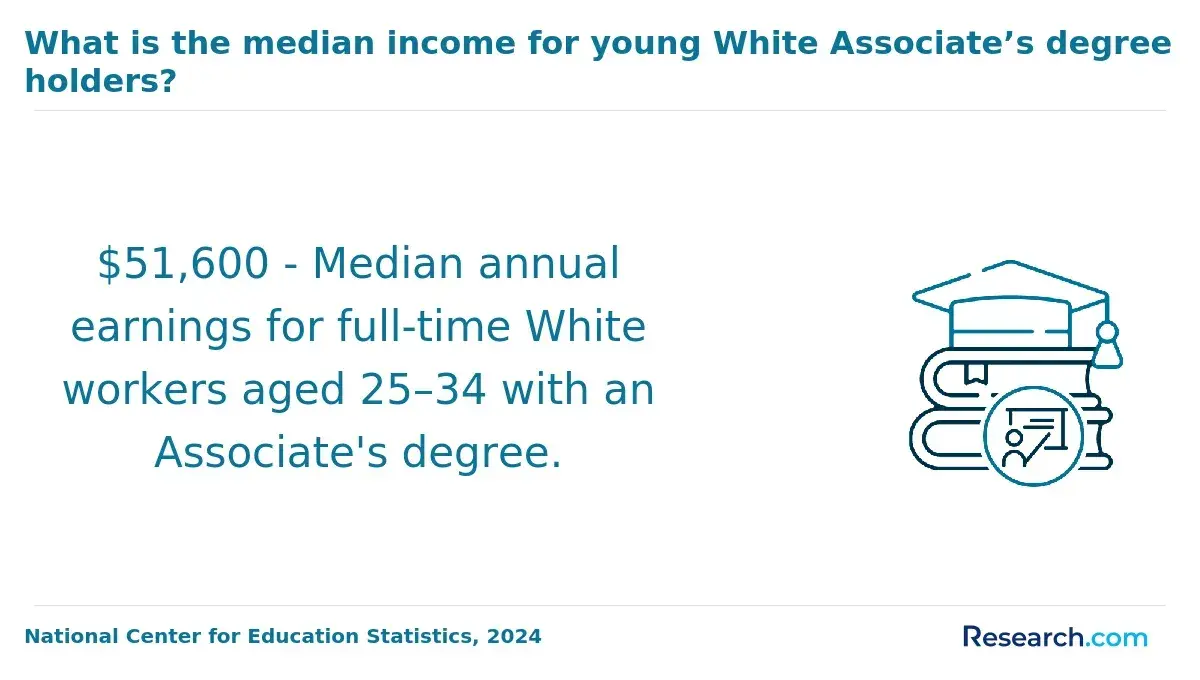
| Associate degree in business | Students seeking an entry point or lower-cost transfer pathway | Foundational selling, communication, accounting, and business concepts | About two years full time |
| Bachelor's in business administration | Students pursuing broad entry-level business careers | Strategy, finance, marketing, operations, and management foundations | About four years full time; less with transfer credit |
| Bachelor's in marketing or sales | Students targeting customer acquisition and market-facing roles | Buyer behavior, market research, digital marketing, sales, and account management | About four years full time |
| MBA or specialized business master's | Professionals with prior undergraduate study and often work experience | Advanced strategy, leadership, analytics, and organizational growth | About one to two years full time; longer part time |
Students interested in business development within travel, lodging, events, or tourism should compare the general business curriculum with an online hospitality degree, which may provide more direct industry knowledge but less broad corporate-business preparation.
A public nonprofit university may offer lower in-state tuition and established transfer arrangements, while a private nonprofit university may offer smaller cohorts, more frequent starts, or a specialized adult-learning model. Neither approach is automatically better. Choose a generalist degree when you want flexibility across industries; choose a specialized program when its coursework, projects, and employer connections clearly support a defined career target.
How Can Students Verify Accreditation for an Online Business Development Degree at a Nonprofit University?
Institutional accreditation is the first verification step. It indicates that the university has been reviewed by an accrediting agency recognized by the U.S. Department of Education or the Council for Higher Education Accreditation. It matters for federal financial aid eligibility, credit transfer decisions, and graduate-school admissions, although each receiving institution sets its own transfer rules.
Business programs may also hold specialized accreditation from an organization such as AACSB, ACBSP, or IACBE. Specialized accreditation can be a useful quality signal, particularly for students seeking an MBA or competitive business career, but it is not required for every legitimate or worthwhile business degree. A program without it should be judged carefully on curriculum, faculty, outcomes disclosures, and institutional accreditation rather than dismissed automatically.
Use the following process before applying. It separates verifiable evidence from marketing language.
- Confirm the university's institutional accreditation in the federal Database of Accredited Postsecondary Institutions and Programs.
- Check that the accreditor's name on the university website matches the federal listing and that accreditation is current.
- Determine whether the specific business school or program has specialized accreditation, if that distinction matters to your goals.
- Ask whether online students receive the same credential, transcript designation, faculty standards, and access to academic services as campus students.
- Request written confirmation of transfer-credit evaluation procedures and graduate-school prerequisites before enrolling.
A red flag is a school that emphasizes approval, membership, licensing, or a generic "accreditation" claim without naming the accrediting agency. Another common mistake is confusing state authorization to operate with institutional accreditation. State approval and accreditation are separate concepts.
How Rigorous Are Online Business Development Degree Programs at Nonprofit Universities?
A credible online program should be academically comparable to its campus counterpart, not simply a sequence of self-paced modules. Rigorous business development preparation typically combines business theory with applied work: interpreting market data, presenting a growth recommendation, evaluating a sales pipeline, negotiating terms, and using evidence to prioritize opportunities.
Look beyond course titles. A curriculum with "business development" in its name may still be light on analytics or sales strategy, while a broader business administration degree may offer strong electives in customer relationship management, digital marketing, entrepreneurship, or strategic management.
The following curriculum features are particularly useful because they map to common business development responsibilities.
- Market research and analytics courses that teach students to assess customer segments, demand signals, and competitive conditions.
- Sales, negotiation, and account-management coursework that develops relationship-building and proposal skills.
- Finance and managerial accounting instruction that helps students evaluate margins, pricing, budgets, and growth trade-offs.
- Strategy, entrepreneurship, or international business courses that connect daily opportunity work to organizational goals.
- Capstones, simulations, internships, consulting projects, or case competitions that require students to apply concepts in realistic settings.
Admissions standards, proctored assessments, team projects, required participation, and faculty feedback can all affect rigor. Asynchronous courses may be demanding even without live meetings; students should review weekly workload expectations and grading policies rather than assuming flexibility means less academic work.
For experienced professionals who need graduate-level strategic training, an MBA can be more appropriate than a second bachelor's degree. Compare concentration options, work-experience expectations, and total cost when reviewing a cheap online MBA.
How Much Does an Online Business Development Degree Cost at a Nonprofit University?
The advertised per-credit tuition rate is only one part of the investment. Students should calculate total program cost using the number of credits they must actually complete after transfer evaluation, then add required fees, textbooks or courseware, technology charges, residency travel, testing fees, and any internship-related expenses.
College Board reported that average published 2024-25 tuition and fees were $11,610 for public four-year in-state students and $43,350 for private nonprofit four-year students. These are sector-wide averages, not online-program prices or net prices after grants, so they are useful as a broad cost benchmark rather than a quote for any particular university.
| Cost factor | Public nonprofit university | Private nonprofit university | What to verify |
| Tuition basis | May vary by in-state, out-of-state, or online residency category | Often one tuition rate, though rates vary by program | Whether online learners qualify for a special rate |
| Transfer credit | May follow statewide or system agreements | May use individualized evaluation policies | Maximum transferable credits and course-age limits |
| Institutional aid | May be limited for nonresidents or online learners | May offer merit or adult-learner scholarships | Eligibility, renewal terms, and aid for part-time enrollment |
| Required fees | Technology, distance-learning, and course fees may apply | Technology and program fees may apply | All mandatory fees and whether they change by term |
A low per-credit price is not always the lowest total cost. A transfer-friendly program that accepts more applicable credits may cost less overall than a cheaper program requiring students to repeat coursework. Conversely, an accelerated private nonprofit option can be worthwhile only if its schedule, support, and financing fit the student's circumstances without creating unsustainable borrowing.
What Financial Aid Is Available for an Online Business Development Degree at a Nonprofit University?
Eligible students at accredited nonprofit institutions may use federal financial aid, including Pell Grants for qualifying undergraduate students, Direct Loans, and work-study where available. Aid eligibility depends on citizenship or eligible noncitizen status, enrollment level, satisfactory academic progress, financial circumstances, degree level, and other federal requirements.
Students should submit the Free Application for Federal Student Aid early and compare each university's aid offer by grant amount, loan type, projected borrowing, and net cost. A larger scholarship offer is not necessarily better if the school's starting tuition and fees are substantially higher.
In addition to federal aid, students may have several funding routes to investigate.
- Institutional merit, need-based, transfer, military-affiliated, or adult-learner scholarships offered by the university.
- Employer tuition assistance or reimbursement, especially for students already working in sales, operations, marketing, customer success, or account management.
- State grants for residents, which may have enrollment, institutional, or program-format restrictions.
- Private scholarships from professional associations, local organizations, and employers, with attention to deadlines and renewal requirements.
- Payment plans that spread charges across a term but do not reduce the total cost.
Borrow cautiously and compare annual borrowing against likely completion time and the career path you intend to pursue. Federal student loans generally provide borrower protections that private loans may not, but individual circumstances vary. Ask the financial aid office whether scholarships apply to online, part-time, and accelerated enrollment before treating them as part of your budget.
How Flexible Are Online Business Development Degree Programs at Nonprofit Universities?
Online delivery can reduce commuting and allow students to study from home, but flexibility is not identical across programs. Asynchronous courses generally let students complete lectures and discussions within weekly deadlines. Synchronous courses require live sessions at set times. Hybrid programs may add campus visits, residencies, presentations, or proctored exams.
Working adults should ask for a sample course schedule rather than relying on phrases such as "100% online" or "self-paced." A program can be fully online while still requiring group meetings, internship hours, fixed exam windows, or weekly attendance.
Different formats fit different needs. The table below helps students match scheduling structure with likely trade-offs.
| Format | Best for | Main advantage | Potential limitation |
| Mostly asynchronous | Students with changing work or caregiving schedules | Greater control over when weekly work is completed | Requires strong time management and may offer less real-time interaction |
| Scheduled synchronous online | Students who value live instruction and cohort contact | Regular access to faculty and peers | Meeting times can conflict with work or time zones |
| Accelerated terms | Students able to focus on fewer courses at once | Potentially faster progression through the curriculum | Compressed deadlines can increase weekly workload |
| Part-time traditional terms | Working students seeking a steadier pace | More time for readings, projects, and work obligations | Longer time to degree and possibly more exposure to tuition increases |
Students comparing formats across career fields may also notice that flexibility policies differ considerably in programs such as accelerated MSW programs. The lesson applies here as well: confirm required live participation and fieldwork separately from the online course designation.
What Student Support Services Do Nonprofit Universities Provide for Online Business Development Degree Students?
Online students need more than a learning management system. The most useful support model includes access to academic advising, financial aid counseling, library databases, tutoring, career coaching, technical assistance, disability services, and faculty office hours. Availability may differ for online learners, so students should verify access before depositing or enrolling.
Career support is particularly important in business development because job titles vary widely. Relevant services include résumé review, interview practice, networking events, internship guidance, job-search platforms, alumni outreach, and help translating coursework into skills employers recognize.
Ask each university how it delivers the following services to distance learners and whether there is an added fee.
- Dedicated academic advising that helps students sequence prerequisites, transfer credits, electives, and graduation requirements.
- Career coaching that supports targeting roles such as business development representative, sales representative, account executive, partnership coordinator, market research analyst, or management analyst.
- Virtual library and research support for market analysis, company research, and capstone work.
- Accessible technical support with clear response times during evenings and weekends.
- Professional networking opportunities, employer events, alumni mentoring, and internship or project connections.
Students considering leadership roles in education, training, or organizational development may eventually pursue a doctorate of education. In that case, ask whether the business degree includes research, leadership, and statistics coursework that can strengthen later doctoral applications.
Do Online Business Development Degree Programs at Nonprofit Universities Prepare Graduates for In-Demand Careers?
They can prepare graduates for growth-focused business roles when the program builds relevant skills and students develop evidence of applied work. Business development is usually a function rather than a single occupation. Employers may use titles such as business development representative, partnerships associate, sales operations analyst, account manager, market research analyst, growth manager, or management analyst.
The U.S. Bureau of Labor Statistics projects 11% employment growth for management analysts from 2023 to 2033. This occupation often requires a bachelor's degree and related experience, making internships, client-facing work, analytics projects, and industry knowledge important complements to a degree. Business development graduates should not assume they will enter a senior analyst or management role immediately after graduation.
Career preparation is strongest when students can demonstrate the following capabilities to employers.
- Researching markets, competitors, buyer needs, and potential partners using credible data sources.
- Communicating value propositions through presentations, proposals, emails, and stakeholder conversations.
- Interpreting sales, financial, or customer data to recommend priorities and measure results.
- Using customer relationship management platforms and collaborating with marketing, sales, finance, and operations teams.
- Managing projects, negotiating appropriately, and documenting progress in a professional portfolio.
AI tools are changing routine research, outreach drafting, and data summarization, but they do not eliminate the need for judgment, relationship management, ethical decision-making, and commercial understanding. Favor programs that teach data literacy and responsible technology use while still requiring students to explain and defend business recommendations.
Can an Online Business Development Degree From a Nonprofit University Prepare Students for Graduate School?
Yes, an institutionally accredited online bachelor's degree can prepare students for graduate study if it includes the prerequisites, academic performance, and evidence of readiness required by the receiving program. Graduate admissions policies differ, so prospective students should not assume that any business bachelor's degree automatically meets requirements for an MBA, specialized master's degree, or doctoral program.
A bachelor's degree is usually the appropriate first step for students without undergraduate credentials. An MBA often fits professionals seeking broad management and leadership development after gaining work experience. A specialized master's may be better for students who want deeper preparation in areas such as analytics, marketing, finance, or entrepreneurship. Doctoral study is generally appropriate for research, academic, or senior leadership goals rather than an automatic next credential for business development careers.
- Whether the curriculum includes statistics, economics, accounting, finance, research methods, and quantitative analysis where relevant to future programs.
- Whether online courses carry the same academic credit and transcript treatment as campus courses.
- Whether students can build relationships with faculty who may provide informed recommendations.
- Whether capstone, research, or applied projects create writing samples and evidence of analytical ability.
- Whether the planned graduate program expects work experience, standardized testing, prerequisite courses, or a minimum GPA.
Students changing into helping professions should recognize that a business degree is not interchangeable with discipline-specific preparation. For example, clinical psychology masters programs online may have psychology coursework, practicum, and state-specific requirements that a business curriculum does not satisfy.
How Should Students Compare the Best Online Business Development Degree Programs at Nonprofit Universities?
The best program is the one that meets your target career requirements at a manageable total cost and schedule. A recognizable nonprofit university may be appealing, but a well-informed choice requires comparing the exact degree pathway rather than institutional reputation alone.
Start by reducing your options to programs with valid institutional accreditation, a clear online-delivery model, and coursework relevant to your career target. Then use the same questions for every finalist so that an attractive marketing message does not outweigh important differences.
| Comparison category | What to examine | Decision value |
| Degree and concentration | Business administration, marketing, management, sales, analytics, or entrepreneurship curriculum | Shows whether the program develops skills for your intended role |
| Accreditation | Institutional accreditation and any business-school accreditation | Supports aid eligibility, transfer planning, and graduate-school confidence |
| Total net cost | Credits remaining after transfer, tuition, mandatory fees, aid, and expected borrowing | Produces a more realistic affordability comparison than sticker price |
| Schedule design | Term length, live sessions, deadlines, residencies, and course load | Determines whether the program works with employment and family obligations |
| Career preparation | Internships, projects, CRM or analytics exposure, career coaching, and employer connections | Helps translate academic learning into job-search evidence |
| Student outcomes information | Retention, graduation, transfer, and career data when published | Provides context, though outcomes may vary by student background and program |
Use this short process to make a final decision based on evidence rather than assumptions.
- Write down one or two target job titles and identify the skills, degree level, and experience those roles commonly request.
- Review the full degree plan for each school and mark courses that directly build those skills.
- Request a transfer-credit evaluation and a written estimate of credits remaining before comparing total prices.
- Ask admissions or program staff about synchronous requirements, internships, residencies, faculty access, and online student services.
- Compare financial aid offers using net cost, loan terms, scholarship renewal rules, and your expected enrollment pace.
- Choose the program that delivers the strongest practical alignment within your budget and available time, not simply the lowest tuition or highest-profile name.
Common mistakes include assuming all nonprofit institutions have the same quality, overlooking mandatory fees, accepting an unofficial transfer estimate, and choosing a program without reviewing the required course sequence. Students should also avoid treating salary information as a promise; location, experience, industry, performance, and the broader labor market all affect career outcomes.
Other Things You Should Know About Business Development
Business development and sales overlap, but they are not identical. Sales often focuses on closing revenue with customers, while business development may include market expansion, partnerships, strategic accounts, new offerings, and long-term growth opportunities. Many entry-level roles combine both responsibilities.
Helpful credentials depend on the job target. Students may consider training in customer relationship management platforms, analytics tools, project management, digital marketing, or sales methodologies. Review job postings in your desired industry before paying for a credential.
An internship is not always required, but it can be highly valuable. It provides examples of market research, outreach, account support, reporting, or project work that students can discuss in interviews. Working students can also seek relevant responsibilities through their current employer.
Yes. A general business degree can be suitable when it includes marketing, communication, finance, analytics, and management coursework. Students can strengthen the degree through electives, projects, internships, and a portfolio that demonstrates customer and growth-oriented skills.
References
- A Better Deal? Comparing Alumni's Experiences with Online Degrees at For-Profit and Nonprofit Colleges - Public Agenda https://publicagenda.org/resource/a-better-deal-comparing-alumnis-experiences-with-online-degrees-at-for-profit-and-nonprofit-colleges/
- What do you learn in a bachelor's in entrepreneurship? | edX https://www.edx.org/resources/what-do-you-learn-in-a-bachelors-in-entrepreneurship
- Can Online Colleges Offer Competitive Career Outcomes? https://www.onlineu.com/magazine/popular-online-schools-career-outcomes
- What Can You Do With a Business Degree? | ACE Blog https://ace.edu/blog/what-can-you-do-with-a-business-degree/
- The Most Affordable Online Christian Associate's in Business Degree - City Vision University https://www.cityvision.edu/lp/christian-business-degree-program-online-associates/
- UNC's Undergrad Business Program Reports 99% Success Rate For Class Of 2025 https://poetsandquantsforundergrads.com/first-jobs/uncs-undergrad-business-program-reports-99-success-rate-for-class-of-2025/
- NACUBO Study Finds Private Colleges and Universities Are Offering Record Financial Aid to Students https://www.nacubo.org/Press-Releases/2025/NACUBO-Study-Finds-Private-Colleges-and-Universities-Are-Offering-Record-Financial-Aid-to-Students
- Industry Insights - Legacy Education https://legacyed.com/industry-insights/
- Online Business Degree Programs | University of Phoenix https://www.phoenix.edu/online-business-degrees.html