2027 Is a BS in Business Administration Useful for Running A Subscription Business? Degree Fit and Opportunity Cost
Audited and Verified:
Our Editorial and Data Verification Process
Research.com uses government datasets, official education statistics and primary institutional information to support its career and degree guides. Our review process checks factual accuracy, occupational definitions, source dates and the requirements associated with the credentials discussed.
How This Article Was Fact-Checked
Our editorial team verifies salary estimates, employment projections, education requirements and program information against original data providers and official organizations. Salary figures are checked against the relevant occupational definitions and reporting periods. Information about licensure, accreditation and required in-person training is reviewed separately.
Fact-checked and verified on:

Co-Founder and Chief Data Scientist
A subscription business needs more than a product people like: it must retain customers, collect payments reliably, and earn enough from each account to cover its costs. For an owner considering a BS in Business Administration, the decision is whether broad business training is worth the tuition and time away from building the company.
This article compares what the degree can teach, what it usually cannot, and when targeted learning may be the better investment. It also shows how to evaluate a program against your business's immediate needs and longer-term career options.
Key Things You Should Know
- A BS in Business Administration can strengthen accounting, marketing, operations, and decision-making, but it is not required to own a subscription business or a substitute for testing retention with real customers.
- Compare the full cost of remaining credits, fees, financing, and study time with a smaller course, mentor-led project, or direct investment in the business.
- The U.S. median annual wage for market research analysts was $78,760 in May 2025; that occupation-wide figure is not a predicted salary for a business graduate or founder.
Is a BS in Business Administration useful for running a subscription business?
Yes, if you need broad business capabilities as well as founder-specific skills - and can afford the time to develop them. A subscription business earns recurring payments for continuing access, products, or services. Its central challenge is not simply making a sale; it is delivering enough ongoing value that customers stay while revenue covers acquisition, service, fulfillment, and overhead costs.
A general business degree can help an owner connect pricing, customer research, cash flow, and operating capacity. Its limits matter just as much: a course may explain a marketing framework without teaching you to configure billing software, investigate a failed-payment workflow, or interview your particular customers. Those skills require practice with suitable tools and data.
The best route depends on whether you need a broad foundation, a narrower fix, or firsthand evidence that the business works. This comparison keeps the owner's goal, not the credential's prestige, at the center.
| Path | Best fit | Main limitation |
| BS in Business Administration | Owners who need several business functions and value a bachelor's degree as a career option | Substantial time and cost; subscription-specific work depends on course and project choices |
| Targeted courses or certificate | Owners with a defined gap, such as accounting, analytics, or digital marketing | Less breadth; a certificate is not a bachelor's degree |
| Mentored business testing | Owners who need to validate an offer, pricing, or retention process now | Results may reveal what works without building a broad academic foundation |
If time is your binding constraint, flexible accelerated bachelor's degrees may be worth examining. Check the actual weekly workload before assuming a shorter calendar makes study easier alongside a launch.
What skills does a business administration degree teach subscription business owners?
The most useful skills connect customer behavior to financial and operational decisions. Accounting helps distinguish cash collected from profit earned. Marketing and research help identify which customers value the continuing service. Operations courses address whether the company can deliver that service consistently; analytics helps the owner interpret changes without mistaking a short-lived pattern for proof of success.
For example, churn is the loss of subscribers over a defined period. An owner should state whether the measure counts customers or recurring revenue, identify the starting population, and separate voluntary cancellations from failed payments when the data permits. A lower churn figure alone does not establish that a pricing change caused improvement; the customer mix or observation period may have changed.
As the company grows, management and HR knowledge becomes relevant to hiring, workload, and customer-support practices. Owners planning to build a team can explore human resources education and career options, while recognizing that introductory management coursework does not replace employment-law advice or experience supervising staff.
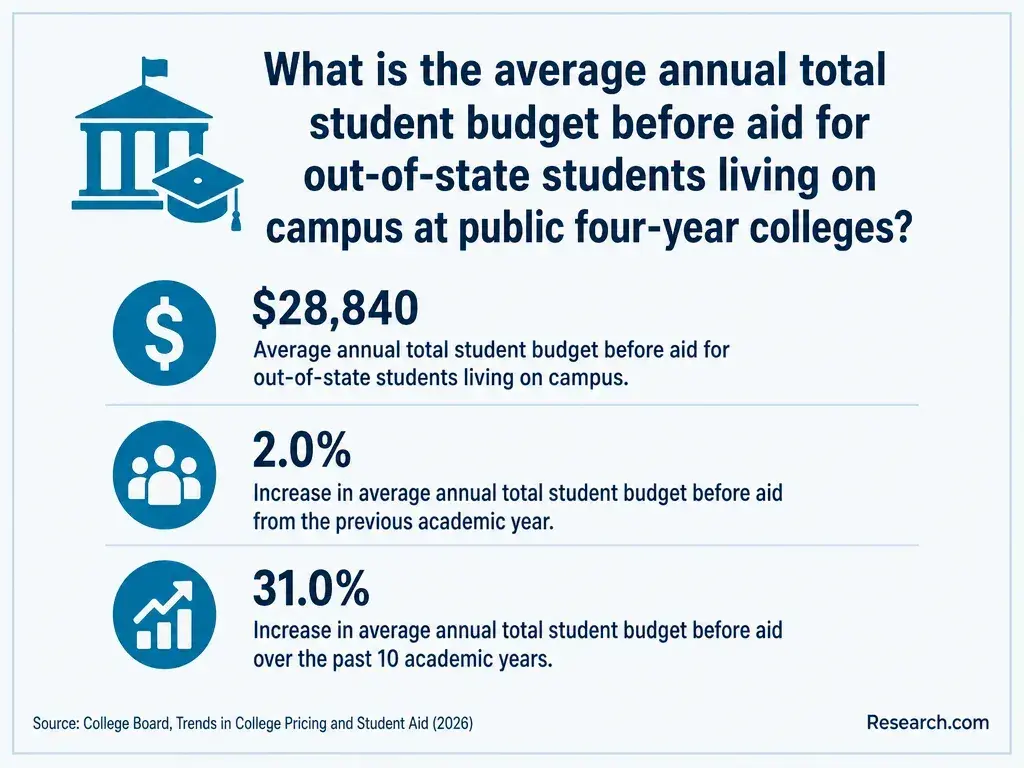
What is the opportunity cost of earning a BS in Business Administration?
Opportunity cost is what you give up by choosing the degree over the next-best use of your money and time. For a founder, that may mean fewer hours serving customers, testing an offer, or taking paid work. It can also mean delaying a useful education: a degree may make sense if you want broader career options should the venture change direction.
Compare options using the same period and a realistic schedule. Add tuition, mandatory fees, books, software, interest if borrowing, and any earnings you would actually forgo. Then identify the specific business decision each option would help you make. Do not count projected subscription sales or a future salary increase as guaranteed returns.
Before enrolling, ask for a written assessment of which prior credits apply to degree requirements, not merely how many credits the school accepts. Compare that remaining-course estimate with lower-priced accredited business administration study options. The lowest advertised tuition may not be the lowest completion cost if required courses are unavailable when you need them.
Prioritize courses by the decisions you face. Financial and managerial accounting support revenue, expense, and margin analysis; finance helps with cash planning; marketing research and analytics support customer and pricing questions; and operations or supply chain courses matter when fulfillment and service reliability drive renewals. Business law can introduce contracts and consumer obligations, but it is not legal advice.
Course titles alone are poor evidence of depth. Review syllabi for assignments that require interpreting financial statements, building a defensible forecast, analyzing customer segments, or mapping a service process. Ask whether an entrepreneurship elective or capstone can address a subscription problem using information you are permitted to share. An elective is not necessarily an official concentration, and a classroom forecast is not a validated sales result.
When you compare fast-paced online business degrees, inspect the course sequence rather than just the advertised finish date. A needed analytics elective may have a statistics prerequisite or may not run every term.
Choose the format that lets you complete the right coursework without disrupting the business's essential work. Online study may reduce travel, while campus study may make in-person collaboration and local connections easier. Neither format guarantees better learning or greater flexibility.
For an online program, verify live-session times, fixed deadlines, group projects, proctored exams, technology requirements, and any campus visits. For a campus program, check travel time and whether required classes meet during customer-service or fulfillment hours. In either format, ask whether faculty will permit an appropriately scoped project about your business and what data-use rules apply.
Use compare ranked online business schools in America as a starting point, then confirm scheduling and requirements directly with each institution. A program's delivery label cannot tell you whether its actual weekly commitments fit your operating calendar.
Requirements vary by institution and by whether you apply as a first-time student, transfer student, or returning student. Schools commonly request prior academic records; a business major may also have separate entry requirements or prerequisite courses. An admissions offer does not establish that previous coursework satisfies accounting, statistics, or other degree requirements.
Ask the admissions office what documents and deadlines apply to your situation, and request a degree audit from the office authorized to evaluate transfer credit. If application charges are a concern while you compare schools, you can find online colleges with free admissions applications. Confirm that the particular business program, delivery format, and applicant category are covered before applying.
A traditional full-time bachelor's path is commonly planned over four academic years, but an entrepreneur's remaining time depends on accepted and applicable credits, course sequencing, and study pace. Part-time enrollment may preserve operating hours while extending the calendar; accelerated terms can shorten the calendar while concentrating assignments.
There is no reliable single price for this decision. Request a personalized estimate showing remaining required courses, tuition basis, mandatory fees, materials, and any travel or technology costs. Ask financial-aid staff how your enrollment pace affects aid and borrowing. If you are comparing online business bachelor's degrees with shorter timelines, verify the timeline against your own transfer evaluation rather than another student's best-case pathway.
No general business administration degree, professional certification, or subscription-business license is required simply because customers pay recurring fees. Other obligations depend on what you sell, where you operate, and how you charge customers. A regulated product or service may require its own license; applicable business registration, tax, consumer-protection, privacy, and payment-card obligations must be checked separately.
Automatic-renewal disclosures, consent, cancellation practices, and sales-tax treatment can vary by jurisdiction and business model. Before launch or a major pricing change, identify the rules that apply to your customers and obtain qualified legal or tax advice when needed. A business course can help you recognize these issues but cannot certify compliance.
If you decide a degree serves your broader goals, financing is a separate question from legal permission to operate. FAFSA-accepting colleges for business administration students can provide comparison leads; confirm each school's current aid eligibility and your individual award with its financial-aid office.
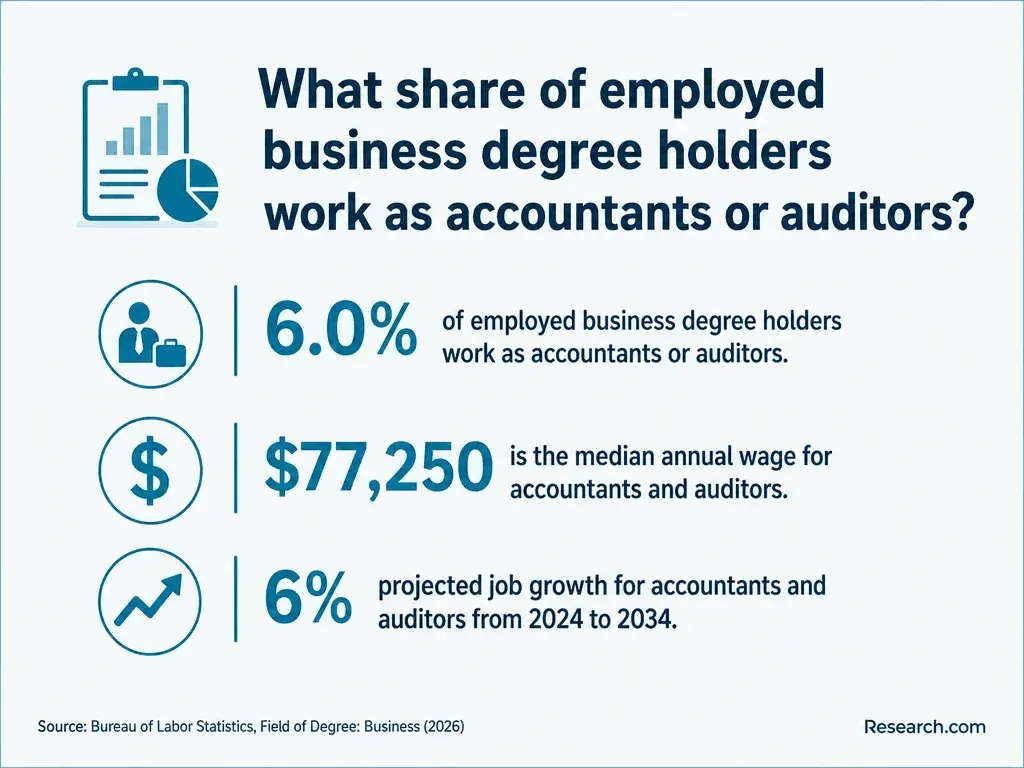
Running a subscription business can produce relevant experience in customer research, marketing, operations, and budgeting, but employers will assess what you actually did and can document. A business degree may support applications for roles such as marketing coordinator, operations coordinator, or customer-success associate. Analyst and management positions may require additional technical skills or substantial experience.
For context, the U.S. Bureau of Labor Statistics reports a $78,760 median annual wage in May 2025 and 7% projected employment growth from 2025 to 2035 for market research analysts. Those figures describe an occupation across employers and experience levels, not starting pay for BS graduates or income from a subscription venture. If you operate physical subscription boxes and want a related functional career, compare the curriculum and entry requirements of fast-track online supply chain bachelor's options with a general business degree.
How should you choose an accredited business administration program?
First confirm that the institution holds recognized institutional accreditation and awards the exact bachelor's degree you intend to earn. Then check whether any advertised AACSB, ACBSP, or IACBE business accreditation covers the relevant school or program; it is distinct from institutional accreditation. Neither type, by itself, proves that the coursework fits your subscription business.
Compare required accounting and analytics courses, useful electives, project permissions, scheduling, transfer-credit applicability, and the full remaining cost. Ask to see a current catalog and a personalized degree audit before relying on a completion estimate. For a price comparison, online business education on a smaller budget can help you identify candidates, but confirm each school's current charges and required courses directly.
The strongest choice is a program you can finish without neglecting the business and whose assignments address decisions you need to make. If no program meets that test, start with the most urgent skill gap and revisit the degree after you have clearer evidence of its value.
Other Things You Should Know About Business Administration
Possibly. Ask the program whether your business and proposed deliverable meet its capstone rules. Obtain any required approvals before using customer records, employee information, or proprietary material.
Both can be useful. Customer churn shows how many subscribers leave; revenue churn shows the recurring revenue lost. Define the period and calculation consistently so you can interpret changes.
No. Cash received is not the same as profit, and accounting treatment may spread recognized revenue over the service period. Account for the cost of delivering future service and ask an accountant about your reporting obligations.
Estimate the effect on margins and renewals, check existing customer terms and applicable notice rules, and plan how you will explain the change. Monitor actual results rather than treating the estimate as a guaranteed outcome.
- Manage your business - Small Business Administration https://www.sba.gov/counseling/manage-your-business/
- BS in Business Administration (BSBA) Degree Online & on Campus | GCU https://www.gcu.edu/degree-programs/bachelor-science-business-administration
- Understanding Opportunity Cost of Attending College | University of Phoenix https://www.phoenix.edu/blog/understanding-opportunity-cost-of-attending-college.html
- 10 Key Subjects Taught in a Bachelor of Business Administration Program | Carson-Newman University https://www.cn.edu/cps-blog/10-key-subjects-taught-in-a-bachelor-of-business-administration-program/
- 6 BS in Business Skills Employers Seek | University of Bridgeport https://www.bridgeport.edu/news/bs-in-business-administration-skills-employers-seek/
- Do You Need a Business Degree to Start a... - Campus https://campus.edu/blog/business/business-degree-for-entrepreneurs
- Types of Business Degrees: Your Complete Guide | UWA Online https://online.uwa.edu/news/types-business-degrees/
- What Can You Do With a Business Administration Degree? | snhu.edu https://www.snhu.edu/about-us/newsroom/business/what-can-you-do-with-a-business-administration-degree
- What Is a Bachelor's Degree in Business? | Bellevue University https://www.bellevue.edu/articles/what-is-a-bachelors-degree-in-business/
- Capstone Programs and Business Plan Support | cornell.edu https://innovation.weill.cornell.edu/programs-offerings-and-support/entrepreneurship-and-startup-basics/capstone-programs-and-business