2027 Is a 2-Year Energy Engineering Degree Worth It: Accelerated Bachelor's ROI & Time Trade-Offs
Audited and Verified:
Our Editorial and Data Verification Process
Research.com uses government datasets, official education statistics and primary institutional information to support its career and degree guides. Our review process checks factual accuracy, occupational definitions, source dates and the requirements associated with the credentials discussed.
How This Article Was Fact-Checked
Our editorial team verifies salary estimates, employment projections, education requirements and program information against original data providers and official organizations. Salary figures are checked against the relevant occupational definitions and reporting periods. Information about licensure, accreditation and required in-person training is reviewed separately.
Fact-checked and verified on:

Co-Founder and Chief Data Scientist
Deciding whether to pursue a 2-year accelerated bachelor's degree in energy engineering poses a critical challenge for many prospective students. According to the U. S. Bureau of Labor Statistics, employment in energy-related engineering fields is projected to grow 8% from 2022 to 2032, faster than the average for all occupations. However, the time saved by accelerating education must be weighed against potential impacts on long-term earning potential and industry readiness. This article examines the return on investment and time trade-offs of accelerated energy engineering degrees to help readers make informed decisions aligned with their career and financial goals.
Key Benefits of a 2-Year Energy Engineering Degree
- The 2-year accelerated energy engineering degree offers faster entry into the workforce, reducing opportunity costs and allowing earlier salary accumulation compared to traditional 4-year paths.
- Average starting salaries for graduates range between $60,000 and $75,000 annually, providing a strong short-term return on investment relative to degree duration and costs.
- Industry demand for energy engineering professionals is projected to grow 8% over the next decade, improving job security and long-term career growth potential.
How Do 2-Year Energy Engineering Programs Work?
Two-year energy engineering degree programs offer an accelerated path to completing foundational engineering coursework in roughly half the time of traditional four-year degrees. Understanding how 2-year energy engineering degrees are structured is key for students weighing the demands and benefits of this faster route.
Below is a breakdown of the core elements that define how these programs operate.
- Accelerated pacing: These programs condense the typical engineering curriculum into a shorter time frame, requiring students to maintain a fast and focused study rhythm without extended breaks.
- Year-round enrollment: Instead of long summer breaks, courses run continuously, often across all seasons, which helps keep progress steady and reduces total program length.
- Condensed course terms: Terms are shorter but more intensive, demanding quicker assimilation of material and consistent effort from students to keep up.
- Credit load expectations: Students face heavier credit loads each term, frequently exceeding 15 credits and sometimes reaching 18 or more, necessitating strong time management skills.
- Instructional format: Programs often offer flexible learning options including in-person, online, and hybrid courses to accommodate working adults or those with other commitments.
- Assessment methods: Evaluations combine traditional exams, hands-on labs, and project-based work to ensure mastery of both theoretical concepts and practical skills.
- Curriculum progression: Coursework is structured sequentially, requiring students to demonstrate competence in earlier modules before advancing to more complex subjects.
According to the U.S. Bureau of Labor Statistics, employment growth in energy-related engineering fields is steady, with about a 3% increase projected over a decade. This steady demand highlights the value of entering the workforce efficiently through accelerated programs. The approach can also be financially advantageous, potentially lowering tuition and living expenses compared to longer degree paths and improving overall return on investment for many students.
Prospective students considering an accelerated bachelor's in Energy Engineering may also find insights by comparing such programs to other rigorous paths like a pharmacist degree, especially in balancing time commitment and career outcomes.
What Are the Admission Requirements for a 2-Year Energy Engineering Degree?
Knowing the admission requirements is essential for students considering an accelerated bachelor's in energy engineering, as it helps set clear expectations and informs their preparation strategy. Meeting these criteria can streamline entry into a rigorous program that balances technical coursework with practical skills.
Below is a detailed breakdown of the typical criteria applicants should be ready to fulfill for a 2-year energy engineering degree admission.
- Prior Education: Applicants usually need a high school diploma or equivalent as a baseline. Completion of an associate degree or prior college credits related to engineering can strengthen the application, especially for accelerated energy engineering program entry criteria.
- GPA Expectations: Many programs require a satisfactory GPA, generally around 2.5 to 3.0 on a 4.0 scale. This helps ensure students are prepared for the STEM-intensive coursework.
- Standardized Tests: While some colleges still request SAT or ACT scores, an increasing number are waiving these requirements, adopting more holistic admissions processes to evaluate candidates.
- Prerequisite Coursework: Foundational courses in mathematics (such as algebra, trigonometry, and sometimes calculus), physics, and chemistry are often expected. These subjects reflect the technical nature of energy engineering.
- Work Experience and Certifications: Relevant technical experience or certifications can enhance an application but are typically not mandatory. They demonstrate practical knowledge and commitment to the field.
- Accelerated Pathways: Some programs shorten the typical four-year course of study by around 25% by requiring prior college credits, supporting faster workforce entry.
Prospective students interested in related accelerated career options might also consider fields like medical billing and coding online schools, which offer flexible learning paths and financial aid opportunities.
What Does a Typical Week Look Like in a 2-Year Energy Engineering Program?
For those weighing the commitment of an accelerated energy engineering degree, a clear picture of the weekly workload is crucial. Understanding the fast-paced nature helps students prepare mentally and organize their time effectively.
Below is an overview of components typically encountered in a two-year program.
- Class sessions and lectures: Multiple daily classes focus on core subjects like thermodynamics, electrical systems, and sustainable energy. These sessions combine theory with applied tasks, accelerating the learning curve.
- Assignments and assessments: Frequent tasks such as problem sets, labs, and quizzes demand steady effort. These are designed not only for practice but also to gear students up for comprehensive exams.
- Group work: Collaborative projects simulate workplace challenges, fostering communication and teamwork. These activities emphasize hands-on problem solving in realistic scenarios.
- Independent study: Considerable time outside class is devoted to reviewing material, solving complex problems, and conducting relevant research. This self-study is vital to keep pace with the program's intensity.
- Instructor interaction: Regular office hours and online forums provide academic support. Engaging with faculty often clarifies difficult topics and reinforces understanding.
- Time management: The accelerated format requires disciplined scheduling. Balancing coursework, projects, and study time is key to sustaining ongoing progress.
Breakdown of Private Fully Online For-profit Schools

Choosing the right delivery format is crucial for students pursuing an accelerated energy engineering degree, as it impacts flexibility, accessibility, and how well they manage their time. Online and hybrid options can significantly ease the challenge of balancing coursework with work or family commitments.
The following points explore key aspects of these formats and their effect on a two-year program.
- Fully Online vs. Hybrid: Programs offered entirely online provide convenience for students by eliminating commuting, while hybrid formats blend remote learning with occasional in-person sessions to enhance interaction.
- Asynchronous and Synchronous Learning: Many online courses use asynchronous methods to let students study at their own pace, but some include scheduled live classes or discussions to promote engagement and immediate feedback.
- Technology Requirements: Reliable internet access, a capable computer for running specialized software, and familiarity with digital platforms are essential to support coursework and simulations in energy engineering.
- Student Support Services: Virtual academic advising, tutoring, career counseling, and tech assistance help replicate campus resources, encouraging student success and retention.
- Pacing and Engagement: Though accelerated programs require disciplined study habits, flexible online formats can help students better manage their time, while synchronous activities foster a sense of connection and active participation.
Calculating the total cost of a 2-year energy engineering degree is essential for assessing its return on investment (ROI), especially given the compressed timeline of accelerated programs. These degrees often condense four years of study into about two, influencing tuition distribution, fees, and other expenses.
Below is a breakdown of key cost factors that affect the overall price and value of these accelerated programs.
- Tuition Structure: Accelerated energy engineering programs typically charge per credit similar to traditional degrees but require more credits per term. This front-loads tuition payments, increasing short-term financial commitments even though the total credit requirement may be similar.
- Fees: Engineering programs often include extra fees covering labs, technology, and campus facilities. These additional expenses should be carefully considered when calculating the complete cost.
- Textbooks and Learning Materials: Due to the fast pace of accelerated courses, students might need to purchase multiple textbooks upfront or invest in online resources that add to upfront costs.
- Technology and Lab Costs: Specialized software licenses and lab equipment usage typical in energy engineering can incur significant fees beyond tuition.
- Accelerated Pacing Impact: Although accelerated programs save one to two years, reducing living costs and enabling earlier workforce entry, the intensity may increase short-term expenses compared to traditional paths.
Public institutions average annual costs around $10,000-$13,000 for in-state students according to the National Center for Education Statistics, but total costs fluctuate based on the intensity of accelerated coursework. Evaluating the average cost of accelerated energy engineering programs alongside these factors helps prospective students weigh financial outlays against earlier career advancement.
For those exploring related educational pathways, resources on easy nursing schools to get into offer additional insight into program affordability and access.
Evaluating financial aid options is crucial for students considering accelerated energy engineering degrees due to the intensive course load and condensed timeframe. Access to funding can significantly affect affordability and the ability to balance studies with other commitments.
Here's a closer look at common aid sources and their implications for accelerated program students.
- Federal Student Aid Eligibility: Accelerated programs that hold proper accreditation generally qualify for federal aid through FAFSA. Students can access Pell Grants, Direct Subsidized and Unsubsidized Loans, and federal work-study, although accelerated pacing may influence when and how much aid is distributed, since aid is often tied to credit hours completed per term.
- Scholarships and Grants: There are targeted scholarships and grants available for energy engineering and STEM disciplines. These awards typically come from professional associations, industry sponsors, or state initiatives focused on renewable energy workforce growth and do not require repayment.
- Employer Tuition Assistance: Many companies in the energy sector offer financial support to employees pursuing relevant education. This assistance can reduce out-of-pocket expenses and makes investing time in an accelerated degree more feasible for working professionals.
- Flexible Payment Plans: Schools frequently provide payment plans to spread tuition costs over several installments. This feature especially benefits accelerated students by easing short-term financial pressure during an intense study period.
When weighing the benefits of an accelerated energy engineering bachelor's degree, examining likely job prospects is essential. Knowing which entry-level energy engineering careers this degree opens helps students align their education with their professional ambitions and determine the return on investment.
The following overview highlights common roles and industries for graduates, illustrating how the program's structure supports workforce readiness and upward mobility.
- Energy Technician: Graduates often start as energy technicians, performing hands-on monitoring and maintenance of energy systems. These roles develop practical skills crucial for managing renewable energy and power generation equipment.
- Field Engineer Assistant: In this capacity, graduates assist senior engineers with site assessments, system installations, and troubleshooting, gaining valuable industry exposure in a range of energy sectors.
- Energy Auditor: Auditors analyze energy consumption and recommend efficiency improvements. This job leverages technical training and awareness of regulatory compliance learned during the program.
- Renewable Energy Technician: Specializing in sustainable technologies, these technicians support installation and maintenance of solar, wind, or other green energy solutions, reflecting the growing market demand for environmental expertise.
- Industry Versatility: Graduates find opportunities across utilities, manufacturing, environmental consulting, and government agencies focused on energy policy and infrastructure development. The curriculum's applied focus ensures immediate contribution to projects.
- Accelerated Program Advantage: The condensed duration enables faster workforce entry than traditional four-year degrees, resulting in earlier professional experience and the potential for quicker promotions or specialization through certifications.
For those comparing educational paths, keeping an eye on affordable and flexible options like cheapest online nursing programs can provide useful insights into balancing costs and career goals, even outside of energy fields.
Salary outcomes are a critical factor when evaluating the return on investment (ROI) of accelerated versus traditional degree paths in energy engineering. Understanding how earnings compare between a 2-year energy engineering degree and a traditional bachelor's degree helps prospective students make informed decisions about their education and career trajectory.
The following points offer a detailed salary comparison to guide these considerations.
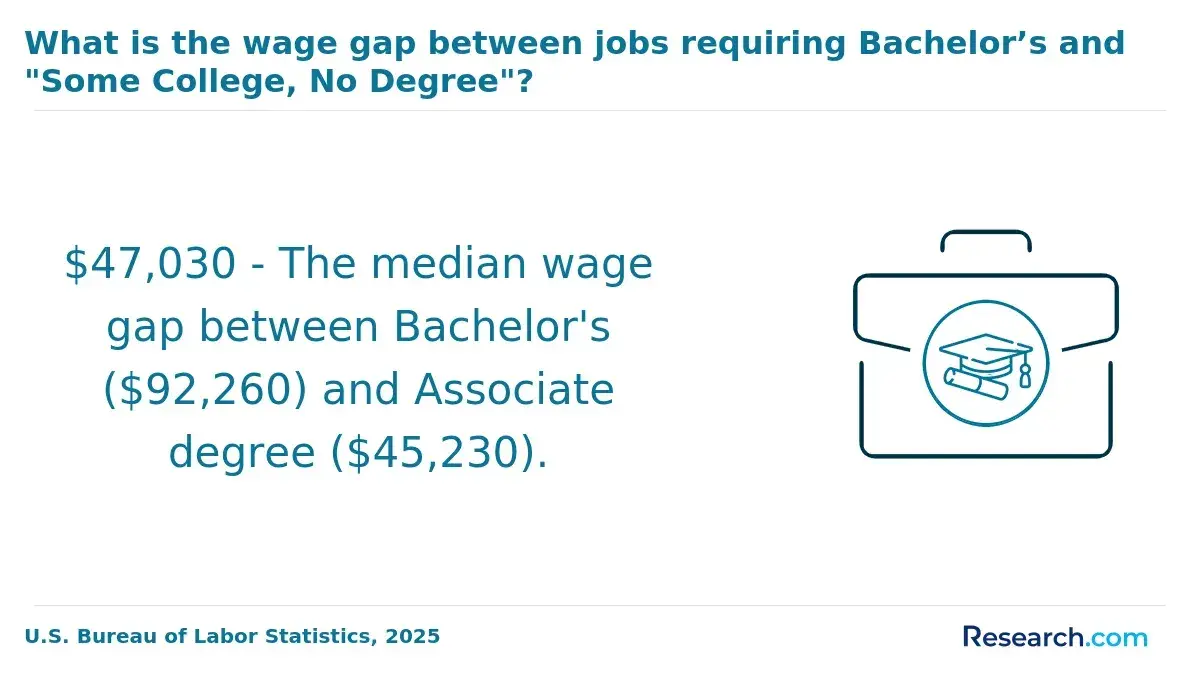
- Early-Career Earnings Advantage: Graduates with a 2-year energy engineering degree enter the workforce earlier, typically saving one to two years of study time and beginning to earn between $50,000 and $70,000 annually during entry-level roles. This accelerated energy engineering degree earnings can provide significant short-term financial benefits compared to bachelor's degree holders, who usually start near $70,000 but after a longer education period.
- Long-Term Salary Potential: Traditional bachelor's degree holders in energy engineering generally enjoy higher median wages over time, approaching $95,000 annually after gaining experience and advancing in their careers. This reflects greater opportunities for promotion and specialization that may not be as accessible to those with shorter credentials.
- Employer Perception and Advancement: Employers often prefer bachelor's degree holders for leadership and research positions due to broader academic preparation and credentials. This preference accelerates career progression and can translate into higher salaries in advanced roles.
- Career Progression Timelines: The longer runway provided by a bachelor's degree allows for continuous salary growth well beyond the initial years, whereas those with a 2-year degree might plateau sooner unless they pursue further education.
- Lifetime Earnings Considerations: While the 2-year degree offers earlier workforce entry and immediate income, total lifetime earnings may be greater for bachelor's graduates due to sustained growth and better advancement prospects. Prospective students should carefully weigh these time and income trade-offs in their planning.
For individuals comparing degree options and financial outcomes, exploring programs like the most affordable BSN to DNP programs online can provide additional context on accelerated pathways and their respective economic impacts.
Calculating the return on investment (ROI) is essential for anyone considering an accelerated energy engineering degree, as it helps clarify whether the time and money spent will yield meaningful career and financial benefits. Accelerated programs offer unique advantages but also require careful evaluation of factors affecting both costs and long-term earnings.
The following points highlight the most important aspects impacting ROI in this field.
- Reduced time-to-completion: Accelerated degrees condense the traditional four-year timeline into two or three years, allowing students to graduate and enter the workforce more quickly. This shorter duration limits tuition payments and reduces time away from earning a salary.
- Lower overall tuition and expenses: Although per-credit costs may be comparable to standard programs, accelerated tracks demand fewer total credits and shorten living expenses, resulting in significant savings over the course of study.
- Opportunity cost advantages: By spending less time in school, students minimize lost wages and other income opportunities, enhancing the financial benefit of graduating early and starting their careers sooner.
- Positive employment trends and salary growth: The energy sector shows steady demand growth, with environmental and energy-related engineering roles expanding. Graduates positioned with relevant skills can expect earlier salary increases and opportunities for advancement.
- Transferable, versatile skills: Accelerated curricula focused on core engineering principles and practical experience prepare students for diverse positions across energy and environmental industries, increasing career flexibility over time.
Choosing a 2-year energy engineering degree involves assessing your learning preferences, time constraints, and readiness for an intensive curriculum. These accelerated programs often require managing heavier course loads and adapting quickly to new material, which suits those who perform well under pressure. Consider how quickly you need to enter the workforce, as the faster pace can shorten your educational timeline by up to two years.
However, it's important to match this urgency with your capacity to stay focused and handle the demands of an accelerated schedule. Your decision should also account for how well you thrive in fast-moving academic environments.
From a practical standpoint, shorter degree programs can lower overall costs by reducing tuition and living expenses. Typical annual tuition for energy-focused bachelor's degrees ranges widely, so completing your degree faster may improve your return on investment. While the energy sector is growing steadily, some employers may still favor candidates with traditional degrees or relevant internship experience. Weigh the balance between immediate financial savings and your long-term career flexibility before committing, ensuring you align your educational path with both current job market demands and future opportunities.
What Graduates Say About Their 2-Year Energy Engineering Degree
- Emerson: "I chose the 2-year accelerated bachelor's degree in energy engineering because I wanted to enter the workforce quickly without sacrificing quality education. Balancing the intense schedule was challenging but rewarding; I developed strong time management skills that helped me excel both academically and personally. This degree has significantly boosted my career prospects, allowing me to secure a position at a leading renewable energy firm shortly after graduation."
- Pax: "Reflecting on my experience, the 2-year energy engineering degree fit perfectly with my goal to minimize educational expenses, considering the average cost of attendance could otherwise be a heavy burden. The fast pace meant dedicating myself fully, but support from professors and peers made it manageable. Professionally, this accelerated program gave me a competitive edge in the job market and deepened my expertise in sustainable energy solutions."
- Jordan: "Professionally, the 2-year accelerated bachelor's degree in energy engineering was a strategic choice, allowing me to transition swiftly from studies to engineering roles without a long gap. The rigorous curriculum required me to prioritize effectively and stay disciplined amidst a packed schedule. Having this degree opened doors to advanced technical positions and gave me confidence in my capability to contribute meaningfully to energy innovation projects."
Other Things You Should Know About Energy Engineering Degrees
A strong program should hold ABET accreditation from the Engineering Accreditation Commission. ABET recognition is the standard employers and licensing boards look for, and it helps satisfy the education requirement for the Fundamentals of Engineering exam and later Professional Engineer licensure.
An accelerated bachelor's degree in energy engineering offers financial benefits by reducing tuition costs and decreasing lost earnings compared to traditional four-year programs. Graduates can enter the workforce sooner, potentially leading to earlier career advancement and increased lifetime earnings in the growing energy sector.
- BSc (Hons) Engineering with accelerator https://www.hw.ac.uk/study/foundation/engineering-bachelors-degree-accelerator-programme
- Top 5 In-Demand Renewable Energy Jobs https://www.kintecglobal.com/resources/blog/top-5-in-demand-renewable-energy-jobs/
- Two year accelerated degrees https://www.staffs.ac.uk/courses/undergraduate/study-options/two-year-accelerated-degrees
- Energy Engineering Programs Abroad - AEC Overseas https://www.aecoverseas.com/energy-engineering/
- Energy Engineering | Future Students | University of Calgary https://www.ucalgary.ca/future-students/undergraduate/explore-programs/energy-engineering
- Renewable Energy Project Engineer https://www.isotrol.com/careers/renewable-energy-project-engineer
- Master's in Renewable Energy https://mastersplus.innoenergy.com/programmes/masters-in-renewable-energy/
- Return on Investment - your degree choice and potential future earnings https://www.thecompleteuniversityguide.co.uk/student-advice/what-to-study/degree-choice-and-future-earnings
- Early Career Programs | Hitachi Energy https://www.hitachienergy.com/careers/about-us/early-career
- Close Jobs and Careers https://www.siemens-energy.com/us/en/home/careers/jobs.html