2027 Internal Float Pool Nursing Pay Packages: Base Rate, Differentials, and Benefits to Compare
Audited and Verified:
Our Editorial and Data Verification Process
Research.com uses government datasets, official education statistics and primary institutional information to support its career and degree guides. Our review process checks factual accuracy, occupational definitions, source dates and the requirements associated with the credentials discussed.
How This Article Was Fact-Checked
Our editorial team verifies salary estimates, employment projections, education requirements and program information against original data providers and official organizations. Salary figures are checked against the relevant occupational definitions and reporting periods. Information about licensure, accreditation and required in-person training is reviewed separately.
Fact-checked and verified on:

Co-Founder and Chief Data Scientist
An internal float pool offer can advertise a higher hourly rate while providing fewer guaranteed shifts, different benefits, or limits on when premiums apply. For RNs comparing a hospital float pool with a staff position or travel contract, the useful number is not the headline rate - it is the compensation you can reasonably earn under the written assignment rules.
This guide shows how to compare base pay, differentials, benefits, scheduling, and preparation requirements so you can judge whether an offer fits your finances and clinical experience.
Key Things You Should Know
- Compare expected annual earnings, not hourly rates alone: 36 paid hours per week for 52 weeks equals 1,872 hours, while 30 hours equals 1,560.
- A hypothetical $8-per-hour float premium adds $14,976 over 1,872 eligible hours - but less if the premium excludes certain shifts, assignments, or paid leave.
- Confirm the position's full-time status, benefit eligibility, cancellation rules, and approved units in writing before treating its advertised rate as a dependable paycheck.
What Is an Internal Float Pool Nursing Pay Package?
An internal float pool nurse is employed by a hospital or health system and works across approved units as staffing needs change. The package may combine a staff-style base wage with a float premium, shift differentials, incentives, and employer benefits. Some employers instead advertise one higher hourly rate that already incorporates the float premium. These structures are not equivalent unless you know which payments can be added together.
Float assignments must remain within the nurse's license, demonstrated competencies, and employer-approved practice areas. A medical-surgical RN, for example, should not interpret a system-wide float designation as authorization to independently take an ICU assignment without appropriate training and validation.
Those still deciding whether to enter nursing through an accelerated route may also want to review ABSN options for second-degree applicants, which can offer a faster path for those who already hold a bachelor’s degree in another field.
Request the pay policy and offer letter, not just a recruiter's quoted rate. Identify the employing entity, job classification, approved units, minimum scheduled hours, and whether the rate changes when you work on a home unit or at another facility.
How Much Do Internal Float Pool Nurses Earn Per Hour?
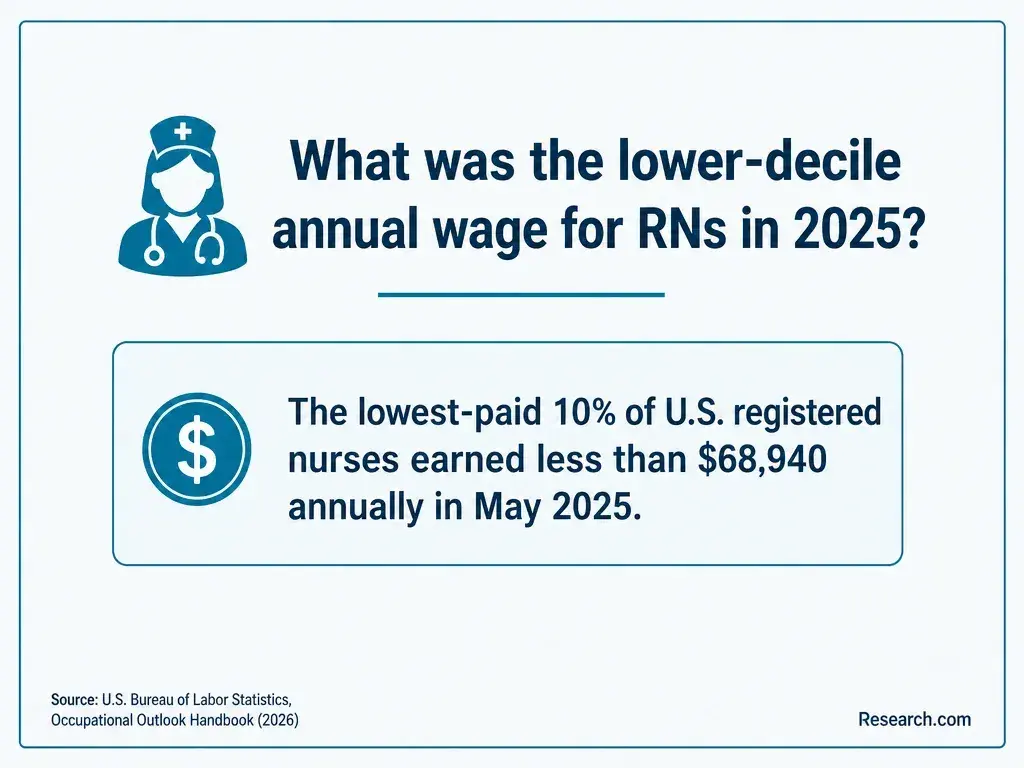
There is no reliable national hourly rate specifically for internal float pool nurses. The U.S. Bureau of Labor Statistics reports wages for the broader registered nurse occupation, not a separate float pool category. That occupation-wide figure cannot tell you what a particular hospital will pay for floating, nights, or specialty coverage. Local wage scales, bargaining agreements, experience, unit mix, and benefit classification matter more when comparing actual offers.
The following hypothetical offers show why a higher quoted rate does not necessarily produce higher annual wages. The calculation assumes every scheduled hour is worked and paid for 52 weeks; it excludes overtime, additional differentials, bonuses, and benefits.
| Illustrative offer | Hourly pay used | Paid hours per week | Illustrative annual wages |
| Staff position | $46 | 36 | $86,112 |
| Float pool, consistent hours | $53 | 36 | $99,216 |
| Float pool, fewer hours | $53 | 30 | $82,680 |
These are examples, not market averages or guaranteed earnings. For an offer you are considering, multiply each eligible hourly component by the hours you realistically expect to work, then account separately for paid leave and employer-paid benefits. Ask whether scheduled shifts can be canceled and whether another approved assignment is offered when a unit's census falls.
LPNs weighing a move into RN roles, including float pool positions, may also want to read a guide to six-month LPN-to-RN claims and alternatives, since program length claims can vary widely and affect when higher RN wages begin.
Which Differentials and Bonuses Increase Float Pool Nurse Compensation?
Hospitals may pay premiums for floating, nights, weekends, holidays, hard-to-fill shifts, or particular specialties. The consequential question is whether those amounts stack. A $7 float premium and a $5 night differential might produce $12 above base pay, or the employer might apply only one premium under its policy.
Ask payroll or the hiring manager for a worked example covering a regular weekday shift, a weekend night, a holiday, and an overtime week. Confirm whether premiums apply to every hour of a shift, only hours within a designated time window, or only assignments outside a home unit. Sign-on and retention bonuses need separate scrutiny: payment dates, minimum service periods, repayment terms, and tax withholding can substantially change their value.
For nonexempt employees, federal overtime rules generally require at least 1.5 times the applicable regular rate for hours worked over 40 in a workweek; qualifying differentials and certain bonuses may affect that regular-rate calculation. State law and an applicable collective bargaining agreement may provide additional protections. Do not assume overtime is calculated solely from the posted base wage - or that every scheduled extra shift qualifies as overtime.
Nurses planning to move up from an associate degree or diploma may also want to review online BSN completion clinical policies, since clinical hour requirements can affect how well coursework fits around variable float pool schedules.
Benefits depend on the employer and the position's classification, not the word internal. A full-time float RN may qualify for health coverage, paid time off, retirement contributions, disability coverage, education assistance, and certification reimbursement. A PRN or low-hour float position may have a higher cash rate but limited access to those benefits.
Compare the employer's contribution - not just whether a benefit exists. Insurance premiums, deductibles, retirement matching or pension vesting, paid-leave accrual, and waiting periods can outweigh a modest hourly difference. Check whether paid leave is compensated at base pay or includes regular float and shift premiums. For education assistance, verify eligible courses, annual limits, grade requirements, and any obligation to remain employed after reimbursement.
Those considering other entry points into nursing may also want to explore shorter practical nursing study pathways, which can offer a faster way into the field before pursuing additional education assistance for advanced credentials.
Benefit eligibility can depend on scheduled or measured hours. If your household needs employer-sponsored insurance, obtain the applicable benefits summary and confirm the hours threshold before accepting a variable-hours offer.
These roles solve different problems. Compare them using a complete offer rather than assuming that either "float" or "travel" always pays more.
| Role | Typical arrangement | Principal financial trade-off | Principal workplace trade-off |
| Unit-based staff RN | Primarily assigned to one unit | May have fewer float-specific premiums | More consistent team, patient population, and workflows |
| Internal float pool RN | Employed by the facility or system; assigned among approved areas | Premiums may improve wages, but hours and benefits vary by classification | Frequent changes in teams, units, and sometimes sites |
| Travel RN | Works under a time-limited agency assignment | Contract pay and possible stipends require careful comparison with taxes, benefits, gaps, and duplicate living costs | New systems and teams at each assignment |
A staff role may be the better choice for an RN developing expertise in one specialty or needing predictable mentorship. An internal pool can suit an experienced RN who knows the health system and wants varied assignments without changing employers. Travel work may fit a nurse comfortable with contract gaps and relocation, but an advertised weekly package is not the same as take-home pay. Tax treatment of travel stipends depends on individual circumstances, including applicable tax-home rules.
Those still deciding how to enter nursing may also want to look into HESI-free nursing admission options, which can help applicants find programs that don’t require that entrance exam before they begin building toward any of these career paths.
RN float positions require an active RN license authorizing practice where the assignment occurs. Employers may accept nurses educated through a qualifying associate or bachelor's prelicensure pathway, but degree preferences and prior-experience requirements vary. Graduation and NCLEX passage are distinct from holding an active license; neither independently authorizes practice.
Those entering nursing from another field may also want to explore comparing nursing degrees for non-nursing graduates, since the pathway you choose can shape both licensure timing and eligibility for float roles.
Float pool hiring usually hinges on documented experience in the units covered, safe prioritization, and an orientation that validates site-specific competencies. A new graduate generally needs a supported transition-to-practice or unit-based orientation before taking broad independent assignments. Ask whether the employer has a new-graduate float pathway, which units it includes, how long supervised orientation lasts, and who determines readiness. If floating crosses state lines, verify practice authorization for each location with the relevant licensing authority and employer.
Certification value depends on the pool's patient populations and the employer's requirements. Basic Life Support is commonly expected; Advanced Cardiovascular Life Support or Pediatric Advanced Life Support may be required for certain assignments. Experienced nurses might consider specialty board certification relevant to their approved units, such as medical-surgical or critical care nursing, if they meet the certifying organization's current eligibility rules.
Separate three things when reviewing a posting: a required resuscitation course credential, an optional professional specialty certification, and the employer's own competency validation. None replaces an active RN license or guarantees approval to float into an unfamiliar specialty. Before paying for an exam, ask whether the certification is required, preferred, or rewarded with a differential or reimbursement.
If the employer primarily needs proficiency with its equipment, medication processes, and escalation procedures, targeted onboarding may be more useful than another degree, such as one of the entry-level MSN options for career changers.
Scheduling policies determine whether the quoted rate translates into reliable income. A nurse promised three 12-hour shifts has a different financial position from one who merely may request up to three shifts. Weekend and holiday commitments can also make a premium less attractive if those shifts conflict with caregiving or another job.
Before accepting, request written answers to these operational questions:
- Are hours guaranteed, or can a shift be canceled when census falls? If canceled, is there reporting pay or another assignment?
- What is the assignment order, how much notice is given, and can you be sent to another campus?
- Which units are approved after orientation, and how are additional competencies taught and documented?
- Do float, night, weekend, holiday, and overtime payments stack, and which apply to paid leave?
A high premium does not compensate for unsafe assignments. Confirm how to report a mismatch between assigned patient needs and your validated competencies, who can adjust the assignment, and what support is available on an unfamiliar unit. Nurses who want more schedule stability or leadership options over time might look at associate-degree RN to MSN options as a way to move beyond float work.
If you are still preparing for RN practice, do not budget around an experienced float pool rate immediately after graduation. First account for prelicensure tuition and fees, clinical travel, supplies, examination and licensing costs, and the income you may forgo during training. Then compare realistic entry-level offers and orientation opportunities - not only eventual float premiums.
A lower-cost qualifying RN pathway may be financially sensible if it meets the relevant board's requirements and a prospective employer accepts its graduates. A BSN may matter for a particular hospital's hiring or advancement policy, but an additional degree is not automatically necessary to move from staff RN to float RN.
Ask prospective employers about required clinical experience, unit-specific competencies, tuition assistance, and whether current staff can transfer into the pool after gaining that experience. Nurses who later weigh graduate study may also want to consult a BSN-to-MSN program affordability guide before committing to additional tuition.
The strongest early-career outcome is a role where you can build sound clinical judgment and verified competence with adequate supervision. Moving into the pool later may offer more choices than accepting broad assignments before you are ready.
How Can You Compare Reputable Nursing Programs and Float Pool Offers?
Start with the decision in front of you. If you are already a licensed RN, compare employers and orientation plans before shopping for another degree. If you are entering nursing, confirm that a prospective prelicensure program meets the relevant state board's requirements for RN licensure eligibility; distinguish that determination from institutional accreditation and nursing program accreditation. A nursing program admission accessibility guide can help you frame admissions questions, but verify each school's current requirements and outcomes directly.
For competing job offers, make one side-by-side worksheet with base wage, each eligible differential, expected paid hours, cancellation risk, insurance costs, retirement contributions, leave rules, commute or intercampus travel, and bonus conditions. Calculate annual wages using realistic hours, then compare benefits and costs separately so a one-time bonus does not mask lower ongoing compensation.
Finally, request the written float policy and an orientation outline. A strong offer specifies where you may work, how competence is validated, who supports you on unfamiliar units, and how pay is calculated. If those details remain unclear, the advertised hourly rate is not enough to make an informed decision.
Other Things You Should Know About Nursing
Yes. Promptly explain the specific competency or patient-safety concern through the employer's escalation process and request an appropriate assignment or support. Follow applicable law and workplace policy; do not assume that a job title overrides professional accountability.
Only if the position's assignment rules allow it and the nurse has appropriate practice authorization, orientation, and validated competencies for that site. A shared corporate owner does not by itself establish those conditions.
You can ask, particularly about experience credit, placement on the wage scale, scheduling commitments, and bonus terms. A collective bargaining agreement or fixed pay scale may limit what the employer can change.
Retain the offer letter, pay policy, schedules, time records, assignment records, and pay statements. Report the discrepancy to payroll promptly using the employer's correction process.
- Fact Sheet #22: Hours Worked Under the Fair Labor Standards Act (FLSA) | U.S. Department of Labor https://www.dol.gov/agencies/whd/fact-sheets/22-flsa-hours-worked
- Unions & Collective Bargaining | U.S. Department of Labor https://beta.dol.gov/policy-regulations/unions-collective-bargaining
- Stretching Boundaries: Nurses' Perceptions on Job Demands and Resources in Hospital Float Pools - PMC https://pmc.ncbi.nlm.nih.gov/articles/PMC12483744/
- Comparing the Compensation of Federal and Private-Sector Employees in 2022 | Congressional Budget Office https://www.cbo.gov/publication/60235
- Healthcare Shift Differential Pay: A Payroll Guide | Netchex https://netchex.com/blog/how-to-handle-shift-differentials-and-premium-pay-in-healthcare-payroll/
- Float Pool Incentives: The Complete Guide | staffdna.com https://staffdna.com/float-pool-incentives-a-complete-guide-for-nurses-and-facilities/
- What Is Shift Differential Pay? Employer Guide | Paychex https://www.paychex.com/glossary/what-is-shift-differential