2027 Intelligence Degree vs Bootcamp vs Certificate: Which Path Leads to Better Career Outcomes?

Co-Founder and Chief Data Scientist
Choosing between an intelligence degree, bootcamp, or certificate often leaves candidates uncertain about which path leads to the best career outcomes. Salary disparities are notable-graduates with intelligence degrees see an average starting salary 25% higher than those holding only certificates, while bootcamp completers report faster job placement rates. Employers vary in credential preference, favoring degrees for leadership roles but appreciating bootcamps for practical skills. Networking access also differs, significantly impacting long-term career growth.
This article examines these educational routes-comparing salary outcomes, job placement, employer acceptance, and return on investment-to help readers identify the pathway fitting their career goals and learning style.
Key Things to Know About Which Path Leads to Better Career Outcomes: Intelligence Degree, Bootcamp, or Certificate
- Intelligence degree holders generally command higher salaries-averaging 20% more than bootcamp graduates-reflecting strong employer preference for formal credentials in competitive roles.
- Bootcamps offer faster job placement with up to 85% employment rates within six months but often lack the long-term growth prospects and networking access of degree programs.
- Certificates provide cost-effective upskilling-ideal for working professionals-but yield modest salary increases and limited employer recognition compared to degrees or bootcamps.
How Does Intelligence Degree Compare to Bootcamps and Certificates in Total Program Cost and Time to Completion?
Prospective intelligence students face a critical choice between committing several years to a traditional degree program or opting for quicker, often more affordable alternatives like bootcamps and professional certificates. Neither pathway is inherently superior - the right option depends on individual goals and circumstances.
A traditional intelligence degree-either associate's or bachelor's-typically requires two to four years of full-time study at accredited institutions. Data from the National Center for Education Statistics (NCES) and the Integrated Postsecondary Education Data System (IPEDS) show that the total cost for a bachelor's degree, including tuition and fees, ranges from $40,000 to over $100,000. Part-time enrollment extends completion time but may better suit working adults balancing other responsibilities. This pathway often includes broad foundational knowledge and theory alongside practical skills.
Intelligence bootcamps are immersive, focused programs lasting 8 to 26 weeks, available full- or part-time. Aggregated reviews from sources like SwitchUp and Course Report report average costs between $7,000 and $15,000. Bootcamps target rapid skill acquisition, emphasizing hands-on practical competencies over comprehensive theory. They appeal especially to those seeking faster entry into the intelligence field.
Professional certificates offer flexible, typically self-paced learning through platforms such as Coursera, Google Career Certificates, or industry groups. These vary from weeks to a few months and cost between a few hundred to a few thousand dollars. Certificates often specialize in specific intelligence subfields or tools, making them effective for upskilling or career shifts without the time or financial commitment of degrees or bootcamps. This flexibility also aligns well with learners exploring online MBA programs or similar part-time study options.
- Degree: Multi-year (2-4 years full-time), $40,000-$100,000+ total cost
- Bootcamp: 8-26 weeks, $7,000-$15,000 average cost
- Certificate: Weeks to months, $200-$3,000+ depending on provider and scope
When comparing intelligence degree program cost versus bootcamp alternatives, and assessing time to complete intelligence certificates compared to degrees, cost and duration form only part of the picture. Subsequent sections explore crucial outcomes such as employer credential preferences, salary trajectories, job placement rates, long-term career growth, and the best pathway fit for diverse learner profiles.
What Career Outcomes Can Intelligence Degree Graduates Expect Compared to Bootcamp and Certificate Completers?
Graduates with an intelligence degree generally experience strong career outcomes compared to those completing bootcamps or professional certificates-though the size of this advantage varies by specialization and employer preferences. Data from the Bureau of Labor Statistics (BLS), the National Association of Colleges and Employers (NACE), and Course Report's annual bootcamp surveys reveal key differences across employment metrics.
- Employment Rate Within Six Months: Degree holders often report employment rates above 85%, benefiting from established hiring pipelines and wide employer recognition. Bootcamp completers show improving rates, typically between 60% and 75%, especially in tech-driven intelligence roles. Certificate holders tend to have slightly lower early employment rates, as certifications often supplement rather than replace formal qualifications.
- Median Starting Salary: Intelligence degree graduates can start with median salaries 10% to 30% higher than bootcamp or certificate completers. NACE data indicate degree holders averaging $60,000-$75,000 annually, while bootcamp alumni commonly report $50,000-$65,000. Certificate completers' salaries vary significantly by specialization and location.
- Job Title Level at First Placement: Degree graduates usually secure roles with greater responsibility-such as analyst, consultant, or junior research positions. Bootcamp completers often start as technicians, data assistants, or specialized junior staff, whereas certificate holders typically fill niche or support roles complementing other credentials.
- Employer Credential Preferences: Although some sectors prioritize skills-based hiring-boosting bootcamp and certificate recognition in cybersecurity and data analysis-a degree frequently remains a gatekeeper in academia and intelligence services. This evolving landscape narrows outcome gaps but does not eliminate them.
- Data Reliability and Evaluation: Many bootcamp and certificate outcomes rely on self-reported data prone to survivorship bias or selective disclosure. Prospective students should seek programs verified by independent audits or CIRR membership to ensure transparency.
- Contextual Factors Influencing Outcomes: Career success integrates more than credentials alone. Portfolio strength, networking, geographic conditions, and industry demand all shape real-world results. Combining credentials with practical experience and connections is often most effective for long-term career growth for intelligence degree graduates compared to bootcamp and certificate completers.
For learners balancing cost and credential value, exploring options such as the cheapest executive MBA programs can offer additional pathways to elevate career prospects in related intelligence and management fields.
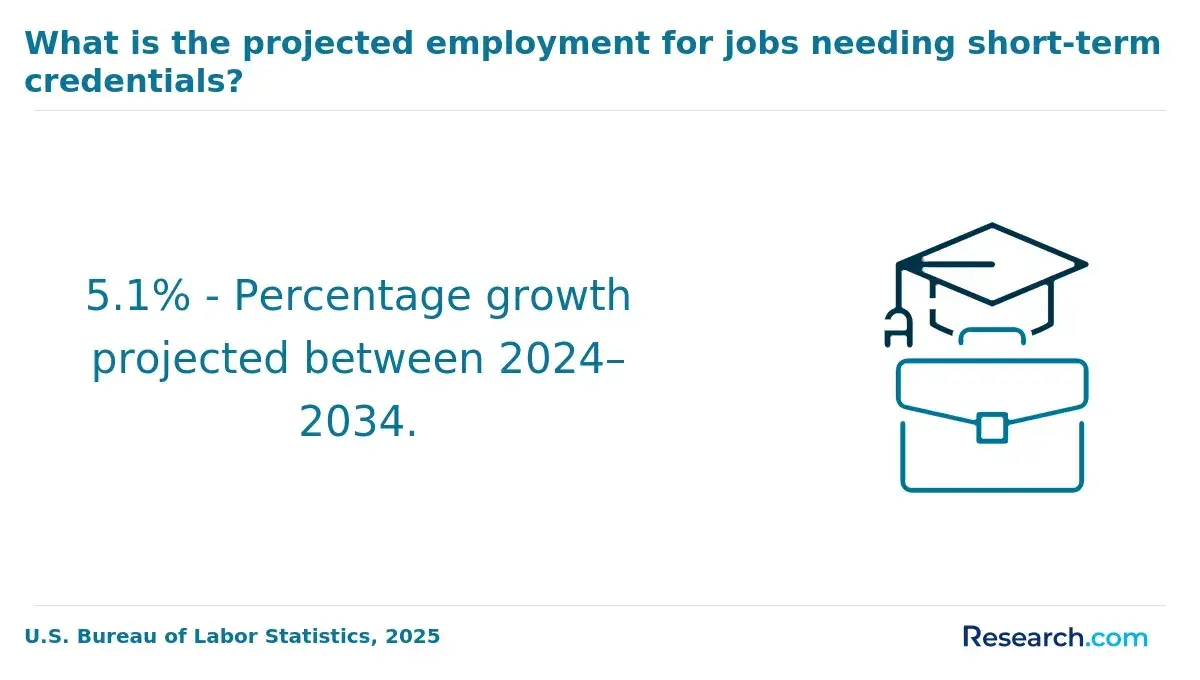
Which Intelligence Pathway - Degree, Bootcamp, or Certificate - Offers the Highest Starting Salary for Graduates?
Starting salaries for Intelligence graduates vary based on educational background and other factors, according to data from the Bureau of Labor Statistics, National Association of Colleges and Employers, LinkedIn Salary Insights, and Glassdoor. Those holding bachelor's degrees typically earn between $55,000 and $70,000 annually at entry level-higher than bootcamp or certificate completers. Bootcamp graduates often begin with salaries ranging from $45,000 to $60,000, sometimes matching degree holders in tech-focused firms or startups. Certificate earners usually start lower-around $40,000 to $55,000-but may find opportunities in specialized or niche roles.
- Employer Type: Large corporations and government contractors often require formal degrees, offering higher starting pay and clearer promotion paths. In contrast, startups may reward practical skills and compensate bootcamp graduates competitively.
- Industry Sector: Intelligence positions in cybersecurity, defense, and data analytics generally provide higher compensation than broader investigative roles, affecting pay regardless of educational credentials.
- Job Title Specificity: Specialized roles demanding advanced degrees-such as federal intelligence analysts-tend to offer better starting salaries than entry-level positions open to various backgrounds.
- Geographic Market: Salaries fluctuate significantly between metropolitan tech hubs and other regions, often narrowing credential-based pay gaps.
Over time, degree holders frequently see faster salary growth and advancement into leadership or specialized roles due to formal education requirements. Although bootcamp and certificate completers can progress by accumulating experience and further credentials, their upward mobility may be limited without a degree.
These figures reflect median values; individual outcomes depend heavily on factors like prior experience, field specialization, program quality, and geographic flexibility. For a more complete cost-to-earnings comparison, consult the ROI section of this guide.
A professional who earned an Intelligence degree recalled facing early uncertainty about workload and job prospects but found the structured curriculum and university resources invaluable. "There were moments I doubted if the investment was worth it," he said, "but graduation opened doors that felt otherwise closed to me. The connections and internships through the degree program made all the difference." His experience highlights how formal education can provide both a clear pathway and a network that supports career entry and growth.
Employers evaluating intelligence credentials remain influenced heavily by organizational type and sector-balancing between traditional degrees and emerging skills-based credentials. In large enterprises, government agencies, and regulated fields like defense and cybersecurity, a formal degree often remains a baseline requirement, serving as a consistent benchmark for foundational knowledge and regulatory compliance.
- Degree Dominance: These sectors typically demand a bachelor's or higher degree for entry and advancement, valuing it as a proof point for critical thinking and rigorous training.
- Bootcamp and Certificate Viability: In contrast, startups, consulting, and certain tech firms increasingly emphasize certificates and bootcamp experience, particularly when paired with strong portfolios or demonstrable project outcomes-reflecting shifting employer preferences for intelligence degree versus bootcamp.
- Skills-Based Hiring Trends: Major tech companies and some government initiatives promote skills over formal education, yet hiring patterns still largely favor degree holders for mid-to-senior roles, evidencing a gap between stated openness and actual practice.
- Sector Nuance: While credential standards stay rigid in regulated environments, many smaller firms prioritize adaptability and current skills, enabling certificate and bootcamp completers to compete nearly equally with degree holders.
- Hiring Manager Preferences: Surveys highlight a shift toward portfolio and skills assessments as complements-not replacements-to degrees.
Those deciding which pathway fits best should weigh these variables carefully, since the career impact of intelligence certificates compared to degrees varies substantially by employer type and sector.
Admission to accredited intelligence degree programs typically involves multiple academic requirements that serve as both a screening tool and a signal of quality to employers. Common criteria include:
- GPA Minimums: Generally around 3.0 on a 4.0 scale, reflecting basic academic ability.
- Prerequisite Coursework: Foundational subjects such as computer science, math, or statistics.
- Standardized Tests: SAT, ACT, or GRE requirements with some programs offering test-optional entry.
- Letters of Recommendation: Academic or professional endorsements assessing suitability.
- Fixed Deadlines: Set admissions cycles requiring timely applications.
In contrast, intelligence bootcamps and certificate programs often have minimal or no formal prerequisites-most utilize open enrollment or require only a basic skills check. Their flexible start dates and shorter duration lower upfront commitment, benefiting working professionals, career changers, and learners balancing other responsibilities. Because these programs do not filter students through selective admissions, they rely on measurable outcomes, instructor expertise, curriculum relevance, and accreditation to convey program quality to employers.
- Open Enrollment: Accept learners regardless of academic background, focusing on motivation or brief skill assessments.
- Flexible Start Dates: Multiple cohorts per year enhance accessibility.
- Lower Time and Cost Commitment: More suited for adults with work or family duties.
Selective admissions in degree programs function as a quality filter widely valued by employers; however, they can pose inequitable barriers for non-traditional students facing financial, geographic, or time constraints. Prospective learners should weigh their academic history and life circumstances to determine whether degree program selectivity serves as a meaningful indicator of quality or a structural hurdle that makes bootcamps or certificate routes more practical and equally effective.
One professional who established her career after completing an intelligence degree recalled the admission process as "challenging but clarifying." She described painstakingly gathering recommendations and balancing prerequisite courses with part-time work. Though initially stressful, she felt these rigorous steps prepared her well for advanced study and gave her confidence when entering the job market. She also reflected that while bootcamps offer easier access, the structured admissions process of her degree "signaled to employers the seriousness of my training," helping her stand out early in her career.
Degree programs in Intelligence typically offer extensive curricula that integrate foundational education with specialized study. Students engage in general education courses enhancing critical thinking and communication skills, alongside core subjects such as Intelligence analysis, cybersecurity, data interpretation, and policy. Electives provide opportunities to delve into niche areas, while many programs mandate a research project or thesis. This structure builds broad, adaptable knowledge, positioning graduates for diverse career paths, though it often extends time before entering the workforce.
- Degree Curriculum: Broad and comprehensive, balancing theory and practice with general education, core courses, electives, and research components
- This depth fosters long-term adaptability but delays immediate employment.
- Bootcamp Curriculum: Condensed and intensive, focusing on hands-on, project-based learning that targets essential job-ready Intelligence skills such as tool proficiency and practical scenarios
- Efficient in rapidly developing applicable competencies but lacks wider theoretical foundations and elective variety.
- Certificate Curriculum: Varies by level-entry certificates (often from providers like Google or Coursera) offer foundational knowledge suited for beginners or career shifters, whereas advanced professional certifications validate specialized skills from recognized industry organizations
- Usually narrow in scope, emphasizing specific technologies or methods without significant theory or research.
- Their value depends on the learner's prior experience, targeted role, and employer demand.
Each educational route balances foundational knowledge and immediate job skills differently, influencing salary potential, employer recognition, and career trajectory. Degrees emphasize a holistic educational experience for long-term growth; bootcamps deliver swift, focused skill acquisition; and certificates act as targeted credentials aligning with specific career stages or specializations in Intelligence.
Calculating return on investment (ROI) for Intelligence educational pathways involves totaling direct costs-tuition, fees, materials-and the often-overlooked opportunity cost of forgone income during enrollment. A two- or four-year degree requires not only substantial tuition but also several years of lost salary, sharply increasing total expenses compared to shorter programs like bootcamps or certificates, which typically span weeks to months and allow faster workforce re-entry.
Three learner profiles highlight how ROI depends more on personal circumstance than credential type alone:
- Recent High School Graduate: No salary to forgo means opportunity cost is minimal. Degrees cost more upfront but pay off over ten years with higher cumulative salary premiums in Intelligence fields. Bootcamps, with lower costs and quicker completion, deliver faster ROI within five years.
- Mid-Career Professional: Leaving a $50,000 annual job magnifies opportunity cost for degrees, making intensive bootcamps the fastest path to positive ROI, often recouping training and lost wages within a few years. Certificates, studied part-time, provide moderate but slower ROI.
- Part-Time Learner: Maintaining employment while studying cuts opportunity cost dramatically, improving ROI on degrees and certificates. Though longer-term, degrees yield fuller salary benefits over ten years, with bootcamps appealing for immediate skill gains.
- Cost Considerations: Degree programs typically total $100,000 to $150,000 including lost income; bootcamps cost $10,000 to $20,000 with minimal salary loss; certificates often remain under $5,000.
- Salary Premium: Degrees unlock the largest cumulative salary gains over a decade, especially in specialized Intelligence roles, while bootcamps often provide faster initial salary boosts relative to investment.
- ROI Time Frames: Bootcamps usually turn positive ROI within 1-3 years, degrees over 5-10 years, and certificates vary depending on industry recognition.
- Opportunity Cost Impact: This hidden factor can double the effective degree cost, making shorter intensive programs comparatively more efficient.
- ROI Is Not Everything: Pathway choice depends on factors beyond ROI-such as employer credential requirements, depth of theoretical knowledge, and specialization access often only available through degrees.
Job placement rates for intelligence degree programs, bootcamps, and certificate pathways vary substantially due to differences in how each defines and reports outcomes. Degree program data-drawn from IPEDS graduate outcomes surveys and institutional career services reports-typically track employment directly related to a student's major within a specific timeframe post-graduation. This focused approach contrasts with many intelligence bootcamp placement statistics, which are often self-reported by providers and may include any employment in broadly related sectors, freelance work, or short-term contracts. Some top-tier bootcamps participate in independently audited CIRR reporting, enhancing transparency and reliability. Certificate programs fall between these extremes, frequently lacking uniform reporting standards, which complicates direct comparisons.
- Definition Of Placement: Degree programs prioritize roles closely aligned to intelligence majors, while bootcamps often count a wide array of tech-related jobs, expanding their placement claims. Certificates may include internships or project-based engagements.
- Reporting Methodology: Accredited degrees follow federal outcome reporting standards ensuring consistent, reliable data. Bootcamps might rely on self-reported figures or the more credible CIRR audits. Certificate programs usually report outcomes less rigorously.
- Career Services Influence: Robust career supports-such as employer networks, resume reviews, mock interviews, and alumni connections-significantly enhance placement rates. Evaluating these services is crucial when choosing a program.
- Evaluating Claims: Ask for job role breakdowns, salary ranges, and placement timing rather than generic placement percentages to uncover meaningful insights.
- Benchmarking Averages: Industry data suggests established degree programs and CIRR-compliant bootcamps typically see 70% to 90% placement rates, while certificate outcomes vary widely.
Prospective students comparing intelligence bootcamp job placement rates compared to degree programs should carefully assess these reporting nuances. Those weighing certificate programs versus degree pathways for intelligence career outcomes must recognize the variability in data reliability and outcome definitions. For adult learners considering a flexible study option, understanding these distinctions is key to making an informed choice. To explore diverse educational options beyond intelligence, consider reviewing accredited programs such as an accelerated business degree online, which exemplifies how placement data and program features might be transparently reported.
Networking and alumni access remain among the most durable and compounding assets a learner can gain from Intelligence education-often providing career advantages that extend beyond formal instruction and grow increasingly valuable at senior levels. Within Intelligence degree programs, the networking infrastructure tends to be comprehensive, including active alumni associations, frequent career fairs, faculty mentorship, and connections through Greek and professional organizations. Institutional relationships with employers also enhance job placement opportunities. The prestige and geographic reach of the degree-granting institution substantially influence the breadth and influence of the graduate network, which can significantly affect long-term career advancement.
- Degree Programs: These typically offer strong networking benefits of Intelligence degree programs versus bootcamps-providing extensive, durable alumni networks and employer connections that contribute to favorable career outcomes in intelligence education.
- Bootcamps: Though bootcamp alumni networks are generally smaller and newer than those linked to degree programs, some well-established bootcamps cultivate strong cohort bonds and alumni referral cultures. With active employer partnerships, these networks support pipelines into tech-adjacent Intelligence roles. This targeted networking can be especially beneficial for career switchers aiming for fast entry into the field.
- Certificate Programs: Certificates from providers such as Google Career Certificates, Salesforce Trailhead, or industry associations form professional communities with varying networking access. While often less structured, these networks sometimes enable learners to connect with mentors, hiring managers, and peers-helping career growth beyond credential acquisition. The quality of networking largely depends on the provider's engagement and industry reach.
For those exploring Intelligence career pathways, the ability to access and leverage professional networks can dramatically affect earning potential, employer preferences, and job placement rates. This dimension often complements other factors such as salary outcomes and return on investment, helping learners make informed decisions tailored to their profiles. Moreover, understanding what can you get with an environmental science degree offers useful parallels in assessing networking impact across disciplines.
Geographic factors significantly influence career prospects for degree holders, bootcamp alumni, and certificate recipients in Intelligence-related fields. Large metropolitan areas like San Francisco, New York, and Seattle provide the most robust job placement opportunities for bootcamp and certificate learners due to dense networks of tech firms and business employers. Many bootcamp programs are based in these hubs, offering graduates immediate access to strong hiring ecosystems and networking advantages. Degree holders also benefit in these cities thanks to well-established academic institutions and their extensive alumni connections.
Mid-sized and regional markets generally favor traditional degrees, as employers in these areas tend to recognize degrees more readily than alternative credentials such as bootcamps or certificates. When bootcamp graduates move away from their original training locations, their chances of securing employment often decline, reflecting weaker local demand and diminished program visibility.
Rural and smaller metropolitan areas see lower employer density and less familiarity with bootcamp or certificate credentials, making degrees the more preferred route. Though remote work opportunities are bridging some of these gaps, they also increase competition for remote roles tied to metropolitan salary benchmarks.
Key considerations to guide pathway choices by location include:
- Employer Density: Urban centers offer stronger local networks favoring bootcamp and certificate graduates.
- Credential Recognition: Degrees have higher acceptance in markets with limited exposure to alternative training.
- Remote Work Availability: Broadens job access but raises nationwide applicant competition.
Recent industry data shows that 70% of tech hiring managers in major metropolitan areas have increased their acceptance of bootcamp credentials over the last five years, underscoring the evolving geographic dynamics around educational pathways.
Employer Preferences: Large corporations and government agencies often rely heavily on formal degrees-using them as initial screening tools. Data from LinkedIn Talent Insights and SHRM reveal a strong preference for bachelor's degrees in Intelligence, cybersecurity, or related fields, despite some public moves since 2020 to ease degree requirements.
Skills-First Hiring: In contrast, startups and organizations prioritizing practical skills lean toward evaluating candidates based on portfolios, technical assessments, and hands-on experience rather than traditional credentials. Indeed's research highlights that candidates with bootcamp training and certificates who demonstrate relevant projects tend to perform well in these environments.
Shifting Trends Since 2020: Although many leading employers have announced reduced emphasis on degrees, hiring patterns show a gradual change. Bootcamp graduates and certificate holders are increasingly represented among new hires, but degrees still strongly influence recruitment-especially for senior positions or roles requiring heightened security clearance.
Research Strategy for Candidates: Relying solely on publicly stated preferences risks missing practical hiring realities. Candidates benefit from conducting informational interviews with hiring managers within desired organizations and reviewing LinkedIn profiles of recent hires to identify actual credential trends-enabling strategic alignment of their education and experience.
What Graduates Say About Which Path Leads to Better Career Outcomes: Intelligence Degree, Bootcamp, or Certificate
- Malcolm: "Choosing the Intelligence degree was a clear investment for me-while it took longer, the salary outcomes were noticeably higher compared to bootcamp graduates I know. Employers seem to prefer candidates with a formal degree for advanced roles, which has translated into stronger job placements and steady long-term career growth. The networking opportunities through the university program have also been invaluable in opening doors early on."
- Travis: "From my experience, bootcamps are the most efficient route if you want to quickly break into the job market-job placement rates are impressively high and the return on investment is swift. However, I noticed that some employers still give extra credence to traditional Intelligence degrees when considering leadership or research roles later on. For self-motivated learners who thrive under pressure, bootcamps offer a practical, no-nonsense pathway."
- Owen: "Getting a certificate in Intelligence ended up fitting perfectly with my busy schedule and career goals-it's a strong credential that many employers recognize and respect, with decent salary improvements and good placement stats. While it may not offer the long-term networking clout of a degree, it's much more accessible and provides a solid foundation for career growth in specialized areas. For professionals seeking flexible, targeted upskilling, the certificate path is an excellent compromise."
Other Things You Should Know About Intelligence Degrees
Intelligence degree holders typically experience more sustained long-term career growth due to the depth and breadth of knowledge gained over several years. Degrees often open doors to advanced roles, leadership positions, and higher salaries. In contrast, bootcamps and certificates are more focused on practical skills, which are valuable for entry-level positions but may offer limited advancement opportunities without further education.
In 2027, intelligence degrees often offer a broader knowledge base and longer-term career potential, which may justify a higher upfront cost. Bootcamps provide rapid entry into the field at a lower cost, while certificates complement existing skills, typically resulting in a moderate ROI for skill enhancement rather than initial entry.
During recessions or tight labor markets, intelligence degree holders typically have an advantage due to the perceived rigor and recognition of their credentials. Bootcamps and certificates can still provide valuable practical skills but may not carry the same weight with employers when jobs are scarce, potentially limiting opportunities for those relying solely on short-term programs.
Master’s programs usually accept transfer credit only from regionally accredited colleges, and most bootcamp or certificate coursework is not transferable. Universities often cap transfer credit at 6 to 12 graduate credits, and many require official syllabi, a minimum grade of B or better, and recent completion dates.
- Cybersecurity Bootcamp vs Degree: Complete Comparison 2026 https://unihackers.com/compare/bootcamp-vs-degree
- Alumni Networking: Why Your Degree Connections Matter More Than Your GPA | Joinee Articles https://www.joinee.io/articles/alumni-networking
- Tech Bootcamp vs Degree — Is a Bootcamp Better Than College? https://generalassemb.ly/blog/university-vs-bootcamp-which-path-is-right-for-you/
- How GeoAI Will Impact Your Job Prospects | Bootcamp GIS https://bootcampgis.com/how-geoai-will-impact-your-job-prospects/
- Certifications vs. Degrees: What’s More Valuable in the IT Industry? https://www.swiss-ti.ch/certifications-vs-degrees-whats-more-valuable-in-the-it-industry/
- The Rise of Location Intelligence: Turning Geographic Data Into Competitive Advantage https://www.smartdatacollective.com/rise-location-intelligence-turning-geographic-data-into-competitive-advantage/
- What Recruiters Really Look for When Reviewing Resumes | Celarity https://www.celarity.com/blog/what-recruiters-really-look-for-when-reviewing-resumes/
- AI Certification vs. Traditional Degree: What Actually Gets You Hired in 2026? https://www.nplus.global/blogs/ai-certification-vs-traditional-degree/
- Computer Science Degree vs Bootcamp - Which Path Actually Gets You Hired? https://mentorcruise.com/blog/computer-science-degree-vs-bootcamp-which-path-actually-gets-you-hired-fb4a2/
- Bootcamp vs College: Which Offers Better ROI in 2025? https://www.skillspire.net/post/bootcamp-vs-college-which-path-offers-better-roi-in-2025