
2027 Best Career Pivot Options for People With an Intelligence Degree

Co-Founder and Chief Data Scientist
Many graduates with an Intelligence degree face uncertainty when their initial career plans shift-whether due to market changes or personal reassessment. This degree offers versatile skills such as critical analysis, data interpretation, and problem-solving, yet 58% of Intelligence majors pursue roles outside traditional government or defense sectors.
Identifying accessible entry-level pivot roles in high-growth industries like cybersecurity, data science, and strategic consulting can transform career trajectories. Employing tailored credential strategies, optimizing networking efforts, and reframing resumes to emphasize transferable competencies are vital. This article explores these elements to provide a strategic roadmap for Intelligence graduates seeking sustainable, rewarding career pivots.
Key Things to Know About the Best Career Pivot Options for People With an Intelligence Degree
- Leveraging analytical and critical thinking skills, core to an Intelligence degree, facilitates entry into data analysis, cybersecurity, and risk assessment roles in sectors growing at 7% annually.
- Obtaining industry certifications such as CISSP or Certified Fraud Examiner enhances job market competitiveness while professional networking on platforms like LinkedIn broadens access to high-demand positions.
- Reframing resumes to emphasize problem-solving and information synthesis improves long-term career mobility and earnings potential in defense, private security, and government agencies.
What Career Pivot Options Are Available to People With an Intelligence Degree?
Career pivoting is a well-established and professionally valid strategy in today's fluid job market. Data from the Bureau of Labor Statistics reveals that the average worker transitions through multiple roles over a lifetime, driven by evolving interests, economic changes, and the pursuit of meaningful work. The National Association of Colleges and Employers highlights how transferable skills have become essential for navigating these shifts.
For graduates holding an intelligence degree, rooted in analytical reasoning, data interpretation, and strategic thinking, the flexibility to pivot into high-growth industries hiring intelligence graduates for career changes is particularly strong. LinkedIn Workforce Insights supports this, showing Intelligence graduates successfully moving beyond traditional intelligence roles by leveraging broad competencies.
Here is a structured overview of the primary career pivot options for Intelligence degree holders:
- Data Analysis and Cybersecurity: Intelligence programs train graduates in managing sensitive data, pattern recognition, and problem-solving skills that align with roles in data science, cybersecurity, and risk management. Entry-level positions often include analyst or cyber threat specialist roles.
- Government and Policy Advisory: Graduates frequently transition to government advisory or policy development, where their understanding of security environments informs strategic decisions and legislative processes.
- Business Intelligence and Consulting: The analytical and research techniques gained are directly applicable to corporate intelligence and management consulting, roles that rely on strategic insights to drive business outcomes.
- Technology and Software Development: With supplementary technical skills, Intelligence graduates can move into software development or IT project management, applying problem-solving and logical thinking cultivated in their studies.
- Law Enforcement and Criminal Justice: Intelligence degree holders often find investigative, fraud detection, or forensic analysis careers natural extensions of their skill set in security-focused environments.
These options demonstrate how an Intelligence degree encompasses key transferable skills, critical thinking, quantitative analysis, and communication, which empower deliberate career pivot roles for intelligence degree holders. To support these transitions, graduates can pursue targeted credential enhancement, sometimes through PhD programs online or certifications, employ networking strategies, and strategically reframe resumes.
Which Industries Outside the Traditional Intelligence Field Hire Intelligence Degree Holders?
Intelligence degree holders find significant career opportunities beyond traditional government roles-several industries actively recruit professionals with intelligence competencies, though the relevance of the degree and ease of entry vary.
- Cybersecurity: This sector leads due to its demand for analytical skills and threat assessment expertise. Intelligence graduates often work as cyber threat analysts, incident responders, and security operations center analysts. Here, intelligence credentials are widely recognized and valued for understanding adversary tactics.
- Financial Services: Banks and investment firms hire intelligence graduates for roles such as financial crime analysts and risk management specialists. While intelligence isn't always a formal pipeline, the analytical rigor taught in intelligence programs translates well, though candidates often must frame their skills in financial terms.
- Consulting: Management and risk consulting firms use intelligence talent for strategic analysis, competitive intelligence, and operational risk assessments. Positions like business analysts and intelligence consultants benefit from data evaluation skills, even if intelligence is not explicitly requested.
- Technology and Data Analytics: Tech companies employ intelligence graduates as data analysts and product intelligence specialists, valuing their analytical frameworks. Supplementing intelligence with technical skills such as coding enhances prospects in this field.
- Law Enforcement and Public Safety: State and local agencies recruit intelligence graduates as criminal analysts and policy advisors, viewing intelligence as a recognized pipeline, especially for threat evaluation roles.
- Healthcare and Pharmaceuticals: This growing market hires intelligence professionals for health analytics and bio-surveillance roles. Candidates benefit from combining intelligence skills with domain-specific knowledge.
- Media and Communications: Intelligence graduates contribute in investigative journalism, market research, and strategic communications by leveraging their research and analytic abilities, though they must adapt credentials for these contexts.
Switching industries while maintaining familiar functions like research or operations typically requires fewer additional credentials than changing functional roles-graduates should strategically pursue pivots that leverage existing strengths. Informational interviews with intelligence degree holders in these adjacent fields are crucial to gather personalized hiring intelligence, identify gaps, and build targeted employer lists.
For career changers and prospective students exploring career opportunities for intelligence degree holders outside government, understanding transferable skills and industry demands provides a foundation for successful transitions. Some may also consider complementing their credentials with additional programs, such as a master of Library Science, to broaden their options further.
What Transferable Skills Does an Intelligence Degree Provide for Career Changers?
Graduates with an intelligence degree acquire versatile skills that open doors to numerous industries beyond conventional intelligence roles. Grounded in frameworks like NACE competencies, O*NET data, and intelligence program learning outcomes, several transferable competencies stand out for career changers.
- Critical Thinking: Intelligence training sharpens the ability to dissect complex information and evaluate sources critically. This is crucial in policy analysis, where understanding geopolitical risks requires deep insight, and in management consulting, where strategic business decisions depend on comprehensive data evaluation.
- Research and Analytical Skills: Intelligence education develops both qualitative and quantitative research expertise. These skills apply well in market research, designing consumer behavior studies, and user experience research, focused on analyzing data to enhance product usability.
- Data Interpretation and Visualization: Skills in synthesizing and presenting complex data translate directly to public health analytics and financial analysis, where clear, visual communication aids in decision-making.
- Effective Communication: Intelligence graduates excel at producing succinct briefs and presentations tailored to diverse audiences, facilitating success in corporate communications, grant writing, and journalism.
- Problem-Solving: Handling uncertain, evolving scenarios prepares graduates for careers in cybersecurity, responding swiftly to emerging threats, and operations management, which requires optimizing workflows under constraints.
- Ethical Judgment and Responsibility: A strong ethical foundation equips graduates to navigate compliance roles and contribute meaningfully to non-profits dedicated to human rights and social justice.
- Collaboration and Teamwork: Experience working on interdisciplinary projects enhances effectiveness in project management and international development, where coordination among diverse teams is essential.
To maximize career transitions, graduates should diligently catalog their competencies by examining coursework, internships, and academic projects. For example, analyzing a research methodology section can reveal core analytical strengths often overlooked without intentional reflection. This competency mapping clarifies personal assets and prepares graduates to communicate their value clearly to employers unfamiliar with intelligence training.
Conveying transferable skills effectively is itself a critical ability. Upcoming sections will explore how to reshape resumes and leverage networking strategies to frame intelligence competencies in ways that resonate with hiring managers across various fields.
A professional who successfully graduated with an intelligence degree reflected on the transition challenges: "I initially struggled to articulate how my skills applied outside traditional intelligence roles. It was daunting to bridge the gap between specialized coursework and broader career markets. Creating a detailed competency map really helped me identify strengths I'd overlooked, like my ability to distill complex data into actionable insights.
When networking, I learned to tailor my language to highlight problem-solving and communication, which finally opened doors in cybersecurity. It was a gradual process, requiring patience and persistence, but once I mastered translating my background, opportunities started flowing."
Employers in adjacent fields typically evaluate a crime analysis degree based on how well its skills and training align with their specific job requirements. They often focus on the candidate’s analytical abilities, practical experience, and transferable competencies rather than the degree title alone.
- Credential Translation: Hiring managers often struggle to interpret an intelligence degree in roles outside its usual scope. This process, credential translation, involves mapping the degree's core competencies to relevant job duties. Graduates can assist this by crafting resumes that emphasize transferable skills like data analysis, critical thinking, and problem-solving. Selecting portfolios showcasing domain-specific projects and writing cover letters that explicitly link academic insights to employer priorities also enhances understanding and relevance, which is crucial given how employers assess intelligence degree qualifications in hiring.
- Degree Factors: Employers weigh several degree-related aspects during candidate screening. Institutional prestige remains influential in large organizations, whereas smaller firms often focus more on demonstrated abilities and cultural fit. GPA serves as a secondary criterion, valued for consistency rather than perfection. The degree's relevance varies across industries. Adjacent roles may appreciate the analytical strength of an intelligence background, although some recruiters remain cautious without clear transferable proof.
- Implicit Bias: Unconscious preferences for traditional degrees in certain sectors create challenges for intelligence credential holders. Overcoming this implicit bias requires targeted employer research, networking with advocates of cross-disciplinary hiring, and highlighting concrete skills aligned with job demands. This strategic approach moves candidates beyond passive credential screening barriers.
- Employer Targeting: Intelligence graduates should focus on organizations known for embracing diverse academic backgrounds. Signs include LinkedIn alumni connections, employee spotlights featuring varied paths, and inclusive recruiting initiatives. Building a record with such employers early cultivates evidence of adaptability and competence, easing broader job market entry.
For those exploring further education or alternative pathways, considering options like a psychology degree online can complement an intellectual foundation and expand career flexibility.
Career pivoters with an Intelligence degree often find entry-level roles across various functional areas that tap into their analytical and research expertise. These opportunities span operations, communications, data, policy, sales, and product roles, providing a versatile foundation regardless of industry. Each role leverages core intelligence training to enhance performance and competitiveness.
- Operations Analyst: Streamlines business processes, evaluates efficiency, and manages resource utilization to improve performance. The role requires data analysis, process visualization, and problem-solving skills, typically reporting to operations managers or business analysts. An intelligence background strengthens the ability to integrate diverse data sources and diagnose complex operational challenges.
- Communications Coordinator: Oversees messaging channels, facilitates information flow, and supports public relations efforts. This role requires effective writing, media monitoring, and stakeholder engagement, typically reporting to communications managers or directors. Intelligence training enhances information verification and risk assessment, improving communication accuracy and reliability.
- Data Analyst: Gathers, evaluates, and interprets data to support organizational decision-making. The role requires proficiency in statistical tools, data visualization, and critical analysis, typically reporting to data science or business intelligence leads. Intelligence skills in pattern recognition and data synthesis improve the ability to extract meaningful insights.
- Policy Assistant: Conducts legislative research, prepares briefs, and supports policy development initiatives. This role requires strong research techniques, reporting skills, and stakeholder analysis, typically reporting to policy analysts or government affairs officers. A background in intelligence adds value through geopolitical awareness and risk assessment capabilities.
- Sales Support Specialist: Assists with market research, lead qualification, and customer data management to support sales efforts. The role requires CRM knowledge, communication skills, and market analysis, typically reporting to sales managers or account executives. Intelligence training enhances segmentation and targeting through analytical evaluation of customer data.
- Product Analyst: Monitors product performance metrics, gathers user feedback, and supports development and improvement processes. The role requires analytics, user research, and cross-functional collaboration, typically reporting to product managers or business analysts. Intelligent experience in scenario planning and competitive analysis strengthens market understanding and product strategy.
While the fear of restarting at entry level is common, data indicates Intelligence graduates often rise from entry to mid-career levels within 2-4 years, outpacing peers lacking analogous analytical or research backgrounds. Internships and project experience further accelerate these transitions, demonstrating that prior expertise provides tangible advancement benefits even outside core Intelligence sectors.
Graduates should carefully assess roles by matching their skillsets to job demands, evaluating compensation, advancement pace, and long-term prospects. Prioritizing positions that directly utilize transferable Intelligence skills ensures the pivot role serves as a strategic step forward rather than merely a foothold.
One professional who built her career after earning an Intelligence degree reflected on the transition challenges, especially overcoming doubts about experience gaps in new sectors. She described the process as initially "intimidating," noting how reframing her resume to highlight analytical projects drew positive attention from employers.
Taking internships helped her gain confidence while demonstrating relevant skills beyond the classroom. She emphasized that patience and deliberately targeting roles aligned with her strengths turned what felt like a setback into a meaningful launchpad, reinforcing that Intelligence credentials offer more versatility than many realize.
Career pivots for intelligence degree holders reveal distinct compensation patterns driven by the economic models of target industries. Traditional intelligence roles-common in government, academia, and nonprofits-offer moderate early and mid-career salaries reflecting stable yet budget-constrained environments.
In contrast, pivoting into sectors with higher margins and rapid innovation can lead to substantially greater total compensation packages that blend base pay, bonuses, equity, and other benefits.
- Financial Services: Positions such as quantitative analysts and risk managers within investment banks and hedge funds top earnings charts. Early-career salaries surpass those in traditional intelligence roles, with mid-career pay often boosted by annual bonuses and profit-sharing, rewarding analytical expertise and strategic decision-making.
- Management Consulting: Intelligence graduates excel in consulting due to their analytical and problem-solving abilities. Here, base salaries are typically higher than traditional paths, with performance bonuses and incentives increasing total compensation. The project-driven nature fosters rapid skill acquisition but demands flexibility and strong client engagement.
- Enterprise Technology: Roles in cybersecurity, data science, and software development offer competitive base pay complemented by stock options or restricted stock units. These equity elements can significantly enhance long-term earnings, though success requires acquiring technical skills and certifications beyond the core intelligence curriculum.
- High-Growth Startups: Startups often provide lower base salaries, offset by equity stakes that may yield substantial long-term value. Pivot roles leveraging intelligence skills in product strategy or market research require entrepreneurial vigor and acceptance of early-stage financial risk.
Understanding compensation differences means recognizing the financial structures behind each sector. High-margin industries can afford diverse incentives, while nonprofits and government roles typically offer fixed budgets and limited upside. Total compensation encompasses multiple components, including salary, bonuses, equity, retirement matching, health coverage, professional development funds, and work flexibility, which candidates should evaluate collectively rather than focusing on salary alone.
Ambitions for higher earnings should be tempered by realistic assessments of what preparation entails. High-paying pivots often demand additional credentials, extensive networking, and time investments. Candidates must balance these costs, along with opportunity costs and career transition challenges, against the potential for greater long-term financial rewards.
Professionals holding an intelligence degree are uniquely poised to enter several high-growth industry sectors where analytical, data-driven, and strategic reasoning skills are in increasing demand. These sectors are experiencing rapid expansion fueled by technological innovations and evolving security requirements, making them particularly welcoming to intelligence graduates whose training centers on critical thinking and evidence synthesis.
- Cybersecurity: Rising cyber threats worldwide have led organizations to seek experts versed in threat intelligence, risk evaluation, and security strategies. Intelligence graduates excel here by applying analytical skills and knowledge of information systems to roles such as cyber threat analysis and incident response, turning complex data into actionable security decisions.
- Data Analytics and Business Intelligence: The explosion of big data drives demand for professionals who can identify patterns and provide strategic insights. Intelligence backgrounds in critical evaluation and problem-solving equip graduates for data analyst positions where employers prioritize agility and reasoning ability over specific credentials.
- Healthcare Intelligence: Healthcare entities leverage data-driven approaches to enhance patient care and operational efficiency. Intelligence graduates fit well in fields like epidemiology, health informatics, and risk management, where their expertise in evaluating complex information supports innovative health solutions.
- Financial Services and Fraud Detection: The financial sector increasingly relies on intelligence professionals to detect fraud, monitor compliance, and gather market intelligence. Their investigative methodology skills enable them to identify suspicious activities and financial risks, creating a natural alignment with this growing area.
- Government and Defense Contracting: Sustained investments in national security fuel demand for intelligence experts in defense agencies and contractors. These roles involve threat assessment, support for covert operations, and information exploitation, offering clear career pathways for intelligence degree holders seeking to pivot.
- Emerging Technology and Artificial Intelligence: Developing ethical AI and secure technology solutions requires professionals who understand data interpretation, threat detection, and risk forecasting. Intelligence graduates contribute uniquely to this sector, which values demonstrated competency and innovative problem-solving over traditional qualifications.
To tap into these expanding sectors, intelligence graduates should emphasize transferable skills such as adaptability, analytical rigor, and a commitment to continuous learning. Rapidly growing organizations often prioritize proven competencies and learning agility, making them more accessible to those shifting careers than established industries with rigid credential demands.
Job seekers should integrate growth-sector targeting into a comprehensive job search strategy that balances opportunity volume, alignment with personal career goals, and compensation expectations. It is important to recognize that high-growth sectors can present greater job volatility compared to mature industries. Intelligence graduates should carefully evaluate their personal risk tolerance as part of any career pivot planning.
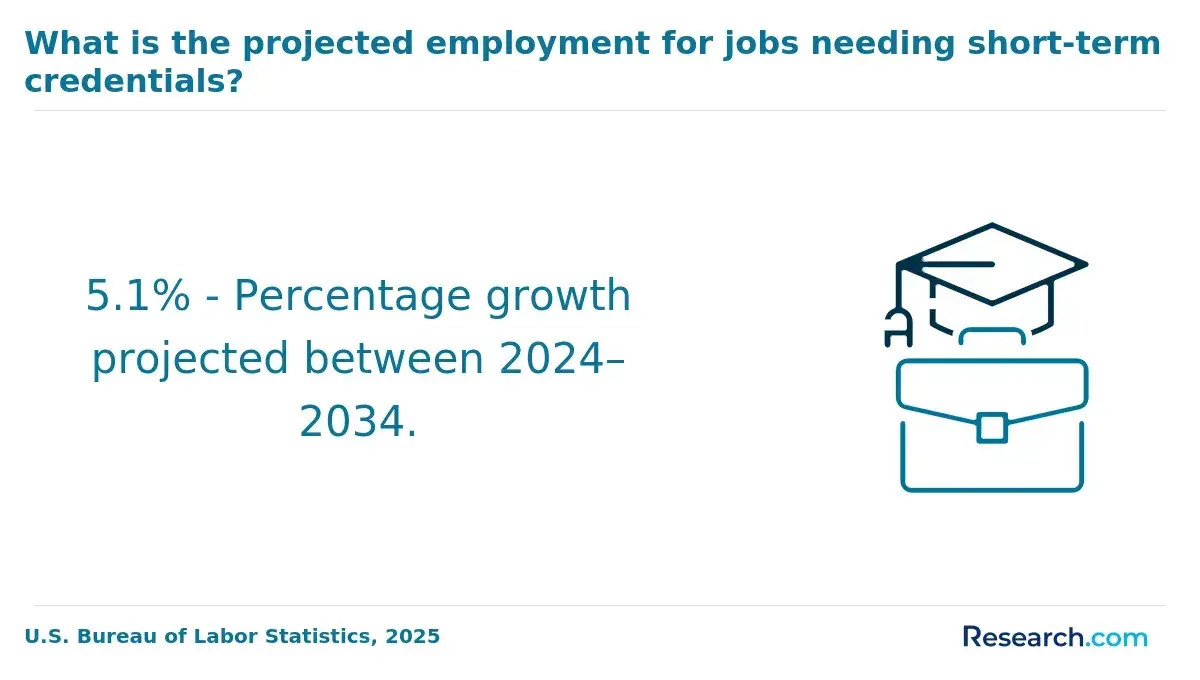
Earning a graduate certificate offers intelligence degree holders a focused pathway to pivot careers efficiently, delivering targeted expertise without the time or financial burden of a full graduate degree. Data from the National Center for Education Statistics (NCES) and the American Council on Education show these certificates usually take six months to a year to complete, significantly less than a traditional master's program. This makes them ideal for individuals seeking rapid skill development and career pivot success in intelligence fields.
- Time and Cost: Graduate certificates require fewer credits and lower tuition, often a fraction of a master's degree, allowing professionals to enhance skills with minimal disruption to work or life obligations.
- Career Signal Value: While they don't carry the full weight of a master's, graduate certificates signal specialized knowledge and a commitment to new fields. However, credential inflation means their value varies considerably. Employers tend to favor certificates from regionally accredited institutions with established industry reputations.
- Common Certificate Areas: Intelligence graduates typically pursue certificates in data analytics, project management, UX research, public health, nonprofit management, and financial analysis. Certificates in data analytics and project management often correlate with higher salary growth and better hiring outcomes, reflecting labor market demand in tech and operations.
Recent data shows 45% of mid-career professionals now use graduate certificates to boost employability or successfully pivot careers, highlighting their growing strategic importance. For those interested in practical upskilling options, Intelligence graduates might explore a UI UX design degree certificate as a route leveraging transferable skills in emerging digital fields.
Professional certifications serve as critical labor market signals for career-pivoting graduates with an Intelligence degree, especially when moving into industries that value applied skills over purely academic credentials. Unlike academic degrees, which demonstrate theoretical understanding and long-term study, certifications validate current competency and job readiness in specific fields. They often deliver immediate value by showcasing specialized expertise and ongoing commitment to professional growth.
The impact of certifications varies by sector and role. In fields like project management, analytics, human resources, or customer relationship management, holding a relevant professional certification frequently provides a meaningful competitive advantage, differentiating Intelligence degree holders from others with less directly applicable skills. Conversely, in jobs emphasizing hands-on experience or domain-specific education, certifications alone may have limited influence on hiring outcomes.
This nuance highlights the importance of choosing appropriate credential pathways validating Intelligence degree transitions. Key certifications widely pursued by Intelligence graduates include:
- Project Management Professional (PMP): Requires documented project management experience and passing a comprehensive exam; preparation often takes 3-6 months; exam fees about $555; highly valued in project coordination and leadership roles across sectors.
- Certified Analytics Professional (CAP): Demands a mix of education and analytics work experience; preparation usually 3-4 months; exam fees around $575; sought by employers prioritizing data-driven decision-making.
- SHRM Certified Professional (SHRM-CP): Focuses on human resource management; eligibility depends on education and experience; preparation typically 2-4 months; exam costs near $400; important in HR specialist and manager positions.
- Salesforce Administrator: No strict prerequisites; preparation ranges 1 to 3 months; exam fee approximately $200; essential for CRM-related sales and customer service roles.
- Certified Information Systems Security Professional (CISSP): Requires five years of security work experience; preparation can exceed six months; exam fee is about $749; highly regarded in cybersecurity fields.
Before investing time and money in any certification, research its relevance to your target career by scanning job postings for preferred skills and certifications, reviewing LinkedIn profiles of successful professionals, and conducting informational interviews. These steps reveal which certifications employers truly recognize, ensuring your decision aligns with labor market demand.
Intelligence degree holders should embrace the value of strategic credential choices, such as integrating certifications in their resume and interviews while still in progress, to highlight active learning and motivation. For those exploring careers beyond traditional Intelligence roles, it may also be worthwhile to investigate specialized training options like accelerated speech pathology programs online, which provide alternative pathways to professional pivoting.
Freelance and contract roles serve as efficient pathways for intelligence degree holders aiming to shift careers, particularly as over 59 million Americans participated in gig work during 2023. Early-stage pivoters often find opportunities in areas like content development, research assistance, data analysis, virtual support, communications consulting, and project coordination. These roles enable professionals to accumulate tangible work samples and domain-specific knowledge.
Starting a freelance career involves strategic choices. Selecting platforms such as Upwork or Fiverr allows access to relevant projects. Clearly defining service offerings (for example, research summaries or data-driven reports) makes value propositions clearer to clients, while setting competitive rates helps build a reputation early on. Intelligence degrees can be positioned as unique assets by underscoring analytical skills, critical thinking, and methodological expertise in profiles and proposals.
Transitioning freelance projects into resume highlights, emphasizing specific outcomes and metrics, enhances appeal to employers in desired sectors. Freelance income volatility and industry restrictions on contract work, especially in regulated or government fields, necessitate careful financial and risk assessment before pursuing this path.
For professionals with adequate financial resilience, freelancing compresses the timeframe for establishing credibility across sectors, thereby accelerating access to full-time roles aligned with new career goals.
- Accessible Roles: Content development, research assistance, data analysis, virtual assistance, communications consulting, project coordination
- Portfolio Building: Deliver projects that showcase relevant skills and knowledge for target industries
- Platform Strategy: Use Upwork or Fiverr; clarify offered services; set beginner-friendly prices to attract initial clients
- Credential Positioning: Emphasize analytical rigor and critical thinking from an intelligence degree in proposals
- Risk Assessment: Analyze financial runway and industry freelance openness before pursuing contract work
Intelligence graduates pivoting careers often confront the challenge of entering new fields without established networks. Labor market research consistently highlights the critical role of weak ties-distant connections that provide unique access to opportunities-and the growing reliance on referral hiring by employers.
To effectively navigate this landscape, intelligence graduates must engage in deliberate networking strategies that transcend generic advice.
- Alumni Network Activation: Locate intelligence alumni who have transitioned successfully into your desired industry. Reach out with personalized messages emphasizing shared educational backgrounds and request brief conversations to gather insights and guidance.
- Professional Association Entry: Join relevant industry associations to gain exposure to active professionals through events, forums, and workshops, fostering natural opportunities for building meaningful relationships.
- Informational Interview Campaigns: Send polite, targeted requests for informational interviews using language focused on learning, for example, "I admire your work at [Company]. As an intelligence graduate exploring [Field], could we schedule 20 minutes to discuss your experiences?" This helps reduce anxiety around outreach.
- LinkedIn Strategic Connection-Building: Craft concise connection requests noting shared interests or alumni status, and maintain engagement through thoughtful comments or questions that avoid aggressive self-promotion.
- Community of Practice Engagement: Participate actively in specialized forums, online groups, or workshops within your target sector, contributing to discussions to establish credibility and demonstrate commitment.
According to a recent Harvard Business Review study, 85% of job placements stem from direct or indirect referrals, underscoring why intentional, strategic networking is indispensable for intelligence graduates making career pivots.
Establishing a consistent networking routine is essential. Set aside dedicated weekly time blocks, define measurable goals such as sending five outreach messages, and track relationship progress. This structured approach transforms networking into a sustainable career development habit instead of an irregular, reactionary task.
What Graduates Say About the Best Career Pivot Options for People With an Intelligence Degree
- Callen: "One of the best career pivots for those with an intelligence degree is leaning into transferable competencies like critical thinking and data analysis. These skills map well into sectors like cybersecurity and risk management, which are booming right now. When I started, focusing on accessible entry-level roles such as intelligence analyst positions helped bridge my academic background to practical experience quickly. Achieving relevant certifications proved invaluable. It's about strategically stacking credentials that validate your expertise and boost your marketability."
- Koen: "Reflecting on my journey, networking was the game-changer. I made a conscious effort to engage with professionals in government and private sectors, which opened doors I hadn't anticipated. I also found reframing my resume to focus on problem-solving skills and real-world intelligence applications was essential for standing out to employers. The long-term career outcomes are promising if you're adaptable-many of my peers have transitioned smoothly into policy advising, strategic consulting, and even AI development, given the high demand in those growth areas."
- Owen: "From a professional standpoint, the intelligence degree provides a robust foundation, but supplementing it with niche credentials, such as certifications in geospatial analysis or cyber threat intelligence, can significantly expand your options. Starting in entry-level roles like an intelligence research assistant helped me gain ground in an evolving job market focused on tech-driven sectors. What I truly appreciate now is how the degree fosters analytical rigor, which prepares you for leadership positions down the line if you commit to continual skill-building and strategic career moves."
Other Things You Should Know About Intelligence Degrees
The CompTIA Security+ is the most common entry certification, and many employers also value Certified Ethical Hacker and GIAC certifications. For federal work, DoD 8140-aligned roles may require approved credentials. Security+ typically takes 6 to 12 weeks of study before the exam.
The timeline for a career pivot typically ranges from six months to two years, depending on the chosen field and the individual's prior experience. Intelligence graduates should expect some initial learning and credential acquisition phases, followed by networking and active job searching. Persistent skill development and targeted applications accelerate the transition process into new roles.
Graduate school programs enable intelligent degree holders to gain specialized knowledge and credentials that align with their pivot goals. Degrees in cybersecurity, data science, international relations, or business analytics can reinforce technical expertise and open doors to new industries. These programs also offer networking opportunities and internships that facilitate smoother transitions.
In 2027, intelligence degree holders stand out in fields like data analysis, cybersecurity, geopolitical risk assessment, and consulting due to their analytical skills. These roles offer opportunities to leverage their expertise while embracing cutting-edge technology and strategic thinking.
- Entry Level Intelligence Analyst Positions: Where to Start Your Career | McAfee Institute https://www.mcafeeinstitute.com/blog/entry-level-intelligence-analyst-positions
- 7 Reasons Why Earning a Graduate Certificate is Worth the Investment https://www.sacredheart.edu/news-room/news-listing/7-reasons-why-earning-a-graduate-certificate-is-worth-the-investment/
- CIA Jobs - Getting Hired Outside of the Official Pipeline | Silent Professionals https://silentprofessionals.org/cia-jobs/
- Intelligence Community career fields https://www.intelligencecareers.gov/career-fields
- Top-Growing Jobs Sectors: AI, Data Science, & Cybersecurity - recruitAbility https://www.therecruitability.com/ai-data-science-and-cybersecurity-americas-fastest-growing-jobs-sectors/
- Cybersecurity Job Demand: Current Trends and Future Outlook https://destcert.com/resources/cybersecurity-job-demand/
- Transferring Your Intelligence Service Skills to the Private Sector https://www.enteles-search.com/blog/how-to-transfer-your-intelligence-service-skills-to-the-private-sector
- IT sectors with the highest demand for employees - market analysis https://www.hrk.pl/en/know-how/articles/it-sectors-with-the-highest-demand-for-employees-market-analysis/
- Top 5 Entry Level Data Science Roles for Graduates http://blogs.lawrence.edu/careercenter/2025/02/top-5-entry-level-data-science-roles-for-graduates.html
- Alignment Between Jobs and Academic Programs - Gray DI https://www.graydi.us/blog/gray-insights/how-to-determine-alignment-between-jobs-and-academic-programs


