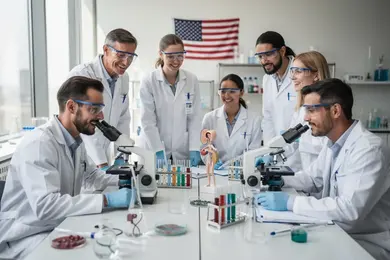
2027 Hybrid vs Fully Online Biology and Biological Sciences Bachelor's Degree Programs

Co-Founder and Chief Data Scientist
If you want a biology or biological sciences bachelor’s degree but cannot attend campus full time, the real choice is not simply “online or in person.” It is whether you need the structure and hands-on lab access of a hybrid program, or the maximum scheduling freedom of a fully online program. That decision matters because biology is a lab-centered field, and the way a program delivers labs, fieldwork, faculty access, and career preparation can affect how well it fits your goals.
Hybrid programs usually combine online lectures with scheduled campus sessions for labs, exams, seminars, or collaborative work. Fully online programs deliver coursework remotely through recorded lectures, live sessions, virtual labs, simulations, discussion boards, and digital assessments. With online degrees in this field growing by 15% annually, students now have more format options—but also more responsibility to compare quality, accreditation, cost, flexibility, and career alignment carefully.
This guide explains how hybrid and fully online biology and biological sciences bachelor’s degrees differ, what each format requires, how employers may view them, and which option is better for different types of students.
Key Benefits of Hybrid vs Fully Online Biology and Biological Sciences Bachelor's Degree Programs
- Hybrid programs offer greater learning flexibility by combining online coursework with scheduled in-person labs, enhancing hands-on experience critical in biology fields.
- Fully online programs provide minimal in-person interaction, often limiting direct mentorship but increasing accessibility for students nationwide.
- Hybrid formats better support balancing education with personal and professional responsibilities by integrating structured campus time with remote study options.
What Is a Hybrid vs Fully Online Biology and Biological Sciences Bachelor's Degree?
A hybrid biology or biological sciences bachelor’s degree blends online coursework with required in-person learning, while a fully online degree delivers the entire program remotely. Both formats can cover core subjects such as cell biology, genetics, ecology, microbiology, chemistry, statistics, and scientific writing. The biggest difference is how students complete labs, interact with instructors, and manage required class meetings.
Recent data shows that about 37% of U.S. college students take at least one online course, which reflects how common digital learning has become. Still, biology is not the same as a lecture-only major. Students should look closely at how each program handles laboratory skills, safety training, research methods, and faculty feedback.
Hybrid Programs
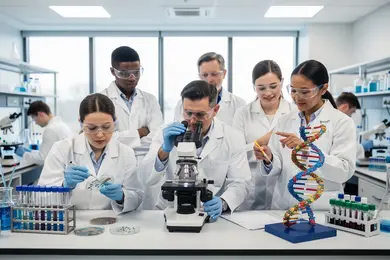
- Best for students who want hands-on science training. Hybrid biology bachelor degree programs advantages usually include access to campus labs, equipment, specimens, field activities, and direct faculty guidance.
- Course delivery is mixed. Lectures, quizzes, readings, and some assignments may be online, while labs, presentations, exams, or intensive weekend sessions may happen on campus.
- Schedules are less flexible than fully online programs. Students must be able to attend required in-person sessions, often at specific times.
- Peer and faculty interaction is stronger. Students can ask questions in real time, work in lab groups, and build relationships that may help with recommendations, internships, or research opportunities.
- Commuting and location matter. A hybrid program may not be practical for students who live far from campus or have unpredictable work schedules.
Fully Online Programs
- Best for students who need maximum location and schedule flexibility. A fully online biological sciences bachelor’s degree structure typically uses recorded lectures, digital assignments, virtual labs, simulations, remote exams, and online discussion tools.
- Campus visits are not required. Students can usually complete coursework from home, which is useful for working adults, caregivers, rural students, military-affiliated students, and learners with transportation barriers.
- Interaction is mostly digital. Communication happens through video calls, discussion boards, emails, chat tools, and virtual office hours.
- Lab training depends heavily on program design. Some programs use simulations or at-home lab kits, while others focus more on biological theory, data interpretation, or computational work.
- Self-management is essential. Students must stay organized without the regular accountability of campus meetings.
- Students who want flexible graduate options after an online bachelor’s may also compare short masters programs.
How Does a Hybrid vs Fully Online Biology and Biological Sciences Bachelor's Degree Program Work?
Hybrid and fully online biology programs usually follow the same broad academic pathway: general education courses, foundational sciences, upper-division biology courses, electives, labs or research-based assignments, and a capstone or senior project. The difference is the delivery model. Hybrid programs reserve some experiences for campus, while fully online programs build the entire student experience around remote platforms.
The National Center for Education Statistics reported that over 40% of undergraduate students participated in some form of online education in 2021. That growth has made online delivery more familiar, but students should still review each program’s exact requirements before enrolling.
Hybrid Programs
- Combine online lectures, readings, quizzes, and assignments with scheduled in-person sessions.
- May require weekly, biweekly, evening, weekend, or intensive campus meetings for labs, exams, fieldwork, or group projects.
- Use a learning management system for syllabi, recorded content, discussion boards, grade tracking, assignment submission, and instructor communication.
- Often require students to prepare online before attending labs so campus time can focus on experiments, demonstrations, data collection, or applied practice.
- Follow a more fixed calendar than fully online programs because in-person sessions must be coordinated with faculty, facilities, and classmates.
Fully Online Programs
- Deliver all instruction remotely, with no required campus visits.
- Use video lectures, digital textbooks, recorded demonstrations, virtual labs, simulations, databases, discussion boards, and online assessments.
- May include live webinars or synchronous class meetings, though many courses also provide asynchronous access for students in different time zones or work schedules.
- Conduct assessments through timed exams, remote proctoring, projects, lab reports, discussion posts, presentations, or portfolio-style assignments.
- Require students to troubleshoot technology, maintain reliable internet access, and meet deadlines without regular campus-based reminders.
Students comparing hybrid biology bachelor’s degree program structure with fully online biological sciences degree admission requirements should ask how often they must be online, whether any live sessions are mandatory, how labs are completed, and whether the degree transcript identifies the delivery format. For comparison across disciplines, resources on the best online business management degree options show how online program design can vary widely by field.
Are Admission Requirements Different for Hybrid and Fully Online Biology and Biological Sciences Bachelor's Degrees?
Admission requirements are usually similar for hybrid and fully online biology bachelor’s programs, but the delivery format can affect what schools ask for before enrollment. Both formats commonly require a high school diploma or equivalent, transcripts, an application form, and evidence that the student is academically prepared for college-level science. Differences are most likely to appear in lab prerequisites, technology standards, residency limits, and attendance expectations.
- Academic qualifications: Both formats typically require a high school diploma or its equivalent along with a minimum GPA. Hybrid programs may place more emphasis on prior science coursework with labs because students will enter physical lab settings earlier or more often.
- Science prerequisites: Applicants may need biology, chemistry, algebra, statistics, or other foundational courses. Hybrid programs often expect students to be ready for in-person lab work, while fully online programs may offer more remote foundation courses to help students build prerequisite knowledge.
- Technical requirements: Fully online programs usually expect reliable internet access, a suitable computer, webcam or microphone access, and sometimes software that supports virtual labs or remote proctoring. Hybrid students still use learning platforms but may rely less heavily on specialized virtual lab tools.
- Application materials: Transcripts and standardized test scores are standard for both when required by the institution. Hybrid programs may ask additional questions about availability for campus sessions, while fully online programs often design the process for remote submission.
- Geographic restrictions: Some hybrid programs limit applicants to students who can reasonably reach campus for required sessions. Fully online programs often serve students across broader locations, including international applicants, though students should confirm state authorization rules and any location-based restrictions.
- Readiness for the format: Admissions teams may evaluate whether applicants understand the demands of the program. For online students, that means independent study habits and technology readiness. For hybrid students, it means the ability to attend campus consistently.
One student enrolled in a fully online biology and biological sciences bachelor’s program described the admissions process as accessible but still academically serious. “Navigating the technical checklist was the biggest hurdle initially—I had to ensure my computer setup could handle virtual lab software,” she explained. She also valued the reduced pressure around geography because she lived far from campus. Even without in-person requirements, she said submitting transcripts and standardized test scores made the process feel rigorous rather than informal.
Neither format is automatically better. A hybrid biology degree is usually stronger for students who learn best through direct demonstration, live discussion, and hands-on lab practice. A fully online biology degree is usually better for students who need flexibility and can stay engaged without regular campus interaction.
Where Hybrid Programs Often Have an Advantage
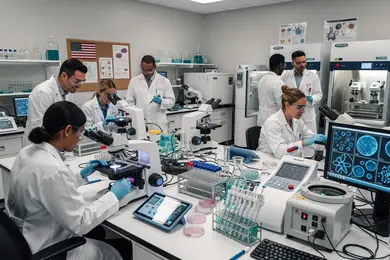
- Hands-on learning: Students can use lab equipment, follow in-person safety procedures, handle specimens, and practice techniques under supervision.
- Immediate feedback: Faculty can correct mistakes during labs or discussions, which can be valuable when students are learning complex scientific methods.
- Stronger campus connection: Hybrid students may find it easier to build relationships with professors, classmates, advisors, and potential research mentors.
- Better structure: Required meetings create a routine that helps some students keep pace with demanding science coursework.
Where Fully Online Programs Often Have an Advantage
- Convenience: Students can study around work, caregiving, military service, travel, or other responsibilities.
- Replayable content: Recorded lectures and demonstrations allow students to review difficult concepts multiple times.
- Digital skill development: Online students often become comfortable with remote collaboration, virtual communication, digital research tools, and scientific databases.
- Access: Students who cannot relocate or commute may still be able to complete a biology-related degree.
The main trade-off is lab depth versus flexibility. If your goal requires strong bench skills, fieldwork, pre-professional preparation, or close faculty mentorship, a hybrid program may provide a richer experience. If your goal is broader biological knowledge, environmental data work, health-related administration, science communication, or preparation for roles where remote and analytical skills matter, a well-designed fully online program may be a practical fit.
A fully online biology or biological sciences bachelor’s degree is usually more flexible than a hybrid degree because it removes commuting and campus attendance requirements. Hybrid programs offer some flexibility because lectures and assignments may be online, but required labs or meetings still create fixed schedule commitments.
Hybrid Flexibility
Hybrid biology bachelor’s degree flexibility depends on how often students must attend campus and how predictable those meetings are. A program with one weekend lab per month may be manageable for a working student. A program with weekly daytime labs may be difficult for someone with a full-time job, childcare responsibilities, or a long commute.
- Students can often complete lectures, readings, quizzes, and papers online.
- Campus sessions may be required for labs, seminars, exams, field activities, or presentations.
- Travel time, transportation costs, parking, and work schedule conflicts can reduce practical flexibility.
- The format works best when students live within a reasonable commuting distance and can plan ahead.
Fully Online Flexibility
Fully online biological sciences degree advantages center on schedule control. Students can access materials remotely and may complete asynchronous work at times that fit their lives. A 2023 survey by the Online Learning Consortium found that 64% of students valued the ability to study anytime as the main benefit of fully online programs.
- Students can study from home or another suitable location.
- Asynchronous courses allow learners to work around jobs, family needs, and time zones.
- Live sessions, if required, may still limit flexibility, so students should check attendance rules carefully.
- Online learning requires strong planning because flexibility can turn into procrastination without a weekly routine.
Students prioritizing maximum flexibility may also compare other remote-first fields, such as online data science programs, to see how fully online formats support different schedules and career paths.
The academic workload is typically similar in rigor because both formats must cover college-level biology content. The difference is how the work feels. Hybrid students balance scheduled campus time with online assignments. Fully online students have fewer location constraints but must manage more independent study. Students learning remotely typically dedicate about 15-20% more time to coursework compared to those attending in person, which makes planning especially important.
Hybrid Workload
Hybrid students must prepare for both in-person and online expectations. Campus labs may require pre-lab readings, safety modules, data collection, lab reports, and follow-up analysis. Online portions may include lectures, quizzes, discussion posts, research papers, and exams. The benefit is that fixed sessions create built-in accountability. The challenge is that students must protect time for commuting, attendance, and independent study.
- Expect a more structured weekly rhythm.
- Plan around immovable lab or seminar times.
- Complete online work before campus meetings to make in-person sessions productive.
- Budget time for travel, parking, lab preparation, and post-lab assignments.
Fully Online Workload
Fully online students often have more control over when they study, but less external structure. They may watch lectures, complete simulations, write lab reports, participate in discussions, and take exams from home. Without set meeting times, deadlines can cluster and create intense work periods if students fall behind.
- Create a weekly study calendar rather than relying only on due dates.
- Treat virtual labs as serious skill-building activities, not quick assignments.
- Schedule time for readings, videos, discussion participation, exams, and instructor questions.
- Avoid waiting until the end of the week, especially in courses with lab reports or data analysis.
For both formats, biology coursework can be reading-heavy and detail-oriented. Students should expect regular memorization, problem-solving, writing, data interpretation, and cumulative exam preparation.
Fully online biology and biological sciences bachelor’s programs are often less expensive on a per-credit basis, but the total cost depends on the institution, residency rules, fees, transfer credits, lab requirements, and time to completion. Generally, fully online programs tend to offer tuition rates that are approximately 10-15% lower per credit hour than hybrid alternatives at similar institutions. However, lower tuition does not always mean lower total cost if technology fees, remote proctoring charges, textbooks, lab kits, or extended enrollment increase expenses.
- Per-credit tuition: Hybrid programs often charge more because students use campus facilities, labs, classrooms, and in-person support services. Fully online programs may have lower per-credit rates because they rely more on digital delivery.
- Campus and technology fees: Hybrid students may pay campus, lab, facility, parking, library, or activity fees. Fully online students usually pay technology-related fees, which are often lower but still important to include in a budget.
- Residency rules: Hybrid tuition may vary by in-state or out-of-state status. Some online programs use a standardized tuition rate regardless of student location, but students should confirm this before applying.
- Commuting costs: Hybrid students should include transportation, parking, meals, childcare during campus sessions, and possible lost work hours.
- Lab expenses: Online students may need lab kits, software, webcams, or proctoring tools. Hybrid students may pay lab fees or equipment-related charges through the school.
- Payment flexibility: Fully online programs may offer monthly installments or pay-as-you-go models. Hybrid programs often follow traditional semester billing cycles.
A hybrid program graduate described the financial side as “a balancing act between tuition, campus fees, and commuting costs.” He said, “While the tuition was higher than fully online options, having access to in-person labs and resources felt worth the extra expense. Still, managing the mandatory fees alongside travel expenses was challenging, especially when budgeting each semester.” His advice was to compare the full cost of attendance, not just the advertised tuition rate.
Employers generally care more about the institution, accreditation, coursework, lab or research experience, internships, technical skills, and job fit than whether the degree was hybrid or fully online. Still, format can matter in biology because some roles require hands-on laboratory competence. A 2023 study by the National Association of Colleges and Employers found that over 70% of U.S. employers are willing to hire graduates with online degrees, reflecting broader acceptance of remote education.
- For lab-based roles: Hybrid graduates may have an advantage when employers want evidence of hands-on benchwork, specimen handling, instrumentation, safety procedures, or in-person lab collaboration.
- For data-centered or non-lab roles: Fully online graduates may be competitive for positions involving biological data, environmental reporting, research support, health information, science communication, regulatory support, or computationally oriented work.
- For graduate or professional school: Students should verify whether online or virtual labs meet prerequisite expectations, especially for programs that require in-person biology, chemistry, or anatomy labs.
- For employer confidence: Internships, research projects, capstones, portfolios, certifications, strong references, and clear explanations of lab experience can help graduates from either format.
- For degree credibility: Accreditation and institutional reputation are critical. A low-quality program with weak science training is a risk regardless of delivery format.
Fully online biology bachelor’s degrees increasingly use virtual labs and advanced simulations to support learning. Some employers accept these tools as appropriate for foundational knowledge, especially when students also complete internships or practical training. Others remain cautious if the job requires physical lab experience. Students should therefore choose the format that matches the type of work they want after graduation.
Students interested in related human science pathways may also compare options such as an online child psychology degree.
Choose a hybrid biology or biological sciences bachelor’s degree if you want more hands-on training and can reliably attend campus. Choose a fully online program if flexibility, location independence, and schedule control are your top priorities. The better choice depends on your career goal, learning style, support needs, and weekly availability.
Choose a Hybrid Program If You:
- Want stronger hands-on lab experience. This matters for students considering lab technician roles, research assistant work, field biology, graduate study, or health-related pathways that value in-person science training.
- Learn best through demonstration and live feedback. Biology concepts can be easier to master when an instructor can correct technique or explain results in the moment.
- Need structure. Scheduled campus meetings can help students stay accountable and build a steady academic routine.
- Want stronger faculty and peer connection. Hybrid programs make it easier to develop relationships that may support mentoring, recommendations, internships, and networking.
- Can commute without major disruption. The format is most practical when campus attendance does not create serious work, transportation, or caregiving conflicts.
Choose a Fully Online Program If You:
- Need maximum flexibility. Working adults, caregivers, military-affiliated students, rural learners, and students with limited transportation may benefit most.
- Are comfortable learning independently. Online success requires discipline, organization, and consistent communication with instructors.
- Live far from campus. A fully online degree can make biology education accessible without relocation.
- Prefer digital learning tools. Recorded lectures, simulations, online databases, and virtual discussions can work well for students who are comfortable with technology.
- Are pursuing roles where physical lab work is not central. Fully online study may fit students interested in data, environmental policy support, health administration, science writing, or other biology-adjacent paths.
Students comparing affordability and online delivery across disciplines may also review library science degree online rankings to understand how program costs and formats differ by field.
Success in either format requires consistent study habits, early communication, and a serious approach to labs and scientific writing. The main difference is where students need the most discipline. Hybrid students must manage travel and campus attendance. Fully online students must create their own structure and stay engaged without in-person accountability.
Strategies for Hybrid Students
- Protect campus days. Treat labs and in-person meetings as non-negotiable. Missing them can be difficult to make up.
- Prepare before every lab. Review procedures, safety rules, readings, and expected outcomes before arriving so you can use lab time effectively.
- Use faculty access. Ask questions during campus sessions and attend office hours when concepts are unclear.
- Plan for commute time. Build travel, parking, meals, and post-lab work into your weekly schedule.
- Connect with classmates. Study groups can help with lab reports, exam preparation, and complex topics such as genetics or biochemistry.
Strategies for Fully Online Students
- Create a fixed weekly routine. Set specific times for lectures, readings, labs, assignments, and review instead of waiting for deadlines.
- Stay visible in the course. Participate in discussion boards, attend virtual office hours, and contact instructors early when you need help.
- Take virtual labs seriously. Record observations, analyze data carefully, and write lab reports as you would in a campus-based course.
- Check technology before high-stakes work. Test software, webcams, proctoring systems, file uploads, and internet stability before exams or lab deadlines.
- Build accountability. Use calendars, reminders, peer study partners, or weekly progress goals to avoid falling behind.
Strategies for Both Formats
- Master note-taking. Biology courses often involve dense terminology, processes, diagrams, and cumulative concepts.
- Practice active recall. Flashcards, diagrams, self-quizzing, and explaining concepts aloud can be more effective than rereading alone.
- Use academic support early. Tutoring, writing centers, advising, library databases, and faculty feedback can prevent small problems from becoming major setbacks.
- Document your skills. Keep examples of lab reports, research projects, data analysis, presentations, and capstone work for future applications or interviews.
- Match electives to your goal. Choose courses that support your intended path, whether that is laboratory work, environmental science, healthcare, biotechnology, education, or graduate study.
What Graduates Say About Hybrid vs Fully Online Biology and Biological Sciences Bachelor's Degree Programs
-
: "Choosing a fully online biology degree was essential for me as I was balancing work and family commitments. The flexibility of the program allowed me to complete coursework at my own pace without compromising quality. Navigating the virtual labs and collaborating through discussion boards built my confidence, which has been invaluable now that I work in environmental research.
—Raul"
-
: "I opted for a hybrid biological sciences bachelor's degree to maintain face-to-face interaction while still enjoying online convenience. The blend of virtual lectures and in-person labs enhanced my understanding and kept me engaged throughout the program. Reflecting on my career as a healthcare consultant, this approach gave me the practical experience I needed alongside theoretical knowledge.
—Elisha"
-
: "Enrolling in a fully online biology program allowed me to explore advanced topics that fit into my busy schedule as a military reservist. The self-discipline I developed managing remote coursework taught me valuable time-management skills. Professionally, earning this degree has opened doors in biotech, and the digital communication experience has been a strong asset in my current role.
—Michael"
Other Things You Should Know About Biology and Biological Sciences Degrees
Hybrid programs typically provide in-person lab sessions, allowing students hands-on experience with biological samples and laboratory equipment. Fully online programs often use virtual labs or simulations, which can be effective but may lack the tactile skills gained through physical lab work. Therefore, hybrid formats generally offer more comprehensive practical training in this discipline.
Fully online degrees from accredited institutions are usually recognized by licensing and certification boards, provided the program meets all academic standards. However, some certification processes may require specific in-person lab hours or clinical experiences, which students should verify before enrolling. It is important to check individual board requirements relevant to the intended career path in biological sciences.
Students must complete lab safety training before any wet-lab work and follow rules on PPE, chemical handling, waste disposal, and incident reporting. Many programs require a signed safety agreement and annual retraining. Hybrid programs often add in-person orientation or proctored lab check-ins before enrollment in upper-level biology labs.
- The Rise of Hybrid & Online Degrees: Are They Worth It? | EdNet Consultants https://www.ednetconsultants.com/the-rise-of-hybrid-online-degrees-are-they-worth-it/
- The Truth About Biology Degree Online Programs https://www.prlog.org/11128160-the-truth-about-biology-degree-online-programs.html
- Online and hybrid college programs explained. Flexibility, risk, and the real value equation | CG https://collegegrind.org/posts/online-and-hybrid-college-programs-explained/
- Hybrid class vs. online: Choosing the best for your student https://www.asuprepdigital.org/blog/hybrid-class-vs-online/
- 4 Flexible Ways to Earn a College Degree on Your Schedule https://www.stjohns.edu/news-media/johnnies-blog/4-flexible-ways-earn-college-degree-your-schedule-0
- Hybrid Learning or Online Degree: Complete Guide https://www.onlineuniversitiess.com/blogs/hybrid-learning-or-online-degree-guide
- Difference between Hybrid, Online & In-Class Degree Programmes | BSBI https://www.berlinsbi.com/blog/what-is-the-difference-between-hybrid-online-and-in-class-degree-programmes
- Client Challenge https://www.scribd.com/document/834622901/Brame-Biel-2016-Traditional-Versus-Online-Biology-Courses-Connecting-Course-Design-and-Student-Learning-in-an-Online
- Bepress Guest Access https://scholarworks.umb.edu/cgi/viewcontent.cgi
- Online Bachelor's Degrees in Biology & Biological Sciences https://www.medicaltechnologyschools.com/biological-sciences/online-bachelors-in-biology