2027 How to Pay for an Exercise Science Master's Degree with Financial Aid

Co-Founder and Chief Data Scientist
Paying for a master's degree in exercise science is not just a tuition question. It is a career-return question: how much should you borrow, which funding sources should you pursue first, and what repayment options will still make sense after graduation? For many prospective students, the stakes are high because the average graduate tuition exceeds $30,000 annually, and over 60% of exercise science graduates rely on loans to fund their education.
This guide is for students comparing exercise science master's programs, working professionals planning a return to school, and applicants trying to build a realistic funding plan before they enroll. It explains how federal aid, scholarships, fellowships, assistantships, employer benefits, state programs, institutional awards, and loan repayment options can work together to reduce out-of-pocket costs and limit unnecessary debt.
The goal is practical: help you identify aid that does not need to be repaid first, borrow only when necessary, and choose a program with a cost structure that fits your career path in performance, rehabilitation, wellness, research, or related health fields.
Key Benefits of Knowing How to Pay for a Exercise Science Master's Degree with Financial Aid
- Using all major financial aid options helps students invest strategically in their professional future, maximizing support from federal programs, scholarships, and assistantships.
- Financial aid significantly lessens the burden of tuition and living costs, reducing the need for high-interest loans and allowing focus on studies and career growth.
- Building a comprehensive aid strategy, including loans with income-driven repayment and employer assistance, makes earning an exercise science master's financially achievable and sustainable long term.
What Is a Exercise Science Master's Degree, and Why Does Funding It Matter?
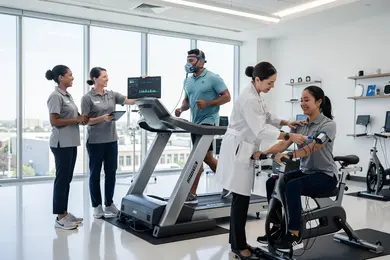
A master's degree in exercise science is a graduate program focused on human movement, exercise physiology, biomechanics, performance, rehabilitation, and applied health science. Students often use the degree to move into advanced roles in sports performance, clinical exercise settings, research, coaching, wellness leadership, or preparation for further professional study.
Funding matters because this degree can require a major financial commitment before a student sees the career payoff. Most programs require between 30 to 60 credit hours and may include advanced coursework, lab work, research, internships, a thesis, or a capstone project. Programs are typically completed within one to three years, but the actual cost depends on tuition, fees, enrollment pace, residency status, and whether the student can keep working while enrolled.
- Academic scope: Programs commonly cover physiology, biomechanics, research methods, strength and conditioning, motor learning, nutrition, rehabilitation concepts, and data-driven performance assessment.
- Cost pressure: Average tuition ranges from $15,000 to $35,000 annually, excluding fees and living expenses. Students should calculate the full cost of attendance, not just listed tuition.
- Funding priority: Scholarships, grants, fellowships, assistantships, and employer support should be pursued before loans because they can reduce or eliminate repayment obligations.
- Career alignment: A lower-cost program may be the better financial choice if it still supports your target role, required prerequisites, research interests, or preparation for certification or doctoral study.
- Program format: Online, hybrid, and campus-based formats can affect commuting costs, work flexibility, assistantship access, and clinical or lab experiences.
Students should also avoid comparing exercise science programs only by sticker price. A program with higher tuition but a strong assistantship package may cost less than a cheaper program with no institutional aid. Likewise, a flexible online option may allow a student to keep earning income while studying. If format is part of your decision, reviewing an exercise science online degree can help you compare delivery models and cost trade-offs.
Some students research unrelated health education pathways, such as the shortest post master's DNP program, but exercise science applicants should focus first on funding sources tied directly to their degree level, institution, department, and career objective.
What Types of Financial Aid Are Available for Exercise Science Master's Students?
Exercise science master's students can use several forms of financial aid, but not all aid has the same long-term impact. The best funding plan usually starts with aid that does not require repayment, then uses work-based aid, and treats loans as a final gap-filling tool.
| Type of Aid | How It Helps | Key Caution |
| Grants | Provide funds that generally do not need to be repaid, often based on need, field, residency, or institutional priorities. | Graduate grant funding can be limited, and eligibility rules vary by school or state. |
| Scholarships | Reduce tuition or fees through merit-based, need-based, identity-based, career-focused, or field-specific awards. | Deadlines may occur before admission decisions or before the standard financial aid timeline. |
| Fellowships | May provide tuition support, research funding, or living stipends for strong academic or research-focused applicants. | They are often competitive and may require a research proposal, faculty match, or full-time enrollment. |
| Assistantships | Can combine work experience with a stipend and partial or full tuition support. | Work obligations can reduce schedule flexibility and may extend time to completion. |
| Loans | Help cover remaining tuition, fees, and living costs when other aid is not enough. | Loans must be repaid with interest, so borrowing should be tied to a realistic post-graduation budget. |
| Work-Study Programs | Offer part-time employment opportunities that may align with campus, research, or community health work. | Availability depends on school participation, funding, and student eligibility. |
A practical funding strategy is to build a layered package. For example, a student might combine a departmental scholarship, a part-time assistantship, a small employer reimbursement benefit, and a limited federal loan. This approach is usually stronger than relying on one source, especially if the program lasts multiple terms.
- Start with the program: Ask the exercise science department which awards are reserved for admitted master's students.
- Complete the FAFSA: Even if you hope to avoid loans, many schools use FAFSA information when determining aid eligibility.
- Search by career goal: Students focused on public health, rehabilitation, strength and conditioning, research, or wellness may qualify for different awards.
- Check renewal rules: Some awards apply only to the first year, while others require a minimum GPA, full-time enrollment, or continued research involvement.
- Compare net cost: Review the final cost after grants, scholarships, tuition waivers, and required fees, not just the advertised tuition rate.
Students exploring related healthcare education options, including nursing programs easy to get into, should remember that aid rules can differ significantly by discipline, credential level, licensure pathway, and employer demand.
How Does the FAFSA Process Work for Exercise Science Graduate Students?
The FAFSA is the main application for federal student aid, and graduate exercise science students should complete it even if they expect to receive scholarships or assistantships. For graduate students, the FAFSA generally treats the applicant as independent, which means the student reports personal financial information rather than parental information.
- Graduate status: Graduate applicants typically provide their own income, assets, tax information, and identifying details. This can make the application more straightforward than the undergraduate process for dependent students.
- Opening date: FAFSA becomes available every October 1 for the next academic year. Submitting early matters because some schools and states allocate limited aid on a priority basis.
- Likely aid types: Graduate FAFSA applicants are most commonly considered for federal loans and Federal Work-Study. Unlike undergraduates, graduate students generally do not qualify for federal grants.
- Documents to prepare: Have recent tax returns, Social Security numbers, legal name details, school codes, and records of income or assets ready before starting the form.
- Borrowing context: Nearly one in five graduate students borrow federal loans, which makes it important to understand repayment terms before accepting an award.
FAFSA steps for exercise science applicants
- Confirm that each program you are applying to participates in federal student aid.
- Submit the FAFSA as early as possible after it opens.
- List every school you are seriously considering so each can prepare an aid offer.
- Review your Student Aid Report or FAFSA summary for errors.
- Compare aid letters carefully, separating grants, scholarships, work-based aid, and loans.
- Accept only the amount of loan funding you need after other aid is applied.
A graduate who pursued a master's in exercise science described the FAFSA process as confusing at first because of unfamiliar financial terms and multiple deadlines. He said he had to gather tax documents early and track state aid cutoffs. The turning point was creating a simple checklist before submitting the form. That preparation helped him meet priority deadlines and avoid accepting more loan funding than necessary.
What Federal Loans Are Available for Financing a Exercise Science Master's Degree?
Federal loans are often the main borrowing option for exercise science master's students, but they should be used carefully. They can provide predictable access to funds and federal repayment protections, yet interest can increase the total cost of the degree.
- Direct Unsubsidized Loans: These loans are available regardless of financial need. Graduate borrowers can receive up to $20,500 per academic year. Interest accumulates during enrollment, and repayment begins six months after graduating or dropping below half-time status.
- Graduate PLUS Loans: These loans can cover up to the full cost of attendance minus other aid. They require a credit check and typically have higher borrowing costs than Direct Unsubsidized Loans. In-school deferment may be available.
- No graduate subsidy: Graduate students do not receive the same interest subsidy available through some undergraduate loan options, so interest planning is especially important.
- Disbursement timing: Federal loans are usually disbursed in installments. Students should budget by term and avoid treating the full annual loan amount as available spending money.
- Borrowing discipline: Accepting the maximum loan offer can be tempting, but it may create a repayment burden that does not match entry-level earnings in some exercise science roles.
How to decide how much to borrow
Start by subtracting scholarships, grants, assistantships, tuition waivers, employer support, and savings from the full cost of attendance. Then separate true education costs from optional lifestyle expenses. Borrow for required tuition, fees, books, technology, transportation, and essential living costs only. If you can work part time without harming academic progress, that may reduce loan reliance.
Students should also be cautious when comparing borrowing strategies across different health fields. For example, online RN to BSN programs may have different employer support, licensure, and tuition structures than exercise science master's programs.
What Scholarships and Fellowships Exist Specifically for Exercise Science Master's Students?
Scholarships and fellowships are among the most valuable funding sources because they can reduce debt and strengthen a graduate student's academic profile. For exercise science students, the strongest opportunities often come from the university, the academic department, faculty research groups, professional associations, and foundations tied to health, performance, rehabilitation, or community wellness.
- Scholarships: These awards commonly recognize academic performance, financial need, leadership, professional goals, or commitment to a specific area of exercise science.
- Fellowships: Fellowships often support research, specialized training, or full-time graduate study. Some include stipends and may be tied to a thesis, lab, or faculty project.
- Professional associations: Organizations such as the National Strength and Conditioning Association and the American College of Sports Medicine award scholarships and fellowships relevant to exercise science students.
- University funding: Graduate schools and departments may offer awards for admitted students, thesis-track students, or applicants with strong academic records.
- Federal and university research programs: Students pursuing research-intensive paths may find support through training grants or faculty-led projects, depending on the institution.
How to improve your chances
- Build a funding calendar with deadlines, required essays, recommendation letters, transcripts, and membership requirements.
- Tailor each statement to the award rather than submitting a generic personal essay.
- Connect your goals to a clear exercise science focus, such as rehabilitation, human performance, public health, aging, injury prevention, or research methods.
- Ask faculty whether their labs have grant-funded positions or student support.
- Apply even when awards are small; several smaller scholarships can meaningfully reduce borrowing.
A graduate who completed a master's degree in exercise science said the search felt overwhelming at first because awards had different eligibility rules and early deadlines. She found the most success by contacting association offices, asking faculty about department-specific opportunities, and applying before the final week. The funding she received reduced financial pressure and gave her more time to focus on research and coursework.
How Can Graduate Assistantships Help Pay for a Exercise Science Master's Degree?
Graduate assistantships can be one of the strongest ways to fund a master's degree in exercise science because they may combine financial support with field-relevant experience. Instead of only reducing costs, an assistantship can help students build research, teaching, coaching, lab, or administrative skills that support their next career step.
- Teaching assistantships: Students may help with labs, grade assignments, support undergraduate courses, lead review sessions, or assist faculty with course preparation.
- Research assistantships: Students may collect data, recruit participants, manage equipment, review literature, analyze results, or support faculty research in exercise physiology, biomechanics, performance, or health behavior.
- Administrative assistantships: Students may work in academic departments, wellness centers, athletic performance units, community programs, or student services.
- Financial value: Most assistantships include a stipend and either a partial or full tuition waiver, making them especially valuable compared with aid that only covers a small portion of tuition.
- Workload: Positions generally require 10 to 20 hours of work weekly, so students should consider whether the time commitment fits their course load, job, family responsibilities, and graduation timeline.
According to the National Center for Education Statistics, approximately 30% of master's students recently have benefited from assistantships or fellowship aid. Availability varies widely, however, so applicants should not assume that admission automatically includes assistantship consideration.
Questions to ask before accepting an assistantship
- Is the tuition waiver full or partial?
- Does the waiver cover fees, or only tuition?
- How much is the stipend, and when is it paid?
- Is summer funding available?
- Are health insurance or other benefits included?
- Can the assistantship be renewed for the second year?
- Will the work align with your career goals or research interests?
Applicants should contact the exercise science department, not just the central financial aid office, because assistantships are often awarded by program directors, faculty investigators, or department committees.
Are There Employer Tuition Reimbursement Options for Exercise Science Master's Programs?
Employer tuition assistance can be a useful funding source for working professionals in fitness, wellness, healthcare support, athletics, rehabilitation services, corporate health, or education. These programs typically work best when the degree clearly benefits the employee's current role or prepares them for a higher-value position within the organization.
- IRS Section 127 tax benefit: Employers may offer up to $5,250 annually in tax-free tuition assistance, which can reduce graduate costs without adding taxable income for the employee.
- Reimbursement rules: Some employers pay upfront, while others reimburse after course completion, proof of payment, and a minimum grade.
- Employment commitments: Many programs require employees to remain with the organization for a set period after receiving tuition support. Leaving early may trigger repayment obligations.
- Degree relevance: Approval is more likely when the student explains how the master's degree supports job performance, leadership, client outcomes, program development, or organizational goals.
- Benefit prevalence: More than 60% of U.S. employers now provide some form of tuition aid, but the amount and rules vary by employer.
How to request employer support
- Review the employee handbook or benefits portal for tuition assistance rules.
- Ask HR whether graduate coursework is eligible.
- Confirm whether the school must be accredited or preapproved.
- Prepare a short proposal connecting the exercise science degree to your role.
- Clarify payment timing, grade requirements, annual limits, and repayment clauses before enrolling.
Employer assistance rarely covers the entire degree, but it can reduce the amount students need to borrow. It may be especially valuable for part-time students who can continue earning income while completing the program.
What State-Based Financial Aid Opportunities Exist for Exercise Science Graduate Students?
State-based aid can be an overlooked funding source for exercise science master's students, especially those attending in-state public universities or preparing for work in health-related, community wellness, rehabilitation, or public service roles. State programs vary, so students should check the higher education agency in the state where they live and the state where they plan to enroll.
- State grants and scholarships: Most states offer grants and scholarships for residents enrolled at accredited in-state institutions. Some awards prioritize financial need, academic merit, health-related study, or workforce demand.
- Loan forgiveness and repayment programs: Some states support graduates who work in underserved or high-need areas. Exercise science graduates may find relevant opportunities if their work connects to public health, rehabilitation, prevention, or community wellness.
- Tuition equity and residency incentives: Certain states reduce tuition expenses through tuition equity laws or residency incentives for eligible students, including some with specific immigration statuses or those relocating in-state for graduate studies.
- Workforce development scholarships: Some states offer incentives for fields tied to health, wellness, sports medicine, or rehabilitation needs.
- Limited funding: State aid often has strict deadlines and finite budgets, so early application can matter.
Recent data show that about 45% of graduate students in health-related fields receive state-based aid, which makes these programs worth investigating before relying on additional loans.
Where to look first
- Your state's higher education agency
- The financial aid office at each university
- Graduate school funding pages
- State workforce development or public health agencies
- Residency and tuition classification offices
Students comparing multiple healthcare-related pathways may also review funding differences across programs such as LPN to RN programs without TEAS test, but eligibility rules for nursing and exercise science awards are not interchangeable.
How Do Institutional Grants and University Fellowships Factor Into Exercise Science Funding?
Institutional grants and university fellowships can significantly change the true cost of an exercise science master's degree. These awards come from the university, graduate school, college, or academic department and may be based on academic strength, research fit, financial need, enrollment goals, or faculty funding.
- Institutional grants: These may reduce tuition directly and can be merit-based, need-based, or tied to a specific graduate program.
- University fellowships: These awards may support high-performing applicants, research-focused students, or candidates whose goals align with university priorities.
- Departmental funding: Exercise science departments may control awards that are not obvious on the general financial aid website.
- Tuition remission: Some awards reduce a portion of tuition, while others may cover a larger share depending on the program and funding source.
- Offer comparison: Applying to several programs allows students to compare net cost, not just admission status.
How to evaluate institutional aid offers
| Question | Why It Matters |
| Is the award renewable? | A first-year award may not reduce second-year costs unless renewal is guaranteed or clearly defined. |
| Does it cover fees? | Some awards cover tuition only, leaving students responsible for mandatory fees. |
| Is full-time enrollment required? | Part-time students may lose eligibility for certain fellowships or grants. |
| Are there work or research obligations? | Some fellowships function like assistantships and require service, lab work, or teaching support. |
| When will the award be posted? | Timing affects billing, loan acceptance, and payment planning. |
Applicants should contact both the admissions office and the exercise science department to ask about awards for incoming master's students. Some institutional funding is offered automatically with admission, while other awards require separate applications, faculty nominations, or earlier deadlines.
If application costs are a barrier when comparing programs, reviewing universities with no application fee may help reduce upfront expenses while you evaluate institutional aid packages.
What Role Do Professional Associations Play in Funding a Exercise Science Master's Degree?
Professional associations can help exercise science master's students fund their education and build career credibility at the same time. These organizations may offer scholarships, research awards, travel support, student grants, mentorship opportunities, and conference-related funding.
- Scholarships and grants: Many associations offer awards for graduate students based on academic achievement, professional goals, research interests, service, or financial need.
- Travel grants: These funds can help students attend conferences, present research, meet faculty from other institutions, and connect with employers or doctoral programs.
- Research awards: Some societies provide monetary recognition for strong graduate research, thesis work, poster presentations, or applied projects.
- Mentorship and development stipends: Certain organizations support leadership training, certification preparation, workshops, or professional development activities.
- Membership benefits: Student membership may be required before applying for awards and can provide early access to deadlines, newsletters, and funding announcements.
How to use associations strategically
Students should identify associations that match their career goals. A student focused on strength and conditioning may look at different awards than a student focused on clinical exercise physiology, biomechanics, public health, or rehabilitation. Joining too many organizations can become expensive, so prioritize groups that offer student rates, relevant funding, strong conferences, and useful networking opportunities.
Strong applications usually include a clear statement of purpose, a concise explanation of research or career goals, faculty recommendations, and evidence of engagement in exercise science. Apply early, follow every formatting rule, and avoid generic essays that could be submitted to any field.
How Can Income-Driven Repayment and Loan Forgiveness Programs Apply to Exercise Science Graduates?
Income-driven repayment and loan forgiveness programs can help exercise science graduates manage federal student loan payments after graduation. These options are especially important for borrowers entering public service, nonprofit health work, university roles, or early-career positions where income may grow gradually.
- Income-Driven Repayment Plans: Options such as SAVE, IBR, PAYE, and ICR calculate monthly payments based on earnings and household size. This can make payments more manageable when starting an exercise science career.
- Public Service Loan Forgiveness: PSLF may forgive remaining eligible federal loan balances after 120 qualifying payments for borrowers who work full-time for qualifying government agencies, nonprofits, or educational institutions.
- Potentially eligible workplaces: Universities, public health organizations, government agencies, nonprofit health entities, and some rehabilitation or community wellness organizations may qualify depending on employer status.
- Private loan limitation: Federal repayment and forgiveness programs do not apply to private student loans. Borrowers who want access to these protections should be cautious about replacing federal loans with private debt.
- Documentation: Borrowers pursuing forgiveness should keep employment records, submit required certifications, and review loan status regularly.
Planning before you borrow
Repayment planning should begin before enrollment, not after graduation. Estimate your likely monthly payment under different borrowing levels, compare those payments with realistic entry-level income expectations, and consider whether your target employers may qualify for PSLF. A lower loan balance gives you more career flexibility, even if forgiveness is possible later.
Students should use federal loan tools and speak with the financial aid office before accepting loans. If you plan to work in public service, confirm that your loan type, repayment plan, payment history, and employer all meet program requirements.
What Graduates Say About Paying for a Exercise Science Master's Degree with Financial Aid
- : "Choosing to pursue a master's degree in exercise science was a deliberate step to deepen my understanding of human physiology and strengthen my credentials in the fitness industry. The program required a significant financial investment, but the curriculum, faculty access, and applied training helped make the cost feel purposeful. Since graduating, I have seen stronger career opportunities, including work with elite athletes and advancement in clinical settings. — Mae"
- : "My exercise science master's program changed the way I saw my professional future. The cost was a serious concern at first, but scholarships made it more manageable and reduced the pressure to borrow heavily. The degree helped me move from general fitness training into specialized rehabilitation work, which opened doors I had not expected. — Leanna"
- : "I enrolled in an exercise science master's program because I wanted to improve people's health through evidence-based practice. It was expensive, but the investment helped me build the skills and credentials I needed to lead wellness programs. Professionally, the degree positioned me to work as a consultant in corporate health initiatives. — Orlando"
Other Things You Should Know About Exercise Science Degrees
Crowdfunding and peer-to-peer lending platforms offer alternative financing options for exercise science students who may not qualify for sufficient federal aid. By sharing their educational goals on these platforms, students can receive donations or low-interest loans from individuals. These methods require strong communication skills and planning but can supplement traditional aid effectively.
Creating a detailed budget that includes tuition, fees, and living expenses is critical for managing the cost of a exercise science master's degree. Students should explore employer tuition reimbursement plans, apply for multiple scholarships, and consider graduate assistantships to reduce expenses. Combining various funding sources strategically minimizes reliance on loans and controls future debt.
Part-time students in exercise science programs may have limited access to federal financial aid compared to full-time students, though some aid options still apply. Online exercise science programs often qualify for federal aid if the institution is accredited. Students should verify their program's eligibility status to ensure they can access grants, loans, or work-study funds while studying remotely or part-time.
References
- Graduate Student Loan Options for Master’s Degrees & Beyond | Edvisors https://www.edvisors.com/student-loans/graduate-student-loans/graduate-loan-options/
- Scholarships and funding in the School of Sport, Rehabilitation and Exercise Sciences | University of Essex https://www.essex.ac.uk/departments/sport-rehabilitation-and-exercise-sciences/scholarships-and-funding
- 6 Reasons a Master’s Degree in Exercise Science Can Transform Your Career https://experience.bastyr.edu/admissions-blog/masters-degree-in-exercise-science
- Online Exercise Physiology Degree – Self-Paced, Affordable https://exsci.cuchicago.edu/exercise-physiology/degrees/masters/
- Master of Science Major in Exercise Science, Sport Coaching Concentration https://online.txst.edu/degrees/healthcare/ms-exercise-science-sports-coaching/
- International Welcome Scholarship - Master of Exercise Science (Research) (M1275) https://www.murdoch.edu.au/study/scholarship/2025-international-welcome-scholarship---master-of-exercise-science-(research)-(m1275)
- NSCA | Foundation Research Grants | Strength & Conditioning https://www.nsca.com/about-us/nsca-foundation/grants/
- Building Trust in Qualified Exercise Professionals: The Power of Alignment, Professional Competencies and Academic Accreditation https://acsm.org/building-trust-certified-pros/
- How to Use FAFSA for Graduate School | National University https://www.nu.edu/blog/tips-for-using-fafsa-for-graduate-school/
- Fact Sheet: Federal Student Loan Limits for Graduate and Professional Programs | AHA https://www.aha.org/fact-sheets/2026-02-11-fact-sheet-federal-student-loan-limits-graduate-and-professional-programs