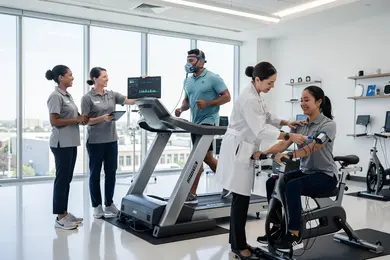
2027 Which Schools Offer Flexible Start-Anytime Enrollment for an Exercise Science Degree Master's Program?

Co-Founder and Chief Data Scientist
A start-anytime master's in exercise science can be useful if you are ready for graduate study but cannot wait for one fixed fall or spring intake. For coaches, fitness professionals, health educators, strength and conditioning specialists, and career changers, the timing of enrollment can affect how quickly they build advanced credentials, qualify for new roles, or move into teaching, research, wellness, or performance-focused work.
Flexibility matters because many graduate students are balancing employment, family responsibilities, clinical or fieldwork schedules, and changing work hours. Nearly 40% of graduate students in related health sciences report flexibility as a top priority when selecting programs. Still, “start anytime” does not always mean you can begin a course on any day of the year. In many cases, it means rolling admissions, frequent start dates, short academic terms, or competency-based pacing.
This guide explains what start-anytime enrollment usually means in exercise science master's programs, which types of schools are most likely to offer it, how calendars and costs work, what admissions requirements to expect, and how employers may view these degrees. It also highlights the trade-offs so you can decide whether a flexible-start program fits your goals, learning style, and schedule.
Key Benefits of Flexible Start-Anytime Enrollment for a Exercise Science Degree Master's Program
- Flexible start-anytime enrollment allows students to begin their master's in exercise science programs monthly, offering unparalleled scheduling convenience compared to traditional semester systems.
- Students can often accelerate their program duration, completing degrees in as little as 18 months through continuous enrollment options.
- Work-study balance is enhanced, as flexible starts enable learners to integrate coursework with professional and personal commitments, boosting retention and success rates.
What Does Start-Anytime Enrollment Mean for a Exercise Science Master's Degree?
Start-anytime enrollment for an exercise science master's degree means the program gives students more than one opportunity each year to begin coursework. Instead of waiting for a single fall cohort or a traditional semester start, students may enter during rolling terms, accelerated sessions, monthly starts, or self-paced learning periods.
The key difference is scheduling. A traditional cohort program usually moves students through the same course sequence together. A flexible-start program may allow students to begin when an available term opens, take courses in a more individualized order, or adjust their course load around work and personal obligations.
What start-anytime usually includes
- Rolling admissions: Applications are reviewed continuously or during several windows throughout the year.
- Multiple start dates: Students may be able to begin during several terms instead of only once or twice annually.
- Asynchronous coursework: Lectures, readings, and assignments may be available online without required live attendance at a fixed time.
- Flexible pacing: Some programs allow students to take fewer or more credits each term, depending on workload and academic progress.
What start-anytime does not always mean
Students should read the enrollment policy carefully. “Start anytime” may still involve registration deadlines, prerequisite sequencing, financial aid disbursement schedules, course availability limits, and minimum academic progress requirements. In exercise science, courses involving labs, research methods, internships, practica, or capstone projects may follow stricter timelines than lecture-based courses.
The biggest benefit is control over timing. The biggest trade-off is that students may not move through the program with the same peer group from start to finish. That can reduce built-in networking unless the school offers strong discussion boards, faculty interaction, alumni mentoring, or professional organization connections. Students comparing other flexible healthcare pathways may also find useful scheduling examples in programs such as RN-to-BSN programs with no clinicals.
What Schools Offer Start-Anytime Exercise Science Master's Programs?
Start-anytime exercise science master's programs are most common at institutions that serve working adults, online learners, and students who need more than a traditional academic calendar. Currently, approximately 45% of online graduate programs use rolling or flexible enrollment models, allowing multiple start dates throughout the year.
Not every exercise science department uses the same model. Some schools offer true rolling starts for online coursework, while others provide several annual entry points but still follow structured terms. Before applying, confirm whether “flexible enrollment” applies to the entire degree or only to selected courses.
- Public universities: These schools may use semester, quarter, or shortened-session calendars. They can be a strong option for students who want recognizable institutional names, access to research faculty, and potentially lower in-state tuition, though start dates may still be tied to formal terms.
- Private nonprofit institutions: These colleges often design online or hybrid graduate programs for adult learners. They may offer multiple entry points, dedicated advising, and smaller class environments while maintaining standard graduate admissions expectations.
- For-profit universities: These institutions often promote frequent starts and continuous enrollment. Students should compare tuition, accreditation, student outcomes, transfer policies, and employer perception carefully before committing.
- Competency-based institutions: These programs focus on demonstrated mastery rather than seat time. They may be attractive to experienced professionals who can move quickly through familiar material, but they require strong self-management and may not fit students who want a highly structured weekly schedule.
If you are still comparing related online pathways in kinesiology, performance, and human movement, a broader online sports science degree search can help you understand how exercise science programs differ by format, curriculum, and career direction.
Students considering flexible graduate study in adjacent healthcare management fields may also compare program structures through resources on an accelerated health administration degree.
Are Start-Anytime Exercise Science Master's Programs Available in Both Online and On Campus Formats?
Yes, start-anytime exercise science master's programs can be found in more than one delivery format, but they are most common online. Around 40% of flexible-enrollment graduate programs are fully online, offering more start-date flexibility compared to traditional on-campus formats.
The format matters because exercise science can include applied coursework in biomechanics, exercise physiology, strength and conditioning, research methods, wellness programming, or performance assessment. Some topics work well online, while others may require labs, internships, field experiences, or in-person intensives.
- Fully online programs: These typically offer the greatest start-date flexibility. They may use asynchronous coursework, online advising, remote library access, and virtual faculty meetings. They are often best for working professionals who do not need campus facilities.
- Hybrid programs: These combine online coursework with occasional campus sessions, labs, residencies, or applied experiences. They may offer flexibility but usually require more planning around travel and attendance.
- Evening or weekend campus options: These programs serve students who want face-to-face instruction but cannot attend daytime classes. They may offer several starts per year, though usually not as many as online programs.
- Competency-based models: These are typically online and allow students to progress after demonstrating mastery. They can be efficient for disciplined learners with relevant background knowledge.
A graduate of an online exercise science master's program described the value of flexible timing this way: “the ability to start whenever I was ready took a lot of pressure off,” especially while balancing a demanding job and family responsibilities. He said the enrollment process was “refreshingly straightforward,” with clear steps and support staff available when questions came up.
His main concern was motivation. Without a fixed cohort start, he had to be more intentional about study routines and deadlines. Regular check-ins, structured modules, and faculty communication helped him stay on track. His takeaway was that flexibility worked best when the program combined independence with clear academic support.
What Are the Admission Requirements for Start-Anytime Exercise Science Master's Programs?
Admission requirements for start-anytime exercise science master's programs are usually similar to traditional graduate programs. The main difference is timing: applicants may be able to apply and receive an admissions decision throughout the year or during several admission cycles.
Flexible enrollment does not mean lower academic standards. Schools still review whether applicants are prepared for graduate-level work in exercise science, research, physiology, statistics, program design, or related areas.
- Minimum GPA standards: A baseline undergraduate GPA, usually near 3.0 on a 4.0 scale, is commonly required. Some programs may review applicants with lower GPAs if they have strong professional experience, prerequisite coursework, or other evidence of readiness.
- Relevant undergraduate preparation: Programs may prefer or require prior coursework in exercise science, kinesiology, biology, anatomy, physiology, statistics, nutrition, or health science. Students from unrelated majors should ask whether bridge or prerequisite courses are needed.
- Professional experience: Work in fitness, coaching, wellness, rehabilitation support, strength and conditioning, health education, or research can strengthen an application, especially for career-focused programs.
- Letters of recommendation: Applicants are commonly asked for two or three recommendations from faculty, supervisors, or professionals who can speak to academic ability, discipline, communication, and career potential.
- Statement of purpose: A strong statement should explain why the applicant wants the degree, which concentration or career direction they are pursuing, and how the flexible format fits their responsibilities.
- Standardized test policies: Many flexible enrollment programs waive GRE or other standardized testing requirements or adopt test-optional policies, which can reduce barriers for working adults.
Applicants should also check whether the program requires an interview, resume, proof of certification, writing sample, or prerequisite review. If financial aid timing matters, ask whether admission must occur before a specific date to qualify for aid in the next term. Students comparing flexible and affordable healthcare education pathways may also review affordable online RN-to-BSN programs.
How Do Academic Calendars Work in Start-Anytime Exercise Science Master's Programs?
Academic calendars in start-anytime exercise science master's programs are designed to reduce waiting time between admission and enrollment. These programs typically allow students to begin seven to twelve times per year, depending on the school, course model, and term structure.
The calendar affects more than the first day of class. It can influence financial aid disbursement, refund deadlines, course sequencing, internship eligibility, faculty availability, and graduation timing. Students should ask for a sample degree plan before enrolling.
- Rolling start dates: Students may enter the program during several points in the year rather than waiting for a traditional fall or spring start.
- Modular courses: Courses may be offered in shorter blocks, allowing students to complete one or two classes at a time instead of carrying a full semester load.
- Asynchronous scheduling: Students can access lectures, readings, and assignments at times that fit their schedules, though deadlines still apply.
- Individualized progression: Advisors may help students choose courses based on availability, prerequisites, career goals, and desired completion timeline.
- Capstone or practicum timing: Applied projects, internships, or research components may have separate approval steps and should be planned early.
A strong start-anytime calendar should be flexible without being vague. Look for published term dates, clear withdrawal policies, predictable course rotations, and advising support. If a program claims students can start at any point but only offers required courses once a year, completion may take longer than expected.
Are Start-Anytime Exercise Science Master's Programs More Expensive Than Traditional Programs?
Start-anytime exercise science master's programs are not automatically more expensive than traditional programs. Tuition for these flexible programs generally falls within the same range as on-campus degrees, averaging between $20,000 and $40,000.
The enrollment model is only one cost factor. Total price depends more on tuition per credit, number of required credits, fees, residency classification, transfer credit policy, course retake rules, and how long a student remains enrolled.
- Tuition structure: Most programs bill by the credit hour. A start-anytime schedule may change when you pay, but not necessarily how much the full degree costs.
- Additional fees: Online course fees, technology fees, graduation fees, proctoring costs, and digital materials may apply. Compare the full cost of attendance, not tuition alone.
- Technology costs: Students may need a reliable computer, internet connection, webcam, software, or specific tools for data analysis and coursework.
- Financial aid availability: Both program types may offer access to scholarships, grants, loans, employer tuition assistance, and payment plans, but eligibility can depend on enrollment intensity and accreditation status.
- Indirect savings: Online or flexible programs may reduce commuting, relocation, parking, and schedule disruption costs, though they may not reduce tuition itself.
A professional who completed a start-anytime master's degree in exercise science said the cost was “very much in line with what I expected from traditional programs.” She noted that the flexibility helped her avoid commuting and housing-related expenses tied to fixed campus schedules.
Her experience highlights an important point: convenience should not be assumed to carry a premium, but it should still be verified. Before enrolling, request an itemized tuition and fee estimate for the full program, ask how financial aid works across short terms, and confirm whether part-time enrollment changes aid eligibility.
How Long Does It Take to Complete a Start-Anytime Exercise Science Master's Program?
Completion time depends on course load, transfer credits, term length, capstone requirements, and whether the student studies full time or part time. Data on flexible online master's programs suggest an average completion time of about two years.
Start-anytime enrollment can help students begin sooner, but it does not guarantee faster graduation. A student who starts immediately but takes one course at a time may finish later than a traditional full-time student. The best timeline is the one that is sustainable enough to complete.
- Pacing flexibility: Students may speed up during lighter work periods and slow down during demanding seasons, depending on program policy.
- Course load options: A heavier course load can shorten the path to graduation, while a lighter load can make the degree more manageable for working adults.
- Accelerated modules: Some programs use condensed sessions that allow students to complete courses more quickly, but the workload can be intense.
- Part-time vs. full-time enrollment: Part-time study can reduce weekly pressure but usually extends the total program timeline.
- Course sequencing: Required courses may have prerequisites. Missing a required course when it is offered can delay graduation.
Students should ask the admissions or advising office for three sample plans: fastest possible completion, standard completion, and part-time completion. That comparison will show whether the program's flexibility matches real course availability.
Are Career Services Available for Start-Anytime Exercise Science Master's Students?
Yes, many start-anytime exercise science master's programs offer career services, especially if they serve online or working adult students. The quality and depth of support vary, so students should evaluate career resources as carefully as curriculum and tuition.
Career services matter because exercise science graduates may pursue different paths, including fitness and wellness leadership, strength and conditioning, health promotion, corporate wellness, coaching, research support, teaching, or preparation for further study. Some roles may require certifications, licensure, supervised experience, or additional education, depending on the state, employer, and job function.
- Career counseling: Advisors can help students identify realistic career targets, translate experience into a stronger resume, and choose electives aligned with their goals.
- Job placement assistance: Schools may provide job boards, internship leads, employer contacts, and application support for roles in fitness, wellness, athletics, healthcare-adjacent settings, and community health.
- Networking opportunities: Virtual career fairs, alumni panels, professional association events, and faculty introductions can help students build connections even if coursework is asynchronous.
- Alumni connections: Alumni mentors can offer practical insight into job searches, certifications, workplace expectations, and advancement in the field.
- Resume and interview support: Students can often receive help explaining their graduate projects, applied experience, research skills, and technical competencies to employers.
Ask whether career services are available to online students, part-time students, and alumni after graduation. Also ask whether the program tracks graduate outcomes or offers employer partnerships relevant to exercise science. Students researching other flexible graduate healthcare pathways may compare support models through resources on an online PhD in nursing education.
Are Start-Anytime Exercise Science Master's Degrees Respected by Employers?
Employers are generally more concerned with accreditation, skills, experience, and program quality than with whether a student began in August, January, or a rolling term. According to a 2022 survey by the National Association of Colleges and Employers (NACE), over 70% of employers are comfortable hiring graduates from accredited online or flexible graduate programs.
A start-anytime degree is more likely to be respected when it comes from an accredited institution, includes rigorous coursework, and helps students demonstrate applied knowledge. The flexible schedule itself is rarely the issue; weak program quality, unclear outcomes, or lack of practical preparation are bigger concerns.
- Accreditation: Institutional accreditation is essential. Students should verify accreditation through recognized accrediting bodies and confirm that the degree is eligible for any career, certification, or further education goals they have.
- Program rigor: Employers value graduates who can apply concepts in exercise physiology, assessment, program design, research interpretation, and evidence-based practice.
- Professional experience: Internships, applied projects, coaching experience, wellness programming, research work, or relevant certifications can make a graduate more competitive.
- Skill demonstration: Portfolios, capstones, presentations, certifications, and strong interview examples help employers see what a graduate can actually do.
- Institution reputation: A recognized university name or strong department reputation can help, but it should not replace careful review of curriculum and outcomes.
Students should avoid assuming that “online,” “flexible,” and “easy” mean the same thing. A respected flexible-start program should have clear academic standards, qualified faculty, transparent policies, and meaningful assessment. Those comparing flexible credential options in other health-related fields may also review accredited medical billing and coding schools online with financial aid.
Who Benefits Most From Flexible Enrollment Graduate Programs?
Flexible enrollment graduate programs are best for students who are academically ready but need control over timing. Around 70% of students in online or rolling-start graduate programs are working adults or nontraditional learners managing multiple responsibilities.
These programs can be a strong fit, but they are not ideal for everyone. Students who rely heavily on face-to-face accountability, fixed weekly class meetings, or a consistent cohort may prefer a more traditional structure.
- Working professionals: Students with changing work schedules can begin when they are ready and adjust course loads around busy seasons.
- Career changers: Flexible starts can help students transition into exercise science without waiting months for the next traditional intake.
- Adult learners with family responsibilities: Parents, caregivers, and students managing household obligations may benefit from asynchronous work and multiple entry points.
- Students seeking accelerated completion: Learners who can handle a heavier workload may be able to move more quickly when courses are offered in shorter terms.
- Military-affiliated students or frequent movers: Online flexible-start programs may reduce disruption caused by relocation or unpredictable schedules.
Students who benefit most are usually organized, self-directed, and comfortable communicating proactively with faculty and advisors. Before enrolling, consider whether you can maintain momentum without a traditional cohort, meet deadlines independently, and plan ahead for internships, capstones, or research requirements.
What Graduates Say About Flexible Start-Anytime Enrollment for a Exercise Science Degree Master's Program
-
: "Enrolling in a start-anytime exercise science master's program changed how I balanced work and study. Being able to begin when I was ready helped me keep full-time employment while continuing to make academic progress. The tuition also felt affordable compared with traditional options, and the degree has already helped open new career opportunities.
— Miguel"
-
: "The flexibility to start the exercise science master's degree at a time that worked for my family was invaluable. The overall cost felt reasonable, especially because I could maintain a personalized pace instead of forcing my schedule around a fixed cohort. Since graduating, I have seen stronger professional opportunities and more confidence in my field.
— Larry"
-
: "Choosing a flexible, start-anytime online exercise science program was a strategic career move. Managing coursework around my job made the experience less stressful and more productive. The cost savings compared with on-campus study were considerable, and the specialized knowledge has strengthened my advancement prospects in healthcare and fitness settings.
— Greg"
Other Things You Should Know About Exercise Science Degrees
In 2027, credit transfer policies in flexible start-anytime master's programs for exercise science vary by institution. Some schools may allow transfers from accredited institutions, provided the credits align with the program's curriculum. It's important to consult specific schools for their transfer policies.
Generally, flexible start-anytime programs maintain the same rigorous curriculum as traditional exercise science master's degrees. The primary difference lies in their enrollment schedules and course delivery methods, not in academic content. Students receive equivalent instruction, ensuring their degree carries the same academic and professional value.
Most exercise science master's programs, including those with flexible start-anytime enrollment, require practical experiences such as internships or practicum hours. These components are essential for developing hands-on skills and professional competencies. Programs may offer various options to complete these requirements locally or through affiliated organizations to accommodate diverse student locations.
References
- Exercise Physiology Phd Programs Online https://export.gettingtoglobal.org/Resources/Db32Jg/3AD097/ExercisePhysiologyPhdProgramsOnline.pdf
- Exercise Science (M.S.) https://www.gradcollege.txst.edu/programs/exercise-science.html
- Academic Calendar https://www.atsu.edu/academic-calendar
- Master of Science in Exercise Science https://campus.kennesaw.edu/colleges-departments/wellstar/degrees-programs/graduate/master-exercise-science/index.php
- Online Master of Exercise Science https://www.maryville.edu/online-programs/masters/exercise-science/
- MS in Exercise Science | : Loyola University Chicago https://www.luc.edu/parkinson/admission/apply/msinexercisescience/
- 2025 Most Affordable Online Master's Programs https://www.onlineu.com/most-affordable-colleges/masters-degrees
- MScClinical Exercise Science https://www.solent.ac.uk/courses/postgraduate/clinical-exercise-science-msc
- Clinical Exercise Science | Master/Ph.D. https://www.uni-potsdam.de/en/studium/what-to-study/master/clinical-exercise-science
- Master of Sport and Exercise Science by Research https://www.unisc.edu.au/study/courses-and-programs/postgraduate-degrees/master-of-sport-and-exercise-science-by-research