2027 How to Choose an Online Criminal Justice Administration Doctorate Program: Accreditation, Cost, Format, and Career Fit

Co-Founder and Chief Data Scientist
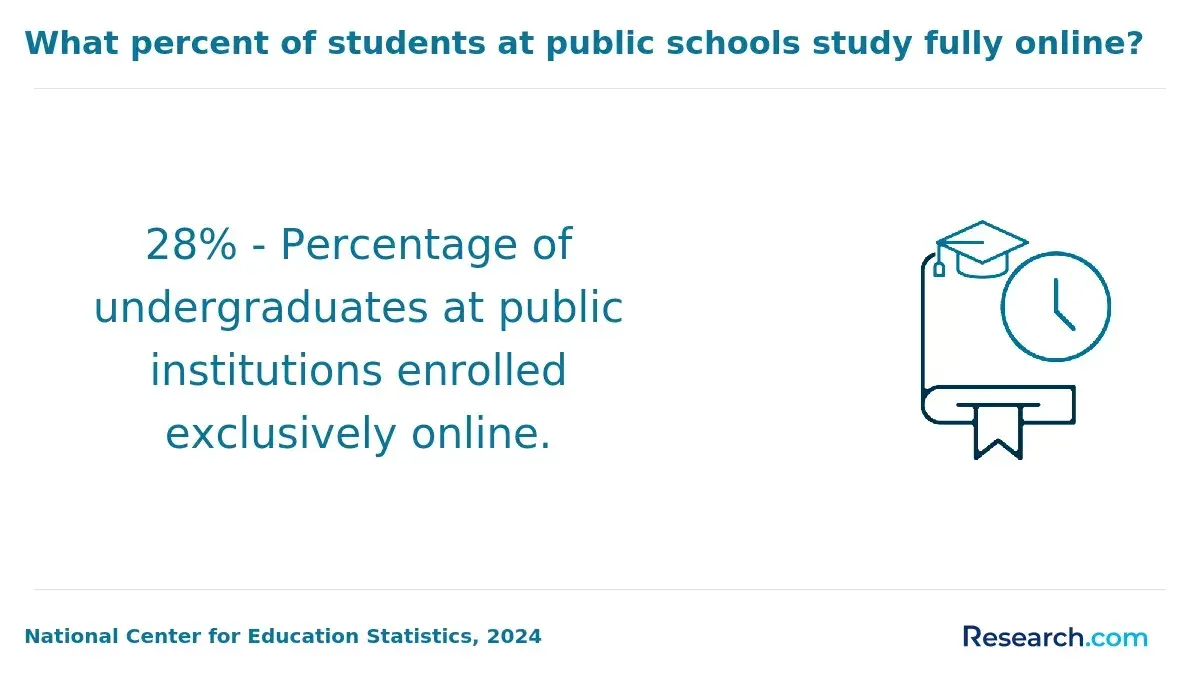
The hard part is not finding an online Criminal Justice Administration doctorate; it is knowing which one is credible, affordable, and aligned with your career. NCES distance education data released in 2024 show that more than 1.2 million U. S. graduate students studied exclusively online, making program comparison more important than ever.
This guide is for working justice professionals, educators, analysts, and agency leaders weighing doctoral options. You will learn how to evaluate accreditation, total cost, delivery format, curriculum, and career fit so you can build a shortlist with fewer surprises.
Key Things to Know About Choosing Criminal Justice Administration Doctorate Programs
- For U.S. online doctorates, accreditation by an agency recognized by the U.S. Department of Education or CHEA is the baseline requirement for federal aid eligibility, transfer credibility, and employer recognition.
- Expect many online Criminal Justice Administration doctorates to require about 42 to 60 credits, with common completion timelines of 3 to 5 years depending on dissertation, capstone, residency, and course-load rules.
- 2024-2025 posted tuition for comparable online justice-related doctoral programs commonly lands in the high hundreds to low four figures per credit before fees, books, travel, and dissertation expenses.
What criteria should you use to assess an online Criminal Justice Administration doctorate program?
A strong online Criminal Justice Administration doctorate should meet three tests at the same time: it should be academically credible, financially realistic, and useful for the kind of leadership, research, teaching, or policy work you want to do. Do not judge a program only by name recognition or rankings; doctorate-level fit is usually more specific than undergraduate fit.
Start by separating the degree's purpose from its delivery format. A PhD usually emphasizes research, theory, and academic preparation, while a Doctor of Criminal Justice, Doctor of Public Administration with a justice focus, or similar professional doctorate often emphasizes applied leadership, agency operations, policy implementation, and executive decision-making.
The criteria below can help you compare programs consistently instead of relying on marketing language.
- Accreditation: Confirm that the institution is accredited by a recognized accreditor and that the doctorate is listed in the school's official catalog.
- Degree type: Decide whether you need a research-focused PhD, an applied doctorate, or an administration-centered public safety doctorate.
- Curriculum fit: Look for advanced coursework in justice administration, public policy, organizational leadership, research methods, ethics, statistics, and evidence-based practice.
- Faculty expertise: Review whether faculty publish or work in your target area, such as corrections leadership, policing, homeland security, juvenile justice, courts, or criminology.
- Format and pacing: Check whether courses are asynchronous, live online, cohort-based, self-paced, or residency-based.
- Total cost: Compare tuition, fees, books, residency travel, dissertation continuation charges, and financial aid terms.
- Student support: Look for dissertation advising, online library access, statistics support, writing help, career services, and research software access.
- Career alignment: Ask whether the program's outcomes match roles you realistically plan to pursue, such as agency executive, policy analyst, researcher, consultant, or faculty member.
If you are still comparing earlier academic pathways, reviewing an online criminal justice degree can also help you see how doctoral-level expectations differ from bachelor's or master's-level preparation.
A practical way to shortlist programs is to score each one against the same factors. The table below summarizes the main comparison categories and what they usually signal to a prospective doctoral student.
| Criterion | What it helps you judge | Why it matters |
| Institutional accreditation | Baseline academic legitimacy | It affects federal aid, employer acceptance, transfer credibility, and degree recognition. |
| Degree structure | Research doctorate versus applied doctorate | The wrong structure can leave you underprepared for either academic research or executive practice. |
| Curriculum depth | Coverage of leadership, research, policy, and justice systems | Doctoral coursework should move beyond practitioner knowledge into advanced analysis. |
| Faculty fit | Mentorship and dissertation alignment | A strong dissertation topic is easier to complete when faculty expertise matches your interests. |
| Delivery format | Schedule compatibility | Online does not always mean self-paced or fully flexible. |
| Total cost | Affordability and debt exposure | Doctoral costs can increase through fees, dissertation extensions, and residency travel. |
| Career services | Support beyond enrollment | Working professionals may need help translating the doctorate into advancement, teaching, or consulting opportunities. |
How do you check if an online Criminal Justice Administration doctorate program is accredited?
Accreditation is the first filter because it tells you whether an outside accrediting body has reviewed the institution's academic quality, governance, faculty qualifications, student support, and financial capacity. For an online Criminal Justice Administration doctorate, institutional accreditation is usually more important than a specialized criminal justice accreditation because there is no single universal programmatic accreditor for doctoral criminal justice administration programs.
Use a verification process instead of accepting a website badge at face value. Accreditation claims can be outdated, incomplete, or presented in ways that confuse state authorization, professional membership, and institutional accreditation.
- Search the school in the U.S. Department of Education's Database of Accredited Postsecondary Institutions and Programs.
- Confirm that the accreditor is recognized by the U.S. Department of Education or the Council for Higher Education Accreditation.
- Check the school's own accreditation page and compare the accreditor name, dates, and institutional status with the federal database.
- Open the current academic catalog and verify that the exact doctorate program is listed, not just a similar program or concentration.
- Ask admissions whether the online doctorate is covered under the institution's accreditation and whether any teach-out, probation, warning, or monitoring status applies.
- Verify state authorization if you live outside the school's home state, especially if the program includes internships, field projects, or in-person components.
Accreditation also affects practical issues. Federal student aid is generally tied to enrollment at an eligible accredited institution, and many employers, colleges, and government agencies prefer or require degrees from accredited schools. If you plan to teach, transfer doctoral credits, pursue a postdoctoral role, or use tuition assistance from an employer, accreditation should be nonnegotiable.
One current trend is stricter vetting of online doctoral providers. Students are increasingly checking accreditation databases, state authorization notices, and consumer protection warnings before applying because diploma-mill concerns are more visible in online education than they were a decade ago.
What programmatic accreditations matter most for an online Criminal Justice Administration doctorate?
For most online Criminal Justice Administration doctorates, institutional accreditation matters more than programmatic accreditation. Unlike nursing, counseling, law, or teacher preparation, criminal justice administration does not have one universally required doctoral-level programmatic accreditor that determines professional eligibility across the United States.
That does not mean program-level quality is irrelevant. It means you should look for credible academic signals that are common in criminal justice, public administration, policy, and public safety education rather than expecting one required accreditation label.
The table below explains the accreditation and quality signals you are most likely to encounter and how much weight to give each one when comparing programs.
| Credential or quality signal | What it usually means | How much it should influence your decision |
| Institutional accreditation | The college or university has been reviewed by a recognized accrediting agency. | Essential. Do not enroll without it. |
| Program housed in a public administration school | The justice administration doctorate may share governance or faculty with public administration, policy, or public affairs programs. | Useful if your goal is agency leadership, public management, or policy work. |
| Criminal justice professional affiliations | Faculty or departments may participate in criminology, justice, or public safety academic associations. | Helpful but not a substitute for accreditation. |
| State authorization | The school is approved to offer distance education to students in your state. | Important for online enrollment eligibility and consumer protection. |
| Employer or agency recognition | Some agencies maintain tuition assistance rules or preferred provider standards. | Important if your employer will fund part of the doctorate or use it for promotion review. |
Programmatic accreditation is most important when a degree leads directly to licensure. A Criminal Justice Administration doctorate usually does not function that way. If you need a credential for a specific licensed role, such as counseling, psychology, law, or education administration, verify requirements with the relevant state board before assuming a justice doctorate will qualify.
A good admissions office should be able to explain accreditation clearly. If the answer is vague, overly defensive, or focused only on "national recognition" without naming a recognized accreditor, treat that as a sign to investigate further.
To assess cost, calculate the full degree price rather than the per-credit tuition alone. Doctoral programs often appear affordable at the course level but become more expensive once dissertation continuation, residency travel, technology charges, and time-to-completion are included.
For U.S. online justice-related doctoral programs with posted 2024-2025 tuition schedules, a practical comparison range is often in the high hundreds to low four figures per credit. Since many programs require about 42 to 60 credits, tuition-only totals can vary widely before fees. That range is best used as a screening tool, not as a promise of what any one school will charge.
Use the same calculation for every school you compare. If you need a broader primer on how tuition and fees work in this field, a guide to criminal justice degree price structures can help you interpret line items before you request a formal estimate.
When you ask a school for costs, request each of the following in writing so you can compare programs accurately.
- Tuition per credit and the number of credits required for the full doctorate
- Whether tuition is different for in-state, out-of-state, military, public safety, or employer-partner students
- Mandatory online learning, technology, library, graduation, dissertation, and student services fees
- Estimated book, software, research database, and statistics tool costs
- Residency, intensives, or campus visit costs, including travel and lodging if required
- Dissertation continuation or doctoral project extension charges after coursework is complete
- Availability of employer tuition assistance, institutional scholarships, assistantships, fellowships, or payment plans
- Federal aid eligibility, including graduate loan options and annual borrowing limits
The table below shows the main cost components to include in your estimate. It is designed to help you avoid comparing one school's tuition-only quote against another school's full cost of attendance.
| Cost component | Where it appears | Why it changes the real price |
| Per-credit tuition | Published tuition schedule | This is the largest cost driver and should be multiplied by required credits. |
| Mandatory fees | Student account or bursar schedule | Online, technology, registration, and graduation fees can add recurring costs. |
| Residency costs | Program handbook or course sequence | Even mostly online programs may require travel for seminars, defenses, or research workshops. |
| Books and software | Course syllabi or bookstore estimates | Research methods and statistics courses may require specialized tools. |
| Dissertation continuation | Doctoral policy manual | Students who need extra terms may pay ongoing enrollment charges. |
| Opportunity cost | Personal budget and work schedule | Reduced overtime, travel time, or unpaid leave can affect affordability. |
Financial aid deserves a separate look. Under current federal student aid rules, graduate students may be eligible for Direct Unsubsidized Loans up to $20,500 per academic year, while Graduate PLUS Loans may cover remaining eligible costs after credit approval. Scholarships and assistantships for online doctoral students exist but are usually less predictable than undergraduate aid, so treat them as helpful offsets rather than guaranteed funding.
Online Criminal Justice Administration doctorates vary more than many applicants expect. "Online" may mean fully asynchronous courses, live evening seminars, a cohort model, hybrid residencies, or a low-residency structure with occasional campus visits.
The most common decision is whether you need maximum schedule control or more structured interaction. Fully asynchronous formats are often best for shift workers, law enforcement personnel, corrections administrators, military-affiliated students, and working parents. Scheduled live formats can be better for students who want faculty interaction, discussion, and accountability.
The table below compares common online formats and the scheduling trade-offs that matter most for working professionals.
| Format | How it usually works | Best fit | Main trade-off |
| Fully asynchronous | Students complete weekly modules without required live class meetings. | Students with rotating shifts, travel demands, or unpredictable work hours. | Requires strong self-management and proactive communication. |
| Synchronous online | Classes meet live by video at scheduled times. | Students who value real-time discussion and structured deadlines. | Less flexible for shift work or family obligations. |
| Cohort-based | A group of students moves through courses together. | Students who want peer support and a predictable sequence. | Harder to slow down or accelerate without leaving the cohort. |
| Self-paced or competency-based | Students move through material based on mastery within school rules. | Experienced professionals with strong independent study habits. | Less common at the doctoral level and may offer less live mentoring. |
| Hybrid or low-residency | Most coursework is online, but some campus or field components are required. | Students who want online access plus intensive faculty engagement. | Travel, lodging, and time away from work can raise total cost. |
Online delivery is also evolving. More programs now use recorded lectures, virtual research labs, online dissertation defenses, digital library consultations, and AI-supported academic tools. These can improve convenience, but you should still ask how the school protects academic integrity, supports original research, and trains students to use AI ethically.
Pacing determines whether the program can realistically fit your life. Many online Criminal Justice Administration doctorates are designed for working adults, but that does not mean every program allows you to pause, accelerate, or take one course at a time.
A typical online doctoral timeline is about 3 to 5 years, depending on credit load, dissertation progress, transfer credits, and whether the program requires a cohort sequence. The biggest time variable is usually the dissertation or applied doctoral project, not the coursework itself.
Ask the school how pacing works in practice, not just what the advertised completion time says. These questions will help you uncover whether the format matches your work and family obligations.
- Can students enroll part time, or is a fixed course load required?
- Are courses offered every term, or could missing one course delay graduation by a year?
- Is there a maximum time-to-degree policy?
- Can students take a leave of absence without losing their place in the program?
- How often are dissertation or doctoral project courses offered?
- Can transfer credits reduce the total timeline?
- Are live sessions recorded for students who work nights, weekends, or emergency shifts?
- What happens if a student changes jobs, is deployed, receives a promotion, or faces a family emergency?
A faster program is not automatically better. Accelerated pacing may work if you have strong writing skills, a stable schedule, and a clear dissertation idea. Slower pacing may be better if you work full time in a demanding justice role, supervise staff, travel frequently, or have caregiving responsibilities.
The safest choice is the program you can finish without sacrificing academic quality. A doctorate that looks short on paper can become stressful if it assumes more weekly reading, writing, and research time than you can consistently provide.
The core curriculum should prepare you to evaluate justice systems, lead organizations, conduct or interpret research, and apply evidence to complex public safety problems. At the doctoral level, strong programs should go beyond operational training and push students toward advanced analysis, policy reasoning, ethics, and original inquiry.
Most credible programs include a combination of administration, research, theory, and specialization coursework. The exact mix depends on whether the degree is a PhD, a Doctor of Criminal Justice, or a public administration doctorate with a criminal justice focus.
When reviewing a curriculum, look for courses or required competencies in the following areas.
- Justice administration and leadership: Budgeting, organizational behavior, personnel management, interagency collaboration, and executive decision-making.
- Criminal justice policy: Policy design, implementation, evaluation, reform, and public accountability.
- Research methods: Quantitative, qualitative, mixed-methods, survey, evaluation, and applied research design.
- Statistics and data analysis: Interpretation of crime data, program outcomes, risk assessment, and evidence-based practice.
- Criminological theory: Advanced theory that helps explain crime, justice responses, and system behavior.
- Ethics and law: Constitutional issues, civil rights, professional responsibility, equity, and public trust.
- Specialization options: Corrections, policing, homeland security, juvenile justice, courts, cybercrime, emergency management, or public safety leadership.
- Dissertation or doctoral project: A major research or applied project that demonstrates advanced independent work.
Students who are still deciding between academic levels may find it useful to compare doctoral expectations with the more foundational coursework found in the best online associate degree programs in criminal justice. The contrast can clarify how far doctoral work moves from introductory justice concepts toward research, strategy, and leadership.
Do not overlook methodology courses. Many doctoral students struggle not because they lack justice experience, but because they underestimate the research and writing demands of dissertation work. A curriculum with strong research preparation, faculty mentoring, and milestone-based dissertation support can make the program more manageable.
A doctorate is the right investment only if the program's design matches the role you want next. Criminal Justice Administration doctorates can support several paths, but the best program for a future professor may not be the best program for a police executive, corrections administrator, public safety consultant, policy analyst, or nonprofit leader.
Start by writing down your target outcome, then compare it with the program's curriculum, faculty, dissertation model, and alumni paths. If your goal is higher education teaching or research, prioritize research methods, publication opportunities, and faculty scholars in your area. If your goal is executive leadership, look for organizational strategy, budgeting, policy implementation, and applied doctoral projects.
Use the following questions to test career fit before committing.
- Does the degree title make sense for the employers or academic institutions I plan to approach?
- Does the curriculum emphasize research, leadership, policy, or practice in the way my career goal requires?
- Do faculty members have expertise related to my intended dissertation or doctoral project topic?
- Does the program offer networking with justice agencies, public safety organizations, researchers, or policy groups?
- Are alumni working in roles similar to the ones I want?
- Will the program help me build evidence of expertise, such as publications, conference presentations, applied research, or agency projects?
- Does my employer recognize this credential for advancement, salary review, tuition assistance, or leadership eligibility?
Salary and job outlook should be interpreted carefully. BLS May 2024 wage data can help you understand the labor market for related roles, but it does not isolate the value of a Criminal Justice Administration doctorate by itself. The degree may be most useful when paired with substantial professional experience, leadership responsibility, research skill, or a clear transition plan.
Career fit can also extend beyond traditional criminal justice roles. For example, public safety leaders increasingly work with workplace safety, emergency preparedness, compliance, and environmental risk teams. If your interests cross into compliance or safety leadership, comparing adjacent fields such as the best online environmental health and safety programs can help you decide whether a justice doctorate or a more specialized safety credential better fits your goals.
Before applying, ask yourself a hard question: "What will I be able to do after this doctorate that I cannot credibly do now?" If the answer is vague, wait until you can define a clearer purpose.
What red flags should I watch out for in an online Criminal Justice Administration doctorate program?
Red flags do not always mean a school is fraudulent, but they do mean you should slow down and verify details before applying. Doctoral programs require major time, money, and intellectual effort, so weak transparency is a serious concern.
Watch for warning signs that point to poor academic quality, unclear costs, or weak student protections. The list below can help you identify problems early.
- Unverifiable accreditation: The school claims accreditation, but you cannot confirm it through a recognized database.
- Pressure-heavy admissions: Recruiters push you to enroll quickly, apply immediately, or borrow before you have reviewed the catalog.
- Vague dissertation support: The program does not explain chair assignment, committee structure, milestone timelines, or research approval processes.
- Unclear total cost: Tuition is advertised, but fees, continuation charges, and residency costs are hard to find.
- Overpromised outcomes: The school suggests the doctorate will automatically lead to promotion, tenure, salary increases, or executive employment.
- Minimal faculty information: Faculty credentials, publications, or practitioner backgrounds are missing or difficult to verify.
- Very short completion claims: The program advertises unusually fast doctoral completion without explaining credit requirements, dissertation expectations, or prior learning policies.
- No state authorization clarity: The school does not clearly state whether it can enroll students from your state.
- Weak student support: There is little evidence of online library access, writing support, research help, or dissertation advising.
The table below contrasts warning signs with indicators of a credible online doctorate. Use it as a final screening tool when you are down to two or three programs.
| Area | Red flag | Credible sign |
| Accreditation | Accreditation is hard to verify or described in vague terms. | The accreditor, status, and dates are easy to confirm. |
| Costs | The school promotes low tuition but does not disclose full fees. | The school provides a full cost estimate and written fee schedule. |
| Academics | Curriculum looks generic or light on research methods. | Coursework includes advanced research, leadership, policy, and dissertation preparation. |
| Faculty | Faculty profiles are incomplete or unrelated to criminal justice administration. | Faculty expertise aligns with justice leadership, criminology, policy, or public administration. |
| Format | "Online" is advertised without explaining live sessions or residencies. | The school clearly describes synchronous requirements, residencies, and pacing. |
| Outcomes | The school guarantees promotion or salary gains. | The school describes outcomes cautiously and encourages employer-specific verification. |
The most common mistake is enrolling before verifying accreditation, cost, and dissertation expectations. A better approach is to request the catalog, tuition sheet, program handbook, sample course sequence, and faculty list before you submit a deposit.
Other Things You Should Know About Criminal Justice Administration
Many programs require a master's degree, often in criminal justice, public administration, criminology, public safety, or a related field. Some may admit students with a different graduate background if they have relevant professional experience, but prerequisite or bridge coursework may be required.
Not always. Some programs require a traditional dissertation, while others use an applied doctoral project, capstone, or practice-based research project. If you want an academic research career, a dissertation-based program may be more appropriate.
Many online programs are designed for working adults, but full-time work still requires careful planning. Ask how many hours students typically spend each week on reading, writing, research, and live meetings before assuming the workload is manageable.
Not automatically. Low cost is valuable, but the best choice also needs strong accreditation, relevant curriculum, qualified faculty, realistic pacing, and dissertation support. The cheapest option can become costly if it delays graduation or does not fit your goals.
- Find Top Online Bachelor's In Criminal Justice Programs https://www.accreditedschoolsonline.org/criminal-justice/bachelors/
- 2025 Most Affordable Online Criminal Justice Degrees https://www.onlineu.com/most-affordable-colleges/criminal-justice-degrees
- Affordable Online Criminal Justice Degree - iResearchNet https://criminal-justice.iresearchnet.com/criminology/criminology-and-criminal-justice-degrees/affordable-online-criminal-justice-degree/
- Course Delivery Formats 101: Synchronous, Asynchronous, and Blended/Hybrid Learning Explained https://www.iacet.org/events/iacet-blog/blog-articles/course-delivery-formats-101-synchronous-asynchronous-and-blended-hybrid-learning-explained/
- Asynchronous Teaching Methodologies: Pandemic Reflections and Best Practices https://cooley.edu/blog/asynchronous-teaching-methodologies-pandemic-reflections-and-best-practices
- Top Online Criminal Justice Degrees https://www.criminaljusticeprograms.com/online-criminal-justice-degrees/
- Doctor of Criminal Justice | Online with Limited Residency | Tiffin University https://go.tiffin.edu/doctorate-programs/doctor-of-criminal-justice/
- Find Online Criminal Justice Degrees & Schools https://www.firescience.org/law-enforcement-criminal-justice-degrees-programs-online/
- Online Criminal Justice Degrees (Types, Benefits & FAQ) https://www.allcriminaljusticeschools.com/criminal-justice/criminal-justice-online-degree/
- 12 Top Careers You Can Pursue with an Online Criminal Justice Degree https://lakewood.edu/online-criminal-justice-degree-careers/