2027 How Fast Can You Get a Corrections Degree Online?

Co-Founder and Chief Data Scientist
Choosing an online corrections degree is often a timing decision: how quickly can you earn a credible credential without overloading your work schedule, shift responsibilities, or family obligations? For many current or aspiring corrections professionals, the fastest option is not simply the shortest program advertised. It is the program that accepts the most applicable transfer credit, fits unpredictable work hours, and leads to a degree employers will recognize.
Online corrections programs commonly sit within criminal justice departments and may focus on correctional administration, offender rehabilitation, institutional security, community corrections, case management, ethics, and justice policy. The right format can help students qualify for advancement, meet agency education requirements, or prepare for specialized roles while continuing to work.
This guide explains how long online corrections degrees typically take, what can shorten or lengthen completion time, how accelerated and competency-based formats work, and what to check before enrolling. It also covers transfer credit, prior learning assessment, military and work experience, employer perception, and the practical trade-offs of fast-track study.
What are the benefits of pursuing a degree in Corrections online?
- Online corrections degrees often offer accelerated courses, enabling completion in as little as 12 to 18 months, significantly faster than traditional programs.
- Flexible scheduling supports working adults and caregivers by allowing coursework anytime, reducing conflicts with jobs or family responsibilities.
- Practical learning through virtual simulations and case studies enhances real-world skills, improving job readiness in a sector growing by 9% through 2030.
How long does it typically take to earn a degree in Corrections?
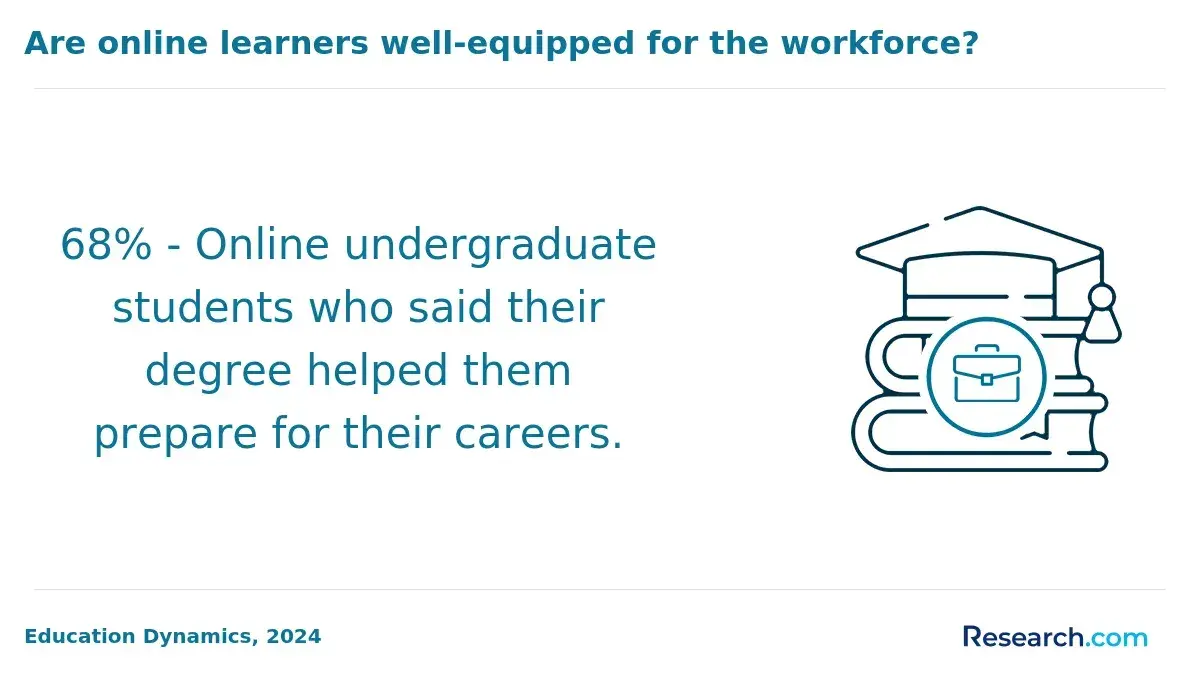
The time required to earn a corrections degree online depends mainly on degree level, transfer credit, enrollment intensity, and whether the program uses standard semesters, accelerated terms, or competency-based pacing. Students with prior college credits usually finish much faster than first-time college students.
Online bachelor's programs typically require 15 to 24 months for full-time students who enter with substantial transferable coursework. Accelerated options may allow completion in as little as 15 to 18 months when students already have lower-division credits, take condensed courses, and maintain a heavy course load.
For many full-time transfer students, a more realistic expectation is about two years. This timeline often assumes that general education requirements and introductory criminal justice coursework have already been completed. Students who enroll part-time because of work, family, overtime, or rotating shifts may take three to four years.
Advanced qualifications, including master's degrees or specialized certifications, generally add one to two years beyond the bachelor's level. These programs may include graduate research, policy analysis, leadership coursework, or field-related projects that require more independent work.
What affects your timeline most?
- Transfer credits: Previously completed college courses can reduce the number of credits you still need.
- Course length: Accelerated terms compress the same academic expectations into shorter sessions.
- Weekly availability: Students who can consistently study several days per week move faster than those studying around irregular shifts.
- Program requirements: Capstones, exams, internships, or residency requirements can influence completion time.
- Credit for prior learning: Approved training, exams, military education, or professional portfolios may shorten the path.
The best estimate will come from a formal degree audit, not the advertised program length. Before enrolling, ask the school to show exactly which requirements remain after transfer and prior learning credits are applied.
Are there accelerated Corrections online programs?
Yes. Accelerated online corrections-related programs are available, although many are offered under broader criminal justice degree titles with corrections coursework, concentrations, or electives. These programs are designed for students who can handle shorter academic terms, steady weekly deadlines, and less downtime between courses.
Accelerated programs are most useful for students who already have college credit, have completed lower-division requirements, or are moving from an associate degree into a bachelor's completion program. They can also benefit working corrections officers seeking advancement, provided the schedule is realistic.
Examples of schools offering accelerated online programs related to corrections include:
- Sacramento State University: Offers an online and accelerated Bachelor of Science in Criminal Justice for transfer students who have completed lower division coursework. The upper-division program is fully online and typically finishes in about two years with a full course load each semester.
- University of Massachusetts-Lowell: Offers a flexible, asynchronous, accelerated online Criminal Justice program that students can finish in 1-3 years depending on transfer credits and individual course load.
- UT Rio Grande Valley (UTRGV): Offers a 100% online accelerated Master of Science in Criminal Justice program requiring 36 graduate semester hours that can be completed in as few as 12 months, including a comprehensive exam.
When an accelerated program makes sense
- You already have transferable credits or an associate degree.
- You can complete weekly readings, discussions, papers, and exams without needing frequent deadline extensions.
- Your employer or household can support a demanding academic schedule.
- The program is accredited and clearly states how corrections-related coursework fits your career goals.
Students comparing fast degree-completion options may also want to review this guide to the best accelerated associates degree online programs for a broader view of accelerated online formats.
How do accelerated Corrections online programs compare with traditional ones?
Accelerated online corrections programs and traditional programs can lead to similar academic outcomes, but the student experience is very different. The accelerated format is built for speed and efficiency; the traditional format gives students more time to absorb material, manage assignments, and recover between terms.
Accelerated programs may be completed in 15 to 24 months for eligible students, while conventional bachelor's degrees commonly follow a typical four years. The shorter timeline does not automatically mean the degree is easier. In many cases, the weekly workload is more intense because assignments, exams, and projects are compressed into fewer weeks.
| Comparison point | Accelerated online Corrections programs | Traditional Corrections programs |
| Completion time | Often 15 to 24 months for students with the right transfer credits and course load. | Often follows the typical four years for a bachelor's degree. |
| Course length | Commonly uses condensed six to eight weeks courses. | Usually follows semester schedules of about 16 weeks with longer breaks. |
| Scheduling | Often asynchronous, which helps students study around shifts and work obligations. | May require fixed class meeting times or a more traditional academic calendar. |
| Workload | Can require 17-23 hours weekly per course, especially in compressed terms. | Spreads assignments over a longer period, which may feel more manageable. |
| Best fit | Motivated students with strong time management, prior credits, and a clear goal. | Students who want a steadier pace or need more flexibility week to week. |
The main risk of an accelerated program is overestimating how much time you can commit. Corrections work can involve overtime, mandated shifts, emergencies, and fatigue. A traditional program may be slower, but it can be the better choice if steady progress matters more than finishing as quickly as possible.
Academic quality should not be judged by speed alone. A credible accelerated degree should maintain comparable accreditation standards, clear learning outcomes, qualified faculty, and meaningful assessments. If a program promises an unusually fast timeline without explaining transfer credit, course intensity, or academic requirements, ask more questions before applying.
Students who are comparing program difficulty may find related context in this guide on what is the easiest bachelor's degree to get.
Will competency-based online programs in Corrections affect completion time?
Competency-based education can shorten completion time for some corrections students because progress is tied to demonstrated mastery rather than seat time in a traditional term. Instead of moving through a course only by calendar week, students advance by proving they understand required skills and concepts.
In corrections-related competency-based programs, assessments may evaluate knowledge of security procedures, inmate supervision, case management, ethics, communication, report writing, and correctional operations. Students with prior law enforcement, military, security, or corrections experience may move faster because they can connect existing knowledge to required competencies.
This model is not automatically faster for everyone. It requires self-direction, consistent study habits, and the ability to complete assessments without frequent instructor-led class meetings. Students who need weekly lectures, live discussion, or highly structured deadlines may find a traditional or accelerated course format easier to manage.
Who benefits most from competency-based pacing?
- Students with relevant professional experience in corrections, security, military service, or law enforcement.
- Students who can document prior learning and prepare independently for assessments.
- Students who prefer moving quickly through familiar material and spending more time on unfamiliar topics.
- Students who have reliable weekly study time and strong organizational skills.
The actual time savings depend on how the school maps competencies to academic credits, how assessments are scheduled, and how quickly the student completes required demonstrations of mastery. Before enrolling, ask whether the program offers an associate degree pathway, how competencies appear on the transcript, and whether future schools or employers commonly accept the credential.
Can you work full-time while completing fast-track Corrections online programs?
Yes, many students work full-time while completing fast-track corrections programs online, but it is demanding. The realistic question is not whether it is possible; it is whether your work schedule, home responsibilities, and stress level can support the pace for the full program.
Accelerated online courses often suit working professionals because many are fully asynchronous. This means students can complete assignments without attending live class sessions at a fixed time. That flexibility is valuable for corrections staff who work nights, weekends, rotating shifts, or mandatory overtime.
The challenge is workload. Accelerated tracks often require 17-30 hours per week, particularly when students take more than one course at a time. Prospective students should honestly assess whether they can commit 15-25 hours weekly outside their job to stay on track and complete the program efficiently.
Practical ways to manage full-time work and accelerated study
- Start with one accelerated course: Test the workload before adding more courses in the next term.
- Map deadlines around shifts: Do not plan major assignments immediately after long, overnight, or high-stress shifts.
- Use employer support: Ask about tuition assistance, schedule flexibility, training credit, or promotion requirements.
- Build a weekly study routine: Fast courses leave little room for catching up after missed deadlines.
- Tell advisors about your work schedule: They may suggest a course sequence that avoids stacking writing-heavy classes.
Cohort-based models can also help because students move through courses with peers who may understand criminal justice and corrections work. Some schools recognize prior experience by awarding credit for years of service, which can reduce the total number of courses required.
The students most likely to succeed are those who choose a pace they can sustain, not simply the fastest one advertised.
Can prior learning assessments (PLAs) shorten Corrections degree timelines?
Yes. Prior learning assessments, often called PLAs, can shorten an online corrections degree by awarding academic credit for college-level learning gained outside a traditional classroom. This can include professional training, certifications, documented work experience, challenge exams, or portfolio reviews.
PLA is especially relevant for corrections, law enforcement, military, and security professionals because much of their training may overlap with criminal justice topics. Some institutions evaluate formal training programs, while others require students to show evidence of what they learned and how it matches course outcomes.
Common PLA options
- Challenge exams: Students take an exam to show mastery of a course subject.
- Portfolio review: Students submit documentation of professional learning, training, job duties, and reflective analysis for faculty evaluation.
- Recognized training programs: Schools may award credit for approved academy, law enforcement, military, or professional training.
- ACE-evaluated learning: Formal training reviewed by ACE may be accepted by some institutions for credit.
Many schools accept specialized training such as Georgia's POST curriculum, allowing law enforcement professionals to apply their instruction toward degree credits. However, policies vary. Most institutions cap experiential learning credits, such as portfolios and exams, at about 25% of degree requirements. Credits from formal training programs evaluated by ACE may exceed this limit.
Students usually must be actively enrolled and in good standing before PLA credits can be awarded. In addition, combined PLA and transfer credits often cannot surpass 75% of the degree, which means students must still complete required coursework at the institution granting the credential.
Before relying on PLA to shorten your timeline, ask for the school's written policy, fee schedule, credit limits, and examples of how PLA credits would apply to your exact corrections degree plan.
Can prior college credits help you get a degree in Corrections sooner?
Yes. Prior college credits are one of the most effective ways to finish an online corrections degree sooner. Transfer credit can satisfy general education, elective, and introductory criminal justice requirements, reducing both time and cost. The number of credits that transfer depends on the institution, course equivalencies, grades earned, accreditation, and how closely prior coursework matches the new degree plan.
Do not assume every completed course will apply. A school may accept credits into the university but apply only some of them to the corrections major. The key document is the official transfer evaluation or degree audit.
How to maximize transfer credit
- Collect official transcripts: Request transcripts from every college you attended, even if you completed only a few courses.
- Gather course descriptions: Syllabi and catalog descriptions can help evaluators match prior classes to degree requirements.
- Check grade minimums: Many schools require a grade of C or higher, though some accept C-minus for non-major courses.
- Compare transfer policies: Schools differ in how they treat old credits, quarter credits, vocational credits, and credits from nationally or regionally accredited institutions.
- Request evaluations from multiple schools: The same transcript may produce different results at different institutions.
- Ask where credits apply: Credits that count only as free electives may not shorten your program as much as credits that satisfy required courses.
Transfer limits matter. For example, Liberty University allows up to 75% transfer credits toward its 120-credit Bachelor of Science in Criminal Justice - Corrections program. Other schools, including Niagara University, may require fewer credits if you hold an associate's degree.
Schools such as CUNY's John Jay College and San Diego State University offer streamlined programs that can benefit transfer students with substantial prior credits. Still, policies vary by program, so verify details before applying.
Students planning future graduate study may also want to compare how transfer-friendly undergraduate pathways align with later options, including the fastest online masters programs.
Can work or military experience count toward credits in a degree in Corrections?
Work or military experience can count toward credits in some online corrections degree programs, but it is never automatic. Colleges typically award credit for documented college-level learning, not simply for years of service. The school must determine that your experience matches specific course outcomes or credit recommendations.
Military students may benefit from American Council on Education (ACE) Military Evaluations, which translate certain military training and occupations into recommended academic credits. Colleges then decide whether and how those recommendations apply to the degree.
For civilian experience, students may be able to submit a portfolio that documents training, job responsibilities, professional learning, certifications, and examples of applied knowledge. Some programs also offer credit-by-examination options, including CLEP exams, for relevant subject areas.
Important limits to understand
- Credits from work or military experience may apply to electives more often than to core corrections courses.
- Each institution makes the final decision on whether to accept the credit.
- There may be caps on how many credits can be earned through experience-based pathways.
- Portfolio reviews and exams may involve fees and may not guarantee credit.
- Credits accepted by one school may not transfer the same way to another school.
If you have corrections, law enforcement, military police, security, probation, parole, or detention experience, ask admissions for a preliminary credit review before enrolling. The result can meaningfully affect your cost, course load, and graduation timeline.
What criteria should you consider when choosing accelerated Corrections online programs?
The best accelerated corrections program is not always the one with the shortest advertised timeline. Choose the program that is accredited, transfer-friendly, affordable for your situation, aligned with your career goals, and realistic for your weekly schedule.
Key criteria to evaluate
- Accreditation: Confirm that the institution is accredited by a recognized accrediting agency. Accreditation affects degree credibility, transfer options, employer acceptance, and access to federal financial aid.
- Corrections relevance: Review the curriculum for courses in correctional administration, offender rehabilitation, institutional operations, community corrections, ethics, criminal justice policy, and supervision.
- Transfer and PLA policies: A generous policy can shorten your timeline, but only if credits apply to required courses. Ask for an official evaluation.
- Course format: Asynchronous courses are often better for shift workers. Live sessions may be useful for interaction but harder to attend consistently.
- Faculty qualifications: Look for instructors with academic and professional expertise in corrections, criminal justice, public safety, law enforcement, or related fields.
- Student support: Strong advising, online tutoring, library access, technical support, and career services can make accelerated study more manageable.
- Program pace: Ask how many hours per week students typically spend per course and whether you can slow down if work demands change.
- Cost and financial aid: Compare total program cost, not just tuition per credit. Include fees, books, PLA costs, transfer policies, and financial aid availability.
- Career alignment: Match electives or concentrations to your goals, such as facility supervision, reentry services, juvenile justice, probation, parole, or correctional leadership.
Also review graduation requirements carefully. Some programs require a capstone, comprehensive exam, internship, or minimum number of credits taken at the institution. These requirements can affect how quickly you finish even if you transfer many credits.
Students comparing reputable online options can use rankings and institutional profiles from the best ranked online schools as a starting point, then verify each program's current accreditation, curriculum, transfer rules, and cost directly with the school.
Are accelerated online Corrections degrees respected by employers?
Accelerated online corrections degrees can be respected by employers when they come from accredited institutions, include relevant criminal justice and corrections coursework, and prepare graduates with practical, job-related skills. Employers are usually more concerned with the credibility of the school and the graduate's competence than with whether courses were completed online or on campus.
Accreditation is central. Recognition by an accreditor such as the Higher Learning Commission signals that the institution has met academic standards. Accreditation also matters for federal financial aid and for students who may later transfer credits or pursue graduate study.
Employers may view accelerated formats positively when the program is rigorous and the student can show discipline, professional growth, and applicable knowledge. This is especially true for current corrections or criminal justice professionals who used prior learning, law enforcement training, or professional experience to move through the degree efficiently.
However, some employers may be cautious if a program appears too fast, lacks clear accreditation, has weak academic requirements, or provides little connection to real corrections practice. Avoid programs that make unrealistic promises or are unclear about faculty, curriculum, outcomes, or credit policies.
How to choose a degree employers are more likely to respect
- Verify institutional accreditation before applying.
- Choose a curriculum with corrections-specific content, not only general criminal justice survey courses.
- Ask whether graduates work in corrections, public safety, probation, parole, or related roles.
- Keep records of major projects, research papers, training, and applied assignments that show job-relevant skills.
- Confirm that the degree title and transcript will be clear to employers and licensing or promotion boards, if applicable.
Students looking for reputable institutions can begin with this resource on the top accredited universities in the us, then compare each school's corrections-related offerings directly.
In short, online corrections degrees are respected by employers when the program is accredited, academically sound, relevant to the field, and supported by the graduate's performance and experience.
What Corrections Graduates Say About Their Online Degree
-
: "“The accelerated online Corrections degree program helped me finish my studies in less than two years while keeping up with a busy schedule. The coursework was practical, and I could apply what I learned on the job. The average cost was also more affordable than a traditional program, which made the decision worthwhile.”
Westin"
-
: "“The online format gave me the flexibility I needed without feeling like the program lacked structure. The courses strengthened my understanding of the justice system and fit around my work life. Graduating quickly helped me prepare for career advancement without sacrificing quality.”
Peter"
-
: "“Earning my Corrections degree online was a strategic step for my career. The program used real-world scenarios, and faculty support made the fast pace manageable. By the end, I felt better prepared to take on new professional responsibilities.”
Andrew"
Other Things to Know About Accelerating Your Online Degree in Corrections
Yes. Many online corrections programs require a criminal background check, and some also ask for fingerprinting before enrollment or field placement. Programs tied to internships or correctional facility access may reject applicants with recent felonies, active warrants, or certain misdemeanor convictions, based on agency policy.
In 2027, completing an online Corrections degree generally requires a high school diploma or equivalent for entry, followed by coursework in criminal justice and corrections. While specific state licensure requirements may vary, many programs also include capstone projects or internships to provide practical experience.
Online Corrections degrees in 2027 typically incorporate practical training through partnerships with correctional facilities or law enforcement agencies. Students can complete internships or fieldwork in their local area, allowing them to gain hands-on experience while completing theoretical coursework online.
Some programs provide specializations in areas such as juvenile justice, probation and parole, or correctional counseling. These tracks allow students to focus their studies on particular aspects of the corrections field, tailoring their education to specific career goals. Availability varies by institution, so it's advisable to check program details before enrolling.
References
- Criminal Justice – Corrections Track https://www.faulkner.edu/adult/montgomery-campus/bachelor-degrees-degree-completion-programs/criminal-justice-bcj-corrections-emphasis/
- Can I Work Full-Time While Earning an Online Degree? https://www.athens.edu/online-degree-completion-programs-working-adults/can-i-work-full-time-while-earning-an-online-degree/
- Academics https://www.mdc.edu/statecorrectionalofficer/
- 10 Fastest Online Bachelor's in Corrections https://www.bachelorsdegreecenter.org/accelerated-corrections-degrees/
- Master’s title https://www.ecpi.edu/blog/do-employers-care-if-you-have-an-online-degree
- Do College Credits Expire? https://www.georgefox.edu/adult-degree/articles/do-college-credits-expire.html
- Inside the Rise of Remote Learning in Prisons: How The Last Mile is Redefining Correctional Education Why Nonprofits Should Think Like Startups https://thelastmile.org/remote-learning-in-prison/
- How to Choose Between Criminal Justice Degrees Online https://rowanblog.com/2025/05/how-to-choose-between-criminal-justice-degrees-online/
- Jail‐based competency treatment comes of age: Multi‐site outcomes and challenges to the implementation of an evidence‐based forensic continuum https://pmc.ncbi.nlm.nih.gov/articles/PMC7986923/
- Accelerated Bachelor of Arts in Criminology & Criminal Justice Online https://online.wpunj.edu/degrees/undergraduate/ba-criminology-criminal-justice-accelerated-professional-track/