2027 Best Online Supply Chain Management Programs for Professionals Moving From Logistics Coordination Into Management

Co-Founder and Chief Data Scientist
Transitioning from logistics coordination to management poses a critical challenge: mastering strategic oversight beyond operational execution while juggling full-time work and personal commitments. The Bureau of Labor Statistics notes a 13% growth in supply chain management roles through 2032, yet less than half of current coordinators pursue formal management education due to time and accessibility constraints.
This gap hinders timely career advancement and risks skill obsolescence amid rising digital supply networks. Online programs have expanded enrollment flexibility by over 40% in recent years, enabling adult learners to align education with real-world demands.
This article evaluates the top online supply chain management programs tailored for professionals navigating this precise career pivot, focusing on practical outcomes and career mobility.
Key Things You Should Know
- Programs requiring over 30 credit hours correlate with a 15% longer career pivot period, increasing opportunity costs in salary loss according to the Bureau of Labor Statistics' 2024 workforce mobility data.
- Employers now prioritize graduates with integrated data analytics and cross-functional leadership skills, with 68% of hiring managers in a 2024 Gartner SCM talent survey emphasizing practical tech application over traditional logistics knowledge.
- Tradeoff between specialized supply chain management credentials and broader MBA tracks manifests in mid-career salary gains: dedicated SCM tracks yield 12% higher initial returns, but less flexibility for lateral moves within six years.
What is an online supply chain management degree and how does it support a move into management?
Transitioning from logistics coordination to management roles requires more than operational familiarity; an online supply chain management degree delivers the strategic, analytical, and leadership capabilities that define such positions. For instance, manufacturing professionals benefit by mastering supplier relationship management and inventory risk mitigation-tasks that extend beyond execution-level oversight and directly influence cost reduction and delivery reliability.
Employers increasingly demand data-driven decision-making aligned with complex global supply chains and technology integration. Curricula typically emphasize supply chain analytics, financial impact assessment, and information systems, which cultivate the analytical rigor and cross-functional leadership essential for management. This prepares graduates to meet employer expectations and validates their readiness for supervisory responsibilities through measurable outcomes.
While the U.S. Bureau of Labor Statistics forecasts a 28% growth in logistics-related roles through 2031, capitalizing on this expansion requires bridging operational expertise with strategic insight-an area many organizations note as a hiring challenge. Working professionals should weigh program demands, including real-time virtual collaboration and advanced analytics software training, against their availability.
Selecting programs with flexible, asynchronous coursework and projects tailored to specialties such as retail or healthcare supply chains can ease this transition.
For those evaluating educational pathways, understanding these tradeoffs and sector-specific skills is critical when considering an online supply chain management degree benefits for logistics professionals seeking advancement. Those interested may also review options like the cheapest online MBA healthcare management to gauge comparative frameworks in supply chain-related fields.
Which online supply chain management programs are best for professionals moving from logistics into leadership?
Transitioning from logistics coordination to leadership demands more than operational know-how; it requires integrating strategic decision-making with data analytics and supplier management skills. Professionals moving into director or VP roles must customize their educational focus depending on industry context.
For instance, retail logistics specialists benefit from consumer demand forecasting and omnichannel distribution strategies, while manufacturing leaders need expertise in production planning and lean inventory systems.
This differentiation highlights the importance of selecting the best online supply chain management programs for logistics professionals moving into management.
Compensation data from the National Association of Colleges and Employers' 2024 Salary Survey confirms the tangible value of specialized credentials: new bachelor's graduates in logistics and supply chain management earn an average starting salary of $66,774, about 12% above the general business major average.
This wage premium underscores employer demand for candidates proficient in advanced topics like supply chain finance, risk management, and leadership development. Prioritizing programs with embedded industry-recognized certifications and experiential learning opportunities is therefore critical.
Practical considerations include program flexibility to maintain full-time employment and networking with senior professionals. Many successful career pivots stem from supplementing foundational logistics knowledge with courses in technology integration and change management, reflecting the skillset essential for advancing in complex supply chain roles.
Those exploring options might also reference MBA no GRE pathways adjacent to supply chain specialties that facilitate strategic growth. The top online supply chain management certifications for advancing from logistics coordination to leadership focus on building analytics, leadership, and strategy capabilities tailored to sector-specific challenges.
How do online supply chain management programs compare with on-campus options for working professionals?
The distinct advantage of online supply chain management programs versus traditional on-campus courses for professionals lies in the flexibility to balance work and study without rigid scheduling conflicts. This is particularly relevant to working logistics coordinators who must navigate unpredictable hours common in transportation and warehousing sectors.
Such flexible learning options in supply chain management for working logistics coordinators enable immediate application of new skills, like Lean Six Sigma methodologies, directly into operational improvements without disrupting ongoing responsibilities. For example, a retail logistics coordinator can reduce warehouse inefficiencies by integrating modules learned online in real time.
However, tradeoffs include limited spontaneous interaction and reduced access to campus resources, which can impact those needing intensive career support or industry networking. Certain industries, including aerospace and pharmaceuticals, may still prefer candidates with established on-campus networks and direct faculty mentorship.
Well-designed online programs often address these gaps with virtual advising, digital job fairs, and collaborative cohorts, but decision-makers must assess if these meet their specific mentorship and internship needs.
Given the U.S. Bureau of Labor Statistics projects an 11% job growth for transportation, storage, and distribution managers from 2022 to 2032, nearly triple the average for all occupations, selecting the right program impacts long-term employability and career trajectory. Programs available online are comparable in procurement, analytics, and strategic planning curriculum and often incorporate current industry software tailored for remote implementation.
For professionals exploring cost-effective options, programs identified with the cheapest AACSB online MBA no GMAT designation can offer valuable pathways without unnecessary financial barriers.
What accreditation and industry standards should online supply chain management programs meet?
Accreditation is the primary filter that determines the value of online supply chain management programs in the labor market. Employers rely heavily on regional or national accreditation recognized by the U.S. Department of Education or the Council for Higher Education Accreditation (CHEA) to ensure candidates possess baseline competencies.
Below this institutional level, specialized recognition from entities like the Accreditation Council for Business Schools and Programs (ACBSP) or the Association to Advance Collegiate Schools of Business (AACSB) signals curriculum relevance to industry standards, which influences how hiring managers weigh applicants for management roles.
Working professionals aiming to pivot from operational logistics to strategic supply chain roles benefit from programs that align with industry recognized certifications for supply chain management programs, such as APICS's CSCP or ISM's CPSM. These frameworks embed practical competencies that recruiters seek to minimize onboarding risk.
For many, program accreditation status also dictates eligibility for employer tuition reimbursement and veteran hiring preferences, affecting both financial feasibility and career advancement potential.
The practical reality is that 92% of HR professionals now accept online degrees from accredited schools as equivalent to traditional credentials when assessing business candidates, a marked increase from past years.
Nonetheless, choosing programs without proper accreditation can hinder certification pathways and reduce resume impact in competitive job markets. For those evaluating educational routes, comparing program rigor and accreditation is as vital as reviewing course content for alignment with established standards.
Students weighing online supply chain management options might also consider ease of admission as a factor in their selection process. Those interested in less restrictive entry requirements can explore a curated list of easy MBA programs to get into, which can help balance accessibility with accreditation assurance.
What courses and skills do online supply chain management programs typically include for future managers?
Online supply chain management education demands more than operational familiarity; it requires mastering analytical and leadership skills that translate directly into managing complex, unpredictable networks. For instance, logistics coordinators aiming for management roles must move beyond shipment tracking to interpreting supply chain data trends for decisions like optimizing supplier selection and reducing lead times.
Core coursework typically covers demand forecasting, procurement, inventory optimization, and logistics technology, integrated with quantitative tools such as predictive analytics and ERP systems. Sector-specific focuses vary: manufacturing-heavy sectors prioritize just-in-time inventory and quality control metrics, while retail programs emphasize omni-channel fulfillment and consumer demand variability.
Leadership components address stakeholder engagement, risk assessment, and regulatory compliance, preparing students to lead cross-functional teams under dynamic market conditions. Successful managers will utilize integrated supply chain visibility software, understand international trade regulations, and implement contingency plans for risk mitigation in volatile environments.
Financially, the average annual online in-state tuition is around $10,473, a considerable expense that must be balanced against growth in managerial roles requiring expertise in supply chain finance, sustainable sourcing, and emerging technologies like blockchain.
- Focus on quantitative decision-making skills and software tool proficiency
- Sector-aware curriculum addressing distinct operational challenges
- Leadership training for cross-functional collaboration and risk management
- Tuition cost versus realistic career growth and salary trajectories
What are the admission requirements for online supply chain management bachelor's and master's programs?
Admission into bachelor's supply chain management programs commonly expects more than basic academic qualifications; candidates with demonstrated operational experience in roles like logistics coordination tend to navigate the curriculum's managerial complexity better.
For instance, a logistics coordinator seeking purchasing management education benefits from programs that prioritize industry familiarity paired with solid GPA benchmarks around 2.5 to 3.0 and standardized test submissions when required.
Master's level entry tightens these expectations, demanding a relevant undergraduate degree, a higher GPA threshold near 3.0, and professional experience typically ranging from two to five years in supply chain or logistics functions. While GRE or GMAT scores may still be requested, they are often waived for seasoned professionals providing detailed resumes and professional references that illustrate management or project leadership capabilities.
Employers in supply chain value practical skills that directly impact operational efficiency and cost control, which positions candidates who integrate formal education with applied experiences more competitively. According to the Association for Supply Chain Management's 2024 salary survey, individuals with at least one professional certification command median salaries roughly 18% higher than non-certified peers.
This signals an explicit tradeoff: meeting admission criteria alone does not translate into management readiness without credentialing and skill cultivation during study.
Prospective students should factor that admission benchmarks reflect merely the entry point; ongoing development and certification acquisition substantially influence employability and leadership trajectory within supply chain management.
How long do online supply chain management programs take and what do they cost?
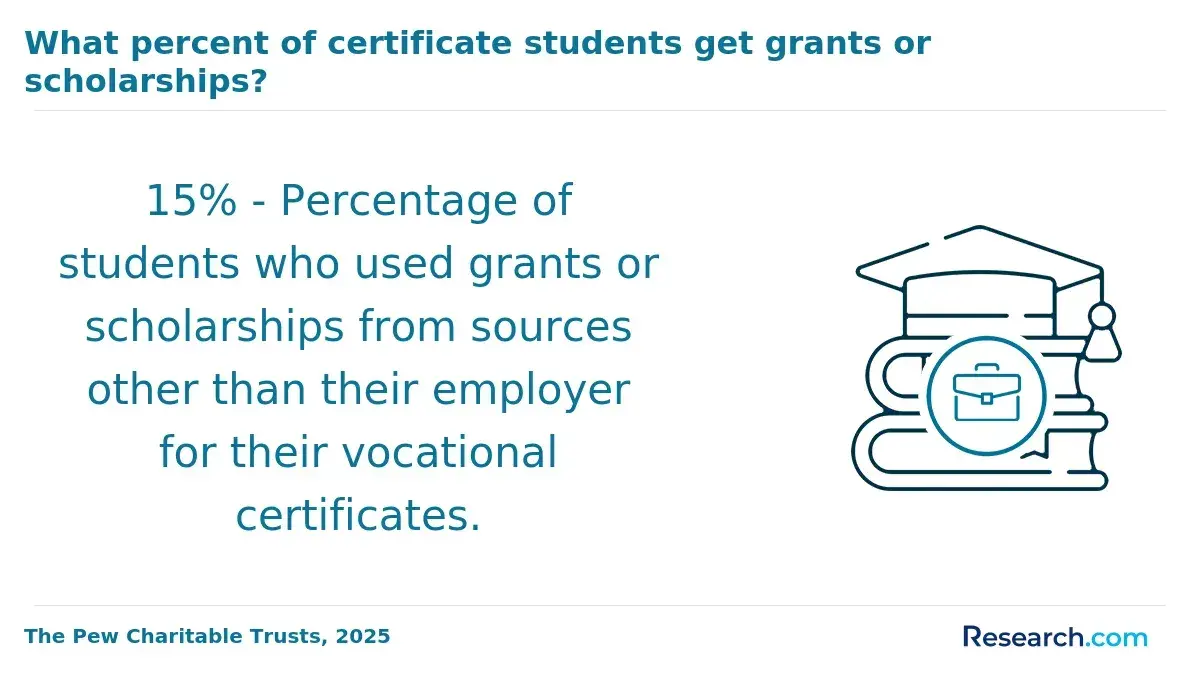
The choice between certificate programs and full master's degrees in supply chain management involves a tradeoff between time, cost, and practical relevance. Certificates typically require 6 to 9 months of part-time study, suiting working professionals needing targeted skills like data analytics and AI application.
These programs, costing roughly $2,000 to $7,000, allow faster workforce entry or pivot compared to master's programs that extend to 18 months and may exceed $50,000 without guaranteed employer tuition assistance.
Employers increasingly prioritize analytics and AI integration skills, a trend supported by Coursera's 2025 data showing a 41% surge in enrollment for courses emphasizing these competencies. For logistics professionals seeking quick ROI, shorter certificates focusing on data-driven decision-making deliver immediate workforce relevance and avoid the broader theoretical coverage typical of longer graduate programs.
The financial and time investments require careful consideration: longer programs must offer clear leadership development or project decision-making access to justify their expense. Conversely, concise professional development courses align better with digital transformation demands and existing job responsibilities.
Ultimately, selecting programs under one year with strong industry data alignment maximizes practical outcomes, while prolonged study should only be pursued if it provides tangible post-completion leadership roles.
What management roles can logistics professionals pursue with an online supply chain degree?
Securing a management role through an online supply chain degree requires an expanded skill set that goes beyond basic logistics coordination. Positions like supply chain manager or procurement manager demand strategic planning, supplier negotiation, and the ability to manage cross-functional teams and multiple stakeholders.
For example, a supply chain manager must integrate operations across manufacturing, warehousing, and distribution, while an operations manager focuses more narrowly on internal workflow optimizations and resource allocation.
The transition into these roles often hinges on proficiency in data analytics, risk mitigation, and technology-driven tools-areas emphasized by online programs through applied projects and case studies. A logistics coordinator advancing to procurement management, for instance, will need to master contract oversight and supplier relationships, reflecting a skill set shift that coursework must explicitly support.
Employers expect more than knowledge; leadership and communication capabilities are crucial, especially when interacting with executive-level stakeholders. Evidence of such competencies often emerges from earned certifications or demonstrable project leadership within degree programs.
Data from the 2024 ASCM Career & Salary Survey indicates tangible benefits: 42% of supply chain graduates or certificate holders reported promotions within a year, twice the rate of those without recent credentials. This underscores a clear link between up-to-date education and accelerated career progression in supply chain management.
What salary growth and job outlook can logistics coordinators expect after moving into supply chain management?
Transitioning from logistics coordination to supply chain management can yield a 25% to 50% salary increase within a year of program completion, with median earnings rising to approximately $62,700 according to OnlineU's 2026 data. For working professionals weighing this shift, the tradeoff involves upfront tuition costs averaging $8,396 annually against the substantial uplift in compensation and expanded responsibilities.
Supply chain managers are increasingly sought in sectors such as manufacturing, retail, and technology for their capacity to optimize entire operations. This contrasts with logistics roles, which often focus on narrower execution tasks. Employers favor candidates with formal education in supply chain management as it signals proven skills in procurement strategy, inventory control, and data analytics-areas rarely mastered through logistics experience alone.
Practical challenges include balancing time commitments for online degree programs and understanding that sector-specific growth rates differ; for example, e-commerce supply chain managers may experience faster advancement than those in traditional distribution. Developing leadership and cross-functional collaboration skills to manage suppliers and production is critical for overcoming common barriers to managerial roles.
Key considerations when evaluating programs include the presence of real-world projects, emphasis on data-driven decision-making, and training in negotiation-each improving readiness to handle the complexities of supply chain management beyond logistics coordination.
How do professional certifications like CSCP or CLTD complement an online supply chain degree?
The value of combining an online supply chain degree with professional certifications like CSCP and CLTD lies in addressing specific employer demands for both broad strategic knowledge and focused operational skills. While an online degree covers foundational supply chain concepts, certifications validate expertise in areas such as inventory control, transportation optimization, and complex global logistics, enhancing practical readiness beyond theoretical understanding.
Consider a logistics coordinator transitioning toward managerial responsibilities in manufacturing: an online degree equips them with planning frameworks, but the CLTD certification sharpens their ability to handle multi-modal transportation and regulatory compliance-critical skills often underrepresented in degree curricula. This targeted skill set helps bridge the gap between academic content and real-world operational challenges.
Employers increasingly expect dynamic skill development, with data showing 70% of supply chain professionals who earned certifications also pursued additional credentials within the same period-indicating a pattern of progressive credential stacking. Holding both degree and certifications mitigates skill obsolescence amid rapid digital transformation and analytical demands but involves extra investment in time and cost.
The tradeoff is clear: those who combine academic foundation with validated, specific credentials enhance their employability and are more likely to secure leadership roles that rely on both strategic insight and operational mastery.
Other Things You Should Know About Supply Chain Management
Online supply chain management programs vary significantly in workload intensity, which directly impacts professionals balancing jobs and studies. Programs with heavier project and group work can mirror real management challenges but require strong time management.
Choosing a program with flexible pacing and asynchronous components is critical for those who cannot afford falling behind due to unpredictable work demands. Prioritizing programs that offer practical, employer-relevant assignments over purely theoretical ones improves immediate applicability without overwhelming the learner.
Employers increasingly recognize accredited online degrees, but the institution's reputation and program rigor remain decisive factors. Graduates of programs with strong industry ties and applied learning components tend to gain faster trust in management roles.
Selection should prioritize programs known for graduate success and employer engagement rather than only low cost or convenience. Those aiming for advancement must evaluate how the program's network and real-world projects align with industry expectations beyond just credentials.
Professionals should assess their career goals and schedule. A master's degree can offer a deeper understanding of supply chain strategies and is beneficial for those seeking leadership roles. However, certifications can be pursued alongside work for immediate skill enhancement and potentially faster career advancement.
References
- Online vs. On-Campus: Choosing the Right Format for Your Supply Chain Degree https://www.ucumberlands.edu/blog/online-vs-on-campus-choose-your-supply-chain-degree-format
- What Can You Do with a Supply Chain Management Degree? | Tiffin University https://www.tiffin.edu/news/what-can-you-do-with-a-supply-chain-management-degree/
- Choose the Right Supply Chain Management Degree for Global Careers | BSBI https://www.berlinsbi.com/blog/how-to-choose-the-right-supply-chain-management-degree-for-global-careers
- How to Break into Supply Chain Management https://teach.com/online-ed/business-degrees/online-masters-supply-chain-management/how-to-become-supply-chain-manager/
- Certified Supply Chain Professional (CSCP) Preparation Training Course https://www.nobleprog.pl/en/cc/cscpprep
- Best Supply Chain Management Courses: From MIT xPRO, Wharton, INSEAD, Michigan, MIT Sloan - Emeritus Online Courses https://emeritus.org/blog/b-best-supply-chain-management-courses/
- Online supply chain management courses | edX https://www.edx.org/learn/supply-chain-management
- Advance Your Career in Logistics and Supply Chain Management | CCU Online https://www.ccu.edu/blogs/cags/category/business/advance-your-career-in-logistics-and-supply-chain-management/
- 21 Best Online Master's in Supply Chain and Logistics for 2025 https://www.supplychainguide.org/degrees/online-masters-in-supply-chain-management/
- How to Get Your First Logistics & Supply Chain Job https://www.logisticsbureau.com/how-to-secure-your-first-supply-chain-or-logistics-job/