2027 Supply Chain Management Specializations for Distribution and Fulfillment Careers

Co-Founder and Chief Data Scientist
Facing escalating complexity around last-mile distribution, professionals must quickly adapt to specialized supply chain demands that directly impact fulfillment speed and accuracy.
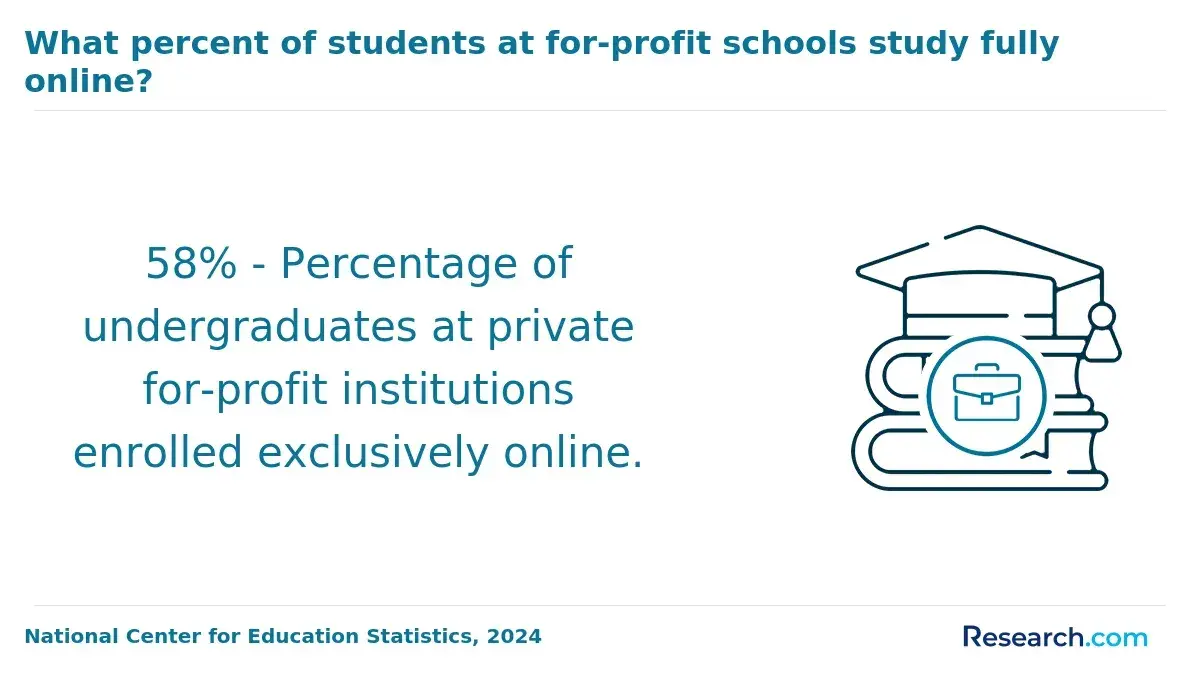
With 56% of adult learners enrolling in online programs as reported by the National Center for Education Statistics in 2024, flexibility in education now shapes career mobility, enabling mid-career pivots without career disruption. However, the tradeoff lies in program rigor and employer recognition, making informed specialization choices essential.
This article outlines the most relevant supply chain management specializations tailored for distribution and fulfillment roles, guiding decision-makers toward paths that maximize employability and operational expertise in this critical sector.
Key Things You Should Know
- Specializing in demand forecasting analytics requires mastering complex algorithms that increase forecast accuracy by 20%, yet demands steep upskilling often unavailable in low-cost certificate formats, constraining rapid workforce entry.
- Employers prioritize candidates with expertise in integrated fulfillment network design, linked to a documented 15% cost reduction in 2025 logistics reports, creating competitive pressure on professionals lacking multidisciplinary SCM competencies.
- Advanced automation and robotics-focused SCM tracks involve longer, more expensive credentials, limiting access for working professionals but aligning with industry pushes toward reducing manual labor by 30% over five years, impacting long-term career stability.
What is supply chain management with a focus on distribution and fulfillment careers?
Distribution and fulfillment supply chain management careers require precise operational expertise to navigate time-sensitive demands and complex logistics.
Specialists must master inventory control, warehouse management systems, and transportation coordination to meet fluctuating demand while managing constrained storage capacities. For example, an e-commerce logistician optimizing last-mile delivery routes directly impacts customer satisfaction and cost efficiency.
Compared to broader supply chain roles, these specialized supply chain management roles in distribution emphasize real-time data accuracy and rapid decision-making under pressure, especially in sectors like retail or pharmaceuticals, where compliance and delivery speed are non-negotiable. Employers increasingly seek candidates skilled in advanced analytical tools and supply chain visibility platforms to identify and resolve bottlenecks promptly.
The U.S. Bureau of Labor Statistics reports that logisticians earned a median annual wage of $80,880 as of May 2024, reflecting the technical sophistication required. Educational pathways must balance theoretical foundations with hands-on experience, as graduates lacking proficiency in execution tools often face stalled career growth. Practical internships or experience with third-party logistics providers improve employability and operational readiness.
Choosing programs that integrate applied logistics software training, such as those found within accelerated MBA programs, can accelerate career pivot opportunities. However, candidates should critically assess each curriculum's emphasis on supply chain analytics versus distribution execution to align with targeted roles.
Which supply chain management specializations lead directly to distribution and fulfillment roles?
Specializations in logistics and distribution within supply chain management shape distinct career trajectories by aligning technical focus with employer demands in fulfillment operations supply chain management career paths.
Logistics management, for instance, offers a direct route to roles such as distribution center manager through its emphasis on optimizing goods flow and systems integration. In contrast, inventory control demands rigorous stock forecasting skills essential for accurate warehouse operations and order completeness, tailoring candidates for precision-focused roles.
Transportation management requires negotiation skills and regulatory knowledge, preparing candidates to handle shipment scheduling and carrier relationships, key in coordinating last-mile delivery complexities. Warehouse operations specialization centers on efficiency and technology adoption in material handling and order processing, mirroring on-the-ground fulfillment responsibilities.
Employers expect candidates to manage operational disruptions realistically, such as adjusting logistics plans dynamically during port congestions or rapid order surges in e-commerce contexts. Professionals lacking experience in such scenarios may face challenges when transitioning into distribution and fulfillment roles.
Employment for logisticians is projected to grow 17% from 2024 to 2034 per the U.S. Bureau of Labor Statistics, reflecting demand for skills that blend analytical rigor with operational leadership.
Prospective students evaluating these paths should consider practical differences: logistics emphasizes data analytics within integrated systems, inventory control prioritizes demand forecasting, transportation concentrates on carrier negotiation, and warehouse operations focus on streamlined workflows.
Exploring advanced credentials like an online MBA accepting transfer credits can also enhance adaptability across these evolving specializations.
What degrees or certificates do you need for distribution and fulfillment careers?
Entry into distribution and fulfillment management increasingly demands more than just foundational knowledge. It requires targeted proficiency in supply chain management, logistics, and procurement tailored to real-world operational challenges.
A bachelor's degree in supply chain management, logistics, business administration, or operations management serves as the baseline for mid- to upper-level roles that rely on mastering inventory control, transportation, and warehouse systems. For example, distribution managers responsible for optimizing delivery windows and reducing costs must leverage data-driven systems aligned with demand forecasting and risk management protocols.
Certificates in supply chain management and logistics for distribution professionals such as Certified Supply Chain Professional (CSCP) or Certified in Production and Inventory Management (CPIM) quickly sharpen technical competencies without the longer time commitment of degrees. These credentials provide focused expertise, critical for working professionals pivoting into roles requiring real-time inventory tracking and automated fulfillment, a niche increasingly valued by employers relying on ERP systems like SAP or Oracle.
More employers now expect demonstrated experience with ERP software and data analytics skills, underscoring the need for educational options that integrate both technical tools and operational concepts.
While associate degrees may suffice for entry-level positions, progression typically necessitates combinations of bachelor's credentials and certifications. Candidates without these credentials may struggle as digital logistics platforms dominate procurement and fulfillment workflows.
The U.S. median annual wage for purchasing managers, buyers, and purchasing agents stood at $79,830 in May 2024, reflecting supply chain roles tightly coupled with cost efficiencies and inventory precision. An informed choice of educational pathway that balances practical knowledge, industry-recognized credentials, and technical application aligns with emerging workforce demands and long-term career sustainability.
Professionals evaluating options beyond traditional degrees may also consider executive MBA online programs to expand leadership capabilities while maintaining operational relevance.
How do online and on-campus supply chain programs compare for distribution specializations?
Online supply chain management programs with distribution specializations offer essential flexibility but often fall short in delivering the tangible, hands-on experience critical in industries like pharmaceuticals or heavy manufacturing.
For roles such as inventory analysts, where understanding physical warehouse operations is pivotal, on-campus programs provide direct access to labs and internships that sharpen practical skills valued by employers. This distinction profoundly impacts employability and daily job performance.
Employers hiring for mid- to entry-level distribution positions frequently prioritize candidates with real-world exposure. While online courses integrate virtual simulations and increasingly utilize augmented reality to emulate practical environments, these tools cannot fully replicate tactile learning with actual inventory systems.
This gap can delay operational proficiency and should factor into a candidate's choice when evaluating online versus on-campus supply chain management distribution programs.
Projected growth of approximately 28,100 annual openings for inventory analysts from 2018 to 2028 demands scalable education solutions that combine theory with credentialed practical assessments.
Students aiming to balance work and study may find accredited online options with industry mentorships more feasible, whereas those targeting immediate hands-on roles should lean toward traditional programs that embed co-op experiences.
Key considerations include employer regional preferences and personal logistical trade-offs like commuting and equipment access. Candidates must verify that their program's curriculum aligns with practical skill requirements to optimize hiring prospects.
Career changers and professionals exploring the best delivery and fulfillment supply chain management courses should also consult resources like the cheapest 1 year online MBA programs to evaluate complementary pathways that may accelerate transition and broaden skill sets.
What courses and skills are taught in distribution and fulfillment specializations?
Specialized training in distribution and fulfillment involves mastering operational challenges that directly affect a company's bottom line, particularly in controlling inventory flow and meeting delivery deadlines. For example, temperature-sensitive cold chain logistics require distinct protocols between pharmaceuticals and food distribution, where a failure to maintain conditions risks regulatory penalties and product loss.
Core competencies extend beyond technical skills to include analytics for inventory optimization and vendor contract negotiations, which are essential for maintaining uninterrupted supply amid multi-supplier complexities. Risk management strategies are equally critical, preparing professionals to mitigate impacts from disruptions like strikes or extreme weather, realities often absent from general curricula but vital in practice.
Employers prioritize candidates proficient in ERP platforms such as SAP and Oracle because these systems enable integrated process oversight and real-time reporting, which are non-negotiable for effective distribution leadership. Communication and team coordination skills are also emphasized, as managers must align diverse personnel from drivers to procurement specialists under tight deadlines.
Graduates who master these areas position themselves competitively, supported by a median annual wage of $102,010 for transportation, storage, and distribution managers reported by the U.S. Bureau of Labor Statistics. Intentional choices in program focus can determine readiness for these demanding roles, balancing technical rigour with situational adaptability.
How long do supply chain distribution programs take, and what do they typically cost?
Choosing an educational pathway in supply chain management demands a clear-eyed assessment of time investment versus career outcomes. Certificate and diploma programs, spanning 6 months to a year, equip candidates for entry-level logistics roles but often require supplementary experience to access supervisory positions.
Associate degrees, typically completed in about two years, balance faster completion with practical skills applicable to warehouse and transportation roles, presenting a cost-effective option for those prioritizing quick labor market entry.
Bachelor's degrees, generally a four-year commitment, align with employer expectations for leadership roles, especially in sectors like manufacturing and retail distribution where analytical and strategic planning skills are essential.
While the upfront cost, ranging from $40,000 to $80,000 at public universities, may appear substantial, median earnings for supply chain managers with bachelor's credentials average around $92,150 annually, justifying the investment for candidates targeting higher-level responsibilities.
In essence, students prioritizing rapid employment might lean toward certificates or associate degrees, accepting constrained initial advancement, whereas those aiming for strategic roles must weigh the time and financial demands of bachelor's programs to meet the analytical and operational rigor employers require.
How can you verify accreditation and program quality for distribution-focused supply chain degrees?
Accreditation for supply chain degrees focused on distribution involves not only regional recognition by U.S. Department of Education-approved agencies but also specialized validation from bodies like the Accreditation Council for Business Schools and Programs (ACBSP) or AACSB. These accreditations indicate program rigor and sector relevance, which matters because supply chain roles require precise, up-to-date knowledge tailored to industry norms.
Employer expectations often hinge on alignment with certifications such as those from the Association for Supply Chain Management (ASCM). Programs incorporating ASCM frameworks tend to better prepare students for critical tasks including supplier management, compliance, and logistics technology adaptation, skills that vary notably between sectors like retail and pharmaceuticals.
For instance, a logistics manager moving from retail distribution to pharmaceuticals faces distinct compliance challenges that generic programs may overlook.
Graduate outcomes transparency, such as placement rates in distribution roles and progression into leadership, can signal a program's practical value. Given supply chain directors earn median salaries around $145,000 annually, programs that clear a path to leadership positions can justify the investment for supplier-centric career tracks.
To assess program relevance, students should scrutinize published graduate employment data, engage alumni working in distribution, and analyze course syllabi relative to current industry trends like automation in fulfillment centers or last-mile delivery analytics. Absence of these data points often reflects a disconnect between academic content and real-world operational demands.
What entry-level and advanced jobs can you get in distribution and fulfillment?
Entry-level distribution and fulfillment roles prioritize physical execution, tasks like picking, packing, and inventory tracking, with employers expecting proficiency in warehouse management systems (WMS) and physical stamina.
While a high school diploma suffices for many, certifications in logistics software or forklift operation materially improve employability. Advancing beyond this tier requires analytical capability, leadership experience, and often a bachelor's degree in supply chain management or related fields.
For instance, a distribution center manager in an e-commerce setting must balance rapid order processing, labor costs, and returns management while preventing errors that can incur substantial cost. Such roles integrate technology like automated sorting and real-time tracking to optimize operations.
This bifurcation between manual labor and strategic oversight reveals tradeoffs students should consider: entry-level credentials open doors but limit upward mobility without supplementary skills in data analysis and enterprise resource planning (ERP) software.
Given that supply chain-related jobs constitute 37% of U.S. employment, the sector demands professionals who blend operational proficiency with cross-functional knowledge in procurement, vendor relations, or quality control. A narrow focus on operational tasks restricts growth, whereas developing a holistic understanding of fulfillment cycles and technology enables progression into management and planning roles.
What are the typical salaries and job outlook for distribution and fulfillment specialists?
E-commerce fulfillment roles, particularly distribution and fulfillment specialists, typically earn between $44,000 and $70,000 annually, reflecting significant variability tied to sector, geography, and technology expertise.
Higher salaries cluster around high-volume operations, where mastery of automation, sophisticated warehouse management software, and rapid turnaround demands are non-negotiable. This creates a stratification where technological fluency directly influences compensation and career trajectory.
Job growth for logistics-related roles is projected at about 5% over the next decade, slightly above average, driven by expanding e-commerce and supply chain complexity. Candidates with skills in inventory analytics, order processing, and last-mile delivery optimization will see consistent demand.
However, seasonal volume fluctuations impose workforce scalability challenges, requiring adaptability beyond entry-level capabilities.
Consider a mid-sized warehouse fulfillment specialist tasked mid-year with onboarding new software to cut order errors: success here correlates with improved customer retention and measurable business outcomes. Failure to achieve such operational improvements often stalls skill development and salary advancement, illustrating a direct link between technical competence and professional progression.
When evaluating educational pathways, prioritize curricula emphasizing emerging fulfillment technologies and data-driven forecasting over generic supply chain theory. This alignment sharpens employability and reinforces long-term earning potential within distribution careers.
How do industry certifications support careers in distribution, warehousing, and fulfillment?
Certification in distribution, warehousing, and fulfillment is a practical workforce filter that employers use to reduce training burden and operational risk.
Certified professionals, such as those holding Certified Supply Chain Professional (CSCP) or Certified Logistics Associate (CLA) credentials, are demonstrably more capable of maintaining inventory accuracy and navigating regulatory frameworks, especially in high-volume settings. This reliability translates into fewer errors and less managerial oversight, a critical factor when managing thousands of SKUs in complex fulfillment centers.
For instance, a certified warehouse technician can independently fine-tune order picking algorithms or implement automation tools, minimizing shipping delays and lowering return rates. In contrast, uncertified staff typically require extended on-the-job training, increasing labor costs and constraining throughput capacity.
Salary data reinforces this skill premium. The national average income for a supply chain manager stands at $95,000 annually, climbing to $126,000 globally, based on Nexford University research. These figures illustrate how certification opens doors to higher-paying roles combining tactical expertise with strategic oversight, positioning individuals for leadership in supply chains.
Certification programs also prioritize applied proficiency in widely used platforms like warehouse management systems (WMS) and Enterprise Resource Planning (ERP). Workers without this background may find their upward mobility limited in roles demanding integrated technology use and data-driven decision-making.
Other Things You Should Know About Supply Chain Management
In 2027, candidates should assess their career goals, industry demands, and personal interests. Specialized programs may offer deeper insights into distribution and fulfillment, potentially providing a competitive edge in niche markets. A general degree might offer broader knowledge applicable to various roles.
Employers value experience combined with relevant credentials but typically favor hands-on operational expertise over purely theoretical knowledge. Programs offering internships, co-ops, or partnerships with distribution centers enhance employment prospects significantly. When deciding on education paths, prioritize programs that integrate applied learning or offer robust experiential opportunities to meet employer expectations effectively.
Frequent disruptions in supply chains increase demand for adaptable professionals who can handle rapid problem-solving and process redesign under pressure. Specialists narrowly trained in a single system or process risk job instability if that process becomes obsolete. Candidates should pursue programs teaching flexible, cross-functional skills to maintain career resilience amid evolving industry conditions.
References
- Warehouse Management and Distribution Operations Course https://upskilldevelopment.com/warehouse-management-and-distribution-operations-course
- What is Supply Chain Planning? Process, Steps & Benefits https://aims.education/supply-chain-planning-process-and-systems/
- Careers in Supply Chain & Procurement | Distinct https://www.distinctrecruitment.com/uk/resources/blog/careers-in-supply-chain-procurement/
- Supply Chain and Logistics Career Paths: Explained https://www.logisticsbureau.com/jobs-and-career-paths-in-supply-chain-and-logistics/
- Distribution Logistics Training Course https://www.bmc.net/Distribution-Logistics