2027 Hospital-at-Home Nurse Workday: Patient Mix, Responsibilities, and Teamwork
Audited and Verified:
Our Editorial and Data Verification Process
Research.com uses government datasets, official education statistics and primary institutional information to support its career and degree guides. Our review process checks factual accuracy, occupational definitions, source dates and the requirements associated with the credentials discussed.
How This Article Was Fact-Checked
Our editorial team verifies salary estimates, employment projections, education requirements and program information against original data providers and official organizations. Salary figures are checked against the relevant occupational definitions and reporting periods. Information about licensure, accreditation and required in-person training is reviewed separately.
Fact-checked and verified on:

Co-Founder and Chief Data Scientist
A hospital-at-home RN may assess a patient in their living room, coordinate treatment with a remote physician, and decide when a change in condition needs an urgent response. The role combines acute-care nursing with travel, technology, and independent judgment - but its schedule and support vary by program. This guide shows nursing students and RNs what a workday can involve, which patients qualify, and how to evaluate the training, teamwork, and job conditions behind an offer.
Key Things You Should Know
- Hospital-at-home provides hospital-level treatment to selected patients at home; the RN's day typically combines in-person assessments, treatment, remote monitoring, documentation, and escalation
- Patients must meet a program's clinical and home-safety criteria. Nurses need an active RN license and demonstrated acute-care competencies; an advanced degree is not the usual entry requirement.
- The U.S. Bureau of Labor Statistics does not report a separate hospital-at-home nurse wage or growth rate. Its registered-nurse figures describe the broader occupation, not a guaranteed offer in this specialty
What Does a Hospital-at-Home Nurse Do During a Typical Workday?
Hospital-at-home is an organized service that delivers hospital-level care to patients who qualify to receive it in their homes. It is not interchangeable with a routine home health visit. A hospital-at-home RN may provide direct care in the home, work from a remote clinical hub, or rotate between those assignments. The exact workflow depends on the program's staffing model and patient acuity.
A field nurse commonly starts by reviewing the handoff, orders, monitoring alerts, planned visits, and travel route. During a visit, the nurse assesses the patient, gives ordered treatment, checks equipment and the home environment, teaches the patient or caregiver what to report, and documents findings. Between visits, the nurse may call patients, clarify orders, coordinate supplies, or discuss a change in condition with the clinical team. A hub nurse may spend more of the shift reviewing incoming data, conducting video or phone assessments, and dispatching field staff.
The distinction to investigate is who responds when a patient deteriorates. A nurse should know whether the program has on-call clinicians, rapid in-person response, and a defined route to emergency department transfer - not merely a monitoring dashboard. Nurses interested in designing or evaluating such workflows may later consider online DNP programs emphasizing organizational practice; that education is distinct from preparation for a direct-care RN position.
What Types of Patients Receive Hospital-at-Home Nursing Care?
Programs generally select patients who need hospital-level evaluation or treatment but can receive it safely at home with the available staff, equipment, monitoring, and response system. Depending on the program, examples may include selected patients with an infection requiring intravenous treatment, a heart-failure exacerbation, or a respiratory illness. Diagnosis alone does not establish eligibility: clinical stability, treatment needs, geography, and the suitability of the home all matter.
The patient mix can change significantly between employers. Ask for the program's common diagnoses, exclusion criteria, expected visit frequency, and process for patients who become too ill to remain at home. Also ask whether the service accepts patients who live alone; programs should assess available support rather than assume every patient has a caregiver.
Psychiatric care delivered at home is a separate service model, not an automatic part of an acute medical hospital-at-home caseload. An RN whose principal goal is psychiatric advanced practice should evaluate psychiatric NP MSN programs by duration against their actual clinical and licensure requirements rather than treating this RN role as NP preparation.
What Education and License Does a Hospital-at-Home Nurse Need?
Direct-care hospital-at-home nurse positions generally call for an active registered nurse license in the jurisdiction where the patient receives care. Employers set additional requirements for clinical experience, driving or travel, remote-work arrangements, and demonstrated competencies. A degree alone does not authorize RN practice: graduates must meet state board requirements and obtain licensure.
For a nursing student, the practical sequence is to complete a prelicensure nursing program, qualify for and pass the NCLEX-RN, obtain the required license, and build the assessment and escalation skills the employer expects. Some employers may consider new graduates with substantial orientation; others prefer prior medical-surgical, emergency, critical-care, or home-based experience. Ask the hiring manager which experience is required and which can be developed during supervised onboarding.
A person who already holds a non-nursing bachelor's degree can compare prelicensure options, including online direct-entry MSN program comparisons. They must verify that a particular program actually prepares graduates for initial RN licensure and provides the required in-person clinical education; an online label does not eliminate those requirements.
An ADN or BSN can provide a route to initial RN licensure when the specific program meets applicable requirements. Hospital-at-home employers may prefer a BSN, but an additional degree is not automatically necessary for an experienced, eligible RN. An RN-to-BSN program is for an already-licensed nurse seeking a bachelor's degree; it is not a second route to initial licensure.
The useful comparison is the route from the reader's present credential to the employer's actual requirements. A student choosing between prelicensure programs should consider clinical preparation, board eligibility, completion time, and cost. An ADN-prepared RN should check job postings and employer education benefits before paying for another degree. For an RN seeking a later graduate role, bridge programs from an ADN to an MSN may be worth comparing, but an MSN is not required simply to make hospital-at-home visits.
Graduate education has different purposes. A leadership or informatics degree may support program operations; an NP track prepares for a specified advanced practice role and population. Neither should be presented as the standard credential for the field RN job.
Responsibilities can include focused and ongoing assessment, medication administration, intravenous therapy where authorized and supported, specimen collection, patient education, monitoring-device checks, and documentation. Nurses also reconcile what the patient is actually taking with the treatment plan and report concerns through the program's established process. Specific procedures depend on orders, RN scope, employer policy, supplies, and validated competency.
The home adds clinical variables that a hospital room controls more easily: equipment may fail, a patient may have difficulty using a device, and the physical space may complicate safe care. A nurse must distinguish an expected finding from a meaningful change, communicate the findings promptly, and follow escalation protocols. Remote readings support assessment; they do not replace clinical judgment or make an unsafe patient suitable for continued home treatment.
These are RN responsibilities, not independent prescribing authority. An RN considering a future primary-care NP role can examine short-format FNP program comparisons, while verifying supervised clinical preparation and state requirements separately from hospital-at-home employment experience.
The field RN often connects the patient's home to a larger clinical operation. Physicians or authorized advanced practice clinicians direct medical treatment; hub nurses help track patients and coordinate responses; pharmacists, therapists, social workers, paramedics, and logistics staff may contribute according to the program's model. The RN remains accountable for nursing assessment, accurate handoff, and timely communication within their scope.
Teamwork becomes most visible when a plan changes. For example, a field nurse reports new assessment findings, the prescribing clinician determines whether orders should change, and the team arranges any additional visit, equipment, or transfer. A safe program specifies who is reachable after hours, who can come to the home, and how the receiving facility gets the patient's information if transfer is needed.
An experienced MSN-prepared nurse seeking a different role on that team might explore online FNP certificate routes after an MSN. A certificate's relevance depends on its population-focus preparation and subsequent certification and state authorization; it does not change the field RN's scope.
Strong candidates can demonstrate acute-care assessment, prioritization, medication safety, clear remote communication, and concise EHR documentation. They also need to teach patients how to use equipment and report symptoms without assuming that a caregiver can perform clinical tasks. Working in a home calls for situational awareness and comfort making assessments away from immediate bedside backup.
Employers may require or prefer training such as Basic Life Support, Advanced Cardiovascular Life Support for particular assignments, intravenous-therapy competencies, or experience with the program's devices. Requirements vary. A specialty certificate does not replace an RN license, employer orientation, or observed competency in the actual workflow. Before accepting an offer, ask what training is supervised, how competence is checked, and whether a mentor is available during early independent visits.
Psychiatric NP certification represents a different career objective. Nurses considering time-efficient PMHNP certificate pathways should check their prior graduate preparation and the certificate's eligibility requirements; that credential is not a substitute for hospital-at-home RN onboarding.
There is no separate U.S. Bureau of Labor Statistics wage category for hospital-at-home nurses, so a national median for this exact role cannot be inferred from RN data. BLS reported a $93,600 median annual wage for registered nurses in May 2024. That occupation-wide figure includes many settings, locations, schedules, and experience levels; it is context for evaluating an offer, not a prediction of hospital-at-home pay.
Compare offers using the complete compensation arrangement: base rate, shift and on-call differentials, overtime rules, mileage or vehicle reimbursement, travel time, equipment, and benefits. A higher hourly rate may be less attractive if travel is extensive or if expected on-call availability is uncompensated. Ask whether the advertised rate applies to field work, hub work, or both.
Do not assume graduate tuition will be recovered through higher pay in this RN specialty. If a separate graduate career goal warrants study, lower-cost online BSN-to-MSN degree routes provide a cost comparison, but their value depends on the intended role and total expenses.
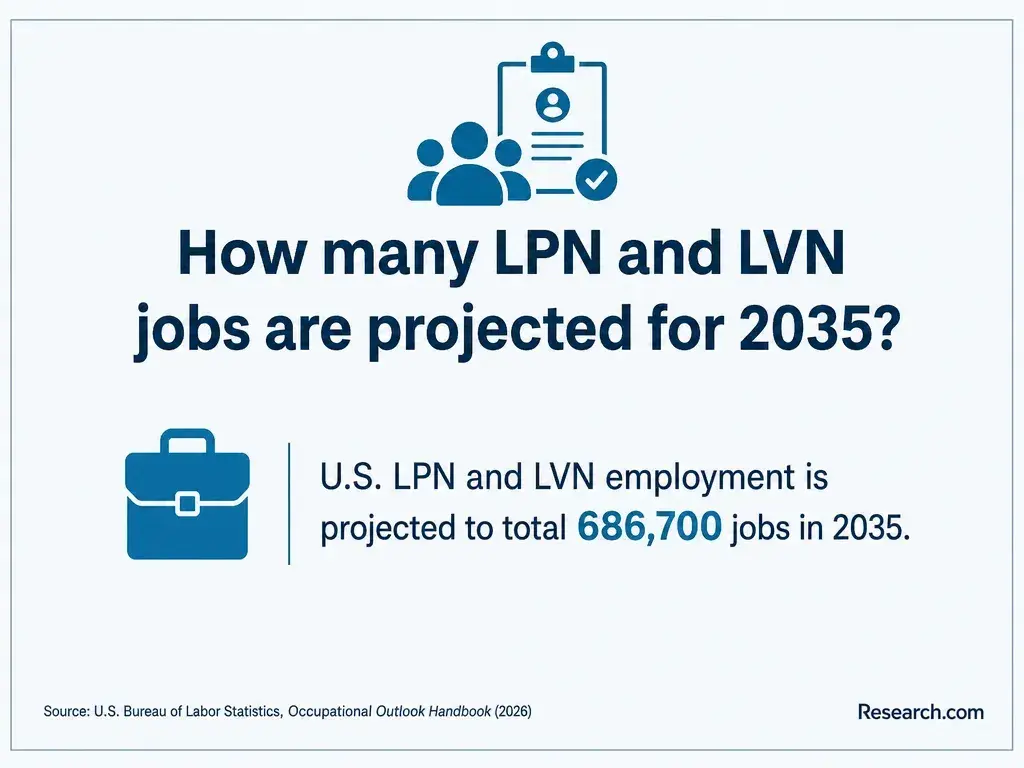
BLS does not publish a hospital-at-home RN employment projection. Its projection for registered nurses was 5% employment growth from 2024 to 2034, across the occupation rather than this care model. That figure cannot establish how many hospital-at-home jobs will open locally or whether a particular program will expand.
Opportunities depend on whether local health systems operate a hospital-at-home service, which patients they accept, and how they staff field and remote care. Program operations can also depend on payer contracts and applicable regulatory arrangements. A candidate should inspect current vacancies and ask how long the service has operated, whether positions are permanent or pilot-funded, and what other roles within the organization would be available if staffing needs changed.
For nurses aiming to lead service development rather than provide direct care, shorter online DNP programs are one possible academic comparison. A doctorate is not a prerequisite for the projected RN jobs or for entry into hospital-at-home bedside practice.
How Can Students Choose an Accredited Nursing Program?
Students aiming for this career should first choose a program that supports initial RN licensure in the jurisdiction where they intend to practice, then evaluate the quality of its clinical preparation. Check the applicable state board's approval or recognition requirements, the institution's accreditation, and any nursing program accreditation, such as ACEN or CCNE. These are distinct checks: institutional accreditation alone does not establish NCLEX eligibility.
Ask the school where supervised clinical experiences occur and how students are assessed in patient safety, clinical judgment, handoffs, and escalation. A student interested in hospital-at-home work can seek relevant acute-care and community-based exposure, while recognizing that no rotation or simulation automatically qualifies them for independent specialty practice. Also verify required on-site labs and clinical schedules before assuming an online or hybrid program fits work or caregiving obligations.
Choose a graduate specialty only if it matches a separate career objective. For example, affordable online psychiatric nurse practitioner programs address psychiatric advanced practice, not the most direct educational route into a hospital-at-home RN job. For most applicants, licensure, relevant experience, and a well-supported employer orientation are the more immediate priorities.
Other Things You Should Know About Nursing
Some field roles require a personal vehicle; others provide transportation or assign nurses to a remote hub. Confirm the service area, insurance and license requirements, mileage reimbursement, parking costs, and whether travel time is paid.
No. A scheduled field or hub shift and an on-call assignment are different arrangements. Ask for the actual shift pattern, weekend and holiday expectations, response-time requirement, and on-call compensation before accepting an offer.
Not necessarily. The program assesses whether it can safely deliver care in that patient's circumstances. A caregiver's availability may matter for an individual plan, but nurses should not assume a family member can provide clinical care.
Follow the employer's safety and escalation procedures rather than entering or remaining in an unsafe situation. During an interview, ask how the program assesses homes, supports staff in the field, and arranges another care setting when home treatment is unsuitable.
- Tool: Handoff | Agency for Healthcare Research and Quality https://www.ahrq.gov/teamstepps-program/curriculum/communication/tools/handoff.html
- Hospital at home: emergence of a high-value model of care delivery - PMC https://pmc.ncbi.nlm.nih.gov/articles/PMC10023005/
- Fact Sheet: Report on the Study of the Acute Hospital Care at Home Initiative | cms.gov https://www.cms.gov/newsroom/fact-sheets/fact-sheet-report-study-acute-hospital-care-home-initiative
- What Does a Home Health Nurse Do? | NSU https://nevadastate.edu/son/rn-bsn/what-does-a-home-health-nurse-do/
- Day in the Life of a Hospital-at-Home Team | Current Health https://currenthealth.com/insights/blog/day-in-the-life-of-a-hospital-at-home-team/
- Hospital-at-Home | AHA https://www.aha.org/hospitalathome
- Hospital at home saves lives and money: CMS report | American Medical Association https://www.ama-assn.org/public-health/population-health/hospital-home-saves-lives-and-money-cms-report