2026 Highest-Paying Physical Education Master's Specializations Ranked

Co-Founder and Chief Data Scientist
Salary variations across physical education master's specializations reflect complex interactions between workforce demand, credentialing intensity, and role-specific technical expertise. Specializations with concentrated industry roles, where technical competence or certifications are stringent, often command premium compensation due to labor scarcity and elevated employer expectations. Additionally, geographic factors and sector-driven funding priorities influence salary structures, leading to distinct pay patterns beyond simple educational attainment.
Career advancement pathways within certain specializations also shape long-term earnings, as leadership potential and program management responsibilities increasingly affect compensation. This analysis highlights how interpreting pay differences requires contextualizing specialization-specific labor market dynamics and professional development demands instead of isolated salary figures.
Key Benefits of the Highest-Paying Physical Education Master's Specializations
- Specializations emphasizing advanced sports science integrate biomechanics insights, yet often demand significant lab time, restricting flexibility for working professionals pursuing degrees part-time.
- The growing employer demand for expertise in adaptive physical education reflects an inclusive workforce trend, increasing job opportunities but requiring specialized certification beyond a general master's.
- Programs focused on administration and policy benefit from industry-wide shifts highlighted in a 2024 report: leadership skills now directly correlate with longer career advancement despite a steeper initial learning curve.
What Are the Top-Paying Careers for Physical Education Master's Graduates?
Salary outcomes for graduates with a master's in physical education reflect more than academic attainment; they hinge on how well specializations align with evolving labor market demands and the strategic positioning of highly valued skills. Divergences in pay within these fields are shaped largely by economic pressures related to health and wellness trends, technological adoption in sports science, regulatory compliance in healthcare-adjacent roles, and the weight of leadership responsibilities in program management.
- Health and Fitness Director ($70,000-$100,000+): These professionals command some of the highest salaries due to their executive-level accountability for managing large wellness facilities or corporate health initiatives. Their compensation reflects the complexity of juggling operational budgets, staff oversight, and compliance with health regulations in an increasingly competitive wellness industry, as supported by salary data from the U.S. Bureau of Labor Statistics.
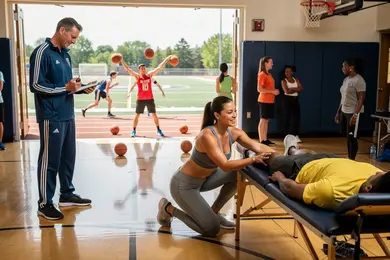
- Sports Medicine Specialist/Athletic Trainer ($55,000-$90,000): Athletic trainers with advanced certifications in physical therapy or kinesiology are in demand because they combine clinical expertise with injury prevention in high-stakes sports environments. Their pay scales are driven by technical scarcity, the critical nature of their role, and the growing integration of rehabilitative technologies, according to PayScale and industry reports.
- Kinesiology or Exercise Science Professor ($70,000+): Although often requiring a doctorate for tenure, master's-level graduates can fill lecturer or adjunct roles that still command strong salaries. Their compensation benefits not only from advanced content knowledge but also from the research and curriculum development duties that influence program quality and institutional prestige.
- Exercise Physiologist/Biomechanist ($55,000-$85,000): Specialists in human movement who operate within clinical or research contexts see elevated compensation tied to the growing reliance on evidence-based protocols and biomechanical analytics. These roles involve sophisticated data interpretation and direct impact on patient outcomes, elevating their labor market value.
- Public Health and Wellness Coordinator ($60,000-$75,000+): Leadership in this area commands higher pay due to responsibility for large-scale program implementation and behavior-change strategies within public institutions. These roles demand expertise in policy compliance and cross-sector collaboration, especially in school systems or government agencies shaping community health.
- Sports Psychologist (~$60,000+): This emerging specialization leverages mental health insights to optimize athletic performance and inclusion, a growing priority in sports programs. Despite variable salaries, the niche expertise and credentialing requirements foster upward wage pressure as awareness of psychological factors in physical activity increases.
- Adaptive Physical Education Specialist ($55,000-$65,000+): Addressing inclusive education mandates, these professionals' compensation is affected by their specialized knowledge of disability accommodations and individualized programming, which remain in short supply across school districts and rehabilitation settings.
- Corporate Wellness Consultant ($65,000-$85,000): Organizations increasingly invest in employee health strategies where consultants apply physical education insights to reduce healthcare costs and improve productivity. Compensation reflects the role's impact on organizational finances coupled with sales and client relationship expertise.
- Rehabilitation Coordinator ($60,000-$80,000): Coordinating therapeutic services requires advanced clinical knowledge and administrative skills, helping employers streamline patient recovery processes. Salaries tend upward due to the regulatory complexity of healthcare settings and the specialized certifications often required.
- Community Recreation Manager ($55,000-$70,000): While on the lower end of the spectrum, these managers oversee programs that influence public health outcomes, with pay influenced by government budgets and grant funding complexities. Leadership responsibility in diverse community settings supports steady salary growth despite occasional geographic limitations.
Accurately mapping top paying physical education master's careers in the United States requires understanding these roles within the context of economic incentives and evolving sector demands rather than viewing salaries as isolated. For those prioritizing strong returns relative to educational investment, examining technical certification requirements, leadership scope, and operational impact is essential. Aspiring professionals may also explore easy degrees to get online that pay well to complement or diversify their skill set while maintaining competitive positioning in the job market.
Which Industries Pay the Highest Salaries for Physical Education Master's Graduates?
Salary variation for physical education master's graduates across industries is largely a reflection of structural economic forces rather than the degree alone. Compensation correlates strongly with how physical education expertise aligns with industries' revenue models, regulatory landscapes, and the scarcity or technical complexity of required skills. Expertise in physical education holds greater financial value in sectors facing high operational risks, significant regulatory scrutiny, or where the application of specialized knowledge directly impacts revenue or cost outcomes.
- Sports Management and Professional Athletics ($70,000-$120,000): These industries command high salaries due to the substantial revenues generated from media rights, sponsorships, and ticket sales. According to PayScale 2024 data, professionals who can optimize athlete performance or manage sports operations leverage their expertise to influence team success and brand value, a factor that justifies premium pay. However, the competitive nature and market-driven demands create volatility, and roles often require long hours and geographic mobility.
- Healthcare and Rehabilitation ($65,000-$110,000): This sector values physical education graduates with specialization in therapeutic exercise and kinesiology, employing them as clinical exercise physiologists or rehabilitation coordinators. The U.S. Bureau of Labor Statistics highlights that these positions demand rigorous knowledge of human physiology and patient care, which translates into above-average wages due to the regulatory environment and the critical role these professionals play in reducing overall healthcare costs. The tradeoff often involves complex certifications and high responsibility for patient outcomes.
- Corporate Wellness and Fitness Consultancy ($60,000-$100,000): Firms in this space pay well because physical education expertise drives programs that reduce healthcare expenses and improve workforce productivity. As noted in recent Lightcast labor market reviews, the blending of fitness knowledge with business acumen is relatively scarce, pushing salaries upward. The challenge lies in balancing client expectations with measurable health improvements amid a rapidly evolving corporate health landscape.
- Higher Education Athletic Administration ($58,000-$90,000): Athletic directors and sports program coordinators within universities receive elevated salaries compared to general teaching roles due to their program management responsibilities and contribution to institutional reputation. According to Glassdoor reports, administrative roles introduce additional stressors such as budget management and regulatory compliance in NCAA-governed sports, which elevate pay but add workload complexity.
- Public School Physical Education Teaching ($45,000-$75,000): This largest employment sector offers moderate salaries reflecting constrained public budgets and standardized pay scales. BLS data indicates that while the demand for physical education teachers remains steady, pay scales rarely reflect the potential long-term impact on student health. Certification requirements and union regulations contribute to pay consistency but limit rapid salary growth.
- Military and Defense Fitness Training ($50,000-$80,000): The military places high value on physical education skills to maintain readiness and resilience, resulting in competitive pay supplemented by benefits. Training specialists must comply with stringent federal regulations and adapt programs to diverse physical readiness standards, as highlighted in 2024 DoD workforce assessments. Positions can be stressful and geographically restrictive.
- Private Fitness and Personal Training Firms ($40,000-$85,000): Salaries vary widely based on location and clientele but tend to remain on the moderate side overall. PayScale data underscores that while successful trainers with advanced credentials can command high fees, many roles face income volatility and client retention challenges, requiring entrepreneurial skills beyond physical education expertise.
- Occupational Health and Safety Programs ($55,000-$90,000): Within industries like manufacturing or construction, physical education graduates focusing on workplace ergonomics and injury prevention are compensated well due to their impact on reducing lost workdays and insurance costs. Robert Half research shows that organizations are increasing investment in employee health to mitigate compliance risks and operational disruptions, justifying sustained salary growth in this niche.
- Recreational and Community Sports Organizations ($35,000-$65,000): These roles emphasize program development and community engagement more than high salaries. Nonprofit funding limits compensation, and workers often face limited opportunities for advancement, according to McKinsey workforce analysis. Nonetheless, a passion-driven workforce and the social impact of such positions remain significant non-monetary benefits.
- Sports Technology and Performance Analytics ($65,000-$105,000): Emerging firms integrating physical education knowledge with data science and wearable tech offer rapidly growing salary brackets. The technical complexity and talent scarcity in this interdisciplinary field drive high pay, as corroborated by 2024 industry salary surveys. However, candidates typically need dual expertise, increasing entry barriers.
Which Physical Education Specializations Have the Strongest Job Outlook?
Job outlook in physical education specializations reflects shifting workforce demands influenced heavily by technological innovation, demographic changes, and evolving regulatory standards. Strong future demand hinges not merely on existing employment volume but on how well a specialization aligns with these emerging sector needs and systemic labor gaps.
- Sports Science and Kinesiology: This specialization leads in employability largely due to its direct application in healthcare and athletic performance optimization. The U.S. Bureau of Labor Statistics projects a 10% or higher growth rate for exercise physiologists and related roles, driven by integration with clinical rehabilitation technology and injury prevention science. The technical nature of this field provides resilience against automation while requiring ongoing skill updates tied to medical research advances.
- Adapted Physical Education: With an aging population and increased inclusion mandates, professionals who design adaptive physical activity programs for people with disabilities face steady demand growth. This niche's stability comes from regulatory pressures on education systems and healthcare providers to serve diverse needs, though the smaller job market means candidates may encounter limited geographic opportunities.
- Sports Administration and Management: Although this area typically sees more moderate growth rates around 6-8%, it benefits from the expanding sports industry's commercial evolution. Successful candidates combine physical education knowledge with leadership and operational expertise, which increases employment versatility but also raises barriers to entry. The complexity of managing large sports organizations limits automation risk but requires navigating fluctuating industry economics.
- Health and Wellness Coaching: Experiencing near 15% demand growth according to recent public health workforce analyses, this specialization thrives amid rising corporate wellness initiatives and population health programs. Its hybrid nature linking education with lifestyle management affords broad applicability, though initial compensation can lag behind clinical or administrative roles, requiring practitioners to balance scalability with income expectations.
A physical education master's graduate once described wrestling with the decision to specialize in adapted physical education versus sports science. Early in their career, the steady but narrow opportunity pool in adapted programs made them hesitate, especially given relocation concerns. Ultimately, the choice to focus on sports science was informed by the clear upward trend in clinical integration and technology use, which promised greater job security and professional growth, despite a steeper learning curve. This nuanced weighing of market signals and personal constraints illustrates how students must critically assess both demand trajectories and practical realities when selecting their specialization.
Which Physical Education Master's Specializations Have the Best Long-Term Salary Growth?
Long-term salary growth in physical education master's specializations depends more on career progression ceilings, leadership mobility, and evolving sector demand than on initial earnings. Some fields may begin with modest pay but experience compounding growth due to increasing scarcity of senior talent and structural shifts in healthcare, sports, and education industries. Understanding these dynamics helps target physical education master's degrees with best salary advancement opportunities over a full career span.
- Sports Management and Administration: This specialization benefits from expanding global sports markets and growing investment in sports technology and event management. Professionals who combine physical education expertise with business skills tend to ascend to senior leadership roles, where compensation significantly increases. Labor data from Glassdoor Economic Research highlights accelerating wage growth aligned with management pipelines in this sector.
- Exercise Science and Kinesiology: Demand for personalized wellness and performance optimization drives sustained salary increases here. With aging populations prioritizing rehabilitation and health, this track offers expanding opportunities in clinical and corporate wellness environments. The U.S. Bureau of Labor Statistics notes consistent employer valuation of advanced certifications and experience in this specialization, translating into higher earnings over time.
- Physical Therapy and Rehabilitation: Though requiring additional licensure, this path sees rapid wage escalation rooted in healthcare demand and sports medicine needs. Lightcast data underscores expedited compensation growth driven by regulatory expansion and workforce shortages, rewarding those who invest further education for greater lifetime income potential.
- Adapted Physical Education: Focused on special populations, this specialization experiences steady but slower salary growth. Its trajectory reflects stable funding increases tied to inclusivity mandates and specialized education programs, though wage gains remain more modest compared to healthcare or management tracks.
- Coaching and Athletic Performance: This area shows highly variable salary outcomes. Entry-level pay is often low, but elite professionals in collegiate or professional environments can realize significant income advancement. However, the path is competitive and lacks predictable growth, making it a less reliable option for long-term salary maximization.
Evaluating these factors highlights the need for prospective students and professionals to weigh long-term trajectory and specialization scarcity carefully when selecting physical education master's programs. For those comparing education investments, resources like affordable psychology degree online listings can provide additional context on educational cost efficiency.
What Skills Lead to the Highest Salaries in Physical Education Careers?
Salary levels in physical education careers correlate more closely with specific skill sets than with holding a general master's degree. High-value competencies consistently open doors to senior roles, accelerate advancement, and grant entry into well-funded sectors, as confirmed by 2024 labor market analyses from sources like the U.S. Bureau of Labor Statistics and PayScale.
- Specialized Rehabilitation and Therapeutic Knowledge: Expertise in physical therapy and injury prevention remains scarce and critical, commanding premium salaries especially in clinical or hospital environments where outcomes directly affect patient recovery and institutional reputation.
- Data Analysis and Performance Monitoring: The ability to leverage biometric data and advanced tech tools to optimize athlete outcomes is increasingly valuable, reflecting a shift towards evidence-based approaches. This technical skill set enhances decision-making influence and remains resistant to automation, consistently yielding above-average compensation.
- Program and Facility Management: Managing complex athletic programs or facilities blends operational oversight with strategic leadership, making professionals indispensable for driving revenue and ensuring regulatory compliance. These roles reward candidates who demonstrate both administrative competence and leadership readiness.
- Advanced Coaching Credentials: Holding certifications in specialized coaching areas signals expertise that commands higher pay due to its direct impact on team performance and organizational success, particularly within educational institutions and private sector teams.
- Interpersonal and Communication Skills: Effective counseling, staff coordination, and stakeholder engagement enable smoother program execution and client satisfaction-key factors that employers reward with greater career growth and compensation.
One professional pursuing a master's in physical education noted how their application stalled during a rolling admissions cycle. Delays in receiving official test scores created a tense wait, complicating their decision to accept alternative program offers. The uncertainty reinforced their realization that timing and preparation-skills often overlooked-are crucial in securing optimal educational and career pathways aligned with high-paying, specialized roles.
Which Certifications Increase Salary Potential After Graduation?
Certifications serve as strategic labor market signals for graduates with a physical education master's specialization, often accelerating salary growth by granting access to specialized roles and enhancing credibility in competitive hiring pipelines. These credentials can reduce time-to-promotion within technical or leadership tracks by validating advanced, job-specific skills employers heavily prioritize.
- Certified Strength and Conditioning Specialist (CSCS): Awarded by the National Strength and Conditioning Association, the CSCS influences salary potential by verifying practical expertise in performance training and rehabilitation, which is highly sought after in collegiate sports, professional teams, and private fitness facilities. U.S. Bureau of Labor Statistics and PayScale data reveal that CSCS-certified professionals typically earn 10% to 20% more than peers lacking this credential, reflecting employer preference for verified applied knowledge in strength and conditioning roles.
- Certified Athletic Trainer (ATC): This credential is crucial for physical education graduates targeting sports medicine or clinical roles, where Glassdoor Economic Research (2024) shows higher wages and more stable employment for certified trainers. The rigorous combination of coursework, supervised clinical hours, and national exams required for ATC certification serves as a quality filter in healthcare settings, enabling certified professionals to command premium salaries by meeting stringent regulatory and skill demands.
- Certified Exercise Physiologist (CEP): Endorsed by the American College of Sports Medicine, the CEP aligns with roles in exercise testing, chronic disease management, and wellness programming. McKinsey workforce reports indicate certified exercise physiologists often hold mid-to-senior level positions in hospitals and corporate wellness that benefit from specialized knowledge, supporting sustained salary increases tied to healthcare sector trends. However, its impact can be niche and regionally variable.
Candidates evaluating the highest-paying physical education master's certifications should weigh the professional commitment, financial investment, and alignment with their specialization to optimize salary potential and long-term growth. For those exploring alternatives or complementary credentials, resources like the affordable real estate degree programs can offer insights into strategic credential selection within dynamic labor markets.
How Do Online and Campus Specialization Salaries Compare?
Salary variations between online and campus-based master's specializations in physical education often stem from how programs structure practical learning and professional integration rather than their mode of delivery alone. Campus programs frequently incorporate extensive hands-on experiences such as internships, lab work, and live coaching, which not only deepen applied skills but also strengthen professional networks and employer confidence. These experiential components contribute to a typical 5% to 8% higher starting salary observed among campus graduates, reflecting labor market skepticism toward online formats lacking comparable direct engagement. However, physical education fields with strong administrative or theory-driven specializations show less disparity when online curricula embed relevant applied projects and industry partnerships, narrowing the compensation gap significantly.
For working professionals enrolled in online programs, salary progression may initially lag due to part-time study pacing and limited access to campus-centered networking or internship pipelines. These learners often leverage program flexibility to remain employed while upskilling, gradually offsetting early earnings differentials through accumulated experience and credentials. Conversely, campus attendees benefit from cohort-driven connections and employer recruiting cycles aligned with program timelines, accelerating early-career salary growth. This dynamic underscores that employer perceptions and opportunity access play pivotal roles in long-term earnings trajectories beyond mere credential format.
Importantly, employer attitudes toward online degrees in physical education are evolving, with mid-career salary parity reported in specialties like Athletic Training and Kinesiology according to 2024 workforce analyses. Where online programs deliver robust experiential learning and maintain strong industry linkages, labor market signaling improves, reducing initial compensation penalties. Geographic factors and specialization intensity also mediate outcomes, meaning that selection decisions should prioritize program design quality and practical relevance to maximize salary potential rather than focusing solely on online versus campus status.
Which Specializations Are Best for Career Advancement Among Working Professionals?
Career advancement among working professionals in physical education hinges on choosing specializations that not only deliver technical expertise but also align closely with organizational pathways to leadership and higher compensation. Specializations that interface with strategic roles, regulatory requirements, or high-demand clinical functions tend to accelerate promotion trajectories more effectively than those offering broader but less targeted skill sets.
- Sports Management: This specialization frequently acts as a gateway to executive and administrative roles in sports organizations, fitness centers, and community programs. Glassdoor Economic Research data indicates that professionals equipped with advanced sports management credentials enjoy faster transitions into managerial positions, driven by the sector's increasing prioritization of strategic planning and business operations expertise. Its focus on operational leadership enables working professionals to leverage existing experience while developing skills directly tied to higher pay bands and organizational influence.
- Exercise Physiology: Recognized for its clinical and scientific rigor, exercise physiology supports upward mobility primarily through specialized certifications and experience in healthcare-adjacent environments. The U.S. Bureau of Labor Statistics highlights steady demand growth for exercise physiologists, especially in rehabilitation and wellness sectors, which encourages employers to reward practical expertise with salary advancements. This pathway favors professionals aiming to deepen applied knowledge while expanding roles in medical fitness and corporate wellness leadership.
- Athletic Training: Athletic training's career progression is shaped by certification accumulation and clinical specialization, notably in injury management and concussion protocols. PayScale findings underscore that master's-level education combined with professional certifications significantly enhances salary growth potential. This specialization offers a distinct advantage for workers focusing on clinical leadership in collegiate or professional sports settings, where specialized responsibilities frequently correlate with elevated organizational roles and compensation.
Are the Highest-Paying Physical Education Specializations Also the Most Stressful?
Higher salaries in physical education master's specializations often correlate with elevated stress levels due to the structural labor market dynamics that assign greater responsibility and decision-making authority to these roles. Specializations such as sports medicine and kinesiology with rehabilitation focus typically command premium compensation because professionals must manage physical health outcomes, injury prevention, and time-sensitive interventions that directly impact clients or athletes.
This complexity increases regulatory exposure and performance-based accountability, raising stress intensity beyond typical workloads. According to recent 2024 workforce analyses, roles in these top-paying fields report burnout rates exceeding 40%, reflecting the pressure inherent in balancing clinical expertise with demanding schedules and high-stakes environments, a hallmark of stress and workload in top physical education specialization careers.
Stress levels and workload intensity do not uniformly rise with salary across all roles, as organizational support, automation, and team structures can moderate pressures even in high-demand specializations. For example, positions in physical education leadership and curriculum development often offer competitive pay with comparatively lower direct clinical stress by emphasizing strategic oversight rather than frontline intervention. Career stage also plays a critical role; early-career specialists may experience heightened stress, while seasoned professionals often leverage experience and resources to mitigate these effects.
Prospective students and practitioners must therefore evaluate both earning potential and the practical realities of job stress to navigate trade-offs effectively, ideally referencing rigorous academic resources such as those available through online library schools for comprehensive career planning and sustainability insights.
How Can Students Align Specialization Choices With Long-Term Career Goals?
Selecting a specialization within physical education master's programs is a strategic career decision that shapes long-term earning potential, employability, and leadership opportunities. Specialization choices significantly influence how graduates align with evolving industry demand and personal career goals.
- Analyze Labor Market Demand Trends: Use authoritative data sources like the U.S. Bureau of Labor Statistics or Lightcast to identify specializations with rising demand. Prioritize fields linked to growth sectors such as sports management or exercise physiology, which offer stronger salary prospects and better job security.
- Assess Skill Transferability Across Sectors: Opt for specializations that develop versatile skills applicable beyond traditional roles. Areas like biomechanics or health promotion enhance adaptability across rehabilitation, corporate wellness, and education, improving overall employability.
- Map Specialization to Career Pathways: Understand typical job trajectories tied to each specialization. For instance, athletic training may lead to clinical or professional sports careers but often involves physical stress and irregular hours, factors critical to consider against personal career aspirations.
- Weigh Short-Term Job Accessibility Versus Long-Term Growth: Some specializations provide immediate entry to stable positions but limited advancement, while emerging fields may demand longer preparation but reward with higher salary growth and leadership roles over time.
- Consider Lifestyle and Workload Implications: Evaluate how different career tracks impact work-life balance, geographic mobility, and job intensity. Academic or administrative roles differ widely from clinical environments in workload and lifestyle compatibility.
Aligning a specialization thoughtfully with these factors-beyond simple academic requirements-enables prospective students to optimize their physical education master's specialization salary potential. For those exploring interdisciplinary options or advanced research, examining programs such as online AI PhD programs can provide additional context on integrating technology-driven expertise into future career plans.
What Graduates Say About the Highest-Paying Physical Education Master's Specializations
- Tristan: "After completing the online master's in physical education, I realized that having a strong portfolio and relevant certifications opened more doors than simply holding a license. Many schools I applied to emphasized internship experience and demonstrable skills over traditional credentials, which really shaped how I approached my job search. It's been a learning curve balancing real-world demands with academic knowledge."
- Jesiah: "The flexibility of the online program allowed me to work remotely while studying, which helped me transition faster into a career in fitness coaching. However, I noticed that salary growth can plateau unless you pursue additional licensure, especially if you want administrative roles. I appreciate that this degree gave me career mobility, but it also made me aware of the trade-offs involved in advancing without licensure."
- Christopher: "Initially, I expected that graduating with a master's in physical education would straightforwardly lead to higher-tier teaching positions, but the reality was more nuanced. I found myself competing with candidates who had more direct experience or niche certifications. This prompted me to pivot slightly, focusing on wellness program coordination where my degree and practical skills aligned better with employer expectations."
Other Things You Should Know About Physical Education Degrees
Accreditation significantly affects employer perception and salary offers, especially in physical education specializations linked to teaching or clinical practice. Employers and licensing boards often require degrees from accredited programs to consider candidates for higher-paying roles. Therefore, prioritizing accredited specializations can prevent barriers to employment and restrict earning capacity in the long term, even if non-accredited options appear cheaper or faster.
Specializations that integrate extensive practicum hours or applied research tend to be favored by employers seeking candidates with hands-on experience, which can translate to better salary offers post-graduation. However, these components also increase program workload and time commitment. Students should weigh how much practical experience they can realistically gain within their schedule, as significant practicum involvement often leads to clearer job readiness signals that justify higher pay.
While some specializations command higher initial salaries, they may restrict graduates to narrower job markets or employer segments. This tradeoff can restrict mobility, making career pivots more difficult without further credentialing or education. Prospective students should consider whether immediate salary gains outweigh potential longer-term adaptability and if their career goals require broader or more niche expertise.
For working professionals, specializations with flexible schedules, such as asynchronous coursework or part-time options, often allow continued employment, reducing income loss during study. However, programs offering the greatest salary outcomes frequently demand intensive, immersive experiences that can be difficult to reconcile with full-time work. Prioritizing flexibility may moderately limit peak salary potential but often results in better overall earnings balance through sustained employment and experience.
References
- 7 Great Careers You Can Have with a Masters in PE & Health https://www.midwestteachersinstitute.org/7-great-careers-with-masters-in-physical-education/
- Physical Education Careers: Job Description & Salary Info https://learningpath.org/articles/Physical_Education_Careers_Job_Description_Salary_Info.html
- 6 Tips to Select a Specialization in Education https://cudoo.com/blog/6-tips-to-select-a-specialization-in-education/
- Career Paths after M.P.Ed. (Master of Physical Education) https://www.lpu.in/blog/career-paths-after-mped-master-of-physical-education/
- Benefits of Obtaining a Master’s in Special Education | UT Permian Basin Online https://online.utpb.edu/about-us/articles/education/benefits-of-obtaining-a-masters-in-special-education
- How to Choose the Right Specialisation for Your Career Goals https://www.unicaf.org/how-to-choose-the-right-specialisation-for-your-career-goals/
- Physical Education https://international.pwsztar.edu.pl/studying/faculty-of-health-sciences/physical-education/
- Here’s How to Choose the Right Education Degree for Your Career Goals https://www.keytostudy.com/heres-how-to-choose-the-right-education-degree-for-your-career-goals/
- 9 Careers You Can Pursue with a Master’s in Special Education https://www.pointloma.edu/resources/education/9-careers-you-can-pursue-masters-special-education