
2027 Highest-Paying Jobs with a Public Health Doctorate: Salaries, Career Paths, and Growth Outlook

Co-Founder and Chief Data Scientist
A Public Health doctorate can lead to senior roles in health leadership, analytics, research, policy, consulting, and academia, but the payoff depends heavily on specialization and experience. The U.S. Bureau of Labor Statistics projects 29% growth for medical and health services managers from 2023 to 2033, making leadership-oriented public health pathways especially timely.
This guide is for MPH graduates, clinicians, researchers, and midcareer professionals weighing a DrPH or PhD. You will learn which jobs pay most, what skills raise earning power, and how to decide whether the degree fits your salary and career goals.
Key Things to Know About High-Paying Jobs in Public Health
- The strongest salary outcomes for Public Health doctorate holders usually appear in executive health leadership, biostatistics, health data science, pharmaceutical research, consulting, and university research leadership, not in generalist entry-level public health roles.
- BLS 2024 wage benchmarks show relevant high-paying roles ranging from $83,980 for epidemiologists to $169,120 for natural sciences managers, with medical and health services managers at $117,960.
- The degree is most likely to pay off when it builds advanced quantitative, management, grant-funded research, informatics, or policy evaluation skills that match a specific labor market need.
Is there high demand for Public Health doctorate graduates?
Demand is strongest for Public Health doctorate graduates who can connect population health expertise with leadership, analytics, informatics, implementation science, or health systems strategy. Employers are not simply looking for the credential; they are looking for people who can interpret complex data, lead cross-functional teams, manage programs, secure funding, evaluate interventions, and translate research into policy or operational decisions.
The clearest demand signal comes from roles that overlap with public health leadership. BLS projects 29% employment growth for medical and health services managers from 2023 to 2033, far faster than the average for all occupations. For readers considering a doctorate, this means leadership-focused DrPH pathways may be more directly tied to management advancement than purely broad public health study.
Demand is also being shaped by current industry changes. Health systems, insurers, public agencies, and research organizations are investing in population health analytics, AI-supported surveillance, value-based care, health equity measurement, and emergency preparedness. These areas reward doctoral-level training when it produces job-ready capabilities rather than only academic credentials.
If you are not ready for doctoral study, compare demand at earlier degree levels first. Many people test the field through MPH routes, and applicants seeking accessible admissions options may find easiest MPH online programs to get into useful before committing to a longer doctoral pathway.
Use this decision filter before assuming the doctorate is necessary:
- Identify 10 to 15 target job postings and note whether a doctorate is required, preferred, or irrelevant.
- Separate leadership roles from research roles because they value different doctorate types.
- Check whether employers ask for methods skills such as R, SAS, Python, causal inference, program evaluation, health economics, or implementation science.
- Compare the salary increase you could realistically pursue with your current degree against the cost and time of doctoral study.
Which Public Health doctorate specializations lead to high-paying roles?
The highest-paying Public Health doctorate specializations tend to be those that solve expensive problems for employers: controlling health system costs, evaluating drugs and interventions, managing risk, analyzing large datasets, leading public programs, and improving measurable outcomes. A niche specialization often has stronger salary potential than a general public health track when it maps directly to a job family with premium compensation.
The table below summarizes specializations that commonly align with higher-paying roles. It is most useful as a planning tool: choose the specialization that fits both your background and the roles employers are actually hiring for.
| Specialization | High-paying role alignment | Why employers value it |
| Health policy and management | Chief public health officer, health system executive, policy director, program director | Connects evidence, finance, regulation, and organizational leadership |
| Biostatistics | Biostatistics director, clinical trials leader, research methods lead | Supports trial design, regulatory evidence, and advanced quantitative decision-making |
| Epidemiology | Senior epidemiologist, surveillance director, infectious disease research leader | Builds expertise in population risk, outbreak response, causal analysis, and prevention strategy |
| Health informatics or population health analytics | Health data science director, informatics executive, analytics strategy lead | Combines public health reasoning with data systems, AI tools, and operational reporting |
| Environmental and occupational health | Environmental health director, corporate health and safety executive, regulatory science leader | Addresses compliance, risk mitigation, workplace safety, and exposure science |
| Health economics and outcomes research | HEOR director, market access strategist, pharmaceutical research leader | Helps organizations evaluate cost-effectiveness, access, value, and real-world evidence |
| Nutrition, obesity, and chronic disease prevention | Research director, policy lead, corporate wellness strategist, population health program director | Targets chronic disease costs and prevention outcomes across communities and systems |
Nutrition can be a strong specialization when paired with epidemiology, policy, or chronic disease analytics. Students who want to build a lower-cost academic pathway before a doctorate may compare options such as the cheapest online master's in nutrition to determine whether a master's-level specialization is enough for their intended role.
A general Public Health doctorate can still be valuable, especially for leadership roles that require broad systems thinking. However, if your goal is a top-paying technical or private-sector role, a focused concentration in biostatistics, informatics, health economics, or policy evaluation usually gives employers a clearer reason to pay a premium.
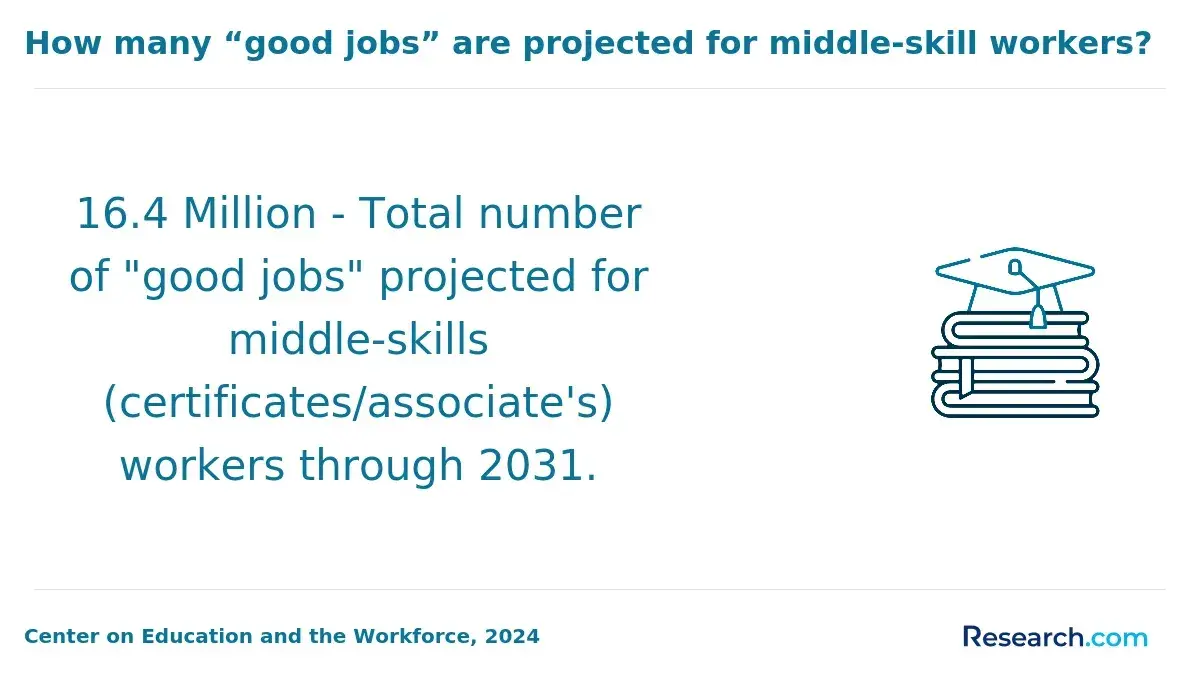
How competitive are the applications for high-paying Public Health jobs?
Applications for high-paying Public Health jobs are often competitive because the best-paid roles sit at the intersection of doctorate-level expertise, years of experience, leadership credibility, and specialized technical skills. The doctorate can help you qualify, but it rarely substitutes for a strong work record, publication history, grant experience, management background, or portfolio of measurable outcomes.
A useful way to understand competitiveness is to compare projected openings with role seniority. BLS expects about 61,400 openings per year for medical and health services managers from 2023 to 2033, but senior public health executive roles represent only a subset of that market. In practical terms, there may be many management openings, but fewer that specifically want a Public Health doctorate and pay at the top end.
High-paying public health applications are usually most competitive in these situations:
- Federal agencies, elite research universities, and major foundations where the applicant pool often includes PhD-trained researchers, physicians, economists, and experienced administrators.
- Pharmaceutical, biotechnology, and consulting roles where employers expect advanced quantitative skills plus business communication.
- Executive public health roles where candidates are judged on crisis leadership, budgets managed, teams led, policy influence, and public-facing credibility.
- Tenure-track faculty roles where publications, grants, teaching fit, and research agenda matter as much as the doctorate itself.
Common mistakes that reduce competitiveness include applying only to broad "public health specialist" roles, waiting until graduation to network, relying on coursework instead of a portfolio, and choosing a dissertation topic with little employer relevance. To avoid this, build evidence of impact while enrolled: publish, present, lead evaluations, manage grants, consult on applied projects, or create reproducible analytics work samples.
There is no single national salary figure for "Public Health doctorate holders" because federal wage datasets classify workers by occupation, not by DrPH or PhD credential. The best salary estimate comes from the roles these graduates enter. In BLS 2024 wage data, relevant median salaries range from $83,980 for epidemiologists to $169,120 for natural sciences managers, with many doctorate-aligned careers falling between those benchmarks.
The cost side matters just as much as the salary side. The latest NCES data released in 2024 shows average annual graduate tuition and required fees of about $12,596 at public institutions and $29,931 at private nonprofit institutions for 2022-23. Because many Public Health doctorates take several years, readers should model total tuition, fees, living expenses, employer tuition assistance, lost income, and the salary increase needed to justify the investment.
The table below gives a practical salary context using BLS occupational benchmarks rather than unsupported graduate-reported averages. Use it to compare the kinds of jobs a Public Health doctorate may support.
| Career category | Relevant BLS 2024 median wage | How to interpret the figure |
| Epidemiologist | $83,980 | A common public health research and surveillance benchmark; senior and specialized roles may pay more, especially outside local government. |
| Medical scientist | $100,590 | Useful for doctorate holders working in biomedical, prevention, clinical, or translational research. |
| Statistician | $103,300 | A relevant benchmark for biostatistics-heavy public health careers. |
| Data scientist | $112,590 | Relevant for informatics, population health analytics, AI, and large-scale health data roles. |
| Medical and health services manager | $117,960 | A strong benchmark for DrPH graduates pursuing leadership in health systems, agencies, or programs. |
| Natural sciences manager | $169,120 | A high-end benchmark for research leadership, laboratory strategy, and scientific program management. |
For ROI planning, compare your likely post-doctorate role with your current earnings, not with the highest salary in the field. For example, moving from an epidemiologist-type role at $83,980 to a medical and health services manager benchmark of $117,960 creates a pre-tax salary difference of $33,980, but that difference must be weighed against tuition, time, debt, and opportunity cost.
Some students can shorten or lower the cost of their pathway by building a focused foundation before doctoral study. For example, those interested in chronic disease prevention or nutrition policy may explore an accelerated nutrition degree online before deciding whether doctoral specialization is necessary.
The highest-paying jobs for Public Health doctorate holders are usually senior, specialized, or cross-sector roles. They are less likely to be titled simply "public health doctor" and more likely to involve leadership, analytics, research strategy, regulatory evidence, or health system transformation.
The table below ranks common high-paying pathways by salary strength and doctorate fit. The salary benchmarks use BLS 2024 occupational categories where direct job-title data may not exist.
| High-paying job | Closest salary benchmark | Best-fit doctorate preparation | Why it can pay well |
| Natural sciences manager or public health research director | $169,120 | PhD or research-intensive DrPH with grants, publications, and team leadership | Combines scientific credibility with budget, staff, and research portfolio responsibility |
| Chief public health officer or health department executive | $117,960 | DrPH, health policy, management, emergency preparedness, health equity leadership | Requires strategic decision-making, public accountability, program oversight, and crisis response |
| Health system population health executive | $117,960 | DrPH or PhD with analytics, quality improvement, value-based care, and operations experience | Employers pay for leaders who can improve outcomes while managing cost and risk |
| Health data science or informatics director | $112,590 | Informatics, epidemiology, biostatistics, machine learning, data governance | AI, predictive modeling, and population health dashboards are increasingly central to decision-making |
| Biostatistics director or senior statistician | $103,300 | Biostatistics, clinical trials, causal inference, statistical programming | Advanced methods skills are valuable in trials, research, regulatory analysis, and consulting |
| Medical scientist or translational research lead | $100,590 | PhD, epidemiology, prevention science, implementation science, clinical research methods | Research employers value doctoral training for study design, evidence generation, and grant-funded programs |
| Senior epidemiologist or surveillance director | $83,980 | Epidemiology, infectious disease, chronic disease, surveillance systems, outbreak analytics | Pay rises with specialization, leadership responsibility, and advanced analytical scope |
| Public health professor or academic center leader | Varies by institution and rank | PhD or DrPH with publications, teaching record, grants, and a defined research agenda | Compensation improves with rank, funded research, administrative appointments, and institutional type |
For many readers, the best target is not the highest benchmark on the table but the role that fits their existing experience. A midcareer health program manager may see better payoff from a DrPH in leadership than from a highly quantitative PhD, while a data-oriented MPH graduate may benefit more from biostatistics or informatics.
Your earning potential depends on whether the doctorate moves you into a higher-value job family. Public health salaries rise most when the degree helps you transition from individual contributor work into leadership, from general program work into analytics or research strategy, or from public-sector roles into consulting, pharmaceutical, health technology, or executive positions.
The following salary progression model shows how earnings often change as responsibility increases. It is not a guaranteed ladder; it is a practical framework for comparing where your current experience may place you.
| Career stage | Typical role type | Relevant salary signal | What usually drives movement upward |
| Early doctorate holder | Senior analyst, epidemiologist, research scientist, program evaluator | Often aligned with epidemiologist or medical scientist benchmarks | Technical depth, publications, evaluation portfolio, and specialized methods skills |
| Midcareer specialist | Biostatistician, informatics lead, surveillance manager, policy evaluation lead | Often aligned with statistician or data scientist benchmarks | Advanced analytics, stakeholder communication, applied project results, and team leadership |
| Senior leader | Director, principal investigator, population health executive, research center lead | Often aligned with health services manager or natural sciences manager benchmarks | Budget authority, grants, staff supervision, strategy ownership, and measurable outcomes |
| Executive or elite technical expert | Chief officer, national consultant, HEOR leader, scientific executive | Compensation varies widely by employer, sector, and scope | Organizational impact, reputation, business value, policy influence, or regulatory expertise |
To estimate your own earning potential, use a disciplined salary-research process before enrolling:
- Search current job postings for your target title and record the listed salary range, degree requirement, preferred skills, and years of experience.
- Compare salaries across public agencies, hospitals, universities, consulting firms, insurers, and pharmaceutical employers.
- Separate "doctorate preferred" roles from "doctorate required" roles so you do not overpay for a credential you may not need.
- Ask alumni in your intended specialization how long it took them to move into higher-paying positions after graduation.
- Estimate the salary gap between your current path and your realistic post-doctorate path, then compare it with total cost and lost earnings.
The doctorate tends to make the most financial sense when it unlocks a role you could not credibly reach otherwise. It makes less sense if you already qualify for your desired advancement through experience, a certificate, an MPH concentration, or employer-sponsored leadership training.
Public Health doctorate holders can work across government, academia, healthcare, life sciences, consulting, insurance, technology, and nonprofit organizations. The best-paying industries are usually those that tie public health expertise to revenue, risk, regulation, clinical outcomes, large datasets, or expensive strategic decisions.
The table below compares industries by compensation potential and career fit. Because pay varies by job title and employer, use these categories to target research rather than to assume a fixed salary.
| Industry or sector | Compensation potential | Common doctorate-level roles | Best fit for |
| Pharmaceuticals and biotechnology | Very high | HEOR director, clinical research scientist, epidemiology lead, biostatistics leader | Doctorate holders with quantitative, regulatory, clinical trials, or outcomes research skills |
| Scientific research and development | High | Principal investigator, research director, implementation science lead | PhD or research-oriented DrPH graduates with publications and grant experience |
| Hospitals and health systems | High | Population health executive, quality director, health equity officer, analytics leader | DrPH graduates with management, operations, and outcomes improvement experience |
| Management consulting | High but variable | Public health strategy consultant, health policy advisor, analytics consultant | Candidates who can translate evidence into business and policy recommendations |
| Health insurance and managed care | High | Population health analytics director, risk adjustment strategist, quality measurement leader | Doctorate holders with informatics, economics, outcomes, or quality measurement skills |
| Federal government | Stable and competitive | Senior epidemiologist, policy scientist, health program director, research administrator | Applicants seeking mission-driven work, benefits, and national-scale impact |
| Universities and academic medical centers | Moderate to high | Professor, research center director, grant-funded investigator | Doctorate holders pursuing research, teaching, and academic leadership |
| State and local public health agencies | Moderate but stable | Health officer, surveillance director, preparedness director, program administrator | Leaders focused on community impact, policy implementation, and public service |
Private-sector employers may pay more for specialized analytics, health economics, or regulatory evidence, but public agencies and universities can offer stability, benefits, loan forgiveness eligibility, mission alignment, and leadership visibility. The best choice depends on whether your priority is maximum salary, long-term security, research independence, or community impact.
The most valuable skills are the ones that turn public health expertise into decisions employers can act on. High-paying roles increasingly reward candidates who can combine advanced methods, leadership, communication, and technology fluency.
AI is changing the skill mix, but it is not replacing public health judgment. Employers need doctorate holders who can evaluate model bias, validate surveillance outputs, protect privacy, interpret causal evidence, and explain uncertainty to leaders who must make policy, clinical, or financial decisions.
The skills below are especially valuable because they connect directly to higher-paying job functions:
- Advanced quantitative methods, including biostatistics, causal inference, longitudinal analysis, Bayesian methods, and study design.
- Programming and data tools such as R, Python, SAS, SQL, data visualization platforms, and reproducible research workflows.
- Health informatics, including electronic health record data, interoperability, data governance, privacy, and population health dashboards.
- Leadership and management, including budgeting, staff supervision, strategic planning, change management, and cross-sector collaboration.
- Grant writing and research funding, especially for academic, nonprofit, government, and research institute roles.
- Policy analysis and economic evaluation, including cost-effectiveness, regulatory impact, health equity measurement, and program evaluation.
- Communication for executives, policymakers, clinicians, and communities, including concise briefings and risk communication.
Students targeting analytics or informatics roles should build a portfolio that proves they can work with real health data and communicate results clearly. If your interests lean toward data infrastructure and records management, a health information management degree online can also help you understand the systems side of healthcare data before or alongside public health training.
A common mistake is assuming doctoral coursework alone will demonstrate these skills. Employers hiring for high-paying roles usually want evidence: publications, dashboards, code repositories, policy briefs, funded projects, evaluation reports, leadership results, or consulting deliverables.
Career stability is different from maximum salary. Public Health doctorate holders often find the greatest stability in sectors where population health needs persist regardless of economic cycles: government, healthcare systems, universities, public research institutes, and large mission-driven nonprofits.
BLS projects 19% growth for epidemiologists from 2023 to 2033, which reflects sustained demand for disease surveillance, data analysis, preparedness, and prevention work. For readers who value stability, this suggests that technical public health expertise remains relevant even when specific grant cycles or agency budgets shift.
The most stable sectors usually offer different trade-offs:
- Federal agencies may provide strong benefits, national impact, and structured advancement, but hiring can be slow and highly procedural.
- State and local health departments offer direct community impact and leadership pathways, but salaries may lag behind private-sector analytics or consulting roles.
- Hospitals and health systems provide steady demand for quality, equity, and population health expertise, but priorities can change with reimbursement pressures.
- Universities and academic medical centers can offer research continuity and intellectual independence, but tenure-track and grant-funded roles are competitive.
- Large nonprofits and foundations may offer mission alignment and policy influence, but funding priorities can shift over time.
If your goal is stable advancement, choose a doctoral program that lets you keep working, build employer-relevant projects, and maintain professional networks. An online or hybrid Public Health doctorate can be worthwhile for working professionals when it is accredited, transparent about outcomes, and flexible enough to preserve income while you study.
What do employers of high-paying jobs look for when hiring Public Health doctorate holders?
Employers hiring for high-paying Public Health roles look for proof that the doctorate has produced advanced judgment, not just advanced coursework. The most competitive candidates show they can lead people, analyze complex evidence, manage uncertainty, and deliver measurable outcomes.
The table below summarizes what employers often evaluate when comparing doctorate-level candidates. Use it as a checklist when building your resume, portfolio, dissertation topic, and practicum or research experiences.
| Employer expectation | What strong candidates show | Red flag to avoid |
| Clear specialization | A focused identity such as biostatistician, health policy leader, HEOR researcher, informatics strategist, or preparedness executive | Presenting yourself as a general public health expert without a marketable niche |
| Applied outcomes | Evidence of improved programs, published findings, dashboards, policy changes, grants, or evaluated interventions | Listing courses without showing what you can do with the training |
| Leadership ability | Experience managing budgets, teams, partnerships, crises, or multi-site projects | Assuming the doctorate alone proves readiness for executive responsibility |
| Technical credibility | Methods, software, data governance, study design, or evaluation skills relevant to the role | Using broad terms like "data analysis" without specific tools or examples |
| Communication skill | Ability to brief executives, publish research, speak to communities, and translate uncertainty | Writing only for academic audiences when the job requires operational decisions |
| Professional network | References, collaborators, alumni contacts, association involvement, and field visibility | Beginning networking only after graduation |
To position the doctorate for a raise or promotion, connect it to employer priorities. Show how your dissertation, capstone, or research solves a problem your organization already cares about, such as readmissions, chronic disease burden, emergency preparedness, health equity metrics, workforce safety, or cost-effective intervention design.
When comparing Public Health doctorate programs, do not rely only on reputation. Ask each program for alumni job titles, employer sectors, completion timelines, funding options, practicum quality, dissertation support, career services, and whether graduates move into the roles you want. The right program is the one that builds the exact evidence employers will reward.
Other Things You Should Know About Public Health
A DrPH is often better for applied leadership, executive, program, and policy roles. A PhD is usually better for research-intensive, academic, biostatistics, and scientific leadership roles. The better choice depends on whether your target job rewards management impact or original research depth.
Yes, if the program is accredited, respected by employers, and allows you to build strong applied evidence while continuing to work. Online format alone is less important than curriculum quality, faculty support, practicum access, dissertation relevance, and graduate outcomes.
Certifications are not always required, but they can strengthen credibility in specialized roles. Depending on your path, useful options may include CPH, PMP, SAS or data analytics credentials, clinical research certifications, or informatics-related credentials. Requirements vary by employer and role.
Start by comparing target salaries, total program cost, funding, employer tuition support, and whether you can keep working while enrolled. Choose a specialization tied to real job postings, avoid unnecessary debt, and prioritize programs with transparent completion rates and alumni career outcomes.
- Highest Paid Public Health Careers https://www.publichealthdegrees.org/careers/highest-paid-public-health-jobs/
- How your organization determines Geographic Pay Differentials | Mercer https://www.imercer.com/articleinsights/determining-geographic-differentials
- Highest Paying Jobs in Public Health and their Salaries - MPH Online https://www.mphonline.org/highest-paying-jobs-public-health/
- Health Promotion Careers 2025: Degrees, Jobs & Salary Guide - nutritioned.org https://www.nutritioned.org/what-is-health-promotion/
- 3 approaches to location-based pay (and the pros and cons of each) https://ravio.com/blog/3-approaches-to-location-based-pay
- Careers in healthcare and public health - MSc/PhD Advice 19405 https://www.postgraduatestudentships.co.uk/advice/careers-in-healthcare-and-public-health/19405
- Health Sciences Degree Careers and Salary in Europe - StudyinEurope.eu https://www.studyineurope.eu/ko/health-sciences/health-sciences-degree-careers-salary-europe/


