2027 Highest-Paying Jobs with an Educational Technology Doctorate: Salaries, Career Paths, and Growth Outlook

Co-Founder and Chief Data Scientist
If you are considering an Educational Technology doctorate, the central question is whether it can move you into higher-paying work, not just add another credential. BLS data published in 2024 shows doctoral degree holders had median weekly earnings of $2,109, higher than master's degree holders at $1,737. This guide is for educators, instructional designers, administrators, and learning leaders comparing career outcomes. You will learn which jobs pay most, which specializations have the strongest market value, and how to judge whether the doctorate fits your salary, leadership, and industry goals.
Key Things to Know About High-Paying Jobs in Educational Technology
- The highest-paying paths for Educational Technology doctorate holders usually sit at the intersection of learning strategy, technology leadership, analytics, product design, and organizational change, rather than in entry-level instructional design roles.
- BLS May 2024 wage data places related high-paying roles such as computer and information systems managers, marketing managers, training and development managers, and postsecondary administrators in median salary bands that commonly exceed many traditional education roles.
- The doctorate is most likely to pay off when it helps you qualify for senior leadership, research-intensive, enterprise learning, AI-enabled learning design, or higher education administration roles; it is less likely to create a salary jump by itself without relevant experience.
Is there high demand for Educational Technology doctorate graduates?
Yes, but demand is uneven. Educational Technology doctorate graduates are not usually hired because of the degree title alone; they are hired when the doctorate signals advanced ability in learning systems, evidence-based design, digital transformation, faculty development, workforce training, assessment, or education analytics.
The strongest demand comes from employers trying to improve learning outcomes at scale. That includes universities modernizing online programs, school systems adopting digital platforms, corporations expanding learning and development, healthcare systems training employees on complex compliance requirements, and EdTech companies building products for schools, colleges, and workforce learning.
BLS projections published in 2024 show why the market is mixed but promising for strategically positioned candidates: computer and information systems managers are projected to grow much faster than average from 2023 to 2033, while training and development managers are projected to grow faster than average. In contrast, instructional coordinator growth is more modest. For readers, this means the best-paying opportunities are more likely to come from leadership, technology strategy, and analytics roles than from traditional curriculum support roles alone.
Current trends also favor doctorate holders who can connect learning theory with practical implementation. AI tools, learning analytics dashboards, adaptive platforms, competency-based education, and remote workforce training have increased demand for professionals who can evaluate whether technology actually improves learning. Employers are less impressed by tool familiarity alone and more interested in candidates who can lead adoption, measure impact, protect learners' data, and align learning systems with institutional or business goals.
Before investing in the doctorate, evaluate whether your target market values the credential. A good decision process is to compare job postings, alumni outcomes, and your current experience against the roles you want next.
- Search 20 to 30 job postings for your target title and note whether a doctorate is required, preferred, or rarely mentioned.
- Separate roles that pay for leadership authority from roles that mainly pay for production skills, such as course building or LMS administration.
- Look for repeated premium skills, especially AI strategy, learning analytics, program evaluation, accessibility, change management, and enterprise learning systems.
- Review alumni profiles from programs you are considering to see whether graduates moved into the job level you want.
- Estimate whether the likely salary increase justifies tuition, time, and opportunity cost.
Which Educational Technology doctorate specializations lead to high-paying roles?
The highest-paying specializations tend to be those that prepare graduates to lead complex learning systems, not just design individual lessons. In hiring markets, "Educational Technology" can mean several different things, so specialization matters.
The table below compares common doctorate-level specialization areas with the types of high-paying roles they most often support. Use it to match your academic focus to the job market you actually want to enter.
| Specialization | Best-fit high-paying roles | Why employers value it |
| Learning analytics and assessment | Director of learning analytics, institutional research leader, education data strategist | Connects learning outcomes to data-driven decisions, budget priorities, and program improvement. |
| Instructional systems design | Senior instructional design director, learning experience director, curriculum innovation leader | Supports large-scale course, workforce, or digital learning redesign efforts. |
| AI and adaptive learning | AI learning strategist, EdTech product leader, digital transformation director | Helps organizations evaluate and implement emerging tools responsibly and effectively. |
| Higher education leadership and online learning | Online learning dean, director of digital education, postsecondary administrator | Prepares graduates to oversee online programs, faculty support, policy, quality assurance, and student success systems. |
| Corporate learning and performance technology | Chief learning officer, training and development executive, workforce learning strategist | Links learning programs to employee performance, compliance, retention, and business outcomes. |
| Accessibility and inclusive learning technology | Digital accessibility director, universal design leader, compliance-focused learning consultant | Addresses legal, ethical, and usability needs in digital learning environments. |
A niche specialization is more likely to lead to high-paying roles when it solves an expensive problem for employers. For example, learning analytics can justify program investments, AI strategy can reduce poor technology adoption, and accessibility expertise can lower compliance risk.
A broader specialization can still make sense if you are already in leadership and need the doctorate to strengthen credibility for senior roles. However, if you are changing careers or trying to move from practitioner to executive-level work, a sharper specialization usually gives employers a clearer reason to pay more.
If a doctorate feels premature, a master's-level option may be a lower-cost way to test the field first. For example, comparing best online instructional design master's programs can help you decide whether you need doctoral-level preparation or whether an advanced practitioner credential is enough for your target role.
How competitive are the applications for high-paying Educational Technology jobs?
Applications for high-paying Educational Technology jobs can be highly competitive because many roles attract candidates from several backgrounds: K-12 leadership, higher education administration, instructional design, corporate learning, UX research, data analytics, and product management. A doctorate can help you stand out, but it does not replace a strong record of measurable impact.
The most competitive roles usually have three characteristics. They involve budget authority, cross-functional leadership, and evidence that learning technology improved outcomes at scale. Employers may interview doctoral candidates closely to see whether their research translates into practical results.
BLS occupational data published in 2024 also shows that some adjacent high-paying fields are broader and faster growing than traditional education support roles. For example, management analyst and computer and information systems manager roles are projected to grow faster than average from 2023 to 2033. This matters because Educational Technology doctorate holders who can speak the language of strategy, data, systems, and organizational performance may compete beyond education-sector job titles.
Common mistakes can make candidates less competitive even when they have a strong academic background. The list below highlights issues that often limit earning potential and how to avoid them.
- Relying on the doctorate alone: Pair the credential with a portfolio showing program launches, evaluation reports, dashboards, grants, product work, or measurable learner outcomes.
- Targeting vague EdTech roles: Focus on job titles with budget ownership, analytics responsibility, enterprise systems oversight, or product strategy.
- Ignoring employer language: Translate dissertation topics into business, institutional, or student-success outcomes that hiring committees can understand quickly.
- Underestimating industry candidates: Build fluency in product roadmaps, ROI, data governance, accessibility standards, and change management.
- Waiting to network until graduation: Connect with alumni, conference communities, vendor partners, and professional associations before you enter the senior job market.
There is no single national salary category for "Educational Technology doctorate holder," so the most reliable way to estimate earnings is to examine related occupations and seniority levels. BLS data is useful for the baseline, while job postings and alumni outcomes help refine the estimate for your region and target sector.
For general education-level context, BLS data published in 2024 reported median weekly earnings of $2,109 for doctoral degree holders across the labor market. Annualized, that is about $109,668 before considering bonuses, consulting income, or sector-specific pay. This does not mean every Educational Technology doctorate holder earns that amount, but it provides a useful benchmark when comparing the doctorate to master's-level earnings.
The salary range depends heavily on whether you remain in classroom-adjacent work, move into administration, join corporate learning, or pivot toward technology leadership. The table below uses 2024 BLS wage data for closely related occupations to show realistic salary reference points.
| Career level or role family | Relevant BLS occupation benchmark | May 2024 median annual wage | What it means for doctorate holders |
| Instructional and curriculum leadership | Instructional coordinators | $74,720 | Useful baseline for school or district curriculum roles, but not usually the highest-paying doctoral path. |
| Higher education administration | Postsecondary education administrators | $103,960 | Relevant for online learning directors, academic technology leaders, and student-success administrators. |
| Organizational learning leadership | Training and development managers | $127,090 | Strong benchmark for corporate learning, workforce education, and enterprise training leadership. |
| Technology systems leadership | Computer and information systems managers | $171,200 | Best fit when the doctorate is paired with systems strategy, data, platform governance, or digital transformation experience. |
Cost is the other half of the salary decision. NCES data published in its 2024 Digest shows average graduate tuition and required fees are substantially lower at public institutions than at private nonprofit institutions, but total cost of attendance also includes books, technology fees, residencies, travel, living costs, and lost work time. Because Educational Technology doctorates vary widely in length and format, compare full program cost rather than per-credit tuition alone.
If cost control is central to ROI, researching cheapest online EdD programs can help you identify lower-priced options, but affordability should be weighed against accreditation, faculty fit, dissertation or capstone support, and graduate career outcomes.
The highest-paying jobs for Educational Technology doctorate holders are usually senior roles where learning expertise influences institutional strategy, workforce performance, technology adoption, or product direction. Some are education-sector roles, while others sit in corporate, healthcare, government, nonprofit, or EdTech company settings.
The table below summarizes high-paying job targets and the salary benchmark most relevant to each role. Because job titles vary across employers, the BLS occupation listed is the closest standardized comparison rather than a perfect one-to-one match.
| High-paying job title | Closest BLS benchmark | May 2024 median annual wage | Best candidate profile |
| Chief Learning Officer | Training and development managers | $127,090 | Experienced learning leader who can connect workforce education to performance, retention, compliance, and business goals. |
| Director of Learning Analytics | Data scientists | $112,590 | Doctoral graduate with research design, statistics, dashboards, assessment, and institutional or workforce data experience. |
| Director of Online Learning or Digital Education | Postsecondary education administrators | $103,960 | Higher education professional with experience in online program quality, faculty support, instructional design, and student success. |
| Educational Technology Product Director | Marketing managers or computer and information systems managers | $161,030 to $171,200 | Candidate who combines learning science, user research, product strategy, market awareness, and platform implementation knowledge. |
| Learning Experience Design Director | Training and development managers | $127,090 | Senior designer or manager who can lead teams, set quality standards, and evaluate learning impact across programs. |
| Digital Transformation Director for Education | Computer and information systems managers | $171,200 | Leader with technology governance, change management, learning systems, data privacy, and stakeholder management experience. |
| Senior Education Consultant | Management analysts | $101,190 | Doctoral expert who advises schools, universities, agencies, vendors, or employers on learning strategy and implementation. |
| Professor or Program Chair in Educational Technology | Postsecondary teachers and postsecondary administrators | Varies by rank and institution | Research-oriented doctorate holder with publications, teaching experience, grants, curriculum leadership, or administrative experience. |
The best role for you depends on whether you want authority over people, products, research, systems, or strategy. A doctorate can support all of these paths, but each requires a different career narrative.
- Choose chief learning officer or training executive roles if you already have leadership experience and want to influence workforce performance at scale.
- Choose learning analytics roles if you enjoy research design, data interpretation, assessment, and evidence-based decision-making.
- Choose online learning administration if you want to work in colleges, universities, or systems-level academic operations.
- Choose EdTech product leadership if you are comfortable with market strategy, user needs, product roadmaps, and cross-functional teams.
- Choose consulting if you want flexible work and can package your expertise into clear, outcome-focused services.
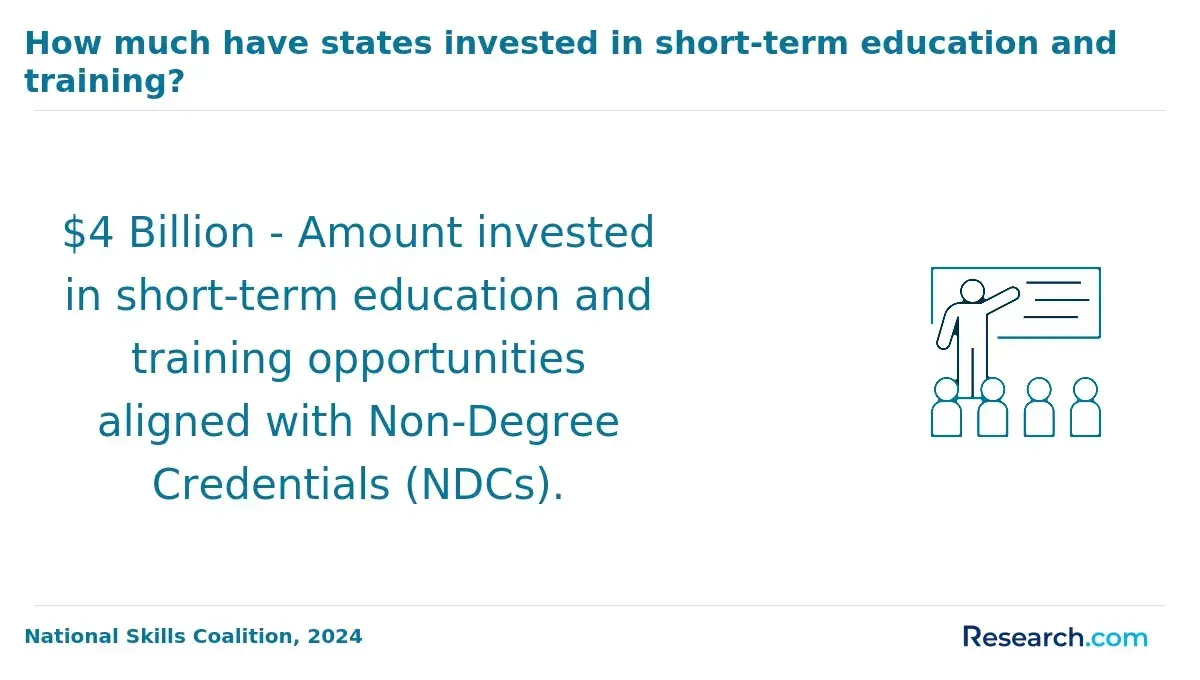
Earnings can rise substantially when Educational Technology doctorate holders move from individual contributor roles into director, executive, product, or systems leadership positions. The doctorate is most financially useful when it accelerates promotion, supports a pivot into a higher-paying sector, or gives credibility for consulting and senior strategy work.
The table below presents a practical salary progression model using related 2024 labor-market benchmarks. It is not a guaranteed pathway; it shows how compensation can change as responsibility increases.
| Career stage | Common roles | Salary reference point | Key factor that raises pay |
| Advanced practitioner | Senior instructional designer, curriculum specialist, academic technology specialist | Often aligned with instructional coordinator and training specialist benchmarks | Strong design portfolio, LMS expertise, accessibility knowledge, and measurable project outcomes. |
| Manager or program lead | Instructional design manager, online learning manager, faculty development lead | Often moves toward postsecondary administration or training management benchmarks | Supervising teams, managing budgets, improving program quality, and reporting results. |
| Director or senior strategist | Director of digital learning, director of learning analytics, learning experience director | Often aligns with $100,000-plus benchmark occupations | Enterprise-level planning, analytics, change management, and cross-functional leadership. |
| Executive or product leader | Chief learning officer, EdTech product director, digital transformation director | Often aligns with training, marketing, or technology management benchmarks | Ownership of strategy, revenue influence, enterprise systems, and organizational outcomes. |
To estimate your personal ROI, compare the total program cost with the realistic salary difference between your current role and your target role. For example, a move from a mid-level instructional design position into a training and development management role may create a different payoff timeline than a move from assistant professor to full professor, because academic promotion cycles and salary structures are slower and more institution-specific.
Program length also matters. Some working professionals compare traditional doctoral timelines with 1 year EdD programs online, but speed should not be the only factor. A faster option is only useful if it is accredited, manageable with your work schedule, aligned with your specialization, and respected by the employers you plan to target.
Use the following process before committing to a doctorate primarily for salary growth. It will help you avoid overestimating the degree's financial effect.
- Identify the exact job titles you want within three to five years.
- Record the salary ranges shown in current job postings for your region or remote market.
- Check whether those postings require a doctorate, prefer one, or prioritize experience over credentials.
- Calculate total program cost, including tuition, fees, travel, books, technology, and reduced work hours if applicable.
- Estimate the salary increase needed to recoup the cost within a timeline that feels acceptable to you.
- Ask program alumni whether the doctorate directly supported promotion, salary negotiation, consulting work, or a sector change.
The best-paying industries for Educational Technology doctorate holders are typically those where learning has a direct financial, compliance, product, or strategic impact. Traditional school roles can be meaningful and stable, but the highest compensation often appears in sectors that manage large budgets, complex technology, regulated training, or scalable digital products.
The table below compares sectors by pay potential and hiring logic. Use it to decide where your doctorate may have the strongest market value.
| Industry or sector | Pay potential | Why the sector pays for doctoral-level EdTech expertise | Best-fit roles |
| Corporate learning and development | High | Learning programs affect productivity, compliance, leadership development, onboarding, and workforce retention. | Chief learning officer, training director, learning experience director. |
| Technology and EdTech companies | High | Products need learning science, user research, analytics, implementation strategy, and credibility with education buyers. | Product director, learning scientist, research lead, customer education executive. |
| Healthcare and life sciences | High | Organizations need rigorous training for compliance, patient safety, clinical systems, and continuing education. | Director of clinical education technology, learning analytics lead, compliance training strategist. |
| Higher education | Moderate to high | Institutions need leaders for online programs, digital learning quality, student success systems, and faculty development. | Director of online learning, dean of digital education, program chair, faculty development director. |
| Government and defense contracting | Moderate to high | Large-scale training, simulations, workforce systems, and performance support often require advanced instructional systems expertise. | Instructional systems lead, training program director, learning technology consultant. |
| K-12 school districts and state education agencies | Moderate | Digital curriculum, assessment, data systems, and professional learning are important, but salary bands may be constrained by public budgets. | Director of instructional technology, curriculum director, state digital learning specialist. |
Readers who want the strongest salary potential should look beyond job titles and examine the economic value of the work. A role that influences enterprise adoption, customer retention, compliance risk, or product revenue will often pay more than a role focused only on course production.
However, pay is not the only factor. Public education and higher education may offer better mission alignment, pensions, tuition benefits, or predictable advancement structures. Corporate and technology-sector roles may offer higher upside but can be more exposed to reorganizations, product cycles, and market slowdowns.
The most valuable skills for high-paying Educational Technology doctorate jobs combine research depth with practical leadership. Employers want candidates who can diagnose learning problems, choose appropriate technologies, lead implementation, and prove whether the solution worked.
The table below maps high-value skills to the job functions where they most often increase earning power. This can help you choose electives, dissertation topics, capstone projects, and professional development activities.
| Skill area | Why it commands a premium | Roles where it matters most |
| Learning analytics | Turns learner data into decisions about program quality, retention, training effectiveness, and resource allocation. | Learning analytics director, institutional research leader, workforce data strategist. |
| AI-enabled learning strategy | Helps organizations evaluate tools, reduce ineffective adoption, address ethics, and redesign workflows. | AI learning strategist, digital transformation director, EdTech product leader. |
| Program evaluation | Shows whether learning investments produced measurable outcomes, which is essential for senior leadership and consulting. | Education consultant, training executive, grant-funded project lead. |
| Change management | Technology adoption often fails because of people and process issues, not because of the tool itself. | Director of digital learning, chief learning officer, implementation leader. |
| Accessibility and universal design | Supports compliance, usability, equity, and quality across digital learning environments. | Accessibility director, online learning administrator, learning experience director. |
| Product and user research | Connects learning science with learner needs, market fit, and product decisions. | EdTech product director, learning scientist, UX research lead. |
To build a portfolio employers will pay attention to, focus on proof of impact rather than listing tools. A strong doctoral portfolio might include evaluation briefs, research summaries for nonacademic audiences, sample dashboards, accessibility audits, implementation plans, faculty development materials, or case studies showing improved learner outcomes.
The most practical way to build premium skills is to connect coursework with work-based projects. If your current role does not offer those opportunities, consider internships, consulting projects, grant-funded work, conference presentations, or collaborations with faculty and alumni.
The most stable sectors for Educational Technology doctorate holders are not always the highest-paying sectors. Stability depends on funding sources, regulatory requirements, institutional need, and whether learning technology is essential to the organization's operations.
Higher education, healthcare, government, and large public school systems often offer more predictable career structures than early-stage EdTech startups. However, they may also have slower promotion timelines and salary bands that limit negotiation. Corporate learning roles can be stable in large regulated industries, but training budgets may tighten during downturns.
The table below compares sectors by stability, not just pay. This distinction matters if you are deciding whether a doctorate should support long-term security, maximum compensation, or a sector change.
| Sector | Career stability | Trade-off | Best fit for |
| Higher education | Moderate to high | Stable need for online learning and faculty support, but budgets and promotion processes vary widely. | Professionals who value academic mission, governance, and long-term institutional roles. |
| Healthcare education | High | Compliance and clinical training needs are steady, but domain knowledge may be required. | Learning leaders interested in patient safety, workforce training, and regulated environments. |
| Government and defense | Moderate to high | Training systems can be well funded, but hiring may depend on contracts, clearance, or procurement cycles. | Instructional systems experts comfortable with structured environments. |
| K-12 public education | Moderate | Mission stability is strong, but salary bands may be lower and tied to district budgets. | Educators seeking leadership in instructional technology, curriculum, and student support. |
| Large corporations | Moderate | Higher pay potential, but learning departments may be reorganized during cost-cutting cycles. | Professionals focused on workforce performance and leadership development. |
| EdTech startups | Variable | High upside and innovation exposure, but more risk from funding cycles and product-market fit. | Candidates comfortable with ambiguity, product work, and rapid change. |
If your interests overlap with student support, assessment, and educational technology in school settings, it may also be useful to compare adjacent credential paths such as school psychology programs online accredited by NASP. That path serves different professional goals, but it can help you distinguish technology leadership from student services, assessment, and school-based licensure work.
What do employers of high-paying jobs look for when hiring Educational Technology doctorate holders?
Employers hiring for high-paying Educational Technology roles look for evidence that a candidate can move from theory to execution. The doctorate may open the conversation, but hiring decisions usually depend on leadership record, technical fluency, measurable outcomes, and fit with the organization's learning challenges.
For senior roles, employers often evaluate four dimensions at once: academic credibility, operational experience, people leadership, and strategic judgment. A strong candidate can discuss research methods in one conversation and budget, adoption barriers, stakeholder resistance, vendor selection, or product metrics in the next.
The following checklist can help you prepare for applications, interviews, and salary negotiation. It focuses on the evidence employers usually need before paying a premium.
- Show measurable outcomes, such as improved completion rates, reduced training time, better learner satisfaction, stronger assessment results, or successful platform adoption.
- Translate doctoral research into employer language by explaining the problem, intervention, evidence, and organizational value.
- Demonstrate leadership beyond individual course design, including team supervision, vendor coordination, faculty development, or cross-department implementation.
- Bring examples of data use, such as dashboards, evaluation plans, research briefs, survey analysis, or learning analytics reports.
- Address AI thoughtfully by discussing governance, bias, privacy, academic integrity, accessibility, and evaluation rather than simply naming tools.
- Prepare a salary case based on role scope, market benchmarks, budget responsibility, and the cost of problems you can solve.
Red flags include a program with weak career support, a dissertation topic disconnected from your target market, no portfolio, no leadership experience, or an assumption that "doctorate required" roles are automatically higher paying. The safest approach is to build your doctorate around the role you want, not around the broadest version of the field.
When comparing programs, ask direct career-outcome questions: Where do graduates work? What roles did they move into after graduation? Do students complete applied research with employers? Are alumni working in corporate learning, higher education leadership, product roles, or consulting? Does the program support working adults who need to convert doctoral work into promotions or marketable projects?
Other Things You Should Know About Educational Technology
Yes. Many instructional design, learning experience, product, and training leadership roles do not require a doctorate. The doctorate is most useful when your target role values research leadership, senior administration, faculty status, advanced analytics, or executive credibility.
It can be, especially if the institution is accredited and the program has strong faculty, applied projects, and relevant alumni outcomes. Employers usually care less about online delivery itself and more about program quality, your experience, and the evidence you can show.
An EdD often fits applied leadership, school or college administration, and organizational change roles. A PhD may be better for research-intensive university faculty roles, learning science research, or advanced policy work. The better choice depends on whether you want to lead practice, conduct research, or do both.
Yes, some do consulting in online learning strategy, accessibility, learning analytics, faculty development, instructional systems, or EdTech implementation. Consulting income depends on reputation, network, niche expertise, client demand, and the ability to package services clearly.
- What Can You Do with a PhD in Education https://aituedu.org/what-can-you-do-with-a-phd-in-education/
- 13 Highest-Paying Doctoral Degrees in 2026 https://www.edumindslearning.com/blog/highest-paying-doctoral-degrees
- EdD Salary - How much can you make with a Doctor of Education (EdD) degree? (2025 Update) https://www.onlineeddprograms.com/faqs/edd-salary
- 10 Highest-Paying Ph.D. Degrees https://www.gradschoolhub.com/lists/best-doctoral-degrees-by-salary/
- 120+ EdTech Statistics | 2026 Report | Careertrainer.ai https://careertrainer.ai/en/reports/edtech-statistics/
- PhD Student Salary Guide (2026) https://www.applykite.com/blog/phd-student-salary
- Edtech Market Share, Size, Trends, Forecast, 2034 https://www.fortunebusinessinsights.com/edtech-market-111377
- Education in 2030 https://www.holoniq.com/2030
- Best Career Options After PhD in 2026: High Salary Jobs https://thecasehq.com/best-career-options-after-phd-in-2026-high-salary-jobs/
- Doctor of Education EdD Salary and Career Outlook https://teach.com/online-ed/education-degrees/online-edd-programs/edd-careers/