2027 Explainable AI in an Online Data Science Master's: Courses, Projects, and Program Selection

Co-Founder and Chief Data Scientist
An online data science master's can teach explainable AI, but a course description that mentions "interpretability" does not tell you how deeply you will study it. If you want to build models whose predictions people can investigate and challenge, you need to examine the coursework and projects behind that claim. This guide shows you what substantive training looks like, how to compare online programs, and which questions to ask before you enroll.
Key Things You Should Know
- Look for a progression from machine learning and statistics to explanation methods, evaluation, and a substantial project, not just an ethics lecture or a mention of SHAP.
- Choose a program whose project options let you test explanations against model behavior, data limitations, and the needs of a specific decision-maker.
- Career demand is promising but not a degree-level outcome: the U.S. Bureau of Labor Statistics projects 35% growth in data scientist employment from 2025 to 2035.
What Is Explainable AI in an Online Data Science Master's?
Explainable AI, often called XAI, concerns how people understand and assess a model's behavior. In a graduate data science program, that can mean interpreting a model's overall patterns, examining why it made an individual prediction, or designing a model that is easier to inspect from the outset.
The point is not merely to produce a convincing chart. It is to determine what the explanation supports, what it leaves uncertain, and whether it helps someone make a better decision.
Students should learn the distinction between interpretable models, such as a suitably constrained decision tree, and post-hoc explanations applied after a more complex model is trained. Neither is automatically preferable.
The choice depends on predictive performance, the consequences of error, and what a user needs to know. A feature's apparent influence on a prediction also does not establish that changing the feature would cause a different real-world outcome.
Strong XAI training builds on probability, statistics, model evaluation, and programming. Without those foundations, it is difficult to recognize unstable explanations, correlated features, data leakage, or a model that performs poorly for a subgroup despite an appealing overall explanation.
What Courses Cover Explainable AI in Data Science Master's Programs?
Explainable AI may appear across several courses rather than in one bearing its name. The table distinguishes common places to look from the evidence that would show meaningful depth; these are evaluation criteria, not a claim about every program's curriculum:
| Course area | Relevant XAI work | Evidence of depth to seek |
| Statistics and machine learning | Model assumptions, feature effects, validation, and error analysis | Assignments comparing interpretable and complex models |
| Advanced machine learning or dedicated XAI elective | Permutation importance, SHAP, local explanations, and counterfactuals | Critical testing of explanation stability and limitations |
| Responsible AI or data ethics | Fairness, transparency, documentation, and stakeholder communication | Assessments linking explanations to observed model behavior and harms |
| Applied practicum or capstone | Explanations incorporated into a real decision workflow | A deliverable evaluated for both technical quality and usability |
A passing mention in a syllabus offers less preparation than an assessed unit; a dedicated elective can offer more method depth, but only if it runs when you can take it. Ask for recent syllabi, assignment descriptions, and the elective rotation. A course title alone cannot establish what students actually implement or critique.
What Projects Build Explainable AI Skills in Graduate Data Science Programs?
A strong XAI project begins with a decision, not a visualization tool. For example, a student might model service-demand patterns, compare a simpler model with a more complex one, and explain predictions to staff who must allocate limited resources.
The project should test whether the explanations remain useful when the data or model changes - not present one feature-importance plot as the final result.
Before choosing a capstone topic, look for a program that gives students room to complete the following work:
- Define the decision-maker, the model's intended use, and the consequences of a wrong prediction.
- Document data provenance, missingness, privacy constraints, and possible leakage.
- Evaluate predictive performance and relevant subgroup errors before interpreting predictions.
- Compare appropriate explanation methods and test their sensitivity to correlated features, sampling, or model changes.
- Deliver reproducible code and a plain-language account of what the explanations do and do not justify.
A program with a mandatory capstone is not necessarily the better choice if project topics are tightly restricted. Conversely, a program without a named XAI course may still offer substantial experience through supervised research or an applied project.
Ask whether online students can propose a topic, access appropriate data and computing resources, and receive feedback from faculty familiar with interpretability.
How Do Online and Campus-Based Data Science Master's Programs Compare?
Delivery mode alone says little about XAI rigor: online and campus students can study the same methods, while either format can offer limited project feedback. Compare access to live discussions, office hours, computing resources, project supervision, and peers who can critique an explanation intended for a real audience.
An online program may suit a working professional who needs to keep a job and can manage independent technical work. Campus study may be preferable if you rely on frequent in-person collaboration or access to a local lab.
For either option, verify required live meetings, time-zone fit, group-work expectations, and any campus visits rather than assuming "online" means fully asynchronous.
If your main goal is building AI systems broadly rather than evaluating data science models and their explanations, compare the curriculum against shorter online AI master's pathways. A faster credential is only a better fit if its courses and projects cover the depth you need.
What Are the Admission Requirements for an Online Data Science Master's?
Requirements vary by institution. Applicants commonly need to demonstrate readiness for quantitative graduate work, but programs differ in how they assess prior mathematics, statistics, programming, academic records, and professional experience.
Check each program's current admissions page for formal prerequisites, required documents, testing policies, and any permitted preparatory coursework.
For XAI-focused study, preparation in Python or another relevant programming language, probability, linear algebra, and model evaluation matters more than prior exposure to a particular explanation library. If you have a gap, ask admissions staff whether a course will fulfill a formal prerequisite or simply help you succeed after enrollment. Those are different claims.
An application requirement is a separate question from academic fit. If an essay is a significant constraint, machine learning graduate programs with no essay requirement may provide comparison points; confirm current policies directly and do not treat a simpler application as evidence of stronger XAI training.
How Long Does an Online Data Science Master's Take and Cost?
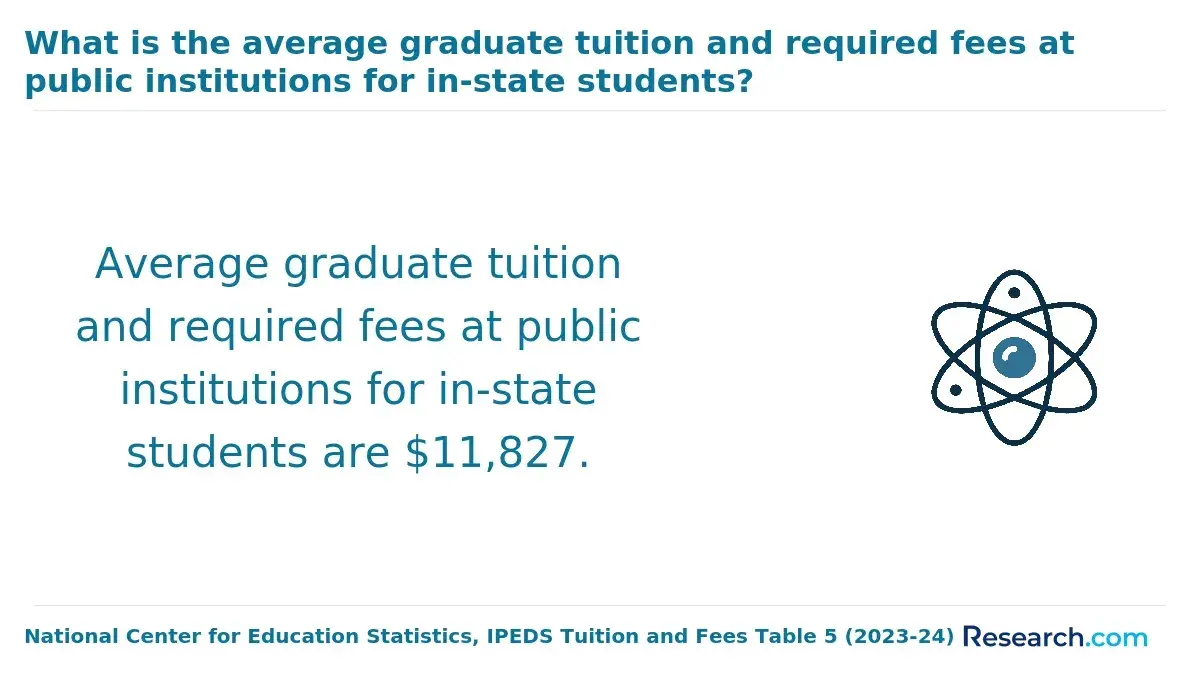
There is no reliable single duration or price for an online data science master's. Both depend on the program's credit requirements, per-credit or term-based tuition, required fees, course availability, and your enrollment pace. An advertised completion time may assume a course load or elective sequence that does not fit a working student.
Request a written estimate based on your intended pace. Separate tuition from mandatory fees, software or computing expenses, books, and any travel.
Check whether the XAI-relevant electives are offered often enough to fit that schedule. Employer assistance, scholarships, and aid eligibility may change your out-of-pocket cost, but confirm their conditions before relying on them.
Use cost-conscious online data science degrees as a starting point for comparison, then calculate each institution's current total on the same basis. The cheapest tuition figure is not necessarily the lowest total cost - or the best value if it leaves little room for the training you want.
How Can You Verify Accreditation for an Online Data Science Master's?
Verify the institution's current accreditation status through its stated accreditor and an official directory such as the U.S. Department of Education's accreditation database.
Do not assume that an online program has separate programmatic accreditation, or that it needs it simply because another field does. Check the precise institution and degree listed, especially when a university uses multiple campuses or academic units.
Accreditation does not establish XAI curriculum quality. Review course descriptions and project requirements separately. Also ask the university whether it is authorized to enroll students where you live and whether any required in-person component is available to you; accreditation and state authorization answer different questions.
What Careers Can Explainable AI Training Prepare You For?
XAI skills can strengthen applications for data scientist, machine learning scientist, applied machine learning, or model-risk and responsible-AI work, depending on the employer and your other skills. These are not interchangeable entry-level roles.
Building and validating models, writing production-quality code, and working with domain stakeholders may matter as much as familiarity with explanation methods.
Match projects to the decisions you want to support. A hiring team assessing a data scientist may value clear error analysis alongside interpretability; a model-governance team may expect careful documentation and challenge of model limitations.
To compare broader role preparation, review online data science programs for data careers, then inspect whether the program lets you build evidence for your particular target role.
A master's can provide structured practice and a credential, but it is not always necessary to learn an XAI method. If you already build and evaluate models professionally, a focused project or employer-supported training may address a narrower skills gap more efficiently.
What Salary and Job Outlook Can Data Science Graduates Expect?
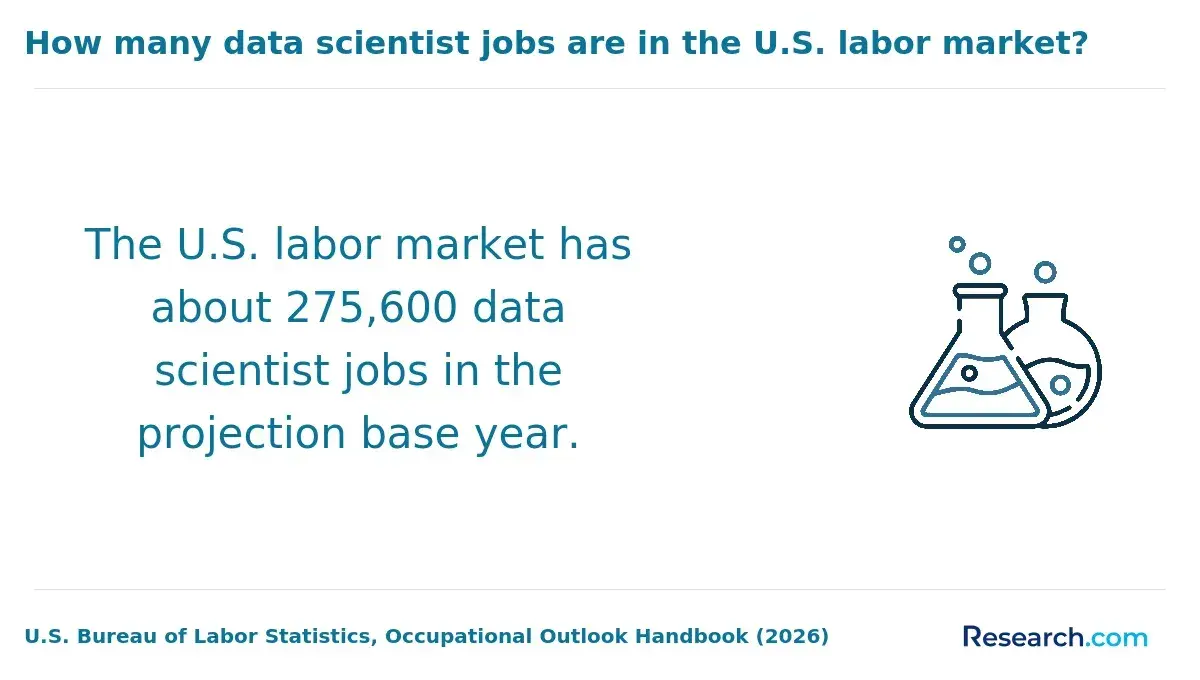
According to the U.S. Bureau of Labor Statistics, the median annual wage for data scientists was $120,230 in May 2025. That figure describes workers in an occupation, not graduates of online master's programs or people with XAI specialization. Your likely pay depends on experience, responsibilities, employer, and location.
BLS projects data scientist employment to grow 35% from 2025 to 2035. That signals demand for the broader occupation, not a guaranteed opening or salary premium for explainable AI.
When a school presents graduate outcomes, ask which graduates responded, when they were surveyed, and whether the figures distinguish new entrants from experienced professionals.
How Should You Choose a Reputable Explainable AI Master's Program?
Choose based on evidence of learning, not the number of times a website says "AI." Start with accredited institutions that can enroll you, then compare the same academic and practical criteria across your shortlist.
A guide to choosing an artificial intelligence program can help frame the broader degree decision, but the XAI-specific checks below should determine whether a data science option meets this goal.
Ask each program for concrete answers before paying an enrollment deposit:
- Which required courses assess model interpretation, and which advanced XAI courses are electives?
- Can online students see recent syllabi or examples of the kinds of assignments they would complete?
- How often do relevant electives run, and can students finish them within their intended schedule?
- Can students pursue an XAI-focused capstone, and who would supervise its technical and stakeholder-facing work?
- What is the current total cost at your expected pace, including mandatory fees?
Favor the program that answers those questions with a feasible course-and-project path for your goals. Treat vague elective availability, a capstone with no relevant supervision, or salary claims that cannot be tied to a defined graduate population as reasons to investigate further, not as details to overlook because a program ranks highly.
Other Things You Should Know About Data Science
No. It attributes a model prediction under a particular method and set of assumptions. It does not, by itself, show that changing a feature would change the real-world outcome.
Only if your employer and university permit it under their data-use, privacy, and security rules. Discuss access and publication restrictions before proposing the project; a suitable public or synthetic dataset may be safer.
Not necessarily. Many useful interpretability exercises run on modest datasets and computing resources. Check a program's actual software and hardware requirements before purchasing equipment.
No. Explanations are one part of responsible AI. Privacy, fairness, security, governance, and whether a system should be used at all require additional analysis.
References
- Guide to feasibility studies in programmes and projects (HTML) - Government Project Delivery https://projectdelivery.gov.uk/library-products/guide-to-feasibility-studies-in-programmes-and-projects-html/
- AI Degree Tuition & Cost | Purdue Online https://www.purdue.edu/online/artificial-intelligence/tuition/
- Artificial Intelligence and Data Science, Master of Science (M.S.) | St. John's University https://www.stjohns.edu/academics/programs/artificial-intelligence-and-data-science-master-science-ms
- Master's in Artificial Intelligence - Computer Science https://cdso.utexas.edu/msai
- Master of Science in Biomedical Data Science and AI | mssm.edu https://icahn.mssm.edu/education/masters/data-science
- Capstone Projects | wisc.edu https://datascience.psych.wisc.edu/capstone-projects/
- Artificial Intelligence Professional Program - Stanford Online https://online.stanford.edu/programs/artificial-intelligence-professional-program
- Applied Data Science (MS) Student Capstone Projects | Bay Path University https://www.baypath.edu/academics/graduate-programs/applied-data-science-ms/student-capstone-projects/
- MS in Data Science | UConn | Online & On-Campus Programs | Master of Science in Data Science | University of Connecticut https://masters.datascience.uconn.edu/