2027 Evidence-Based Practice for Nursing Students: Background Knowledge and Readiness Questions
Audited and Verified:
Our Editorial and Data Verification Process
Research.com uses government datasets, official education statistics and primary institutional information to support its career and degree guides. Our review process checks factual accuracy, occupational definitions, source dates and the requirements associated with the credentials discussed.
How This Article Was Fact-Checked
Our editorial team verifies salary estimates, employment projections, education requirements and program information against original data providers and official organizations. Salary figures are checked against the relevant occupational definitions and reporting periods. Information about licensure, accreditation and required in-person training is reviewed separately.
Fact-checked and verified on:

Co-Founder and Chief Data Scientist
A research finding can look convincing without answering the question in front of a nursing student. Differences in patients, outcomes, study quality, and local policy all affect whether evidence is useful in care.
This guide explains the background knowledge needed for evidence-based practice (EBP), the questions to ask before using a source, and how programs develop these skills. It is designed to help students prepare for coursework and supervised clinical learning - not to replace a preceptor's judgment or an organization's protocols.
Key Things You Should Know
- Evidence-based practice combines three inputs: the best available evidence, clinical expertise, and the patient's values and circumstances.
- Before applying a finding, check five things: the question, study design, results, patient fit, and local authority to act.
- A student can appraise evidence and suggest a change, but patient-care decisions still require appropriate supervision, scope of practice, and institutional policy.
What Is Evidence-Based Practice in Nursing?
Evidence-based practice is a way to make care decisions by bringing together trustworthy research, clinical expertise, and what matters to the patient. For a student, the process usually begins with a focused question, continues through searching and appraising evidence, and ends with discussing whether the findings apply in a supervised setting.
EBP is not the same as following a single published study. A well-conducted study may examine a different population, measure an outcome that matters less to your patient, or conflict with a current institutional protocol. Nor is EBP identical to research: research generates knowledge, while EBP uses existing knowledge to inform practice. Quality improvement typically examines how to improve a local process; its oversight and conclusions may differ from those of research.
Postlicensure students can also develop these skills through coursework. When considering RN-to-BSN programs without traditional clinical rotations, ask how the program teaches evidence appraisal and evaluates its application. The absence of a traditional rotation does not, by itself, tell you whether EBP instruction is strong.
Why Is Background Knowledge Important for Nursing Evidence-Based Practice?
Background knowledge helps students recognize what a study actually says and what it cannot establish. Anatomy, pathophysiology, pharmacology, health assessment, and population health provide clinical context. Introductory statistics and research methods help students interpret comparisons, uncertainty, bias, and the difference between an association and a demonstrated effect.
Consider a study reporting fewer falls after a unit introduced several changes. A student needs to understand how falls were defined, whether patient risk changed, and whether the results can be attributed to any one change. Without that context, a favorable number could be mistaken for proof that one intervention will work everywhere.
Students enter with different strengths. A nurse progressing through comparing ADN-to-MSN nursing programs may bring substantial clinical experience but still need preparation in statistics or scholarly writing. Prior experience helps frame good questions; it does not replace careful appraisal.
What Readiness Questions Should Nursing Students Ask Before Using Evidence?
Use these questions before recommending an intervention or citing a study in a care discussion. They separate finding relevant evidence from having permission and sufficient support to act on it.
- What decision am I trying to inform? Specify the patient group, intervention or issue, comparison when useful, and outcome.
- How trustworthy is the evidence? Check the study design, source, sample, limitations, and whether other evidence agrees.
- Does it fit this patient and setting? Consider preferences, access, risks, comorbidities, and differences between the study and the clinical environment.
- What do current policies require? Review applicable protocols and raise conflicts with the instructor, preceptor, or clinical team.
- What is my role? Identify who can assess, authorize, implement, document, and evaluate the proposed action.
A useful readiness check also asks whether the learning environment can support the work. For example, a student reviewing online FNP programs that provide preceptors should verify who arranges approved placements; access to evidence does not substitute for supervised clinical preparation.
Students learn to locate sources, identify a research question, recognize common study designs, and assess whether methods support a conclusion. They also learn that a statistically detectable difference may not be clinically meaningful, and that a finding from one setting may not transfer neatly to another.
Clinical judgment is the context-sensitive process of recognizing cues, interpreting them, deciding what needs attention, acting within one's role, and evaluating the response. Research appraisal informs that process but does not replace assessment, communication, or timely escalation. In simulation and clinical placements, faculty may evaluate both the student's reasoning and observable actions; a strong written evidence review is not proof of independent bedside competence.
The distinction continues in advanced education. A DNP practice project may evaluate an improvement in a particular setting, while a PhD dissertation generally aims to produce research knowledge. Students comparing doctoral nursing projects and practice hours should check each program's project, oversight, and practice-hour requirements rather than assuming an evidence review fulfills them.
Programs may introduce EBP in research or foundations courses, then revisit it in case studies, library assignments, simulation, clinical conferences, and improvement projects. A typical assignment might ask students to form a focused question, find relevant sources, appraise their limitations, and explain whether a change is appropriate for a specified setting. The depth and assessment methods vary by degree and program.
When comparing programs, request a course outline or sample learning outcomes. Look for practice searching nursing literature, feedback on appraisal rather than citation counts alone, and opportunities to explain findings to a clinical audience. Ask how faculty assess safe application in supervised learning. If considering accelerated DNP admissions and requirements, verify that the shorter schedule still gives you enough time and support to complete the program's scholarly work.
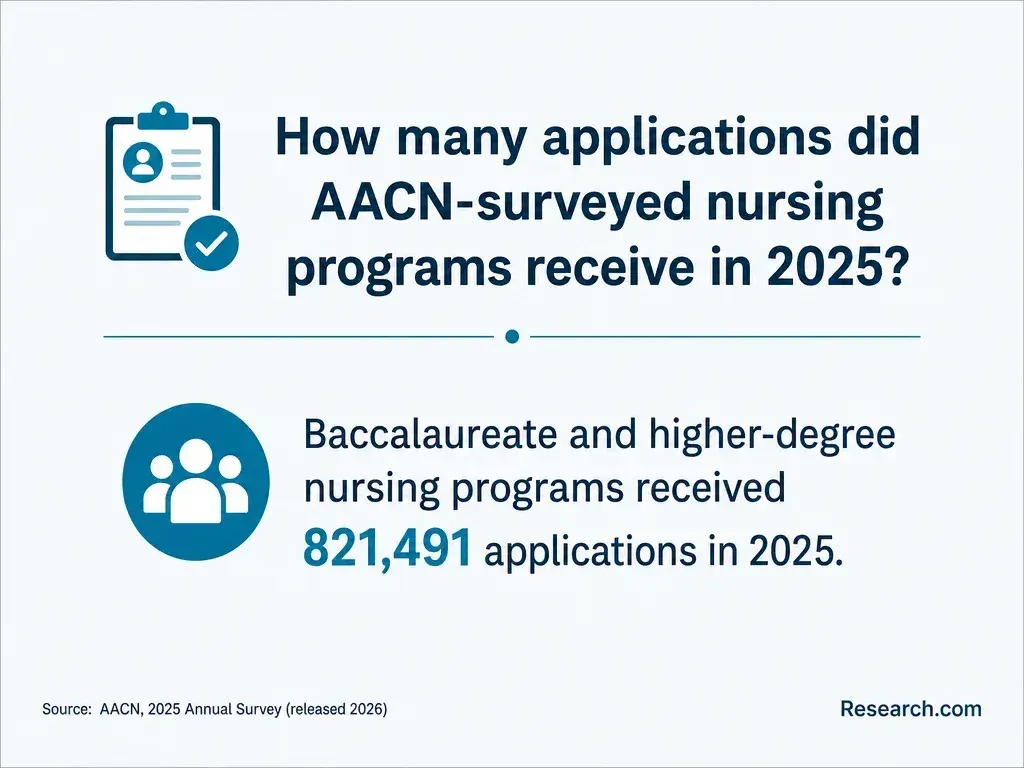
Check three different forms of recognition rather than treating "accredited" as a complete answer. Institutional accreditation applies to the college or university. Nursing program accreditation, where applicable, covers a specified program through an organization such as ACEN or CCNE. State board approval or recognition matters particularly for prelicensure programs and eligibility for initial nursing licensure.
Verify the exact degree and track - not just the school's name - using the institution, applicable accreditor, and relevant state board. Ask whether the program accepts students in your location and whether its clinical arrangements and curriculum meet the requirements tied to your goal. Accreditation alone does not grant a license or establish eligibility for every certification.
Those checks remain important when planning applications to accessible DNP programs: an approachable admissions process says little about the accreditation scope, project expectations, or fit with a particular career objective.
Requirements depend on whether a program prepares students for initial RN licensure or builds on an existing RN license. Prelicensure programs may require specified sciences and labs, minimum grades, an entrance assessment, and eligibility for clinical placement. Postlicensure programs typically require an RN license; graduate tracks may additionally require a qualifying degree, experience, recommendations, or statistics preparation. Admission to a university is not necessarily admission to its nursing major.
Request the requirements for your intended entry term and track. Confirm prerequisite equivalencies, course-age limits, application deadlines, and whether background checks or other clinical-site conditions apply after academic admission. An RN considering PMHNP certificate admissions and timelines should also confirm the program's required prior graduate preparation and the certification and state requirements for the intended advanced practice role.
Time depends on the route, accepted prior coursework, course sequence, and clinical availability. A traditional prelicensure associate degree is often planned around two academic years of nursing study, while a traditional bachelor's degree is commonly planned around four years of full-time undergraduate study; prerequisites and admission waits can extend either path. Accelerated, bridge, and graduate schedules vary substantially. Ask for a term-by-term plan based on your transcript rather than relying on an advertised minimum.
Compare total cost, not tuition alone. Include program and lab fees, books, equipment, required checks and immunizations, travel to clinical sites, possible campus visits, and any reduction in earnings. For an online graduate option, verify placement responsibilities and in-person requirements before assuming it will be cheaper to attend. An online mental health NP affordability guide can help identify programs to investigate, but obtain a school-specific cost estimate and confirm that the track meets your intended credentialing requirements.
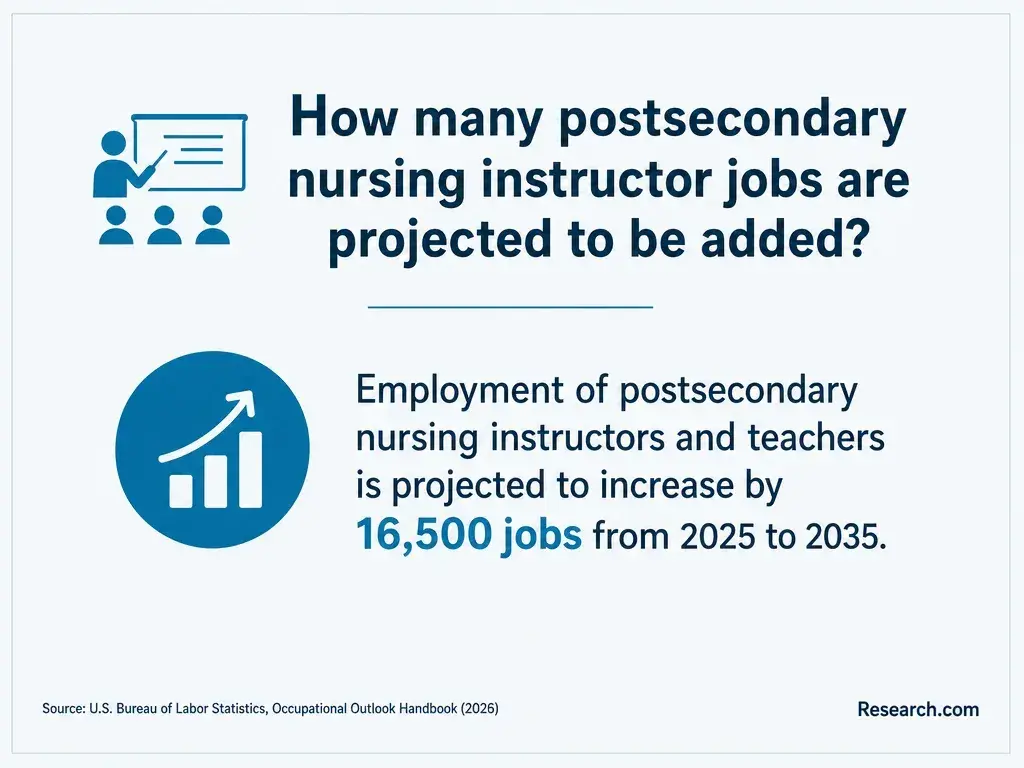
EBP is relevant across nursing roles, though the responsibility differs. A new RN may use approved guidance, report a mismatch between a protocol and a patient's needs, and participate in a unit review. Experienced nurses may help evaluate practice changes or teach colleagues. Nurse educators, quality specialists, researchers, and advanced practice nurses may have greater responsibility for appraising literature, designing evaluations, or translating findings into practice - subject to their role, preparation, and authority.
The best next step depends on the work you want to do. If your goal is to contribute to a unit's evidence review, mentorship and employer training may be more direct than another degree. If your goal is advanced practice, EBP skill alone is insufficient: the role requires appropriate population-focused education, certification where required, and state authorization. Nurses exploring accelerated postgraduate family NP certificates should verify those requirements and the supervised experiences needed for that specific transition.
How Do Nursing Licensure and Job Outlook Affect Career Planning?
For a prelicensure student, graduation, eligibility to take the NCLEX-RN, passing the exam, and receiving a state RN license are separate steps. Confirm the relevant state board's requirements before enrolling or relocating. An RN license does not itself authorize advanced practice, and an employer may require additional orientation or documented competencies for a particular unit.
U.S. Bureau of Labor Statistics wage and employment projections can help compare occupations, but occupation-wide figures cannot predict a new graduate's offer or the return on a specific program. Use the occupation that matches your target job - such as registered nurse or nurse practitioner - and consider local openings, experience expectations, schedule, and education costs alongside national data. If advanced practice is the goal, cost-focused nurse practitioner study options are only useful comparisons after you confirm the appropriate population focus, clinical placement arrangements, and eligibility for the credential you need.
Other Things You Should Know About Nursing
No. Start by recognizing what question a source answers and whether its methods support its conclusion. Use course resources and ask faculty when a design or statistic is unfamiliar.
Follow your school's AI policy. Check any summary against the original sources: generated citations and descriptions of findings can be inaccurate.
Not automatically. Check the guideline's date, evidence review, issuing organization, and relevance. A newer article may raise an important question, but students should discuss apparent conflicts rather than independently changing care.
Try your school library's databases, link resolver, or interlibrary loan. An abstract can help you decide whether a study is relevant, but it usually lacks enough detail for a thorough appraisal.
- Evidence-based practice and patient-centered care - PMC - NIH https://pmc.ncbi.nlm.nih.gov/articles/PMC8162222/
- Nursing Professional Development Evidence-Based Practice - NCBI - NIH https://www.ncbi.nlm.nih.gov/books/NBK589676/
- Chapter 4: Formulating PICO Questions | ACIP GRADE Handbook | CDC https://www.cdc.gov/acip-grade-handbook/hcp/chapter-4-formulating-pico-questions/index.html
- A scale of readiness for clinical practice: A validity and reliability study for nursing students - ScienceDirect https://www.sciencedirect.com/science/article/abs/pii/S1557308724000192
- Literature Searching for Evidence-Based Projects - Nursing | stanford.edu https://laneguides.stanford.edu/nursing/Lit_Search
- Levels of Evidence - Evidence-Based Practice Research in Nursing - LibGuides at Adelphi University https://libguides.adelphi.edu/evidence-based-practice/Levels-of-Evidence
- Evidence-Based Practice (EBP): Forming a Clinical Question | umsl.edu https://libguides.umsl.edu/ebp/pico
- NURSING: Appraisal & Levels of Evidence | pnw.edu https://guides.pnw.edu/c.php