2027 Evaluating Women's Health NP Outcomes: Completion Rates, Certification Results, and Data Gaps
Audited and Verified:
Our Editorial and Data Verification Process
Research.com uses government datasets, official education statistics and primary institutional information to support its career and degree guides. Our review process checks factual accuracy, occupational definitions, source dates and the requirements associated with the credentials discussed.
How This Article Was Fact-Checked
Our editorial team verifies salary estimates, employment projections, education requirements and program information against original data providers and official organizations. Salary figures are checked against the relevant occupational definitions and reporting periods. Information about licensure, accreditation and required in-person training is reviewed separately.
Fact-checked and verified on:

Co-Founder and Chief Data Scientist
A women's health nurse practitioner (WHNP) program may advertise a strong certification pass rate without showing how many students entered, finished, or took the exam. For RNs and APRNs considering this population focus, those missing numbers can change the meaning of an otherwise impressive result. This article explains how to compare completion, attrition, certification, accreditation, and clinical preparation - and what to request when a program's published outcomes do not tell the whole story.
Key Things You Should Know
- A certification pass rate describes exam takers, not everyone who entered a WHNP track; ask for entrants, graduates, first-time testers, and first-time passers from the same cohort.
- In an illustrative cohort of 20 entrants, 15 graduates, and 11 first-time passes among 12 testers, completion is 75% and the exam pass rate is 91.7% - two different outcomes.
- No single national completion rate describes every WHNP program. Compare cohort definitions, small-group counts, clinical placement support, and eligibility for the National Certification Corporation's WHNP-BC exam.
What are women's health nurse practitioner outcomes, and why do completion data matter?
WHNP outcomes describe what happens between entry into a WHNP track and the next professional steps. Useful measures include continued enrollment, graduation, time to completion, national certification results, and, when reliably collected, employment or APRN licensure outcomes. These measures answer different questions: graduation shows whether students completed the program; an exam result concerns only those who tested.
Completion matters because a student who cannot finish required courses or secure approved clinical experiences cannot reach the certification stage through that program. A low completion rate warrants investigation, but is not proof of poor teaching: leaves, transfers, part-time enrollment, and small cohorts can change the figure. Likewise, a high rate cannot show that every graduate was clinically well prepared.
Compare outcomes for the WHNP track, not an institution-wide graduate nursing population. Even an RN considering a guide to RN-to-BSN programs with no clinicals should not treat general degree-completion figures as evidence about a later, clinically supervised WHNP track.
How do WHNP programs report completion rates, attrition, and graduation outcomes?
A completion rate generally divides graduates by a defined group of entrants over a specified period. Attrition may count withdrawals, dismissals, or transfers, depending on the school's definition; students still enrolled should not automatically be counted as failures. Ask whether the clock starts at university admission or entry into the WHNP track, and whether the reporting window accommodates part-time students.
The following hypothetical cohort shows why a rate needs both a denominator and a time frame. Its figures are an illustration, not results from a real program.
| Measure | Illustrative calculation | What it does not establish |
| Track completion | 15 graduates ÷ 20 entrants = 75% | Why five entrants did not graduate within the window |
| First-time certification pass rate | 11 passers ÷ 12 first-time testers = 91.7% | Results for graduates who have not tested |
| Graduates not represented among testers | 15 graduates − 12 testers = 3 | Whether those graduates will test later |
For a fair comparison, request several consecutive cohorts, their counts, the reporting dates, and the treatment of students on leave. When comparing other graduate options - including admission-focused nursing practice doctorate comparisons - apply the same rule: an admissions measure or institution-wide graduation figure is not a WHNP-track outcome.
What are the certification requirements and pass rates for women's health NPs?
The National Certification Corporation (NCC) awards the WHNP-BC credential through its Women's Health Care Nurse Practitioner certification examination. Candidates should check NCC's current eligibility guide for the required RN license, qualifying graduate-level WHNP education, supervised preparation, documentation, and application rules. A school-issued certificate or degree is not the national credential, and certification does not itself grant state APRN authority.
An NCC aggregate exam pass rate, when published, describes the candidates and testing period NCC specifies; it is not a completion rate for an individual school. For a program, ask separately for first-time and eventual pass rates, the number of testers behind each percentage, and how many eligible graduates have not yet tested. A rate based on a handful of people can swing substantially when one result changes.
Do not substitute results from another NP examination. Even if 12-month family NP study schedules appear attractive, FNP preparation, certification, and patient-population expectations differ from WHNP preparation. Compare each track using its own graduates and relevant examination.
Check three distinct questions: whether the institution holds recognized institutional accreditation; whether the applicable nursing program holds accreditation from an appropriate nursing accreditor, such as CCNE or ACEN; and whether the specific WHNP pathway meets current certification and intended-state APRN requirements. A university's accreditation alone does not establish that its WHNP track qualifies a graduate for NCC certification or practice in a particular state.
Confirm the accreditor's listing, the degree and location covered, and any conditions or upcoming review. Ask the program how its curriculum and supervised clinical preparation map to NCC eligibility, and ask the intended state board which education and certification it accepts for APRN authorization. These checks are particularly important for post-graduate certificates and students completing clinical experiences outside the school's home state.
The same verification applies when exploring faster online DNP routes: a doctoral title and a short timeline do not establish WHNP population-focus preparation. Request confirmation for the actual track and your entry term before committing.
A licensed RN commonly enters a graduate WHNP track leading to an MSN or DNP. An APRN prepared in another population focus may instead pursue a qualifying post-graduate WHNP certificate, subject to the receiving school's review of prior coursework and clinical preparation. The school, NCC, and state board each make different eligibility decisions; prior practice alone does not authorize a new population focus.
An RN whose highest nursing degree is an associate degree may need a bridge or additional bachelor's-level study before entering a particular WHNP graduate track. ADN-to-MSN degree progression can help frame that academic step, but applicants must verify that the eventual specialty curriculum - not merely the bridge - prepares them for WHNP certification.
For an experienced APRN, the most efficient route is the one that closes documented competency gaps without repeating approved learning unnecessarily. Send prospective schools transcripts, course descriptions, clinical-hour records, and current certification details; request a written evaluation rather than assuming earlier hours will transfer.
Online delivery can reduce routine travel for coursework, but it does not make supervised patient care remote or self-paced. Both online and campus-based students need program-approved sites, qualified preceptors, faculty oversight, and opportunities to meet WHNP population-focus competencies. Programs may also require live classes, simulation, intensives, or campus visits.
The consequential difference is often who secures a usable clinical placement. Ask whether the school arranges sites, assists with student-identified preceptors, or expects students to find placements themselves. Confirm placement availability in your state, approval deadlines, travel expectations, and what happens if a preceptor withdraws. A working RN should compare the actual weekly clinical schedule - not just whether lectures are asynchronous - with employment and caregiving commitments.
These questions also apply to nurses considering online FNP certificate routes after an MSN. Format labels cannot tell you whether a program can support the clinical experiences required for its particular population focus.
WHNP preparation generally combines advanced assessment, pharmacology, and pathophysiology with population-focused learning in gynecologic, reproductive, and sexual health across the lifespan. Programs may address preventive care, contraception, common gynecologic conditions, pregnancy-related care within the WHNP role, health equity, referral, and collaborative practice. Exact courses and clinical requirements vary by school and credential pathway.
Review the clinical plan for more than a total-hours figure. Ask which settings and patient encounters are available, how the program evaluates assessment and management decisions, and how it responds if a site offers too narrow a case mix. Simulation may strengthen preparation but should not be assumed to replace supervised clinical experiences accepted by the program and certifying body.
Population focus also determines what counts as relevant experience. Shorter postgraduate psychiatric nursing routes, for example, cannot be evaluated as though their clinical exposure were interchangeable with WHNP experiences. Compare the competencies each credential requires, not just course counts.
Applicants should expect a school to review RN license status, prior degrees, academic record, and fit for graduate study; individual programs may set additional experience, GPA, prerequisite, or state-residency requirements. MSN, DNP, and post-graduate certificate timelines differ with prior preparation, enrollment intensity, course sequencing, and clinical availability. An advertised shortest time is not a reliable personal graduation date.
Compare a written total-cost estimate, not tuition alone. Include required credits and per-credit charges, program and technology fees, travel for campus visits or clinical sites, books, compliance requirements, certification and licensing expenses, and income lost if clinical scheduling reduces paid work. Ask what an extra term would cost and whether aid or employer reimbursement covers the track and pace you intend to pursue.
For an RN weighing an academic bridge, planning the cost of a BSN-to-MSN transition can clarify the earlier degree expense. Add the WHNP specialty requirements separately; a low-cost bridge does not establish a low total cost to certification eligibility.
WHNPs may work in gynecology, reproductive health, ambulatory care, and other settings serving patients with women's health needs. Duties depend on the position, employer, and state scope of practice, and can include assessment, diagnosis and management within authorized scope, prevention, counseling, and coordination of referrals. National certification is a credentialing step; state APRN authorization and employer privileges still matter.
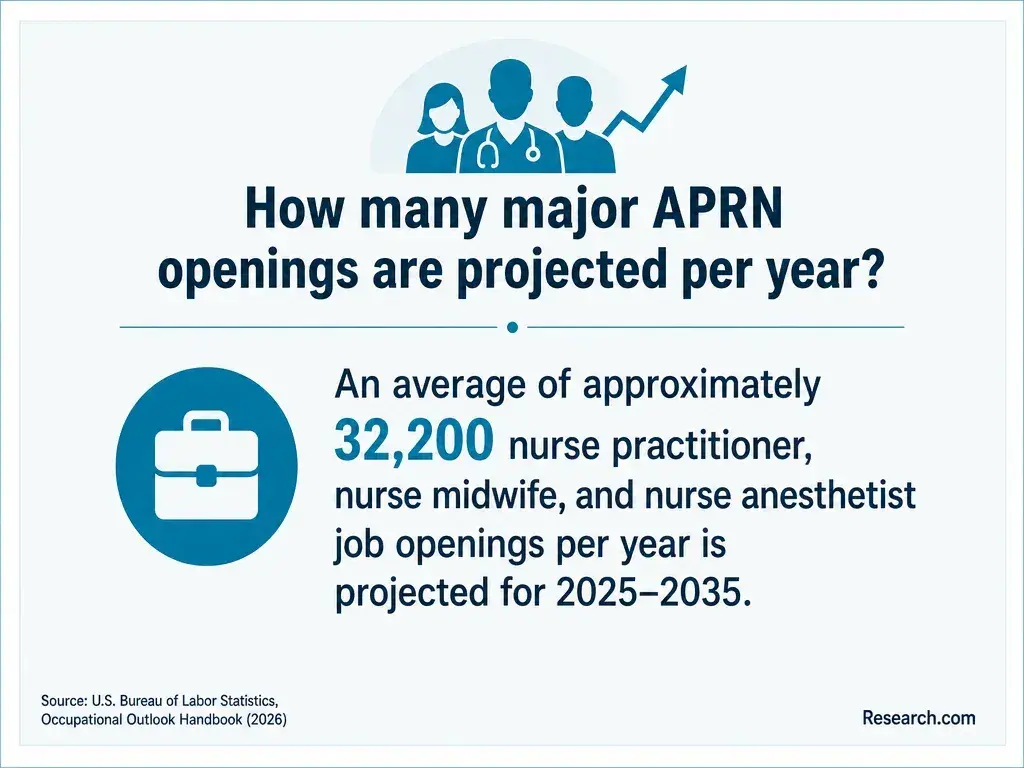
The U.S. Bureau of Labor Statistics reports wages and employment projections for nurse practitioners as an occupation, not for WHNPs as a separate published wage category. Its May 2025 occupational wage estimates and 2025-2035 projections can provide broad market context, but cannot predict a WHNP graduate's offer, local openings, or earnings. Compare actual job postings by location, duties, schedule, required experience, and compensation before estimating a return on education.
If the target job is primarily psychiatric care, investigate that population focus instead of choosing WHNP based on a general NP salary figure. Lower-cost mental health advanced practice study may be more relevant to that goal, but it prepares for a different role.
Why are women's health NP outcome data incomplete, and how can students evaluate programs?
WHNP cohorts can be small, and schools may combine specialties or report graduate-nursing results instead of track-level figures. Completion and certification also occur on different schedules: graduates may delay testing, while part-time students remain enrolled beyond a standard reporting window. Employment surveys can miss graduates who do not respond. Privacy concerns may limit public detail when a cohort contains only a few people; missing information should be identified, not filled with assumptions.
Before enrolling, request the following information in writing. It lets you compare programs without treating a polished percentage as the whole outcome.
- The number entering the WHNP track in each recent cohort, its start date, and the school's completion window.
- Counts of graduates, withdrawals, transfers, leaves, and students still enrolled, with definitions for each category.
- Counts of first-time NCC testers and passers by graduate cohort, plus the treatment of graduates who have not tested.
- Written clinical-placement responsibilities, jurisdiction limits, and the process for verifying NCC and intended-state APRN eligibility.
If a school cannot supply comparable figures, weigh what it can document - such as its placement process, assessment practices, and eligibility guidance - while acknowledging the uncertainty. Apply the same scrutiny to accelerated MSN preparation in psychiatric nursing or any other NP focus: a quick schedule and a high exam percentage answer different questions.
Other Things You Should Know About Nursing
Yes. NCC certification requires ongoing maintenance under its current rules. Check NCC's renewal instructions and deadlines separately from your state APRN license renewal requirements.
Review NCC's current retesting policy and your program's graduate support options. A later pass may appear in an eventual pass rate but not in a first-time pass rate.
Possibly, but verify that state's APRN application, education, certification, and practice requirements before moving. An RN multistate privilege does not by itself grant APRN authority in another state.
Certification demonstrates that you met the credential's requirements; it does not replace employer onboarding, site-specific privileges, or assessment of your readiness for a particular position.
- Examining Factors Associated with Attrition, Strategies... - PMC https://pmc.ncbi.nlm.nih.gov/articles/PMC12195747/
- Accreditation, Attrition, and On Time Completion Rates | ca.gov https://www.rn.ca.gov/education/attrition.shtml
- MS Women's Health Nurse Practitioner | CU Anschutz Nursing https://nursing.cuanschutz.edu/degrees-programs/graduate-programs/ms/whnp
- AANP vs. ANCC Certification: Which Exam Is Right for You? | Spring Arbor University https://online.springarbor.edu/news/what-you-should-know-about-aanp-and-ancc-exams
- Completion and attrition of DNP students of the 2006-2015 matriculating cohorts - ScienceDirect https://www.sciencedirect.com/science/article/abs/pii/S0029655422000045
- Advanced Nursing Practice Degree, Women's Health Nurse Practitioner Concentration, DNP | ASU https://degrees.asu.edu/masters-phd/major/ASU00/NUANPWHDNP/advanced-nursing-practice-womens-health-nurse-practitioner-dnp%3Bjsessionid=F49F3E2CD7CDE2B4B565CEF940C49510
- Online Women's Health Nurse Practitioner (WHNP) Postgraduate Certificate | Purdue Global https://www.purdueglobal.edu/degree-programs/nursing/womens-health-nurse-practitioner-whnp-certificate/
- Women's Health Nurse Practitioner Program (WHNP) | Frontier Nursing University https://frontier.edu/womens-health-nurse-practitioner/
- Women's Health Nurse Practitioner: Comparing Roles | keiseruniversity.edu https://www.keiseruniversity.edu/articles/womens-health-nurse-practitioner-comparing/
- Women's Health Nurse Practitioner | Admissions | SUNY Downstate https://www.downstate.edu/education-training/college-of-nursing/admissions/womens-health-np/index.html