2027 Evaluating Academic Nursing Jobs: Teaching Load, Clinical Duties, Research, and Service
Audited and Verified:
Our Editorial and Data Verification Process
Research.com uses government datasets, official education statistics and primary institutional information to support its career and degree guides. Our review process checks factual accuracy, occupational definitions, source dates and the requirements associated with the credentials discussed.
How This Article Was Fact-Checked
Our editorial team verifies salary estimates, employment projections, education requirements and program information against original data providers and official organizations. Salary figures are checked against the relevant occupational definitions and reporting periods. Information about licensure, accreditation and required in-person training is reviewed separately.
Fact-checked and verified on:

Co-Founder and Chief Data Scientist
An academic nursing job can look manageable on paper until clinical supervision, student advising, scholarship, and committee work are added to the course schedule. For experienced RNs and APRNs considering a faculty move, the crucial decision is whether the whole job fits their expertise, income needs, and available time.
This guide explains how responsibilities differ across faculty appointments, what qualifications employers may require, and which questions reveal the workload behind an offer. Use it to compare positions - not just titles or advertised teaching credits.
Key Things You Should Know
- Evaluate all four workload domains: teaching, clinical duties, scholarship, and service. A low course count does not necessarily mean a light job.
- Compare 9-month and 12-month offers using contract dates, required summer work, benefits, and any separate clinical income - not annual salary alone.
- Request the written workload policy, clinical assignment details, promotion criteria, and a sample first-year schedule before accepting a position.
What Do Academic Nursing Jobs Involve Beyond Classroom Teaching?
Academic nursing faculty design and assess learning, not simply deliver lectures. Depending on the appointment, they may supervise students in clinical settings, run simulation or skills labs, evaluate documentation and clinical judgment, advise students, revise curricula, participate in accreditation work, and produce scholarship. They may also coordinate with clinical partners when placements or preceptors change.
The work varies with the students served. An instructor in an accelerated prelicensure program may spend substantial time arranging clinical learning and assessing readiness for supervised patient care; ABSN application planning by selectivity addresses a different decision - getting into such a program - not what teaching in one requires. When reviewing a job posting, ask which of these tasks are assigned to the role and which have dedicated staff support.
What Education and Licensure Are Required for Academic Nursing Jobs?
Requirements depend on the institution, program level, state rules, accreditation expectations, and assignment. Schools commonly seek an active, applicable RN license for faculty teaching nursing practice. Clinical instructors may also need authorization to practice in the placement jurisdiction and recent experience with the patient population. APRN teaching or supervision may call for the corresponding current certification and state authorization. A degree never substitutes for a required professional license.
A graduate nursing degree is commonly expected for full-time faculty roles, while some positions allow a qualified bachelor's-prepared nurse to teach under specified conditions or pursue further study. Doctoral preparation is particularly important for many research-intensive and senior faculty appointments. A school's published minimum is not necessarily its competitive hiring standard: ask the hiring committee what credentials recent hires actually held.
Check whether a posting requires an earned degree before the start date, accepts a degree in progress, or specifies a nursing degree rather than another discipline. Faculty who teach across license levels should also distinguish their own eligibility from students' routes to practice; LPN-to-RN pathway options for working practical nurses concern student progression, not automatic eligibility to teach RN courses.
How Do Teaching, Clinical Duties, Research, and Service Differ by Faculty Role?
The title alone is an unreliable workload guide. This comparison shows common emphases; the appointment letter and faculty handbook control the actual expectations.
| Role | Typical emphasis | Point to verify |
| Clinical instructor or adjunct | Assigned clinical groups, labs, or individual courses; usually limited formal research duties | Paid preparation time, travel, grading, and required meetings |
| Teaching-focused full-time faculty | Multiple courses or clinical assignments, advising, curriculum work, and service | How clinical supervision converts to workload credit |
| Tenure-track faculty | Teaching and service alongside defined research and publication expectations | Protected research time, funding support, and tenure milestones |
| Graduate or APRN faculty | Advanced coursework, clinical oversight, student projects, and potentially active practice | Population-focus fit and whether practice is required, funded, or additional |
| Program director or chair | Administration, staffing, compliance, and partnerships alongside reduced teaching | Decision authority, staff support, and term of appointment |
For an APRN role, do not assume experience in one population focus covers another. For example, PMHNP certificate completion timelines relate to preparation for that specialty, whereas a faculty appointment requires the specific teaching and clinical qualifications in its posting.
A teaching load is the assigned instructional work for a term, often expressed in courses, credits, contact hours, or workload units. These measures are not interchangeable. One lecture course may involve large-scale grading and advising; one clinical section may involve travel, site onboarding, direct observation, and safety-sensitive evaluation across long shifts. Simulation setup and debriefing add work that may not appear on a course list.
Ask for the workload formula and apply it to the actual proposed assignment. Determine how many distinct courses need preparation, how many students are in each group, who secures placements, and whether a course release offsets coordination duties. Confirm whether evenings, weekends, or summer terms are expected. Compressed student pathways can intensify scheduling; short-format MSN programs for non-nurses illustrate why an advertised program duration tells a prospective instructor little about weekly supervision demands.
A useful interview request is a recent, anonymized faculty timetable plus an explanation of work that falls outside its scheduled hours. If the school cannot explain how clinical and simulation time receives workload credit, compare its offer cautiously with a lecture-heavy appointment.
There is no single experience threshold for every US academic nursing job. Employers and applicable regulators determine whether an instructor's license, practice history, and current competence fit the level and setting taught. Recent direct-care experience may matter most for bedside clinical instruction; graduate clinical supervision calls for expertise aligned with the student's role and population focus.
Ask what the school means by "current practice." It may value employed patient care, an approved faculty practice arrangement, or other documented clinical engagement, but these are not automatically equivalent. Clarify whether you must maintain practice outside your faculty contract and who pays for credentialing, liability coverage, and required site access. Prior experience alone does not establish readiness to assess students safely in a new specialty.
For instance, short-format family NP degree and certificate routes may raise questions about clinical oversight and population-specific preparation; a prospective FNP faculty member should verify the precise supervisor qualifications and responsibilities rather than infer them from a program's length.
Scholarship expectations range from maintaining evidence-informed teaching materials to building a funded research program. Tenure-track postings may specify peer-reviewed publications, grant activity, and a coherent research agenda. Teaching-focused appointments may instead recognize educational scholarship, simulation work, curriculum evaluation, or dissemination of practice improvement. Ask which outputs count for renewal and promotion, not merely whether the posting says "scholarship required."
A DNP practice project and a PhD dissertation demonstrate different forms of preparation; neither guarantees that a candidate meets a particular department's publication expectations. Understanding practice requirements in leadership DNP programs can help distinguish doctoral practice work from a research-intensive faculty agenda. Before accepting an offer, establish whether startup resources, mentoring, data access, research time, and institutional review support match the expected outputs. Patient information and employer data require appropriate permissions and oversight.
Service usually means work that supports the school, profession, or community beyond an individual course: admissions and progression committees, curriculum review, accreditation preparation, faculty governance, clinical-partner relationships, and professional association work. Such duties may be especially consequential in smaller programs with fewer faculty to share them.
Ask whether service has an explicit workload allocation, which committees are mandatory, and whether new faculty receive a lighter first-year assignment. Curriculum service can extend across different student pathways; reviewing practical nursing programs organized by duration, for example, should not lead a committee to assume that shorter schedules remove required learning or regulatory obligations. A service assignment is more valuable to your career when its authority, time commitment, and relevance to promotion are clear.
Start with the job you want to hold. An experienced RN seeking clinical instruction may need an applicable license, strong specialty practice, and the graduate preparation required by the employer. An MSN in nursing education can develop teaching and assessment skills. A DNP may fit practice-focused education or leadership roles; a PhD is generally the more direct preparation for an independent research career. Neither doctorate automatically confers APRN eligibility, and an educator degree is not an APRN population-focus credential.
An associate-degree RN considering graduate study can investigate associate-degree RN to MSN options, then check whether the resulting degree meets the target faculty posting and any intervening bachelor's-degree requirements. Before paying for another degree, compare actual vacancies: some experienced clinicians can begin with adjunct teaching, precepting, or employer-based education and determine whether academic work suits them. A shorter route is worthwhile only if it satisfies the credentials and competencies the intended appointment requires.
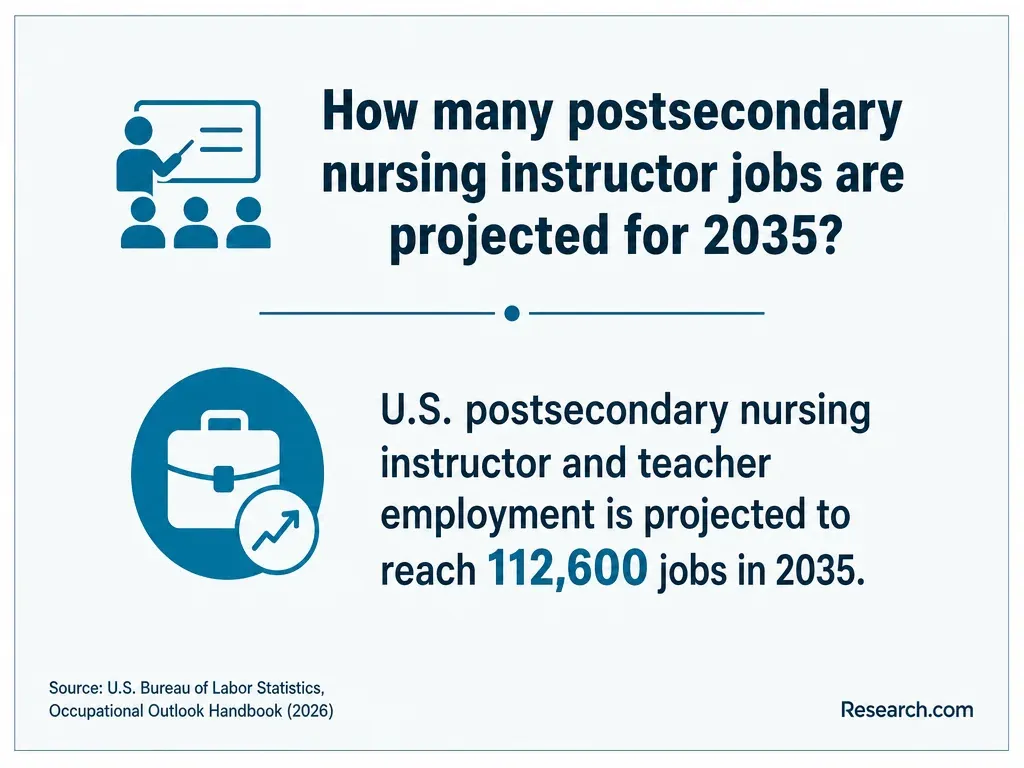
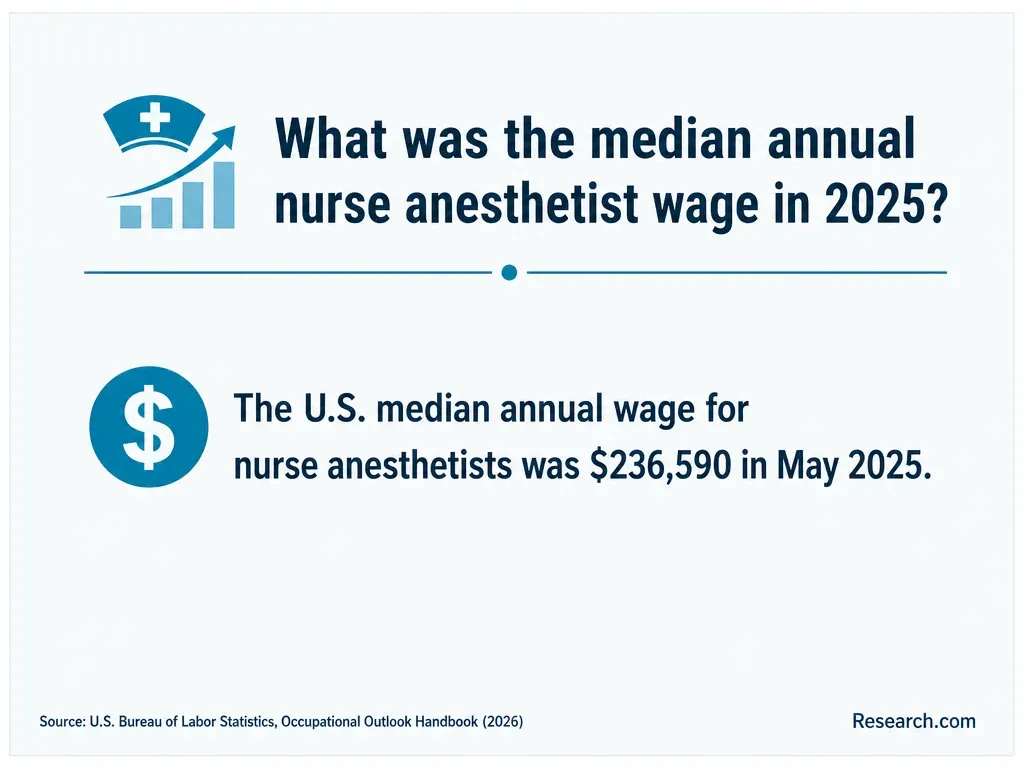
The relevant federal wage category is the US Bureau of Labor Statistics' nursing instructors and teachers, postsecondary, but an occupation-wide median cannot predict a particular offer. Pay varies by institution type, region, rank, contract length, specialty, administrative duties, and whether clinical practice income is separate. Request the employer's current salary range and pay schedule rather than treating an RN or NP wage figure as a faculty benchmark.
Compare total compensation on consistent terms. A 9-month salary is not directly comparable with a 12-month salary unless you account for required summer work, opportunities for separately paid teaching, benefits, retirement contributions, and any practice requirement. Also ask how raises, promotion, and overload pay work. If a doctorate is proposed as a route to higher rank, weigh its tuition and foregone earnings against the institution's written promotion rules; fast-track DNP study options do not, by themselves, establish a favorable financial return.
How Can You Evaluate Nursing Programs for Faculty Quality and Career Preparation?
If you are choosing an employer, program quality affects daily teaching conditions. If you are choosing a degree to prepare for faculty work, it affects the experience and mentoring you can gain. In either case, verify the exact program's applicable state approval, nursing accreditation status, clinical arrangements, and faculty resources rather than relying on institution-wide claims.
Use the same questions in interviews and program discussions so you can compare answers rather than impressions:
- What are the faculty-to-student arrangements for clinical learning, and who handles placements, site problems, and simulation support?
- How are new instructors oriented to teaching, clinical evaluation, learning systems, and student-safety escalation?
- What are faculty turnover patterns, vacancies, mentoring arrangements, and opportunities to observe experienced educators?
- How do the written workload, renewal, and promotion policies compare with what current faculty describe?
For a graduate program intended to support a faculty career, also examine supervised teaching opportunities and educator mentorship, not just the speed or price of the degree. A specialty-focused program may be appropriate for clinical expertise but less direct for teaching preparation; PMHNP education costs and program choices are a separate comparison from the qualifications for a nursing faculty appointment. Seek written answers to any unresolved licensing, placement, or employment questions before committing.
Other Things You Should Know About Nursing
Often, yes. An adjunct course, approved clinical-instructor role, or precepting opportunity can test your interest. Check the appointment's qualifications, schedule, and compensation before assuming it will fit alongside shifts.
No. Even when lectures are online, clinical oversight, simulation, campus meetings, or student evaluations may require scheduled in-person work. Ask for the location requirements of the specific assignment.
Ask the hiring chair to reconcile the posting, appointment letter, faculty handbook, and workload policy in writing. Clarify which document governs if duties or promotion expectations differ.
Document relevant clinical expertise and examples of teaching, precepting, presentations, or learner feedback you are authorized to share. Describe your contribution accurately; informal mentoring is valuable evidence but is not the same as holding a faculty appointment.
- Faculty Teaching Time: A Comparison of Web-Based... - PMC https://pmc.ncbi.nlm.nih.gov/articles/PMC2920737/
- Rule 3349-3-203 | Faculty workload. https://codes.ohio.gov/ohio-administrative-code/rule-3349-3-203
- An evaluation framework for faculty practice | PubMed https://pubmed.ncbi.nlm.nih.gov/17289467/
- School of Nursing: Policy on Faculty Workload | University of North Carolina at Chapel Hill https://policies.unc.edu/TDClient/2833/Portal/KB/Article/151981/School-of-Nursing-Policy-on-Faculty-Workload
- Barriers to Nontenure Track Faculty Scholarship...: Nurse Educator | uky.edu https://www-ovid-com.ezproxy.uky.edu/00006223-202309000-00018
- Prospective Faculty - Faculty Qualifications | College of Nursing | The University of Iowa https://nursing.uiowa.edu/prospective-faculty/faculty-qualifications
- Monitoring Faculty Teaching Workloads1 | northcarolina.edu https://www.northcarolina.edu/apps/policy/doc.php