2027 Education Degree vs. Certificate: Which Should You Choose?

Co-Founder and Chief Data Scientist
Today's students and professionals face important decisions when choosing between earning a degree or a certificate in education. Both paths offer valuable opportunities for career advancement, but they differ in duration, depth, and cost. For example, degree programs typically require two to four years of study, while certificates can often be completed in months, focusing on specific skills or subjects.
Choosing between them depends on individual goals and circumstances. Degrees provide comprehensive knowledge and often lead to higher salaries, while certificates offer quicker entry into specialized roles. This article will explore these key differences to help you identify the best option for your education career and lifestyle.
Key Points About Education Degree vs. Certificate Programs
- Degree programs typically offer comprehensive knowledge and higher salary potential, with median earnings for education majors around 20% above certificate holders.
- Certificates focus on specific skills and faster completion, ideal for career changers or those seeking immediate job credentials in areas like special education or technology integration.
- Professional growth often favors degrees for leadership roles, while certificates enhance practical expertise, supporting different learning styles and long-term career goals.
What Are the Differences Between Education Degree and Certificate Programs?
Both education degrees and certificate programs can open doors to rewarding career paths, but they differ in several important ways. Understanding these differences allows students to make informed decisions based on their personal goals and available time. Below is a comparison highlighting key factors to consider between the two pathways.
The main differences between education degrees and certificate programs include:
- Duration and Commitment: Education degrees typically require a longer time investment, suited for those seeking comprehensive preparation. Certificate programs are shorter and more focused, ideal for individuals wanting quick entry or skill updates.
- Depth of Learning: Degrees provide broad and in-depth knowledge, covering theory, practice, and research. Certificates generally concentrate on practical skills, appealing to learners needing targeted expertise.
- Career Advancement: Degrees often open doors to higher-level roles and leadership positions, making them valuable for long-term career growth. Certificates may boost employability in specific areas or support professionals looking to specialize without extensive study.
- Flexibility: Certificate programs tend to offer more flexible schedules and formats, including online options, suiting those balancing work or family. Degrees usually demand more structured coursework and campus involvement.
How Long Does It Take to Complete a Education Degree vs. a Certificate Program?
Completion time is a key factor for students choosing between an education degree vs. certificate program. Understanding the typical duration of an education degree program compared to certificate options can help clarify the best path based on individual goals and time availability.
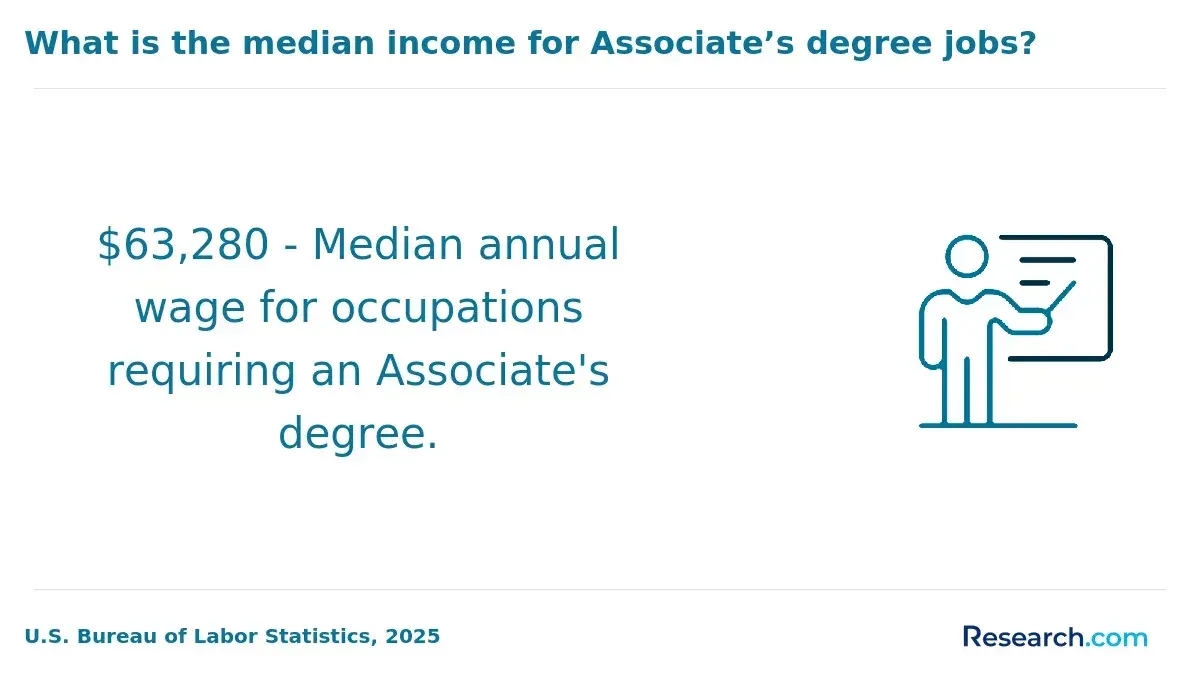
- Typical Duration: Most bachelor's degrees in education require about four years of full-time study, while associate degrees typically take around two years. In contrast, certificate program length for teaching careers usually ranges from a few months up to 18 months, allowing for a faster completion timeline.
- Flexibility: Certificate programs often provide more flexible pacing options with evening, weekend, or online classes designed for working professionals. Education degree programs, especially at the bachelor's level, tend to have a more structured course sequence, which can extend completion times for part-time students.
- Factors Affecting Timeline: Several elements influence how long completion takes for both paths. Prior experience might allow skipping some certificate modules, reducing duration. Transfer credits can shorten degree programs. Additionally, accelerated or year-round course offerings can speed up both certificate and education degree completions.
For prospective students prioritizing quick workforce entry, certificates offer an advantage given their generally shorter length. However, degrees remain the standard for broader professional roles requiring comprehensive education training. Some students seeking a balance may explore options like the best accelerated online associates business degree, which may provide a faster yet substantive education credential.
Can You Complete a Education Degree or Certificate Entirely Online?
The rapid growth of online education in the United States has made it possible for many students to pursue both education degrees and certificates without attending a physical campus. Many accredited universities now offer fully online certificate programs that focus on specific teaching skills or subject areas, allowing students to study at their own pace from anywhere with internet access.
While some online teaching degree programs, especially bachelor's and master's, are also available online, these often incorporate hybrid elements or require occasional on-campus visits, particularly for courses involving hands-on training or student teaching. The availability of accredited online education certificate programs is generally higher and more flexible compared to degree programs, which might still have in-person components due to state licensure policies.
Practical requirements like supervised classroom experiences, internships, or practicum hours mandated by many state licensure boards typically cannot be completed entirely online. Some universities facilitate local placements, while others require travel to campus or partner schools. For individuals seeking full teaching certification, programs with clear support for these hands-on elements are essential.
However, for those aiming to quickly boost skills or transition within education without licensure, a fully online certificate may be the best fit. When choosing between an online degree and certificate, consider your career goals, state regulations, and logistics. To explore options and learn more about what's the easiest degree to get, review available programs carefully.
Admission requirements play a crucial role when deciding between an education degree and a certificate program, as they affect your eligibility, preparation time, and career path options. Understanding these differences helps align your choice with your background and goals.
Below is a side-by-side comparison of the typical admission requirements for each pathway.
Admission Requirements for Education Degree Programs
- Educational Background: Most education degree programs require at least a high school diploma or GED for undergraduate entry. Graduate programs often expect a completed bachelor's degree in education or a related field.
- Transcripts: Applicants need to submit official transcripts from all previously attended institutions to verify academic history and performance.
- Standardized Test Scores: Some universities require SAT or ACT scores for undergraduate admission, while graduate programs may request GRE or similar tests, although these are increasingly optional.
- Letters of Recommendation: Degree programs often ask for 1-3 letters from teachers, employers, or professionals who can attest to your academic abilities and character.
- Personal Statement: A written essay outlining your goals, motivation, and relevant experience is typically required.
- Minimum GPA: Most programs set a minimum cumulative GPA, often around 2.5-3.0 for undergraduates and higher for graduate applicants.
Admission Requirements for Education Certificate Programs
- Educational Background: Most certificate programs require a high school diploma or GED, though some accept less formal education or prefer some college coursework. This flexibility often reflects certificate program requirements for teaching careers in New York.
- Transcripts: Transcript submission is less common and generally more flexible than with degree programs.
- Work Experience: Certain graduate-level or specialized certificates prefer or require relevant work or volunteer experience in education.
- Application Form: A completed application is usually required, but other materials are minimal compared to degree programs.
- Prerequisites: Some advanced certificates have prerequisite courses, though most entry-level certificates do not.
Admission requirements for education degrees tend to be more comprehensive due to their academic scope and professional rigor. Certificate programs offer a more accessible and focused route, often appealing to those interested in quick skill development or targeted training.
For those seeking affordable pathways, exploring cheap associate degrees online can provide additional options.
Knowing the credit requirements for education degrees and certificates is essential for students planning their academic schedules and career timelines. This clarity helps in setting realistic goals and managing time effectively.
Here is a straightforward comparison of what to expect in terms of credit loads for each path:
- Education degree: These programs typically demand between 60 and 120 semester credits, often completed over two to four years of full-time study, including general education, core classes, and electives.
- Education certificate: Certificates require fewer credits-usually 12 to 18-and can be completed in as little as three months up to a year, concentrating on specialized skills without the broader coursework found in degree tracks.
Tuition costs are a crucial factor when deciding between pursuing an education degree or an education certificate, as they directly impact your overall financial commitment and potential return on investment. Comparing average tuition ranges for each path can help clarify which option better aligns with your career goals and budget.
Average Tuition for Education Degree Programs
- Tuition Range: State residents typically pay about $10,578 per year for undergraduate education degrees; out-of-state students encounter significantly higher costs averaging $35,723 per year. Private institutions usually charge more.
- Institution Type: Public universities provide lower tuition for in-state students, whereas private schools and out-of-state tuition rates at public colleges are substantially more expensive.
- Online vs. On-Campus: Online bachelor's programs in education average around $12,216 per year, which is lower than the $18,981 per year typical for on-campus programs.
- Graduate Programs: Master's degrees cost roughly $19,749 per year, with total expenses influenced by program length and institution prestige.
- Additional Expenses: Beyond tuition, students should consider mandatory fees, books, and living costs, adding several thousand dollars annually.
Average Tuition for Education Certificate Programs
- Flat Rate Tuition: Many certificate programs offer a flat tuition of approximately $4,750 for the entire curriculum, common in online or post-baccalaureate teaching certificates.
- Per Credit Cost: Some certificate programs charge by credit, such as $713 per credit for post-baccalaureate teaching certification prep, with total costs based on required credits.
- Program Duration: Certificates generally require fewer credits and less time, lowering tuition compared to degree programs, an important factor reflected in the education certificate program tuition comparison.
- Institutional Variation: Tuition can differ depending on whether the program is offered by public or private institutions and whether it is online or on-campus.
- Mandatory Fees: Certificate students may have lower university fees than those enrolled in degree programs.
For students seeking affordable options, researching the most affordable online universities that accept financial aid can provide valuable opportunities to reduce costs while pursuing education credentials with most affordable online universities that accept financial aid.
8
It is possible to transfer certificate credits toward a education degree, but this depends largely on the institution's policies and the accreditation status of the program. Generally, only credits from accredited schools that align closely with the degree's curriculum are accepted. Course content and level must match what the education degree requires for the credit to be eligible. Because policies vary widely, some universities are more flexible and allow more transfer credits, while others enforce stricter limitations.
Key factors to consider include transfer limits, which differ significantly between schools-for example, some institutions allow up to 90 transfer credits for a bachelor's degree, while others accept much fewer. Additionally, many programs require a minimum grade, often a C or better, for a course to be transferable. It is crucial to verify transferability with admissions prior to enrollment, as rules can change or vary by program. Confirming these details helps students make informed decisions and protect their investment in education.
Certificate programs in education are not accredited in the same manner as education degree programs. Education degrees, such as a bachelor's or master's, come from accredited colleges or universities that meet rigorous standards set by recognized regional or national accrediting agencies.
These agencies are approved by bodies like the U.S. Department of Education or the Council for Higher Education Accreditation. In contrast, certificate programs may be offered by a broader variety of institutions-community colleges, universities, online platforms, or professional groups-with less uniform accreditation standards. While some certificates come from accredited schools, others emphasize industry relevance or program quality over broad academic criteria.
Accreditation is important because it guarantees the program meets established quality benchmarks, supports credit transferability, and is valued by employers and licensing authorities. For education careers, accredited degrees are typically mandatory for licensure or advancement within public schools.
Students should verify that the institution is accredited by recognized agencies and, for certificates, check for endorsements from relevant professional organizations. It is also crucial to ensure that credentials align with state or employer requirements. Always confirm accreditation status through official accrediting bodies before enrolling in any education program.
Both education degrees and certificates offer pathways to rewarding careers, but they often lead to different professional levels and roles. Understanding the distinctions can help you select the credential that best matches your career goals and timeline.
Below is a comparison of typical jobs associated with each option.
Jobs You Can Get with a education Degree
- Teacher: Plans and delivers curriculum in K-12 or higher education settings, often requiring specific subject expertise and licensure.
- School administrator: Oversees school operations, manages staff, and ensures compliance with education standards within an institution.
- Curriculum developer: Designs educational materials and programs to enhance student learning across grade levels or specialties.
- Instructional coordinator: Evaluates teaching practices and implements training programs to improve instructional quality.
- Education consultant: Advises schools or organizations on best practices and policy development to optimize educational outcomes.
- Academic advisor: Guides students on course selection and academic planning to support degree completion and career goals.
Jobs You Can Get with a education Certificate
- Teaching assistant: Supports lead teachers in classrooms by assisting with instruction and student supervision.
- Substitute teacher: Temporarily fills teaching roles during absences, ensuring continuity in classroom activities.
- Paraprofessional: Provides targeted support to students with special needs or learning challenges under professional supervision.
- Childcare worker: Cares for and nurtures young children in daycare or after-school environments, fostering social and developmental skills.
- After-school program leader: Organizes and leads educational or recreational activities for students outside regular school hours.
- Corporate trainer: Delivers specialized training sessions designed to improve employee skills in educational or workplace settings.
Salary potential frequently differs between education certificate holders and degree graduates, often influencing career decisions. Understanding how the average starting salary for education degree graduates compares to certificate program graduate starting salary can help clarify these differences.
Below is a side-by-side comparison of starting salaries and key factors shaping earning potential for each credential type.
- Typical Salary Range: Education degree graduates, particularly those with a bachelor's, typically see starting salaries ranging from $41,800 to $59,600 per year, with median earnings for bachelor's degree holders overall near $69,381 annually.
- Certificate Graduate Starting Salary: Those completing certificate programs or some college without a degree generally earn between $40,248 and $46,755 per year initially, which can be close to salaries for high school diploma holders ($42,081-$42,590), though this varies by certificate and industry.
- Influencing Factors: Both salary outcomes depend on type of credential, relevant work experience, industry and occupation, geographic location, and current job market demand. Some technical certificates may even surpass entry-level degree salaries in specific trades.
- Career Outlook: While certificate holders can enter the workforce more quickly, education degrees often provide broader career options and higher long-term earning potential.
- Additional Opportunities: Pursuing undergraduate dual degree programs can further enhance earning prospects and expand professional pathways.
Here's What Graduates of Education Programs Say About Their Degree or Certificate
- Taylor: "Choosing an education certificate program was perfect for me because of the accelerated pace and focused curriculum. While certificate programs generally cost less and take less time than degree programs, I appreciated how it enhanced my teaching skills quickly without the long-term commitment. If you're looking for a cost-effective way to upskill rapidly, certificates are a fantastic option."
- Cruz: "Pursuing an education degree was a transformative experience that offered deeper learning and broader career opportunities despite the higher cost and longer duration. The comprehensive coursework and pacing allowed me to explore educational theories and practical applications extensively, which really prepared me for leadership roles in the field. For anyone considering their long-term career impact, a degree is definitely worth the investment."
- Luka: "Having completed both an education certificate and degree, I can confidently say each served a unique purpose in my professional growth. The certificate allowed me to gain specific skills fast and at a lower cost, while the degree provided a robust foundation and opened doors for more advanced positions. Deciding between the two really depends on your career goals and how much time and money you're willing to invest."
Other Things You Should Know About Education Degrees
Yes, but only some do. Regionally accredited colleges usually accept up to 6–12 semester credits from graduate certificate coursework, and transfer is decided course by course. Schools often require a minimum grade of B and recent completion, usually within five to seven years.
Some certificate programs are designed to help candidates meet state licensure requirements or renew teaching credentials. These are often shorter and targeted programs intended for professional development rather than initial teacher certification. However, many certificate programs do not qualify a student for licensure and should be carefully evaluated for this purpose.
In 2027, education certificate programs generally require less classroom experience compared to degree programs. Certificates often focus on specific skills and knowledge, offering a more streamlined pathway, whereas degree programs typically include extensive classroom and hands-on experiences as part of a comprehensive educational framework.
- Online Certificate Programs Vs. College Degrees https://www.washingtontech.edu/online-certificate-programs-vs-college-degrees/
- Does Education Make a Difference in Salary? | Penn Foster https://www.pennfoster.edu/blog/does-education-make-a-difference-in-salary
- Credit Transfer Programs https://eduwing.ae/credit-transfer-programs/
- How Transfer Works - BC Transfer Guide https://www.bctransferguide.ca/how-transfer-works/
- Average Cost of Online College [2025]: Yearly Tuition + Fees https://educationdata.org/average-cost-of-online-college
- European Credit Transfer and Accumulation System (ECTS) https://education.ec.europa.eu/education-levels/higher-education/inclusive-and-connected-higher-education/european-credit-transfer-and-accumulation-system
- Certification Programs vs. Degrees in Today’s Market https://www.csinow.edu/blog/certification-programs-vs-degrees-in-todays-market/
- Certification vs. Degree: Which is Right for You? - TechBuffalo https://www.techbuffalo.org/certification-vs-degree-which-is-right-for-you/
- Online Learning - Is an online degree a 'real' degree? | Postgraduate study | College of Medicine and Vet Medicine https://medicine-vet-medicine.ed.ac.uk/postgraduate/postgraduate-blog/online-degree-real
- Degrees vs. Certificate Programs: What's the Difference? https://www.snhu.edu/about-us/newsroom/education/certificates-vs-degrees