2027 Is a 2-Year Education Degree Worth It: Accelerated Bachelor's ROI & Time Trade-Offs

Co-Founder and Chief Data Scientist
Many prospective students face uncertainty about pursuing a 2-year education degree, especially when evaluating the value of accelerated bachelor's programs. According to the National Center for Education Statistics, accelerated education degree graduates see a 15% faster entry into teaching roles compared to traditional pathways.
This article examines the financial return on investment and the time trade-offs associated with these programs. It aims to provide clear insights on whether the reduced duration translates into comparable career advancement and income. Readers will learn how to weigh accelerated degree benefits against potential challenges to make informed education and career decisions.
Key Benefits of a 2-Year Education Degree
- Accelerated 2-year education degrees reduce time to workforce entry by up to 40%, enabling faster salary accumulation compared to traditional 4-year programs.
- These programs often cost less, lowering student debt and enhancing return on investment given the average teacher salary's regional variation.
- Graduates gain practical teaching skills and certification eligibility sooner, improving job placement rates and career stability in a competitive education job market.
How Do 2-Year Education Programs Work?
Two-year education programs offer an accelerated pathway for students aiming to earn a bachelor's degree more quickly than through traditional four-year tracks. Understanding the structure of these programs is key for those considering the time commitment and how it aligns with their career goals.
This overview breaks down the essential components of a 2-year education degree program structure and its admissions process.
- Accelerated Pacing: Students complete degree requirements faster by managing higher credit loads per term, often around 12 to 15 credits in condensed periods, demanding strong focus and time management.
- Year-round Enrollment: These programs feature continuous enrollment without long breaks, allowing learners to progress steadily and shorten total completion time.
- Condensed Course Terms: Instead of standard semesters, courses run in shorter sessions of 6 to 8 weeks, facilitating rapid movement through curriculum content.
- Credit Load Expectations: Balanced coursework demands are substantial; students handle intensive schedules that can reduce overall tuition and lost income opportunities.
- Instructional Formats: A flexible mix of online, hybrid, and in-person classes accommodates working adults, supporting diverse learning styles and schedules.
- Assessment Methods: Frequent quizzes, projects, and performance-based evaluations keep pace with accelerated timelines and ensure mastery of both theory and practical skills.
- Curriculum Progression: Regular checkpoints include practicum or student teaching placements, essential components for licensure preparation and applied experience.
Prospective students should carefully review the accelerated education degree admissions process to ensure readiness for the fast pace and rigor. With employment in education fields projected to grow, such programs may offer valuable advantages.
For those interested in advancing beyond a bachelor's, exploring options like an online DNP could be a subsequent step.
What Are the Admission Requirements for a 2-Year Education Degree?
For students considering an accelerated bachelor's in education, understanding the admission requirements is crucial to assessing whether the program aligns with their academic and career goals. These requirements help ensure that applicants are prepared to manage the rigors of an intensified curriculum designed for faster degree completion.
Below is a detailed breakdown of typical 2-year education degree admission criteria.
- Prior Education: Admission generally requires a high school diploma or an equivalent credential, demonstrating foundational academic achievement necessary for succeeding in accelerated education programs.
- GPA Expectations: Many programs expect a minimum GPA, often between 2.5 and 3.0 on a 4.0 scale, which reflects a student's readiness and ability to handle college-level coursework efficiently.
- Standardized Tests: SAT or ACT scores may be optional or waived at some institutions, particularly in programs catering to adult learners who benefit from flexible admissions standards in accelerated tracks.
- Prerequisite Courses: Coursework in key subjects such as English, math, or social sciences is commonly required to ensure applicants possess essential foundational knowledge before entering an accelerated program.
- Relevant Experience: Some schools value work or volunteer experience within educational settings as a way to assess an applicant's commitment and practical understanding, which can enhance admissions prospects.
- Program-Specific Considerations: Since accelerated education programs emphasize time management and self-motivation, applicants often need to demonstrate these skills either through prior academic performance or supplementary documentation.
Students exploring the requirements for accelerated education programs should also consider related accelerated training options, such as a medical assistant program, which similarly targets quick workforce entry. According to the National Center for Education Statistics, these accelerated bachelor's programs can save up to 50% of the time compared to traditional four-year degrees, making them an appealing choice for those ready to advance their careers efficiently.
What Does a Typical Week Look Like in a 2-Year Education Program?
Gaining insight into the weekly demands of a 2-year accelerated education program helps prospective students gauge if the pace matches their lifestyle and commitments. This understanding clarifies how classwork, study, and collaboration are balanced within a condensed timeframe.
Below is an overview of the typical weekly rhythm for such a program.
- Class Sessions and Lectures: Students usually attend multiple classes throughout the week, totaling about 10 to 15 hours. These gatherings focus on essential topics like pedagogy and curriculum design while encouraging interactive participation.
- Assignments and Assessments: Coursework involves regular essays, quizzes, and lesson plan projects with tight deadlines, reflecting the program's accelerated nature. Keeping up requires consistent, focused effort.
- Group Work: Collaborative assignments play a key role, requiring several hours weekly for team projects or peer reviews, often conducted both online and in person to build essential communication skills.
- Independent Study: Outside of class, students dedicate 15 to 20 hours weekly reviewing material, researching theories, and preparing for exams, emphasizing a rigorous workload.
- Instructor Interaction: Access to faculty is generally available through office hours or scheduled meetings, with prompt feedback crucial for progress in the fast-paced environment.
- Time Management: Maintaining an organized schedule is vital. Students rely on planners or digital tools to juggle lectures, study sessions, group tasks, and personal responsibilities seamlessly.
After speaking with a graduate who completed an accelerated bachelor's degree in education within two years, it became clear the journey was as demanding as expected but rewarding. He shared, "Balancing a full-time job and the program meant my evenings were packed with readings and assignments.
Some weeks felt overwhelming, especially when multiple deadlines overlapped." Yet, he noted that remaining disciplined and seeking support when needed made the workload manageable. "It wasn't just about studying harder but prioritizing smarter. The intensity sharpened my focus and really prepared me for real-world teaching challenges."
Delivery format plays a crucial role for students pursuing accelerated two-year education degrees, impacting flexibility, access, and how they manage their time. Choosing the right format can determine how well a student balances studies with work or family commitments, making understanding the options essential.
- Fully online vs. hybrid: Programs either offer fully online coursework or blend online learning with occasional in-person sessions. Hybrid models may include practical experiences or campus visits, providing hands-on opportunities alongside online study.
- Asynchronous and synchronous learning: Courses often mix real-time classes with self-paced materials. Live sessions encourage interaction and community, while on-demand content offers learners freedom to study according to their own schedules.
- Technology requirements: Reliable internet and compatible devices are necessary to access video lectures, digital assessments, and discussion platforms. Ensuring technological readiness is key for navigating accelerated online courses successfully.
- Student support services: Many programs provide virtual tutoring, advising, and career counseling. These resources help maintain progress and address challenges unique to fast-paced online learning.
- Impact on pacing and engagement: The combination of learning formats affects how quickly students move through material and stay connected with instructors and peers, which is critical for success in condensed two-year programs.
Evaluating the total cost of a 2-year education degree program is crucial for assessing its return on investment, especially when considering accelerated formats. These programs often compress coursework into a shorter timeframe, which can impact both tuition and living expenses. A clear understanding of all relevant costs helps prospective students make informed financial decisions.
Key cost components to consider include:
- Tuition structure: Accelerated programs may charge higher tuition rates per credit or adopt flat-rate fees per term, reflecting the faster pace. Students should compare how these fees stack up against traditional programs to assess affordability.
- Mandatory fees: These cover administrative costs, campus services, and technology access, which may be similar or slightly elevated in accelerated settings due to increased resource demands over a condensed period.
- Textbooks and learning materials: The rapid course turnover in accelerated degrees can lead to more frequent purchases of textbooks or digital resources, adding to total expenses beyond tuition.
- Technology and lab fees: Education degrees often require specific software or practical training tools. These costs can vary widely but are essential to factor into the total price, particularly in programs involving hands-on learning.
The compact schedule of accelerated degrees often means students pay more per credit but spend less time on living expenses such as housing and transportation. This balance can make accelerated paths cost-competitive with traditional ones. When examining tuition and financial aid for accelerated education degrees, keep in mind that the average annual tuition and fees for public two-year colleges hover around $4,000; however, compressed programs may equal or exceed traditional four-year program costs.
The potential benefits of finishing sooner include earlier entry into the workforce, which may increase lifetime earnings, aligning with data from the U.S. Bureau of Labor Statistics on median teacher salaries rising with degree level. For those interested in related fields, exploring a fast track healthcare administration degree can offer comparable insights into accelerated education cost dynamics.
When considering accelerated education degree options, access to financial aid plays a critical role in deciding whether the investment of time and money is feasible. Students often worry if the compressed timeframe limits eligibility for traditional funding sources.
Exploring how aid applies to shorter, intensive programs helps clarify the financial picture before committing.
- Federal student aid eligibility: Pell Grants and Direct Loans remain available to students enrolled in 2-year accelerated education programs as long as they meet enrollment and academic progress standards. However, because aid distribution often depends on credit hours or semesters, condensed schedules can influence when and how much aid is provided.
- Scholarships and grants: Various scholarships target education majors or accelerated degree seekers specifically. These funds do not need repayment and can substantially ease tuition costs, but awards vary by institution and program focus.
- Employer tuition assistance: Many working adults benefit from employer-sponsored tuition reimbursement programs, which often require continued employment or minimum grade achievement. Such programs can cover part or all of tuition, making accelerated paths more affordable while balancing work.
- Flexible payment plans: Some institutions offer structured payment options that help students manage tuition costs without resorting to loans or accruing interest. These plans often break payments into installments aligned with the accelerated calendar.
- Impact of accelerated pacing: Faster program completion means students enter the workforce sooner, but it may shift aid timing and amount since funds are allocated per term or credit. Careful financial planning is essential to align aid with program milestones.
When I spoke with a professional who completed an accelerated bachelor's degree in education, she emphasized how critical financial aid was in her journey. "The pace was intense, and I worried about keeping up with payments," she recalled.
"Federal aid helped me tremendously, though the timing was tricky since the semesters were shorter than usual. I had to stay on top of paperwork and communicate regularly with the financial aid office." She also utilized employer tuition assistance, noting it was life-changing to have partial reimbursement during busy work-study periods.
She reflected, "Without that aid, finishing in two years would've been almost impossible for me financially. It wasn't just about getting funds but managing them smartly." Her experience highlights that, while challenges exist, financial aid for 2-year education programs is accessible and can make accelerated degrees attainable with correct planning and support.
When evaluating accelerated bachelor's degrees in education, understanding potential career outcomes is crucial for aligning time investment with professional goals. Job prospects can greatly influence whether choosing a 2-year education degree meets expectations for early career entry and growth.
Below is a detailed overview of common career paths and how accelerated programs support workforce readiness.
- Entry-level support roles: Graduates often take positions such as teacher assistants, paraprofessionals, preschool teachers, or childcare providers. These roles provide practical classroom experience and a chance to apply foundational teaching skills in real-world settings.
- Accelerated program advantages: Many careers with accelerated education degrees benefit from condensed curricula that emphasize hands-on learning. This approach equips students with essential skills like classroom management, lesson planning, and communication, enabling a smoother transition into teaching support or early childhood education roles.
- Licensure and career advancement: Some states allow holders of a 2-year education degree to pursue licensure for early childhood or teaching aide positions. Combining this with continued education or professional development can fast-track career growth prospects within educational settings.
- Industry demand and growth: The U.S. Bureau of Labor Statistics forecasts a 7% growth for occupations such as teacher assistants through 2032, signaling good demand for graduates. This aligns well with the generally shorter duration of accelerated programs, which can save students up to two years compared to traditional pathways.
- Balanced investment: Overall, a 2-year education degree offers targeted entry points into early childhood and educational support sectors, balancing efficient preparation with relevant job opportunities. Individuals considering options may also explore related fields through resources like cheap online FNP programs as part of broader career planning.
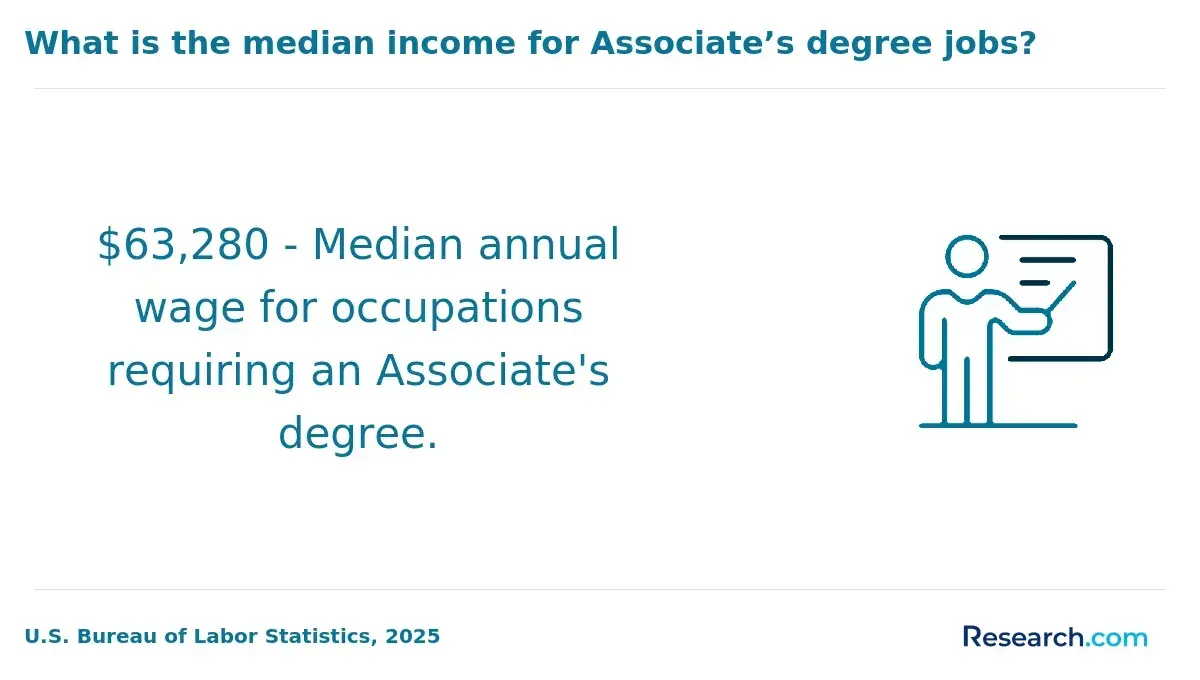
Salary outcomes are a critical factor when evaluating the return on investment (ROI) of accelerated versus traditional degree paths in education. Understanding how earnings compare between 2-year education degrees and bachelor's degrees helps prospective students make informed decisions based on both short-term income and long-term career growth.
The following points offer a detailed comparison of these salary outcomes.
- Early-career earnings: Graduates with 2-year education degrees typically earn median annual wages around $40,000 to $45,000, while those holding traditional bachelor's degrees usually start between $50,000 and $60,000. This reflects differing credential levels and certification opportunities early in their careers.
- Long-term earning potential: Bachelor's degree holders generally have broader qualification scopes and access to higher certification levels, which lead to promotions and specialized teaching roles. This often results in greater salary growth over time compared to 2-year degree holders, whose potential can be limited without further qualifications.
- Employer preferences: Many public K-12 teaching positions mandate a bachelor's degree plus state certification, favoring these graduates for full teacher roles. Individuals with 2-year degrees are often restricted to paraprofessional or assistant roles with capped salaries.
- Career progression timelines: Those completing accelerated bachelor's degree programs may enter the workforce faster-often in about three years instead of four-allowing earlier accumulation of work experience and income. This faster entry can partially offset the initial wage gap and support quicker advancement if pursuing advanced certifications or master's degrees.
- Faster workforce entry impact: Accelerated bachelor's graduates might maximize lifetime earnings by starting sooner, despite a shorter degree duration. Evaluating options like the cheapest BSN programs can provide insights into affordable accelerated pathways that balance costs against earnings.
The salary trade-offs highlighted reflect widely reported data from sources such as the BLS Occupational Outlook Handbook and the National Center for Education Statistics, confirming general trends in 2 year education degree salary comparison and accelerated bachelor's degree earnings potential.
Evaluating the return on investment is essential when choosing an accelerated education degree, as it helps determine whether the time and money spent will result in meaningful career and financial benefits. With accelerated programs designed to shorten completion time, understanding the factors that influence ROI can guide students toward smarter decisions.
The following outlines the primary elements that most affect ROI in these programs.
- Time-to-completion: Accelerated degrees reduce the traditional four-year timeline to around two or three years, enabling faster entry into the workforce and decreasing time away from earning potential. This shorter duration helps minimize opportunity costs and speeds up career advancement.
- Tuition and total cost: Although per-credit fees may be similar to traditional programs, the condensed curriculum typically means paying for fewer credits overall. This leads to lower total expenses, reducing student debt and easing financial burdens after graduation.
- Employment outcomes and salary growth: Strong job prospects in education, supported by a projected 8% growth in demand through 2031, enhance ROI by offering stable employment and opportunities for increased wages over time. Graduates can expect competitive salaries depending on their teaching level and location.
- Industry demand: Specialized fields such as special education or STEM teaching often have higher demand, translating to more job openings and potentially higher salaries. Choosing a program aligned with these sectors can improve future career opportunities.
- Skill transferability: Programs that focus on adaptable teaching skills and provide practical experience allow graduates to work in diverse educational environments or pursue additional certifications, making career transitions and advancement more feasible.
Choosing a 2-year education degree depends on your ability to adapt to a fast-paced learning environment and your availability to commit significant time to studies. These programs condense material into shorter terms, requiring strong focus and discipline.
Consider how urgently you want to enter the workforce, as accelerated paths can reduce time spent in school by up to two years compared to traditional four-year degrees. Reflect on your preferred learning style, since intensive courses may not suit everyone's pace or retention ability. Balancing these factors helps ensure you can manage the program's demands effectively.
From a financial perspective, shorter programs typically offer lower tuition costs and can lessen student debt, potentially improving your overall return on investment. However, weigh these savings against expected earnings in your teaching region and role, as salaries for educators with bachelor's degrees vary widely.
Job market growth in education remains steady, but it's important to verify how employers view accelerated degrees relative to traditional ones to maintain career flexibility. Understanding these practical elements will help you make an informed decision about your education and professional future.
What Graduates Say About Their 2-Year Education Degree
- Taylor: "Choosing a 2-year accelerated bachelor's degree in education was the best decision for me because it allowed me to finish my studies quickly without sacrificing quality. Managing the rigorous schedule was challenging, but with discipline and time management, I stayed on track. This degree has opened doors to teaching positions and gave me the confidence to excel in my career while saving on average tuition costs compared to longer programs. "
- Samantha: "Opting for a 2-year program was a reflection on my need for a cost-effective and time-efficient path into education. Balancing work and study required sacrifices, but the structured curriculum and hands-on experience made it worthwhile. This degree accelerated my professional growth and positioned me well for leadership roles in education."
- Braeden: "The 2-year education degree appealed to me because of the focused and immersive learning experience it promised. The intensive schedule demanded strong commitment, but it amplified my learning and practical skills. Professionally, it gave me a competitive edge in the job market and reduced financial strain due to lower average attendance costs. "
Other Things You Should Know About Education Degrees
Yes. Many accelerated education bachelor’s programs accept up to 60 semester credits from an accredited associate degree, which can cut completion time to about 18–24 months. Schools usually require a minimum 2.0 GPA, official transcripts, and state-approved general education credits before transfer evaluation.
While a 2-year education degree can qualify graduates for support and assistant roles in educational settings, it generally does not meet state certification requirements for full teaching positions. This limitation can restrict opportunities for career advancement and salary increases in K-12 education. Graduates often need to pursue a bachelor's degree to advance professionally.
An accelerated bachelor's degree program typically requires a more intense study schedule, which can challenge time management, especially for working students. Balancing work, classes, and personal life demands effective planning. However, flexible course options and online classes can help alleviate some time constraints, making it feasible.
- Two-Year On-Campus Bachelor of Education After-Degree-Future https://werklund.ucalgary.ca/undergraduate-programs/future-students/pathways-and-admissions/two-year-campus-bachelor-education-after-degree
- Primary Education Studies | Undergraduate | University College Birmingham https://www.ucb.ac.uk/study/courses/undergraduate/primary-education-studies-ba-hons-accelerated/
- Investing in Education: Different Ways to pay for College https://cobellscholar.org/cobell_blog/investing-in-education-different-ways-to-pay-for-college/
- 2 Year Colleges & School Programs | My Future https://myfuture.com/mapping-your-future/education/two-year-schools/
- Online Accelerated Bachelor Swiss degree - Swiss School of Business and Management Geneva https://www.ssbm.ch/online-bba-accelerated-swiss/
- Online Bachelor of Education (Elementary) https://www.uregina.ca/academics/programs/education/online-bachelor-education-elementary.html
- Which Type of College Degree is Right For You? https://accessscholarships.com/blog/what-type-of-college-degree-is-right-for-you/
- Financial Aid Options 2025 | Your College Funding Guide https://www.educationconnection.com/financial-aid/
- The ROI of higher education: New metrics for measuring college value - Business Money https://www.business-money.com/announcements/the-roi-of-higher-education-new-metrics-for-measuring-college-value/