2027 DNP Pediatric Primary Care NP Programs for Nurses in New Mexico: BSN and MSN Entry Routes and Clinical Training
Audited and Verified:
Our Editorial and Data Verification Process
Research.com uses government datasets, official education statistics and primary institutional information to support its career and degree guides. Our review process checks factual accuracy, occupational definitions, source dates and the requirements associated with the credentials discussed.
How This Article Was Fact-Checked
Our editorial team verifies salary estimates, employment projections, education requirements and program information against original data providers and official organizations. Salary figures are checked against the relevant occupational definitions and reporting periods. Information about licensure, accreditation and required in-person training is reviewed separately.
Fact-checked and verified on:

Co-Founder and Chief Data Scientist
For a New Mexico nurse who wants to provide pediatric primary care, the first decision is not simply where to earn a DNP. It is whether a program accepts your current degree and prepares you for the pediatric primary care nurse practitioner role. That distinction matters especially for MSN-prepared nurses whose prior specialty may not be pediatrics.
This guide identifies the in-state program to investigate, explains how BSN and MSN routes differ, and shows what to verify about clinical placements, costs, certification, and New Mexico practice authority before applying.
Key Things You Should Know
- The University of New Mexico is the in-state school to investigate for a BSN-to-DNP pediatric nurse practitioner-primary care track; confirm that the track is admitting students for your intended term.
- An MSN does not automatically shorten the route to pediatric NP practice: prior population-focus coursework and supervised clinical experiences require an individual program review.
- Before enrolling, confirm pediatric primary care certification eligibility and clinical placement arrangements; the DNP's doctoral practice-hour expectation is not the same as a required number of pediatric direct-care hours.
What are DNP pediatric primary care nurse practitioner programs in New Mexico?
A pediatric nurse practitioner-primary care (PNP-PC) DNP is a practice-focused doctoral pathway for registered nurses preparing to assess, diagnose, manage, and coordinate care for children and adolescents in primary care settings.
Its population focus is pediatric; its care focus is primary care. It is not interchangeable with pediatric acute care, family nurse practitioner (FNP), or a DNP in leadership without NP preparation.
The route matters as much as the degree name. A BSN-to-DNP track combines graduate NP preparation with doctoral study. A post-master's DNP may instead build on an NP specialty the nurse already holds and may not teach a new one.
Someone who is not yet an RN must complete an RN-qualifying route first; nursing entry pathways for career changers address that earlier decision, not pediatric NP eligibility.
Which New Mexico schools offer BSN-to-DNP pediatric primary care programs?
The University of New Mexico (UNM) College of Nursing is the principal in-state school to investigate for BSN-to-DNP pediatric primary care preparation. Its pediatric specialty, available entry route, admission cycle, and campus requirements should be confirmed directly with the college for the term you intend to enter.
Do not assume that another New Mexico school's DNP, FNP, or psychiatric-mental health NP track includes a pediatric primary care option.
Ask UNM for the current plan of study and written answers about the exact degree and specialty awarded, whether the cohort is accepting applications, where pediatric clinical placements can occur, and who secures and approves preceptors.
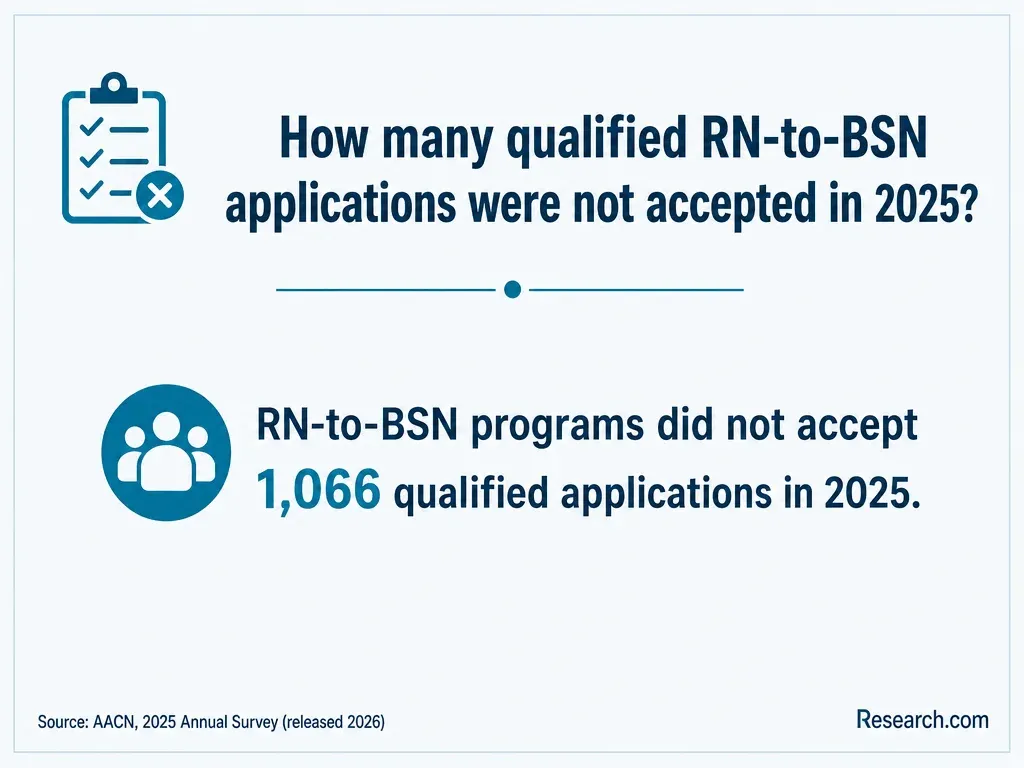
Those answers are more useful than a general DNP program listing. An ADN-prepared RN who needs a bachelor's degree before applying can separately evaluate RN-to-BSN pathways without standard hospital rotations; that completion route does not replace the DNP track's supervised pediatric NP training.
Can MSN-prepared nurses enter a pediatric primary care DNP program?
Possibly, but MSN admission and preparation for a new NP population focus are separate decisions. An MSN-prepared pediatric primary care NP may be seeking doctoral practice preparation.
An FNP, another type of APRN, or a nurse with a non-APRN MSN may need additional pediatric primary care coursework and supervised direct-care experiences before becoming eligible for PNP-PC certification.
The comparison below shows why an individual transcript and competency review matters more than the letters "MSN."
| Current preparation | Likely educational question | What to verify |
| Certified pediatric primary care NP with an MSN | Is a post-master's DNP available without repeating specialty preparation? | Accepted prior practice hours, doctoral coursework, and project requirements |
| MSN-prepared NP in another population focus | Which PNP-PC specialty courses and clinical experiences are missing? | Formal gap analysis and certification-eligible pediatric preparation |
| MSN in education, leadership, or another non-APRN field | Which route provides initial NP preparation? | Admission eligibility, advanced clinical courses, and supervised pediatric care |
Request a written review of transcripts, course descriptions, documented supervised hours, and existing certification. If an MSN-prepared nurse is considering an FNP role instead, planning a shorter post-master's FNP pathway is a different population-focus decision; an FNP certificate should not be mistaken for PNP-PC preparation.
Check institutional accreditation and nursing program accreditation separately. The Commission on Collegiate Nursing Education (CCNE) and the Accreditation Commission for Education in Nursing (ACEN) accredit nursing programs within their stated scope; neither a university's general accreditation nor a DNP label establishes that a particular pediatric track meets certification requirements. Confirm the current nursing accreditation status and degree scope in the accreditor's directory.
Also ask the school whether its specific PNP-PC curriculum and clinical training satisfy the Pediatric Nursing Certification Board's educational requirements and support the New Mexico Board of Nursing's certified nurse practitioner application process.
These are distinct from accreditation. When comparing DNP study options beyond highly selective programs, apply the same specialty, accreditation, and eligibility checks rather than treating admission flexibility as evidence of NP qualification.
For a BSN-to-DNP applicant, expect the school to review a nursing bachelor's degree, RN license, academic record, professional materials, and readiness for graduate clinical study. References, a statement of purpose, an interview, experience expectations, and prerequisites are program-specific.
Admission also depends on the school's ability to support an appropriate clinical plan; acceptance to a university alone does not establish admission to the pediatric track.
MSN applicants should be prepared to document graduate courses, existing APRN certification if applicable, and supervised clinical hours by population focus.
The receiving program decides what prior work applies. An LPN is not yet eligible for a postlicensure NP program on the strength of practical-nursing education alone; LPN-to-RN programs with online coursework concern an earlier licensure step, and their clinical and scheduling requirements still need verification.
PNP-PC preparation combines advanced health assessment, pathophysiology, and pharmacology with pediatric growth and development, health promotion, common childhood conditions, family-centered communication, and care coordination.
Supervised clinical work should develop pediatric primary care judgment with appropriate patients and preceptors. Doctoral study adds evidence appraisal, systems leadership, and a practice-focused improvement project.
Ask for separate accounting of pediatric direct-care hours and total doctoral practice hours. The AACN Essentials set an expectation of at least 1,000 postbaccalaureate practice hours for a DNP, with eligible prior graduate hours assessed under program policy.
That figure does not mean 1,000 hours of pediatric primary care encounters, nor does RN employment automatically count. An ADN-prepared nurse comparing ADN-to-MSN bridge curriculum options should similarly check whether a route actually includes PNP-PC specialty training rather than only general graduate nursing coursework.
A BSN-to-DNP route generally requires more coursework and supervised training than a post-master's DNP for an already-prepared PNP-PC. An MSN in a different specialty may shorten some doctoral coursework without eliminating new pediatric clinical requirements.
Published timelines depend on the current course sequence, enrollment pace, approved placements, and whether any prior graduate work is accepted.
Do not compare programs on tuition per credit alone. Request a current term-by-term estimate using your expected enrollment status and the items below:
- Academic charges: Required credits, tuition rate, mandatory fees, and any continuing-enrollment or project fees.
- Clinical and attendance costs: Travel to approved pediatric sites, required campus visits, compliance checks, and possible reductions in paid work hours.
- Completion costs: Books and equipment, certification examination, and state application fees.
Use the school's current schedule of charges to calculate total expected cost, then compare aid and employer reimbursement conditions. Lower-tuition advanced practice nursing programs may offer a useful price comparison, but only a program with the right pediatric specialty, approved clinical access, and certification pathway is a meaningful substitute.
Online coursework does not make pediatric NP preparation fully remote or self-paced. A program may require live classes, campus sessions, simulation, and supervised in-person clinical care.
For a working New Mexico RN, the decisive scheduling question is whether approved pediatric preceptors and sites are available within a workable travel distance during the program's required clinical periods.
Ask for the number and location of required visits, whether classes meet at fixed times, who finds clinical sites, how preceptors are approved, and whether placements outside New Mexico are permitted.
Delivery labels can conceal important differences: hybrid practical nursing study options also pair online coursework with in-person training, but they prepare students for a different license and cannot substitute for pediatric NP clinical education.
Completing a PNP-PC track is the educational step, not automatic authorization to practice. Graduates should confirm eligibility for the Pediatric Nursing Certification Board's Certified Pediatric Nurse Practitioner-Primary Care (CPNP-PC) examination, obtain the required national certification, and apply to the New Mexico Board of Nursing for certified nurse practitioner authority.
The board determines state eligibility and any additional application requirements; employers separately verify credentials and clinical readiness. A BSN-prepared RN comparing DNP study with budget-conscious graduate nursing options for BSN nurses should check the specific track, not just the award level.
A qualifying PNP-PC graduate program may support the certification route, while an MSN or DNP in a non-APRN field does not. Confirm examination and board requirements directly before committing to either degree.
What careers, salaries, and job outlook can pediatric DNP graduates expect?
Certified pediatric primary care NPs may work in pediatric practices, community clinics, and other outpatient services caring for children and families.
The role calls for assessment and management within the nurse practitioner's authorized scope, preventive care, communication with caregivers, and coordination with other clinicians. An employer may still require specialty onboarding or experience after certification.
The U.S. Bureau of Labor Statistics reports wages and employment projections for the broader nurse practitioner occupation, not a separate national PNP-PC DNP salary.
Its occupation-wide median should therefore be used as market context, not as a promised pediatric salary or a measure of the DNP's pay premium. Compare actual New Mexico job postings and offers by setting, schedule, benefits, experience requirements, and patient population before estimating a return on the degree.
For someone entering nursing from another career, entry-level MSN options for career changers concern becoming an RN first. They do not bypass the subsequent pediatric NP education, certification, and state authorization needed for this role.
Other Things You Should Know About Nursing
No. It can strengthen an application and inform clinical learning, but the program must approve and document the supervised experiences required for its PNP-PC curriculum.
Not solely because the role is pediatric primary care. A qualifying graduate NP pathway may lead to certification eligibility without a DNP; verify the program and current credentialing requirements.
A primary care credential should not be treated as acute care specialty preparation. Ask the employer and regulator what education, certification, and demonstrated competencies the proposed role requires.
Contact the program's clinical placement team before accepting an offer. Ask about approved alternatives, geographic limits, and how a delayed placement would affect progression and cost.
- 16.12.2 NMAC - State Records Center & Archives - New Mexico https://www.srca.nm.gov/parts/title16/16.012.0002.html
- Cost of Attendance (Budget) | 2025-2026 Federal Student Aid Handbook https://fsapartners.ed.gov/knowledge-center/fsa-handbook/2025-2026/vol3/ch2-cost-attendance-budget
- Post Master's Certificate - Pediatric Nurse Practitioner Online | Walden University https://www.waldenu.edu/online-certificates-programs/nursing-post-masters/pediatric-nurse-practitioner
- Accelerated BSN vs. Direct-Entry MSN: Which Is Right for You? | School of Nursing https://nursing.gwu.edu/accelerated-bsn-vs-direct-entry-msn-which-right-you
- Primary Care Pediatric Nurse Practitioner Graduate Certificate | ASU Degree Search https://degrees.asu.edu/masters-phd/major/ASU00/NUPDNPGRCT/primary-care-pediatric-nurse-practitioner-graduate-certificate
- BSN to DNP vs. MSN to DNP: Which Pathway Works for You? | Herzing University https://www.herzing.edu/blog/bsn-dnp-vs-msn-dnp-which-pathway-works-you
- Pediatric Primary Care Nurse Practitioner | Nell Hodgson Woodruff School of Nursing https://www.nursing.emory.edu/degrees-programs/nursing/pediatric-primary-care-nurse-practitioner
- Master of Science in Nursing (MSN) | UVA School of Nursing https://nursing.virginia.edu/academics/msn/fnp/
- Pediatric Primary Care Nurse Practitioner (DNP) | Rutgers Nursing https://nursing.rutgers.edu/pediatric/pediatric-primary-np-dnp/
- Clinical and Fieldwork Information | Joyce University Catalog https://catalog.joyce.edu/catalog/clinical-and-fieldwork-information