2027 DNP Pediatric Primary Care NP Programs for Nurses in Nebraska: BSN and MSN Entry Routes and Clinical Training
Audited and Verified:
Our Editorial and Data Verification Process
Research.com uses government datasets, official education statistics and primary institutional information to support its career and degree guides. Our review process checks factual accuracy, occupational definitions, source dates and the requirements associated with the credentials discussed.
How This Article Was Fact-Checked
Our editorial team verifies salary estimates, employment projections, education requirements and program information against original data providers and official organizations. Salary figures are checked against the relevant occupational definitions and reporting periods. Information about licensure, accreditation and required in-person training is reviewed separately.
Fact-checked and verified on:

Co-Founder and Chief Data Scientist
A Nebraska nurse seeking to become a pediatric primary care nurse practitioner needs more than a DNP program with a convenient schedule. The track must prepare graduates for care across childhood, provide suitable supervised clinical experiences, and align with certification and Nebraska licensure requirements.
This guide compares the BSN-to-DNP and MSN-entry decisions, identifies Nebraska programs worth checking, and explains the questions to ask about placements, time, and total cost before applying.
Key Things You Should Know
- A BSN-to-DNP pediatric primary care track prepares an RN for a new NP role; a post-master's DNP completion track may not.
- University of Nebraska Medical Center and Creighton University are the Nebraska schools to investigate for pediatric NP doctoral study; confirm the exact population focus and entry route offered for your intended term.
- Plan around supervised pediatric patient-care placements, not just online coursework. DNP programs commonly assess prior preparation against a 1,000-hour post-baccalaureate practice-experience benchmark.
What are DNP pediatric primary care NP programs in Nebraska?
A pediatric primary care nurse practitioner (PNP-PC) DNP track combines doctoral nursing study with preparation to assess, diagnose, treat, and coordinate ongoing care for infants, children, and adolescents.
Its clinical emphasis includes preventive visits, development, common illnesses, and management of chronic conditions. It is different from pediatric acute care preparation, which centers on children with complex, unstable, or critical conditions.
These are postlicensure RN programs, not routes to an initial nursing license. A Nebraska resident who is not yet an RN must complete an RN-qualifying pathway first. Even comparing accelerated LPN training schedules addresses a different, earlier credential; LPN education does not provide direct entry to NP practice.
The decisive distinction is the named pediatric primary care NP population focus. A general DNP, a pediatric nursing background, or a DNP in another NP specialty does not by itself establish eligibility for PNP-PC certification.
Which Nebraska DNP programs offer BSN and MSN entry routes?
University of Nebraska Medical Center (UNMC) and Creighton University are the principal Nebraska institutions to investigate for pediatric NP doctoral preparation.
A listing for "pediatric NP" is not enough to establish whether the current track is primary care, whether it admits BSN-prepared nurses, or whether its MSN-entry option adds a new NP specialty. Confirm all three with the school for the term in which you would enroll.
The comparison below separates the entry-route decisions from features that can change between admission cycles; it is not a guarantee that either institution has an open seat in every route.
| Institution to check | BSN-prepared RN | MSN-prepared nurse | Essential verification |
| UNMC College of Nursing | Ask whether its DNP pediatric primary care NP track is accepting BSN-entry applicants. | Ask whether the available route provides new PNP-PC preparation or only DNP completion for an already-prepared APRN. | Request the current specialty plan, admission cycle, clinical geography, and certification-eligibility statement. |
| Creighton University College of Nursing | Confirm current pediatric primary care DNP track availability and BSN-entry eligibility. | Request an individual review of prior MSN coursework and ask whether a pediatric specialty-change route is offered. | Confirm the precise population focus, required campus activities, and who arranges pediatric sites. |
An RN with an ADN generally needs to resolve bachelor's-level entry eligibility first; BSN completion options for experienced RNs may be relevant, but a school must determine whether the resulting credential meets its DNP admission rules.
If neither Nebraska school offers your required entry route in your admission term, compare out-of-state programs only after confirming that they can enroll Nebraska residents and approve Nebraska clinical placements.
What are the admission requirements for Nebraska pediatric DNP programs?
Expect the school to review an active RN license, accredited prior nursing education, transcripts, academic performance, recommendations, a statement of goals, and readiness for graduate clinical work. The exact GPA, experience, application materials, and deadlines belong to the institution and track, not to a statewide pediatric DNP rule.
For an MSN-prepared applicant, the first question is whether prior education included an NP role and which population focus it covered. Bring course descriptions, transcripts, supervised-hour records, and certification information to a formal review.
A leadership or education MSN is not automatically an NP-qualifying MSN, and an FNP's prior hours do not automatically replace pediatric primary care experiences.
Academic admission also differs from clearance for a clinical site, which can involve health records, background checks, and site-specific onboarding. Use a DNP admissions and applicant preparation guide to organize general application questions, then obtain the Nebraska program's actual specialty requirements in writing.
Online delivery usually describes where didactic classes occur - not where pediatric patients, simulation activities, or skills assessments occur. A hybrid track may require scheduled live classes, campus intensives, and in-person clinical days.
Campus-based coursework can simplify access to faculty and local partners but may impose a less flexible commute.
Ask each program for a term-by-term calendar showing synchronous meetings, required visits, clinical-day expectations, and placement deadlines.
Also ask whether the school secures sites, assists with introductions, or expects you to propose preceptors; those are materially different services. Questions used when evaluating family nurse practitioner programs with placement services are useful here, but an FNP site is not necessarily an approved pediatric primary care site.
Course titles vary, but NP preparation typically includes advanced physiology or pathophysiology, pharmacology, and health assessment, followed by pediatric primary care diagnosis and management.
Students also study growth and development, prevention, family-centered care, and pediatric clinical decision-making. DNP-level work commonly adds evidence appraisal, quality improvement, population health, leadership, and a practice-focused project.
For an existing APRN, a school may evaluate completed graduate courses rather than repeat them automatically. That review must still establish pediatric primary care competencies and appropriate supervised care.
A guide to accelerated post-master's FNP study illustrates why post-master's specialty routes require careful comparison: an FNP certificate and a PNP-PC track prepare for different population-focus credentials.
BSN-entry study generally takes longer because it includes both initial NP preparation and doctoral requirements. An MSN-entry DNP completion plan may be shorter for an already-qualified APRN; an MSN-prepared nurse adding pediatric primary care preparation may need substantially more coursework and clinical time than a completion student. Neither "post-master's" nor "online" is a reliable shortcut by itself.
Request an individualized degree plan showing total credits, semesters, specialty-course sequencing, clinical start dates, and project milestones.
Ask what happens if a pediatric site is unavailable when a rotation begins. Published MSN-PMHNP program length comparisons concern another NP population focus and should not be used to estimate a Nebraska PNP-PC DNP timeline.
Students need program-approved, supervised experiences with pediatric patients that support the primary care competencies being assessed.
A rotation's value depends on its patient population, visit types, qualified preceptor, faculty oversight, and documented performance, not simply time spent at a clinic. Programs also determine how DNP practice experiences and a doctoral project fit their graduation requirements.
The commonly cited DNP benchmark is 1,000 post-baccalaureate practice hours, but an applicant should obtain the school's calculation of eligible prior hours and remaining requirements.
Employment, simulation, volunteer work, and supervised NP clinical hours are not interchangeable. An ADN-prepared RN considering MSN bridge options for ADN-prepared RNs should likewise retain detailed clinical records for any later evaluation without assuming those hours will transfer.
Before committing, ask who approves sites and preceptors, whether placements must be in Nebraska, which age groups and primary care visits are required, and how the school handles a failed placement. For a DNP project, confirm site permission and privacy oversight before planning to use patient or organizational data.
There is no dependable single price for a "Nebraska pediatric DNP." Total cost depends on the school's current graduate tuition schedule, credits remaining after formal review, enrollment pace, fees, and how long clinical and project work take. Published per-credit tuition alone cannot show what a particular BSN- or MSN-entry applicant will pay.
Request an itemized estimate for tuition and mandatory fees across the full degree plan, then budget for books, technology, health clearance, background checks, travel to clinical sites or campus, certification and licensure applications, and any reduced earnings during rotations.
Compare the same cost categories when considering lower-cost NP programs; a cheaper advertised rate can lose its advantage if travel or delayed placement adds expense. Ask about employer assistance and aid eligibility without assuming either is guaranteed.
A graduate pursuing pediatric primary care NP practice should verify eligibility for the Pediatric Nursing Certification Board's Certified Pediatric Nurse Practitioner-Primary Care (CPNP-PC) examination. Graduation and certification are separate steps.
Nebraska's nursing regulator makes the state APRN licensing determination, including review of the applicant's RN status, graduate preparation, and national certification under applicable rules.
If you hold an LPN license rather than an RN license, resolve RN education and licensure before planning NP entry; LPN-to-RN bridge duration and eligibility is an earlier decision, not a substitute for graduate pediatric NP preparation.
Before enrolling in any Nebraska or out-of-state DNP, ask the program and the relevant certifying and licensing authorities to confirm that the specific track aligns with your intended credential and practice jurisdiction.
What careers, salaries, and job outlook follow pediatric DNP training?
Qualified PNP-PCs may work in pediatric primary care practices, ambulatory clinics, and other settings providing longitudinal care to children and families. Actual responsibilities depend on Nebraska law, employer privileges, patient needs, and demonstrated competence. An employer may still provide specialty onboarding after certification and licensure.
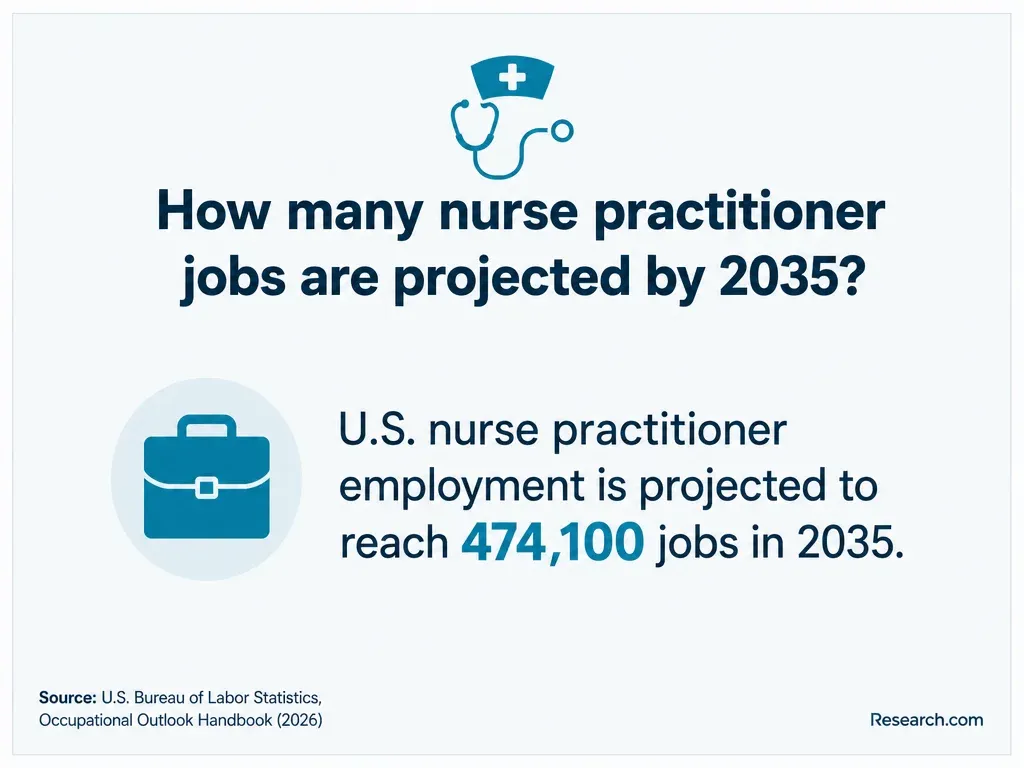
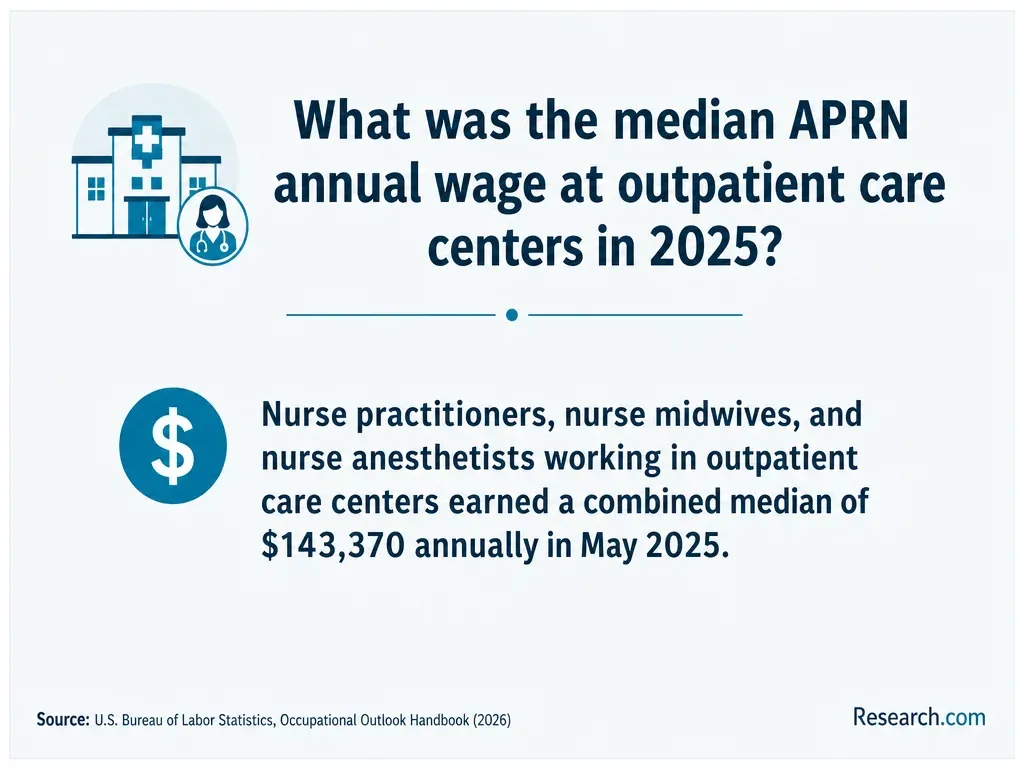
The U.S. Bureau of Labor Statistics reports wages and projected employment for the broader nurse practitioner occupation, not a separate Nebraska PNP-PC or DNP-graduate salary. Its national outlook can indicate demand for NPs overall, but it cannot predict pediatric openings, an individual offer, or a financial return on doctoral study.
Compare local job postings and prospective employers' credential requirements against your full education cost. If your goal is NP practice rather than specifically a DNP, BSN-to-MSN tuition comparisons can help frame a lower-cost degree-level alternative - but only a track with the appropriate pediatric primary care preparation addresses this specialty goal.
Other Things You Should Know About Nursing
FNP preparation includes patients across the lifespan, but it is not the same specialty credential as PNP-PC. Check the position's required certification, expected pediatric case mix, and your own preparation before choosing between them.
No. The credentials reflect different preparation and practice emphases. Choose the track that matches the care setting and patient needs you intend to serve.
Not automatically. The program must approve supervised experiences that meet NP-level objectives; routine RN employment alone does not establish those competencies.
Typically, no. A DNP generally culminates in practice-focused scholarly work, while a PhD is research-focused. Ask the school what its project, site approval, and completion requirements involve.
- Nurse Licensing Examination and APRN Certification | ne.gov https://dhhs.ne.gov/licensure/Pages/Nurse-Licensing-Examination-and-APRN-Certification.aspx
- Doctor of Nursing Practice (DNP) Program | creighton.edu https://www.creighton.edu/academics/programs/doctor-nursing-practice-dnp
- Nursing School Cost & Tuition | Chamberlain University https://www.chamberlain.edu/admissions/tuition-expenses
- Doctor of Nursing Practice | University of Nebraska Medical Center https://www.unmc.edu/nursing/academic-programs/dnp/index.html
- Primary Care Pediatric Nurse Practitioner Graduate Certificate | ASU Degree Search https://degrees.asu.edu/masters-phd/major/ASU00/NUPDNPGRCT/primary-care-pediatric-nurse-practitioner-graduate-certificate
- Is It Time for Dual Primary and Acute Care Preparation? | sciencedirect.com https://www.sciencedirect.com/science/article/pii/S0891524522002383
- BSN to DNP | Duke University School of Nursing https://nursing.duke.edu/academic-programs/msn-master-science-nursing/bsn-dnp
- BSN to DNP - Nursing at The W | Mississippi University for Women https://www.muw.edu/nursing/graduate/dnp/bsn-to-dnp/