2027 DNP Adult-Gerontology Acute Care NP Programs for Nurses in Wisconsin: BSN and MSN Entry Routes and Clinical Training
Audited and Verified:
Our Editorial and Data Verification Process
Research.com uses government datasets, official education statistics and primary institutional information to support its career and degree guides. Our review process checks factual accuracy, occupational definitions, source dates and the requirements associated with the credentials discussed.
How This Article Was Fact-Checked
Our editorial team verifies salary estimates, employment projections, education requirements and program information against original data providers and official organizations. Salary figures are checked against the relevant occupational definitions and reporting periods. Information about licensure, accreditation and required in-person training is reviewed separately.
Fact-checked and verified on:

Co-Founder and Chief Data Scientist
A Wisconsin RN considering adult-gerontology acute care practice needs more than a doctoral program with a convenient schedule. The program must provide the right NP population-focus preparation, supervised acute care experiences, and a viable route to certification and Wisconsin practice authorization.
BSN-prepared nurses and nurses who already hold an MSN may need substantially different coursework. This guide explains those routes, what to verify about clinical placements and costs, and when a shorter specialty pathway may be the better choice.
Key Things You Should Know
- A BSN-to-DNP AGACNP track prepares an RN for a new advanced practice role; an MSN-to-DNP track may add only doctoral education unless it explicitly includes AGACNP preparation.
- Compare 3 separate requirements before enrolling: program-approved clinical experiences, eligibility for adult-gerontology acute care NP certification, and Wisconsin authorization to practice.
- An online label does not eliminate in-person clinical care, supervised competency assessment, or possible campus visits; obtain the placement and attendance policies in writing.
What are DNP adult-gerontology acute care NP programs in Wisconsin?
A Doctor of Nursing Practice (DNP) adult-gerontology acute care nurse practitioner (AGACNP) program combines doctoral-level practice education with preparation to assess and manage acutely or critically ill patients from young adulthood through older age.
The population focus is adult-gerontology acute care, not all-age primary care. Graduates may work with hospitalized patients and in other settings where their education, certification, authorization, and employer privileges support the role.
Wisconsin nurses can look for an AGACNP specialty within a DNP program, such as the specialty listed by the University of Wisconsin-Madison. Confirm that the specialty is admitting students for your intended term and ask for its current curriculum and clinical-placement policy.
A general DNP is not a substitute. Leadership DNP education after a nursing master's serves a different goal when it does not include a new NP population-focus track.
What BSN and MSN entry routes are available for Wisconsin AGACNP programs?
The deciding factor is not the letters after your name alone. It is whether your previous graduate education already prepared you and led to certification in the same NP population focus. The table shows the routes to ask Wisconsin programs about; availability and credit recognition vary by school.
| Starting point | Route to examine | Key question |
| RN with a BSN | BSN-to-DNP AGACNP specialty | Does the full sequence lead to AGACNP certification eligibility? |
| RN with a non-APRN MSN | AGACNP DNP track or another qualifying NP pathway | Which graduate courses apply, and which NP courses and clinical experiences remain? |
| Already-certified APRN in another population focus | AGACNP post-graduate certificate, possibly followed by a DNP | What formal gap analysis and new population-focused clinical preparation are required? |
| Already-certified AGACNP with an MSN | Post-master's DNP | Can doctoral requirements be completed without repeating the existing specialty? |
A post-graduate AGACNP certificate may be more direct than another full degree for an eligible MSN-prepared nurse changing specialties. Conversely, a post-master's DNP that teaches leadership but no AGACNP specialty content will not make a non-AGACNP nurse eligible for that role.
Nurses exploring ADN-prepared RN graduate study options should verify the intermediate degree and subsequent AGACNP entry requirements rather than assume a bridge includes this specialty.
What are the admission requirements for Wisconsin AGACNP DNP programs?
Expect a program to review your nursing degree, active RN license, academic record, recommendations, statement of goals, and relevant clinical experience. Requirements for GPA, statistics, interviews, and minimum experience differ by school and entry route. Acute care or critical care RN experience can strengthen preparation, but it does not replace graduate NP coursework or supervised NP clinical education.
Before applying, ask the specialty director, not only general graduate admissions, to review your license, transcripts, prior graduate syllabi, and documented clinical hours. MSN-prepared applicants should request a written explanation of what counts toward the proposed track and what must be completed for certification eligibility.
Also ask when background checks, immunizations, and site-specific onboarding must be finished; academic admission does not guarantee access to every clinical site.
These are postlicensure RN pathways. An LPN or an applicant without an RN license needs a qualifying RN education and licensure route first; fast-track LPN admission requirements describe entry to a different license level, not a shortcut into AGACNP graduate study.
Online coursework may reduce commuting, but AGACNP training still requires supervised patient care at approved sites. Hybrid and campus-based programs may also require simulation, skills assessments, intensives, or scheduled meetings. Compare the actual attendance calendar, not the marketing label, against your shifts and caregiving responsibilities.
Clinical placement responsibility is often more consequential than lecture delivery. Ask whether the school secures sites, offers leads while you secure a preceptor, or requires you to arrange both; then ask what happens if a site falls through. The same question applies when comparing clinical site support for FNP students, although an FNP site does not automatically provide appropriate AGACNP patient encounters.
If you live outside Wisconsin, obtain written confirmation that the program can enroll you where you reside and arrange eligible clinical education there. Also check whether its curriculum supports the certification and licensing requirements of the state where you plan to practice.
An AGACNP curriculum typically integrates advanced pathophysiology, pharmacology, and assessment with diagnosis and management of complex adult and older-adult conditions.
Supervised experiences should develop clinical judgment across the acuity levels and patient presentations required by the specialty. DNP study adds evidence appraisal, systems leadership, quality improvement, and a practice-focused project; a DNP project is not the same as a PhD research dissertation.
Ask each school for its current clinical-hour requirements, approved settings, preceptor qualifications, faculty oversight, and method of evaluating patient-care competencies. The school and certifying organization determine which documented experiences count. RN employment, simulation, and previously completed clinical hours should not be assumed to substitute for new AGACNP direct-care experiences.
Population focus matters even when courses share advanced-practice foundations. Short-format online PMHNP study prepares nurses for psychiatric-mental health practice, not adult-gerontology acute care; compare a certificate with an AGACNP track only after identifying the role you intend to hold.
A BSN-to-DNP route normally requires a longer sequence than doctoral study for an MSN-prepared, already-certified AGACNP. An MSN in another specialty may shorten some graduate coursework while still leaving substantial AGACNP clinical and specialty requirements. Published timelines can change with part-time enrollment, course sequencing, clinical-site availability, and project completion; request an individualized plan for your entry term.
Compare total cost rather than tuition alone. The table separates charges and constraints that can differ even when two programs advertise similar tuition.
| Cost component | What to verify |
| Tuition and university fees | Rate per credit or term, required credits after transcript review, residency classification, and continuing-enrollment charges |
| Clinical and academic expenses | Placement-related fees, screenings, equipment, technology, books, and certification preparation |
| Travel and time | Campus visits, clinical-site travel or lodging, reduced work hours, and time needed for the DNP project |
| Funding | Employer reimbursement limits, aid eligibility, and any service commitments |
Use the school's current tuition schedule and your written degree plan to calculate a realistic range; a generic per-credit estimate can be misleading when prior MSN credits are still under review. For a broader cost checklist, see online NP tuition and fee considerations.
Check three different matters separately: the institution's accreditation, the nursing program's accreditation and its scope, and whether the AGACNP track's curriculum supports the certification and state authorization you need. A school's general accreditation does not, by itself, establish that a particular NP specialty meets a certifier's eligibility rules.
Nursing accreditors such as the Commission on Collegiate Nursing Education (CCNE) and Accreditation Commission for Education in Nursing (ACEN) evaluate programs within their respective scopes.
Verify a school's status in the accreditor's directory, then request the specialty's current curriculum and ask the program to identify the applicable certification pathway. Wisconsin's Board of Nursing and the certifying organization, not an accreditation claim in an advertisement, determine their respective practice and examination requirements.
Be especially careful when comparing unlike experiences. BSN completion programs using workplace-based projects address RN degree completion; their project format does not establish that an APRN track can omit supervised specialty clinical education.
Completing an AGACNP DNP is an educational milestone, not an automatic certification or authorization to practice. Graduates must meet the current eligibility requirements of an applicable adult-gerontology acute care NP certifier, such as the American Nurses Credentialing Center for AGACNP-BC or AACN Certification Corporation for ACNPC-AG, and pass the relevant examination. They must then satisfy Wisconsin's requirements for advanced practice authority and any employer credentialing and privileges applicable to the job.
Before enrollment, ask the program which examination its graduates are prepared to pursue and how it documents required coursework and supervised clinical education. If you intend to practice elsewhere, check that jurisdiction separately; an RN multistate privilege does not automatically confer NP authority in another state. Likewise, FNP completion timelines and entry requirements concern a different population focus and cannot establish AGACNP eligibility.
After certification, appropriate Wisconsin practice authorization, and employer onboarding, an AGACNP may pursue roles in hospital-based specialty services, critical care, or other acute-care teams.
Actual duties depend on the position, patient population, organizational privileges, and applicable law. A new graduate should assess the employer's orientation, mentorship, coverage, and escalation support rather than assume doctoral preparation eliminates the need for transition-to-practice training.
The U.S. Bureau of Labor Statistics reports wages for the broader nurse practitioner occupation, not Wisconsin AGACNP DNP graduates as a separate group. Its national occupational median therefore cannot predict a local offer or a doctoral pay premium. Compare Wisconsin job postings and written offers for base pay, shift or call expectations, benefits, and the experience required; request program-specific graduate outcomes when available.
If your intended work is primarily psychiatric rather than adult-gerontology acute care, online MSN-PMHNP completion timelines are more relevant to that career decision than an AGACNP DNP timeline.
What job outlook and employer demand exist for AGACNPs in Wisconsin?
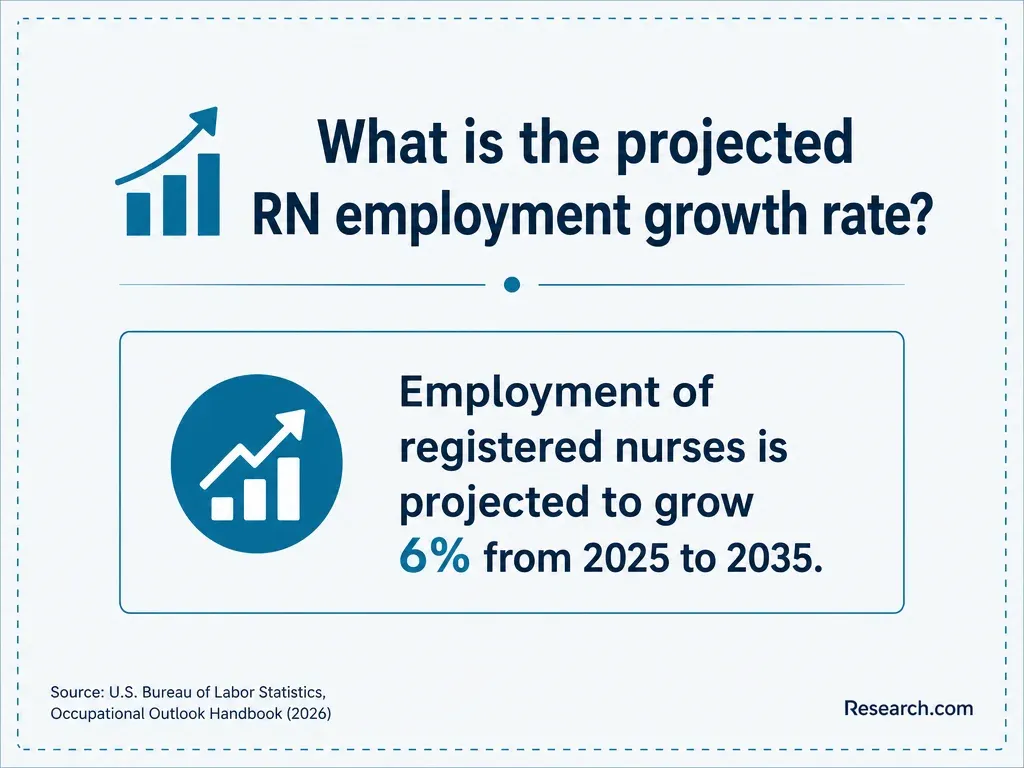
National nurse practitioner employment projections describe the occupation overall; they do not forecast openings for Wisconsin AGACNPs specifically. Local demand depends on health-system staffing models, specialty-service needs, geography, and whether positions accept new graduates. A broad NP growth figure is useful context, but it is not a substitute for checking current Wisconsin vacancies in the settings where you want to work.
Review postings from several Wisconsin employers for required certification, acute care experience, schedules, and hospital privileges. Compare those requirements with the program's clinical settings and its support for graduates entering practice. If you wish to complete the highest degree in a short timeline, consider accelerated Doctor of Nursing Practice programs.
Other Things You Should Know About Nursing Programs
Possibly, but clinical days and required live activities may conflict with shifts. Ask for a term-by-term schedule and discuss reduced hours before committing.
Only if the program approves the site, patient experiences, supervision, and separation of student and employee responsibilities. Employment alone does not make hours eligible.
No. Adult-gerontology preparation begins with young adults. Nurses seeking pediatric acute care need a program and certification appropriate to that population.
Not necessarily. Some AGACNPs qualify through a master's or post-graduate certificate pathway. Check the employer's requirements and the applicable certification and licensing rules before choosing a degree.
- Advanced Practice Registered Nurse (APRN) - DSPS https://dsps.wi.gov/a-z-professions-list/advanced-practice-registered-nurse-aprn/
- Online DNP Adult Gerontology Acute Care Nurse Practitioner | Walden University https://www.waldenu.edu/online-doctoral-programs/doctor-of-nursing-practice/adult-gerontology-acute-care-nurse-practitioner
- Cost of Attendance | wisc.edu https://financialaid.wisc.edu/cost-of-attendance/
- Tuition & Fees | UW-Eau Claire https://www.uwec.edu/tuition-aid/tuition-fees
- MSN to DNP-AGACNP Adult Gerontology Acute Care NP | Herzing University https://www.herzing.edu/nursing/dnp/msn-to-dnp/agacnp
- Clinical Information - Nursing Students - UW-Madison https://students.nursing.wisc.edu/clinical-information/
- Adult-Gerontology Acute Care NP (DNP) - Rutgers Nursing https://nursing.rutgers.edu/adult-gerontology/adult-gerontology-acute-care-np-dnp/
- DNP: Adult-Gerontology Acute Care Nurse Practitioner | University of Maryland School of Nursing https://www.nursing.umaryland.edu/academics/doctoral/dnp/dnp-adult-gerontology-acute-care-nurse-practitioner/
- Clinical Placement Standards, Compliance, and Expectations | Current Students https://students.nursing.uw.edu/policies/policy-3-1-clinical-placement-standards-compliance-and-expectations/
- Adult-Gerontology Acute Care Nurse Practitioner DNP | RUSH University https://www.rushu.rush.edu/college-nursing/programs-admissions/adult-gerontology-acute-care-nurse-practitioner-dnp