2027 Data Science Master's Admissions with an Interdisciplinary Bachelor's Degree

Co-Founder and Chief Data Scientist
An interdisciplinary bachelor's degree can be a strong foundation for a data science master's, but its title alone will not tell an admissions committee whether you are ready. What matters is the combination of quantitative coursework, programming ability, and evidence that you can use both to solve problems. If your degree crossed several fields, this guide will help you identify gaps, compare admissions policies, and decide whether to apply now, complete prerequisites, or choose a program designed for career changers.
Key Things You Should Know
- An interdisciplinary degree does not automatically qualify or disqualify you; compare your transcript with each program's stated math, statistics, and programming requirements.
- Courses and graded prerequisites are stronger evidence of formal eligibility than self-study alone, while a well-documented project can show how you apply your skills.
- The U.S. Bureau of Labor Statistics projects 35% growth in data scientist employment from 2025 to 2035, but demand does not remove the need to demonstrate technical readiness.
Can You Enter a Data Science Master's Program with an Interdisciplinary Bachelor's Degree?
Yes, potentially. An interdisciplinary curriculum might combine computing with economics, biology, psychology, public policy, or another field. That breadth can give you useful domain knowledge and experience framing questions across disciplines. It may also leave gaps if your degree required less calculus, linear algebra, statistics, or programming than a particular master's program expects.
Assess the courses you completed, not whether your diploma says "data science." A transcript showing quantitative methods and substantial coding may make you better prepared than a more traditionally named degree with little relevant coursework. Conversely, experience using spreadsheets or presenting research does not necessarily substitute for a required programming or mathematics course.
Program fit matters. If your strongest preparation is in research design and interpreting results, a program with an applied analytics emphasis may suit you better than one built around advanced algorithms. Compare the curriculum and entry requirements of master's in data analytics study options as well as data science degrees; the titles alone will not reveal the technical depth.
What Are the Admission Requirements for a Data Science Master's Program?
Requirements vary by institution. Programs may ask for a completed bachelor's degree, transcripts, a statement of purpose, recommendations, and evidence of quantitative and programming preparation. Some specify prerequisite courses or minimum grades; others evaluate preparation across coursework and experience. Testing policies and application deadlines also vary, so use the current admissions page for each program rather than a general checklist.
Your application should make an interdisciplinary record easy to evaluate. In your statement, connect relevant courses and projects to the program's requirements: name the methods you used, the code you wrote, and your individual contribution to group work. A recommendation from someone who assessed your technical work can provide more useful evidence than one that speaks only to your enthusiasm.
If a prerequisite is unclear, send admissions staff the course title, catalog description, syllabus, grade, and the requirement you hope it satisfies. Ask whether it meets the formal admissions condition or merely strengthens your application. That distinction is important: an impressive portfolio may demonstrate ability without replacing a course the program explicitly requires.
Which Prerequisite Courses Do Data Science Master's Programs Require?
Common areas to check are statistics or probability, calculus, linear algebra, and programming. Specific course levels and acceptable substitutes differ. An interdisciplinary graduate who took research methods may already understand study design, for example, but should not assume that course fulfills a mathematical statistics requirement.
The table shows how different undergraduate experiences can relate to graduate preparation. It is a gap-checking aid, not a list of universal admissions requirements.
| Prior experience | Potential strength | Preparation that may need closer review |
| Social-science research | Study design, interpretation, and communication | Calculus, linear algebra, or substantial programming |
| Life-science coursework | Experimental thinking and domain-specific data | Computing beyond introductory analysis tools |
| Computing coursework | Coding and software problem-solving | Statistical inference or mathematical foundations |
| Business or policy analytics | Decision context and applied analysis | Proof of the math and coding depth a technical program expects |
To close a formal gap, first confirm whether the program accepts a graded course from an accredited institution, a placement assessment, or another stated option. Self-study and online tutorials can prepare you to succeed, but they should not be treated as transferable credit without written confirmation. A lower-cost specialist degree is not necessarily an easier entry route: online machine learning master's programs under $20,000 may have their own mathematics and coding expectations.
How Do You Choose an Accredited Data Science Master's Program?
Start by verifying that the university holds institutional accreditation recognized by the U.S. Department of Education or the Council for Higher Education Accreditation. Check the institution and accreditor in an official directory rather than relying on a program advertisement. Then confirm that the specific master's degree is offered by that institution; do not assume institutional accreditation means a particular data science program has separate, specialized accreditation.
After that baseline check, compare programs against your actual preparation. A suitable program should clearly state its entry requirements, explain any bridge or prerequisite options, and offer enough statistics and computing depth for your target work. Examine course descriptions and project requirements, not just elective names. If a school cannot clarify whether your undergraduate courses count, obtain an answer before paying an application fee or enrolling in a replacement course.
Should You Study Data Science Online or On Campus?
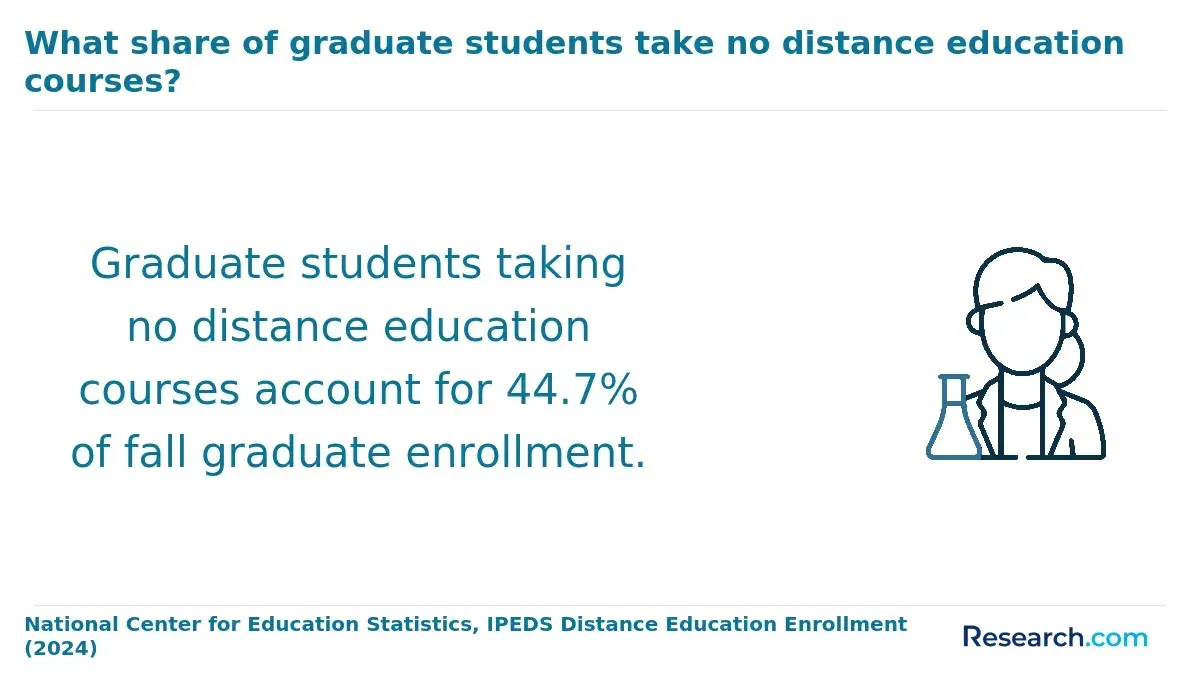
Choose the format that lets you complete technically demanding work consistently. Online study may be more practical if you need to keep working or cannot relocate; campus study may offer easier access to in-person collaboration and university resources. Neither format, by itself, establishes curriculum quality or makes admissions prerequisites disappear.
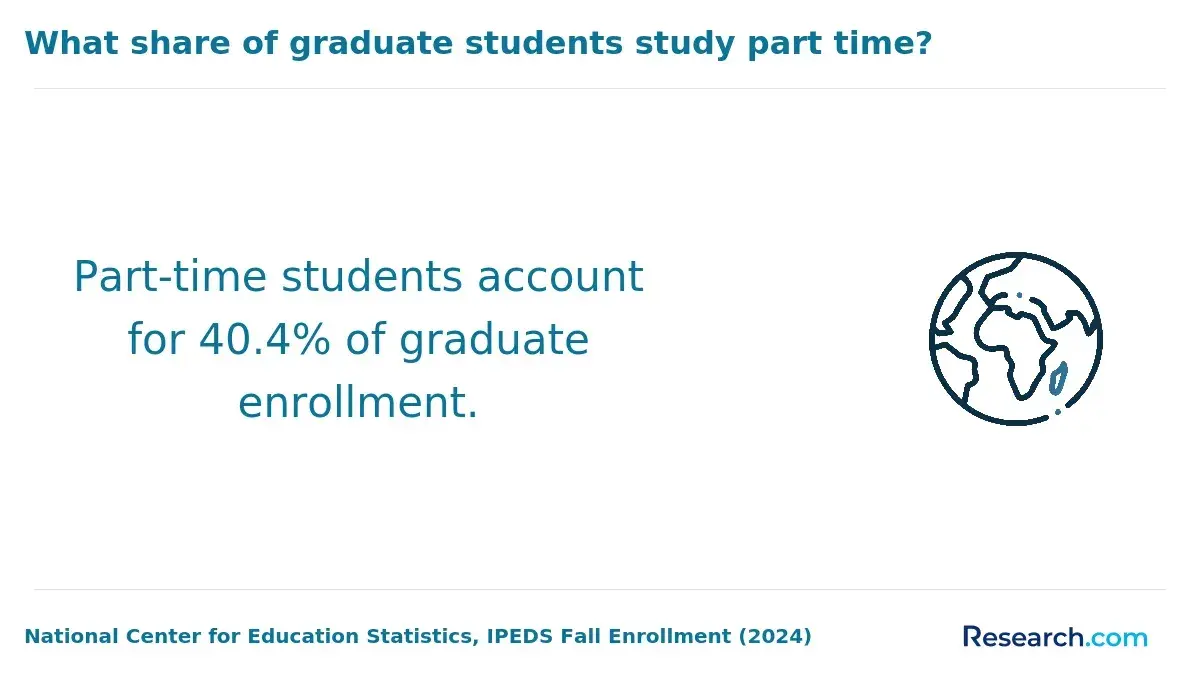
For either option, verify whether classes are live or self-paced, when group work occurs, whether exams require scheduled attendance, and whether projects require campus visits. Ask for the permitted pace and maximum completion period if you expect to study part time. Someone balancing work and missing prerequisites may benefit more from a manageable sequence than from the shortest advertised timeline. For comparisons focused on pace, see time-efficient graduate study in data science, then verify each program's current schedule directly.
What Do You Learn in a Data Science Master's Program?
Coursework commonly brings together statistical reasoning, programming, data management, modeling, and communication of results. The balance varies: one degree may emphasize statistical inference, while another devotes more work to software systems or machine learning. That difference matters especially if your interdisciplinary degree already gave you strong research or domain skills but less technical depth.
Look for projects that require students to define a question, prepare imperfect data, evaluate a method, and explain limitations. Those tasks can reveal more about a program than a course title or a passing reference to AI. If building data pipelines is central to your goal, review data engineering content in AI master's programs as a comparison point, and check whether any data science program you consider teaches that work through dedicated courses or substantial projects.
How Long Does a Data Science Master's Take and Cost?
Both depend on the program's credit requirements, course availability, study pace, and whether you must complete prerequisites first. A published completion time may assume full-time enrollment or a particular course sequence. Request a degree plan for your intended pace, including when required courses are actually offered.
For cost, calculate tuition for the full degree plus mandatory fees, then add any required prerequisite courses, software or equipment, travel, and the income you might forgo if you reduce work hours. Ask whether tuition differs by residency or enrollment format and whether the published rate applies throughout your expected enrollment. Comparing one school's tuition-only figure with another school's full estimated cost is a common mistake.
Scholarships, employer tuition assistance, and federal aid eligibility can change what you pay, but availability depends on your circumstances and the institution. Review data science master's financial aid options, then obtain a program-specific cost estimate and aid information before deciding that an offer is affordable.
What Jobs Can You Get with a Data Science Master's Degree?
Possible targets include data scientist, data analyst, machine learning specialist, and roles that combine analysis with expertise in a field you already know. Job titles are not standardized: compare actual responsibilities and required tools rather than assuming every "data scientist" opening calls for the same preparation.
The U.S. Bureau of Labor Statistics projects 35% growth in data scientist employment from 2025 to 2035. That outlook signals demand across the occupation, not a placement rate for any master's program. Applicants with interdisciplinary backgrounds can use domain-specific projects to show an advantage, but should still test their technical skills against the requirements of the roles they want. If a job emphasizes production software or data infrastructure, check that the program teaches those skills rather than assuming modeling coursework covers them.
How Much Can Data Science Master's Graduates Earn?
The U.S. Bureau of Labor Statistics reports a median annual wage of $120,230 for data scientists in May 2025. This is an occupational figure for workers with different education and experience levels - not a starting salary for new master's graduates or evidence that the degree causes a particular pay increase.
For a personal return-on-investment decision, compare the total cost of each program with your current earnings and plausible target roles. Consider your prior experience, location, employer, and whether the degree would help you qualify for work you cannot currently obtain. Treat any school-reported salary outcome cautiously unless it explains who responded, their prior experience, and whether the figure measures salary level or salary change.
Is Certification or Licensure Required for Data Science Careers?
Data science generally does not have a profession-wide U.S. license. An employer may prefer a certification in a particular cloud platform or tool, but that is different from a legal requirement to practice data science. Requirements can change when a role includes responsibilities regulated under another profession or industry, so read the job description rather than assuming the degree settles every credential question.
For admissions and hiring alike, prioritize demonstrable skills over collecting unrelated certificates. If you need to satisfy a master's prerequisite, ask the program whether a certificate is accepted before paying for it; otherwise, a graded course or substantive project may provide more relevant evidence for your specific gap.
Other Things You Should Know About Data Science
Some programs may require recent coursework or evidence that your skills are current, while others do not publish an expiration rule. Ask about older math and programming courses before retaking one.
That depends on the program. Ask whether it permits an in-progress course and, if so, when the final grade must be submitted and whether admission would be conditional.
It can be useful if you may share it and can clearly explain your own work, methods, results, and limitations. Remove confidential data and check any restrictions set by your project partner or university.
Not automatically. Before enrolling, ask the degree program which courses may count, what grade is required, and whether credit must be earned at the same institution.
References
- Evaluation of Foreign Degrees - United States Department of State https://www.state.gov/global-community-liaison-office/family-member-employment/family-member-employment-in-the-d-c-area/evaluation-of-foreign-degrees
- Writing Your Academic Statement of Purpose - Graduate School https://gradschool.cornell.edu/inclusion/recruitment/prospective-students/writing-your-statement-of-purpose/
- Admissions | wisc.edu https://datascience.psych.wisc.edu/admissions/
- Social Data Science, MA - ASU degree https://degrees.asu.edu/masters-phd/major/ASU00/ASSTCMA/social-data-science-ma
- College Credit for Work and Life Experience | Purdue Global https://www.purdueglobal.edu/transfer-students/work-life-experience/
- Master's in Computer Science vs Master's in Data Science | jhu.edu https://ep.jhu.edu/news/masters-computer-science-vs-data-science/
- How to Apply - Computer Science Bridge, MS | University of San Francisco https://www.usfca.edu/arts-sciences/programs/graduate/computer-science-bridge/how-to-apply
- Computer Science Bridge Program | Case School of Engineering https://engineering.case.edu/computer-and-data-sciences/bridge
- Data Science: Policy, Governance & Society (Online) | Brown University https://graduateprograms.brown.edu/graduate-program/data-science-policy-governance-society-online-scm
- International Applicants | fitnyc.edu https://www.fitnyc.edu/admissions/graduate-applicants/international-applicants.php