2027 Choosing an Online Data Science Master's for a Career in Conservation

Co-Founder and Chief Data Scientist
An online data science master's can help you work with conservation data, but a strong technical degree is not automatically a strong fit for ecological work. If you want to study wildlife, habitats, climate impacts, or resource management, the key decision is whether a program lets you build sound models and apply them to messy environmental data.
This guide shows you how to evaluate coursework, projects, format, cost, and career outcomes before you enroll.
Key Things You Should Know
- Prioritize statistics, geospatial analysis, reproducible computing, and access to an environmental project; a general machine-learning course alone is not enough to establish conservation fit.
- Check institutional accreditation, online availability in your state, the full cost of completion, and whether you can work with conservation-relevant data before applying.
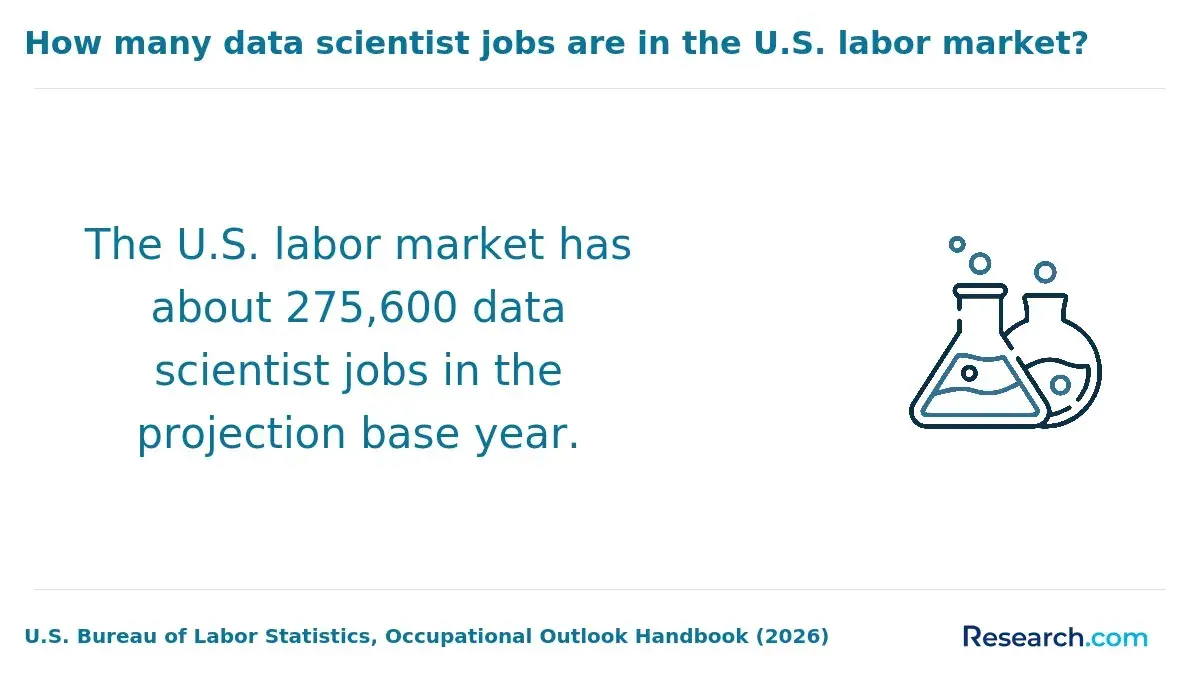
- The U.S. Bureau of Labor Statistics projects 35% growth in data scientist employment from 2025 to 2035, but that figure covers all industries - not conservation jobs specifically.
What is an online data science master's for conservation?
It is usually an online data science master's degree that you tailor toward conservation through electives, research, a capstone, or relevant work experience - not a distinct conservation credential. The goal is to use statistical and computational methods to answer questions such as where habitat is changing, how species observations vary across a landscape, or which monitoring sites need closer attention.
Conservation work makes the choice of program unusually important. Satellite images, camera traps, acoustic recordings, field surveys, and public environmental records have different errors and gaps. A program may teach powerful algorithms without teaching you how to account for incomplete observations, spatial dependence, or the ecological meaning of a prediction.
How can a data science master's prepare you for conservation careers?
A suitable program can help you turn environmental data into defensible decisions: cleaning repeated field observations, estimating uncertainty, mapping change, and explaining findings to scientists or land managers. It cannot replace ecological judgment. If you lack conservation experience, seek a project partner, internship, or role that lets you learn how the data was collected and what decisions the analysis will inform.
For example, a habitat model built from species sightings may perform well on a random test set yet fail in a new region because nearby observations are similar. Training in study design and spatial validation helps you recognize that problem before a map guides fieldwork. A useful portfolio project should show the question, data limitations, methods, evaluation, and a cautious interpretation - not just a high accuracy score.
Choose a broad data science degree if you want flexibility across conservation analytics roles. If your target work is primarily model development, an online machine learning master's budget guide may help you assess a narrower alternative; verify that any lower-cost option still supports the environmental work you want to do.
What should you look for in an accredited online data science master's?
Start by confirming the university's institutional accreditation through the institution and its accreditor. Then confirm that the specific master's degree is offered online to residents of your state. Institutional accreditation does not, by itself, establish the quality of the data science curriculum or guarantee that a program is available where you live.
Next, inspect course descriptions, elective schedules, faculty work, and capstone rules rather than relying on a program's marketing language. The most consequential checks for a conservation applicant are whether you can study spatial data, obtain meaningful statistical depth, and complete a project using an environmental question. Ask whether online students have the same access to relevant electives, faculty supervision, software, and project partners as campus students.
Data infrastructure matters when a project combines large imagery archives, sensor streams, or records collected by different organizations. If that is central to your goal, compare the program's pipeline and data-management teaching with AI graduate programs with data infrastructure training. Do not mistake a course title mentioning AI for evidence that you will build reliable environmental data systems.
Which courses are essential for conservation data science?
Look for a coherent sequence in probability and statistical inference, programming, data management, and model evaluation. For conservation, geospatial analysis and remote sensing can be especially valuable, while experimental design or ecological modeling helps connect a result to the process that produced the data. Course names vary, so review assignments and prerequisites to see whether these subjects receive sustained attention rather than a brief mention.
Match the deeper electives to the data you expect to use. Computer vision may fit satellite imagery or camera-trap photographs; time-series methods may fit sensor monitoring; and Bayesian or hierarchical modeling may help with observations collected across sites and years. Whatever the method, ask how the course addresses missing data, uncertainty, and validation outside the training sample.
A data analytics degree may also meet your needs if it provides the statistical, geospatial, and project depth your target role requires. When comparing graduate data analytics degrees, evaluate actual courses and project opportunities rather than treating the degree title as a measure of technical rigor.
What admission requirements do online data science master's programs have?
Requirements vary by school, but applicants should expect programs to assess prior degree work and readiness for quantitative graduate study. Check each program's current policy for required coursework, grades, transcripts, recommendations, statements, and any tests. Do not assume that a conservation background either qualifies or disqualifies you.
If you studied ecology or environmental science, your domain knowledge may help you frame credible questions, while programming, calculus, linear algebra, or statistics may need strengthening. If you come from computing or mathematics, the gap may instead be field methods and ecological interpretation. Before paying an application fee, ask admissions staff which gaps are formal prerequisites, whether prior work can demonstrate preparation, and which courses can be completed before enrollment. Self-study can improve readiness without necessarily satisfying a transcript-based requirement.
How do online and campus-based data science master's programs compare?
Online study can make it easier to remain employed or stay near a conservation project; campus study may make in-person research and field collaboration more accessible. Neither format guarantees mentoring, fieldwork, or a conservation-focused capstone. Compare the experience you would actually receive, not the delivery label.
For an online program, check whether classes meet live, whether group work crosses time zones, and whether exams or short campus visits require travel. Ask how students obtain project supervision and access specialized software or remote computing. Data science graduate study around work commitments is especially relevant if you plan to keep a job or field assignment while studying. Choose campus study when its specific research group or field access materially advances your goal; choose online study when its flexibility does not come at the expense of the courses and project support you need.
How long does an online data science master's take and cost?
There is no reliable single completion time or price for online data science master's programs. Both depend on the school's credit requirements, course availability, your enrollment pace, and tuition and fee policies. Estimate your own timeline from the required course sequence and the number of courses you can realistically take while working; ask whether key electives run often enough to fit that plan.
For cost, request a written estimate covering all required credits, mandatory fees, software or equipment, and any travel. Check whether tuition differs by residency, whether rates can change during enrollment, and whether a slower pace adds fees. Compare programs on the projected cost to finish, not one term's tuition or an advertised per-credit rate. Funding may include employer support, scholarships, or eligible financial aid; data science graduate study funding options can help you investigate these without assuming you will qualify.
A lower-priced program is a good value only if it offers the preparation you need. Conversely, do not pay a premium for a conservation label without confirming the courses, project access, and support behind it.
Which conservation jobs can you pursue with a data science master's?
Potential targets include conservation data analyst, geospatial analyst, remote-sensing analyst, ecological modeler, and data scientist working with an environmental organization or research team. Titles and qualifications vary by employer. Some positions center on analysis and communication; others require substantial field ecology, scientific publication experience, or specialized geospatial work.
Use job postings to work backward from a realistic target. Compare the required tools and scientific knowledge with a program's coursework, then plan a project that demonstrates both. For example, a remote-sensing portfolio piece could map habitat change, document image-processing choices, test results against independent observations where available, and explain where the map should not be used. A master's may strengthen your candidacy, but relevant experience and demonstrable work can matter as much as the degree title.
What salary and job outlook can conservation data scientists expect?
The U.S. Bureau of Labor Statistics reports a median annual wage of $120,230 for data scientists in May 2025. That is a national figure across employers and industries, not a verified median for conservation data scientists or a predicted salary for a graduate.
BLS also projects data scientist employment to grow 35% from 2025 to 2035. This signals broad demand for the occupation, but it does not show how many openings will be in conservation. Before using salary to justify tuition, compare postings for the roles and locations you would actually consider, including their experience requirements. Do not treat a salary associated with an occupation as an increase caused by earning a degree.
Do conservation data science careers require licenses or certifications?
A general conservation data scientist role does not have a universal professional license. Requirements can change when a position also involves regulated work or an employer specifies a particular credential, so check the duties in the posting rather than assuming the degree covers them.
Certifications in cloud platforms, geographic information systems, or particular tools may be useful when an employer asks for those skills, but they are not substitutes for sound analysis. For most applicants, a reproducible project that explains its ecological assumptions and limitations is stronger evidence of fit than collecting unrelated certificates.
Other Things You Should Know About Data Science
Often, yes, if the program accepts an independently sourced project and the dataset's terms permit your intended use. Check for incomplete records, sensitive species locations, and restrictions on publishing results before committing to a question.
Not necessarily. Experience can help you choose a meaningful problem, but you may also gain context through a supervised project or collaboration. Ask a prospective program how students without existing partners find suitable projects.
Basic GIS familiarity can make spatial coursework easier. Whether it is required for admission depends on the program; review prerequisites before paying for a separate course.
Ask who owns the data, whether publication could expose sensitive habitats or species, and who will use the findings. A responsible project documents permissions and limits access or location detail where necessary.
References
- Software to facilitate and streamline camera trap data... - PMC https://pmc.ncbi.nlm.nih.gov/articles/PMC6202726/
- Biodiversity Data Analytics | Columbia University School of Professional Studies https://sps.columbia.edu/news/columbia-university-school-professional-studies-launches-new-online-masters-program
- What Can I Do With a Degree in Data Science? Career Paths & Skills | Harvard SEAS https://seas.harvard.edu/news/what-can-i-do-degree-data-science-career-paths-skills
- Master of Environmental Data Science (MEDS) - Bren School | Bren School of Environmental Science & Management https://bren.ucsb.edu/masters-programs/master-environmental-data-science
- Biological Data Science, MS - ASU degree https://degrees.asu.edu/masters-phd/major/ASU00/ASBDSMS/biological-data-science-ms
- Employment Data | Nicholas School of the Environment https://nicholas.duke.edu/careers/employment-data