2027 Building an Internal Data Science Role While Studying for a Master's

Co-Founder and Chief Data Scientist
Building a data science role inside your current organization can let you apply graduate coursework without waiting for an external job offer. The challenge is to turn occasional analysis into work your employer needs, supports, and recognizes. This guide is for working professionals deciding whether to pursue a master's while making that transition. It explains how to test demand for an internal role, choose a program around your skill gaps and schedule, and judge whether the investment makes sense.
Key Things You Should Know
- Start with a business problem and an approved project, not a proposed job title; agree on who will use the result and how its value will be assessed.
- Choose a master's that fills your specific gaps in statistics, programming, and responsible data use while fitting your work schedule. A degree alone does not create an internal opening.
- The U.S. Bureau of Labor Statistics reports a $120,230 median annual wage for data scientists in May 2025 and projects 35% employment growth from 2025 to 2035. Neither figure predicts your employer's pay or willingness to create a role.
What is an internal data science role while earning a master's degree?
An internal data science role is a defined set of analytical responsibilities within an organization where you already work. It might begin as an approved project alongside your current duties, expand into a hybrid position, or become a transfer to an established data team. Earning a master's at the same time gives you a way to develop methods while testing them against real organizational questions.
The distinction is ownership. Making a dashboard on request is useful analytical work; owning a recurring forecasting, experimentation, or decision-support process requires a stakeholder, access to appropriate data, a way to evaluate results, and time allocated to maintain the work. Your existing knowledge of operations, customers, or policy can be an advantage, but it does not replace technical preparation or permission to use sensitive data.
Before committing to a degree for this purpose, ask whether your organization has problems that warrant more than routine reporting, someone who can sponsor the work, and a credible route to changing your responsibilities. If those conditions are absent, the master's may still support an external move, but an internal transition is a less certain reason to enroll.
How can you build data science experience within your current organization?
Begin in the function you know. A finance employee might investigate forecast errors; an operations specialist might study delays; a customer-support analyst might examine which issues lead to repeat contacts. In each case, the first question is whether a better decision is possible - not whether a sophisticated model can be built.
A small, authorized pilot is the clearest way to test both your readiness and organizational demand. Use the following sequence to make the work assessable rather than an informal side project:
- Identify a recurring decision, its owner, the current process, and the outcome that would indicate improvement.
- Confirm data access, privacy rules, available tools, and the time your manager will allocate before beginning analysis.
- Establish a baseline, then use the simplest suitable method; compare results with the existing approach and document limitations.
- Present the findings to the decision owner and agree on whether to repeat, revise, or stop the work.
- If the work continues, discuss a written scope, supervision, performance criteria, and whether a formal transfer or revised job description is possible.
A common mistake is building a technically impressive model that no team can operate. Another is taking on substantial new duties without clarifying which existing tasks will move off your plate. A successful pilot demonstrates judgment and usefulness, but it is not proof that a promotion or new position will follow.
What master's degree pathways prepare you for internal data science roles?
The best degree label depends on the work your organization needs and the preparation you already have. Compare required courses and projects rather than assuming every program called "data science" teaches the same depth of statistics, engineering, or business application.
The following comparison shows how common pathways differ in emphasis. These are broad distinctions, not guarantees about any particular university's curriculum.
| Pathway | Likely emphasis | Potential internal fit |
| Data science | Statistics, programming, machine learning, and applied projects | Cross-functional analytical work requiring both modeling and communication |
| Applied statistics | Inference, study design, and uncertainty | Experimentation, measurement, forecasting, or evaluation-heavy work |
| Computer science | Software, algorithms, and computing systems | Roles with substantial production or data-infrastructure demands |
| Business analytics | Organizational decisions and applied analysis | Decision support close to an existing business function |
Choose based on the gap between your current skills and the target role. Someone already comfortable with software development may need stronger statistical inference; a domain expert who regularly interprets reports may need programming and data engineering. If your intended internal projects center on AI systems rather than broader analysis, examine artificial intelligence master's routes from other disciplines, then check whether their prerequisites and projects fit your background.
A master's is not automatically necessary. If your employer can give you supervised analytical work and your gaps are limited, targeted coursework and a documented pilot may be a lower-commitment first step. A degree becomes more compelling when the intended role requires sustained technical depth or your employer explicitly values graduate preparation.
Should you choose an online or campus-based data science program?
For an internal transition, the central format question is whether you can keep doing meaningful work while studying. An online program may reduce travel and preserve access to workplace projects; a campus-based program may make scheduled collaboration or in-person support easier. Neither format establishes academic quality by itself.
Ask each program when classes, exams, group meetings, and project presentations occur; whether attendance is live or flexible; and how breaks or reduced course loads affect progress. Also check whether a capstone can use an employer-approved problem. Choose the format that leaves enough time for both coursework and a credible pilot at work—not merely the one that appears fastest on paper.
A warning sign is a schedule that assumes you can complete demanding projects during your busiest work periods. If your responsibilities are unpredictable, a slower pace with clear support for working students may be more useful than an accelerated calendar.
What courses should a master's in data science include?
For an internal role, look for courses that help you move from a workplace question to a defensible result. That usually means foundations in probability and statistics, programming, data management, and machine learning, alongside opportunities to evaluate models and explain findings to nontechnical stakeholders. Responsible data use matters when the records belong to an employer and may contain confidential information.
Read course descriptions and project requirements, not just titles. A passing mention of experimentation or deployment is different from a dedicated course or substantial project. If your proposed role involves testing operational changes, seek meaningful coverage of research design and causal reasoning. If colleagues must use a model repeatedly, look for work involving reproducible pipelines, monitoring, and implementation.
One useful test is whether you could apply what you learn to an approved internal project: define a baseline, justify a method, assess errors or uncertainty, and communicate a recommendation. A program focused mainly on building models may leave a gap if your actual job will be deciding when not to use one.
What are the admission requirements for a data science master's program?
Requirements vary by institution and program. Review each program's current admissions page for its degree, mathematics, programming, test, and application requirements; do not assume that workplace experience either fulfills a formal prerequisite or makes you ineligible without one.
Your internal projects can strengthen an application when you explain your contribution clearly: the question, data constraints, methods, evaluation, and decision informed by the result. If you have a preparation gap, ask admissions whether a credit-bearing course is required or whether other evidence of readiness is accepted. Self-study can help you succeed in a program without necessarily satisfying its formal admission rules.
It is also worth asking whether your employer can support a project or recommendation without disclosing protected information. An application should demonstrate your judgment, not expose company data.
How long does a data science master's take and cost?
There is no reliable single duration or price for this decision: both depend on the program, course load, fees, and your employer's support. A working student should compare the school's published requirements with the pace they can sustain while delivering results at work. A short advertised completion time is less useful if it leaves no room for an internal pilot.
Build a personal cost estimate from the current official tuition and fee schedule, including required technology or materials, any travel, and financing costs if you borrow. Then confirm what employer tuition assistance covers, when reimbursement occurs, and whether continued employment is required. Compare that total with your budget and the value of skills and opportunities you expect—not with an assumed post-graduation raise.
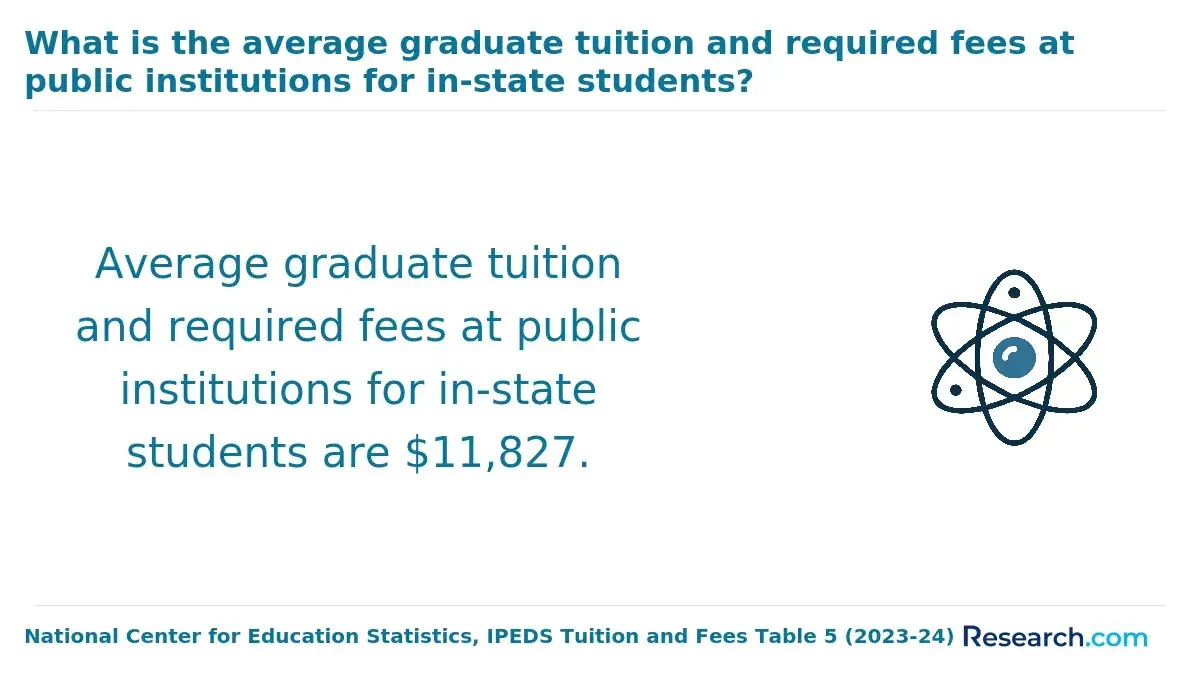
If affordability is the constraint, a comparison of data science master's programs with lower tuition can help create a shortlist. Verify each school's current charges and calculate the cost for your own enrollment pattern before deciding.
Which internal data science jobs can a master's degree lead to?
The most realistic target often sits near your existing function. An analyst who understands operational data may move toward forecasting or experimentation; a software employee may move toward machine learning implementation; a subject-matter specialist may become the analytical partner for their team. Titles vary by employer, and a master's does not ensure that any particular vacancy exists.
The table distinguishes several types of work so you can identify the role your organization actually needs. Responsibilities may overlap in practice.
| Possible role | Primary contribution | Existing experience that may carry over |
| Data scientist | Develops and evaluates analyses or predictive models for decisions | Knowledge of the decisions, data, and stakeholders in a business function |
| Decision or product analyst | Measures performance and investigates changes in outcomes | Reporting, process knowledge, and stakeholder communication |
| Analytics engineer | Creates reliable, reusable data assets for analysis | Database, reporting-system, or software experience |
| Machine learning engineer | Integrates and maintains models in operational systems | Software engineering and production-system experience |
If your employer has no formal data science team, compare your prospective responsibilities with online degree pathways into data careers rather than selecting a program around a title alone. Your immediate goal may be a well-defined hybrid role; an external move remains an option if the organization cannot support one.
What salary can you expect in data science roles after graduate school?
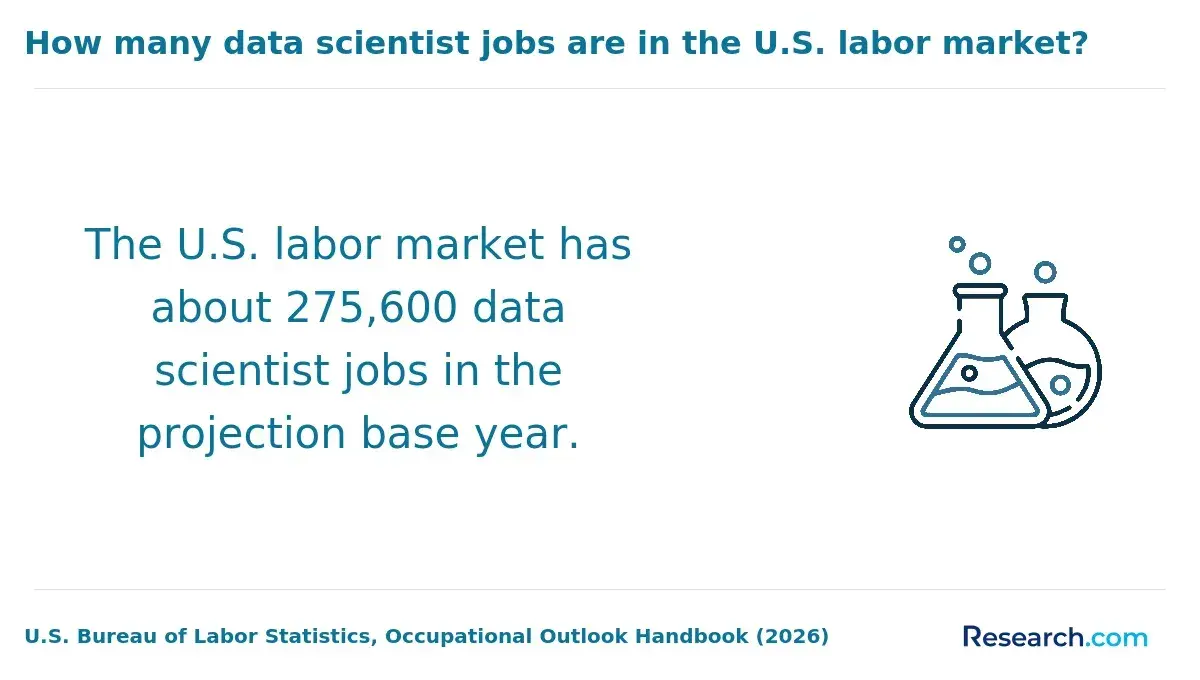
The U.S. Bureau of Labor Statistics reports that data scientists had a $120,230 median annual wage in May 2025. That is an occupation-wide midpoint, not an entry salary, a graduate outcome, or the amount an existing employer will offer for expanded duties. Your pay will depend on the actual role, experience, location, and employer compensation structure.
For an internal move, compare the proposed position with your employer's job levels and pay bands. Ask whether new responsibilities qualify for a reclassification, a transfer, or a change in performance goals, and when compensation would be reviewed. You can use broader data science salary opportunities across sectors as context, but an industry figure cannot establish your likely raise or prove that a master's caused it.
Do data science jobs require certification or professional licensure?
General data science work does not have a single professional license that qualifies someone for the occupation. Employers may still ask for particular credentials, security training, or approval to work with restricted systems or regulated data. Check the requirements of the specific internal position and industry rather than buying a certification in anticipation of an unknown rule.
A certificate can document familiarity with a tool, but it does not substitute for evidence that you can frame a question, use permitted data, assess a result, and help a stakeholder act on it. For this transition, an approved project and a clear account of your contribution are usually more directly relevant to the discussion with your manager.
Other Things You Should Know About Data Science
Only with the organization's permission. Ask what you may describe publicly, remove restricted details, and consider a separate demonstration using public or synthetic data. Anonymizing records alone may not satisfy company policy.
Seek technical feedback through your program and ask an appropriate internal expert to review data access and operational context. If nobody can validate or maintain the proposed work, limit the pilot's scope rather than deploying an unsupported system.
Possibly, but obtain approval from both the program and employer before relying on it. Confirm rules for data access, publication, intellectual property, and what your instructors must be able to assess.
Check your program's enrollment policies and your employer's tuition-assistance agreement before making plans. A change could affect project access, reimbursement, or a service obligation; an employer-independent project option can provide flexibility.
References
- Data.gov Home - Data.gov https://data.gov/
- Partnering with Students to Develop a Capstone for a... - PMC https://pmc.ncbi.nlm.nih.gov/articles/PMC11732519/
- What You Can Do with a Master's in Data Science and Artificial Intelligence | Harvard Extension School https://extension.harvard.edu/blog/what-you-can-do-with-a-masters-in-data-science-and-artificial-intelligence/
- Profiling data scientists in the digital labour market | sciencedirect.com https://www.sciencedirect.com/science/article/pii/S0263237322000810
- Future-Proof Your Path: Is Data Science a Good Career? | Cornell Bowers https://stat.cornell.edu/news-stories/future-proof-your-path-data-science-good-career
- Course Governance - Capstone Project | ANU School of Engineering https://eng.anu.edu.au/engage/capstone-design-project/information-students/course-governance-capstone-project
- Deployment as a Critical Business Data Science Discipline | Harvard Data Science Review https://hdsr.mitpress.mit.edu/pub/2fu65ujf
- What Can I Do With a Degree in Data Science? Career Paths & Skills | Harvard SEAS https://seas.harvard.edu/news/what-can-i-do-degree-data-science-career-paths-skills
- How to Get a Job in Data Science in a Remote Working World | virginia.edu https://datascience.virginia.edu/news/how-get-job-data-science-remote-working-world
- Project or Thesis? - Interdisciplinary Studies https://mais.gmu.edu/current-students/the-capstone