
2027 Master's in Data Science vs. Master's in Computational Science: Choosing Your Graduate Path

Co-Founder and Chief Data Scientist
A master's in data science and a master's in computational science can both involve programming, statistics, and substantial computing - but they train students to solve different problems.
If you are choosing between them, the important question is whether you want to draw conclusions from data across organizations or build computational models of complex systems. This comparison will help you evaluate curricula, career fit, preparation, and total cost before committing to a program.
Key Things You Should Know
- Choose data science if you want to build, evaluate, and communicate data-driven analyses or predictive models; choose computational science if you want to simulate and study scientific or engineering systems.
- Compare actual courses and projects, not degree titles: either program may teach machine learning, but computational science typically places greater emphasis on numerical modeling and domain-specific simulations.
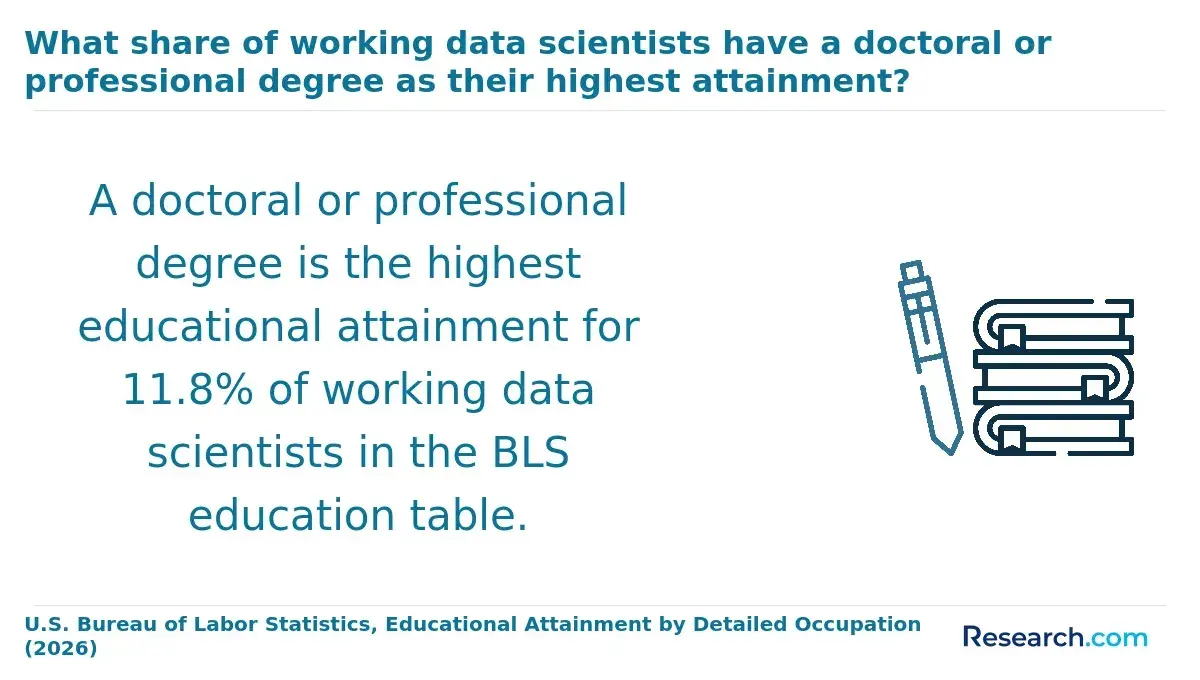
- The U.S. Bureau of Labor Statistics projects 35% employment growth for data scientists from 2025 to 2035; that forecast describes an occupation, not the job prospects of graduates from either degree.
What is the difference between a master's in data science and computational science?
Data science starts primarily with data: students learn to prepare it, find patterns, develop models, and assess whether the results answer a practical question. Computational science starts primarily with a system or process: students use mathematics, algorithms, and computing to represent and investigate how it behaves. Both approaches can use data and machine learning, so the distinction is an emphasis, not a boundary.
The comparison below shows what each degree is more likely to optimize. Individual programs may cross these lines, making the required courses and final project more informative than the degree name.
| Criterion | Data science master's | Computational science master's |
| Typical central question | What can observed data tell us or help us predict? | How does a modeled system behave under different conditions? |
| Common technical emphasis | Statistical inference, machine learning, data engineering, and model evaluation | Numerical methods, simulation, scientific computing, and model validation |
| Typical project output | An analysis, predictive model, or data product | A simulation, computational experiment, or numerical model |
| Domain knowledge | Varies widely by dataset and application | Often closely tied to a scientific or engineering field |
Which careers can each master's degree prepare you for?
A data science degree may suit applicants targeting data scientist, analytics, or machine-learning roles, provided the program develops the programming and statistical skills those jobs require. A computational science degree may be a stronger match for simulation specialist, scientific software, or research-computing work, particularly when applicants already have a relevant science or engineering background. Employers assess skills and experience as well as credentials; neither degree reserves a job title for its graduates.
Some careers sit between the two. Healthcare research, for example, can involve both predictive analysis of patient data and computational models of biological processes. If that intersection interests you, compare the methods and projects in both degrees with AI graduate programs for healthcare career paths. The best fit depends on the work you want to perform, not simply the industry name.
How do data science and computational science curricula compare?
Both degrees can require calculus, linear algebra, probability, and programming. Data science curricula commonly emphasize statistical modeling, databases, machine learning, and communicating results. Computational science curricula more often emphasize differential equations, numerical analysis, parallel computing, and simulation in a particular scientific domain. These are tendencies, not standardized degree requirements.
Inspect the depth behind course titles. A program that mentions simulation in one elective is different from one that requires numerical methods and a substantial modeling project. Likewise, an introductory machine-learning course does not establish that students will build production-ready data systems. If your primary interest is developing AI systems rather than analyzing data or simulating physical processes, online artificial intelligence degree programs offer a third curriculum to compare.
What admission requirements do these master's programs typically have?
Requirements vary by institution. Both paths may expect quantitative coursework and programming experience; computational science programs may also expect preparation in a relevant scientific discipline or differential equations. Data science programs may place particular weight on statistics and experience working with data. A degree title alone cannot tell you whether your background meets a program's prerequisites.
Compare the published requirements with your transcript and ask admissions staff whether missing courses must be completed for credit before enrollment or can be addressed during the program. Also distinguish a required application component from a recommendation: essay policies differ, and applicants comparing machine learning master's programs without essays should verify each program's current application instructions rather than assume the policy extends to another degree.
Are online or campus-based programs better for graduate students?
Neither format is inherently better. Online study can help students retain a job or avoid relocating, while campus study may make in-person research meetings and access to specialized facilities easier. For a computational science student, the decisive issue is whether the program provides the software, computing access, and supervision needed for the intended project - not whether lectures happen in a classroom.
Ask how often students must attend live sessions, whether projects require campus visits, and how remote students work with faculty and research teams. A flexible format is less useful if required meetings conflict with your schedule or the program cannot support your technical interests.
How long do these master's degrees take and what do they cost?
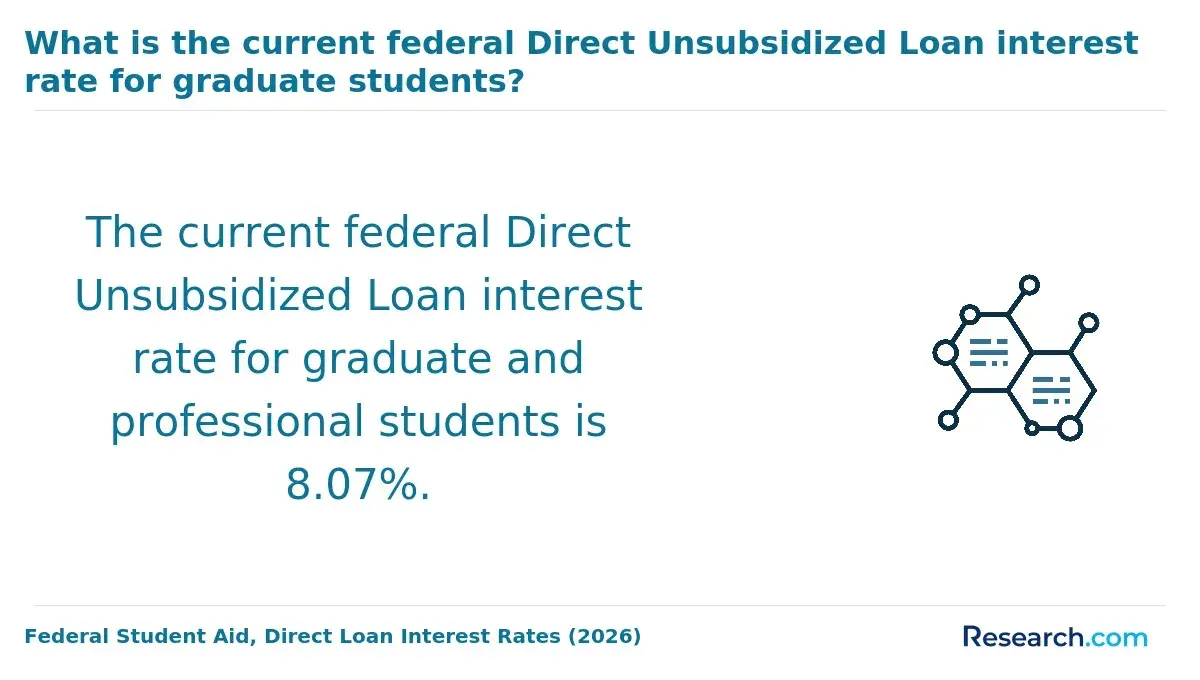
Completion time and price depend on required credits, enrollment pace, tuition policy, fees, and whether a thesis or research project extends the schedule. There is no single reliable national price or duration for either degree, and a lower per-credit rate does not necessarily mean a lower total bill.
For each prospective program, request the full degree requirements and an estimate based on your expected enrollment status. Include mandatory fees, software or equipment, travel for any in-person requirements, and the cost of delaying or reducing paid work. Students comparing accelerated routes can use online data science master's options by program length as a starting point, then confirm current schedules and charges with the institution. Do not assume that a faster program offers enough time for a research-intensive computational project.
What accreditation should you look for in a graduate program?
Start by confirming that the university holds recognized institutional accreditation. Accreditation applies to the institution; it does not, by itself, establish that a particular data science or computational science curriculum fits your goals. Specialized accreditation may apply to certain related disciplines, but should not be assumed to cover either master's degree.
Verify the institution's current status with its accreditor or the U.S. Department of Education, then check the program's academic home, degree requirements, and research resources. If you plan to study online from another state, ask the university to confirm that it can enroll students where you live.
What salaries and job outlook can graduates expect?
The U.S. Bureau of Labor Statistics reports a $120,230 median annual wage for data scientists in May 2025. That is an occupation-wide figure, not a starting salary or a measured outcome for data science master's graduates. BLS also projects 35% growth in data scientist employment from 2025 to 2035, but competition for a particular role will depend on skills, experience, location, and employer needs.
Computational science graduates enter multiple occupations, so a single salary figure would obscure more than it explains. Identify your target job titles before comparing labor-market data or a school's reported outcomes. If a program publishes graduate salaries, check who responded, when they graduated, and whether the figures separate students who had substantial work experience before enrolling.
Do these careers require licenses or professional certifications?
Data scientist and computational scientist roles generally do not have a single mandatory professional license. A particular position may still impose requirements tied to its industry or duties, so check job postings rather than treating the degree as proof of eligibility for every role.
Optional certifications can demonstrate familiarity with a tool or platform, but they are not substitutes for quantitative preparation or credible project work. Prioritize the skills and evidence requested by your target employers before paying for an additional credential.
How can you choose a reputable data science or computational science program?
Begin with two or three jobs or research problems you would genuinely pursue, then compare programs against the same criteria. This prevents a common mistake: selecting the more impressive-sounding degree only to discover that its required courses do not support your intended work. If AI is central to your goal, AI degree comparisons based on career interests can help you decide whether either of these degrees is the right starting point.
Use the following checks before applying or paying a deposit:
- Match required courses and available electives to the methods used in your target roles; do not rely on marketing descriptions alone.
- Review recent thesis or capstone topics to see whether students complete the type of analysis or simulation you want to perform.
- Confirm prerequisite, delivery, computing-access, and faculty-supervision policies directly with the program.
- Compare full estimated costs at the same enrollment pace and ask how funding or employer support applies to your situation.
- Request clearly defined graduate outcomes where available; treat missing or selectively reported results as a reason to ask more questions, not as proof of poor outcomes.
Choose data science when your strongest interest is learning from data and putting analytical results to use across settings. Choose computational science when your central aim is building and testing models of scientific or engineering systems. If both appeal, favor the program whose required work - not just its electives - lets you practice the methods you want to use after graduation.
Other Things You Should Know About Data Science
No. Computer science is a broad field that includes topics such as algorithms, software systems, and computing theory. Computational science uses computing and mathematics to investigate problems in fields such as physics, biology, and engineering; programs may draw heavily on computer science courses.
No. A computational science project might use numerical simulation without machine learning. Check required courses if machine learning is essential to your goals.
Not necessarily. Computing needs depend on the models and projects you undertake. Ask prospective programs what resources students can actually use and whether remote access is available.
It can, but publication is not guaranteed. If publishing matters to you, ask potential supervisors how thesis students contribute to research and what support is available for preparing a paper.
References
- Cost of Attendance (Budget) | 2025-2026 Federal Student Aid Handbook https://fsapartners.ed.gov/knowledge-center/fsa-handbook/2025-2026/vol3/ch2-cost-attendance-budget
- What Is a Capstone Project? - Boston University Questrom https://www.bu.edu/questrom/blog/what-is-a-capstone-project/
- Alumni Perspective: Do I Need a Master's Degree for Data Science? - School of Data Science https://datascience.virginia.edu/news/alumni-perspective-do-i-need-masters-degree-data-science
- Data Science vs. Computer Science: What's the Difference? | UCLA MSOL Data Science https://www.msol.ucla.edu/data-science-engineering/articles/data-science-vs-computer-science/
- Data Science vs. Computer Science: Choosing the Right Major | Syracuse University https://ischool.syracuse.edu/data-science-vs-computer-science/
- Parts of an Application - Pre-Health Student Resource Center https://healthcareers.umn.edu/program-application-guide/parts-application
- Profiling data scientists in the digital labour market | sciencedirect.com https://www.sciencedirect.com/science/article/pii/S0263237322000810
- Master's in Computer Science vs Master's in Data Science | jhu.edu https://ep.jhu.edu/news/masters-computer-science-vs-data-science/
- Data Science Degree Skills Every Student Should Know | Gordon College https://www.gordon.edu/stories/data-science-degree-skills
- Data Science and Decision Science Skills: Are They Different and Does It Matter? · Issue 7.3, Summer 2025 https://hdsr.mitpress.mit.edu/pub/9ir6e1j6


