2027 Customer Segmentation in an Online Data Science Master's: Courses, Projects, and Program Selection

Co-Founder and Chief Data Scientist
Customer segmentation can be a strong focus for an online data science master's - but a course that mentions clustering is not necessarily enough to prepare you for customer-facing analytics work. Prospective students need to compare statistical depth, access to realistic projects, and opportunities to evaluate whether segments lead to useful decisions.
This guide explains what to look for in curricula and capstones, then puts admissions, format, cost, and career prospects in context so you can choose a program that fits your goal.
Key Things You Should Know
- Look for a sequence that connects data preparation, statistical learning, clustering, and business evaluation - not just a single lecture on segmentation.
- A strong portfolio project tests whether segments are stable and actionable, while documenting privacy choices and avoiding unsupported claims about business impact.
- The U.S. Bureau of Labor Statistics projects 35% growth in data scientist employment from 2025 to 2035; that describes an occupation, not the placement rate of any master's program.
What is customer segmentation in data science?
Customer segmentation groups people or accounts using shared characteristics or behavior so an organization can make more relevant decisions. An analyst might segment customers by purchasing frequency, product use, or retention risk. The work involves more than generating clusters: it requires selecting appropriate data, defining a useful business question, checking whether the groups are meaningful, and deciding how they could responsibly inform an action.
Methods range from interpretable rules, such as recency-frequency-monetary grouping, to clustering and model-based approaches. A segment that is mathematically distinct may still be unhelpful if it cannot be identified consistently or does not change a decision. Conversely, a simple rule may be valuable when stakeholders can understand and use it. Privacy, consent, and potential bias matter whenever customer-level data is involved.
What courses teach customer segmentation in an online data science master's?
Segmentation is usually assembled from several courses rather than taught under one course title. The following curriculum areas show what each part contributes; prospective students should check current syllabi and project descriptions to establish how deeply a program covers them.
| Curriculum area | Contribution to segmentation | Evidence of substantive coverage |
| Statistics and experimental design | Sampling, uncertainty, comparison, and testing | Students assess whether apparent differences are credible and design a way to test an intervention |
| Data management and engineering | Combining transaction, account, and event data | Students build reproducible datasets and address missing values, identity matching, and leakage |
| Machine learning or unsupervised learning | Clustering, dimensionality reduction, and model assessment | Students compare methods and test segment stability rather than report clusters alone |
| Marketing analytics or applied electives | Connecting groups to retention, targeting, or product decisions | Students explain who would use the segments and what decision would change |
Graduate-level depth means being able to defend feature choices, explain a method's assumptions, compare alternatives, and evaluate results on data not used to construct the groups. A catalog mention is weaker evidence than a graded assignment; a dedicated elective adds depth, but substantial capstone work may be just as relevant. Students interested in preparing customer data pipelines can also compare AI master's curricula that include data engineering, while checking that those programs also teach the statistical and business evaluation this goal requires.
What projects can students complete in customer segmentation?
A useful project starts with a decision - such as which customers should receive a retention offer - rather than with a preferred algorithm. These examples illustrate different levels of evidence a student could bring to a portfolio:
- Purchase-behavior segmentation: Build interpretable groups from transaction history, compare them with a clustering approach, and assess whether membership and descriptions remain reasonably stable across time periods.
- Subscription-retention study: Develop segments using information available before a renewal decision, describe how an outreach strategy would differ by group, and propose a randomized test before claiming that outreach improves retention.
- Product-use segmentation: Combine appropriately permitted usage events into reproducible features, compare segment profiles, and present recommendations alongside limitations such as incomplete tracking or changing user behavior.
For any project, document data provenance, preprocessing, code, evaluation choices, and stakeholder interpretation. Remove or protect personal information and confirm that the dataset's terms allow portfolio publication. A convincing capstone distinguishes descriptive evidence that groups differ from causal evidence that acting on those groups improves an outcome. Ask prospective programs whether students can choose a segmentation topic, obtain suitable data, and receive both technical and domain-specific feedback; do not assume every capstone permits it.
How do online data science master's programs compare with campus programs?
Delivery mode alone does not establish curriculum quality. An online program may suit a working analyst who needs to keep a job and apply course concepts immediately. A campus program may be preferable for someone who values scheduled in-person collaboration, local recruiting, or regular access to faculty and peers. In either format, the decisive question for segmentation is whether students get hands-on work with data, feedback on their methods, and a substantial applied project.
Compare required live sessions, time zones, group-work expectations, assessment methods, and any campus visits before treating an online program as fully flexible. Students whose schedules make a long program difficult can investigate short-format online data science graduate programs, but should check whether a faster schedule leaves room for the electives and project development they want.
What are the admission requirements for an online data science master's?
Requirements vary by institution. Programs may ask applicants to demonstrate preparation in programming, calculus, linear algebra, statistics, or related quantitative work; others provide introductory coursework. A non-computer-science degree is not automatically disqualifying, and professional analytics experience may help demonstrate readiness, but neither substitutes for a formal prerequisite unless the program says it does.
Before applying, compare your transcript and work samples with each school's published requirements. If you have worked with customers but not written code or studied statistics recently, ask whether prerequisite courses must be completed before admission or can be taken within the program. Applicants considering a different technical emphasis can review non-CS background options for an AI master's; the appropriate preparation still depends on the specific degree's requirements.
How long does an online data science master's take and cost?
Completion time depends on required credits, course availability, and whether a student enrolls full time or part time. Published timelines may assume a particular course load, so check when needed electives and capstones are actually offered. For a working student, a schedule that allows time to build a credible segmentation project may be more useful than the shortest advertised timeline.
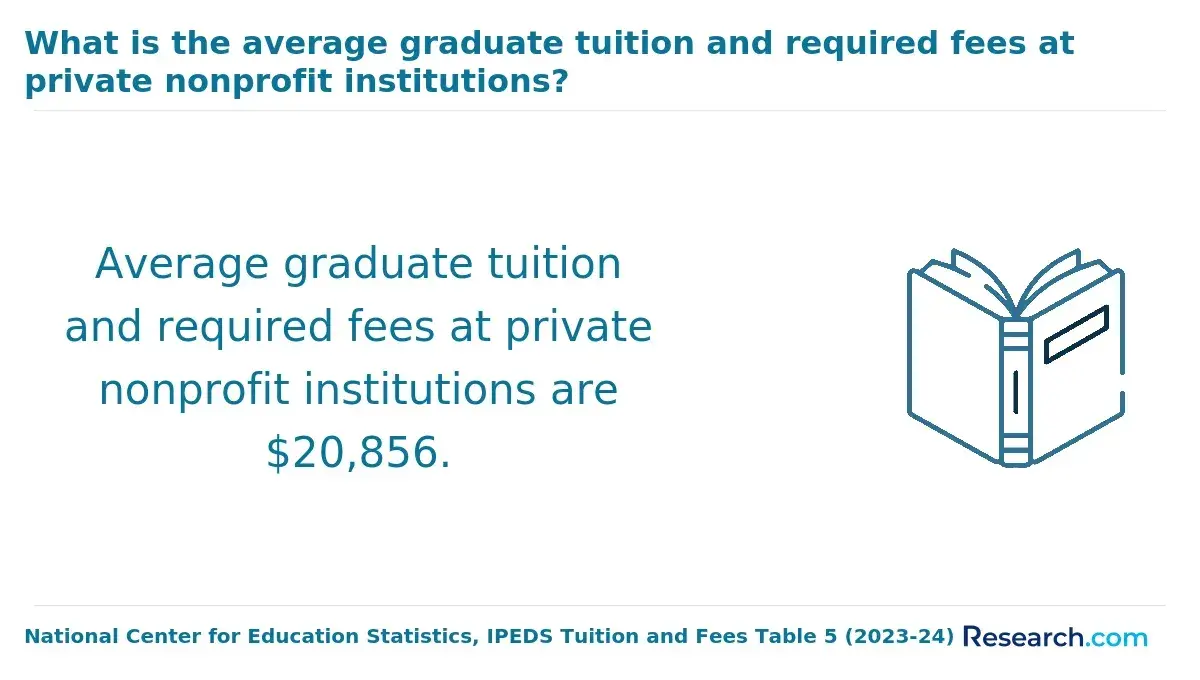
There is no reliable single price for an online data science master's. For each candidate, calculate tuition from its current published credit requirements and rate, then add mandatory fees and any applicable technology, materials, or travel costs. Check whether tuition differs by residency, how often rates can change, whether employer assistance applies, and what borrowing would cost. Comparing one school's tuition-only figure with another's full estimated cost is a common - and avoidable - mistake.
How does accreditation affect online data science master's programs?
Institutional accreditation is an essential credibility check, but it does not establish that a particular program teaches customer segmentation well. Verify the institution's current status through the accreditor or an official government-recognized listing, and confirm that the online degree is offered by that institution. Then separately examine course content, project access, faculty support, and student outcomes where the school reports them.
If you will study from another state, also confirm that the institution can enroll residents where you live. Authorization to offer an online program and accreditation answer different questions; neither should be assumed from the other. Be cautious of claims of specialized endorsement that do not identify a verifiable accrediting body or the precise program covered.
What careers use customer segmentation and data science skills?
Segmentation skills are relevant to marketing analytics, customer insights, product analytics, growth analytics, and some data scientist roles. The balance of work differs: an insights analyst may emphasize interpretable groups and stakeholder communication, while a data scientist may also build production pipelines or develop and monitor models. Job titles alone are unreliable guides; read postings for the data, methods, and decisions the role actually involves.
A graduate targeting these roles should be able to show how a segment was constructed, validated, and translated into a proposed action. If the intended career centers more on developing AI systems than interpreting customer behavior, career-focused artificial intelligence degree selection may help clarify which curriculum is a better match. A master's can develop skills and portfolio evidence, but employers may also consider relevant experience and projects.
What salary and job outlook can data science graduates expect?
The U.S. Bureau of Labor Statistics reports a median annual wage of $120,230 for data scientists in May 2025. That occupational median includes workers with different education levels and experience; it is not an expected starting salary or an outcome attributable to a master's degree.
BLS projects strong growth for the occupation, but a growing field does not guarantee an individual job offer. Applicants considering the degree for a career change should compare target-role postings with their present skills and ask schools for clearly defined, recent graduate outcomes. If a school publishes salary figures, check who responded, whether they were already employed, and whether the figure describes salary level or salary change.
How should students choose a reputable online data science master's?
Start with the job you want, then request enough program detail to judge whether you can produce credible segmentation work. Use the following checks when comparing finalists:
- Map required courses and electives to data preparation, statistical reasoning, unsupervised learning, and evaluation; request recent syllabi where catalog summaries are vague.
- Confirm whether you can undertake a customer-focused capstone, how data access works, and who provides feedback on technical and business decisions.
- Verify accreditation and state enrollment eligibility, then compare realistic schedules and total estimated costs on the same basis.
- Ask what career support and graduate outcomes are documented, without treating a ranking or an occupational salary as evidence of your likely result.
Choose a data science program if it provides the methods and project flexibility your target work requires. If your goal is primarily reporting, business measurement, and decision support rather than deeper model development, compare master's in data analytics study options as well. The strongest fit is the program whose actual coursework, feasible project, schedule, and full cost align with your existing skills and intended role - not the one with the most impressive course names.
Other Things You Should Know About Data Science
No. Recency-frequency-monetary analysis groups customers using defined purchasing measures and rules. Clustering uses an algorithm to identify patterns in selected features. Either can be appropriate; the choice depends on the question and how the results will be used.
Yes. A public dataset with suitable reuse terms or a clearly labeled synthetic dataset can demonstrate your workflow. Explain its limitations and do not present simulated results as evidence of real customer behavior.
Reapply the method to later data and examine whether segment sizes, characteristics, and assignments remain interpretable. Changes may reflect shifting customers, altered data collection, or a method that needs revision.
No. Distinct groups show differences in the analyzed data, not that an intervention will improve an outcome. A properly designed experiment can provide stronger evidence about a campaign's effect.
References
- Practitioner's Guide to Latent Class Analysis - PMC - NIH https://pmc.ncbi.nlm.nih.gov/articles/PMC7746621/
- Understanding College Costs | studentaid.gov https://studentaid.gov/resources/prepare-for-college/students/choosing-schools/consider-costs
- Cost of Attendance (Budget) | 2025-2026 Federal Student Aid Handbook https://fsapartners.ed.gov/knowledge-center/fsa-handbook/2025-2026/vol3/ch2-cost-attendance-budget
- Online Program - UChicago Data Science Institute https://datascience.uchicago.edu/education/masters-programs/online-program/
- Personalized marketing: Leveraging AI for culturally aware segmentation and targeting - ScienceDirect https://www.sciencedirect.com/science/article/pii/S1110016825000997
- Master's in Data Science - University of Notre Dame https://datascience.nd.edu/masters/
- Master's in Data Science - Pace University Online https://online.pace.edu/graduate-programs/ms-in-data-science/
- Online Master's in Data Science | Graduate Degree Program | Bellevue University https://www.bellevue.edu/programs/masters-degrees/data-science/online/
- UC Berkeley iSchool Online Master's in Data Science (MIDS) https://ischoolonline.berkeley.edu/data-science/
- 2026 UNC Online Master of Applied Data Science (MADS) https://online.unc.edu/online-masters-programs/masters-data-science/