
2027 Choosing an Online Data Science Master's for a Career in Subscription Businesses

Co-Founder and Chief Data Scientist
An online data science master's can prepare you for subscription analytics, but the degree title alone will not tell you whether you will learn to investigate cancellations, test retention strategies, or work with billing data. If you want a role in software, media, membership, or another recurring-revenue business, compare programs by their statistical depth, applied projects, flexibility, and total cost. This guide shows what to look for - and when a different educational path may fit better.
Key Things You Should Know
- Prioritize programs that teach experimentation, longitudinal analysis, and machine learning - and let you apply them to retention or pricing questions.
- The U.S. Bureau of Labor Statistics projects 35% growth in data scientist employment from 2025 to 2035, but that occupation-wide forecast does not measure demand specifically at subscription companies.
- Compare total program cost and access to a relevant project before enrolling; neither a data science degree nor a high-level churn dashboard proves you can make sound subscription decisions.
What is an online data science master's degree for subscription businesses?
It is generally a data science master's delivered online, not a separate credential in subscription analytics. Its relevance comes from how well you can apply statistics, computing, and business reasoning to recurring customer relationships. A strong program helps you study when customers subscribe, change plans, fail to pay, disengage, or cancel - and decide whether an intervention improves outcomes.
Subscription businesses differ in what they count as an active customer or a cancellation. A streaming service, a software company, and a paid membership may use different billing periods, trials, and contract terms. Choose a program that teaches you to define the population and outcome before modeling it, rather than treating a generic "churn" label as sufficient.
Why do subscription businesses hire data science professionals?
Recurring revenue makes customer behavior observable over time. Data scientists can connect product usage, support contacts, marketing exposure, and billing events to questions such as which customers are at risk, whether onboarding helps retention, and how a price change affects both conversion and longer-term revenue.
The difficult part is often causal interpretation, not prediction. A model may identify customers likely to cancel without showing that a discount will keep them. Likewise, a rise in retention could reflect a seasonal shift rather than a new feature. Programs that teach randomized experiments, credible observational comparisons, and uncertainty are therefore more useful for decision-making than programs focused only on model accuracy.
What careers can an online data science master's prepare you for?
Subscription companies may place similar work in product, marketing, finance, or centralized data teams. The table distinguishes common role directions by the decisions they support; actual titles and responsibilities vary by employer.
| Role direction | Typical subscription question | Evidence of readiness |
| Product or growth data scientist | Does a change to onboarding improve sustained use? | Experiment design and analysis of user events over time |
| Retention or customer analytics scientist | Which customers are at risk, and which intervention helps? | Churn modeling paired with intervention evaluation |
| Pricing or revenue analyst | How do plan changes affect conversion and recurring revenue? | Careful metric definitions, segmentation, and scenario analysis |
| Machine learning engineer | How can predictions be delivered and monitored in a product? | Production-oriented coding, data pipelines, and model monitoring |
Choose your target role before comparing electives: a product-focused student may need stronger experimentation and stakeholder communication, while a production-modeling role calls for more software engineering. If your main goal is building AI systems rather than analyzing subscription decisions, career-focused artificial intelligence degree selection offers a different basis for comparing credentials.
Which courses should an online data science master's include?
Look for a foundation in statistical inference, probability, regression, programming, and data management. For subscription work, especially valuable follow-on topics include experimental design, causal inference, time-to-event or longitudinal analysis, machine learning, and data visualization. Database coursework matters because customer events, invoices, refunds, and account records rarely arrive as one clean modeling table.
Judge depth from syllabi and assignments, not course titles alone. A useful experiment course should address assignment, sample selection, outcome definitions, and uncertainty; a useful machine learning course should cover evaluation on future data and the consequences of data leakage. An elective that mentions customer lifetime value briefly is less compelling than a substantial project that handles customers whose future behavior has not yet been observed.
Some students will also consider online artificial intelligence program comparisons. Compare actual coursework rather than labels: an AI-heavy degree may suit model-building goals, while a data science curriculum with stronger experimentation may better support pricing and retention decisions.
How can data science programs prepare students for subscription analytics?
The clearest signal is a substantial project in which students turn imperfect customer histories into a defensible business recommendation. Ask whether you can choose a subscription-related capstone topic, obtain appropriate data, and receive feedback on both technical work and the decision it supports. No program should be assumed to offer a subscription-company placement or proprietary billing data unless it says so.
A strong project can follow these steps; they also provide a checklist for assessing project-based coursework:
- Define the decision and a measurable outcome, such as cancellation after a clearly specified renewal point.
- Assemble a time-ordered dataset and separate information available before the decision from events that occurred afterward.
- Compare a meaningful baseline with an appropriate model or experiment, and report uncertainty alongside performance.
- Explain how the result would change an action, including possible effects on revenue, customer experience, and privacy.
Current AI tools can assist with coding and analysis, but they do not resolve unclear consent, biased data, or poorly defined outcomes. Students interested in formal oversight of such systems can explore artificial intelligence graduate programs in ethics and governance; for subscription analytics, also check whether ordinary coursework requires responsible handling of customer-level data.
What are the admission requirements for an online data science master's?
Requirements vary by program. Review each school's current admissions page for degree eligibility, mathematics and programming prerequisites, application materials, and any work-experience expectations. In particular, confirm whether prior coursework must appear on a transcript or whether another form of preparation is accepted; completing a short online course does not automatically satisfy a formal prerequisite.
If your background is in marketing, operations, or finance, identify any gaps in calculus, statistics, or coding before applying. Conversely, applicants with technical backgrounds should look for ways to demonstrate that they can frame business questions, not just train models. For applicants comparing application workloads, information on machine learning master's applications without essays may help, but an easier application should not outweigh curriculum fit.
How long does an online data science master's take and cost?
Neither duration nor price can be assumed from the words "online master's." Credit requirements, enrollment pace, prerequisite courses, tuition rules, and fees differ by school. Obtain a current program-specific estimate based on the number of credits you would actually take, your residency or enrollment status where relevant, and your intended pace.
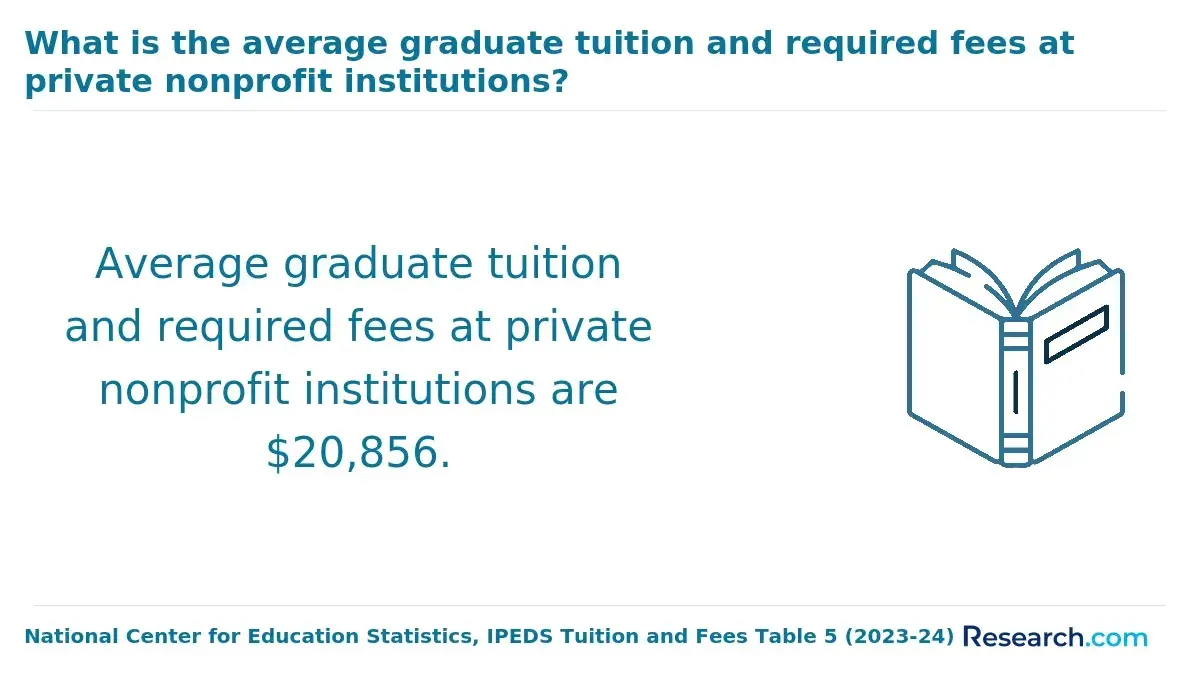
For a working professional, the financial comparison should include required fees, materials or computing costs, possible travel, financing costs, and any income lost by reducing work hours - not tuition alone. Employer tuition assistance can change the calculation, but confirm its annual limits, eligible programs, and repayment conditions before relying on it. Ask each program for an estimated completion schedule that accounts for course availability, not just the fastest advertised path.
Are online data science master's programs accredited and professionally recognized?
Check the institution's current institutional accreditation through the accreditor or U.S. Department of Education, and verify that the specific online offering is available to students in your state. Institutional accreditation does not establish that a curriculum covers subscription analytics, and a university's reputation does not substitute for inspecting its courses and projects.
Data science roles generally do not hinge on a single professional license. Employers may instead assess your degree, experience, technical work, and ability to explain decisions. A practical red flag is a program that makes strong career-outcome claims without explaining whom its reported outcomes represent; ask for the methodology rather than treating the claim as a prediction for you.
How do online and campus-based data science master's programs compare?
Either format can teach the same relevant methods, but access and scheduling differ by program. Online study may let you stay employed and apply lessons to an existing subscription-business role. Campus study may be more suitable if you need in-person collaboration, local recruiting access, or a dedicated change of environment. Neither format automatically provides better projects or employer connections.
Before choosing online delivery, check whether classes are live, whether attendance falls in your time zone, how teams coordinate projects, and whether exams or residencies require travel. Also ask whether online students have equal access to capstone supervision and career services. If speed is your primary constraint, you can compare accelerated artificial intelligence master's degrees, but do not trade away the statistical and applied work your target subscription role requires.
What salaries and job outlook can data science graduates expect?
The U.S. Bureau of Labor Statistics reports a median annual wage of $120,230 for data scientists in May 2025. That is an occupation-wide figure - not a starting salary, a subscription-industry estimate, or a return attributable to a master's degree. The agency also projects substantial growth in the occupation, but competition for a particular role will depend on the employer and the applicant's skills and experience.
For your own decision, compare likely target jobs with your current position and the full cost of study. If you already perform product or customer analysis, a master's with rigorous methods and a strong applied project may help you pursue more technical work. If you primarily need one missing skill, targeted coursework and a credible project may be a less costly first step than a full degree.
Other Things You Should Know About Data Science
Yes. Public or synthetic data can demonstrate your methods if you document its limitations. State clearly when it cannot reproduce real billing, customer behavior, or intervention effects.
Not necessarily. Experience in product, marketing, finance, or customer operations can be relevant if you can show how you defined metrics, analyzed behavior, or evaluated a decision.
No single degree is universally required. An MBA may suit broader commercial leadership goals; a data science master's is more directly aligned with statistical modeling and experimentation. Check the responsibilities in the jobs you want.
Explain what revenue and costs your definition includes, the observation period, and how you treat customers whose future behavior is unknown. A transparent, limited estimate is more useful than a precise-looking number built on hidden assumptions.
References
- Cost of Attendance (Budget) | 2025-2026 Federal Student Aid Handbook https://fsapartners.ed.gov/knowledge-center/fsa-handbook/2025-2026/vol3/ch2-cost-attendance-budget
- Types of Financial Aid: Grants, Work-Study, and Loans | studentaid.gov https://studentaid.gov/understand-aid/types
- Employer Tuition Assistance Plans May Help Pay for College | Campus https://campus.edu/blog/financial-aid/employer-tuition-assistance-programs-can-help-pay-for-college
- Customer Churn Prediction for Subscription-Based Businesses | Institute for Information Sciences https://i2s-research.ku.edu/customer-churn-prediction-subscription-based-businesses
- What You Can Do with a Master's in Data Science and Artificial Intelligence | Harvard Extension School https://extension.harvard.edu/blog/what-you-can-do-with-a-masters-in-data-science-and-artificial-intelligence/
- 12 Data Science Skills (+10 Hard-Won Career Lessons) | Syracuse University https://ischool.syracuse.edu/data-science-skills/
- What preparations do I need for graduate education? | Statistics & Data Science Graduate Interdisciplinary Program https://stat.arizona.edu/what-preparations-do-i-need-graduate-education
- Syracuse Online Master's in Applied Data Science https://onlinegrad.syracuse.edu/information-science/applied-data-science/
- 10 Skills You Need to Succeed as a Data Scientist | Intuit Blog https://www.intuit.com/blog/innovative-thinking/data-science-skills/
- Uncovering Data Science: Skills, Careers and Education | Databricks https://www.databricks.com/blog/uncovering-data-science-skills-careers-and-education


