2027 Choosing an Online Data Science Master's for a Career in Grocery Retail

Co-Founder and Chief Data Scientist
Choosing an online data science master's for grocery retail means looking beyond a program's title. Grocery teams need people who can forecast demand, evaluate promotions, manage perishable inventory, and explain decisions to merchants and operations staff.
For prospective students and retail professionals, the best choice depends on whether a program builds those skills at a manageable cost and pace. This guide shows what to compare - and when a master's may not be necessary.
Key Things You Should Know
- Prioritize statistics, forecasting, experimentation, databases, and a project that can address grocery problems such as stockouts or food waste; a retail-branded course is less important.
- A master's is not a universal entry requirement. Compare the degree with a smaller skills-building route if you already have relevant retail experience and can demonstrate analytical work.
- The U.S. Bureau of Labor Statistics projects 35% growth in data scientist employment from 2025 to 2035, but that economy-wide projection does not measure grocery-specific openings or guarantee a job.
What Is an Online Data Science Master's for Grocery Retail Careers?
It is a graduate data science degree selected for its relevance to grocery decisions - not necessarily a degree with "grocery" in its name. A suitable program teaches students to turn transaction, pricing, inventory, loyalty, and store-operations data into defensible recommendations. The strongest fit depends on your intended role: forecasting specialists need substantial time-series work, while promotion analysts need experimentation and causal inference.
When you review online data science programs for data careers, look past broad career claims. Inspect course descriptions, elective availability, and project rules for evidence that you could investigate an actual retail decision.
Is a Data Science Master's Required for Grocery Retail Analytics Jobs?
No single degree requirement applies across grocery employers or roles. An analyst position may emphasize SQL, reporting, and business judgment, while a modeling-intensive position may call for deeper statistics and software skills. Check current postings for the specific jobs you want rather than treating "data scientist" as a uniform hiring standard.
Choose a master's when you need structured graduate-level preparation, access to substantial projects, or a credible way to move from retail operations into technical work. Consider a narrower route first if you can already analyze retail data but need to strengthen one demonstrable skill, such as SQL or forecasting. A degree can improve preparation; it does not replace evidence that you can solve an employer's problem.
Which Online Data Science Master's Programs Are Properly Accredited?
For a U.S. online master's, verify that the university holds institutional accreditation from an accreditor recognized by the U.S. Department of Education. Do not assume that a data science program needs separate field-specific accreditation, or that a university's accreditation establishes the quality of a particular elective, project, or online course.
Before applying, confirm the institution's current accreditation status through the accreditor or federal recognition records. Also ask the university whether it can enroll students in your state and whether any advertised campus activities are required. Accreditation, state authorization, and career fit answer different questions; a program needs to pass all relevant checks.
What Do Online Data Science Master's Programs Teach for Retail Applications?
Useful programs connect statistical methods to operational constraints. Grocery sales reflect promotions, holidays, changing prices, and whether an item was on the shelf at all. A forecast built from recorded sales alone may underestimate demand when stockouts prevented purchases; a promotion model can also mislead if it confuses correlation with a promotion's effect.
The table connects common curriculum areas with the grocery decisions they could support. Use it to compare course descriptions, not to assume that a course title guarantees practical depth.
| Curriculum area | Grocery application | Evidence of depth |
| Statistics and causal inference | Assess whether a promotion changed purchasing | Experiments, comparison groups, and uncertainty estimates |
| Time-series forecasting | Plan orders for seasonal and perishable products | Evaluation across future periods, stores, and products |
| SQL and data engineering | Join transactions, product records, and inventory | Work with messy data and reproducible pipelines |
| Optimization and decision analysis | Balance product availability against waste | Projects that state costs, constraints, and trade-offs |
A valuable project might compare a baseline forecast with a more complex model, then test how each affects ordering decisions and waste. Check whether students can choose such a topic and use appropriate data. If your target is recommendation systems or advanced machine learning, options for studying artificial intelligence online may also be worth comparing - but AI branding should not substitute for forecasting, evaluation, and retail context.
What Are the Admission Requirements for Online Data Science Master's Programs?
Requirements vary by university. Prospective students should check each program's current policy for a bachelor's degree, quantitative preparation, programming experience, transcripts, recommendations, and any tests. A requirement listed by one school should not be treated as standard across online programs.
Preparation and formal eligibility are different. A retail manager may bring strong knowledge of replenishment and promotions but need more practice in calculus, statistics, Python, or SQL; a technically trained applicant may need to learn how stores make decisions.
If you have a gap, ask admissions which courses formally satisfy its prerequisites and whether a bridge course is part of the degree or an additional expense. Applicants comparing adjacent technical degrees can also examine AI master's programs with bridge courses without assuming those courses meet a data science program's rules.
How Long Do Online Data Science Master's Programs Take and Cost?
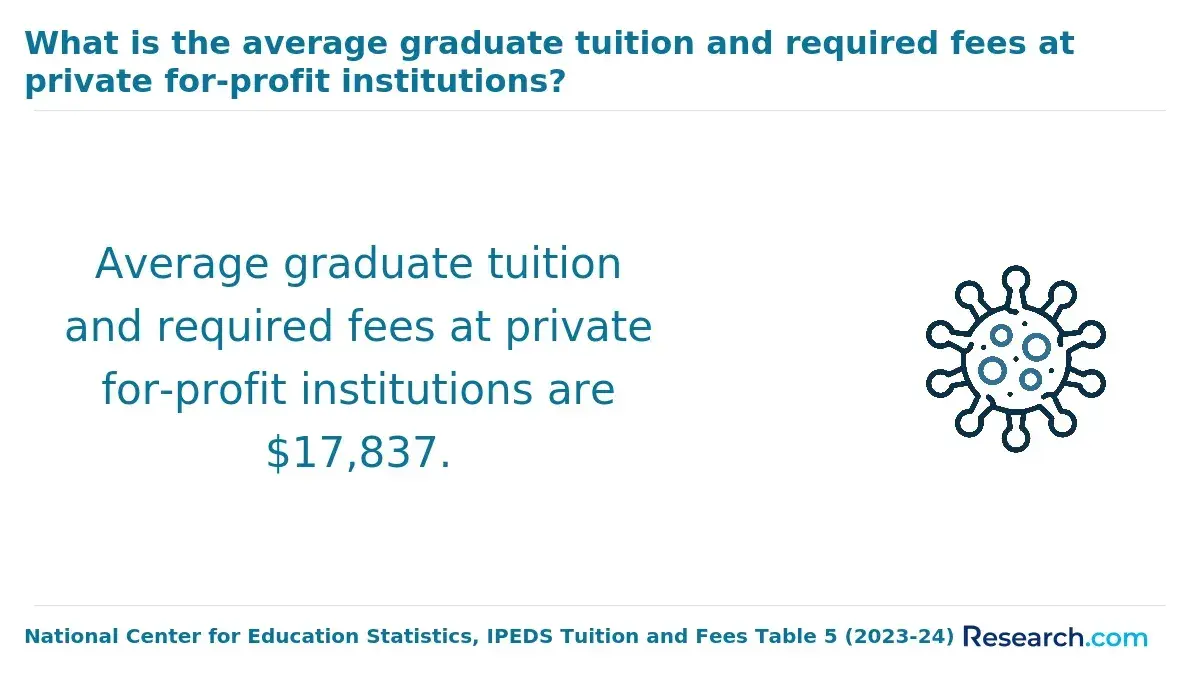
There is no responsible single price or completion time for online data science master's programs: credit requirements, tuition policies, course loads, and required fees differ. Request a current written estimate for your expected enrollment pace, then check how long the university allows you to finish. A lower advertised tuition figure may not be the lower total cost.
The following cost categories help distinguish a quoted tuition rate from the amount you may actually pay.
| Cost category | What to verify |
| Tuition | Required credits, rate applicable to you, and whether rates may change |
| Mandatory fees | Online, technology, student, or graduation charges |
| Situational expenses | Software, equipment, travel, and prerequisite coursework |
| Financing and time | Loan costs, employer assistance terms, and the work hours your schedule can support |
Compare net cost after confirmed employer support or aid, not after funding you merely hope to receive. If you are evaluating a return on the investment, include what you already earn and the roles you could plausibly pursue afterward; a future salary cannot be attributed to the degree alone.
How Do Online and Campus Data Science Master's Programs Compare?
Online study may let a grocery employee keep working and apply new methods on the job. Campus study may make in-person collaboration and employer events easier to access. Neither format guarantees better teaching or placement; course design, faculty access, projects, and recruiting opportunities matter more than the label.
For an online option, ask whether meetings are live or recorded, when group work occurs, and whether exams or projects require travel. Grocery operations can involve irregular shifts, making these details consequential.
An online master's in data science for busy professionals is most useful when its actual scheduling rules - not just its marketing - fit your work pattern. Choose campus study instead if the in-person opportunities are important to your transition and you can accommodate its schedule and full cost.
Which Grocery Retail Jobs Can Data Science Master's Graduates Pursue?
Possible targets include demand forecasting analyst, pricing or promotion analyst, supply chain analyst, customer analytics specialist, and data scientist. Titles overlap: one employer's "data scientist" may build production models, while another's may primarily analyze experiments. Read the responsibilities and tools in current postings before selecting electives.
Retail experience can be an advantage when interpreting substitutions, stockouts, spoilage, and store-level constraints. For someone changing careers from store or merchandising work, an analyst role may offer a more practical first step than aiming immediately for a modeling-heavy position. Build a portfolio around the role you want, and explain both the analytical method and the decision a grocery stakeholder could make from it.
How Much Can Grocery Retail Data Scientists Earn?
The U.S. Bureau of Labor Statistics reports a $120,230 median annual wage for data scientists in May 2025. That is an occupation-wide figure, not a grocery-retail salary or a prediction for new master's graduates. Actual pay depends on the job's duties, location, employer, and your prior experience.
Use the figure as broad context rather than an expected starting offer. For a more relevant comparison, examine compensation for the exact roles and locations you are targeting; a data science graduate salary guide by industry can help frame questions, but it cannot establish what a particular grocery employer will pay you.
What Skills and Certifications Help Data Scientists Advance in Grocery Retail?
Advancement depends on combining reliable analysis with decisions that store, merchandising, and supply chain teams can use. SQL and Python matter for working with data; statistical evaluation matters for knowing whether a model helps; communication matters for explaining when a recommendation should not be trusted. Grocery-specific understanding includes product hierarchies, substitutions, promotions, availability, and the cost of waste.
Before paying for a certification, compare it with job postings and the tools used by your target employers. A cloud or analytics credential may demonstrate familiarity with a platform, but it is not a substitute for a project showing that you can protect customer information, test a forecast against a sensible baseline, and explain the operational trade-off. Treat a program that promises retail employment from a credential alone as a red flag.
Other Things You Should Know About Data Science
Only with the data owner's permission and under the applicable privacy and security rules. If that is not possible, use appropriately licensed public or simulated data and clearly state its limitations.
Not necessarily. Analytics work may sit within merchandising, supply chain, digital commerce, or a central data team. Store visits can still help analysts understand how data is generated and decisions are carried out.
It need not. Forecasting, experimentation, and inventory analysis apply elsewhere. Describe your methods and results clearly enough that employers outside grocery can assess them.
Yes, at a practical level. Understanding terms such as stockout, shrink, and product substitution makes interviews and projects more credible, but it does not replace the technical skills listed in the role.
References
- Estimate your college cost | usa.gov https://www.usa.gov/estimate-college-cost
- What Is Data Science? Definition, Skills, Applications & More | Harvard SEAS https://seas.harvard.edu/news/what-data-science-definition-skills-applications-more
- What's the Difference Between Asynchronous and Synchronous Learning? | Ohio State Online https://online.osu.edu/content-hub/blogs/whats-the-difference-between-asynchronous-and-synchronous-learning/
- 13 Top Data Science Careers: Key Insights | Syracuse University https://ischool.syracuse.edu/data-science-careers/
- Choosing between a full-time and part-time graduate degree program | Carey Business School blog https://blog.carey.jhu.edu/full-time-vs-part-time-benefits
- Prerequisite Key Topics - UVA School of Data Science https://datascience.virginia.edu/pages/prerequisite-key-topics
- What is a Non-Traditional Student? | MDS@Rice https://csweb.rice.edu/academics/graduate-programs/online-mds/student-experience/nontraditional-students