2027 Online Data Science Master's for Credit Analysts: A Career Transition Guide

Co-Founder and Chief Data Scientist
Credit analysts already understand lending decisions, financial statements, and the consequences of a weak risk assessment. Moving into data science means adding the ability to build, test, and explain models - not starting over professionally. For analysts considering an online master's, the decision is whether graduate study will close their particular technical gaps better than a shorter, less expensive route. This guide connects program features to realistic credit risk roles and shows what to verify before enrolling.
Key Things You Should Know
- The strongest transition builds on credit expertise while adding programming, statistics, model evaluation, and evidence of applied work.
- An online master's can support a move into credit risk modeling or data science, but an analyst targeting a less technical analytics role may not need a graduate degree.
- The U.S. Bureau of Labor Statistics projects 35% growth in data scientist employment from 2025 to 2035; that broad projection does not predict hiring for credit risk specialists or individual graduates.
What is an online data science master's degree for credit analysts?
It is a graduate degree in data science completed primarily online, applied by a credit analyst to problems such as default prediction, portfolio monitoring, and lending-model evaluation. It is generally not a separate credential reserved for credit analysts. The useful distinction is whether a program lets students gain substantial technical depth and apply it to financial risk problems.
A credit analyst may already know what a borrower's financial ratios mean. Graduate data science study should add the ability to prepare large datasets, estimate and compare models, test how well they perform on unseen cases, and communicate limitations. A program that teaches tools without opportunities to examine assumptions, errors, and real decisions may be a poor fit for this transition.
How can a data science master's help credit analysts transition careers?
The transition is most credible when it joins domain judgment with technical evidence. Experience reviewing borrowers can help an analyst recognize questionable inputs, interpret unusual results, and explain why a model's output matters to a lending team. The usual gaps are coding, statistical inference, data engineering, and rigorous model testing; the size of each gap depends on the analyst's current work.
A master's can provide structured practice, feedback, and a recognized graduate credential. It is not automatically necessary. An analyst who already writes code and builds validated models may be able to pursue an internal transfer or create a portfolio without another degree. Conversely, someone seeking a modeling-intensive role may benefit from sustained graduate coursework rather than a short tool-focused course. Analysts considering work beyond credit risk can also find an online AI degree program, then compare its statistical and data-science depth with their target job requirements.
Before applying, choose a target role and examine actual job descriptions. Match their recurring skills against work you can demonstrate today. If the missing skills are mostly programming fundamentals, try a focused course and project first; if they include advanced statistics, modeling, and substantial applied practice, compare master's curricula.
What jobs can credit analysts pursue after earning a data science master's?
The most plausible next role depends on technical experience gained before and during the degree. These roles use credit knowledge differently, so their titles should not be treated as interchangeable.
| Potential role | Connection to credit analysis | Technical evidence to demonstrate |
| Credit risk analyst or analytics specialist | Monitors portfolios and investigates changes in borrower performance | SQL, reproducible analysis, and clear reporting |
| Credit risk modeler | Develops models used to estimate or rank lending risk | Statistical modeling, validation, and documentation |
| Model validation analyst | Independently challenges model assumptions and performance | Testing, error analysis, and communication of limitations |
| Data scientist in financial services | Applies broader predictive methods to business problems | End-to-end projects, programming, and stakeholder communication |
A first move within a bank or lender may be more attainable than an immediate move to a broad data scientist position: colleagues can assess the analyst's credit judgment alongside new technical skills. A degree alone does not establish readiness for any of these roles; employers may require experience with their particular data, tools, and model controls.
How do you choose an accredited online data science master's program?
Start by checking the institution's current accreditation through the accreditor or the U.S. Department of Education's accreditation database. Then confirm that the specific online program is available to students in your state. Institutional accreditation is an important baseline, but it does not establish that a curriculum fits credit risk work.
Use the following questions to distinguish programs that share a similar degree title:
- Can students take substantial coursework in statistics, machine learning, databases, and model evaluation - not merely introductory survey courses?
- Can electives or a capstone address financial data, risk, interpretability, or responsible model use?
- What feedback do instructors provide on code and projects, and what career support is available to online students?
- What are the current course schedule, synchronous attendance rules, total required charges, and limits on time to completion?
For credit decisions, the ability to explain and govern model use may matter as much as predictive performance. If that is a career priority, compare data science curricula with AI master's pathways focused on governance; check the actual courses and projects rather than relying on a track name. A common mistake is choosing by ranking or degree title without confirming that the required coursework addresses the intended role.
What do online data science master's programs teach?
Relevant programs may cover probability and statistics, programming, databases, machine learning, visualization, and applied projects. Course names alone do not show depth. A credit analyst should look for assignments that require students to prepare imperfect data, establish a baseline, test models on held-out data, explain errors, and document how results could be used.
A useful credit-focused project might predict late payments using appropriately sourced data, compare a simpler model with a more complex one, and examine whether performance changes across borrower groups or over time. The project should address the cost of false predictions and the limits of the available data - not just report an accuracy score. Because automated methods can produce results that are difficult to explain, interpretability and model oversight are particularly relevant when assessing curricula for lending-related work.
If advanced modeling is the main goal, compare the depth of machine learning requirements with dedicated programs, including machine learning master's programs within a $20,000 budget. The less expensive or more specialized option is useful only if its prerequisites, projects, and overall curriculum fit the role you want.
What are the admission requirements for online data science master's programs?
Requirements vary by institution. Programs commonly assess an applicant's prior degree, quantitative preparation, programming experience, academic record, and professional background; testing and formal prerequisite policies differ. Credit analysis experience may strengthen an application, but it does not necessarily fulfill a stated calculus, statistics, or programming prerequisite.
Before paying an application fee, compare your transcript with each program's published requirements. If preparation is unclear, ask admissions staff whether a particular prior course meets a prerequisite and whether missing coursework may be completed before entry. A personal project can demonstrate readiness to work with data, but it should not be presented as a substitute for a formal requirement unless the program says it is. In an application, describe specific analyses and decisions you contributed to rather than assuming the job title "credit analyst" explains your technical experience.
How long and how much do online data science master's programs take?
Both depend on required credits, course availability, pace, and the school's tuition and fee policies. A working analyst may prefer part-time study, but should check whether required courses are offered often enough to support the planned finish date. Published tuition alone may exclude mandatory fees, books, software, or occasional travel.
For a meaningful comparison, calculate each program's expected total using its current tuition rate × required credits + mandatory fees, then add any disclosed materials or travel costs. Ask whether tuition can change during enrollment and whether your employer's education benefit applies to the program and study pace. Working full time may preserve income, but it does not eliminate the time cost of study.
Do not treat a possible future data scientist salary as the financial return on the degree. A promotion, internal move, or new job also depends on prior experience and the hiring market. If an AI-focused alternative is under consideration, compare AI master's tuition and duration using the same cost components and realistic assumptions about your own career path.
How do online and campus-based data science master's programs compare?
Neither format is inherently better for a credit analyst. An online program may make it easier to keep a job and apply coursework to current lending problems. Campus study may provide more frequent in-person contact or access to local recruiting. In either format, verify how students obtain instructor feedback, collaborate on projects, and meet employers; delivery mode alone does not establish those outcomes.
Online programs also differ from one another. Live sessions, group work, timed assessments, and occasional campus visits can affect whether a working analyst can participate fully. If professional connections are a deciding factor, review AI master's programs by alumni community as a comparison point, then ask each data science program what networking access its online students actually receive. Choose the format that permits sustained project work alongside your employment, rather than assuming flexibility from the word "online."
What salaries can graduates earn in data science and credit risk careers?
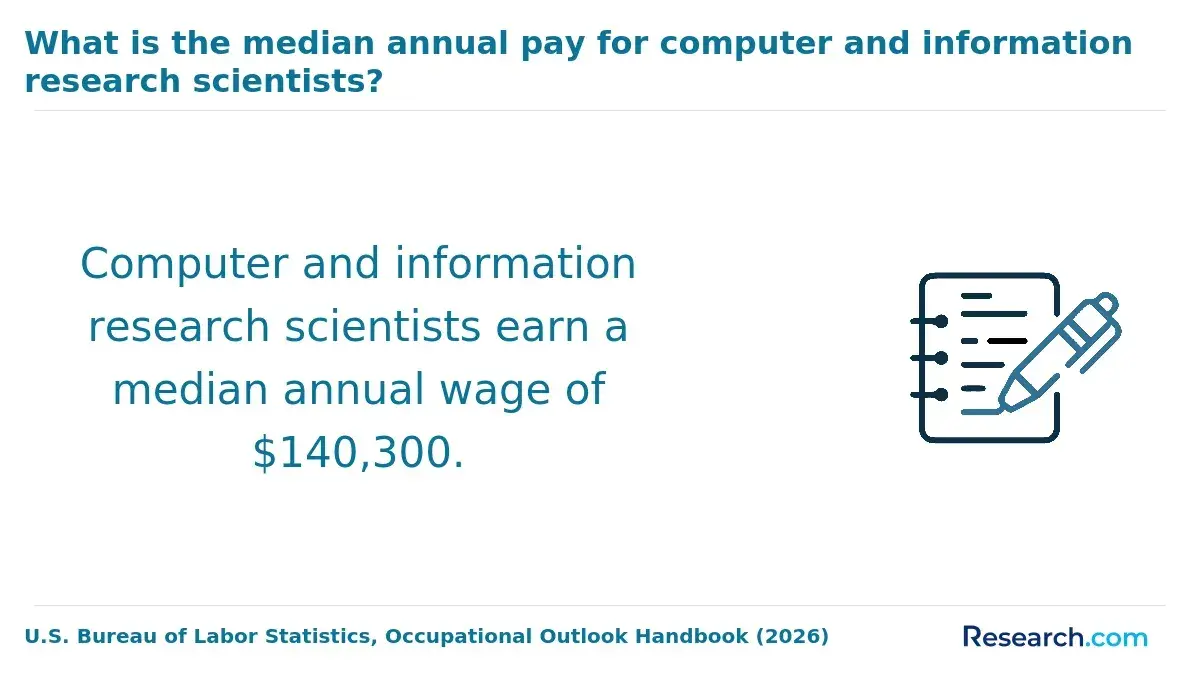
The U.S. Bureau of Labor Statistics reports a $120,230 median annual wage for data scientists in May 2025. That is an occupation-wide figure, not a starting salary for master's graduates or a pay estimate for credit risk modelers. It includes workers with different experience levels, employers, locations, and educational backgrounds.
Credit risk jobs may be classified under different occupational titles, making a single data scientist median an unreliable comparison with an analyst's current pay. For a personal decision, compare posted compensation for specific roles in your market with your present earnings, and account for tuition, time, and the possibility that a first transition role will not carry an immediate raise. Be wary of programs that present broad occupational wages as their own graduates' outcomes without explaining who was surveyed and when.
Do credit analysts need certifications or licenses for data science careers?
A general data scientist or credit risk modeling role does not have a single universal professional license. Employers can still specify credentials, training, or experience for a particular position. Before purchasing a certification, check job postings for your target role and determine whether they emphasize that credential or demonstrable coding and modeling work.
For many career changers, a well-documented project is stronger evidence of technical ability than a certificate that only confirms course completion. A certification may be worthwhile when an employer requests a particular platform or methodology, especially if the employer will fund it. Confirm role-specific requirements with the hiring organization rather than assuming a master's or a certificate automatically satisfies them.
Other Things You Should Know About Data Science
Do not publish employer or borrower data without explicit authorization. Public, synthetic, or appropriately licensed datasets can demonstrate your approach without exposing confidential information; follow the dataset's terms and explain its limitations.
Start with the language used in the roles or program you are targeting. Either can support statistical analysis; completing and explaining a sound project matters more than listing both languages without evidence of use.
Describe the data you analyzed, the decisions your work informed, the tools you used, and how you checked your conclusions. Be precise about your contribution: reviewing a model's output is different from developing the model.
Yes, if it demonstrates transferable work such as cleaning data, testing predictions, and communicating uncertainty. Add a credit-relevant project when possible so employers can also see how you apply those methods to lending decisions.
References
- A United States Fair Lending Perspective on Machine Learning | nih.gov https://pmc.ncbi.nlm.nih.gov/articles/PMC8216763/
- Cost of Attendance (Budget) | 2025-2026 Federal Student Aid Handbook https://fsapartners.ed.gov/knowledge-center/fsa-handbook/2025-2026/vol3/ch2-cost-attendance-budget
- Providing adverse action notices when using AI/ML models | consumerfinance.gov https://www.consumerfinance.gov/archive/blog/innovation-spotlight-providing-adverse-action-notices-when-using-ai-ml-models/
- Data Science in Finance | MSCF | Carnegie Mellon University https://www.cmu.edu/mscf/news/data-science-finance
- Master's in Financial Technology and Analytics | Stevens Institute of Technology https://www.stevens.edu/program/financial-technology-and-analytics-masters-degree
- Master's in Data Science | utexas.edu https://cdso.utexas.edu/msds
- Analytics: Data Science & AI (Online) - Rutgers MBS https://mbs.rutgers.edu/academic-programs/analytics-data-science-ai-online
- Data Science (DATA_SCI) | University of Missouri Academic Catalog https://catalog.missouri.edu/courseofferings/data_sci/
- Programs, Certificates and Courses | Data Science Institute https://dsi.udel.edu/programs-and-courses/
- Online Program - UChicago Data Science Institute https://datascience.uchicago.edu/education/masters-programs/online-program/