2027 Choosing a BS in Business Administration When You Need to Pause Classes During a Busy Work Season
Audited and Verified:
Our Editorial and Data Verification Process
Research.com uses government datasets, official education statistics and primary institutional information to support its career and degree guides. Our review process checks factual accuracy, occupational definitions, source dates and the requirements associated with the credentials discussed.
How This Article Was Fact-Checked
Our editorial team verifies salary estimates, employment projections, education requirements and program information against original data providers and official organizations. Salary figures are checked against the relevant occupational definitions and reporting periods. Information about licensure, accreditation and required in-person training is reviewed separately.
Fact-checked and verified on:

Co-Founder and Chief Data Scientist
A predictable rush at work can make a business degree possible for most of the year - and unmanageable for the rest. If you expect to stop taking classes during a busy season, the deciding factor is not whether a BS in Business Administration is advertised as flexible. It is whether you can finish a term, skip the next one, and return without losing your place in the program or facing avoidable financial consequences. This guide helps working adults compare those policies, plan around required courses, and choose a degree they can realistically finish.
Key Things You Should Know
- Yes, some programs let you skip a future term or take an approved leave, but online enrollment does not automatically permit a mid-course pause. Get the rules and return process in writing.
- Plan your break around course end dates and the next offering of required business classes. Withdrawing midterm can affect grades, financial aid, employer reimbursement, and your completion date.
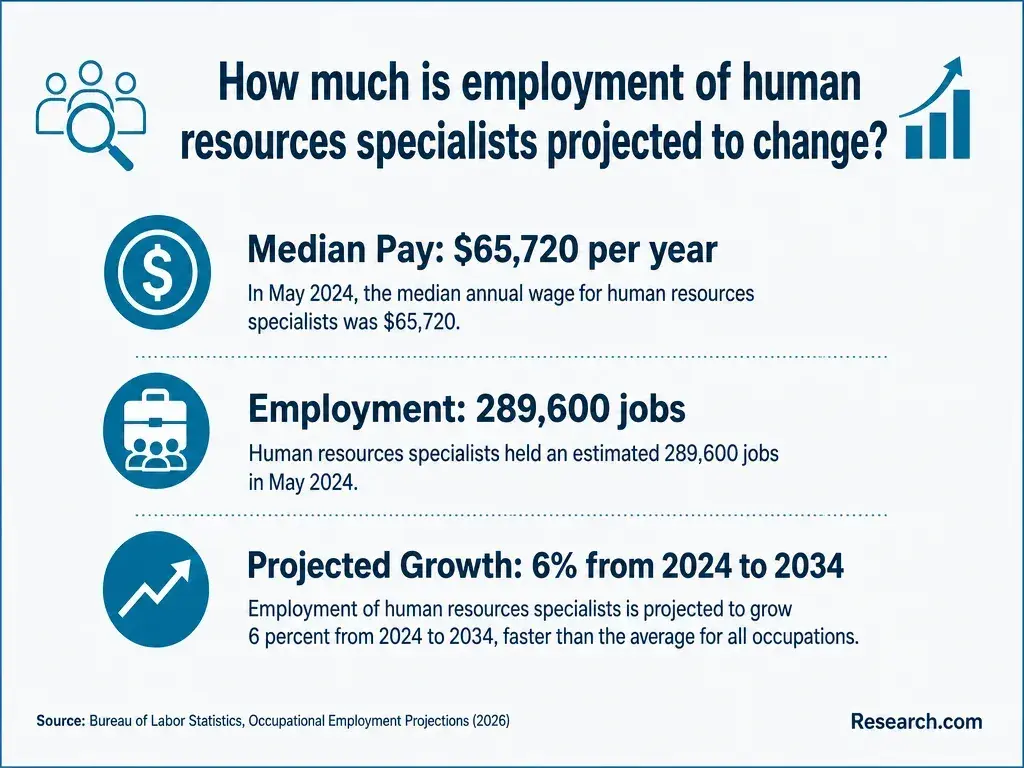
- Judge the degree by both feasibility and career fit: the Bureau of Labor Statistics reports a May 2025 median annual wage of $75,940 for human resources specialists, an occupation-wide figure - not an expected starting salary for business graduates.
What is a BS in Business Administration, and who is it best for?
A Bachelor of Science in Business Administration is an undergraduate degree combining general education with study of business functions such as accounting, management, marketing, finance, and operations. Its exact curriculum varies by school. A BS may emphasize quantitative work, but the title alone does not establish how much; compare actual requirements with those of a BBA or a specialized bachelor's degree.
The degree can suit an employee whose next role calls for broad business knowledge or a bachelor's credential, especially if existing work provides opportunities to apply what they learn. It is less compelling when a short course or employer training would close a specific skill gap. If your goal is narrowly focused on coordinating projects, compare the curriculum and total expense of a specialized degree as well; funding sources for a bachelor's in project management can help frame that alternative's financing questions.
For a seasonal worker, even a well-matched degree is a poor fit if required courses run only during peak season or the school will not allow a planned enrollment gap.
Can you pause an online business administration degree during a busy work season?
Usually, the safest pause is between courses or terms - not in the middle of a course. An asynchronous class may let you choose when to study during the week while still imposing fixed assignment and exam deadlines. Schools set their own rules for skipped terms, formal leaves, withdrawal, and reentry.
These arrangements have different consequences. Compare the policy that would apply on your actual enrollment dates, not just the program's description of flexibility.
| Arrangement | What it may allow | Main risk to check |
| Skip a future term | Finish current classes, then enroll later | Reentry rules and the next offering of required courses |
| Approved leave of absence | Pause under a documented institutional policy | Eligibility, maximum duration, aid treatment, and return conditions |
| Withdraw from an active course | Stop coursework after the term begins | Transcript notation, refund deadline, aid recalculation, and academic progress |
| Reduced course load | Keep studying through the busy season | Weekly deadlines and changes to aid eligibility |
Before enrolling, give an adviser your busiest work dates and ask for a term-by-term plan. Confirm when each course ends, whether a capstone or group project crosses that boundary, how to request a break, and who authorizes your return. If a school offers quick-completion business degree pathways, check whether their short terms create convenient stopping points or simply more frequent deadlines. Do not stop attending without following the school's procedure: withdrawal can affect satisfactory academic progress and may require repayment of financial aid.
How do you choose an accredited BS in Business Administration program?
First, confirm that the institution holds recognized institutional accreditation and that the advertised degree is the one you would enter. Then check whether any claimed AACSB, ACBSP, or IACBE accreditation covers the relevant business school or program; those distinctions are not substitutes for checking institutional accreditation.
For this decision, put scheduling policies alongside accreditation. Request the current catalog and written answers from advising and financial aid about leaves, reentry, required-course frequency, online exam arrangements, and whether a returning student keeps the same degree requirements. Ask what happens if a required class is unavailable in your first term back. If affordability is also decisive, use affordable accredited business administration programs accepting FAFSA as a comparison starting point, then verify each school's current accreditation, charges, and aid eligibility directly.
A useful final test is to ask the school to map your anticipated break onto its course schedule. A program that cannot show a feasible return path may not be flexible enough for your job, regardless of its online format.
Expect general education and a business core that commonly includes accounting, economics, finance, marketing, management, and quantitative reasoning. Programs may also require business law, information systems, operations, a concentration, or a capstone. Check the catalog rather than assuming that similarly named BS programs share the same requirements.
Course sequence matters more than the number of electives when you need a seasonal break. Accounting or statistics may be prerequisites for later classes, while a required capstone may be offered on a limited schedule. Ask for a degree audit showing prerequisites and course frequency, then avoid placing a multi-term project or required group course across your peak season. If your work points toward logistics or procurement, compare business electives with a specialized supply chain pathway; economical supply chain study timelines offer a way to examine that narrower option. An elective, however, is not automatically a formal concentration.
Online programs remove commuting, but they can still require live meetings, proctored exams, team presentations, internships, or weekly submissions. Campus programs may have fewer convenient meeting times, yet a local school might offer evening classes and a straightforward term-off policy. Compare actual obligations, not delivery labels.
Ask both types of programs for sample course schedules covering your busy months. Look for the timing of live sessions, group work, exams, campus visits, and required courses after your return. A part-time load may be more sustainable than an accelerated calendar even if it extends graduation. When reviewing bachelor's programs for faster completion, distinguish a shorter calendar from fewer required courses or fewer hours of work: accelerated classes often compress the same demands into less time.
Requirements vary, but applicants generally submit evidence of secondary-school completion and, if they have attended college, official college transcripts. A school may also set GPA standards or require particular preparation before entry to the business major. Admission to the university does not necessarily mean admission to the major or approval of transfer credit toward its requirements.
If you are returning after earlier college study, request an official evaluation that separates accepted credits from credits applied to general education, business core, and electives. Ask whether an enrollment gap requires a new application, updated transcripts, or a different catalog. For a closer look at prerequisites and entry rules, see business administration admissions eligibility rules; the receiving institution has final authority over your application and degree audit.
A bachelor's degree is commonly planned as four years of full-time study from the start, but prior credits, part-time enrollment, prerequisites, and course availability change an individual timeline. A planned season off extends the calendar; it may also add cost if the break delays a required course or leads to additional fees. Shorter terms do not by themselves reduce the coursework or price.
Build a completion estimate using the school's written degree audit and charges. Include tuition, mandatory and technology fees, books, any exam or travel costs, and the terms you expect to enroll. Compare shorter online business administration degrees with cost details on remaining requirements and total expected expense - not advertised speed alone.
Before scheduling a break, ask financial aid how a skipped term, lower course load, or midterm withdrawal affects your particular grants and loans. If your employer reimburses tuition, check whether payment requires continuous enrollment, a completed course, or a minimum grade. A break taken between terms is generally easier to budget for than an unexpected withdrawal, but the applicable deadlines and award conditions control.
Depending on your experience and chosen coursework, the degree may support applications for roles in operations coordination, HR, marketing, procurement, sales operations, or project coordination. These jobs differ: an operations coordinator may track schedules and process measures, while an HR specialist may work on recruiting or employee records. Employers evaluate relevant experience and demonstrated skills as well as the degree.
Use your current job to identify an achievable next step. Someone who already tracks purchasing delays, for example, can pair operations coursework with a permitted, nonconfidential process analysis; someone targeting project coordination can document scheduling and stakeholder communication. Neither an academic project nor graduation automatically qualifies you to manage a department. If project work is the main goal, compare the general BS with the curriculum and cost of accredited project management study before committing to a broader degree.
There is no single salary for this degree. Pay depends on the occupation, location, employer, and experience you bring before and after graduation. For context, the U.S. Bureau of Labor Statistics reports a May 2025 median annual wage of $75,940 for human resources specialists and projects 6% employment growth from 2025 to 2035. Those figures describe an occupation across experience levels - not starting pay or an outcome promised to BS graduates.
If you are deciding whether to pay for a degree you will complete around seasonal work, compare local postings for your target role with your current qualifications. Look for the skills and degree requirements that recur, then weigh the likely value of meeting them against your remaining tuition, time, and borrowing. Low-tuition pathways to a business administration degree may reduce the expense side of that comparison, but only a school-specific audit and aid offer can establish your likely cost.
Do business administration careers require licenses or professional certifications?
Most general business coordination roles do not require a license solely because they involve business administration. Some specific work does: regulated accounting and financial-services activities have separate rules, while employers may prefer voluntary credentials for particular HR or project roles. A BS in Business Administration does not itself award a professional certification or establish eligibility for one.
Check requirements for the job you want before choosing an academic path. If postings consistently require a bachelor's degree, a short certification may not replace it; if they call for a specific skill and accept your existing education, additional degree study may be unnecessary. Accelerated business bachelor's school comparisons can help identify degree options when a bachelor's is needed, but confirm both their pause policies and any separate credential requirements before enrolling.
Other Things You Should Know About Business Administration
Do not assume so. Ask whether the learning platform, library databases, academic email, and advising remain available during your planned gap, and save permitted personal notes before access ends.
Possibly. An adviser should check whether the new concentration is available under your applicable catalog and whether its prerequisites and required courses would delay graduation.
If the employer provides tuition assistance or schedule accommodations, review its policy and discuss dates before making commitments. You generally do not need to describe a planned term off as abandoning the degree.
Contact your instructor and adviser promptly. Ask about remaining deadlines and formal options before the withdrawal date; an informal agreement to submit work late may not change institutional grading or aid rules.
- Academic Years, Academic Calendars, Payment Periods, and Disbursements | 2025-2026 Federal Student Aid Handbook https://fsapartners.ed.gov/knowledge-center/fsa-handbook/2025-2026/vol3/ch1-academic-years-academic-calendars-payment-periods-and-disbursements
- Understanding College Costs | studentaid.gov https://studentaid.gov/resources/prepare-for-college/students/choosing-schools/consider-costs
- Accreditation in the U.S. | ed.gov http://www.ed.gov/laws-and-policy/higher-education-laws-and-policy/college-accreditation/accreditation-in-the-us
- Pay-As-You-Go College: Monthly Tuition Plans for 2026 | Newlane University https://newlane.edu/pay-as-you-go-college/
- Readmission Information | miami.edu https://registrar.miami.edu/general-information/policies/readmission/
- Readmission Procedures - UMW Publications https://publications.umw.edu/academicproceduresdirectory/readmission-procedures/
- Academic Leave of Absence Policy for Term-Based Programs | ncu.edu https://catalog.ncu.edu/content.php
- Do College Credits Expire? Understanding the Shelf Life of Your College Credits - Athens State University https://www.athens.edu/blog/do-college-credits-expire/
- How Do Asynchronous Classes Work? | Hopkins EP Online https://ep.jhu.edu/news/how-do-asynchronous-classes-work/
- Explanation of Fees, Adjustments, and Refunds | The Ohio State University https://registrar.osu.edu/student-hub/tuition-and-fees/explanation-of-fees-adjustments-and-refunds/