2027 Cheapest Online Respiratory Therapy Associate Degree Programs That Pay Well: Tuition, Duration, and Career Outcomes

Co-Founder and Chief Data Scientist
Choosing the cheapest online respiratory therapy associate degree is really a cost-to-career decision. The U. S. Bureau of Labor Statistics reports a May 2024 median wage of $77,960 for respiratory therapists, which makes low-cost programs attractive if they lead to licensure eligibility. This guide is for students comparing tuition, hybrid clinical requirements, completion time, accreditation, and career outcomes. You will learn how to separate genuinely affordable programs from options that look cheap but may take longer, transfer poorly, or limit employment prospects.
Key Things You Should Know
- The best-value respiratory therapy associate degrees are usually CoARC-accredited AAS or AS programs with online didactic courses, local labs or simulations, and in-person clinical rotations.
- Public two-year colleges are often the lowest-cost starting point; College Board reported average published in-district tuition and fees of $4,050 for public two-year colleges in 2024-25.
- Respiratory therapy can pay well for an associate-level healthcare path, but the strongest ROI depends on licensure eligibility, completion time, clinical placement access, and local employer demand-not tuition alone.
Which Are the Cheapest Online Respiratory Therapy Associate Degree Programs That Lead to Well-Paying Careers?
The cheapest online respiratory therapy associate degree programs are rarely 100% online because students must complete hands-on lab competencies and supervised clinical rotations. In practice, the lowest-cost options are usually public community colleges or technical colleges offering an Associate of Applied Science or Associate of Science in Respiratory Care with online coursework and local or regional clinical placements.
The table below shows the main low-cost program categories students should compare. Because tuition changes by residency status, fees, and clinical site rules, use this as a decision framework rather than a fixed national ranking.
| Program type | Typical format | Why it may be affordable | Best fit | Main caution |
| Public community college AAS in Respiratory Care | Online or hybrid lecture courses with campus labs and clinical rotations | Often offers the lowest in-district tuition and access to state grants | Students who live near the college or an approved clinical partner | Out-of-district or out-of-state tuition can reduce the savings |
| Public technical college AS or AAS in Respiratory Therapy | Career-focused hybrid program with scheduled skills checks | May package respiratory-specific labs, equipment, and clinical preparation efficiently | Students seeking direct entry into respiratory therapist licensure pathways | Credits may not transfer as smoothly as a transfer-oriented AS |
| State college respiratory care bridge or completion option | Online general education or professional coursework plus required clinical work | May accept prior credits, reducing total credits paid | Students who already completed prerequisites or healthcare coursework | Admission may require prerequisites, healthcare experience, or local clinical access |
| Private career college associate program | Structured online or blended coursework with arranged clinical rotations | Can be faster or more predictable for some students | Students who need a cohort schedule and intensive advising | Total tuition is often higher than public two-year options |
When comparing specific schools, focus first on whether the program is accredited for respiratory care and whether it prepares students for the National Board for Respiratory Care exam pathway required by many state licensure boards. A program with a lower sticker price but weak clinical access, poor transfer policies, or limited exam preparation may cost more in the long run.
A practical shortlist should include schools in your state first, then nearby states with approved clinical placements. Ask each school for a complete program cost sheet before applying. The most useful comparison points are:
- Total required credits, not just tuition per credit
- In-district, in-state, and out-of-state tuition differences
- Respiratory lab, simulation, testing, background check, immunization, uniform, and liability insurance fees
- Whether clinical rotations can be completed near your home
- Graduation, credentialing exam, and job placement outcomes reported by the program
- Whether credits transfer into a bachelor's degree in respiratory care or another healthcare major
How Much Does an Online Respiratory Therapy Associate Degree Cost?
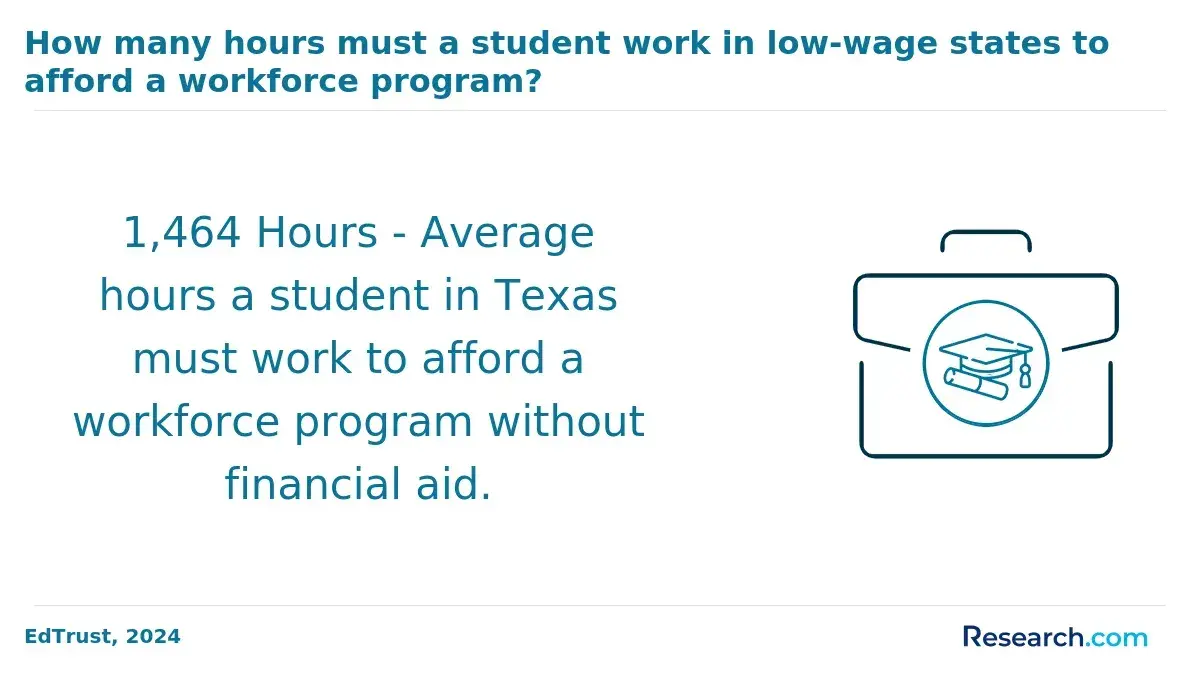
An online respiratory therapy associate degree usually costs more than the advertised tuition because clinical programs add fees for labs, health screenings, insurance, exams, and equipment. The national cost reference point is useful: College Board's 2024-25 data placed average published tuition and fees for public two-year in-district students at $4,050, but respiratory care students should budget beyond tuition.
The table below breaks down common cost components. It helps you estimate the real total cost before deciding whether a program is truly cheap.
| Cost item | How it affects total cost | What to ask the school |
| Tuition per credit | The largest published cost, but not always the full cost | How many total credits are required for the respiratory therapy degree? |
| Residency tuition rate | In-district and in-state students often pay less than out-of-state students | Which tuition rate applies to online respiratory therapy students? |
| Program fees | Respiratory care programs may charge lab, simulation, testing, or clinical coordination fees | Are respiratory-specific fees listed separately from general tuition? |
| Books and digital materials | Healthcare programs may require textbooks, online platforms, and exam prep systems | Are books bundled into tuition or billed separately? |
| Clinical requirements | Students may pay for background checks, drug screens, immunizations, uniforms, CPR certification, and travel | What clinical expenses are required before placement? |
| Technology costs | Online courses may require a reliable computer, webcam, testing software, and high-speed internet | Are there technology or online learning fees each term? |
| Credentialing and licensure costs | Graduates may need exam and state licensure fees after completing the degree | Which post-graduation fees should students expect? |
To compare programs accurately, calculate the full cost of attendance for the exact number of credits you still need. A student who transfers 15 credits into a slightly higher-priced program may spend less overall than a student who chooses the lowest per-credit tuition but must complete every prerequisite at that school.
Use this simple cost-check process before enrolling:
- Request the official degree plan and count all required prerequisite, general education, and respiratory care credits.
- Multiply remaining credits by the tuition rate that applies to you, not the lowest rate listed on the website.
- Add mandatory fees, estimated books, equipment, clinical expenses, transportation, and licensure-related costs.
- Subtract grants, scholarships, employer support, and transfer-credit savings that are already confirmed.
- Compare the result with expected local entry-level wages, not only national median wages.
How Long Does It Take to Complete an Online Respiratory Therapy Associate Degree?
Most respiratory therapy associate degree programs take about two years of full-time study after prerequisites, but the actual timeline depends on course sequencing, clinical availability, and whether the student studies full time or part time. Because clinical courses often build in a strict order, missing one course can delay graduation by a semester or longer.
The table below summarizes common completion timelines. It can help you decide whether a faster program is worth a higher price or whether a lower-cost part-time path better fits your life.
| Student pathway | Common timeline | Financial trade-off | Best fit |
| Full-time associate degree | About two academic years after prerequisites | May reduce time out of the workforce but can limit work hours during school | Students who can handle a fixed cohort, labs, and clinical rotations |
| Part-time associate degree | Often longer than two years | Can lower semester-by-semester payments but may delay earnings | Working adults, parents, and students who need a lighter course load |
| Prerequisite-first route | One or more terms before entering the professional phase | Can reduce professional-program overload but adds calendar time | Students missing anatomy, physiology, math, or science requirements |
| Transfer-credit route | May shorten the general education portion | Can improve ROI if the school accepts prior coursework | Students with previous college credit or military healthcare training |
| Accelerated or intensive cohort | Potentially faster, depending on school design | May cost more per term and leave less time for paid work | Students with strong science preparation and flexible schedules |
The fastest option is not automatically the best value. A compressed schedule can be difficult if you need to work, commute to clinical sites, or care for family. A slower program can be financially sensible if it prevents course failure, repeated tuition, or burnout.
Before choosing based on speed, ask the admissions or program director these questions:
- Are respiratory courses offered every term or only once per year?
- Can general education courses be completed online before the clinical phase?
- What happens if a student fails or withdraws from a clinical course?
- Are evening, weekend, or local clinical placements available?
- Does part-time enrollment affect financial aid eligibility or program progression?
The primary career outcome for a respiratory therapy associate degree is becoming a respiratory therapist after meeting credentialing and state licensure requirements. Respiratory therapists evaluate and treat patients with breathing and cardiopulmonary conditions, manage oxygen therapy, assist with ventilators, perform diagnostic testing, educate patients, and support care teams in hospitals, clinics, long-term care settings, and emergency environments.
The BLS reported a May 2024 median annual wage of $77,960 for respiratory therapists, while the highest-paid workers in the occupation earned above $104,480. That range matters because new graduates generally should not budget around top-end wages; higher pay is often tied to experience, shift differentials, critical care skills, supervisory duties, or high-cost labor markets.
The table below compares associate-accessible respiratory therapy roles and related advancement directions. Salary potential depends on state licensure, employer setting, credentials, experience, and local labor demand.
| Career path | Associate degree fit | Salary context | What can raise earning potential |
| Respiratory therapist | Core target role for accredited associate programs | BLS May 2024 median wage was $77,960 | RRT credential, hospital experience, critical care exposure, and state licensure |
| Critical care or neonatal/pediatric respiratory therapist | Often possible after initial RT employment and specialized training | Can pay more than general entry-level roles in some hospitals | Advanced credentials, ICU experience, neonatal or pediatric competency |
| Pulmonary function technologist | May be accessible with RT training or related cardiopulmonary experience | Pay varies by employer and testing responsibility | Diagnostic testing expertise and specialty credentials |
| Sleep disorders technologist | May require additional sleep technology training or credentials | Pay varies widely by clinic, hospital, and shift schedule | Sleep lab experience and relevant certification |
| Lead respiratory therapist or shift supervisor | Usually requires experience beyond the associate degree | Higher pay may be tied to leadership duties | RRT credential, bachelor's degree, management skill, and strong clinical record |
Students who like healthcare but do not want bedside care should compare alternative clinical and non-clinical careers early. For example, reviewing a health information management salary can help you decide whether patient-care respiratory therapy or healthcare data and records management better matches your goals.
The best ROI usually comes from a program that combines low net cost, strong licensure preparation, reliable clinical placements, and a realistic path to employment in your local market. A cheap program with delayed clinical placements can reduce ROI because each extra term adds tuition, fees, transportation, and lost earning time.
A useful tuition-to-earnings comparison starts with the BLS May 2024 median wage for respiratory therapists of $77,960, but you should adjust expectations downward for entry-level roles and upward or downward for your local labor market. National wage data is a benchmark, not a personal earnings forecast.
The table below shows how to think about ROI across common program scenarios. The strongest option is not always the one with the lowest listed tuition.
| Program scenario | ROI strength | Why it may work | When it may be a poor value |
| Low-tuition public program with local clinical placement | Strong potential ROI | Lower net cost and practical access to required clinical hours | If admission is highly limited or clinical sites are far from home |
| Moderate-cost accredited program with excellent transfer options | Strong long-term ROI | May support both licensure and bachelor's completion later | If you do not plan to continue education and cheaper local options exist |
| Cheapest advertised tuition but high hidden fees | Uncertain ROI | Can still be affordable if total fees are modest | If lab, testing, travel, and out-of-district charges erase savings |
| Fast private program with higher tuition | Case-by-case ROI | May help students enter the workforce sooner | If debt is high or employer outcomes are unclear |
| Part-time low-cost program | Good fit for some working adults | Can reduce borrowing and allow continued income | If the extended timeline delays RT wages for too long |
To estimate ROI, compare net program cost with the wages for respiratory therapists in your state or commuting area. Then consider completion risk. A slightly more expensive program with better scheduling, stronger advising, and nearby clinical sites may be financially safer than the cheapest program if it improves your chances of graduating on time.
Common ROI mistakes include:
- Using national median wages as if they were guaranteed entry-level earnings
- Ignoring clinical travel costs, parking, background checks, uniforms, and exam fees
- Choosing the lowest tuition without checking accreditation and licensure eligibility
- Assuming online means fully remote when respiratory care requires in-person clinical training
- Overlooking transferability if you may later pursue a bachelor's degree
Financial aid can make a low-cost respiratory therapy associate degree even more affordable, especially at public two-year colleges. The federal Pell Grant maximum was $7,395 for the 2024-25 award year, which means eligible students at lower-tuition colleges may be able to cover a significant portion of tuition and fees without borrowing.
The table below summarizes aid sources that can reduce out-of-pocket cost. Availability depends on financial need, enrollment status, state rules, employer policies, and school participation.
| Aid source | How it helps | Best use |
| Federal Pell Grant | Does not have to be repaid if eligibility rules are met | Reducing tuition and fees at community colleges |
| Federal student loans | Can cover remaining education costs | Filling limited gaps after grants and scholarships |
| State grants | May support residents in workforce-demand programs | Lowering cost at in-state public colleges |
| Institutional scholarships | School-based awards may target allied health students | Reducing program fees, books, or tuition |
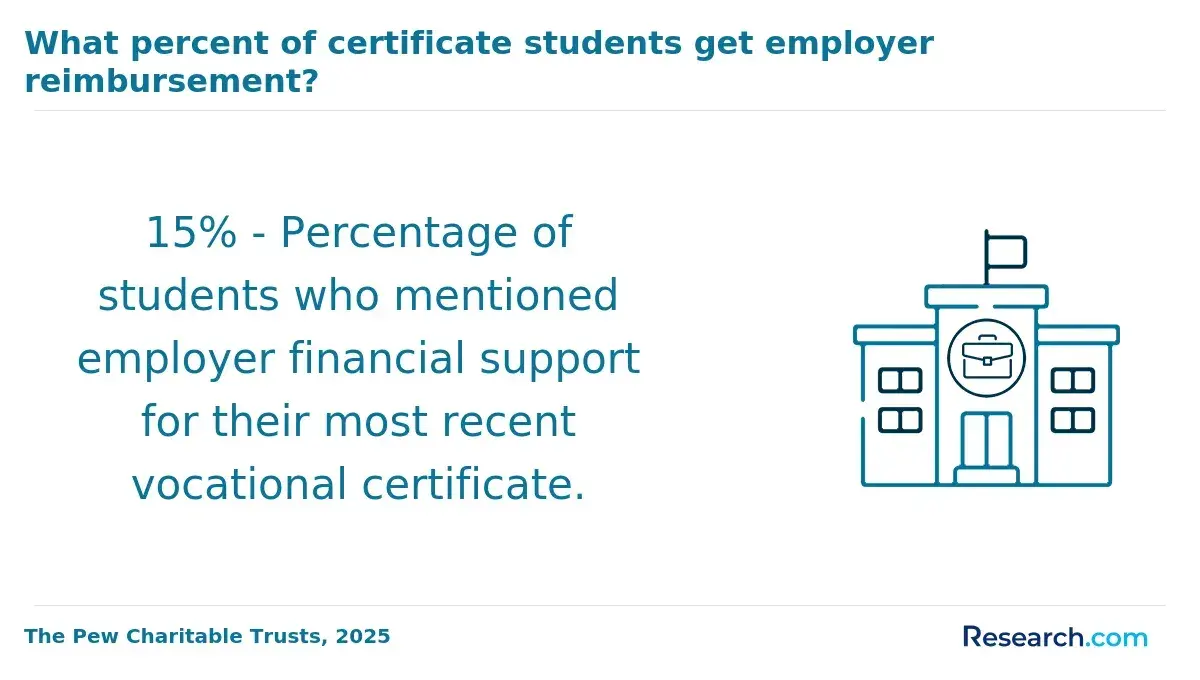
| Hospital or employer tuition assistance | May reimburse employees or support clinical workforce pipelines | Students already working in healthcare settings |
| Workforce development funding | May support training for in-demand occupations | Career changers, displaced workers, and eligible adult learners |
Apply for aid before assuming a program is unaffordable. The advertised tuition is only the starting price; the net price after grants, scholarships, and employer support is the number that matters for ROI.
Take these steps to reduce borrowing:
- Complete the FAFSA as early as possible and list every respiratory therapy school you are considering.
- Ask each school whether respiratory therapy students qualify for allied health, workforce, or hospital-partner scholarships.
- Check whether your state funds high-demand healthcare training at community or technical colleges.
- If you work in healthcare, ask HR whether tuition assistance applies to prerequisite courses and respiratory therapy coursework.
- Borrow only after subtracting confirmed grants and scholarships from the full program cost.
Accreditation is one of the most important value factors in respiratory therapy. In the U.S., students should look for programs accredited by the Commission on Accreditation for Respiratory Care, commonly called CoARC. Many state licensure pathways and employer expectations are tied to completing an accredited respiratory care program and qualifying for credentialing exams.
A low-cost program that does not support licensure eligibility may have weak career value, even if it offers online convenience. Accreditation helps signal that the curriculum, faculty qualifications, clinical education, outcomes assessment, and student preparation meet respiratory care standards.
The same accreditation-first logic applies across healthcare education. Students comparing alternatives can see this clearly in fields such as the best online CAHIIM accredited health information management degree programs, where programmatic accreditation can affect employer confidence and credential pathways.
Before applying to a respiratory therapy associate degree, verify quality indicators directly with the school:
- Current CoARC accreditation status and any recent accreditation actions
- Eligibility for NBRC credentialing exams after graduation
- State licensure alignment for the state where you plan to work
- Clinical site availability near your location
- Recent graduation, exam success, and job placement outcomes
- Faculty experience in adult critical care, neonatal care, diagnostics, and patient education
Red flags include vague accreditation language, no clear clinical placement plan, pressure to enroll before receiving a total cost sheet, and promises about salary or job placement. A trustworthy program should explain what it can support and what depends on student performance, employer demand, and state licensure rules.
Flexible online respiratory therapy associate degrees usually move lectures, assignments, discussions, and some simulations online while keeping lab checkoffs and clinical rotations in person. This structure can help working adults, rural students, and career changers reduce commuting, but it does not remove the need for hands-on patient-care training.
The table below compares flexibility features that can affect cost and completion time. These features matter because a program that fits your schedule is less likely to create repeated courses, delayed graduation, or unnecessary debt.
| Flexibility feature | How it helps | What to verify |
| Online general education courses | Can reduce campus visits before the professional phase | Whether prerequisites can be completed before program admission |
| Hybrid respiratory care courses | Allows theory online while preserving hands-on skill assessment | How often students must visit campus for labs |
| Local clinical placement options | Can reduce relocation and travel expenses | Whether the school already has approved sites near you |
| Evening or weekend clinical options | May help students who work during business hours | Whether availability is guaranteed or limited by site schedules |
| Transfer-credit evaluation | Can shorten the degree and reduce tuition | Which prior credits apply to the respiratory care degree plan |
| Cohort-based progression | Provides structure and predictable sequencing | Whether a missed course delays graduation by a full year |
Accelerated completion is most realistic for students who already have prerequisites, strong science grades, reliable transportation, and a flexible work schedule. Students who need to work full time should be cautious about compressed programs because clinical shifts can be physically demanding and difficult to reschedule.
Ask schools to map your likely weekly schedule before you enroll. You need to know how many hours will go to online coursework, lab practice, clinical rotations, studying, and commuting. A program is only flexible if the full schedule works in real life.
An associate degree can be enough to start the respiratory therapist pathway when the program meets accreditation, credentialing, and state licensure requirements. However, career advancement may eventually require more education, especially for leadership, education, case management, research support, or specialized clinical roles.
Some students use the associate degree as a low-cost entry point into healthcare, then complete a bachelor's degree while working. This can be a strong strategy if the associate credits transfer cleanly and the student avoids excessive debt. It is weaker if the associate program is too narrow, credits do not transfer, or the student later discovers that their target role requires a bachelor's degree from the start.
Students who want a less bedside-focused healthcare path may compare respiratory care with a health information management degree online, especially if they prefer coding, records, compliance, data quality, privacy, or healthcare operations.
Associate-to-bachelor's value depends on three transfer questions:
- Does the associate program have articulation agreements with respiratory care bachelor's programs?
- Will respiratory therapy technical credits count toward the bachelor's degree or only as electives?
- Can the bachelor's program be completed online while working as a respiratory therapist?
- Will the bachelor's degree support your goal, such as leadership, education, advanced clinical practice, or graduate study?
Choose an associate degree if your near-term goal is licensure-oriented respiratory therapy employment at the lowest reasonable cost. Consider a bachelor's-first or transfer-focused path if you already know you want management, teaching, advanced practice, or graduate-level healthcare administration later.
How Should Students Choose the Cheapest Online Respiratory Therapy Associate Degree for Their Career Goals?
To choose the cheapest online respiratory therapy associate degree wisely, compare programs by net price, licensure value, clinical feasibility, time to completion, and long-term transfer options. The right program should be affordable enough to limit debt, structured enough to help you finish, and credible enough to support employment and credentialing.
Use the following step-by-step process to turn program information into a decision:
- Confirm that respiratory therapy is the correct goal by reviewing job duties, patient-care expectations, shift work, physical demands, and state licensure rules.
- Build a list of CoARC-accredited programs that serve your state or offer approved clinical placements near you.
- Request a total program cost sheet from each school, including tuition, fees, books, clinical costs, equipment, and exam-related expenses.
- Ask for a transfer-credit evaluation before applying if you have prior college coursework.
- Compare completion timelines and identify whether courses are offered every term or only once per year.
- Review graduation, credentialing exam, and job placement outcomes, and ask how recent those outcomes are.
- Check local respiratory therapist job postings to see which credentials, shifts, and experience levels employers request.
- Estimate net cost after grants and scholarships, then compare that cost with realistic local entry-level wages.
- Choose the program that offers the best balance of cost, clinical access, accreditation, schedule fit, and career mobility.
Avoid choosing based only on rankings, marketing claims, or the lowest per-credit tuition. Also avoid assuming an online degree will be cheaper than a campus-based option; travel to clinicals, repeated lab visits, technology fees, and out-of-state tuition can change the math.
If your long-term plan includes hospital management, operations, or executive leadership, factor that into the decision now. A low-cost associate degree may be a good first step, but you may eventually compare bachelor's options and a masters in healthcare administration if you want to move beyond clinical respiratory care into broader healthcare leadership.
Other Things You Should Know About Respiratory Therapy
Yes. Respiratory therapy is a hands-on clinical field, so online programs still require in-person labs, simulations, and supervised clinical rotations. Before enrolling, confirm where those rotations happen and whether approved sites are available near you.
An AAS is usually more career-focused and designed for direct workforce entry. An AS may include more transfer-oriented general education, but this varies by school. Students planning to earn a bachelor's degree later should verify transfer agreements before choosing.
Some students work while enrolled, but full-time work can be difficult during clinical semesters. Labs and clinical shifts may occur during daytime, evening, weekend, or rotating schedules, depending on the program and clinical site.
Most states regulate respiratory therapists through licensure. Requirements vary, but they commonly involve completing an accredited respiratory care program and passing required credentialing exams. Always check the licensing board rules in the state where you plan to work.
- Respiratory Therapist Salary, Job Outlook & Education Options | Respiratory Therapy https://respiratory-therapy.com/department-management/education/respiratory-therapist-salary-job-outlook-education-options/
- Respiratory Therapy | Ozarks Tech (OTC) https://ozarkstech.edu/programs/health-services/respiratory-therapy/
- Respiratory Therapy Program | Become a Respiratory Therapist in 20 Months https://yti.edu/program/healthcare-programs/respiratory-therapy/
- Find The Best Online Respiratory Therapy Programs https://www.accreditedschoolsonline.org/healthcare/respiratory-therapy/
- Respiratory Therapy https://www.ntc.edu/academics-training/programs/all/associate-degree/respiratory-therapy
- Respiratory Therapist Associate’s Degree | Platt College https://plattcollege.edu/programs/school-of-medical-sciences/respiratory-therapy/
- Respiratory Therapist Assistant Salary In The U.S. | Become With Lantern https://www.learnhowtobecome.org/respiratory-therapist-assistant-salary/
- RESPIRATORY CARE (AAS) - Academics https://www.ncmissouri.edu/academics/respiratory-care-aas/
- Which Respiratory Therapy Degree is Right For You? | NMC https://blog.methodistcollege.edu/associate-vs-bachelors-choosing-a-respiratory-degree
- Respiratory Therapy, A.S. https://vermontstate.edu/academic-programs/respiratory-therapy-as/