2027 Cheapest Online Early Childhood Education Associate Degree Programs That Pay Well: Tuition, Duration, and Career Outcomes

Co-Founder and Chief Data Scientist
Choosing the cheapest online early childhood education associate degree is really a cost-versus-career decision. The U. S. Bureau of Labor Statistics reported a $37,120 median annual wage for preschool teachers in May 2024, which means tuition, transfer options, and local pay matter a lot.
This guide is for students who want an affordable path into childcare, preschool, Head Start, or bachelor's transfer programs. You will learn how low-cost programs compare, what careers are realistic, and how to avoid choosing a degree that looks cheap but limits your next step.
Key Things You Should Know
- The cheapest online early childhood education associate degrees are usually public community or technical college programs; in-state tuition can start around $46 to $107 per credit before fees, books, and field-placement costs.
- Career pay varies sharply by role: BLS May 2024 median wages were $32,050 for childcare workers, $37,120 for preschool teachers, and $56,570 for preschool and childcare center directors.
- The best ROI usually comes from a regionally accredited, low-tuition program that offers supervised field experience, state-recognized childcare preparation, and clean transfer pathways into a bachelor's degree.
Which Are the Cheapest Online Early Childhood Education Associate Degree Programs That Lead to Well-Paying Careers?
The cheapest online early childhood education associate degree programs are often not national brands. They are usually community colleges with low resident tuition, online general education courses, and local field-experience placements. The table below highlights affordable examples that can support entry-level childcare or preschool work, transfer to a bachelor's program, or advancement toward center leadership when combined with experience and state-required credentials.
| School | Online early childhood education associate option | Published tuition basis | Approximate tuition-only cost | Best fit |
| Cerro Coso Community College | Associate Degree for Transfer in Early Childhood Education | California resident tuition commonly listed at $46 per unit | About $2,760 for 60 units before fees | California students planning bachelor's transfer |
| Coastline College | Associate in Science or transfer-oriented early childhood education pathway | California resident tuition commonly listed at $46 per unit | About $2,760 for 60 units before fees | Students seeking a low-cost online transfer pathway |
| Wake Technical Community College | AAS in Early Childhood Education | North Carolina resident tuition commonly listed at $76 per credit | About $5,092 for 67 credits before fees | Students wanting an applied childcare and preschool pathway |
| Fayetteville Technical Community College | AAS in Early Childhood Education | North Carolina resident tuition commonly listed at $76 per credit | About $5,000 to $5,400 depending on credits before fees | North Carolina students seeking a workforce-focused associate degree |
| Albany Technical College | AAS in Early Childhood Care and Education | Georgia technical college tuition commonly listed at $107 per credit | About $6,700 for a 63-credit program before fees | Students seeking low tuition and technical-college career preparation |
| Central Georgia Technical College | AAS in Early Childhood Care and Education | Georgia technical college tuition commonly listed at $107 per credit | About $6,700 for a 63-credit program before fees | Students seeking an affordable applied degree with childcare career alignment |
| Northcentral Technical College | Associate Degree in Early Childhood Education | Wisconsin technical college tuition and fees vary by residency and delivery | Often under many four-year alternatives, but students should request a full cost sheet | Students who need flexible online coursework plus practicum preparation |
These programs should be treated as affordable starting points, not automatic winners. A $3,000 tuition-only program can become less valuable if credits do not transfer, field placements are hard to complete, or the degree does not match your state's childcare licensing or preschool employment rules.
When comparing low-cost options, pay attention to the type of associate degree. An AA or AS is often better for transfer, while an AAS is often stronger for immediate childcare employment. Students who already know they want long-term teaching, leadership, curriculum design, or graduate study should also look beyond the associate level; later pathways may include options such as 1 year EdD programs online, but only after completing the required bachelor's and graduate preparation.
How Much Does an Online Early Childhood Education Associate Degree Cost?
An online early childhood education associate degree usually requires about 60 to 70 credits. The total price depends on residency, per-credit tuition, online course fees, textbooks, background checks, CPR or first-aid requirements, fingerprinting, and field-placement costs. College Board's 2024 pricing report placed average public two-year in-district tuition and fees at $4,050 for the 2024-25 academic year, which shows why community colleges remain the main low-cost route.
The table below shows how tuition can change when the same 60-credit degree is priced at different per-credit rates. This helps you estimate whether a program is truly affordable before you add fees and living expenses.
| Per-credit tuition | 60-credit tuition estimate | 70-credit tuition estimate | What it usually means |
| $46 | $2,760 | $3,220 | Very low resident community college tuition, often limited to in-state students |
| $76 | $4,560 | $5,320 | Low public community college tuition for state residents |
| $107 | $6,420 | $7,490 | Low technical college tuition before mandatory fees |
| $150 | $9,000 | $10,500 | Still affordable if transfer and field-placement support are strong |
| $250 | $15,000 | $17,500 | May be harder to justify unless the program offers exceptional flexibility, transfer value, or employer support |
To compare programs fairly, calculate total cost instead of relying on advertised tuition. The most useful estimate includes the following items:
- Tuition for all required credits, not just first-year courses
- Mandatory online learning, technology, student services, graduation, and course fees
- Books, digital access codes, classroom materials, and early childhood assessment tools
- Background check, fingerprinting, immunization, CPR, first-aid, and mandated-reporter training costs when required
- Transportation or schedule costs for practicum, observation, or supervised field-experience placements
- Lost work hours if field placements must occur during weekday childcare or preschool hours
A common mistake is assuming online automatically means cheaper. Online programs can reduce commuting and housing costs, but some charge higher distance-learning fees or require local practicum hours that interfere with work schedules.
How Long Does It Take to Complete an Online Early Childhood Education Associate Degree?
Most online early childhood education associate degrees take two years of full-time study. Part-time students often need three to four years, especially if they work full time or must complete practicum hours around childcare-center schedules. The best timeline is not always the fastest one; it is the one that lets you finish without withdrawing, repeating courses, or losing financial aid eligibility.
The table below compares common completion patterns. Use it to decide whether faster graduation is worth the workload and field-placement demands.
| Study pace | Typical course load | Estimated completion time | Best for |
| Full time | 12 to 15 credits per term | About 2 years | Students who can reduce work hours or have predictable schedules |
| Part time | 6 to 9 credits per term | About 3 to 4 years | Working adults, parents, and students with limited weekly study time |
| Accelerated | Short sessions or heavier year-round enrollment | About 18 to 24 months when available | Students with transfer credits, strong time management, and flexible field-placement availability |
| Transfer-credit pathway | Reduced credits after prior college, CDA, or eligible training review | Varies by accepted credit | Students with prior coursework or documented early childhood training |
Before choosing an accelerated online option, ask whether the program's child-development, curriculum, and practicum courses are offered every term. A program may advertise online flexibility but still delay graduation if key courses are offered only once per year.
Students considering long-term education careers should also think about how the associate degree fits into later credentials. For example, those interested in curriculum technology, adult learning, or training roles may eventually compare best online instructional design master's programs after completing a bachelor's degree and gaining relevant experience.
An associate degree in early childhood education can qualify students for childcare, preschool, assistant teaching, family childcare, and some lead teacher roles, depending on state rules and employer requirements. It does not usually qualify graduates for licensed public school teaching positions, which often require a bachelor's degree and state certification.
The table below uses U.S. Bureau of Labor Statistics May 2024 wage data to show career possibilities connected to early childhood education. Median wages are not entry-level salaries, so students should compare these figures with local job postings before estimating ROI.
| Career path | Typical role | May 2024 median annual wage | Associate degree relevance |
| Preschool and childcare center director | Manages staff, enrollment, compliance, curriculum, and family communication | $56,570 | An associate degree may help, but employers often require experience and some states require additional credentials |
| Preschool teacher | Plans activities, supports early literacy and social development, observes child progress | $37,120 | Often directly relevant, though Head Start, public pre-K, and state-funded roles may require higher credentials |
| Teacher assistant | Supports classroom instruction, supervision, and small-group learning | $35,240 | Useful for school-based support roles, but requirements vary by district and funding source |
| Childcare worker | Provides daily care, safety supervision, play-based learning, and family updates | $32,050 | Relevant, especially for moving from aide roles into lead teacher or supervisor roles |
The highest-paying roles connected to this degree usually involve leadership, compliance, or specialized settings rather than entry-level classroom care alone. A preschool director role, for example, typically requires experience, knowledge of licensing rules, staff supervision ability, and sometimes state-specific director credentials.
Students should avoid one common error: using median national wages as if they were guaranteed first-year earnings. Early childhood pay varies significantly by state, employer type, local funding, union coverage, and whether the role is in private childcare, Head Start, public pre-K, or a school district.
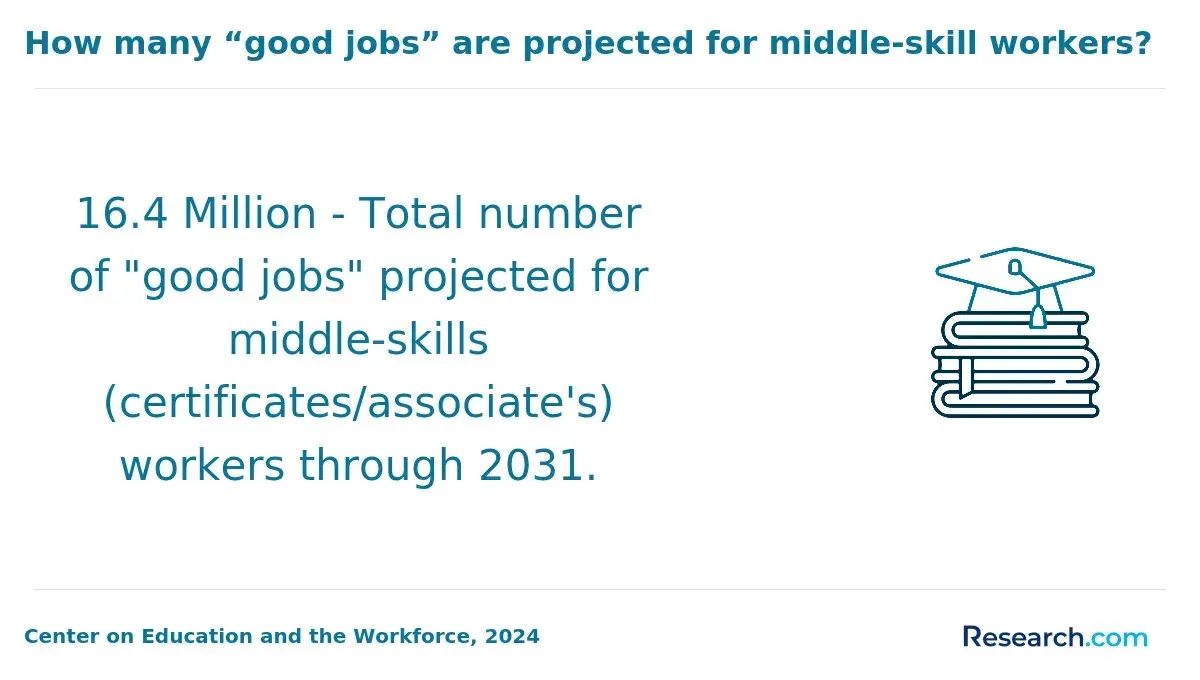
The best return on investment does not always come from the school with the lowest tuition. ROI improves when a program is inexpensive, completable, accredited, transferable, and connected to realistic local jobs. A low-cost AAS may be excellent for immediate childcare advancement, while a transfer-oriented AA or AS may provide stronger long-term value for students who plan to earn a bachelor's degree.
The table below compares common associate degree choices by financial value. It is designed to help you match program type to your career goal rather than simply choosing the lowest price.
| Program type | Typical strength | ROI advantage | Potential limitation |
| AA in Early Childhood Education | General education and transfer preparation | Strong for students planning a bachelor's degree in education, child development, or family studies | May include fewer workforce-specific childcare courses than an AAS |
| AS in Early Childhood Education | Transfer-focused coursework with some applied preparation | Good balance for students who want both employment and bachelor's transfer options | Transfer rules depend heavily on articulation agreements |
| AAS in Early Childhood Education | Career-focused childcare and preschool preparation | Strong for students seeking immediate employment or advancement in childcare settings | Some technical credits may not transfer smoothly into a bachelor's program |
| Associate degree plus CDA or state credential | Combines academic study with recognized childcare preparation | Can improve employability in licensed childcare settings | Credential rules and renewal requirements vary by state and employer |
A practical way to estimate ROI is to compare tuition-only cost with the median wage for your target role, then adjust for local entry-level pay. For example, a $5,000 tuition-only program is easier to justify for a childcare worker moving into a lead preschool role than a $17,000 program that leads to the same local wage and weaker transfer options.
Use this sequence when comparing ROI across programs:
- Identify the exact job you want after graduation, such as childcare lead teacher, preschool teacher, teacher assistant, or center director trainee.
- Check whether that job requires an associate degree, CDA credential, state certificate, bachelor's degree, or public school licensure in your state.
- Calculate tuition, mandatory fees, books, field-placement costs, and lost work time.
- Confirm whether credits transfer into at least one bachelor's program without excessive credit loss.
- Compare local job postings with national wage data to avoid overestimating first-year earnings.
Financial aid can make an already cheap online early childhood education associate degree much more affordable. The federal Pell Grant maximum for the 2024-25 award year was $7,395, which can cover a large share of tuition at many public two-year colleges for eligible students.
Students should look for aid that does not have to be repaid before borrowing. The most relevant options usually include:
- Federal Pell Grants for eligible undergraduate students who have not yet earned a bachelor's degree
- State grants for community college, workforce training, childcare workforce development, or transfer pathways
- Institutional scholarships from community colleges, foundations, and early childhood education departments
- Childcare workforce scholarships, including state or local programs tied to licensed childcare employment
- Employer tuition assistance from childcare centers, Head Start agencies, school districts, hospitals, or nonprofit providers
- Credit for prior learning, CDA coursework, military training, or completed college credits when the school has a formal review process
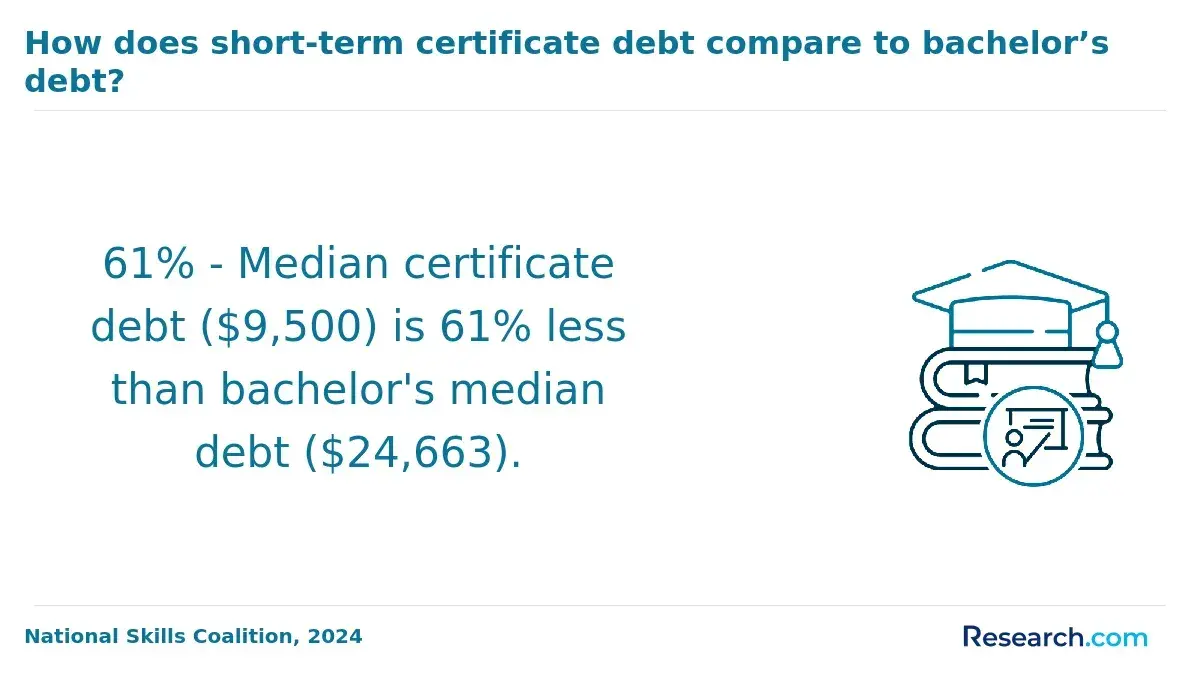
Borrowing can still make sense for some students, but it should be limited. Because many associate-level early childhood roles have modest entry pay, students should be especially cautious about loans that exceed the tuition needed to finish at a public community college.
If you are already thinking far beyond entry-level childcare work, compare aid rules at each stage of education. Graduate-level education paths, including online EdD programs no dissertation, use different financial aid limits and should not be financed the same way as a low-cost associate degree.
Accreditation affects transfer credit, financial aid eligibility, employer trust, and long-term degree value. For most students, the safest choice is a college that holds institutional accreditation recognized by the U.S. Department of Education. Program-level recognition can also matter when coursework must align with state childcare standards, Head Start expectations, or transfer agreements.
Use this checklist before enrolling, especially if a program advertises very low tuition or unusually fast completion:
- Verify institutional accreditation through official accreditation databases or the school's accreditor page.
- Ask whether the associate degree is eligible for federal financial aid.
- Confirm whether the program includes observation, practicum, or supervised field experience required for your target role.
- Check whether the curriculum aligns with your state's childcare licensing, preschool teacher, or director credential rules.
- Request written transfer information showing which bachelor's programs accept the credits.
- Ask for course rotation details so you know whether online classes are available when you need them.
Quality also shows up in practical support. Strong programs help students arrange field placements, prepare for background checks, build child-development portfolios, and understand state-specific employment requirements. Weak programs may leave students to solve those issues alone.
Students interested in child development, learning differences, assessment, or school-based support roles should also understand that some careers require graduate-level preparation and specialized accreditation. For example, later pathways such as school psychology programs online accredited by NASP are separate from associate-level early childhood preparation and have much higher admission and credential requirements.
Flexible and accelerated online early childhood education associate degrees are most useful for working adults, parents, and childcare employees who cannot attend daytime campus classes. However, flexibility depends on more than online lectures. The most important question is whether the program's fieldwork, observation, and practicum requirements can be completed near where you live and around your work schedule.
Look for these flexibility features when comparing programs:
- Asynchronous online courses that do not require weekly live attendance at fixed times
- Multiple start dates or short sessions for general education and child-development courses
- Year-round enrollment options, including summer courses
- Local practicum placement approval instead of mandatory campus-based fieldwork
- Clear policies for transfer credits, CDA coursework, prior learning, or military training
- Part-time degree maps that show exactly how long completion will take
Accelerated formats can reduce opportunity cost if they help you qualify for higher responsibility sooner. They can also backfire if the pace causes course failures, delayed practicum completion, or burnout. Students working full time in childcare should ask whether their current workplace can count as a field site, because that can make online study much easier to finish.
A red flag is a program that promises rapid completion without explaining field-experience requirements. Early childhood education is practice-based, so credible programs usually require students to demonstrate skills with children, families, curriculum, safety, and observation.
An online early childhood education associate degree can be both a direct workforce credential and a stepping stone to a bachelor's degree. Students who want to become licensed public school teachers, early childhood special education teachers, curriculum specialists, or administrators often need additional education beyond the associate level.
The table below shows how an associate degree may connect to longer-term advancement. The right pathway depends on your state, employer, and whether your associate degree is transfer-oriented or applied.
| Next step | Why students choose it | What to verify before enrolling in the associate program |
| Bachelor's in early childhood education | Preparation for licensed teaching, public pre-K, or broader school-based roles | Whether the associate credits transfer into junior standing or meet major prerequisites |
| Bachelor's in child development or family studies | Preparation for family services, child advocacy, program coordination, or graduate study | Whether general education and child-development courses satisfy degree requirements |
| Childcare center leadership | Advancement into lead teacher, assistant director, or director roles | Whether the program aligns with state director credential or administrator requirements |
| Specialized graduate education later | Long-term movement into leadership, research, counseling-adjacent, or learning-support fields | Whether the associate degree supports a bachelor's pathway with minimal credit loss |
Students should choose an associate degree instead of going straight to a bachelor's program when cost, open admission, local practicum access, or part-time flexibility matters most. But students who already qualify for an affordable bachelor's program and need public teaching licensure may save time by starting in a transfer-guaranteed pathway or direct bachelor's route.
The biggest transfer mistake is assuming all associate credits will count toward a bachelor's degree. Before enrolling, ask the school to name specific transfer partners and show how early childhood, general education, and practicum credits apply to the bachelor's major.
How Should Students Choose the Cheapest Online Early Childhood Education Associate Degree for Their Career Goals?
The best cheap online early childhood education associate degree is the one that fits your target job, state requirements, budget, schedule, and transfer plan. A program with the lowest advertised tuition may not be the best choice if it lacks accreditation, charges high fees, delays practicum completion, or transfers poorly.
Use these steps to make a practical decision:
- Start with your target outcome: immediate childcare employment, preschool teaching, center leadership, or bachelor's transfer.
- Choose the right degree type: AA or AS for transfer, AAS for workforce entry, or a program that clearly supports both.
- Calculate total cost by adding tuition, fees, books, technology, background checks, CPR training, and field-placement expenses.
- Compare completion time realistically based on your work schedule, childcare responsibilities, and practicum availability.
- Verify institutional accreditation and financial aid eligibility before submitting an application.
- Check state and employer requirements for the exact job title you want.
- Ask for written transfer agreements if you may pursue a bachelor's degree later.
- Compare local wages and job postings instead of relying only on national salary medians.
Students should avoid choosing a program based only on rankings, marketing claims, or the lowest tuition line. A slightly more expensive program may deliver better value if it has stronger advising, easier field placement, better transfer agreements, or employer partnerships in your area.
The final decision should balance three questions: Can you afford to finish it? Will it qualify you for the job or transfer pathway you want? Does the expected career outcome justify the time and cost? If the answer to any of these is unclear, contact admissions, financial aid, and the early childhood education department before enrolling.
Other Things You Should Know About Early Childhood Education
Usually, yes. Many programs include observation, practicum, or field-experience hours in a childcare, preschool, Head Start, or early learning setting. Online coursework may be remote, but practice-based requirements are often completed locally.
No. The Child Development Associate credential is a professional credential, while an associate degree is a college degree. Some schools may award credit for CDA-related training, but policies vary by institution.
Yes, many students do. Part-time online study is common for childcare workers and parents. The main challenge is scheduling practicum or observation hours, which may need to happen during normal childcare or preschool operating hours.
Many programs require background checks, fingerprinting, immunization records, or safety training before field placement. Requirements vary by school, state, and placement site, so students should ask before enrolling.
- 2025 Most Affordable Early Childhood Education Degrees Online https://www.onlineu.com/most-affordable-colleges/early-childhood-education-degrees
- Careers in Early childhood education: What to do after - Mirasur School https://colegiomirasur.com/en/blog/opportunities-vt-early-childhood-education/
- Online Associate's Degree in Early Childhood Studies | Aspen University https://www.aspen.edu/education/associates-early-childhood-studies/
- Online Associate Degree in Early Childhood Education | IWU https://www.indwes.edu/program/as-early-childhood%20education/
- Early Childcare Courses That Lead to Real Jobs (and Better Pay) https://www.prosolutionstraining.com/resources/articles/early-childcare-course-jobs-salary-guide.cfm
- Child Development Scholarships in Missouri - Child Care Aware https://mochildcareaware.org/blog/uncategorized/child-development-scholarships-missouri/
- The 20 Best Bachelor's in Early Childhood Education Programs https://www.onlinecolleges.net/rankings/best-online-bachelors-early-childhood-education-degree-programs/
- Online Associate Degree In Childhood Education: Top Programs https://www.learnhowtobecome.org/best-online-associates-in-early-childhood-education-degree-programs/
- How to Start Your Career in Early Childhood Education https://www.straighterline.com/blog/how-to-start-your-career-in-early-childhood-education
- How Long is School for Early Childhood Education https://benjaminprep.com/our-blog/how-long-is-school-for-early-childhood-education