
2027 Cheapest Accredited Online Theology Master's Programs With No Out-of-State Tuition Surcharge

Co-Founder and Chief Data Scientist
An online theology master's can be affordable for out-of-state students, but a low advertised per-credit rate does not always equal the lowest total cost. The U.S. Bureau of Labor Statistics reported a $60,000 median annual wage for clergy in 2024, making cost and career alignment especially important for students pursuing ministry, religious education, nonprofit leadership, or doctoral study.
This guide explains how to identify accredited programs with no out-of-state surcharge, verify the full price, compare formats, and decide whether the degree fits your financial and professional goals. It is crucial to consider the total cost, not just the per-credit rate, when choosing an online theology master's program.
Key Things You Should Know
- A true no-out-of-state-surcharge policy means eligible online students pay one published rate regardless of where they live, but required credits, fees, residencies, and transfer limits determine the actual total.
- Institutional accreditation is the essential baseline for most theology master's students; specialized theological accreditation can add value for ministry preparation, seminary transfer, and denominational expectations.
- For graduate students, Direct Unsubsidized Loans are generally capped at $20,500 per academic year, so compare net cost, employer support, scholarships, and borrowing needs before choosing the lowest advertised tuition.
What Does No Out-Of-State Tuition Surcharge Mean for an Online Theology Master's Program?
No out-of-state tuition surcharge means an institution does not charge online theology master's students a higher tuition rate solely because they reside outside the university's home state. A public university may call this an online rate, distance-learning rate, eRate, or universal tuition rate. Private nonprofit universities commonly use one tuition schedule for all students, although that does not automatically make them less expensive.
This policy is not the same as free tuition, an in-state residency classification, or a temporary waiver. It simply removes one cost difference that often affects public-university students. A program with one nationwide rate can still cost more than an in-state public option if its base rate, credit requirement, or mandatory fees are higher.
The comparison below separates common pricing models so students can recognize what a school is actually offering.
| Tuition model | How residency affects tuition | Best fit | Cost caution |
| Residency-neutral online tuition | Eligible online students pay the same published rate | Students living outside the institution's state | Confirm the rate applies to the theology master's program and every required course |
| Traditional public tuition | Out-of-state students usually pay more | Established in-state residents | Online delivery does not necessarily remove the nonresident surcharge |
| Private nonprofit tuition | Usually one rate regardless of residence | Students prioritizing a particular mission, format, or specialization | One rate can still be higher than a public online rate |
| Waiver or scholarship model | Rate reduction depends on eligibility or funding | Students who clearly meet the conditions | Ask whether the award renews for the full program |
Ask admissions for a written estimate stating the tuition rate, credit total, fee schedule, and whether the residency-neutral policy applies to students in your state. Do not rely on a general university tuition page when the theology school, graduate division, or online campus has its own pricing.
How Can Students Verify Accreditation for an Affordable Online Theology Master's Program?
Affordable should never mean unverified. Institutional accreditation is the primary quality and aid-access checkpoint because it evaluates the university as a whole. Theology programs may also hold specialized accreditation, particularly when they are housed in seminaries or divinity schools. Specialized accreditation can matter more when a denomination, employer, ordination body, or doctoral program expects it.
Students should distinguish an academic theology degree from a professionally oriented ministry degree. A Master of Arts in Theology or Religion often emphasizes biblical studies, church history, ethics, theological reflection, languages, or research.
A Master of Divinity is typically longer and more practice-oriented, while a Master of Arts in Ministry may emphasize leadership, discipleship, pastoral care, and administration. Program titles alone do not establish accreditation or career eligibility.
Use this verification sequence before submitting an application. It helps prevent a costly mistake involving an institution that uses vague approval language instead of recognized accreditation.
- Find the institution in the U.S. Department of Education or Council for Higher Education Accreditation directory and confirm that its accreditor is recognized.
- Open the university's accreditation page and verify that the online campus or distance-learning division is included in the institution's accredited operations.
- Check the theology school's page for specialized theological accreditation, if claimed, and confirm the exact degree is covered.
- Ask whether the degree meets requirements for your intended employer, denomination, chaplaincy pathway, doctoral program, or state-regulated role.
- Save the tuition and accreditation confirmation in writing before making a deposit or accepting loans.
Institutional accreditation is also important if you may later change fields or need graduate credits evaluated elsewhere. Students exploring helping-profession alternatives should similarly verify field-specific standards; for example, CACREP-accredited counseling programs have a distinct accreditation consideration that does not apply automatically to theology degrees.
How Much Does the Cheapest Online Theology Master's Program Cost in Total?
The cheapest online theology master's program is not a single national title because schools set different credit requirements, tuition schedules, fees, and eligibility rules. The practical answer is the program with the lowest verified total net cost for your circumstances, not necessarily the lowest price per credit.
Calculate estimated direct educational cost with this formula: required program credits multiplied by the applicable per-credit tuition, plus mandatory university, online-learning, technology, graduation, and course fees. Then add costs that are easy to miss, including books, proctoring, travel, background checks, ministry placements, and any required campus residency.
This table shows why total price must be calculated rather than inferred from a single advertised rate.
| Cost item | What to confirm | Why it changes affordability |
| Required credits | Catalog credit total, including capstone or thesis credits | A lower per-credit rate can cost more in a longer program |
| Tuition rate | Online graduate rate and whether it is residency-neutral | The listed undergraduate or campus rate may not apply |
| Mandatory fees | Per-term, per-credit, course-specific, and graduation fees | Fees can materially change the total for part-time students |
| Books and course materials | Digital resources, biblical-language tools, and reading requirements | Costs vary by curriculum and course design |
| Travel and residency costs | Campus intensives, worship services, retreats, or field experiences | Airfare, lodging, and missed work can exceed a small tuition difference |
Request a program-specific cost sheet and multiply only by the credits you must actually complete after transfer or advanced-standing decisions. Tuition rates can change between academic years, so treat a published figure as a planning estimate until the school confirms your entry term.
A common mistake is comparing a 30-credit MA with a 48-credit ministry-oriented master's as if they provide identical preparation. Compare degrees with similar career purposes first, then assess whether the lower-cost curriculum still provides the biblical, theological, research, leadership, or pastoral preparation you need.
Do Online Theology Master's Students Have to Establish Residency to Receive the Lowest Tuition Rate?
Students usually do not need to establish residency when a school offers a genuine nationwide online tuition rate. In that model, your location should not change the applicable tuition charge, although the institution may still need to confirm that it is authorized to enroll online students in your state.
Residency may still matter at public universities that use traditional state-based tuition. Some schools offer reduced online rates only to specific groups, such as military-affiliated students, alumni, employees, partner organizations, or residents of participating states. Others require a formal residency determination that can involve a period of physical presence, evidence of financial independence, tax records, voter registration, or other state-specific factors.
Before assuming you qualify, obtain answers to these questions in writing.
- Is the listed tuition rate available to every online theology master's student, regardless of permanent address?
- Does the university classify the rate as universal online tuition, a nonresident waiver, or in-state tuition?
- Are there enrollment, course-load, military-status, or state-authorization conditions attached to the rate?
- Can the tuition rate change if a student moves during the program or takes an on-campus course?
- Will any required residency, practicum, or intensive create separate travel expenses?
Students should not move or change legal residency solely to pursue a presumed tuition benefit without confirming the policy. A residency-neutral online rate is often simpler for working adults because it reduces administrative uncertainty, but it should still be compared with local in-state options and employer-supported programs.
How Do Public and Private Universities Compare on the Cost of an Online Theology Master's Degree?
Public and private nonprofit universities can both offer strong-value online theology master's degrees. Public institutions may have lower base tuition for residents and sometimes offer a nationwide online rate. Private nonprofit universities often charge one price irrespective of residence and may provide mission-based scholarships, smaller cohorts, or specialized theological formation. Neither category is automatically the cheapest or the best fit.
Use this comparison to evaluate the trade-off rather than assuming that public always means less expensive.
| Factor | Public university | Private nonprofit university |
| Residency pricing | May vary by state, with some online exceptions | Often one tuition rate for all locations |
| Typical value advantage | Can be especially strong for qualifying residents | Can be competitive when scholarships or universal pricing offset base tuition |
| Program orientation | May emphasize academic study, public-service context, or broad electives | May emphasize a faith tradition, ministerial formation, or denominational network |
| Important review point | Confirm nonresident treatment and online fees | Confirm institutional accreditation, grant renewal rules, and total price |
Compare the final price after institution-specific aid, not the sticker price alone. A private nonprofit program with a renewable institutional grant may cost less than a public program charging nonresident tuition, while an in-state public option can remain the strongest value for a student who needs a broad academic theology curriculum.
Students considering mission-driven leadership outside congregational ministry may also compare related pathways such as a degree in human services. That route may be more appropriate when the intended work centers on community services rather than theological scholarship or ministry formation.
Can Financial Aid Reduce the Cost of a Cheap Online Theology Master's Program?
Financial aid can reduce the net cost of an online theology master's program, but eligibility and award amounts vary by institution, enrollment status, citizenship status, and program. Complete the FAFSA if the institution participates in federal student aid, even when you expect employer assistance or institutional scholarships. It establishes eligibility for federal graduate borrowing and may be used in institutional aid decisions.
Graduate students may generally borrow up to $20,500 annually through the federal Direct Unsubsidized Loan program, subject to eligibility and aggregate borrowing limits. That amount is a borrowing ceiling, not a recommended budget; students should first calculate how much debt their expected career path can reasonably support.
Build a funding plan in this order to limit high-cost borrowing.
- Apply for institutional scholarships, church or denominational awards, and external faith-community scholarships with clear renewal requirements.
- Ask your employer whether tuition assistance covers theology, ministry, leadership, books, fees, and online coursework before selecting classes.
- Use savings and employer reimbursement where practical, accounting for reimbursement timing and grade requirements.
- Consider federal Direct Unsubsidized Loans only for the remaining verified educational cost.
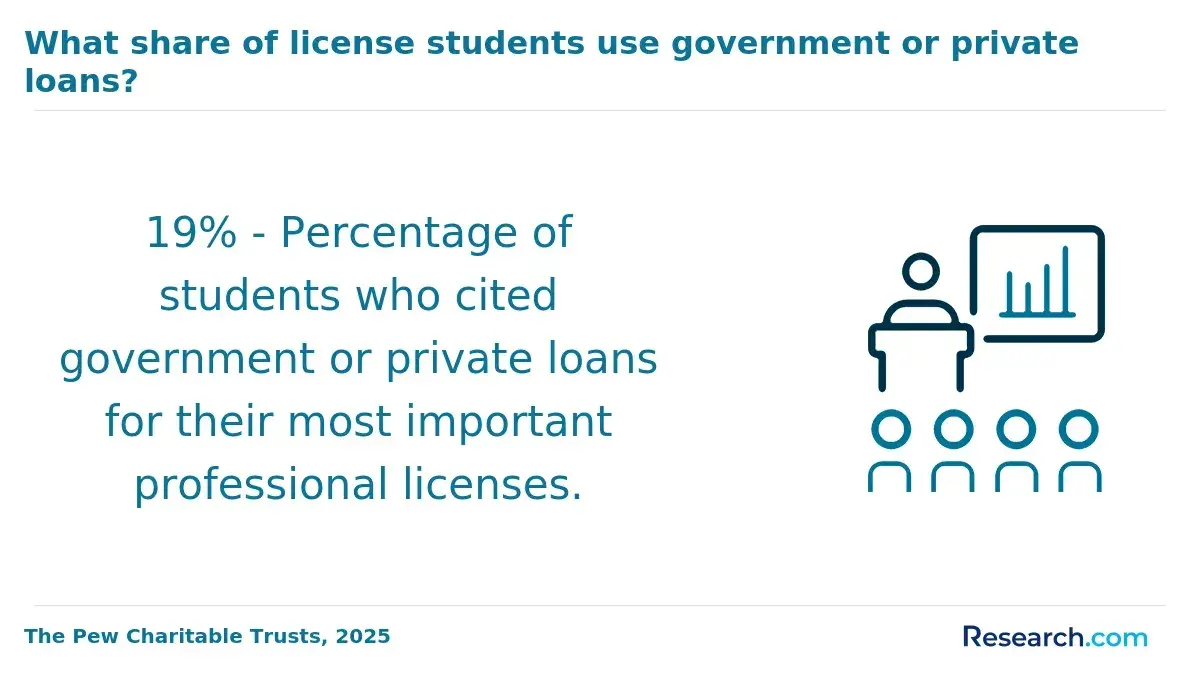
- Review Graduate PLUS Loans or private loans carefully, including interest, origination fees, credit requirements, and total repayment implications.
Do not assume a scholarship applies for every term or that employer reimbursement pays before tuition is due. Ask whether online students receive the same institutional aid as campus students and whether dropping below half-time enrollment changes scholarship, loan, or billing eligibility.
Professionals who want a broader management credential may find that an accelerated business administration degree online better matches an employer's reimbursement policy. The right choice depends on whether the desired advancement requires theological expertise, organizational leadership training, or both.
How Do Program Format and Completion Time Affect the Cost of an Online Theology Master's Degree?
Format and pace affect total cost even when tuition per credit is fixed. Fully online asynchronous programs may reduce commuting and allow students to continue working, while synchronous classes can offer scheduled interaction but may constrain work hours. Hybrid programs can provide valuable formation and networking but may add travel, lodging, meals, and time-away-from-work costs.
Accelerated terms can shorten time to completion and reduce the number of semesters subject to recurring fees. They also require more weekly reading, writing, discussion, and project work. A traditional pace may be financially safer for students whose employment, caregiving, ministry, or health obligations make course withdrawals more likely.
The format options below clarify where the savings and trade-offs usually occur.
| Format or pace | Potential cost benefit | Potential added cost or risk |
| Fully online asynchronous | Can reduce travel and offer scheduling flexibility | Requires disciplined independent study and may include online fees |
| Fully online synchronous | Offers scheduled faculty and peer engagement without regular travel | Fixed meeting times can conflict with work or ministry schedules |
| Hybrid or low-residency | Combines online access with in-person formation | Travel, lodging, and campus-intensive expenses can raise total cost |
| Accelerated sequence | May reduce time-related expenses and reach completion sooner | Heavy course load can increase the risk of overload or reduced work hours |
| Part-time sequence | May allow continued income and smaller term bills | More terms can mean more recurring fees and delayed completion |
Review whether the degree requires a thesis, capstone, comprehensive exam, practicum, internship, supervised ministry experience, or biblical-language sequence. These requirements can be academically valuable, but they can change both completion time and the number of credits billed.
Students who are comparing online pacing across disciplines can see a different technical example in an accelerated cyber security degree online. Acceleration is useful only when the course sequence, available study time, and financial plan make rapid progress sustainable.
How Much Can Transfer Credits Reduce the Cost of an Online Theology Master's Degree?
Transfer credits and advanced standing can reduce the number of credits you pay for, but policies are often narrower at the graduate level than students expect. Theology schools may evaluate prior graduate coursework in religion, theology, biblical studies, ministry, ethics, church history, or related disciplines. Some institutions also assess graduate-level work completed at seminaries, while others limit transfer credit by age, grade, accreditation, course match, or residency requirement.
Advanced standing is different from transfer credit. It may recognize prior theological education, denominational formation, or an approved undergraduate background, but it may not always reduce tuition or total degree credits. Ask whether it grants course exemption only, actual credit, or a modified curriculum.
Request a written preliminary evaluation before choosing a program based on transfer savings. Submit official transcripts, syllabi, course descriptions, and evidence of prior learning when requested. Then compare the school's final credit award against its residency requirement, because many programs require a substantial portion of credits to be completed through the institution.
A frequent error is treating the maximum transferable-credit figure as guaranteed. Count only credits the school has formally approved, confirm whether they are charged any evaluation fee, and ensure the transfer plan still supports your intended concentration, capstone, ordination process, or doctoral application.
Is a Cheap Online Theology Master's Degree Worth the Cost for Career Advancement?
A low-cost theology master's can be worthwhile when it supplies the preparation required for your target role without creating unmanageable debt. The strongest return is often professional rather than purely financial: deeper theological competence, eligibility for ministry roles, improved religious-education preparation, access to denominational networks, or a foundation for doctoral study.
Career outcomes vary widely because theology graduates work in congregations, religious schools, higher education, nonprofits, publishing, advocacy organizations, chaplaincy-related settings, and community programs.
Clergy held a $60,000 median annual wage in 2024 according to the U.S. Bureau of Labor Statistics. That occupation-level figure is not a salary promise for theology graduates, and compensation can differ substantially by denomination, geographic area, employer budget, benefits, and whether a role is full-time.
Before enrolling, connect the curriculum to a concrete next step. A research-oriented MA may suit students pursuing a PhD, teaching support roles, writing, or scholarly study. A professional ministry degree may better suit pastoral leadership, spiritual formation, chaplaincy preparation, or church administration. Chaplaincy and counseling-related roles can have employer, board-certification, clinical, or supervised-experience requirements beyond a theology master's degree.
Evaluate career value through these questions.
- Does the job description, denomination, or prospective doctoral program actually require or prefer this degree type?
- Does the curriculum include the theological tradition, biblical studies, leadership training, research methods, or field experience needed for your goal?
- Will the program's accreditation and reputation be accepted by your intended employer or further-study institution?
- Can your anticipated income, employer assistance, and household budget support the likely borrowing amount?
- Are networking, career advising, supervised ministry, and alumni connections available to online students?
Do not choose solely on tuition if a cheaper program lacks the specialization, supervised experience, or recognition your next step requires. Conversely, paying more is not automatically justified when a lower-cost accredited program offers equivalent curricular fit, flexible delivery, and accepted credentials for your goal.
How Should Students Compare the Cheapest Accredited Online Theology Master's Programs?
Compare the cheapest accredited online theology master's programs using one consistent worksheet. Start with programs that match your desired degree type and theological tradition, then eliminate options that do not meet your accreditation, state-authorization, transfer, or career requirements. Only after that should you rank remaining programs by verified net cost.
The following comparison framework identifies the information that most directly affects affordability and fit.
| Comparison category | What to collect | Decision use |
| Degree design | MA, MS, MDiv, ministry MA, concentration, thesis, capstone, and required credits | Confirms the program supports your intended career or further education |
| Accreditation | Institutional accreditor and any specialized theological accreditation | Protects transfer, aid, employment, and doctoral-study options |
| Tuition policy | Online rate, out-of-state treatment, and rate-effective term | Confirms whether the program is genuinely residency-neutral |
| Total cost | Required credits, all fees, books, travel, and residency expenses | Prevents misleading per-credit comparisons |
| Funding | Scholarships, employer assistance, aid eligibility, and renewal terms | Shows likely net price and borrowing need |
| Flexibility | Asynchronous or synchronous classes, terms per year, part-time option, and campus requirements | Tests whether completion is realistic alongside work and ministry |
| Outcomes support | Faculty expertise, denominational relationships, advising, placement support, and alumni network | Measures value beyond tuition |
Contact the top two or three schools with the same questions so the answers are comparable: What is my full estimated cost through graduation? Does the published online rate apply regardless of residency? Which fees are mandatory? How many transfer credits are likely to be accepted? Are scholarships available to online students? Are any campus visits required? Is the degree suitable for my stated professional or doctoral goal?
Finally, compare the estimate with your budget and timeline. The best option is usually the accredited program that meets your purpose, permits realistic completion, limits unnecessary borrowing, and has a transparent tuition policy - not simply the program with the lowest number on a marketing page.
Students who may ultimately pursue communication-disorders work rather than theology should review the separate professional and clinical requirements for online master's speech pathology programs. A theology credential does not substitute for the specialized academic and clinical preparation required in that field.
Other Things You Should Know About Theology
Theology examines beliefs about God, sacred texts, traditions, ethics, and religious practice, often from within or in conversation with a faith tradition. Religious studies commonly uses historical, cultural, social-scientific, and comparative approaches. Ministry programs usually emphasize applied leadership and service in faith communities. Review the curriculum rather than relying on the title alone.
It depends on your goal. Many ordination pathways and pastoral positions prefer or require an MDiv, which is generally broader and longer than an MA in Theology. An MA may be a better match for theological study, teaching support, religious education, writing, nonprofit work, or preparation for doctoral study. Confirm requirements with your denomination or intended employer.
It can provide relevant theological education, but professional chaplaincy often requires additional supervised clinical training, endorsement, board-certification steps, and employer-specific qualifications. Healthcare, military, correctional, and hospice settings may apply different standards. Verify requirements before selecting a degree.
Schools commonly request a bachelor's degree from an accredited institution, official transcripts, an application, statement of purpose, recommendations, and sometimes a writing sample or faith-background statement. Requirements for prior theology coursework, minimum GPA, standardized tests, and denominational affiliation vary by program.
References
- The 25 Best Online Master's in Theology Programs https://www.onlinecolleges.net/rankings/best-online-masters-theology-degree-programs/
- Master of Theological Studies https://financialaid.mercer.edu/cost-of-attendance/graduate-and-professional/school-of-theology/master-of-theological-studies/
- Best Master's in Theology Online Programs: 2025 Edition https://www.onlinemastersdegrees.org/best-programs/religious-studies/theology/
- 7 Cheapest Theology Degree Online Programs for 2026 https://www.thebibleseminary.edu/post/cheapest-theology-degree-online
- Affordable and Accredited | APU Global https://www.apuglobal.edu/post/affordable-and-accredited-a-guide-to-online-christian-universities
- 2026 Most Affordable Online Master's Degrees in Theology https://www.onlineu.com/most-affordable-colleges/theology-masters-degrees
- Your Affordable Online Seminary - TheosSeminary https://www.theosseminary.com/blog/affordable-online-seminary
- Master's Degree in Theological Studies https://www.ccu.edu/ccu/theology/masters/
- Tuition Costs for Masters Programs - Lancaster Bible College https://www.lbc.edu/admissions/masters-admissions/tuition-costs/
- Online Seminary Programs & Degrees | United Theological Seminary https://www.unitedseminary.edu/distance-learning/


