2027 Cheapest Accredited Online Media Communication Master's Programs With No Out-of-State Tuition Surcharge

Co-Founder and Chief Data Scientist
Online media communication master's students can face substantially different prices for similar degrees when public universities charge nonresidents more. A residency-neutral tuition policy can remove that premium, but it does not automatically produce the lowest total cost. The U.S. Bureau of Labor Statistics projects employment for media and communication occupations to grow faster than the average for all occupations from 2023 to 2033, making targeted, affordable graduate training worth evaluating carefully.
This guide helps working professionals, career changers, and communication graduates compare accredited MA and MS options, calculate realistic expenses, confirm eligibility, and assess whether a lower-priced online degree supports their career goals.
Key Things You Should Know
- A no-out-of-state-surcharge program charges the same published tuition to online students regardless of where they live, but required credits, mandatory fees, and campus requirements determine the true total.
- Institutional accreditation is the essential baseline for an affordable online media communication master's program. Verify it through the school, its recognized accreditor, and the U.S. Department of Education database before paying an enrollment deposit.
- For career planning, the Bureau of Labor Statistics projects media and communication occupations to grow faster than the average for all occupations from 2023 to 2033, but a degree's value depends on the role, portfolio, network, specialization, and employer, not tuition alone.
What Does No Out-Of-State Tuition Surcharge Mean for an Online Media Communication Master's Program?
A no-out-of-state tuition surcharge means an online student who lives outside the university's home state is charged the same tuition rate as an eligible in-state student or a single nationwide online rate. It does not mean the program is free, discounted for every learner, or necessarily cheaper than every residency-based alternative.
This policy matters most at public universities, where campus-based graduate tuition often has separate resident and nonresident prices. Many institutions price selected online programs differently from their campus programs, using one per-credit rate for all online students. Private nonprofit universities commonly charge one university-wide rate regardless of residence, although their starting price may still be higher.
The comparison below separates a residency-neutral rate from other tuition approaches. Use it to identify what a university is actually promising before comparing advertised "starting at" prices.
| Tuition approach | What an out-of-state online student pays | Best fit | Key caution |
| Nationwide online rate | The published online per-credit or program rate | Students seeking predictable pricing across states | Confirm that the rate applies to the exact media communication master's program |
| In-state rate for all online students | The institution's resident-equivalent rate | Nonresidents comparing public universities | Ask whether fees or course formats differ from campus enrollment |
| Out-of-state waiver | A reduced rate under stated conditions | Students who clearly meet the waiver rules | A waiver may expire, require continuous enrollment, or exclude certain courses |
| Traditional residency pricing | The nonresident rate unless residency is established | Current residents or students able to qualify under school rules | Do not assume online enrollment creates residency |
A true no-surcharge policy should appear in the graduate tuition schedule, online-program page, or written confirmation from the bursar or admissions office. Ask whether it applies to every required course, whether the rate can change after enrollment, and whether students living in particular states face authorization restrictions.
How Can Students Verify Accreditation for an Affordable Online Media Communication Master's Program?
Accreditation is separate from price. For most media communication master's degrees, the primary checkpoint is institutional accreditation from an accreditor recognized by the U.S. Department of Education and the Council for Higher Education Accreditation. Institutional accreditation supports federal-aid eligibility, transfer evaluation, employer confidence, and eligibility for further study, although each receiving institution sets its own transfer rules.
Media communication programs do not universally require a single programmatic accreditor. Journalism-focused curricula may have voluntary specialized recognition, while communication, strategic communication, digital media, public relations, and media studies programs are commonly evaluated through institutional accreditation and academic quality indicators such as faculty, curriculum, assessment, and student services.
A school's institutional status should not be confused with approval for a professional license; media communication careers generally do not have a universal state licensure pathway.
Verify the program before applying by completing these checks. They help prevent the common mistake of relying on a logo, a school name, or an outdated accreditation statement.
- Find the institution's current accreditor on the university's official accreditation page and note the institution's legal name.
- Search the U.S. Department of Education accreditation database using that legal name and confirm the accreditor and current recognition status.
- Ask admissions whether the online media communication master's is offered directly by the accredited institution or through a partner, and whether the degree transcript identifies the institution.
- Review the curriculum, faculty credentials, capstone or thesis expectations, and online student-support services rather than treating accreditation as the only quality measure.
- For journalism, public relations, or another specialized goal, ask whether voluntary program recognition, internships, portfolio support, or employer partnerships are relevant to your intended role.
Students considering management-oriented communication work can also compare how accreditation and business-focused outcomes are presented in an affordable online MBA search. The best credential depends on whether the target role emphasizes communication strategy, content and media expertise, or broader business leadership.
How Much Does the Cheapest Online Media Communication Master's Program Cost in Total?
The cheapest online media communication master's program is the one with the lowest net total cost for your required path, not necessarily the lowest per-credit number.
Total tuition is generally calculated by multiplying the applicable per-credit rate by the number of required credits, then adding mandatory program, technology, course, graduation, and residency costs. Subtract grants, scholarships, employer payments, and other aid that does not need repayment to estimate net price.
Graduate media communication degrees often require roughly 30 to 36 credits, but requirements vary by MA, MS, strategic communication, digital media, journalism, and communication studies track. A 30-credit program at a higher rate can cost less than a 36-credit program with a lower rate. Thesis, portfolio, practicum, and elective requirements can also change the bill.
This planning worksheet shows which costs belong in a total-cost comparison. Enter each school's written figures rather than estimating from an undergraduate or campus tuition page.
| Cost component | Calculation | What to verify |
| Base tuition | Required credits × applicable per-credit rate | Whether all online students receive one rate |
| Mandatory fees | Term fees + course fees + technology fees | Whether fees apply per credit, course, term, or program |
| Required experiences | Travel + lodging + local transportation | Campus residency, immersion, internship, or presentation requirements |
| Learning materials | Books, software, equipment, and subscriptions | Required editing, analytics, design, or production tools |
| Net estimated cost | Total charges − confirmed nonrepayable aid − employer support | Award conditions, reimbursement caps, and timing |
Request a program-specific estimate for your anticipated start term. Tuition can change annually, and a university's general graduate rate may not govern a separately priced online degree. Also budget for indirect expenses, such as reduced work hours or travel, without assuming they will appear on the student account.
Do Online Media Communication Master's Students Have to Establish Residency to Receive the Lowest Tuition Rate?
If an online media communication master's explicitly uses a nationwide online rate or charges all distance learners the same resident-equivalent tuition, students ordinarily do not need to establish state residency to receive that rate. The policy is a tuition classification, not a declaration that the student has become a legal resident of the state.
However, residency still matters when a school uses traditional public-university rates, offers a conditional nonresident waiver, restricts a discounted rate to certain states or military-affiliated students, or applies different rules to online and hybrid students.
Establishing residency after enrollment can be difficult because states and institutions often require evidence that the move was not made primarily for educational purposes.
Before relying on a stated rate, get answers in writing to the questions below. This is especially important if the difference between resident and nonresident tuition drives your enrollment decision:
- Does the published online tuition rate apply to my state of residence and to this exact master's program?
- Is the rate guaranteed for continuing students, or can residency-based pricing apply after the first term?
- Are any courses, immersions, or electives billed at a separate campus or nonresident rate?
- Does the school require a residency affidavit, proof of location, or participation in a state authorization process?
- Would moving to the university's state affect tuition, financial aid, taxes, employment, or other residency determinations?
Do not move solely to obtain a lower education rate without reviewing the institution's residency policy. Housing and relocation costs can outweigh a tuition difference, and an online program with a transparent nationwide rate may be financially safer for a working adult.
How Do Public and Private Universities Compare on the Cost of an Online Media Communication Master's Degree?
Public and private nonprofit universities can both offer affordable online media communication master's degrees, but they use different pricing models. Public institutions may offer a low resident rate and a separate, higher nonresident rate.
A residency-neutral online model can make a public program competitive for applicants nationwide. Private nonprofit institutions often use a single tuition rate for all students, which improves predictability but does not necessarily lower the total bill.
The useful comparison is not "public versus private" in isolation. Compare the required credits, all mandatory charges, aid eligibility, curriculum, schedule, student support, and career relevance.
A private nonprofit program with a larger institutional scholarship may cost less after aid than a public program with lower published tuition, while a public online rate may be the better value for students receiving little institutional aid.
The table highlights the trade-offs that affect an out-of-state applicant's decision.
| Factor | Public university | Private nonprofit university | How to use it |
| Residency effect | May be substantial unless an online nationwide rate applies | Often no residency distinction | Compare the exact online rate, not the institution type |
| Published tuition | Can be low for residents and selected online programs | May be higher but more uniform | Multiply the rate by required credits |
| Institutional aid | May vary by state funding and program | May include merit-based discounts or scholarships | Compare written aid offers and renewal conditions |
| Program selection | May include broad communication, journalism, and media studies options | May emphasize professional, strategic, or accelerated formats | Match the curriculum to your target role |
| Cost predictability | Depends on rate rules and annual tuition actions | Depends on institutional pricing and aid renewal | Ask for an estimated cost through completion |
Students comparing cost structures across professional online degrees may notice similar trade-offs in an online MFT programs search. The fields differ because marriage and family therapy involves clinical and licensure requirements, but the practice of comparing net cost rather than tuition alone remains useful.
Can Financial Aid Reduce the Cost of a Cheap Online Media Communication Master's Program?
Financial aid can reduce the net cost of a cheap online media communication master's program, but availability and amounts vary by institution, enrollment level, academic record, residency category, and funding rules.
Online students enrolled in eligible degree programs may be considered for federal Direct Unsubsidized Loans and, when eligible, Direct Graduate PLUS Loans after submitting the FAFSA. Loans lower immediate out-of-pocket costs but increase the amount that must be repaid with interest.
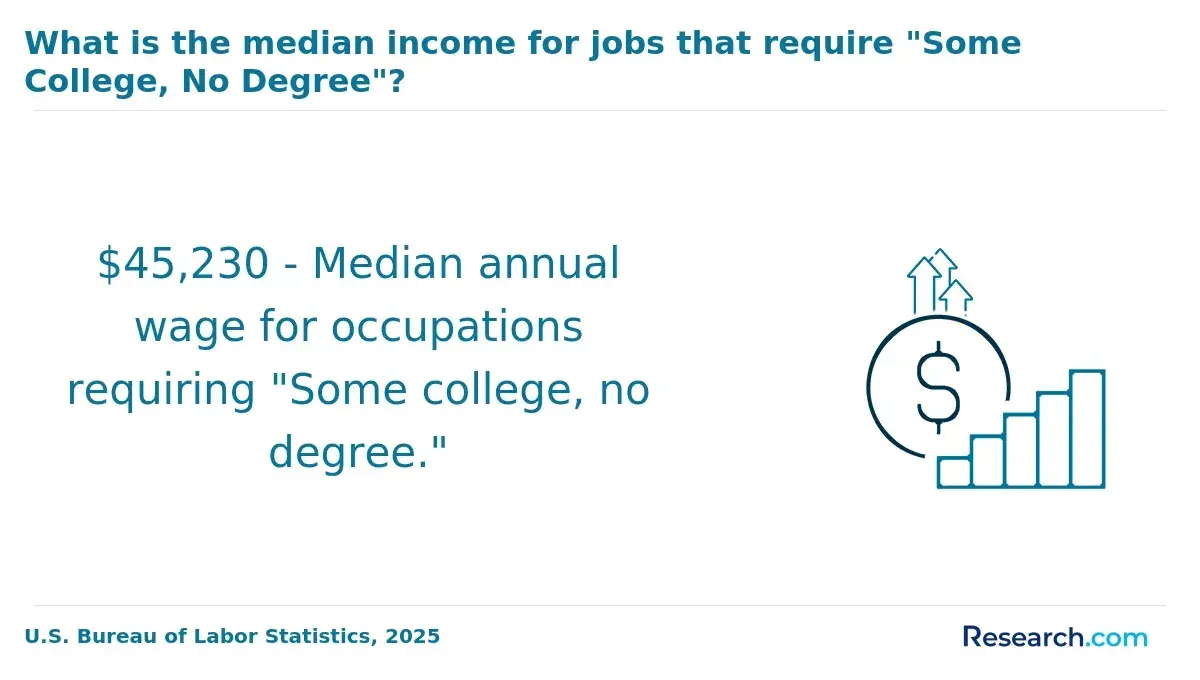
Prioritize funding that does not require repayment. Institutional scholarships, graduate assistantships when available to online students, employer tuition assistance, professional association awards, veterans' education benefits, and external scholarships may be more valuable than choosing a slightly lower sticker-price program without aid.
Review each funding source in this order so that you can distinguish real savings from borrowed financing:
- Submit the FAFSA early and confirm that the online program is eligible for federal student aid.
- Ask the school whether online media communication students can receive institutional scholarships, departmental awards, assistantships, or payment plans.
- Ask your employer about annual reimbursement limits, grade requirements, approved-school lists, tax treatment, and whether reimbursement occurs before or after course completion.
- Compare grants and scholarships by renewal conditions, required enrollment intensity, and whether they reduce tuition directly or arrive as later reimbursement.
- Borrow only after calculating the remaining balance, expected repayment obligations, and the degree's realistic career benefit.
A common error is treating a loan offer as a tuition discount. Compare programs using the amount you expect to pay after grants and employer assistance, then separately decide whether borrowing is appropriate for the remaining amount. For students looking into other career paths, consider the cheapest online computer science degree program.
How Do Program Format and Completion Time Affect the Cost of an Online Media Communication Master's Degree?
Program format affects both billed charges and the cost of remaining employed while enrolled. Fully online asynchronous programs can reduce commuting and scheduling conflicts, while synchronous classes may provide live interaction but require attendance at fixed times. Hybrid programs can add travel, lodging, meals, and time away from work even when their tuition matches a fully online option.
Completion time also changes the financial picture. An accelerated program can reduce the number of terms in which recurring fees are charged and may help a student apply new skills sooner.
It can also require a heavier course load that limits work availability or reduces the time available for internships, portfolio development, and networking. Traditional part-time formats may spread payments across more years but can increase exposure to future tuition changes and repeated term fees.
Compare delivery choices against your work and learning needs rather than assuming the fastest option is automatically cheapest.
| Format | Potential cost advantage | Potential cost or scheduling risk | Who it may suit |
| Fully online asynchronous | May minimize travel and support flexible work schedules | Requires strong time management and may have limited live networking | Working professionals with variable schedules |
| Fully online synchronous | May provide structured interaction without commuting | Fixed meeting times can conflict with work or time zones | Students who prefer regular live discussion |
| Hybrid or low-residency | May add face-to-face production, networking, or mentorship value | Travel and lodging can materially increase total cost | Students able to attend required sessions |
| Accelerated | May reduce time enrolled and recurring term charges | High workload can make full-time employment harder | Students with adequate time and financial capacity |
| Part-time traditional | Spreads tuition payments over time | May extend fees, tuition exposure, and completion time | Students balancing work, caregiving, or other commitments |
Review whether a program ends in a capstone, professional portfolio, thesis, or research project. Professional MA or MS programs often use applied capstones; academic or research-oriented tracks may require a thesis. Neither is inherently better: choose the option that supports your next role, doctoral plans, and available time.
How Much Can Transfer Credits Reduce the Cost of an Online Media Communication Master's Degree?
Transfer credit can reduce the number of credits you must pay for, but it is often limited in graduate programs and should never be assumed. Schools typically evaluate whether prior graduate coursework is recent, accredited, comparable in content and rigor, and applicable to the degree. Some programs accept no transfer credit; others set a maximum and may require a minimum number of credits completed at the institution.
Advanced standing is different from transfer credit. It may recognize prior academic preparation or professional learning under a specific policy, but many media communication master's programs do not award it broadly. A relevant graduate course in research methods, media theory, strategic communication, analytics, or digital storytelling may be considered, but the receiving school makes the final determination.
Take these steps before counting transfer credit as a savings. They help you avoid enrolling in a program whose actual required credit total is higher than expected.
- Request the written transfer-credit policy for the exact online master's program, including the maximum accepted credits and grade minimum.
- Submit official transcripts and course syllabi early, since a course title alone may not show equivalency.
- Ask whether accepted credits replace required core courses or only electives; replacing an elective may not shorten the program if all core courses remain.
- Confirm whether transfer credit affects financial-aid enrollment status, sequence requirements, or access to a concentration.
- Obtain a revised degree plan showing remaining credits, anticipated completion date, and estimated tuition after the evaluation.
Do not choose a school solely because it advertises transfer-friendly policies. The most valuable evaluation is one that confirms how many credits apply to your selected media communication curriculum and whether the shortened plan still provides the portfolio, research, or specialization experience you need.
Is a Cheap Online Media Communication Master's Degree Worth the Cost for Career Advancement?
A cheap online media communication master's degree can be worth the cost when it helps you qualify for a role, build demonstrable expertise, move into strategic responsibilities, or make a credible career transition without excessive borrowing. It is less likely to be a strong investment when the curriculum duplicates skills you already have, lacks portfolio-building opportunities, or does not connect to the role you intend to pursue.
Media communication graduates may pursue work in corporate communications, public relations, social and digital media strategy, content development, audience research, media planning, internal communications, journalism-adjacent roles, nonprofit communications, or higher education.
Responsibilities can include shaping messages, analyzing audiences, managing campaigns, producing content, coordinating stakeholders, evaluating communication performance, and responding to reputation or crisis issues.
The U.S. Bureau of Labor Statistics projects faster-than-average employment growth for media and communication occupations from 2023 to 2033. That broad category does not predict an individual outcome, because salaries and hiring standards vary by occupation, location, industry, experience, portfolio, and employer. Use labor-market information as context, then evaluate the jobs you actually want.
A strong program-to-career match usually includes the following elements. They are more useful ROI indicators than a low tuition figure by itself:
- Courses in areas employers value for your target role, such as strategic communication, digital analytics, content strategy, audience research, media law, storytelling, or campaign measurement.
- A capstone, practicum, publication, production project, or portfolio that supplies evidence of your skills.
- Faculty and peer connections relevant to your preferred industry, region, or type of employer.
- Career services that support resume development, interviewing, networking, internship search, or portfolio review for online students.
- A realistic financing plan that limits borrowing relative to your expected career change or advancement opportunity.
Students considering communication-related helping professions should recognize that career ROI can differ sharply. For example, an SLP salary is different from the wage of a journalist. Be sure to explore various considerations when researching career paths.
How Should Students Compare the Cheapest Accredited Online Media Communication Master's Programs?
Compare the cheapest accredited online media communication master's programs using a consistent worksheet. Start by excluding programs that lack recognized institutional accreditation or cannot confirm their online tuition policy. Then compare the remaining options by total cost and career fit, not marketing labels such as "affordable," "fast," or "no residency requirement."
The following comparison categories will reveal whether a low advertised rate is truly the best value for you.
| Comparison category | What to collect | Decision value |
| Accreditation | Institution, recognized accreditor, and current status | Establishes a basic quality and aid-verification checkpoint |
| Tuition policy | Online per-credit rate, residency rule, and rate duration | Confirms whether nonresidents avoid a surcharge |
| Total direct cost | Required credits, tuition, mandatory fees, and graduation charges | Shows the actual billed estimate |
| Indirect cost | Travel, required technology, materials, and lost work time | Captures expenses not visible in advertised tuition |
| Financial aid | Grants, scholarships, employer support, and borrowing options | Produces a more realistic net-cost comparison |
| Format and timeline | Asynchronous or live classes, residencies, and completion pace | Tests whether the program fits work and personal obligations |
| Curriculum and outcomes | Concentrations, capstone, portfolio support, and career services | Connects the investment to a specific career goal |
After narrowing your options, contact each school with the same concise questions:
- What will I pay for all required credits as an out-of-state online student?
- Which mandatory fees apply?
- Are campus visits required?
- How many transfer credits are likely to apply?
- Is aid available to online students?
- Can you provide a degree plan through graduation?
Cross-field comparisons can be useful when you are deciding among graduate study and other professional education. For example, an online construction management degree may have different project, technical, and scheduling expectations, but the same total-cost and accreditation review process applies. Select the program that best aligns with your intended work, budget, and capacity to complete it.
Other Things You Should Know About Media Communication Programs
Program names vary by university. Media communication programs may emphasize digital media, audience engagement, storytelling, strategic messaging, and media industries. Mass communication programs may include journalism, broadcasting, public relations, advertising, and media research. Compare required courses and concentrations rather than relying on the title alone.
Employers generally focus on the issuing institution, accreditation, relevant skills, work experience, portfolio quality, and the role's requirements. A clearly identified online format is not automatically a disadvantage, but students should confirm that the program offers meaningful faculty access, project feedback, and career support.
It can, particularly when the curriculum includes applied campaigns, multimedia production, audience analysis, research projects, capstones, or internships. Before enrolling, ask to see examples of typical final projects and determine whether students retain work they can show employers.
Neither degree label is universally better. An MA may emphasize theory, writing, culture, research, or humanities-oriented communication study, while an MS may emphasize analytics, technology, applied research, or professional practice. The better choice is the one whose coursework, final project, and specialization match your intended position.
References
- 2025 Most Affordable Online Master's in Communications https://www.onlineu.com/most-affordable-colleges/communications-masters-degrees
- The 10 Most Affordable Online Master's in Public Relations - Best Marketing Degrees https://www.bestmarketingdegrees.org/the-most-affordable-online-masters-in-public-relations/
- All Online Master's in Communication Programs (2025 Update) https://www.mastersincommunications.com/online-programs
- Program Certification & Accreditation https://www.commissionpred.org/the-professional-bond/program-certification-accreditation/
- Online Master's in Media Communication Programs in 2025 https://www.mastersincommunications.org/online-media-communication/
- Average Cost of a Master's Degree: 2025 Analysis https://educationdata.org/average-cost-of-a-masters-degree