2027 Cheapest Accredited Online Child Development Degree Programs That Accept FAFSA

Co-Founder and Chief Data Scientist
Choosing an online child development degree is really a cost-and-credential decision: you need a program employers respect, aid you can actually use, and tuition that will not outweigh entry-level earnings. BLS May 2024 wage data places the median pay for preschool teachers at $37,120, which makes borrowing discipline especially important.
This guide is for future early childhood educators, childcare workers, preschool administrators, and transfer students comparing accredited online programs that participate in FAFSA-based federal aid. You will learn how to identify genuinely affordable options, estimate net cost, avoid red flags, and choose the best-value path for your career goal.
Key Things You Should Know
- The cheapest FAFSA-eligible child development paths are usually online associate degrees at public community colleges, followed by public university bachelor's completion programs that accept substantial transfer credit.
- FAFSA participation does not mean school will be free; the Federal Pell Grant maximum for the 2024-25 award year is $7,395, so students must compare tuition, fees, credits required, transfer policy, and loan need.
- For ROI, keep total borrowing low because many early childhood roles have modest wages, while higher-paying preschool or childcare administration roles often require experience, state credentials, or a bachelor's degree.
Which Are the Cheapest Accredited Online Child Development Degree Programs That Accept FAFSA?
The cheapest accredited online child development degree programs that accept FAFSA are typically offered by public community colleges, regional public universities, and some nonprofit or career-focused institutions that participate in federal Title IV aid.
The table below is a practical shortlist of low-cost program types and examples to research first. Tuition changes often, and online rates can differ by residency, so use the table as a starting point and verify each school's current net price, program format, and federal aid participation before applying.
| School or program type to research | Common online child development credential | Why it may be low cost | FAFSA relevance | Best fit |
| Public community colleges in your state | AAS or AA in Early Childhood Education, Child Development, or Early Care and Education | Often the lowest per-credit tuition, especially for in-district or in-state students | Many participate in federal student aid, but the specific program must be aid-eligible | Students seeking entry-level childcare, preschool, assistant teacher, or transfer pathways |
| North Carolina community colleges with online Early Childhood Education programs | AAS in Early Childhood Education | Public two-year tuition can be substantially lower than four-year tuition | Many campuses are Title IV participants; students should confirm the school code and program eligibility | Students who can benefit from state community college pricing and transfer agreements |
| Great Basin College | Associate-level early childhood education options | Public college pricing may be affordable for distance learners compared with many private options | Institutional participation in federal aid should be verified through the school's financial aid office | Students seeking an online associate pathway with public-college pricing |
| Fort Hays State University | Online bachelor's options related to early childhood or education | Known for comparatively low online undergraduate tuition among public universities | Federal aid may apply to eligible degree-seeking students | Transfer students who want a bachelor's degree from a public university |
| Eastern New Mexico University | Online bachelor's options in early childhood or related education fields | Public university online tuition is often competitive, especially when transfer credits apply | Eligible students may use FAFSA-based aid for approved degree programs | Students comparing low-cost bachelor's completion routes |
| Florida International University Online | BS in Early Childhood Education or related online education pathway | Can be affordable for Florida residents, but nonresident rates may be much higher | FAFSA-based aid can apply to eligible degree-seeking students | Florida residents and transfer students seeking a large public university option |
| University of North Carolina Greensboro | Online degree-completion options in human development, family studies, or birth-through-kindergarten-related fields | Public pricing and transfer pathways can improve total affordability | Students should confirm the exact online program is aid-eligible | Students with prior college credits who want a bachelor's completion program |
| Wilmington University | BS in education studies or early childhood-related tracks | May offer flexible transfer and adult-learner formats, though tuition may exceed community college pricing | Eligible degree programs may qualify for federal student aid | Working adults who value flexibility and transfer-credit acceptance |
The lowest sticker price is not always the cheapest finished degree. A $300-per-credit bachelor's program that accepts 90 transfer credits can cost less than a $220-per-credit program that accepts only 45 credits. For most students, the best starting shortlist includes one local community college, one in-state public university, one affordable public online university, and one flexible adult-completion option.
How Does FAFSA Eligibility Work for Online Child Development Degree Programs?
FAFSA eligibility starts with the institution and the specific program. A school must participate in federal Title IV student aid, and the student must be admitted into an eligible certificate or degree program. Some online courses at a FAFSA-participating school may still be ineligible if they are noncredit, continuing education, standalone training, or not part of an approved degree pathway.
Students should verify eligibility before assuming federal aid will cover an online child development degree. The safest process is to confirm all three layers: school, program, and student eligibility.
- Check that the college is institutionally accredited by an agency recognized by the U.S. Department of Education.
- Confirm that the school participates in federal student aid and has a valid federal school code for FAFSA filing.
- Ask whether the exact online child development degree, not just the college, is eligible for Title IV aid.
- Confirm whether you must enroll at least half time to receive federal loans or certain aid types.
- Ask whether practicum, fieldwork, or student teaching courses have extra fees or location restrictions.
- Review satisfactory academic progress rules, because losing aid eligibility can quickly raise out-of-pocket costs.
A common mistake is treating "FAFSA accepted" as the same thing as "grant funded." FAFSA is the application, not the award. Your actual aid package depends on financial need, enrollment intensity, dependency status, prior aid use, lifetime Pell limits, cost of attendance, and school packaging policies.
How Much Does an Online Child Development Degree Cost After Financial Aid?
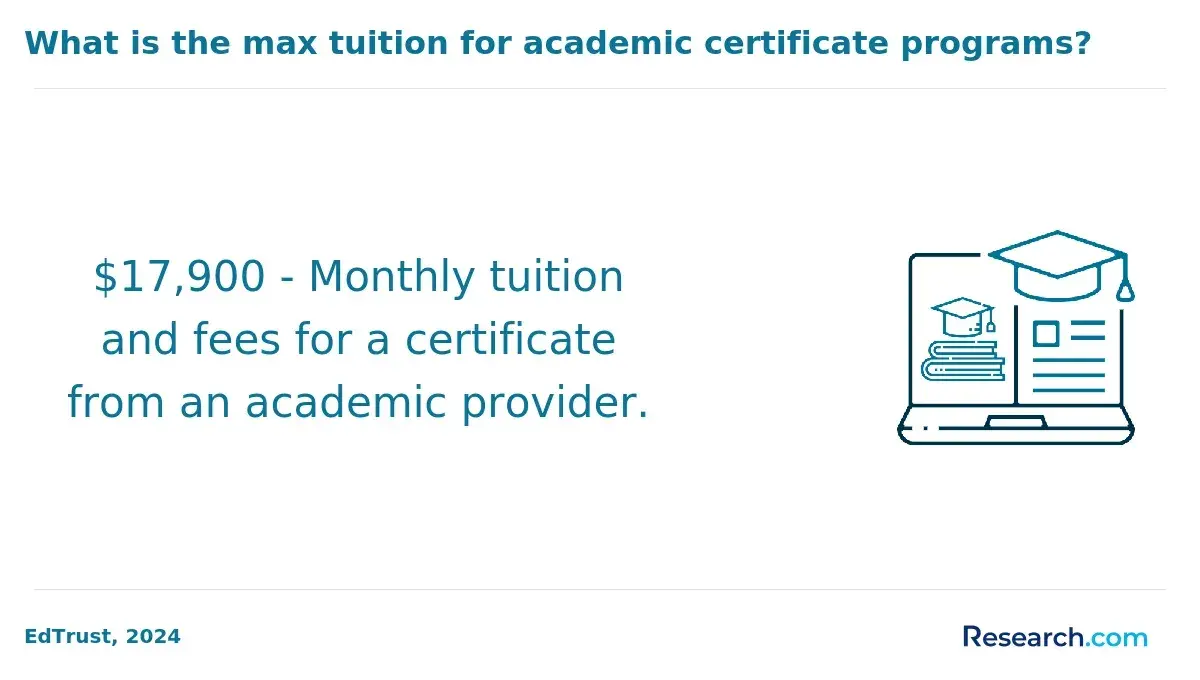
The cost of an online child development degree after financial aid depends on the degree level, credits needed, tuition rate, fees, grants, scholarships, and transfer credits. College Board's 2024 Trends in College Pricing reported average published tuition and fees of $4,050 at public two-year colleges and $11,610 for in-state students at public four-year colleges for the 2024-25 academic year. That gap explains why many cost-conscious students begin with an associate degree and transfer later.
The table below shows how degree level changes affordability. It uses typical cost drivers rather than promising a final price, because your net cost depends on your aid package and transfer evaluation.
| Degree path | Typical credits | Lowest-cost route | Cost risks to check | When it makes sense |
| Associate degree in child development or early childhood education | About 60 credits | Public community college, especially in-district or in-state | Course fees, background checks, practicum requirements, and whether credits transfer | Best for entry-level childcare, preschool support roles, or starting a bachelor's affordably |
| Bachelor's degree in child development, early childhood education, or human development | About 120 credits | Transfer-friendly public university or bachelor's completion program | Out-of-state online tuition, field placement requirements, and limited transfer acceptance | Best for students seeking a lead teacher, program coordinator, family services, or graduate school options |
| Post-baccalaureate or licensure pathway | Varies widely | State-approved public university pathway | State licensure rules, student teaching, testing fees, and whether federal aid applies | Best for students who already hold a bachelor's degree and need teacher certification |
| Master's degree related to child development or early childhood leadership | Often 30 to 36 credits | Public online graduate program with employer assistance | Graduate loan dependence and whether the role requires the degree | Best for leadership, curriculum, policy, or advanced specialist roles |
To estimate your after-aid cost, subtract grants and scholarships from the full cost of attendance, not just tuition. Then separate "free aid" from loans. A program may look affordable because the school offers enough federal loans, but loans still affect ROI and monthly repayment after graduation.
Which Affordable Online Child Development Degree Programs Offer the Best Value?
The best-value affordable online child development programs combine low net price, recognized accreditation, strong transfer policies, relevant field experience, and alignment with your career target. Value is not the same as the lowest advertised tuition; it is the lowest realistic cost for a credential that helps you qualify for the role you actually want.
Use the comparison below to decide which affordable path fits your situation. It focuses on when a program is likely to produce better value, not just lower upfront tuition.
| Value factor | Low-cost but weaker value | Affordable and stronger value | Why it matters |
| Transfer credit | Low tuition but few accepted credits | Slightly higher tuition but accepts most prior college credit | Total credits paid can matter more than per-credit price |
| Accreditation | Unclear or nationally advertised credential with limited recognition | Institutionally accredited college with state-recognized education pathways when needed | Employers, transfer schools, and licensing bodies may reject weak credentials |
| Field placement | No support for practicum or local placement | Clear fieldwork process for online students | Child development programs often require observation or supervised practice |
| Career alignment | General child studies degree for a role requiring licensure | Program matched to childcare, preschool, family services, or teacher certification goals | The cheapest degree can be poor value if it does not meet job requirements |
| Aid package | Affordable only because of heavy loans | Lower net cost through grants, scholarships, employer aid, or transfer savings | Less borrowing improves ROI in modest-wage fields |
Students comparing education and care careers sometimes explore adjacent healthcare pathways because they can lead to different wage structures and credential ladders. If your interest is more clinical than classroom-based, comparing education programs with options like ASN programs online can help clarify whether child development, nursing, or another helping profession better fits your goals.
Are the Cheapest Online Child Development Degree Programs Properly Accredited?
Yes, many of the cheapest online child development degree programs are properly accredited, but students must verify accreditation instead of relying on marketing language. The most important baseline is institutional accreditation from a U.S. Department of Education-recognized accreditor. This affects federal aid eligibility, transfer credit, employer recognition, and graduate-school admission.
Child development degrees may also intersect with state approval or specialized expectations. For example, a bachelor's degree designed for teacher licensure must satisfy state educator-preparation requirements, while a non-licensure child development degree may be suitable for childcare, family services, or program support but not public school teaching.
Before enrolling, ask the school these accreditation and recognition questions. These checks reduce the risk of paying for a degree that does not meet your employment or transfer goals.
- Is the institution accredited by a U.S. Department of Education-recognized accreditor?
- Does the online degree appear in the official catalog as an aid-eligible degree program?
- If the program claims to prepare students for licensure, which state licensure pathway does it meet?
- Will credits transfer to public universities in your state if you start at a community college?
- Do local childcare centers, Head Start programs, school districts, or licensing agencies recognize the credential?
- Are field placements, background checks, and student teaching requirements available to online students in your location?
Red flags include vague "accredited" claims without naming the accreditor, programs that cannot explain federal aid eligibility, unusually short bachelor's timelines with little discussion of transfer credit, and degrees that advertise teacher preparation without state-specific licensure disclosures.
What FAFSA Grants and Federal Aid Can Pay for an Online Child Development Degree?
FAFSA can connect eligible online child development students to federal grants, loans, and sometimes work-study. The most valuable aid is usually grant aid because it does not have to be repaid if enrollment and eligibility rules are met. For the 2024-25 award year, the maximum Federal Pell Grant is $7,395, which can cover a large share of community college tuition but may cover a smaller share of a four-year online bachelor's program.
Here are the main federal aid types students should understand before comparing award letters. The key is to separate aid that lowers price from aid that postpones payment.
- Federal Pell Grant: Need-based grant aid for eligible undergraduate students who have not already earned a bachelor's degree, subject to annual and lifetime limits.
- Federal Supplemental Educational Opportunity Grant: Campus-based grant aid for students with exceptional financial need, but funding is limited, and not every school awards it.
- Direct Subsidized Loan: Need-based undergraduate loan where the government pays interest during certain in-school and deferment periods.
- Direct Unsubsidized Loan: Undergraduate or graduate loan that is not based on financial need and accrues interest from disbursement.
- Federal Work-Study: Part-time work funding offered by some schools, though online students should ask whether remote or local placements are available.
- Parent PLUS or Graduate PLUS Loans: Credit-based federal loans that may increase borrowing capacity but can also increase repayment risk.
Students should also look beyond federal aid. State early childhood workforce scholarships, employer tuition assistance, childcare center sponsorships, TEACH-style state programs, and local foundation awards can materially reduce borrowing. The best award letter is usually one with the lowest required loans, not simply the highest total aid amount.
How Do Transfer Credits Lower the Cost of an Online Child Development Degree?
Transfer credits can be the biggest cost reducer in an online child development degree. Because bachelor's programs often require about 120 credits, a student who transfers a completed 60-credit associate degree may cut the remaining tuition bill roughly in half if the credits apply cleanly to the degree plan.
Students should evaluate transfer policy before choosing between a lower per-credit program and a higher per-credit program. The right question is not "Which school is cheapest per credit?" but "Which school requires me to pay for the fewest remaining credits?"
- Request an unofficial transfer review before applying if the school offers one.
- Ask how many credits can transfer into the major, not just into general electives.
- Confirm whether CDA credentials, prior learning, military training, or workplace training can earn credit.
- Check whether old credits expire for child development, psychology, health, or education-methods courses.
- Compare the remaining degree plan course by course, including prerequisites and practicum courses.
- Calculate tuition on remaining credits only, then add fees, books, background checks, and field placement costs.
This same transfer-first logic applies across many career-oriented programs. Students comparing fast credential pathways, such as a 6 month LPN program online, should use the same caution: speed and low tuition only create value when credits, licensure, and employer recognition line up.
Which Students Benefit Most From a Low-Cost Online Child Development Degree With FAFSA?
A low-cost online child development degree with FAFSA is especially useful for students who need flexibility and must limit debt because early childhood career pay can be modest. It fits working childcare employees, parents returning to school, community college transfer students, paraprofessionals, and students aiming for childcare center leadership or family-service roles.
The table below shows which students tend to benefit most and when a low-cost online program may not be enough. This distinction matters because affordability should support your career plan, not replace it.
| Student profile | Why a low-cost FAFSA-eligible program helps | What to verify first |
| Current childcare worker | Can study while employed and may combine federal aid with employer assistance | Whether the degree leads to a raise, promotion, or required credential in your state |
| Community college transfer student | Can complete lower-division credits cheaply before finishing a bachelor's online | Whether an articulation agreement protects transfer credits |
| Parent or working adult | Online coursework may reduce commuting and scheduling costs | Whether fieldwork can be completed near home and outside standard work hours |
| Future licensed teacher | A low-cost pathway may reduce debt before licensure | Whether the program is state-approved for the exact license and grade range |
| Student seeking the fastest route only | May benefit if prior credits apply | Whether accelerated pacing is realistic with work, family, and practicum obligations |
Students who are mainly motivated by healthcare, administration, or clinical advancement may want to compare child development with related fields before committing. For example, researching the best schools for healthcare administration online can help students decide whether their long-term interests point more toward early childhood services, healthcare operations, or nonprofit leadership.
How Does the Cost of an Online Child Development Degree Affect Career ROI?
The cost of an online child development degree has a direct effect on ROI because many common roles in early childhood education do not have high wage ceilings. BLS May 2024 data reports median annual pay of $32,050 for childcare workers and $37,120 for preschool teachers, while preschool and childcare center administrators are closer to the upper end of the field at around $58,800. That means students should borrow cautiously unless the degree clearly supports advancement.
ROI is strongest when the credential matches a specific outcome: lead teacher qualification, childcare center director eligibility, Head Start requirements, transfer into a bachelor's program, or preparation for graduate study. ROI is weaker when students pay bachelor's-level prices for a degree that does not meet state licensure rules or does not improve their role options.
Use this framework to judge whether a more expensive program is worth considering. It may be reasonable to choose the higher-cost option if it reduces time to completion, accepts more transfer credit, includes state-approved licensure preparation, or provides field placement support that a cheaper program lacks.
- Choose the lowest net-cost associate degree if your immediate goal is childcare employment, preschool support, or an affordable transfer foundation.
- Choose a transfer-friendly bachelor's program if your target role requires a four-year degree or if you want future access to leadership or graduate options.
- Consider a more expensive program only when it lowers total credits needed, meets licensure requirements, or improves scheduling enough to help you finish.
- Avoid high borrowing if the program does not document how it connects to your state's early childhood credential, licensing, or employer requirements.
Some students eventually move from child development into health, human services, or organizational leadership. If that is part of your long-term plan, comparing child development ROI with a masters degree in healthcare management can help you understand how graduate credentials may change career direction and earning potential.
How Should Students Choose the Cheapest FAFSA-Eligible Online Child Development Degree?
To choose the cheapest FAFSA-eligible online child development degree, compare net cost, accreditation, transfer credit, field placement, career alignment, and borrowing risk together. The best program is not necessarily the one with the lowest tuition; it is the one that gets you to an appropriate credential with the least unnecessary debt.
Follow this step-by-step process before enrolling. It is designed to prevent the most common affordability mistakes: comparing sticker prices only, overlooking fees, assuming all aid is free money, and missing transfer-credit limits.
- Define your target role first: childcare worker, preschool teacher, lead teacher, center director, family support specialist, or licensed public school teacher.
- Identify the minimum credential required by your state, employer, or licensing pathway.
- Build a shortlist of at least three FAFSA-participating accredited schools, including one local public option.
- Ask each school for a full cost estimate covering tuition, fees, books, technology, background checks, exams, and field placement costs.
- Submit FAFSA and compare award letters by grants, scholarships, work-study, subsidized loans, and unsubsidized loans.
- Request transfer evaluations before committing, especially if you have an associate degree, CDA credential, or prior college coursework.
- Calculate total borrowing at graduation and compare it with realistic wages in your target role.
- Confirm whether online students receive the same advising, practicum support, and career services as campus students.
Students planning long-term advancement in care-related fields may also compare child development with nursing or advanced practice pathways. For example, reviewing DNP programs online can be useful for students who are weighing early education against healthcare careers that require very different levels of training, licensure, and debt planning.
Other Things You Should Know About Child Development
Yes, if the school participates in federal student aid and the specific online degree is Title IV-eligible. Some programs may still require local fieldwork, observation hours, or practicum placements even when coursework is online.
Online child development degrees that accept FAFSA typically require between 120 and 124 credit hours for completion. These programs often include core courses, electives, and field experiences that align with each institution's graduation criteria for 2027.
Common electives in these programs may include early childhood curriculum, child psychology, and family interactions. These courses complement core studies and may vary by institution, though they are often geared towards enhancing educational strategies and development understanding in children.
Only if the program is specifically approved for the relevant state licensure pathway. A general child development degree may help with early childhood roles but may not qualify you for licensed public school teaching.
References
- Accreditation Overview - Association for Early Learning Leaders https://www.earlylearningleaders.org/accreditation/accreditation-overview/
- Students Seeking a Degree in Early Childhood Education https://www.naeyc.org/our-work/higher-ed/students
- Why Accreditation Matters for Child Care - Doodle Bugs! https://www.doodlebugs.com/blog/why-accreditation-matters-for-child-care/
- Top 5 Online Child Development Bachelor’s Degree Programs https://www.topeducationdegrees.org/rankings/online-child-development-bachelors/
- 2025 Most Affordable Early Childhood Education Degrees Online https://www.onlineu.com/most-affordable-colleges/early-childhood-education-degrees
- Online Child Development Degrees: See the Best Schools & More https://www.edumed.org/online-schools/child-development-degrees/
- Cheapest Online Master's Degree In Early Childhood Education https://www.affordablecollegesonline.org/degrees/best-online-masters-in-early-childhood-education/
- 10 Key Benefits of Part-Time Jobs for Students While Studying https://www.ue-amsterdam.com/blog/top-10-benefits-of-working-part-time-for-students-while-studying
- Cost of Early Childhood Ed Academic Programs | Erikson Institute https://www.erikson.edu/admissions/financial-aid-tuition/cost-of-attendance/